
2027 What Degree Do You Need To Be a Social Worker: Education Requirements in Illinois

Co-Founder and Chief Data Scientist
Nearly 15% of Illinois residents grapple with mental health challenges, underscoring urgent social care needs. Securing a degree aligned with Illinois’ rigorous licensure standards paves the way to meaningful impact and career stability. The path, though intricate, offers access to professional roles that shape lives and communities.
This article deconstructs Illinois’ essential degree requirements. It equips aspiring social workers with clear, actionable guidance to meet state mandates and start rewarding careers in social work.
Key Things to Know About Social Work Education Requirements in Illinois
- A Bachelor’s Degree in Social Work (BSW) opens doors for entry-level roles, like case management and community outreach, widely recognized across Illinois.
- To offer clinical services or counseling, a Master’s in Social Work (MSW) is vital, as Illinois requires this for Licensed Clinical Social Worker (LCSW) status, unlocking advanced career pathways.
- Illinois demands supervised field experience—often 3,000 hours post-MSW—ensuring hands-on training sharpens skills in real-world social challenges.
- What is the minimum degree required to become a licensed social worker in Illinois?
- What courses are covered in a social work degree program in Illinois?
- How long does it take to complete a social work degree program in Illinois?
- How much does a social work degree cost in Illinois?
- What degrees are required for different social work specializations in Illinois?
- What financial aid options are available to social work students in Illinois?
- What are the licensure and continuing education requirements for social workers in Illinois?
- What are the alternative pathways to become a social worker in Illinois?
- Are online social work degrees recognized in Illinois?
- What organizations accredit social work degree programs in Illinois?
- What are the top institutions offering social work degree programs in Illinois?
- What are the career prospects and earnings potential for social work graduates in Illinois?
What is the minimum degree required to become a licensed social worker in Illinois?
The path to becoming a licensed social worker in Illinois unfolds through a spectrum of degrees, each opening unique doors within the profession. The degrees not only satisfy the minimum degree for social worker in Illinois but also shape the scope and autonomy of your future practice.
- Bachelor of Social Work (BSW) for Licensed Social Worker (LSW): A BSW from a CSWE-accredited program allows entry into professional social work after three years of post-graduate supervised experience, though it does not enable independent clinical practice.
- Master of Social Work (MSW) for Licensed Social Worker (LSW): Holding an MSW from a CSWE-accredited school grants immediate eligibility for the LSW license, broadening professional opportunities without requiring further supervised experience.
- Master of Social Work (MSW) for Licensed Clinical Social Worker (LCSW): An MSW is required to pursue the LCSW license, which permits independent clinical practice after completing 3,000 hours of supervised clinical experience, representing a common route in Illinois.
- Doctoral Degree (DSW or PhD) for Licensed Clinical Social Worker (LCSW): Advanced doctoral degrees also qualify for LCSW licensure, demanding 2,000 hours of supervised clinical work, catering to those targeting high-level academic or clinical roles.
Whether entering with a bachelor’s or advancing through a doctorally-infused journey, these Illinois social work license education requirements reflect a commitment to ensuring competent, ethical practice. For those wondering what can you do with an MSW, the degree opens doors to immediate licensure in many paths, highlighting its central role in the profession.
What courses are covered in a social work degree program in Illinois?
Effective social work education in Illinois hinges on a curriculum that blends theory, ethics, and hands-on practice to shape professionals ready for real-world challenges. The program’s core courses build a robust toolkit to navigate diverse communities and complex social systems. Below is a concise overview of these fundamental courses:
- Introduction to Social Work: A comprehensive primer on the profession’s history, values, and practice areas, setting the conceptual stage for the entire degree.
- Human Behavior in the Social Environment: An exploration of how biology, psychology, and society intersect to shape individual and group development across the lifespan.
- Social Welfare Policy and Services: Analysis of U.S. social policies and programs, emphasizing critical skills in advocacy and policy evaluation.
- Diversity and Social Justice: Focuses on dismantling inequalities by understanding identity, systemic barriers, and cultivating inclusive intervention strategies.
- Social Work Practice (I, II, III): Sequential skill-building in client engagement, assessment, intervention, and evaluation at multiple systemic levels.
- Social Work Research Methods: Training in designing and critiquing research that informs evidence-based social work practice.
- Field Practicum: Immersive supervised experience connecting academic knowledge to community service environments, often spanning two semesters plus a professional seminar.
- Professional Practice Seminar: Development of ethical reasoning, professional identity, and reflective skills, bridging classroom and practice.
- Electives and Special Topics: Opportunities to specialize in areas such as child welfare, substance use, or international social work, tailoring education to career goals.
Illinois programs follow the standard Council on Social Work Education (CSWE) accreditation requirements without additional state-specific courses, but often emphasize local policy concerns and population needs.
How long does it take to complete a social work degree program in Illinois?
How long does it actually take to become a social worker in Illinois? This question dances between years of classroom learning, hours in the field, and personal commitments shaping every student’s timeline. The duration impacts not just when you enter the profession, but how you balance life, study, and practical experience along the way.
- Bachelor of Social Work (BSW): Typically 4 years for new students and 2 years for transfers with junior status, this foundational degree mixes about 120 credit hours with hands-on field placements essential to real-world readiness.
- Master of Social Work (MSW), Full-Time: Normally a 2-year journey for those without a BSW, but advanced standing holders—fresh from a CSWE-accredited BSW—can finish in 12 to 16 months by completing only 44 credit hours and gaining field experience.
- Master of Social Work (MSW), Part-Time: Designed for working adults, this path spans 3 to 4 years, weaving evening and weekend classes with mandatory fieldwork that aligns with state requirements and workforce needs.
- Doctor of Social Work (DSW) and PhD in Social Work: The academic marathon lasting 3 to 5 years full-time or up to 6 to 8 years part-time, these degrees immerse students in research, leadership, and policy, with timelines syncing with dissertation progress and professional balance.
When I spoke with a social worker from Illinois who graduated locally, she shared her journey of balancing life and school. “It took me just under three years to complete my MSW part-time,” she reflected, “because I worked evenings and had to fit field placements on weekends, which stretched my schedule beyond the typical two years.”
She explained the emotional highs of applying learning directly during fieldwork, but also the frustration when field placement availability delayed progress. “Each semester felt like a puzzle — balancing work, family, and those all-important practicum hours.” Her story highlights how program length isn’t just about credit hours—it’s about weaving education into a full, busy life while chasing a passion to help others.
How much does a social work degree cost in Illinois?
Tuition and fees play a pivotal role in shaping your path to a social work career, affecting choices from daily budgeting to long-term commitments. Grasping the cost of a social work degree in Illinois empowers you to navigate financial realities while pursuing licensure.
- BSW Tuition: Public universities in Illinois charge in-state students between $11,000 and $17,000 annually, while out-of-state learners face $25,000 to $30,000. Private colleges can push tuition above $45,000 per year.
- MSW Tuition and Financial Aid Illinois: In-state public MSW programs generally cost $12,000 to $20,000 per year; out-of-state rates reach $25,000 to $35,000. Private institutions often exceed $40,000, but many offer scholarships and aid to offset costs.
- DSW Tuition: Doctoral social work costs at private Illinois schools hover around $1,000–$1,200 per credit hour, totaling $35,000 to $60,000 depending on credit requirements and formats.
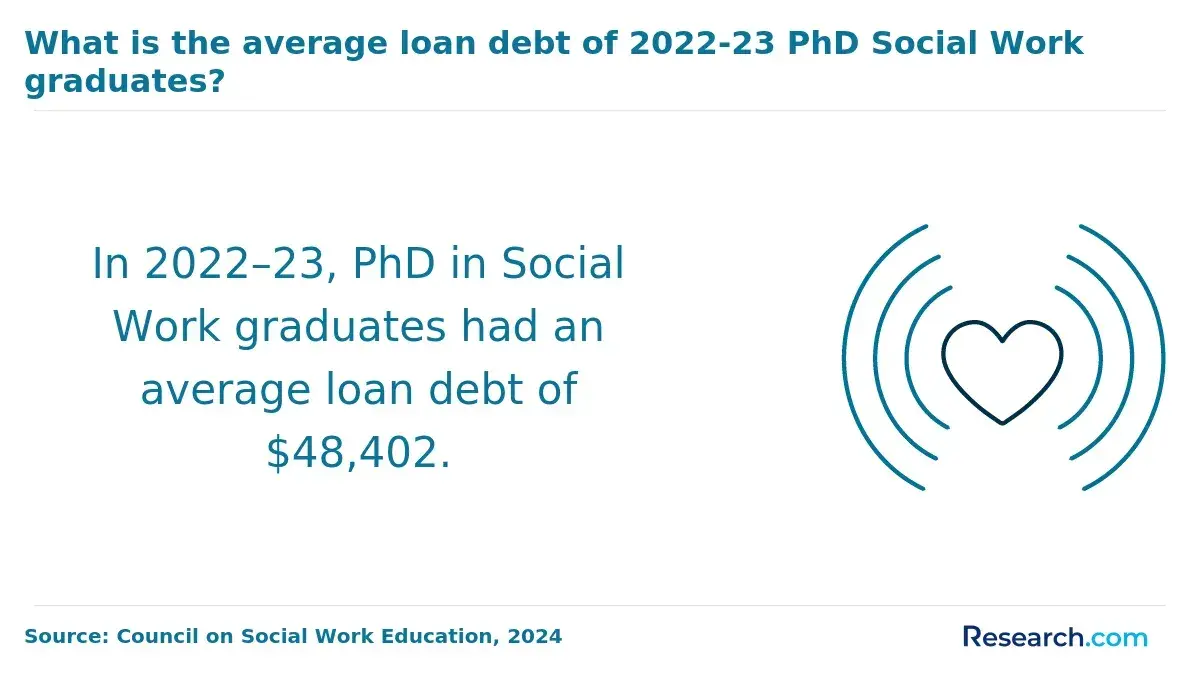
- PhD in Social Work Tuition: Public university PhD candidates may benefit from tuition waivers or reduced fees, while self-funded students can expect $12,000 to $25,000 yearly; private programs often charge $40,000 or more.
- Tuition Variation: In-state residency discounts at public universities and flat-rate tuition for some online programs offer affordable paths, balancing out higher private institution prices and added fees like books and field placements.
For those weighing options between social work and counseling, it’s helpful to explore the difference between counseling and social work to align education investments with career goals.
What degrees are required for different social work specializations in Illinois?
Social work in Illinois demands tailored educational achievements to fit the varied landscapes of practice. This diversity in requirements reflects the unique skills needed to effectively serve specific populations and fulfill licensure criteria.
- Clinical Social Work: An MSW from a CSWE-accredited program is essential, plus two years (3,000 hours) of supervised clinical experience before taking the LCSW exam.
- School Social Work: Requires an MSW with specialization in school social work, including focused graduate coursework and a field practicum. Candidates must pass the School Social Worker content exam to earn a Professional Educator License endorsed in School Social Work.
- Healthcare Social Work: Typically demands an MSW, especially for advanced roles, although some entry-level positions accept a BSW.
- Child and Family Services: Entry-level roles may require a BSW, but clinical and supervisory positions generally need an MSW for adequate preparation.
- Social Work Research and Academia: A PhD in Social Work is necessary for university-level research and teaching, focusing heavily on advanced methodologies and policy analysis.
The degree requirements for social work specializations in Illinois ensure practitioners are highly qualified for their roles. Knowing what degree is needed to become a clinical or school social worker helps align educational goals with licensure and career demands, setting a solid foundation for professional success.
What financial aid options are available to social work students in Illinois?
Pursuing a social work degree often feels like embarking on a heroic quest, but the financial challenges can weigh heavily on students determined to serve their communities. Luckily, financial aid for social work students in Illinois transforms this journey by lightening the burden of tuition costs and opening doors to advanced education. Here are key avenues where support might await:
- Federal Grants: Pell Grants and FSEOG provide essential tuition help to undergraduates demonstrating financial need, offering non-repayable aid that eases early education expenses.
- Illinois State Scholarships and Grants: Programs like the Monetary Award Program (MAP) Grant and Illinois Commitment assist in-state students from qualifying families, covering tuition at public universities to keep education affordable.
- School-Specific Scholarships and Assistantships: Many Illinois institutions offer dedicated scholarships targeting social work students in BSW and MSW programs, alongside assistantships that reward teaching or research contributions with stipends or tuition waivers.
- Emergency Assistance Funds: Unexpected crises can disrupt studies, but funds such as the Mildred Pratt Student Assistance Fund provide vital financial relief to keep students on course.
- Work-Study Programs: Federal Work-Study placements let students earn income while gaining hands-on experience at social service agencies, perfectly blending financial support with professional growth.
- Student Loans and Loan Repayment Programs: For remaining costs, Federal Direct Loans and Graduate PLUS Loans serve as options, while Public Service Loan Forgiveness and Illinois’ targeted repayment programs offer relief for those serving in public schools or municipal roles.
- Association and National Funding: Support from bodies like the NASW Illinois Chapter and the National Health Service Corps offers scholarships and up to $50,000 in loan repayment for commitment to underserved communities.
- External Scholarships: Numerous nonprofit organizations and social work associations provide scholarships rewarding academic merit, leadership, and dedication to vulnerable populations.
For students eyeing an expedited path, an accelerated MSW program may present an intriguing blend of speed and financial aid opportunities tailored to social work’s evolving demands.
What are the licensure and continuing education requirements for social workers in Illinois?
Illinois requires social workers to obtain licensure through a structured process that includes passing a standardized exam and completing approved supervised clinical hours. Licensed professionals must also fulfill periodic continuing education requirements to stay current with evolving practice standards and state regulations. Regular updates on ethical guidelines, legislative changes, and professional developments are essential for maintaining licensure and ensuring optimal client care. For a detailed overview of the licensure process and additional guidance, visit how to become a social worker in Illinois.
What are the alternative pathways to become a social worker in Illinois?
If your background is in psychology, sociology, or a related field, you don’t need to start fresh to become a social worker in Illinois. The pathways here are designed to honor your previous experience and help you move forward efficiently into the social work profession.
- Traditional MSW Track for Non-BSW Holders: Complete a typical two-year Master of Social Work program, covering foundational coursework and fieldwork to prepare for licensure.
- Advanced Standing MSW Programs: For those with a Bachelor of Social Work (BSW), finish your MSW in as little as one year thanks to credit transfer and accelerated study.
- Degrees in Related Fields: Use psychology, sociology, education, or human services degrees as strong bases for MSW admission, recognized by many programs.
- Post-Bachelor’s Bridge Programs: Enroll in certificate programs that provide prerequisite knowledge and field experience to transition smoothly into MSW studies.
- Alternative Licensure Routes: Illinois offers special pathways like extra supervised hours instead of passing the clinical exam, opening doors for diverse candidates.
When I spoke with a social worker who graduated from a local Illinois school after shifting from a psychology career, he reflected on the journey’s mix of excitement and uncertainty. “I was worried my previous degree wouldn’t count,” he admitted, “but the bridge program helped me build confidence and connect theory to real-life social work.”
Navigating these alternative routes wasn’t always smooth—balancing part-time study with work tested his endurance—but the support from faculty and peers made the path feel achievable. His experience underscored how Illinois’s flexible options truly embrace varied backgrounds, turning passion into professional impact.
Are online social work degrees recognized in Illinois?
Online Bachelor's and Master of Social Work programs have surged in popularity, especially in Illinois, offering a lifeline to students balancing work, family, and distance challenges. But recognition is the secret key: without an accredited degree, sitting for licensing exams or landing jobs in hospitals, schools, and agencies can feel like chasing shadows. L
icensure and employment hinge on more than just learning online; it’s about validation. Recognition is rooted firmly in accreditation—specifically from the Council on Social Work Education—and adherence to the Illinois Department of Financial and Professional Regulation’s licensing rules.
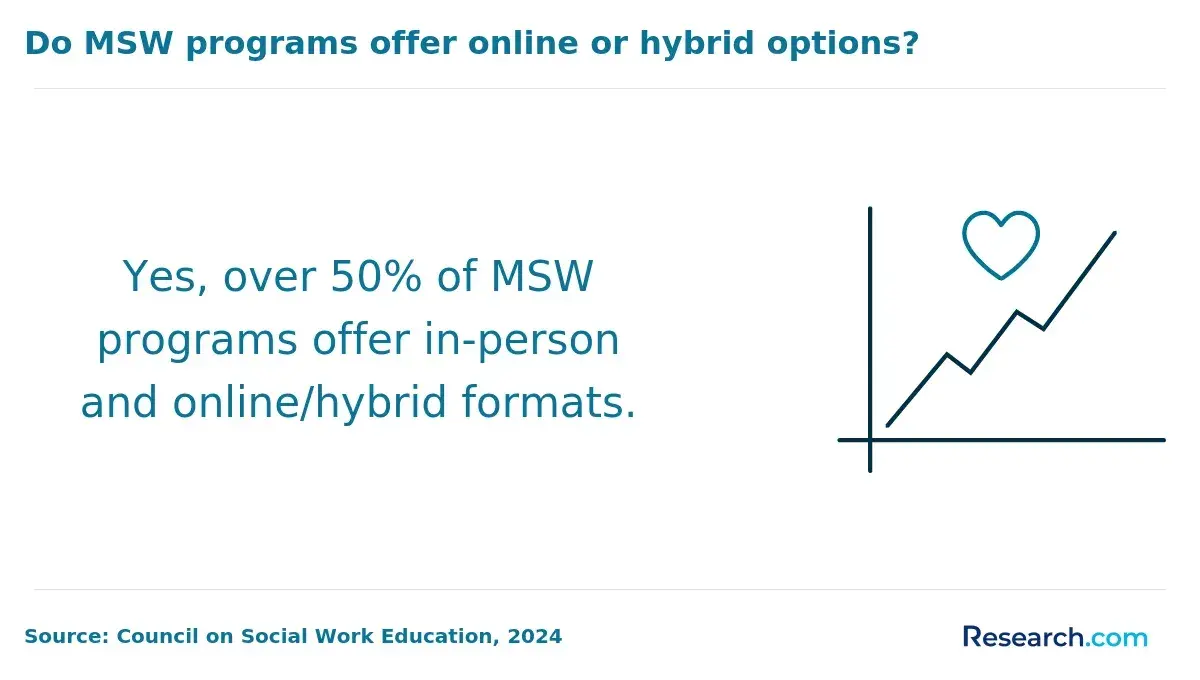
Recent data reveals a shift: over half of Master’s students nationwide engage with online courses, and 80% of employers see CSWE-accredited online degrees as equal to traditional ones. Illinois employers focus on credentials, not the classroom location, ensuring online graduates are welcomed with open arms, provided they meet these standards. Yet, online learning alone won’t cut it. Supervised, in-person fieldwork remains vital, often blending with hybrid models that fuse virtual classes and local internships.
Choosing a CSWE-accredited, Illinois-approved program is non-negotiable—without it, doors to licensure and meaningful employment might slam shut, no matter how flexible the degree’s format.
What organizations accredit social work degree programs in Illinois?
Accreditation serves as the compass that guides social work programs in Illinois toward excellence, ensuring they meet stringent standards vital for licensure eligibility and gaining employer respect. This seal of approval not only guarantees educational quality but also unlocks the door to professional advancement within the state’s social work community.
- Council on Social Work Education (CSWE): The cornerstone for social work education in the U.S., CSWE accredits bachelor’s and master’s programs nationwide. Graduating from a CSWE-accredited program is mandatory to sit for Illinois licensing exams and is highly regarded by employers seeking qualified candidates from accredited social work programs in Illinois.
- Higher Learning Commission (HLC): As Illinois’s regional accreditor, the HLC assures that institutions maintain academic integrity and quality overall. Institutional accreditation by the HLC is essential for accessing federal financial aid and validating the worth of your degree.
- Illinois Board of Higher Education (IBHE): Though not a program accreditor, the IBHE oversees colleges and universities to ensure they comply with state education regulations, providing an additional layer of oversight and quality assurance.
For anyone weighing the question is social work a good degree, verifying that your chosen program is accredited by CSWE and housed within an HLC-accredited institution is the smartest move. These credentials are gateways to licensure and set the foundation for a thriving social work career in Illinois.
What are the top institutions offering social work degree programs in Illinois?
Choosing the right institution in Illinois for your social work education isn’t just about ticking boxes; it’s a strategic move that shapes your professional future, ensuring your degree holds state license approval and opens doors to impactful careers. Plus, with the considerable financial investment involved, aligning with a school known for strong outcomes can pay dividends far beyond graduation. Illinois boasts a selection of top MSW programs in Illinois that cater to diverse learning styles and career ambitions:
- University of Chicago, Crown Family School of Social Work: Renowned nationally, it combines rigorous academics with exceptional field placements, empowering graduates to surpass average salary benchmarks through a research-driven curriculum and a powerful alumni network.
- University of Illinois Urbana-Champaign: Offers extensive specialization options, ranging from mental health to justice systems, anchoring theory in community practice, and producing a significant share of Illinois’s social work workforce annually.
- Loyola University Chicago: Stands out for its flexible program formats, including online and hybrid models, alongside a strong commitment to social justice and advanced clinical or leadership pathways.
- Aurora University, George Williams School of Social Work: Unique for its nine MSW concentrations and employment-based internship model, it integrates students’ current jobs with fieldwork to deepen professional experience and flexibility.
- University of Illinois Chicago: Focuses on urban social issues with specialties in child and family services, mental health, and community practice, supported by a reputation for advocacy and public service research.
For even broader options, consider exploring social work degree online programs that offer accredited pathways blending convenience with quality education.
What are the career prospects and earnings potential for social work graduates in Illinois?
Graduates entering the social work field in Illinois encounter diverse opportunities that extend across government, healthcare, and nonprofit sectors. Industry data highlights competitive entry-level salaries that progressively improve with advanced certifications and practical field experience. Career trajectories often lead to roles in clinical practice, program administration, or community-based initiatives, where specialized expertise directly influences earnings growth. This upward mobility is reinforced by a steadily expanding job market that values both comprehensive academic training and demonstrated community engagement. Professionals interested in broadening their scope may consider exploring the fastest way to become a counselor in Illinois to diversify their skill set and enhance their long-term financial potential.
What Do Social Workers in Illinois Say About Their Degree
Completing my social work degree at Northern Illinois University truly opened doors I hadn't imagined. The program’s strong connection to local communities helped me feel prepared and supported as I started my career in a nearby school system. There’s a real sense of purpose knowing I’m helping young students thrive in challenging environments. The stability and resources available in Illinois make it encouraging to pursue long-term goals in education-based social work. Jin
My experience at Loyola University Chicago was transformative, both professionally and personally. The curriculum emphasized cultural competence and community engagement, which deeply resonated with the diverse urban population here. Starting my career as a social worker in a local school fuels my passion every day because I see firsthand the progress and well-being we cultivate in students’ lives. Illinois offers unique challenges, but also incredible opportunities for growth and advocacy. Keisha
Pursuing a social work degree at the University of Illinois Urbana-Champaign gave me invaluable training and a strong network dedicated to social justice. I appreciated how the program addressed the specific needs of Illinois’s rural and suburban areas, which helped me adapt as I began working in a local school. This work has been deeply fulfilling, enabling me to contribute to the community’s health and resilience in meaningful ways. It’s empowering to know that my career advancement here is supported by a state with such rich resources. Rafael
Related Articles for Nearby States
- 2027 What Degree Do You Need to Be a Social Worker: Education Requirements in Indiana
- 2027 What Degree Do You Need To Be a Social Worker: Education Requirements in Wisconsin
- 2027 What Degree Do You Need To Be a Social Worker: Education Requirements in Iowa
- 2027 What Degree Do You Need to Be a Social Worker: Education Requirements in Missouri
- 2027 What Degree Do You Need to Be a Social Worker: Education Requirements in Kentucky
- 2027 What Degree Do You Need To Be a Social Worker: Education Requirements in Michigan
- 2027 What Degree Do You Need To Be a Social Worker: Education Requirements in Minnesota
- 2027 What Degree Do You Need To Be a Social Worker: Education Requirements in Ohio
- 2027 What Degree Do You Need To Be a Social Worker: Education Requirements in Tennessee
- 2027 What Degree Do You Need To Be a Social Worker: Education Requirements in Arkansas
References:
- Chicago State University. (n.d.). Degree requirements | Social Work | Chicago State University. csu.edu.
- IDFPR. (n.d.). Social work. idfpr.illinois.gov.
- Illinois Social Work EDU. (2024, June 3). How to become a government social worker in Illinois. illinoissocialworkedu.org.
- Illinois State University. (n.d.). Social Work Major. illinoisstate.edu.
- NASW-IL. (n.d.). Licensure Steps | NASW-Illinois Chapter. naswil.org.
- socialworklicensemap.com. (2024, May 20). How to become a social worker in Illinois. socialworklicensemap.com.
- The University of Chicago. (n.d.). Licensure | Crown Family School of Social Work, Policy, and Practice. crownschool.uchicago.edu.
- University of Illinois Chicago. (n.d.). MSW Program Requirements | Jane Addams College of Social Work. socialwork.uic.edu.
- University of Illinois Urbana-Champaign. (n.d.). Bachelor of Social Work – School of Social Work. socialwork.illinois.edu.
- Wintemute, D. (2025, February 6). Illinois Social Work license requirements and programs: Become a social worker in IL. Psychology.org. psychology.org.
Other Things You Should Know About What Degree You Need to Be a Social Worker in Illinois
Yes, specific courses are required. Illinois mandates courses in human behavior, social welfare policy, and field education as part of social work programs. Ensure your curriculum includes these subjects to meet state licensure requirements in 2027.
To become a licensed clinical social worker in Illinois in 2027, you must hold a Master of Social Work (MSW) from a program accredited by the Council on Social Work Education (CSWE). An MSW is essential for clinical practice, as it provides extensive training in social work theories and clinical skills.


