
2027 What Degree Do You Need To Be a Social Worker: Education Requirements in Maryland

Co-Founder and Chief Data Scientist
With over 6,000 social workers employed statewide, the demand for qualified professionals continues to grow. Earning the appropriate degree and meeting state education requirements significantly increases job prospects and career advancement opportunities. Maryland mandates at least a Bachelor of Social Work (BSW) for entry-level roles, with a Master of Social Work (MSW) preferred for clinical positions.
This article outlines these educational pathways in detail, equipping readers with clear guidance to navigate their social work career goals successfully.
Key Things to Know About Social Work Education Requirements in Maryland
- A Bachelor of Social Work (BSW) is the minimum educational requirement for entry-level positions in Maryland’s social work field, providing foundational skills in human behavior and social policy.
- For clinical licensure as a Licensed Certified Social Worker-Clinical (LCSW-C), a Master of Social Work (MSW) from an accredited program is mandatory, combined with supervised experience.
- Maryland’s social work workforce emphasizes continuing education to maintain licensure, reflecting evolving standards and regional workforce needs.
- What is the minimum degree required to become a licensed social worker in Maryland?
- What courses are covered in a social work degree program in Maryland?
- How long does it take to complete a social work degree program in Maryland?
- How much does a social work degree cost in Maryland?
- What degrees are required for different social work specializations in Maryland?
- What financial aid options are available to social work students in Maryland?
- What are the steps to obtain social work licensure in Maryland?
- How can integrated counseling training accelerate career readiness in Maryland?
- What are the alternative pathways to become a social worker in Maryland?
- Are online social work degrees recognized in Maryland?
- What organizations accredit social work degree programs in Maryland?
- What are the top institutions offering social work degree programs in Maryland?
What is the minimum degree required to become a licensed social worker in Maryland?
Choosing the right educational path is a foundational step for those aiming to meet the accredited social work degree requirements Maryland sets for licensure. Each degree represents a distinct stage of professional readiness and responsibility within the field.
- Bachelor of Social Work (BSW): The essential minimum degree to pursue the licensed bachelor social worker credential, the BSW must come from a CSWE-accredited program and is oriented toward entry-level roles.
- Master of Social Work (MSW): Required for those seeking advanced practice and clinical roles, including licenses such as LMSW and LCSW, the MSW degree enhances professional scope and requires completion at a CSWE-accredited institution.
- Doctoral Degree (DSW or PhD): While not necessary for licensure, a doctoral degree supports advancement into leadership, research, or academic positions, reflecting a deeper commitment to the profession and often correlates with higher earning potential.
The minimum degree for social worker license in Maryland directly influences career trajectory and opportunities. For those contemplating their next step in the social work career pathway, understanding these educational benchmarks clarifies what is needed to ascend professionally. These thoughtfully structured degrees uphold the standards expected in the field and ensure practitioners are well-equipped to serve diverse communities effectively.
Exploring the social work career pathway can provide further clarity on how each degree integrates into the broader professional landscape and helps tailor your educational investments to your ambitions.
What courses are covered in a social work degree program in Maryland?
Appropriate coursework in a social work degree program is essential to equip future practitioners with the diverse skills required to navigate complex social issues and comply with professional standards in Maryland. The curriculum combines theoretical foundations with practical experiences, preparing students for both licensure and effective practice. Key courses typically include the following core areas:
- Introduction to Social Work: Offers a comprehensive overview of the social work profession, including its history and core ethical values.
- Human Behavior and the Social Environment: Studies human development and social influences across different life stages.
- Social Welfare Policy and Services: Focuses on U.S. social welfare policies with emphasis on Maryland’s community-specific challenges.
- Social Work Practice Methods: Develops skills in interviewing, assessment, and intervention with various client groups.
- Social Work Research: Provides knowledge of research methods and statistics relevant to social work practice and program evaluation.
- Field Education/Practicum: Engages students in supervised, hands-on community agency experience, often exceeding 400 hours, crucial for licensure.
- Technology in Human Services: Explores the integration of technology in service delivery and case management.
- Diversity, Inequality, and Social Justice: Examines social inequities and promotes culturally competent practice in Maryland’s diverse populations.
- Professional Issues Seminar: Addresses ethical, legal, and professional challenges specific to Maryland social work practice.
Maryland does not require additional state-specific courses beyond the nationally accredited curriculum. However, institutions frequently incorporate Maryland-centric policy education and fieldwork placements to enhance practical relevance. Notably, programs often mandate a minor or secondary area of focus, expanding students’ interdisciplinary expertise. This holistic approach ensures graduates are well-prepared to meet the state’s growing demand for qualified social workers.
How long does it take to complete a social work degree program in Maryland?
The time required to complete a social work degree in Maryland varies widely based on program level, enrollment status, and individual circumstances, making it a key factor when planning your education. Knowing these timelines helps manage personal and professional commitments effectively while preparing you to enter a growing field with diverse opportunities. Below is a concise look at typical completion times and factors influencing the duration of social work degree programs in Maryland.
- Bachelor of Social Work (BSW): Typically completed in about 4 years for full-time students, including classroom and field education components integrated into the curriculum.
- Master of Social Work (MSW): Usually takes 2 years full-time, with part-time or hybrid options extending up to 4 years; online programs may take around 3 years but require in-person field practicum.
- MSW Advanced Standing: For students with a CSWE-accredited BSW, this path shortens the timeline to 12–18 months of full-time study by crediting prior coursework and experience.
- Doctoral Programs (DSW or PhD): Require 3 to 5 years, dependent on research, dissertation work, and enrollment status; these include intensive advanced studies and original research.
- Full-time vs. Part-time Enrollment: Part-time study offers flexibility but generally adds 1–2 years to degree completion compared to full-time.
- Fieldwork Requirements: All accredited programs demand substantial field education, sometimes lengthening timelines if flexible scheduling is needed.
- Advanced Standing Options: These significantly reduce MSW program time for qualifying BSW graduates, speeding entry into the workforce.
- Program Format (Online/Hybrid): Offers scheduling flexibility but requires in-person fieldwork, which can impact how quickly students progress.
A social worker from Maryland, who graduated from a local school, reflected on her experience balancing work and study. “It took me just over three years part-time to finish my MSW, mostly because I wanted to maintain my job and family life,” she shared.
“The field practicum was challenging to schedule around everything else, but it was the most rewarding part, making all the late nights worth it.” She emphasized that while planning for degree length can feel rigid, the flexibility offered by Maryland’s programs allowed her to navigate unforeseen life events without sacrificing her goal. Her journey illustrates that completion times can fluctuate greatly, yet with determination and a supportive program, reaching the finish line is entirely achievable.
How much does a social work degree cost in Maryland?
Knowing the cost of a social work degree in Maryland helps students plan their finances wisely and choose programs that fit their budgets without sacrificing quality. Tuition for BSW/MSW programs can vary significantly by institution type, residency, and delivery method, making informed decisions essential.
- BSW tuition: Public universities charge between $8,000 and $12,000 per year for in-state students, while out-of-state fees range from $20,000 to $30,000; private schools often exceed $35,000 annually.
- MSW costs: Maryland’s public MSW programs cost $10,000 to $15,000 yearly for residents and $20,000 to $35,000 for non-residents; private colleges may require $30,000 to $45,000 per year, excluding living expenses.
- DSW expenses: Tuition typically falls between $15,000 and $25,000 at public institutions for residents; private schools can charge $30,000-plus per year, not counting research fees.
- PhD programs: Public universities charge $12,000 to $20,000 annually for residents, with private schools reaching $30,000 to $45,000; some students receive stipends, helping lower net costs.
- Residency & institution type: In-state tuition offers substantial savings at public schools, while private colleges maintain higher rates regardless; online programs may offer flat tuition rates, presenting potential savings for out-of-state students.
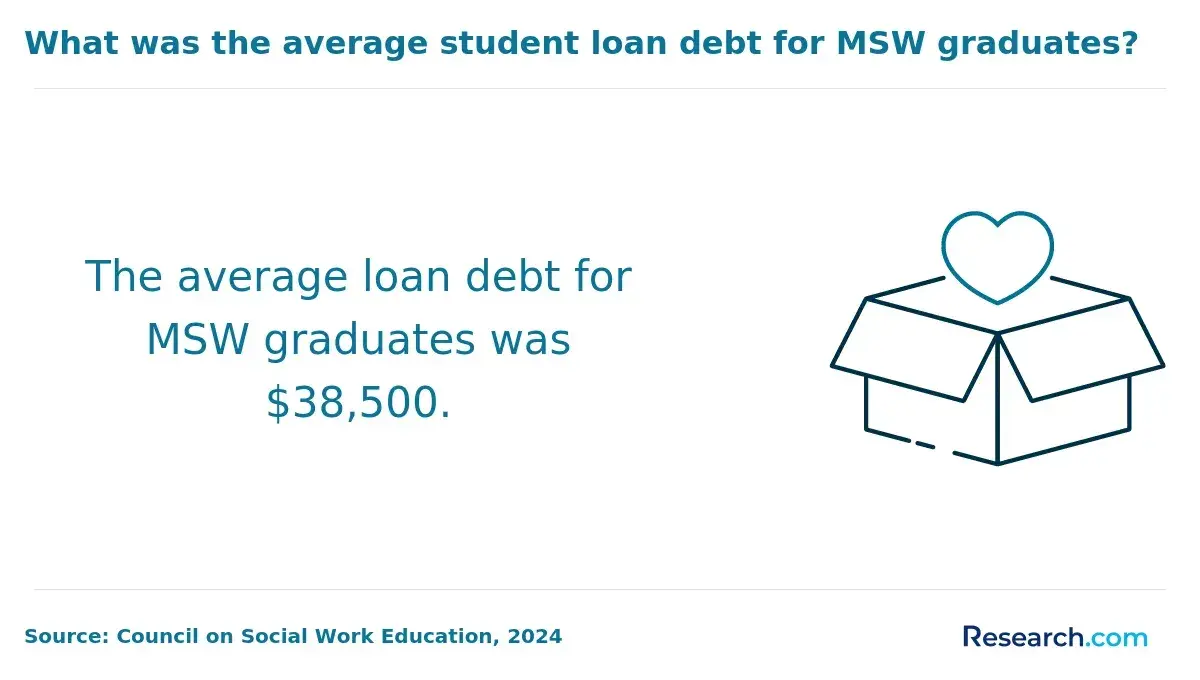
For professionals evaluating affordable MSW programs Maryland offers, balancing tuition with possible financial aid is key. Explore options thoroughly and consider how earning potential, as outlined in the MSW salary data, aligns with educational investment.
What degrees are required for different social work specializations in Maryland?
Social work in Maryland involves a variety of roles, each demanding particular educational credentials to effectively meet the needs of diverse populations. Recognizing the degree requirements for social work specializations in Maryland helps clarify the path to professional licensure and practice.
- Clinical Social Work: A Master of Social Work (MSW) from a CSWE-accredited program is required, along with 3,000 hours of supervised clinical experience over at least two years, and passing the ASWB Clinical exam to become an LCSW-C. This degree enables independent mental health diagnosis and treatment.
- School Social Work: Typically requires an MSW, often with a school social work concentration, and passing the LMSW exam. Additional financial support options, like Maryland’s tuition scholarships, may be available for those focusing on school mental health.
- Healthcare Social Work: An MSW is necessary, qualifying individuals for the LMSW or LCSW-C depending on clinical responsibilities. These professionals work in medical settings addressing health-related psychosocial needs.
- Child and Family Social Work: Entry roles usually require a Bachelor of Social Work (BSW) for LBSW licensing, while supervisor or clinical positions demand an MSW. This specialization serves vulnerable children and families within public and foster care systems.
- Generalist Social Work: A BSW allows for entry-level practice under supervision as an LBSW, while an MSW enables advancement to LMSW or LCSW-C, expanding practice scope and leadership opportunities.
What financial aid options are available to social work students in Maryland?
Financial aid plays a critical role for students pursuing social work degrees by helping to alleviate the often substantial burden of tuition and living expenses. Access to scholarships, grants, and other funding options makes education for both BSW and MSW programs more attainable, encouraging a diverse and dedicated workforce in Maryland.
- Federal Grants: Options like the Pell Grant and Supplemental Educational Opportunity Grant provide valuable funding for undergraduates based on financial need, reducing the overall cost of education without requiring repayment.
- Maryland State Scholarships and Grants: Several state-funded opportunities, including the 2+2 Transfer Scholarship and the Community College Promise Scholarship, support Maryland residents pursuing social work with awards that often consider GPA and enrollment status.
- Workforce Shortage Student Assistance Grant (WSSAG): Designed specifically for students entering high-demand fields such as social work, this grant offers financial support in exchange for a service commitment within Maryland after graduation.
- Federal Work-Study Programs: These programs provide part-time employment to students with financial need, allowing them to earn money while gaining experience relevant to social work careers.
- Student Loans and Loan Forgiveness: Federal Direct Loans and PLUS Loans are available to assist students and families, with loan forgiveness programs like Public Service Loan Forgiveness encouraging graduates to serve in public service roles.
- Professional Organization Scholarships: Social work associations, including the National Association of Social Workers Maryland Chapter, offer scholarships that reward academic excellence, leadership, and commitment to social justice.
- Institutional Aid: Many Maryland colleges, notably the University of Maryland School of Social Work, provide fellowships, scholarships, and reduced tuition options, making education more affordable for local students and those in nearby regions.
For students exploring advanced degrees, considering an online masters of social work can expand financial aid possibilities and offer flexible pathways to fulfilling careers in this crucial field.
What are the steps to obtain social work licensure in Maryland?
Applicants must complete a CSWE-accredited social work degree and fulfill the mandated supervised fieldwork hours before submitting a detailed licensure application to the Maryland Board of Social Work Examiners. Following application approval, candidates must successfully pass the state licensing exam, ensuring they meet all documented competency standards. For clinical social work roles, additional demonstration of clinical proficiency through supervised practice is required. Prospective professionals can review the full process and requirements by visiting how to become a social worker in Maryland. Continuous professional development through structured continuing education is essential for license renewal and sustained compliance with ethical practice standards.
How can integrated counseling training accelerate career readiness in Maryland?
Emerging social work programs are increasingly incorporating specialized counseling components that not only prepare candidates for licensure exams but also enhance practical service delivery in diverse community settings. By engaging in focused workshops, simulation exercises, and real-world mentorship, students build a robust skill set that complements their core social work education. This blended approach accelerates readiness for professional roles while expanding opportunities to offer a broader range of support services. For professionals weighing dual expertise, exploring the fastest way to become a counselor in Maryland can provide a strategic advantage in today's competitive job market.
What are the alternative pathways to become a social worker in Maryland?
Individuals holding degrees in psychology, sociology, or other related fields, as well as mid-career professionals, can enter social work in Maryland without starting their education from scratch. The state offers several flexible paths that value prior learning and work experience, easing the transition.
- Traditional MSW Track for Non-BSW Holders: Two-year programs requiring around 900 hours of supervised fieldwork, designed for those without a Bachelor of Social Work.
- Advanced Standing MSW Programs: Accelerated one-year options for CSWE-accredited BSW graduates, not available to those with unrelated degrees.
- Using Related Degrees as a Foundation: Maryland programs accept applicants with degrees in fields like psychology or education, strengthening their applications.
- Post-Bachelor’s Certificate or Bridge Programs: Institutions may offer tailored certificates or bridge courses to prepare career changers.
- State-Specific Alternative Certification Routes: New pathways under development include additional supervised hours and exam support for candidates facing barriers.
When I spoke with a social worker from Maryland who pursued an alternative pathway after years in education, he explained the experience as both challenging and rewarding. “I wasn’t starting over, but weaving my past into this new role took patience,” he said.
The bridge courses helped him gain social work skills quickly, yet navigating licensing requirements required persistence and careful planning. Graduating from a local program gave him essential support, and he reflected, “Knowing the system cares about diverse backgrounds made all the difference in feeling ready to serve my community.”
Are online social work degrees recognized in Maryland?
The rise of online Bachelor and Master of Social Work programs reflects the need for flexibility among students balancing work and personal commitments. In Maryland, ensuring these degrees are recognized is essential for licensure and meaningful employment. Without proper recognition, graduates risk facing barriers to certification by the Maryland Board of Social Work Examiners and may find limited job prospects in competitive markets.
Recognition hinges on program accreditation and alignment with state licensing standards. The Council on Social Work Education (CSWE) accreditation remains the definitive benchmark. Maryland accepts graduates from CSWE-accredited online programs, such as Morgan State University’s fully online MSW, for licensure.
Nationally, over 320 programs hold this accreditation. A recent survey found that 73% of social work employers view online and campus degrees equally if CSWE-accredited. Enrollment in online social work programs has doubled in five years, confirming growing institutional support and demand.
Beyond accreditation, supervised fieldwork is a critical licensure requirement that online students must fulfill locally. Hybrid programs provide additional balance with occasional in-person engagement and networking opportunities. Choosing a Maryland-approved, CSWE-accredited institution ensures compliance with state regulations, facilitates licensure, and enhances employment prospects. Thoughtful program selection remains key to merging online flexibility with professional credibility.
What organizations accredit social work degree programs in Maryland?
Accreditation plays a vital role in maintaining high standards within social work degree programs, ensuring graduates are well-prepared and eligible for licensure. It also gives employers confidence in the quality of education provided, which can influence hiring decisions and career advancement.
- Council on Social Work Education (CSWE): This organization is the national authority accrediting Bachelor of Social Work (BSW) and Master of Social Work (MSW) programs in the United States. Graduating from CSWE accredited social work programs in Maryland is essential for eligibility to earn state licensure and practice professionally.
- Middle States Commission on Higher Education (MSCHE): Serving as a regional accreditor, MSCHE evaluates the overall quality of colleges and universities in Maryland. While it does not accredit individual social work programs, its recognition legitimizes institutions to offer federal financial aid and is often required before program-specific accreditation like CSWE.
- Maryland Higher Education Commission (MHEC): This state agency authorizes institutions to operate and confirms that their degree programs meet Maryland’s education standards. Its endorsement is necessary for legal operation and access to state funding, though it does not specifically accredit social work degrees.
According to Maryland’s licensing board, only graduates from CSWE-accredited programs qualify for credentials such as Licensed Bachelor Social Worker (LBSW) and Licensed Master Social Worker (LMSW).
With growing demand for social workers, understanding these accreditation requirements is crucial for anyone pursuing this path. For those curious about the financial prospects of this career, exploring the social worker salary data can offer valuable insights.
What are the top institutions offering social work degree programs in Maryland?
Selecting the right institution in Maryland for your social work degree is vital because accreditation ensures eligibility for professional licensure and the right preparation for a competitive job market. Additionally, this decision represents a significant financial commitment that will shape your future opportunities. When exploring top social work schools in Maryland, consider these five institutions known for their accredited and respected programs:
- University of Maryland, Baltimore: Ranked #24 nationally, its School of Social Work offers both BSW and MSW degrees with extensive field placements and diverse specialization tracks in clinical, community, and management practice.
- Morgan State University: A leading HBCU, Morgan State provides CSWE-accredited programs with flexible online MSW options, emphasizing urban social work and service to diverse populations.
- Salisbury University: Known for graduates earning above-state-average starting salaries, Salisbury supports students with strong internship networks in rural and urban areas through its accredited BSW and MSW programs.
- McDaniel College: One of two private Maryland colleges offering CSWE accreditation, McDaniel delivers a personalized education with small classes and thorough internship experiences for career or graduate study preparation.
- Coppin State University: This school offers accredited degrees focused on workforce development, tailoring field placements to interests in health, aging, family, and community social services.
To navigate the options wisely, understanding how factors like accreditation, practical experience opportunities, and flexible learning affect your educational and career trajectory is key. For those seeking alternatives, how to become a social worker without qualifications offers additional pathways worth considering in Maryland’s complex social work landscape.
What Do Social Workers in Maryland Say About Their Degree
Completing my social work degree at Towson University was one of the best decisions I've made. The program's strong emphasis on community engagement helped me develop practical skills that I immediately applied when I started my career working in a local school. It’s incredibly rewarding to support children and families while fostering a healthier school environment. Maryland's diverse population and resources have given me unique insights into cultural sensitivity and resilience. I feel proud and motivated every day knowing I’m making a real difference. Karl
My experience earning a social work degree from the University of Maryland, Baltimore County, was both challenging and enriching. The curriculum was thorough, blending theory with hands-on practice that prepared me to begin my career in a local academic setting confidently. Maryland’s focus on social equity gave me a deeper appreciation for the community's needs and motivated my commitment to advocacy. The professional development opportunities in the area have been instrumental in my growth as a social worker. I find fulfillment in knowing my work contributes to positive change for young people and families. Hannah
Attending Salisbury University for my social work program offered a transformative journey that went beyond academics. The program nurtured my personal growth and taught me the value of resilience amidst Maryland’s unique socio-economic landscape. Starting work in a local school, I encountered challenges that sharpened my problem-solving skills and deepened my passion for helping students overcome barriers. The sense of community here is strong, and I feel honored to contribute to its well-being. This career path has truly expanded my horizons and professional potential. Jose
Related Articles for Nearby States
- 2027 What Degree Do You Need To Be a Social Worker: Education Requirements in Virginia
- 2027 What Degree Do You Need To Be a Social Worker: Education Requirements in West Virginia
- 2027 What Degree Do You Need To Be a Social Worker: Education Requirements in Pennsylvania
- 2027 What Degree Do You Need To Be a Social Worker: Education Requirements in Delaware
- 2027 What Degree Do You Need To Be a Social Worker: Education Requirements in New Jersey
- 2027 What Degree Do You Need To Be a Social Worker: Education Requirements in New York
- 2027 What Degree Do You Need To Be a Social Worker: Education Requirements in Ohio
- 2027 What Degree Do You Need To Be a Social Worker: Education Requirements in North Carolina
- 2027 What Degree Do You Need to Be a Social Worker: Education Requirements in Kentucky
- 2027 What Degree Do You Need To Be a Social Worker: Education Requirements in Connecticut
References:
- College Factual. (2025, August 1). 2025 Best Social Work Schools in Maryland. collegefactual.com.
- EduRank. (2025, March 2). 10 Best Social Work colleges in Maryland [2025 Rankings]. EduRank.org - Discover University Rankings by Location. edurank.org.
- Lowry, J. (2025, April 29). 3+ Maryland Master’s in Social Work MSW Programs +CSWE. MSWGuide.org | MSW Programs Guide. mswguide.org.
- Niche. (n.d.). 2026 Best Maryland Colleges with Social Work and Youth Services Degrees. niche.com.
- Psychology.org. (2025, May 28). Social work license requirements in Maryland. psychology.org.
- Social Work Degrees. (2023, October 18). Maryland BSW Programs - Social work degrees. socialworkdegrees.org.
- socialworklicensemap.com. (2024, May 20). How to become a social worker in Maryland. socialworklicensemap.com.
- UMBC Baccalaureate Social Work Program. (n.d.). School of Social Work. socialwork.umbc.edu.
- University of Maryland School of Social Work. (n.d.). Explore Social Work. ssw.umaryland.edu.
Other Things You Should Know About What Degree You Need to Be a Social Worker in Maryland
To become a social worker in Maryland by 2026, students need at least a Bachelor of Social Work (BSW) from an accredited school. For clinical roles, a Master's in Social Work (MSW) is required. Licensure necessitates passing relevant exams and completing supervised work hours.
In Maryland, social work degree programs offer specializations such as clinical social work, school social work, and child welfare. These specializations allow students to focus on a particular area of interest during their studies, which can enhance career opportunities after licensure.
Community colleges in Maryland typically do not offer bachelor's degrees specifically in social work, but many do provide associate degrees or certificates in related fields such as human services or behavioral health. These programs can serve as a valuable foundation or stepping stone toward transferring to a four-year institutions that offer a Bachelor of Social Work (BSW) degree, which is the minimum educational requirement for most social work positions.
For students aiming to become licensed social workers in Maryland, starting at a community college can be a cost-effective way to gain relevant coursework and experience before pursuing a BSW or advanced degrees at a university.


