
2027 What Degree Do You Need To Be a Social Worker: Education Requirements in West Virginia

Co-Founder and Chief Data Scientist
Many aspiring social workers in West Virginia struggle to identify the precise degree required to enter this crucial field. Currently, West Virginia faces a 15% higher demand for licensed social workers than the national average, driven by increasing social and healthcare challenges.
Pursuing a bachelor’s or master’s degree in social work aligns with state licensure mandates and offers promising career prospects. Advances in behavioral health and community support signal growth in specialized roles.
This article, crafted by career planning experts, outlines essential education pathways, licensure prerequisites, and emerging trends shaping the future of social work in West Virginia to guide informed decision-making.
Key Things to Know About Social Work Education Requirements in West Virginia
- A Bachelor’s Degree in Social Work (BSW) is the minimum requirement for entry-level social work positions in West Virginia’s growing healthcare and human services sectors.
- A Master’s Degree in Social Work (MSW) is required for clinical licensure, enabling practice in specialized areas like mental health and substance abuse treatment.
- West Virginia’s evolving workforce demands ongoing education and certification updates, reflecting trends toward interdisciplinary skills and telehealth integration.
- What is the minimum degree required to become a licensed social worker in West Virginia?
- What courses are covered in a social work degree program in West Virginia?
- How long does it take to complete a social work degree program in West Virginia?
- How much does a social work degree cost in West Virginia?
- What degrees are required for different social work specializations in West Virginia?
- What financial aid options are available to social work students in West Virginia?
- What are the alternative pathways to become a social worker in West Virginia?
- What are the career outlook and earning potentials for social workers in West Virginia?
- What Are the Career Advancement and Professional Development Opportunities for Social Workers in West Virginia?
- Are online social work degrees recognized in West Virginia?
- What organizations accredit social work degree programs in West Virginia?
- What are the top institutions offering social work degree programs in West Virginia?
What is the minimum degree required to become a licensed social worker in West Virginia?
The social work profession in West Virginia continues to evolve, with educational standards reflecting growing expectations for expertise and responsibility. Anticipating future shifts, these degrees form the foundation for advancing social work practice in the state. Here are the degrees currently required for licensure, each corresponding to different levels of practice:
- Provisional License: A bachelor’s degree in a related field such as Psychology or Sociology, allows entry into supervised social work roles, providing essential experience early in one’s career.
- Licensed Social Worker (LSW): A Bachelor of Social Work (BSW) from a CSWE-accredited program enables independent practice within defined limitations, serving as a critical step for many professionals.
- Licensed Graduate Social Worker (LGSW): A Master of Social Work (MSW) or Doctorate in Social Work from an accredited institution prepares social workers for advanced responsibilities and clinical positions.
- Licensed Certified Social Worker (LCSW): A Master’s degree paired with post-degree supervised experience supports advanced practice and supervisory roles, reflecting greater professional maturity.
- Licensed Independent Clinical Social Worker (LICSW): The highest licensure requires a Master’s or doctoral degree combined with significant clinical supervision, qualifying practitioners for independent clinical work.
Looking ahead, these requirements could adapt as the demand for specialized fields grows, such as geriatric care, accessible through pathways like how to become a geriatric social worker. Staying informed on West Virginia social work education requirements will be vital for those aiming to navigate this dynamic landscape.
What courses are covered in a social work degree program in West Virginia?
Ensuring the right coursework in a social work degree program equips students with the essential knowledge and skills to meet evolving social challenges and professional standards. This foundation supports adaptability to future developments in the field and enhances readiness for licensure and practice. Below are the core courses in West Virginia social work degree programs:
- Introduction to Social Work: Offers a broad view of the profession’s values and diverse practice settings, preparing students for varied career paths.
- Human Behavior in the Social Environment: Focuses on biopsychosocial influences across the lifespan, providing critical insight into client development.
- Social Welfare Policy and Services: Examines institutional frameworks and policies, emphasizing their impact on West Virginia and Appalachian communities.
- Group Dynamics and Interviewing Skills: Develops communication and counseling techniques vital for effective client interaction and intervention.
- Research Methods in Social Work: Introduces ethical, design, and analytic aspects of research that underpin evidence-based practice.
- Social Work Practice I, II, and III: A progressive series addressing micro to macro practice strategies, reinforcing skills across multiple intervention levels.
- Field Instruction/Internship: Requires a minimum of 400 supervised hours, providing essential hands-on experience integral for licensure.
- Capstone/Senior Seminar: Integrates theoretical and practical learning through a culminating project that synthesizes knowledge.
- State-Specific Requirements: At least 12 credits in field placement plus a capstone project are mandatory, reflecting West Virginia’s emphasis on regionally relevant practice, with no foreign language prerequisite.
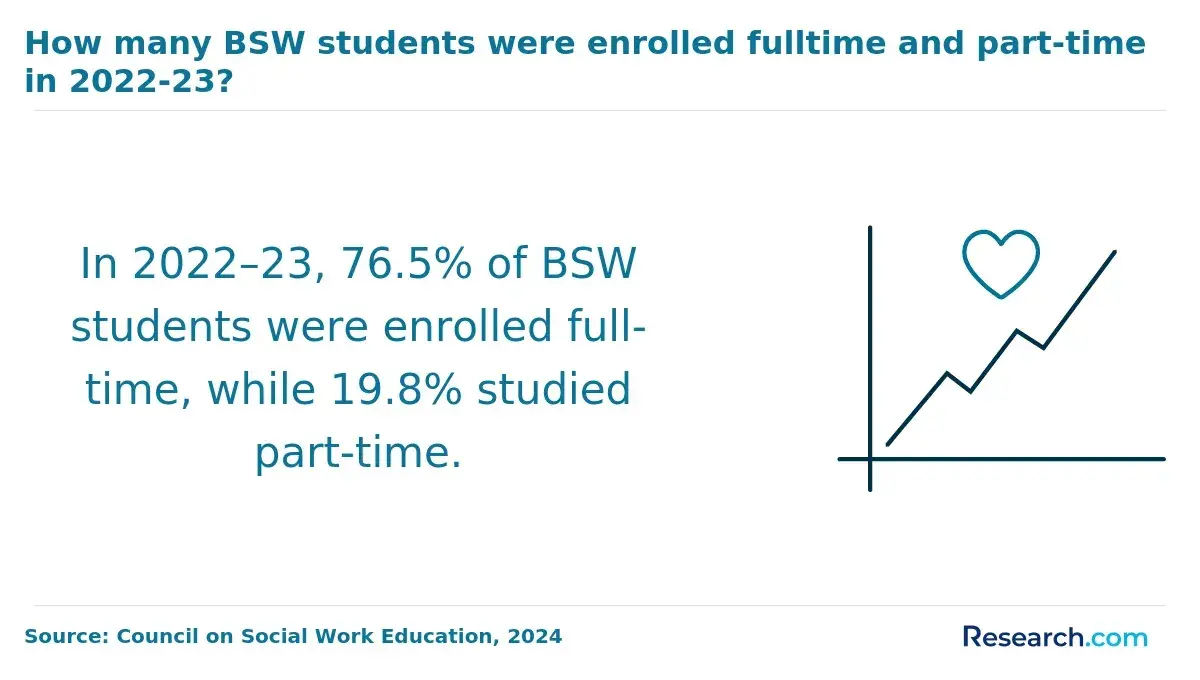
This image highlights that in 2022–23, most BSW students were enrolled full-time, while a smaller portion studied part-time. These enrollment patterns in West Virginia reflect how programs structure coursework and field experiences to accommodate both traditional students and those balancing outside commitments.
How long does it take to complete a social work degree program in West Virginia?
Timing is a critical factor for aspiring social workers in West Virginia, impacting their career launch and life balance. Degree length varies notably depending on program level, enrollment status, and unique student circumstances. Exploring typical completion times alongside emerging trends can help future professionals navigate their educational journey more strategically.
- Bachelor of Social Work (BSW): Most full-time students finish in four years, while part-time study may extend the timeline to five or six years due to course load and personal responsibilities.
- Master of Social Work (MSW): Traditional full-time study requires two years without prior BSW credentials; however, advanced standing options can reduce this to one year, and part-time programs may take three to four years.
- Doctor of Social Work (DSW): Full-time completion generally takes three to five years, with part-time students requiring up to seven years, influenced by research and fieldwork demands.
- PhD in Social Work: Programs typically span four to six years full-time, with part-time students possibly extending to six to eight years, balancing comprehensive exams and dissertations.
- Full-time vs. Part-time Enrollment: Part-time study effectively stretches program length but offers flexibility for work or family commitments, increasingly supported through online course offerings.
- Advanced Standing: BSW graduates from accredited programs may accelerate their MSW timeline by up to one year, reflecting recognition of prior learning and experience.
- Fieldwork Requirements: These are mandatory across BSW and MSW programs, often shaping scheduling and potentially delaying graduation if placements are scarce or require travel.
Speaking with a social worker from West Virginia who graduated from a local school, she shared how her path took a bit longer than anticipated. “I started full-time aiming to finish in four years, but balancing a part-time job and family meant switching to part-time study after two years,” she explained. “Field placements were rewarding but required commuting to different counties, which added time and complexity.”
Despite these hurdles, she reflected, “Taking nearly six years wasn’t easy, but it allowed me to gain diverse experiences and truly absorb the material. Looking back, that pace was right for my circumstances, and I felt well-prepared stepping into the workforce.” Her journey underscores the personalized nature of social work education timelines and the importance of flexible options for students across West Virginia.
How much does a social work degree cost in West Virginia?
Tuition and fees play a pivotal role in shaping the cost of a social work degree in West Virginia, influencing student debt and access to affordable education options. Prospective social workers should weigh these expenses carefully, especially given the diverse tuition rates across public, private, in-state, out-of-state, and online programs.
- BSW Tuition: Public universities typically charge $8,500–$10,500 annually for in-state students, while out-of-state and private college tuition often exceeds $25,000 per year.
- MSW Tuition: In-state tuition at public schools ranges from $11,000 to $13,000, with private and out-of-state costs climbing to $27,000–$35,000 yearly.
- DSW Tuition: Less common in West Virginia, DSW programs usually cost between $12,000 and $20,000 at public institutions, but private schools may charge over $40,000, often with online enrollment options offering flat-rate tuition.
- PhD Tuition: Public PhD programs cost $11,000–$15,000 for residents and up to $30,000 for non-residents annually, while private programs can reach $40,000 or more, with possible tuition waivers for teaching or research assistants.
Considering online versus on-campus options, some programs extend in-state tuition to online students regardless of residency, though these may include additional technology fees. As you explore affordable social work programs West Virginia offers, be sure to factor in extra costs like books and living expenses. For detailed guidance on the job requirements for social worker careers, visit job requirements for social worker.
What degrees are required for different social work specializations in West Virginia?
Different social work roles demand varied educational backgrounds due to the complexity and responsibilities associated with each specialization. These distinctions ensure that professionals are adequately prepared to meet the specific needs of the populations they serve in West Virginia.
- Generalist Social Work (Entry-Level/LSW): A Bachelor of Social Work (BSW) from a CSWE-accredited program is needed to qualify as a Licensed Social Worker (LSW), enabling entry-level practice in diverse social service settings.
- Clinical Social Work (LICSW): A Master of Social Work (MSW) plus at least 3,000 hours of supervised clinical experience is required to earn the Licensed Independent Clinical Social Worker credential; candidates must also pass the ASWB Clinical exam.
- School Social Work: Most positions require an MSW with Licensed Graduate Social Worker (LGSW) or higher licensure, alongside additional certification from the West Virginia Department of Education.
- Healthcare Social Work: A BSW can grant access to supportive roles, but advanced healthcare positions typically require an MSW and licensure at the LGSW or LCSW level for effective patient and family support.
- Child, Family, and School Social Work: Entry-level roles require a BSW, while advanced supervisory or therapeutic positions demand an MSW, appropriate licensure, and post-master’s supervised experience.
- Social Work Administration and Supervision: Leadership roles in social work agencies usually require an MSW with administration coursework and post-master’s experience, commonly accompanied by LCSW or LICSW credentials.
This chart highlights the primary career paths for PhD graduates in social work, with tenure-track positions in CSWE-accredited programs being the most common. It emphasizes how advanced degrees in West Virginia prepare professionals for academic, research, and leadership roles, extending opportunities beyond traditional practice.
What financial aid options are available to social work students in West Virginia?
Pursuing a degree in social work requires a significant financial investment, and securing financial aid for social work students in West Virginia can help reduce the burden of tuition and other educational expenses. Access to various aid options allows students to focus on their studies and career goals in a growing field dedicated to community support.
- Federal Grants: Pell Grants and Supplemental Educational Opportunity Grants offer need-based funding to undergraduate students, with Pell Grants reaching up to $6,895 for the 2022–2023 academic year.
- State Scholarships and Grants: Programs like the West Virginia PROMISE Scholarship and the Invests Grant provide merit-based and last-dollar assistance covering tuition at public institutions.
- WVU Social Work Scholarships: Targeted scholarships for BSW and MSW students at West Virginia University support both full-time and part-time learners, typically awarding between $1,000 and $1,500.
- Federal Work-Study Programs: Eligible students can earn income through part-time roles often related to their social work focus, reinforcing professional experience while financially supporting their education.
- Student Loans: Federal Direct Loans offer fixed interest rates and flexible borrowing options for undergraduate and graduate social work students, encouraging responsible borrowing to minimize debt.
- Professional Organization Scholarships: Associations such as the National Association of Social Workers West Virginia Chapter award scholarships and fellowships based on academic merit and commitment to local service.
Looking ahead, financial aid for social work students in West Virginia may evolve to include more hybrid and digital learning supports, reflecting changes in educational delivery and workforce needs. Students interested in understanding what a career in social work entails can explore what to do with a social work degree to gain insight into future opportunities shaped by ongoing social challenges.
By exploring these varied and growing financial aid programs, prospective social workers can better plan their educational journeys and access scholarships for BSW and MSW programs that make their professional aspirations attainable.
What are the alternative pathways to become a social worker in West Virginia?
Individuals holding degrees in psychology, sociology, or other related fields can transition into social work in West Virginia without restarting their education entirely. Several alternative pathways support this shift by combining additional coursework, supervised practice, and tailored programs that lead to licensure.
- Traditional MSW Track: Allows non-BSW graduates to pursue a two-year Master of Social Work program with foundational and advanced training.
- Advanced Standing MSW Track: Enables BSW holders to complete an MSW degree in about one year, accelerating career progression.
- Provisional Licensure: Grants supervised practice rights for non-social work degree holders, requiring core social work courses and eventual full licensure.
- Bridge or Certificate Programs: Offer post-bachelor’s coursework tailored to related fields, facilitating licensure eligibility.
- State-Specific Certification: Emphasizes flexibility to address workforce needs, especially in underserved areas.
One social worker from West Virginia, who transitioned from a psychology degree earned at a local university, shared the challenges of balancing supervised practice while completing required social work classes. "It wasn’t easy managing full-time work and coursework," he reflected, "but the provisional license gave me the hands-on experience I needed without waiting years to start." His journey underscored the importance of flexible routes in meeting both personal goals and community needs, showing how alternative pathways can make social work careers more accessible and practical.
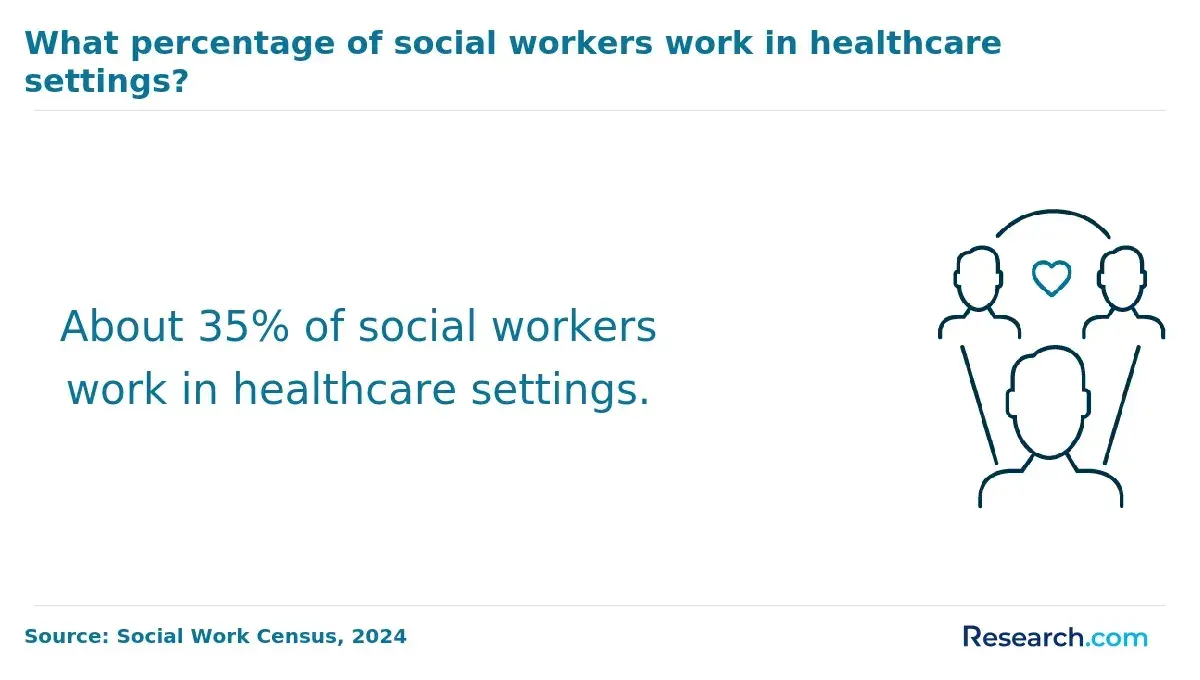
This image emphasizes that about 35% of social workers are employed in healthcare settings, underlining one of the most common career outcomes for those entering through alternative pathways in Kansas. It shows how diverse backgrounds can still lead to meaningful roles in hospitals, clinics, and healthcare organizations.
What are the career outlook and earning potentials for social workers in West Virginia?
Recent labor market data shows that social workers in West Virginia experience a steadily growing demand accompanied by competitive starting salaries that often improve with specialized certifications and advanced degrees. Employment opportunities tend to be more robust in urban areas, where diverse roles and higher compensation packages are available compared to rural settings. Factors such as continuing education, professional networking, and obtaining targeted licensure are pivotal in advancing one’s career trajectory and income levels. For an in-depth guide on the steps and requirements, see how to become a social worker in West Virginia.
What Are the Career Advancement and Professional Development Opportunities for Social Workers in West Virginia?
Social workers in West Virginia can access a diverse array of opportunities to enhance professional skills and advance their careers. Specialized certification programs, targeted continuing education courses, and involvement in local professional associations provide paths to refine expertise and secure leadership roles in the field. Peer networking events and mentorship programs support strategic career planning and help professionals stay informed about legislative updates and emerging practice trends. For additional targeted career strategies, review the fastest way to become a counselor in West Virginia.
Are online social work degrees recognized in West Virginia?
Online Bachelor of Social Work (BSW) and Master of Social Work (MSW) programs are rapidly gaining popularity in West Virginia, reflecting broader shifts toward flexible learning. For many students, recognition of these degrees is essential, as it directly impacts eligibility for licensure and employment opportunities. Without proper recognition, graduates may face hurdles in sitting for the state licensure exam and securing professional roles in social work.
This recognition hinges on program accreditation, state licensing board mandates, and employer perceptions of online credentials. The Council on Social Work Education (CSWE) accreditation remains the cornerstone, ensuring programs meet rigorous professional standards.
Recent data show that over 80% of social service employers nationwide accept CSWE-accredited online degrees as equivalent to traditional on-campus ones. Enrollment in online MSW programs has doubled since 2020, with West Virginia universities like Concord University and WVU leading this growth through CSWE-accredited offerings.
Students should also weigh the necessity of supervised fieldwork, typically completed in person, which anchors practical training in real-world settings. Hybrid programs combining online coursework with hands-on experience are increasingly popular, balancing convenience with essential practice. Selecting a CSWE-accredited institution recognized by the West Virginia licensing board remains key for future licensure and career success in social work.
This chart illustrates the different delivery methods available for BSW programs, showing that while entirely in-person formats remain most common, blended, hybrid, and fully online options are steadily growing. It highlights the flexibility students in West Virginia now have when pursuing accredited online degrees recognized for licensure.
What organizations accredit social work degree programs in West Virginia?
Accreditation plays a vital role in maintaining high standards for social work education by ensuring that degree programs deliver rigorous training and meet essential criteria for licensure eligibility and employer recognition. Graduating from a recognized accredited program confirms that students are prepared to meet the demands of the profession and adapt to evolving social work practices.
- Council on Social Work Education (CSWE): The CSWE serves as the key accrediting body for social work programs across the United States. Only graduates from CSWE accredited social work programs in West Virginia, whether Bachelor of Social Work or Master of Social Work degrees, qualify to sit for licensing exams nationally and within West Virginia.
- Regional Higher Education Accrediting Bodies: Institutions must also hold accreditation from recognized regional agencies like the Higher Learning Commission (HLC). This layer of accreditation guarantees the institution’s overall academic quality and credibility, which supports the social work degree’s value.
- West Virginia Higher Education Policy Commission (WVHEPC): Although it does not directly accredit programs, the WVHEPC authorizes institutions to operate and aligns degree offerings with state standards to uphold program integrity and legitimacy in West Virginia’s educational landscape.
Looking ahead, the landscape of social work education might increasingly integrate more innovative standards and potentially new accrediting collaborations to ensure programs remain relevant amid changing societal needs.
Prospective students exploring options may also consider pathways through cheapest online MSW programs that comply with CSWE accreditation while offering flexible learning environments. This trend could enhance access for international students and working professionals aiming to join the social work field in West Virginia.
What are the top institutions offering social work degree programs in West Virginia?
Choosing the right institution for your social work degree in West Virginia is essential, as accreditation shapes your eligibility for licensure and significantly influences your career trajectory and financial investment. As educational models evolve, prospective students should anticipate programs that balance rigorous training with flexible delivery to meet diverse professional goals.
- West Virginia University (WVU): Offers CSWE-accredited BSW and MSW degrees noted for integrated practice preparation and strong early-career salaries averaging above $44,000.
- Marshall University: Features accredited programs with a focus on contemporary social issues and community-based placements that foster regional social service impact.
- Concord University: Provides a fully online accredited BSW program tailored for working adults and rural students seeking flexibility and early field experience.
- West Virginia State University: Delivers accessible BSW education emphasizing generalist practice and active partnerships with local agencies for hands-on learning.
- Bethany College: Combines small class sizes and personalized mentorship with a focus on rural field placements and preparation for direct practice and graduate study.
Emerging trends in social work education in West Virginia suggest increased integration of online learning, specialization options, and enhanced field placement quality. Those exploring bachelors in social work online may find broad opportunities to customize their paths while maintaining accreditation standards, critical for meeting workforce demands in evolving healthcare and social service environments.
What Do Social Workers in West Virginia Say About Their Degree
- Completing my social work degree at Marshall University gave me not only the academic foundation but also the confidence to make a tangible impact in my community. Starting my career in a local school, I quickly realized how vital it is to support children through their challenges, both academic and personal. The program’s emphasis on rural populations prepared me well for the unique needs of West Virginia’s families. I feel grateful to contribute positively to the well-being of young people in my hometown and to grow professionally every day. Aia
- Finishing my studies at West Virginia University was an enriching experience because the professors truly understand the cultural and economic challenges facing our state. Working as a social worker in a local school opened my eyes to the profound impact we can have by addressing mental health and resource disparities early on. This journey has led to significant personal growth and a deeper commitment to serving West Virginia’s diverse communities. Each day, I see how my career helps shape a healthier, more resilient future for our children. Jeremy
- The social work program at Fairmont State University offered unique opportunities to engage with Appalachian communities directly, which made my education feel incredibly relevant and purposeful. Transitioning into a local academic institution was smooth, given the strong focus on practical skills and understanding regional resources. It’s rewarding to face the challenges that come with working in this environment while advancing my professional development and seeing real changes in students’ lives. I’m proud to be part of a profession that fosters growth and hope in West Virginia’s youth. Loise
Related Articles for Nearby States
- 2027 What Degree Do You Need To Be a Social Worker: Education Requirements in Virginia
- 2027 What Degree Do You Need To Be a Social Worker: Education Requirements in Ohio
- 2027 What Degree Do You Need to Be a Social Worker: Education Requirements in Kentucky
- 2027 What Degree Do You Need To Be a Social Worker: Education Requirements in Pennsylvania
- 2027 What Degree Do You Need To Be a Social Worker: Education Requirements in Maryland
- 2027 What Degree Do You Need To Be a Social Worker: Education Requirements in North Carolina
- 2027 What Degree Do You Need To Be a Social Worker: Education Requirements in Tennessee
- 2027 What Degree Do You Need to Be a Social Worker: Education Requirements in Indiana
- 2027 What Degree Do You Need To Be a Social Worker: Education Requirements in South Carolina
- 2027 What Degree Do You Need to Be a Social Worker: Education Requirements in Georgia
References:
- College Factual. Best Value Colleges for Social Work (Income $75-$110k) in West Virginia.
- Concord University. Online Bachelor of Social Work Program.
- Course Advisor. 2023 Best Value Social Work Schools in West Virginia.
- Marshall University. Social Work, BSW Degree Program.
- Social Work Degree Center. 3 Top MSW Programs in West Virginia.
- West Virginia Board of Social Work. Regular License Level A - LSW.
- West Virginia State University, College of Professional Studies. Bachelor of Science in Social Work (BSW).
- West Virginia University. Online Bachelor of Social Work (BSW).
- West Virginia University. Pre-Social Work (Potomac State College).
- West Virginia University. Social Work BSW Major.
Other Things You Need to Know About Education Requirements in West Virginia
In West Virginia, becoming a licensed social worker generally requires obtaining a degree in social work, such as a Bachelor of Social Work (BSW) or Master of Social Work (MSW). However, individuals without a social work degree may still enter the field in certain roles that do not require licensure, like social service aides or case management assistants.
To become a Licensed Bachelor Social Worker (LBSW) or Licensed Master Social Worker (LMSW) in the state, a degree from an accredited social work program is mandatory, as is passing the relevant licensing exams. Therefore, while entry-level or support positions might be accessible without a social work degree, professional social work practice in West Virginia requires the appropriate education and licensure credentials.
In 2027, to practice clinical social work in West Virginia, you need at least a Master's degree in Social Work (MSW) from an accredited program. A doctoral degree is not required for clinical practice, but an MSW is essential for obtaining the necessary licensure.
In 2027, to obtain social work licensure in West Virginia, you must pass the appropriate level of the Association of Social Work Boards (ASWB) exam. The specific exam level corresponds to the degree you hold and the type of license you seek, such as BSW for a bachelor's license or MSW for an advanced license.


![2027 Best Advanced Standing Online MSW Programs [CSWE Accredited] thumbnail](https://research.com/resized/uploads/Online_Advanced_Standing_MSW_301dbd5368.jpg?format=thumbnail)


