2027 How to Compare Online MBA Tuition Beyond Sticker Price

Co-Founder and Chief Data Scientist
Choosing an online MBA program often begins with comparing tuition fees, but sticker price alone can be misleading. Programs may vary widely in hidden costs such as technology fees, materials, residency requirements, or financial aid options. Prospective students risk overlooking factors that impact overall expenses and value. Without a nuanced approach, individuals might make decisions that strain budgets or limit future flexibility. This article explores how to evaluate online MBA tuition beyond the nominal figure, focusing on comprehensive cost analysis to help readers make informed, cost-effective educational investments aligned with their career goals.
Key Things You Should Know
- Comparing online MBA tuition requires analyzing total costs, including fees, technology charges, and living expenses, which can add 15-25% beyond the sticker price.
- Financial aid and scholarships often cover 20-40% of expenses, significantly reducing net costs despite high initial tuition rates.
- Return on investment varies widely; graduates from top-ranked programs typically see salary increases of 50% within three years post-graduation, impacting cost-benefit evaluations.
What Is Sticker Price in Online MBA Tuition?
Sticker price in online MBA tuition is the published cost set by schools before any financial aid, scholarships, or other expenses are included. This initial figure can be misleading, as it doesn't reflect the full amount a student will pay. For example, a program might list a sticker price of $30,000 annually, but after scholarships and employer tuition reimbursement, the actual cost may be lower or higher depending on mandatory fees.
There are often hidden costs beyond online MBA sticker price, such as technology fees, textbooks, software licenses, and sometimes required travel for residencies. These additional expenses can add several thousand dollars to the total cost. According to Best Colleges, part-time online MBA programs average about $16,000 per year, while full-time programs cost around $26,110 annually, which shows a clear difference between sticker price and the true cost of attendance.
Students should request a detailed breakdown of all fees beyond tuition to avoid unexpected charges. If tuition is charged per credit or per term also impacts budgeting. For those comparing affordability, it's helpful to look at net prices considering financial aid and extra fees rather than just sticker price.
For those exploring options, reviewing affordable MBA programs can be a valuable step toward finding a clear financial picture before enrollment.
How Do Online MBA Tuition Discounts Really Work?
Online MBA tuition discounts are strategic reductions from the published price to make programs more affordable and competitive. These discounts vary widely by institution and often depend on factors like enrollment timing, program length, and student qualifications. Early application incentives can reduce tuition by 5% to 15%, while merit-based scholarships for high-achieving professionals or those with significant work experience may offer 10% to 30% off.
Many schools also provide need-based aid or employer tuition reimbursement partnerships that function as discounts but require financial need proof or third-party sponsorship. Discounts may differ depending on program format-accelerated online MBA programs sometimes have fewer discounts but save costs through shorter completion times, whereas standard-length programs might have more frequent offers.
It's important to consider total program cost after discounts rather than just the annual rate. Online MBA tuition ranges broadly, from about $9,700 to over $125,500 depending on school, length, and concentration. The National Center for Education Statistics reports an average annual tuition of $10,964 for online MBA programs, highlighting price variation and the impact of effective tuition discounts.
Students exploring regional online MBA scholarship opportunities should evaluate discounts alongside:
- Program length-longer programs may have discounts that don't offset higher cumulative costs
- Format and delivery-some discounts only apply to synchronous or asynchronous models
- Additional fees outside base tuition that may not be discounted
- Conditions like maintaining minimum GPA or credit load to retain discounts
Requesting detailed financial aid packages is essential to understand how discounts stack or exclude each other. This helps avoid overestimating savings and enables realistic budgeting for an online MBA education. For those interested in affordability, exploring online AACSB accredited schools can provide targeted options aligned with financial goals.
What Financial Aid Options Lower Online MBA Costs?
Financial aid programs play a crucial role in lowering online MBA costs beyond the listed tuition. Scholarships and grants for online MBA students are commonly offered based on merit, need, leadership, or industry potential. Many employers support employees through tuition reimbursement plans that cover partial or full costs, particularly for roles related to business disciplines.
Federal and private student loans provide flexible repayment options during and after coursework. Federal loans often include benefits such as income-driven repayment plans and deferment, helping working professionals manage education expenses alongside job and family obligations.
Grants for graduate business studies are less frequent but should be explored through schools, professional organizations, and state agencies. Schools sometimes offer fee waivers or early registration discounts, and exclusive partnerships may reduce tuition rates. For an overview of highly cost-effective alternatives, see executive MBA cheapest.
Applicants must account for hidden costs like books, technology, software licenses, and exam fees, which are often excluded from tuition. For example, tuition varies widely-University of North Carolina at Chapel Hill charges up to $125,589, while Arkansas Tech University's programs start at $9,718, a difference exceeding 1,200% according to College Raptor estimates.
Tax credits such as the Lifetime Learning Credit also help mitigate expenses. Consulting an institution's financial aid office enhances access to lesser-known funding channels, improving the financial feasibility of online mba financial aid programs.
Which Accreditations Matter Most for Online MBAs?
Regional accreditation remains a vital benchmark for identifying quality accredited online MBA programs. In the U.S., institutions must hold accreditation from one of the six regional accreditors recognized by the U.S. Department of Education. This ensures rigorous academic and operational standards are met. Additionally, program-specific accreditation from respected bodies like the Association to Advance Collegiate Schools of Business (AACSB), Accreditation Council for Business Schools and Programs (ACBSP), or International Accreditation Council for Business Education (IACBE) can help you assess program quality.
AACSB accreditation, which fewer than 5% of global business schools hold, indicates a challenging curriculum and highly qualified faculty. Such programs often offer superior education quality, enhanced networking opportunities, and stronger employer recognition. While ACBSP and IACBE accreditations focus on teaching excellence and student outcomes, they may carry less prestige in competitive industries.
Considering online MBA program accreditation importance alongside tuition costs can guide your choice. For example, the University of Kansas Business School's online MBA costs $37,590 and ranks among the top 10 nationwide, according to GMAC's 2025 US News data. This shows that higher price alone does not guarantee quality, but reputable accreditation combined with solid rankings does.
Students seeking regional accreditation for accredited online mba degrees should verify the accreditor's recognition and how employers in their target industry view the credential. Programs lacking recognized accreditation risk limited credit transfer options, fewer financial aid opportunities, and reduced employer trust.
For those exploring affordable options, consider programs like those listed in the online MBA no GMAT category, which balance cost and academic standards effectively.
How Do Online vs Campus MBA Programs Compare Cost-Wise?
Online MBA programs typically offer significant cost savings compared to traditional campus-based options. The National Center for Education Statistics reports that average tuition and fees for in-person MBA programs were $17,058 annually, whereas online programs averaged $10,964, reflecting about a 36% reduction in direct costs.
Beyond tuition, campus students often face additional expenses such as commuting, housing, and meals, which can add thousands more each year. Online students generally avoid these costs, enhancing their overall financial advantage. However, campus programs may charge facility and activity fees not found in online formats, so total expenses vary depending on individual circumstances.
Employer tuition reimbursement is a common benefit that can ease financial burdens in both learning formats. Online MBA programs especially suit working professionals because they allow maintaining full-time employment while studying, preserving income and benefits.
Financial aid availability varies widely by institution. Many students should investigate:
- Employer tuition reimbursement policies
- Scholarships or grants designed for online MBA students
- Federal and private student loan conditions
Considering these factors holistically helps prospective students make informed decisions. The combined savings from tuition and ancillary costs enhance online mba programs' appeal, but verifying all fees before enrollment is essential for accurate budgeting.
What Admission Requirements Apply to Online MBAs?
Admission requirements for an online MBA differ widely but typically mandate a bachelor's degree from an accredited university and a minimum GPA, commonly around 3.0. Applicants must submit academic transcripts and often demonstrate professional work experience, usually between two to five years, emphasizing mid-career readiness.
Many programs require standardized tests like the GMAT or GRE, although waivers are increasingly common-especially for candidates with prior graduate degrees, high undergraduate GPAs, or five-plus years of relevant managerial experience.
Additional application materials can include essays highlighting career goals, one to three letters of recommendation focusing on leadership and work ethic, and sometimes interviews via phone or video to assess communication and fit.
International students must provide English proficiency scores such as TOEFL or IELTS. Some states request background checks or proof of residency.
Tuition costs vary by region, reflecting admission factors and competitiveness. For example, out-of-state students in some affordable programs pay an average of $322 per credit hour, according to U.S. News & World Report. Planning applications carefully can help applicants align their qualifications with program demands and budget expectations.
How Long Do Online MBA Programs Typically Take?
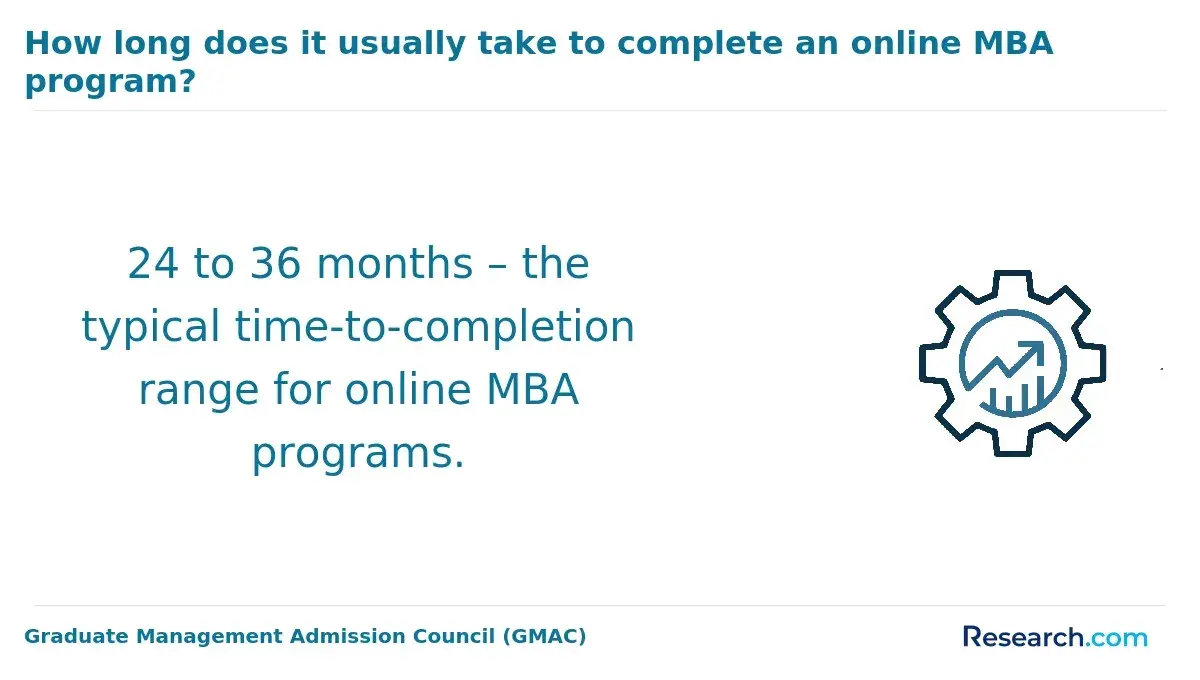
Online MBA programs generally take between 18 and 36 months to finish, depending on course load, format, and scheduling flexibility. Full-time students often complete their studies within 18 to 24 months, while part-time students may extend up to 36 months or longer, balancing professional and personal commitments.
There are two main formats: asynchronous and synchronous. Asynchronous programs allow students to watch pre-recorded lectures at their own pace, offering flexibility and often lower tuition due to reduced faculty and administrative costs, as noted by Online MBA.com. This structure enables students to accelerate or slow their progress according to their needs.
Synchronous programs require attendance at live classes at scheduled times. This model encourages real-time interaction and networking but can lengthen completion times if scheduling conflicts arise.
Several factors influence how long a program lasts, including:
- Credit hour requirements, usually between 30 and 60 credits.
- Policies on transfer credits that may shorten study time.
- Accelerated tracks that condense coursework.
- Employer-backed flexible scheduling options.
Choosing a program duration involves weighing trade-offs between immediate cost and long-term benefits. Shorter programs may cost more upfront but provide quicker credential completion, while longer programs offer financial relief by spreading tuition payments but delay potential career advancements.
What Is the Actual ROI of an Online MBA?
The true return on investment (ROI) of an online MBA depends on more than just tuition fees; it requires evaluating career outcomes, salary growth, and debt impact. Tuition alone does not determine ROI-students must analyze net financial gains after graduation. For example, GMAC (2025) data reveals a wide tuition range among top-ranked online MBA programs, with Warrington charging $58,000 compared to Tepper's $147,648. This nearly $90,000 difference highlights the need to assess corresponding salary increases to justify costs.
Important factors to consider include:
- Post-MBA salary increase: Compare pre- and post-degree salaries for net gain.
- Time to recoup costs: Determine how quickly tuition can be paid off from salary increases.
- Debt and financing expenses: Account for interest on student loans, which lowers net benefit.
- Career progression and networking: Consider promotions and new opportunities via alumni connections.
- Program reputation and employer recognition: Higher tuition programs may offer stronger recruitment pipelines.
Warrington's online MBA may offer comparable career outcomes at a lower cost, while Tepper's higher tuition might provide greater salary boosts in technology or consulting fields, reducing payback time. Prospective students should request detailed salary reports and employment statistics from schools and weigh these data against personal career goals to determine actual ROI. Relying solely on sticker price remains misleading.
Which Online MBA Programs Offer Best Career Outcomes?
Top online MBA programs for career advancement combine strong employer networks, accredited curricula, and demonstrated alumni success. Schools such as the University of North Carolina's Kenan-Flagler, Indiana University's Kelley School, and Carnegie Mellon's Tepper School report high post-graduation salary increases and promotion rates. These programs offer active career services and extensive alumni connections that open doors in finance, consulting, technology, and entrepreneurship.
Programs integrating experiential learning, mentorship, and real-world projects show significantly better career outcomes. For example, Tepper emphasizes leadership labs and industry collaborations that boost job readiness. Kelley's online MBA offers dedicated career advisory teams to support interview preparation and employer introductions.
Hybrid MBA models, blending online coursework with in-person residencies, often provide superior career services and networking but usually cost more-sometimes over 100% higher than fully online options, according to Online MBA.com. Prospective students should balance this premium against benefits like enhanced recruiter engagement and stronger peer connections.
Essential factors for grads to evaluate include:
- Alumni salary growth and employment within six months of graduation.
- Access to live career coaching and internships.
- Employer recruitment partnerships tied to the program.
Top career outcomes come from programs that merge academic rigor with strategic professional support rather than focusing solely on cost.
How to Choose Reputable Online MBA Providers?
Choosing reputable online MBA providers involves verifying accreditation from recognized agencies such as AACSB, ACBSP, or EQUIS, which ensures academic quality and employer recognition. Graduation rates and alumni outcomes are key indicators, with starting salaries for graduates typically beginning around $77,000, reflecting the strength of network connections and career services.
Faculty credentials also matter; programs led by professors with doctoral degrees and business experience offer more practical learning. Look for schools that provide live sessions, mentorship, and industry access to build useful skills beyond theory.
Flexibility is essential for working professionals and international students. Options like asynchronous courses and hybrid models help balance study with other commitments without losing rigor. Practical career support, including dedicated counseling, internship placements, and active alumni networks, can significantly boost job prospects.
Transparency in tuition and additional fees helps avoid unexpected costs, while student feedback on platforms and administration reveals the program's commitment to success.
- Accreditation ensures curriculum quality and degree respect
- Starting salaries around $77,000 highlight program value
- Experienced faculty enhance learning and networking
- Flexible formats accommodate diverse schedules
- Robust career services foster professional growth
Other Things You Should Know About MBA
Some online MBA programs provide credit for relevant professional experience or prior coursework through competency assessments or transfer credits. This can shorten the duration of the program and reduce tuition costs. However, eligibility and the amount of credit awarded vary widely by institution and require careful verification during the application process.
While traditional MBA programs often include internships, online MBAs usually incorporate practical experience through case studies, consulting projects, or virtual simulations. Some programs also offer optional or hybrid opportunities for internships, depending on local availability and student preferences. These practical elements aim to enhance real-world skills despite the remote format.
Many online MBA programs provide access to career counseling, job placement resources, and alumni networks similar to on-campus options. Virtual networking events, mentoring programs, and employer connections are commonly included to help students build professional relationships. The effectiveness of these services can depend on the school's commitment and platform sophistication.
References
- Online MBA Tuition Fees Comparison | CU Online https://www.onlinecu.in/blog/cu/online-mba-tuition-fee-comparison.php
- Online MBA Programs Admission Requirements You Need to Know - consulting https://consulting.mampirbandung.com/online-mba-programs-admission-requirements-you-need-to-know/
- Online MBA vs Campus MBA Program - Which one to choose https://rcu.education/online-mba-vs-campus-mba-programs/
- MBA Accreditation: AACSB's Impact on Business Programs https://www.onlinemba.com/rankings/best-online-mba/aacsb-accredited/
- Top Online MBAs for Accreditations | FIND MBA Online https://findmbaonline.com/lists/top-10-online-mbas-with-the-best-accreditations
- Scholarships Options for Online MBA - MBA & Beyond https://www.mbaandbeyond.com/blog/scholarship-options-for-online-mba-2
- How to Choose The Right MBA Program Length https://www.princetonreview.com/business-school-advice/mba-program-length
- How Much Does an Online MBA Cost? | University of Bridgeport https://www.bridgeport.edu/news/cost-of-online-mba/