2027 Online MBA vs PMP Certification: Which Is Better for Managers?

Co-Founder and Chief Data Scientist
Managers seeking career advancement often face a tough choice between pursuing an online MBA or earning a PMP certification. Both options promise improved leadership skills and marketability, yet the investment of time, money, and effort varies significantly. Choosing the wrong path can delay professional growth or limit future opportunities.
This dilemma is particularly acute for professionals transitioning from unrelated fields who need flexible yet credible credentials to pivot successfully. This article analyzes the strengths and limitations of both credentials, helping readers decide which option aligns best with their career goals and industry demands.
Key Things You Should Know
- In 2026, an online MBA typically offers broader leadership and strategic skills, while PMP certification focuses specifically on project management methodologies and practices.
- Salary data from 2025 indicates MBA graduates earn an average of 20-30% more in managerial roles compared to PMP-certified professionals, but PMP holders often advance faster in project-focused careers.
- Completion time differs: online MBAs generally require 1-2 years, whereas PMP certification can be attained within 3-6 months, making PMP a quicker route to career advancement.
What is the difference between an Online MBA and PMP Certification?
The primary difference between an online MBA and a PMP certification lies in their scope, focus, and career goals. An online MBA covers broad business areas such as finance, marketing, leadership, strategy, and operations, aiming to develop managerial skills for executive roles across industries. PMP certification is a focused credential validating project management expertise, emphasizing project planning, execution, risk management, and team leadership specific to project delivery.
Salary potential reflects these paths. According to the 2026 PMI Salary Survey and David McLachlan's analysis, PMP-certified professionals average $130,000 annually in the U.S., slightly higher than the $128,129 average for MBA graduates. However, graduates of top-tier MBA programs earn between $205,000 and $231,000, illustrating the higher long-term earning potential of an MBA in senior leadership.
For professionals focused on managing projects and teams within a specific industry, PMP certification offers immediate practical value and recognition. Those seeking broader leadership or executive management may prefer an online MBA, which delivers wider business knowledge and strategic skills. Considering the difference between an MBA degree and a PMP certification helps identify the best fit for career goals.
Factors to consider include study duration and cost: an MBA requires about two years and a larger financial investment, but opens diverse career paths and growth opportunities. PMP certification demands less time and expense, yet specializes in advancing project management roles.
For those exploring options, researching affordable online MBA programs can provide cost-effective alternatives and flexibility in pursuing a business education. You can explore more about online MBA programs as a pathway to broader career prospects.
Which is better for managers: Online MBA or PMP Certification?
Managers weighing the benefits of online MBA versus PMP certification for managers should consider their distinct career impacts, costs, and timelines. PMP certification delivers targeted project management expertise at a cost between $405 and $655, offering practical skills for managing projects and teams. This credential boosts credibility in project-focused roles and often improves salary prospects in mid-level management positions across IT, construction, and healthcare sectors.
Conversely, an online MBA provides a broad business education covering leadership, finance, marketing, and strategy, with programs costing up to $203,000. This larger investment supports career growth with online MBA or PMP certification by preparing managers for executive roles, entrepreneurship, and strategic decision-making.
- PMP certification typically takes months, while online MBA programs often require 1-3 years.
- Online MBAs equip professionals with versatile skills applicable to general management and cross-functional leadership.
- Professionals seeking executive advancement or career shifts benefit more from the wider scope of an MBA.
- Industries centered on project management may prioritize the PMP certification's focused advantages.
Balancing budget, time, and desired competencies is essential. Those interested in affordable credentials targeting project management should consider PMP, whereas broader leadership ambitions might align better with the depth of an online MBA. For those exploring affordable options, researching options at online AACSB-accredited schools can provide valuable insights to inform your decision.
What are the career outcomes of Online MBA vs PMP?
Career outcomes of online MBA versus PMP certification show notable differences in timeline, salary impact, and professional scope. PMP certification delivers a quick return on investment by increasing salaries by about 15%. For example, on a $95,000 base salary, PMP holders can expect roughly $14,000 more annually, making it possible to recoup certification costs within months. This rapid financial benefit appeals to mid-level managers seeking fast salary growth and enhanced project management credentials.
In contrast, an online MBA requires a higher upfront cost, often exceeding $100,000, with typical ROI realized after more than four years. However, the MBA supports broader managerial career advancement with online MBA and PMP paths, unlocking senior leadership and executive roles across industries. Graduates gain flexible career mobility, enabling transitions into areas like finance, consulting, or marketing, opportunities that a PMP's specialized focus may not offer.
Managers focused on immediate salary increases and project management will likely benefit more from PMP certification. By comparison, those targeting long-term leadership and higher hierarchical roles must consider the time and expense of an MBA. The value of an MBA grows with experience, industry, and network, unlike PMP, which is more narrowly focused but yields faster rewards.
For those exploring affordable education alternatives, exploring cheap executive MBA programs can make this long-term investment more accessible and strategic.
What are the admission requirements for Online MBA programs?
Admission requirements for online MBA programs vary widely but generally include a bachelor's degree from an accredited university, a minimum GPA of around 3.0, and professional work experience, typically two to five years. Many programs require GMAT or GRE scores; however, some waive these tests based on relevant work experience or academic achievements.
Candidates must submit letters of recommendation, a statement of purpose, and a current resume to highlight leadership potential and career goals. These elements form essential parts of the online MBA admission criteria for managers. Additional prerequisites may involve foundational business courses like accounting or statistics, while some schools offer basic courses for those with diverse academic backgrounds.
International applicants usually need TOEFL or IELTS scores to verify English proficiency. Prospective students should also note the difference in time commitment compared to professional certifications. For example, PMP certification requires 35 hours of project management education and three years' documented experience, whereas typical online MBA programs demand about 600 classroom hours over two years.
Understanding the minimum requirements for online MBA enrollment helps applicants prepare efficiently. Early preparation for tests, assembling professional documentation, and verifying eligibility for test waivers are vital steps for a smooth application process. For those seeking options with reduced testing barriers, exploring the cheapest online MBA no GMAT can be advantageous.
What are the eligibility requirements for PMP Certification?
The Project Management Institute (PMI) sets clear eligibility criteria for PMP certification focused on education and project leadership experience. Candidates with a four-year degree must have at least 36 months of leading projects plus 35 hours of project management education or a CAPM® certification. Those without a four-year degree need 60 months of project leadership experience alongside the same 35 hours of formal training.
This experience must demonstrate the ability to direct and manage real project tasks within the last eight years, ensuring current competency. The required 35 hours of education can be completed through courses, workshops, or online programs covering key project management processes.
Applicants also agree to abide by PMI's Code of Ethics and Professional Conduct. After approval, they must pass a rigorous exam testing knowledge in initiating, planning, executing, monitoring, controlling, and closing projects.
For managers deciding between obtaining PMP certification and pursuing an online MBA, available data shows 85% of MBA graduates received job offers within three months, with 63% through internships. PMP certification, however, highlights proven project experience and practical skills valued by employers seeking demonstrated project delivery ability without requiring a traditional degree.
How long do Online MBA programs take and what do they cost?
Online MBA programs usually take 18 to 36 months to finish, depending on course load and format. Accelerated tracks enable full-time students to graduate in about one year, while part-time or working learners might extend studies over two to three years to juggle work and education.
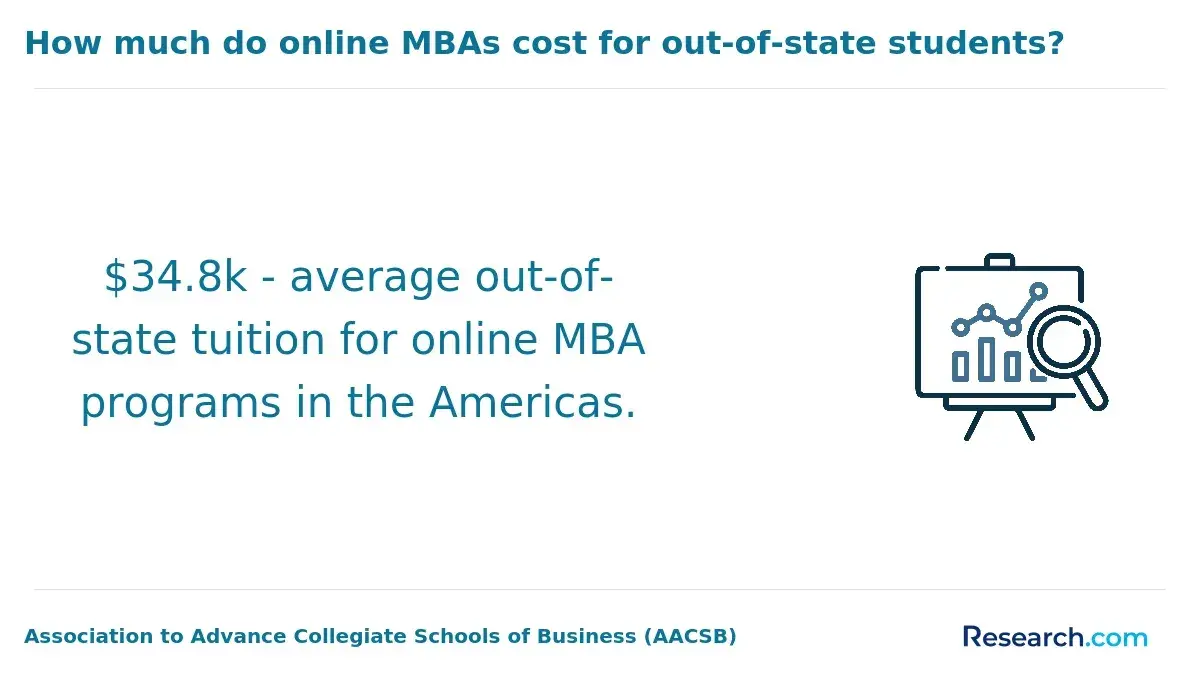
Costs vary widely by institution. Public universities typically charge between $20,000 and $50,000 for the full program, whereas private schools can exceed $70,000. Additional expenses such as books, technology, and application fees may increase total costs by 10% to 15%. Students should request detailed tuition breakdowns and explore financial aid, employer sponsorship, or loans to manage expenses effectively.
The return on investment for an MBA is reflected in earning potential. Skill and Work analysis shows MBA graduates often progress to executive and C-suite roles, earning more than $200,000 annually. This exceeds the salary peak of PMP-certified professionals, who generally earn up to $160,000 in specialized fields like technology and finance.
When weighing online MBA duration and cost, consider program flexibility, credential reputation, and potential salary increases. Options include weekend, evening, or fully asynchronous classes, accommodating full-time employment. Employers often favor the strategic leadership skills from MBA programs over the project-specific expertise associated with PMP certification.
What is the PMP Certification process and timeline?
The PMP certification requires applicants to meet specific eligibility criteria: either a secondary degree plus 7,500 hours leading projects and 35 hours of project management education, or a four-year degree with 4,500 hours leading projects and the same 35 hours of education. Candidates submit their application to the Project Management Institute (PMI), which generally takes about five days for review.
Once approved, candidates schedule the exam, which includes 180 multiple-choice questions to be completed in 230 minutes. The entire process from application to certification typically spans 3 to 6 months. Most candidates study for 2 to 4 months, often using PMI-endorsed materials or formal training courses. In contrast to many MBA programs lasting 1 to 2 years, the PMP certification is concise and project management-focused.
Renewal occurs every three years and requires earning 60 professional development units (PDUs) to maintain certification relevance. The PMP credential is particularly valued in technology and finance sectors, while MBA degrees are often preferred in consulting, investment banking, and executive strategy roles.
Applicants should budget approximately $555 for the exam fee-less for PMI members-and consider additional costs for preparatory courses. Practical experience is critical; applicants must document leadership roles in real projects to demonstrate immediate applicability of project management skills.
What salaries can Online MBA graduates expect vs PMP holders?
Online MBA graduates in the U.S. earn an average salary between $80,000 and $120,000, varying by industry, experience, and role. Entry-level positions typically start near $70,000, while mid-career managers often see salaries from $100,000 to $130,000. Executive roles with MBA credentials can exceed $150,000 annually.
Project management professionals holding PMP certification have median salaries of around $90,000 to $115,000, according to PMI data from 2026. Early-career PMP holders earn about $75,000, while senior professionals, especially in technology or construction, can surpass $130,000.
PMP certification offers recognized industry-wide credibility, with over 1.5 million holders globally. It demonstrates expert project management skills and often results in faster salary growth in project-focused roles. Conversely, online MBA graduates pursue broader managerial and strategic roles that can offer higher long-term earning potential.
Salary differences typically reflect job functions:
- Online MBA graduates pursue upper management, finance, marketing, and operations leadership roles.
- PMP holders specialize in project delivery, risk management, and process optimization.
- Many companies value combined qualifications, with MBA graduates holding PMP certification frequently commanding salaries above $130,000.
- For maximizing leadership compensation, acquiring an online MBA broadens career prospects, while PMP certification strengthens specialized project management earning power.
What is the job outlook for MBA vs PMP certified managers?
Managers with an MBA and those with PMP certification have distinct career paths, earnings potential, and job stability. An MBA opens doors to senior leadership roles like director, vice president, or general manager in areas such as corporate strategy, finance, and operations. Management jobs are expected to grow 8% over the next decade, reflecting steady demand for executives with broad business expertise, according to the U.S. Bureau of Labor Statistics.
Conversely, PMP-certified professionals focus on project management, which is growing faster at 11%. The Project Management Institute's data highlights that organizations increasingly value formal project management skills, especially in technology, construction, and healthcare. PMP holders benefit from faster advancement within their fields and retain employment while earning their certification, avoiding career interruptions.
How to choose between Online MBA and PMP for your career?
Choosing between an online MBA and a PMP certification depends largely on your career goals, available time, and budget. An online MBA typically takes two to three years to complete and provides broad business knowledge in areas such as finance, marketing, strategy, and organizational leadership. In the United States, online MBA programs generally cost between $20,000 and $100,000+, making them a substantial investment best suited for professionals pursuing executive leadership roles.
In contrast, the PMP (Project Management Professional) certification is designed for professionals seeking advancement in project management roles. Preparation and certification can usually be completed within a few months, with total costs often ranging from $500 to $3,000. PMP certification validates expertise in project planning, execution, budgeting, and risk management, and is highly valued in industries such as IT, construction, healthcare, consulting, and engineering.
Key factors to consider include:
- Career focus: online MBA fits broad leadership roles; PMP suits specialized project management.
- Time and cost: PMP is quicker and less expensive; MBA demands a longer time and higher fees.
- Industry demands: PMP excels in project-based industries; MBA credentials open opportunities across sectors.
- Flexibility: Both offer online formats, but PMP's shorter duration better fits full-time work schedules.
Assess your immediate career objectives, financial situation, and schedule carefully. Managers seeking leadership depth and higher long-term earnings often choose MBA paths, while those focused on specialized project roles lean toward PMP certification.
Other Things You Should Know About MBA
An online MBA offers flexible scheduling, making it compatible with full-time work and providing comprehensive management education. A PMP Certification demonstrates expertise in project management, requiring rigorous exam preparation and experience. The choice depends on career goals: strategic leadership (MBA) vs. project management excellence (PMP).
To enroll in an online MBA, candidates usually need a bachelor's degree and relevant work experience. For PMP certification, applicants must possess a secondary degree, 36 months of project management experience, and 35 hours of project management education or a CAPM certification as of 2027.
Yes, students enrolled in online MBA programs can often access the same scholarships and financial aid options as on-campus students. Many universities extend their financial support services to online learners, including grants, loans, and employer tuition assistance. It is important to check specific program policies for available aid.
Online MBA programs typically emphasize leadership, strategic thinking, financial management, and marketing skills. Programs also focus on decision-making, data analysis, and effective communication. These skills prepare graduates to manage teams and lead organizations in complex business environments.
References
- Why choosing PMP over MBA in 2024 is the smart move? https://prothoughtssolutions.com/blog/pmp-vs-mba/
- Entry requirements | Global Online MBA | Distance Learning Online MBA | Warwick Business School https://www.wbs.ac.uk/courses/mba/global-online/requirements/
- PMP Certification Requirements and Syllabus Explained for Beginners https://www.icertglobal.com/blog/pmp-certification-eligibility-and-syllabus
- Online MBA Entry Requirements: Eligibility & Admission https://www.onlinecu.in/blog/cu/most-common-entry-requirements-for-online-mba-programs.php
- Complete Guide To The PMP Certification Process Today https://www.sterlingnext.com/blog/complete-guide-to-the-pmp-process-explained
- Step-by-Step of Acquiring a PMP Project Management Certification https://projectmanagement.ie/blog/step-by-step-of-acquiring-pmp-certification/
- Earn Your Online MBA — No GMAT Required for Entrance https://www.snhu.edu/about-us/newsroom/business/earn-your-online-mba-no-gmat-required
- How Much Does an Online MBA Cost? | University of Bridgeport https://www.bridgeport.edu/news/cost-of-online-mba/