
2027 Most Valuable Business Degree Programs Ranking in Carolina

Co-Founder and Chief Data Scientist
Choosing the right business degree program can shape your future career, especially for students in Carolina looking to stand out. This article introduces the 2027 Most Valuable Business Degree Programs Ranking in Carolina, developed by the Research.com team of data scientists to guide you toward the best options based on data.
By exploring this ranking, you'll gain insights into programs that offer the most value, helping you make a confident, informed decision.
Pursuing a business degree opens doors to exciting opportunities, and this guide will support your journey every step of the way.
Key benefits of getting business degree in Carolina
- Salary for business degree graduates: Business analysts in Carolina enjoy a rewarding career with a mean annual wage of $112,950 and an hourly wage of $54.30, reflecting strong earning potential in the field.
- Career paths overview: Graduates from the University of North Carolina often pursue diverse roles like business analysts and account managers, opening doors to exciting and well-paying opportunities.
- Benefits of an online business degree: Earning a business degree online through schools like Appalachian State University offers flexibility, allowing you to balance work and study while gaining credentials valued by employers.
- Key benefits of getting business degree in Carolina
- What can I expect from business degree in Carolina?
- Where can I work with business degree in Carolina?
- How much can I make with business degree in Carolina?
- 2027 Most Valuable Business Degree Programs Ranking in Carolina
- Key Findings
- How long does it take to complete business degree in Carolina?
- What's the difference between online and on-campus business degree?
- What is the average cost of business degree in Carolina?
- What financial aid is available to business degree students in Carolina?
- What are the prerequisites for enrolling in business degree program in Carolina?
- What courses are typically in business degree programs in Carolina?
- What types of specializations are available in business degree programs in Carolina?
- How do you choose the best business degree in Carolina?
- What career paths are available for business degree students in Carolina?
- What is the job market for business degree in Carolina?
- Top Trending Business Rankings
- See What Experts Have To Say About Studying Business
What can I expect from business degree in Carolina?
The average cost of pursuing a business degree in Carolina varies widely depending on the institution and residency status. For in-state students at public universities like the University of North Carolina at Chapel Hill or North Carolina State University, tuition typically ranges between $9,000 and $16,000 per year. Graduates often cite this investment as justified by the strong industry connections these schools offer, especially in sectors like finance, technology, and manufacturing prevalent in North Carolina's economy.
Out-of-state tuition can exceed $35,000 annually, as seen at universities such as Clemson University in South Carolina, where many students benefit from the Darla Moore School of Business's global reputation. Graduates express enthusiasm about their return on investment due to experiential learning opportunities like internships within the Research Triangle Park or Charleston's port-driven trade industries.
Additional costs for certificates or specialized courses, such as healthcare management or data analytics, vary but are often affordable. Students consistently highlight how these credentials enhance employability in Carolina's diverse economic landscape, balancing cost with career outcomes.
Where can I work with business degree in Carolina?
Graduates with a business degree in Carolina frequently find themselves stepping into vibrant careers across finance, manufacturing, technology, and management. Those graduating from well-known institutions such as the University of North Carolina at Chapel Hill or Clemson University often secure roles in Charlotte's thriving finance sector, the second-largest banking hub in the U.S. Working at major firms like Bank of America or Truist Financial allows them to apply skills in accounting, finance, and risk management to high-impact projects.
Others enter manufacturing or logistics sectors in South Carolina cities like Greenville and Charleston, where companies like BMW and Boeing seek experts in supply chain management and business analytics. This hands-on experience is common among graduates from institutions like the University of South Carolina, fostering a sense of accomplishment as they contribute to large-scale operations.
The growing tech scene in North Carolina's Research Triangle Park also offers business graduates promising opportunities in product management and consulting, blending business acumen with technical insight. Many report enthusiasm for roles that challenge them to innovate and lead within startups or established firms. Job growth projections of around 7% through 2030 reflect an optimistic future for Carolina's business graduates.
How much can I make with business degree in Carolina?
Graduates with a business degree in Carolina can anticipate rewarding salary prospects that vary by job role and experience. According to recent data, business analysts earn a mean annual wage of about $112,950, reflecting strong demand for analytical skills across industries. Meanwhile, business development executives in the region typically make around $83,190 annually, highlighting solid opportunities in sales and growth-focused positions.
Students from prominent institutions like the University of North Carolina at Chapel Hill or Clemson University often find that these figures align well with market realities. For example, a graduate entering Charlotte's dynamic financial sector as a business analyst can quickly see their salary rise near or above the reported averages due to the city's higher-than-average wage levels.
These earnings come alongside growing opportunities across Carolina's diverse economy. Graduates describe feeling optimistic about their ability to leverage strategic thinking and management skills into competitive salaries, especially when paired with ongoing networking and professional certification efforts.
2027 Most Valuable Business Degree Programs Ranking in Carolina
How do we rank schools?
Investing in your education is a significant decision that can shape your future, and the Research.com team understands the importance of making informed choices. To assist prospective students in Carolina, we have meticulously developed the "2027 Most Valuable Business Degree Programs Ranking." Our commitment to quality, credibility, and accuracy is reflected in the extensive research and rigorous analysis performed to compile this ranking.
We utilized the following reputable data sources to ensure a comprehensive and reliable evaluation of business degree programs:
By exploring this ranking, readers will gain valuable insights into the most valuable business degree programs in Carolina, enabling them to make well-informed decisions about their educational investments. For more information on how this ranking was created, please visit our Research.com methodology page.
# 1 position
Universidad Ana G. Mendez-Carolina Campus
Recinto de Carolina Bachelor in Business Administration


# 3 position
Universidad Ana G. Mendez-Carolina Campus
Master of Science in Global Business Administration
# 4 position
Dewey University-Carolina
Bachelor of Business Administration

Key Findings
- Tuition for business degrees in Carolina ranges from $8,500 to $12,000 annually at public universities for in-state students, while private schools can charge over $25,000 per year.
- Additional costs like books, fees, and living expenses increase the total amount needed to complete a business degree.
- Entry-level salaries for business graduates start around $50,000 per year, with higher pay in bigger cities like Charlotte and Raleigh.
- Mid-career business degree holders earn about $95,000 annually on average, reflecting career growth in the field.
- Carolina's diverse economy supports strong job prospects in industries like finance, technology, manufacturing, and healthcare.
- Many programs offer internships and specialized tracks such as accounting, finance, marketing, and supply chain management for tailored career preparation.
How long does it take to complete business degree in Carolina?
The typical completion time for a business degree in Carolina depends on program type and enrollment status. A traditional Bachelor of Business Administration (BBA) usually requires about four years of full-time study, mirroring national standards. Graduates from universities like the University of North Carolina at Chapel Hill often report this timeline as manageable and rewarding, balancing coursework with campus life.
Part-time students attending institutions such as North Carolina State University may take five to six years due to work or personal commitments, but appreciate the flexibility this option offers. Accelerated programs enabling degree completion in roughly three years are available at select schools for highly motivated students willing to take heavier course loads or summer classes.
Graduate degrees like the MBA typically require two years full-time. However, many students enrolled in part-time or online MBA programs at Carolina's business schools complete their studies over three to four years, allowing them to maintain careers while advancing academically.
Associate degrees take about two years and often serve as a cost-effective stepping stone, supported by credit transfer agreements between community colleges and universities across Carolina.
What's the difference between online and on-campus business degree?
Online and on-campus business degrees in Carolina differ primarily in delivery and student experience. On-campus programs at schools like the University of North Carolina at Chapel Hill offer immersive environments where students can engage personally with professors, participate in group projects, and attend networking events on campus. Graduates often recall forming valuable connections through face-to-face mentorship and career services, enriching their education beyond academics.
Conversely, online programs provide flexibility suited to working professionals or those balancing family commitments. Students at institutions such as East Carolina University can access all course materials remotely, adjusting their schedules to fit personal demands. While these students may need extra effort to pursue networking virtually, many appreciate the independence and accessibility this format offers.
Cost differences also exist: on-campus tuition typically ranges from $9,000 to $20,000 annually for in-state public universities, while online tuition may be flatter or slightly lower regardless of residency. Both formats maintain rigorous curricula and regional accreditation, ensuring degrees from Carolina institutions hold recognized value in the job market.
What is the average cost of business degree in Carolina?
The average business degree cost in Carolina varies significantly based on residency and institution type. Data indicates that the median in-state total cost for a business degree is approximately $7,750, whereas out-of-state students face a much higher median total cost around $17,450. These figures consider tuition, fees, and standard living expenses over the typical four-year program duration.
Graduates from public universities in Carolina often find tuition rates relatively affordable when compared to private institutions. For example, students at the University of North Carolina at Chapel Hill's business school may pay nearer to the in-state median, reflecting substantial savings compared to non-residents who incur costs well above $17,000 a year. Meanwhile, students from Clemson University report similar differential costs based on residency, highlighting a realistic picture of expenses faced by Carolina business students.
Understanding the total cost of business degree programs Carolina-wide requires recognizing that tuition is not the sole financial consideration. Additional expenses such as housing, books, and supplies can add roughly $12,000 annually, impacting the overall affordability. Many students appreciate how scholarships, grants, and financial aid opportunities available through these institutions help mitigate costs, motivating them to pursue their degrees enthusiastically.
For prospective students planning their educational investments, it is valuable to explore various options and utilize each program's net price calculator. Combining this with insights about certifications that pay the most can enhance both educational and career outcomes, creating a meaningful and financially manageable path to a business degree in Carolina.

What financial aid is available to business degree students in Carolina?
Students pursuing business degrees in Carolina benefit from multiple financial aid options tailored to regional needs. Public universities such as the University of North Carolina at Chapel Hill typically charge between $9,000 and $12,000 annually for in-state tuition, making federal aid through the FAFSA crucial. Graduates often highlight how Pell Grants, averaging $4,000 annually, significantly eased their financial burden without requiring repayment.
Federal Direct Loans also provide manageable borrowing alternatives with low-interest rates and flexible repayment plans, essential given the national average student debt of over $30,000 for business graduates. State-specific scholarships, like the Carolina Education Lottery Scholarship, have helped many undergraduates in local universities reduce tuition costs effectively.
Merit-based scholarships awarded by universities recognize academic and leadership achievements, ranging from $1,000 to full tuition. Graduates recall how these awards made prestigious programs at colleges like Clemson University more accessible and less financially stressful.
Additionally, private scholarships from groups such as the Carolina Chamber of Commerce support students aspiring to contribute to the local economy, while work-study opportunities on campus offer practical experience alongside financial relief.
What are the prerequisites for enrolling in business degree program in Carolina?
Enrolling in a business degree program in Carolina typically requires a high school diploma or equivalent, such as a GED, with many universities expecting a minimum GPA between 2.5 and 3.0. For example, graduates from popular universities like the University of North Carolina at Chapel Hill often recall the importance of maintaining strong academic records to meet these criteria and feel confident entering their programs. Standardized tests like the SAT or ACT may still be requested, though some schools have become test-optional, reflecting a shift toward holistic admissions.
Students must demonstrate proficiency in key subjects through prerequisite coursework, including mathematics (commonly Algebra and Geometry), English, and social studies. At institutions such as Clemson University, alumni emphasize how this foundation helped them succeed in quantitative courses like accounting and finance. Some programs also value basic computer literacy, recognizing its importance in today's technology-driven business environment.
Work experience or prior college credits can sometimes substitute traditional requirements, a flexibility appreciated by adult learners pursuing online business degrees at colleges like East Carolina University. Additionally, many students benefit from articulation agreements between community colleges and universities, which streamline credit transfers and reduce time to graduation.

What courses are typically in business degree programs in Carolina?
Business degree programs in Carolina typically include core courses in accounting, finance, marketing, management, and economics, forming a comprehensive foundation. Graduates from universities like the University of South Carolina often recount how mastering financial statement analysis and budgeting in accounting courses directly prepared them for real-world roles, such as managing company budgets or evaluating investment opportunities.
Additional courses in business law, ethics, and information systems equip students with critical skills to navigate complex legal environments and technological shifts. For example, coursework in data analytics and enterprise resource planning software has allowed many to confidently enter positions requiring strong digital proficiency in modern businesses.
Specialization options available at popular colleges in Carolina, such as entrepreneurship or international business, enable students to tailor their learning to career goals. Graduates value electives like project management and negotiations for their practical application, often citing successful internship experiences where these skills proved essential.
What types of specializations are available in business degree programs in Carolina?
Business degree specializations in Carolina cover a broad spectrum tailored to meet regional and global market demands. Students at prominent institutions like the University of North Carolina and Clemson University often pursue concentrations such as Finance, which equips graduates to excel in investment analysis and corporate finance, boasting average salaries between $70,000 and $85,000 locally. Marketing remains a sought-after specialization, where students combine consumer behavior studies with digital marketing strategies, addressing the increasing need for data-driven skills reported by the South Carolina Department of Commerce.
Graduates from schools like Wake Forest University embrace Management and Entrepreneurship specializations, finding opportunities to lead teams or develop startups, especially in dynamic hubs like Raleigh and Charlotte. Supply Chain Management also draws interest due to Carolina's strategic position in logistics and distribution networks. Additionally, International Business students benefit from experiential learning through study abroad programs, aligning with the global trade emphases of local economies. Prospective students evaluating Carolina business degree program options might consider exploring the easiest masters degree to get for continued professional advancement.
How do you choose the best business degree in Carolina?
Choosing the best business degree programs in Carolina demands careful evaluation of accreditation, cost, and program structure. Graduates from universities accredited by the Association to Advance Collegiate Schools of Business (AACSB) report higher satisfaction due to rigorous coursework and valuable networking opportunities, especially in metropolitan hubs like Charlotte, NC.
Affordability also plays a significant role; public universities in North and South Carolina typically charge $9,000 to $15,000 annually for in-state students, making them attractive for those seeking affordable business degrees in Carolina 2027. Conversely, private institutions may exceed $30,000 per year but often provide specialized programs and internships that enhance employment prospects.
Students balancing work and study find part-time and online programs appealing. Several Carolina colleges have expanded these flexible options without sacrificing quality, which many recent graduates praise for enabling career advancement. For those interested in advanced degrees, resources like phd online cheap programs offer additional pathways. Ultimately, aligning program specialties with local industry strengths such as finance or entrepreneurship helps maximize job outcomes post-graduation.
What career paths are available for business degree students in Carolina?
Graduates holding a business degree in Carolina find diverse career paths across finance, marketing, management, and entrepreneurship. Many secure roles as financial analysts, investment advisors, or banking professionals, leveraging the state's strong finance sector anchored in metro areas like Charlotte and Raleigh. These positions offer competitive salaries near $110,000 annually, reflecting Carolina's vibrant economy. Students from popular universities report rewarding experiences entering this job market, energized by connections to regional financial firms.
Marketing and sales roles also attract many business alumni. Carolina's expanding tech startups and established companies seek digital marketing specialists and market researchers to boost their online presence and drive growth. Those pursuing these options often thrive in fast-paced environments, applying skills gained at their colleges to real-world challenges. This resonates well with students aiming to capitalize on the top business jobs in Carolina for graduates.
Management careers, including project and operations manager roles, are in demand. Graduates appreciate that Carolina's employers value leadership and strategic acumen, with expected job growth at 6% through 2030. Many find gratification in steering teams and initiatives across local businesses. Entrepreneurship is another thriving avenue, supported by Carolina's business-friendly climate and resources like incubators. Many graduates eagerly embrace launching startups in sectors such as technology and logistics.
Costs for business degree programs vary between $7,000 and $25,000 per year depending on institution type, a range consistent with national averages. Prospective students should explore options among accredited schools that offer free online applications to find affordable pathways into Carolina's competitive business landscape.
What is the job market for business degree in Carolina?
The business degree job market in Carolina is characterized by strong demand across diverse sectors, including finance, technology, and manufacturing. Graduates from well-known institutions such as the University of North Carolina at Chapel Hill and Duke University often find roles in Charlotte's booming financial industry, the second largest banking hub in the U.S. The presence of numerous Fortune 500 companies in cities like Charlotte and Raleigh-Durham further enhances employment opportunities for business degree holders, especially in areas like financial analysis, supply chain management, and business analytics.
For students pursuing a business degree in Carolina, average starting salaries range from $55,000 to $65,000, reflecting a competitive market that improves with experience. Many graduates share positive experiences of securing roles that leverage skills gained through hands-on business programs, sometimes even contributing to expanding digital services within established firms. The Carolina business degree employment opportunities also extend to growing SMEs eager for skilled business managers and marketers.
Costs for obtaining a business degree here can total $40,000 to $60,000 in tuition over four years, but this investment is often rewarded by the industry's openness to hiring local graduates. Prospective students might also explore how business skills translate across sectors by comparing these prospects with those in highest paying trade school careers, providing a broader view of career options available after graduation.
Frequently Asked Questions About business
Business degree students in Carolina can maximize their learning experience by actively engaging with local industries. The state hosts a diverse economy, including finance, manufacturing, and technology sectors, providing many internship and networking opportunities. According to the South Carolina Department of Commerce, internships increase employment chances by 20% for graduates.
Students should also leverage resources offered by universities, such as career centers and business clubs, which often host workshops and guest lectures. Enrolling in experiential learning programs, like case competitions and consulting projects, strengthens practical skills.
Finally, staying updated with regional economic trends through sources such as the Charlotte Regional Business Alliance helps students apply classroom knowledge to real-world challenges.
The business field in Carolina is experiencing growth in several emerging niches that reflect broader economic trends. One key area is sustainable business practices, where companies prioritize environmental responsibility and social governance. This niche aligns with increasing consumer demand for green products and services.
Another growing niche is data analytics and business intelligence. Employers in Carolina seek graduates who can interpret large datasets to guide strategic decisions, supported by regional tech industry expansion.
Additionally, entrepreneurship and innovation management are gaining traction, especially with startups in Charlotte and Raleigh-Durham. Carolina-based universities are enhancing curricula to meet this demand.
Healthcare management also remains significant due to the state's robust biopharma sector. These niches create diverse opportunities for business students.
After completing a business degree in Carolina, preparing for the job market involves strategic steps to enhance employability. Start by gaining practical experience through internships; many Carolina universities have partnerships with local companies, offering students valuable exposure. According to the South Carolina Department of Commerce, business sectors like finance, insurance, and manufacturing show steady job growth, so targeting internships in these areas can be beneficial.
Networking is crucial. Joining professional organizations such as the Carolina Business Network or local chapters of national groups helps build connections. Additionally, attending career fairs hosted by Carolina universities provides direct access to recruiters.
Developing strong soft skills alongside technical business knowledge is important; employers in Carolina often prioritize communication, teamwork, and problem-solving abilities. Finally, consider obtaining certifications relevant to your field, such as CPA for accounting or Six Sigma for operations, to stand out among applicants.
Employers in Carolina consistently seek business graduates who possess strong analytical and communication skills. According to the South Carolina Department of Commerce, companies emphasize the importance of critical thinking to solve complex business problems efficiently. Additionally, leadership abilities and teamwork are highly valued, as many businesses operate in collaborative environments.
Proficiency in data analysis and familiarity with business software also rank among the top skills. A 2023 survey from the North Carolina Business Council highlights that 67% of employers prioritize candidates comfortable with digital tools and data interpretation.
Adaptability and ethical decision-making are increasingly important in Carolina's dynamic job market, reflecting broader national trends in business education.
Finding internships in Carolina relevant to a business degree involves leveraging multiple resources. Many universities in the state have dedicated career centers that connect students with local companies for internship opportunities. For example, the University of North Carolina system reports that over 70% of business students secure internships through campus programs.
Networking is also key. Joining student business organizations or attending local business events in cities like Charlotte and Raleigh can provide valuable contacts. The Carolina Business News and local chambers of commerce frequently share internship listings.
Online platforms like Handshake and LinkedIn are commonly used by Carolina employers to post internships. These tools enable students to filter positions by location and business field, increasing the chances of finding a suitable placement.
In Carolina, a business degree significantly enhances career mobility and advancement opportunities across various industries. According to the U.S. Bureau of Labor Statistics, professionals with a bachelor's degree in business administration can expect a 12% growth in managerial and business roles through 2030, higher than the average for all occupations. Many employers in the region value the critical thinking, leadership, and financial skills gained during business studies.
The state's diverse economy, ranging from finance in Charlotte to technology in the Research Triangle, benefits from graduates ready to fill mid- and upper-level positions. Furthermore, professional networking opportunities through Carolina universities frequently connect students to internships and job placements, accelerating career development.
Studying for a business degree in Carolina offers students a strong foundation in core business principles while fostering skills applicable across multiple disciplines. Many universities in the state integrate coursework from economics, technology, and communication, equipping graduates to work effectively in interdisciplinary settings.
Carolina's business programs often emphasize critical thinking, data analysis, and teamwork, which are vital for roles that span finance, marketing, and information systems. According to the U.S. Bureau of Labor Statistics, business roles in Carolina's growing urban centers increasingly demand versatile professionals knowledgeable in varied sectors.
Partnerships with local industries and internships further enhance experiential learning, allowing students to apply business concepts to real-world challenges beyond traditional boundaries.
When choosing between a thesis and a non-thesis business degree program in Carolina, students should consider their career goals and learning preferences. Thesis programs typically involve conducting original research and writing a detailed paper, which is beneficial for those aiming for academic or research-oriented careers. Non-thesis options focus more on practical skills and coursework, appealing to students seeking immediate workforce entry.
In Carolina, many universities report that about 40% of business graduates choose thesis tracks, often to pursue further education or specialized roles. Meanwhile, the remaining 60% prefer non-thesis paths for faster completion and professional experience. According to the National Center for Education Statistics, this balance reflects broader U.S. trends.
Additionally, thesis programs may require a longer duration and more faculty interaction, while non-thesis programs offer more flexibility and internship opportunities. Reviewing program specifics at Carolina institutions, along with discussing with advisors, helps align the choice with personal ambitions.
Students based in Carolina interested in studying business abroad have several options through established exchange and study abroad programs offered by universities across the state. Institutions like the University of North Carolina system and Clemson University provide partnerships with schools in Europe, Asia, and Latin America, allowing students to earn credits toward their business degrees while gaining global experience.
According to the Institute of International Education, around 10% of Carolina's business students participate in study abroad programs annually. Popular destinations include the United Kingdom, Spain, and China, where students can study subjects ranging from international marketing to global finance.
These programs often include internships and immersive cultural experiences, enhancing practical business skills. Financial aid and scholarships specific to Carolina students are frequently available to make these opportunities more accessible.
Students pursuing business degrees in Carolina have various part-time job opportunities that can enhance their academic learning and professional skills. Common roles include administrative assistants, sales associates, and customer service representatives, which help develop communication and organizational skills valued in the business sector. According to the U.S. Bureau of Labor Statistics, entry-level business-related roles in retail or office settings often offer flexible schedules, ideal for balancing work and study.
Additionally, internships with local Carolina businesses provide hands-on experience in marketing, finance, and management. Universities such as the University of North Carolina and Clemson University often partner with regional companies to facilitate such opportunities. Gaining practical experience through these roles can significantly improve employment prospects post-graduation.
Business students in Carolina benefit from a variety of networking opportunities that enhance their academic and professional growth. Universities often host career fairs attracting regional and national employers, allowing students direct access to internships and job offers. For example, the University of South Carolina's Darla Moore School of Business reports annual participation from over 300 companies, facilitating thousands of student interviews.
Student organizations tied to business disciplines provide additional avenues to connect with peers and industry leaders. Groups such as the Carolina Business Club or local chapters of national associations offer regular events, workshops, and guest lectures. These activities promote skill-building and relationship formation that can continue post-graduation.
Moreover, proximity to vibrant business hubs like Charlotte and Raleigh-Durham expands networking possibilities through industry conferences and meetups. These cities' growing financial and technology sectors are especially active in engaging emerging talent from Carolina colleges.
Alumni networks significantly benefit business degree students in Carolina by providing access to professional connections that help in securing internships and jobs. Schools such as the University of North Carolina and Clemson University have strong alumni bases active in industries like finance, technology, and manufacturing, which dominate the Carolina economy. According to the North Carolina Department of Commerce, networking through alumni improves employment rates for graduates by up to 20%. These networks often host events, workshops, and mentorship programs that enhance students' skills and confidence in real-world business environments. Additionally, alumni connections can facilitate valuable industry insights and career advice specific to the region.
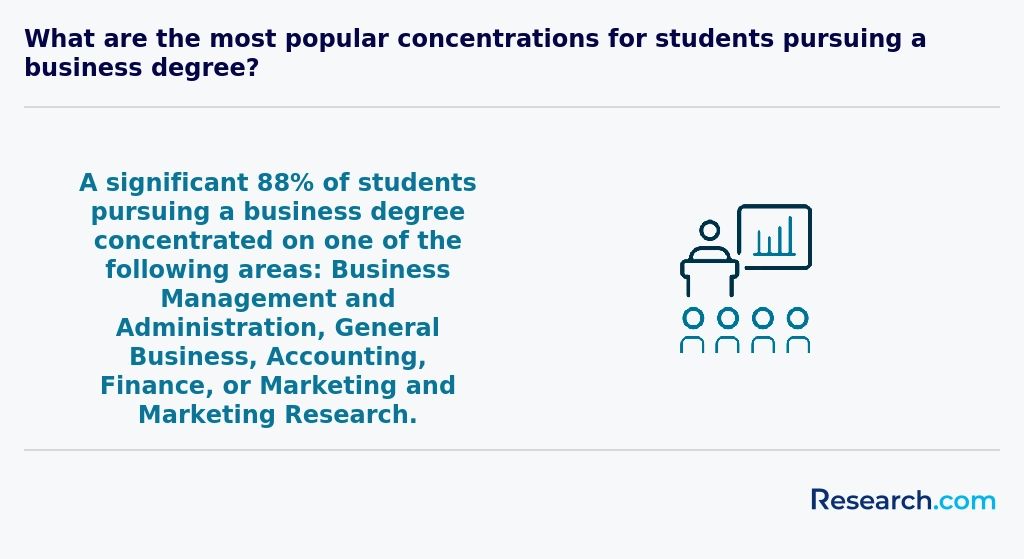
In Carolina, students can customize their business degree program by selecting concentrations that align with their career goals. Many universities offer specializations such as finance, marketing, supply chain management, and entrepreneurship. These options allow students to develop specific skills that are in demand within the regional job market.
Additionally, students may take advantage of internship programs connected to Carolina's growing industries, including technology and healthcare sectors. Practical experience complements classroom learning and often leads to employment opportunities. According to the National Center for Education Statistics, business remains one of the most popular majors in the state, which encourages schools to offer flexible curricula.
Course electives and professional certificates further help in tailoring education to match individual ambitions.
Business students in Carolina often face a range of challenges unique to the region and the broader U.S. higher education context. One key difficulty is balancing rigorous coursework with internship opportunities, which are critical in competitive fields such as finance and marketing. According to the South Carolina Commission on Higher Education, about 45% of business students report stress related to time management as they juggle studies and professional experience.
Moreover, affordability remains a significant concern. Tuition in Carolina's public universities averages around $11,000 per year for in-state students, which can be burdensome without sufficient financial aid. Many students also struggle with adapting to rapidly changing technology trends essential for modern business practices.
Networking is another challenge in smaller cities where access to large corporate hubs is limited, reducing exposure to potential employers. For example, while Charlotte offers robust opportunities, students in rural parts of the state may find fewer local professional connections.
With a business degree from Carolina, graduates have access to several valuable professional certifications that can boost their careers. Common certifications include the Certified Public Accountant (CPA), essential for those in accounting and finance. The Project Management Professional (PMP) is widely recognized for leadership roles in various industries. Additionally, the Certified Management Accountant (CMA) focuses on financial management and strategy.
Many business professionals in Carolina pursue the Chartered Financial Analyst (CFA) certification, especially in banking and investment sectors. According to the North Carolina Department of Commerce, certified professionals tend to see higher earning potential and job stability locally.
Applying to a business program in Carolina requires careful preparation to stand out. First, ensure your application highlights strong academic performance, particularly in quantitative subjects, as most programs value this. For instance, UNC Kenan-Flagler emphasizes analytical skills as key. Include a clear, well-written personal statement that explains your career goals and why a Carolina business degree fits your plans. Demonstrating knowledge of local industries such as finance, manufacturing, or tech can strengthen your case.
Standardized test scores like the GMAT or GRE remain important for many competitive Carolina programs, so prepare thoroughly. Obtain strong letters of recommendation from professors or employers familiar with your work ethic and leadership potential. According to the National Center for Education Statistics, over 30,000 students enroll annually in business degrees across Carolina, making quality applications vital to acceptance.
The global perspective on a business career highlights the increasing importance of adaptability in a rapidly changing economy. Graduates with business degrees from Carolina institutions benefit from curricula that emphasize international trade, cross-cultural communication, and digital innovation. According to the U.S. Bureau of Labor Statistics, jobs in management and business in the Southeastern U.S., including Carolina, are projected to grow by 8% between 2022 and 2032.
Local universities often incorporate global case studies and partnerships with international companies, preparing students for diverse markets. This global orientation aligns with trends seen across U.S. business schools, which focus on sustainability and ethical leadership as crucial career competencies.
Gaining practical experience while studying for a business degree in Carolina is essential for career readiness. Many universities in the state offer internship programs partnering with local businesses, especially in finance, marketing, and entrepreneurship sectors. For example, the University of North Carolina system reports that over 70% of business students complete at least one internship before graduation, enhancing employability.
Students can also engage in cooperative education (co-op) programs, which combine classroom learning with paid work experiences. Additionally, participating in business clubs, case competitions, and networking events provides hands-on skills and industry connections.
Local chambers of commerce and business incubators often welcome student involvement, offering real-world project opportunities. Access to these resources gives Carolina business students a competitive edge in the job market.
Choosing the right concentration within a business degree program in Carolina depends on your career goals and interests. Popular options include finance, marketing, management, and entrepreneurship. Each concentration offers specialized skills tailored to different industries.
Research from the University of North Carolina's Kenan-Flagler Business School shows that finance and management concentrations have strong job placement rates locally, especially in Charlotte's banking sector, which employs over 130,000 professionals.
Consider internships and networking opportunities available through universities, as Carolina's business schools often connect students with prominent regional firms. Aligning your choice with regional economic strengths enhances career prospects.
Evaluating course content, faculty expertise, and local industry ties helps ensure your concentration matches both your aspirations and Carolina's market demands.
Top Trending Business Rankings
See What Experts Have To Say About Studying Business
Read our interview with Business experts

Ingrid S. Greene
Business Expert
Clinical Assistant Professor of Management
Loyola Marymount University

David W. Stewart
Business Expert
Emeritus President's Professor of Marketing
Loyola Marymount University

David Souder
Business Expert
Senior Associate Dean for Faculty and Research
Michigan State University

References
- 8 Best Places to Study Abroad for Business [+ How to Choose] https://www.semesteratsea.org/study-abroad-for-business/
- Why Alumni Networks Matter in Business School: 7 Reasons https://europe.ceibs.edu/article/why-alumni-networks-matter-business-school
- Global careers, real impact: building your career with an international business degree | University of East London https://www.uel.ac.uk/blog/global-careers-real-impact-building-your-career-international-business-degree
- Top 10 Skills Employers Seek in Business Graduates in 2026 https://www.ibat.ie/blogs/top-10-skills-employers-seek-in-business-graduates-in-2026
- Exploring Different Types of Business Majors https://www.ivywise.com/ivywise-knowledgebase/exploring-different-types-of-business-majors/
- Career Goals: 17 Inspirational Examples for you in 2026 https://www.imd.org/blog/learning-and-development/career-goals/
- Online and Traditional Business Degrees Comparison | Free Essay Example https://studycorgi.com/online-and-traditional-business-degrees-comparison/
- Skills Employers Look for in Business Graduates – EU Business School https://www.euruni.edu/blog/skills-employers-look-for-in-business-graduates/
- How Long Does It Take to Get Your Business Degree? https://www.umassglobal.edu/blog-news/long-does-take-get-your-business-degree
- 55 Trending Business Ideas for 2025 and Beyond https://www.uschamber.com/co/start/business-ideas/top-trending-business-ideas


