2027 Most Popular Computer Science Degree Programs Ranking in the USA Territories

Co-Founder and Chief Data Scientist
Choosing the right computer science degree program can feel overwhelming, especially in the diverse USA Territories. This article introduces the 2027 Most Popular Computer Science Degree Programs Ranking in the USA Territories, developed by the Research.com team of data scientists. It offers clear insights to help you make an informed decision about your education path.
Exploring this ranking will guide you toward programs that match your goals and aspirations. A computer science degree opens doors to exciting careers, growth, and innovation. Let's discover which programs stand out in 2027 to shape your future confidently.
Key benefits of getting computer science degree in the USA Territories
- Salary for computer science degree graduates: Graduates in computer science can expect competitive salaries, such as a Software Engineer earning around $138,110 annually and an IT Support Specialist making about $63,640 per year, ensuring strong financial stability.
- Career paths: A computer science degree opens doors to diverse roles like Software Developer, Data Analyst, or Web Developer, allowing graduates from universities in the USA Territories to pursue careers that match their interests and skills.
- Online degree benefits: Earning a computer science degree online offers flexibility for busy students, saving time and costs, as experienced by many graduates from top online programs in the USA Territories who balance work and study successfully.
- Key benefits of getting computer science degree in the USA Territories
- What can I expect from computer science degree in the USA Territories?
- Where can I work with computer science degree in the USA Territories?
- How much can I make with computer science degree in the USA Territories?
- 2027 Most Popular Computer Science Degree Programs Ranking in the USA Territories
- Key Findings
- How long does it take to complete computer science degree in the USA Territories?
- What's the difference between online and on-campus computer science degree?
- What is the average cost of computer science degree in the USA Territories?
- What financial aid is available to computer science degree students in the USA Territories?
- What are the prerequisites for enrolling in computer science degree program in the USA Territories?
- What courses are typically in computer science degree programs in the USA Territories?
- What types of specializations are available in computer science degree programs in the USA Territories?
- How do you choose the best computer science degree in the USA Territories?
- What career paths are available for computer science degree students in the USA Territories?
- What is the job market for computer science degree in the USA Territories?
- Top Trending Computer Science Rankings
- See What Experts Have To Say About Studying Computer Science
What can I expect from computer science degree in the USA Territories?
The average cost of earning a computer science degree in the USA Territories feels like discovering a hidden gem in your neighborhood-much friendlier than many mainland price tags. Take the University of Puerto Rico, Río Piedras Campus, for example: graduates often recall how tuition was surprisingly affordable, allowing them to focus on mastering coding languages without the cloud of overwhelming debt. With annual tuition generally lower than mainland public universities, many students harness federal financial aid like Pell Grants, making their dreams more reachable.
Imagine a student in Guam balancing island life and studies; their tuition costs float lighter thanks to smaller class sizes and local support, blending quality education with community warmth. Meanwhile, the University of the Virgin Islands offers interdisciplinary programs that don't just ease the wallet strain but nourish practical skills aligned with the island's tech needs.
Students often smile recalling how the financial relief empowered late-night debugging sessions or joining research projects online. So, affordability here isn't just about numbers but about crafting possibilities in vibrant, supportive environments.
Where can I work with computer science degree in the USA Territories?
Graduates from universities like the University of Puerto Rico or Guam Community College often find themselves immersed in vibrant tech ecosystems, crafting code that fuels multinational giants or securing networks for the Department of Defense. Imagine a graduate waking up in San Juan and by noon, collaborating on a cybersecurity project that protects sensitive government data, while another in Saipan may be designing healthcare apps that transform island clinics. The thrill of working within booming IT sectors across the territories is palpable.
Some graduates choose the dynamic path of entrepreneurship, launching startups from cozy dorm rooms or local cafés, supported by SBA grants encouraging innovative tech ideas. Whether it's a burgeoning software firm in the U.S. Virgin Islands or freelance app development in American Samoa, these professionals weave their passion into real-world impact.
Public service roles in Homeland Security or municipal IT departments offer rewarding stability, alongside chances to modernize public infrastructure. For many, the territory's unique blend of cultural richness and growing digital demand makes every code they write feel like a contribution to their community's future.
How much can I make with computer science degree in the USA Territories?
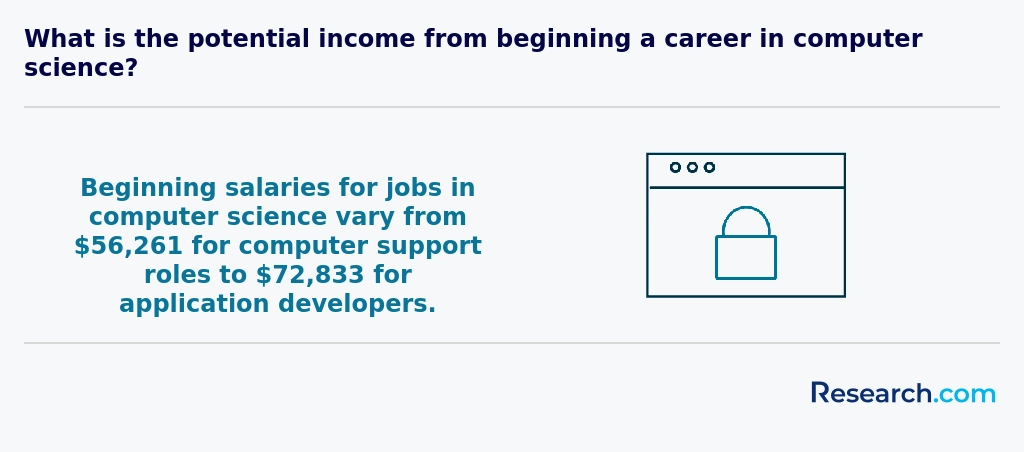
Graduates from universities in the USA Territories often find their early paychecks ranging from $45,000 in IT support roles to about $75,000 for solid developer positions, reflecting local economies yet bursting with promise. Imagine a recent graduate from the University of Puerto Rico stepping into a software engineering role-here, you could aim for the mainland average salary of $138,110, especially if you snag a remote position or a government contract.
Those diving into data analysis might discover an exciting career, with mean earnings around $119,040, fueling aspirations beyond island horizons. Web developers balance creativity and tech with a $95,570 annual mean wage, proving that in the Territories, digital artistry holds real value.
Even entry-level IT support specialists earn a respectable $63,640 annually, enough to start building your tech dreams. These figures blend with your local experience and the emerging digital infrastructure, making every coding line and algorithm worth the climb.
2027 Most Popular Computer Science Degree Programs Ranking in the USA Territories
How do we rank schools?
Investing in your education is a significant decision that can profoundly impact your future, and the Research.com team is deeply aware of this responsibility. To support prospective students in the USA Territories, we have carefully developed the "2027 Most Popular Computer Science Degree Programs Ranking in the USA Territories." Our dedication to quality, credibility, and accuracy is demonstrated through rigorous research and thorough analysis.
We utilized the following reputable data sources to ensure a comprehensive and trustworthy evaluation of computer science programs:
By reviewing this ranking, readers will gain valuable insights to make well-informed decisions about their computer science education, aligning their academic investments with their career goals. For a detailed explanation of our ranking process, please visit our Research.com methodology page.


# 3 position
Inter American University of Puerto Rico-Bayamon
Bachelor of Science in Computer Science


# 7 position
Inter American University of Puerto Rico-San German
Bachelor of Science in Computer Science

Key Findings
- Tuition for in-state students at public universities in Puerto Rico ranges from $4,000 to $6,000 per year, which is lower than most mainland public universities.
- Private institutions and universities in other territories can have tuition fees exceeding $8,000 annually, with additional costs for books and living expenses.
- Job opportunities in computer science in the territories focus on government contracts, telecommunications, healthcare IT, and education sectors, with the strongest growth in Puerto Rico.
- Starting salaries for early-career computer science graduates range from $45,000 to $55,000 annually, while mid-level professionals earn between $60,000 and $80,000.
- Many computer science programs in the territories are regionally accredited, which helps with credit transfers and eligibility for federal financial aid.
How long does it take to complete computer science degree in the USA Territories?
In the USA Territories, conquering a computer science degree often unfolds like a four-year adventure-filled with late-night coding marathons and breakthrough moments on island campuses such as the University of Guam or the University of the Virgin Islands. Graduates frequently recall their journeys packed with core courses, electives, and real-world projects totaling around 120 to 130 semester hours, making the four-year timeline feel both manageable and rewarding.
Imagine balancing studies with island life rhythms; some students stretch this path by weaving in family and work commitments, embracing part-time enrollments that elongate their voyage. Others sprint through accelerated programs-navigating evening or weekend classes-shaving precious months off the traditional timeline while soaking in stunning ocean views.
For many, associate degrees present a two-year gateway before diving deeper into the tech world, a practical choice that mixes solid foundational learning with opportunity. Transfer credits often become a secret weapon, allowing learners to jump ahead, feeling the pride of progress quicker within these supportive island institutions.
What's the difference between online and on-campus computer science degree?
Imagine choosing between a vibrant campus at the University of Puerto Rico, where graduates recall lively debates and late-night coding sessions in bustling labs, and the quiet sanctuary of a personal desk at home, where online learners in the Virgin Islands juggle time zones and family while accessing their course materials with a click. On-campus programs offer that electric buzz of in-person collaboration, face-to-face mentorship, and instant feedback, creating a sense of belonging in a tech community that feels tangible and immediate.
Meanwhile, online study unfolds like a digital odyssey-students crafting code under moonlight, balancing work and study with fluid schedules. For those scattered across remote islands, this flexibility isn't just a perk; it's a gateway to high-caliber education without uprooting their lives. The cost gap is real, too-online courses often trim up to 20% off tuition, though tech fees and reliable internet weave their own complexities into the equation.
Graduates from both paths share one thing: a rigorous curriculum demanding grit and passion, proving that whether onsite or online, mastering programming and system design is a challenge met by commitment, not location.
What is the average cost of computer science degree in the USA Territories?
The journey to earning a computer science degree in the USA Territories often dances around a median total cost of about $16,738, a figure that quietly frames dreams and late-night coding sprints at campuses like the University of Puerto Rico or the University of Guam. For students planted firmly in their home states, the financial heartbeat eases to a more manageable $5,780, making the prospect of a tech career feel closer, more tangible. Graduates from these institutions often recall how affordable tuition helped lessen their worries, allowing them to focus on mastering algorithms rather than hunting for extra funds.
When it comes to computer science degree expenses in US territories, many find the cost advantage not only in tuition but in a community that champions local talent. Imagine a student in Guam, balancing classes and remote beaches, knowing the financial strain isn't as heavy as mainland alternatives, while peers at the University of Puerto Rico celebrate modest tuition that fuels their passion for coding without drowning in debt. These scenarios highlight a unique blend of affordability and opportunity that stokes motivation and pride.
Exploring options, students often discover that while out-of-state tuition aligns with the median total cost, local tuition rates remain a beacon of hope. Supplementing this are avenues like scholarships and financial aid, tailored to STEM fields in these vibrant territories. For those eager to accelerate their education or pivot quickly, checking out one year graduate programs can be a strategic move, blending speed with cost-efficiency.

What financial aid is available to computer science degree students in the USA Territories?
Imagine walking the sunlit halls of the University of Puerto Rico, laptop in hand, knowing the financial weight on your shoulders is lighter thanks to a patchwork of aid uniquely designed for computer science hopefuls in USA Territories. By simply completing the FAFSA, you unlock a gateway to federal treasures like Pell Grants and Supplemental Educational Opportunity Grants-funding that doesn't lurk in shadows but shines as a beacon of hope for those with real financial need.
Graduates often recount how local scholarships from bodies such as Puerto Rico's ASEE transformed their journey, turning dreams into realities by easing tuition costs that hover around $3,500 to $5,000 annually-far less than mainland prices but still a mountain to climb. Over at Guam Community College, work-study programs ripple through campus life, offering students not just coins but confidence through part-time roles syncing work with studies.
Each aid piece blends federal might with territorial heartbeats, crafting a support system tailored for computer science adventurers ready to reboot the future.
What are the prerequisites for enrolling in computer science degree program in the USA Territories?
To embark on your computer science journey in the USA Territories, imagine standing at the gateway of a vibrant campus in Puerto Rico or Guam, clutching your high school diploma or GED like a golden ticket. This credential is your first step into a world where coding languages become your new dialects. Graduates from well-known institutions like the University of Puerto Rico often recall how their strong foundation in algebra and geometry-gained through high school courses-felt like secret keys unlocking complex algorithms in their freshman year.
Admissions offices also expect transcripts, proof of U.S. citizenship or legal residency, and sometimes test scores like the SAT or ACT, though some schools now gently ease this requirement. Selective programs might ask for recommendation letters and personal statements, a chance to showcase your passion and unique story.
- Picture taking a math placement test before enrolling at Northern Marianas College, a rite of passage to tailor your coursework effectively.
- Familiarize yourself with application forms that ask not just for grades but personal insights, echoing the lived experiences of fellow students.
These requirements are more than bureaucratic hurdles-they compose a mosaic of readiness that helps you thrive amid affordable tuition and a supportive learning environment unique to the USA Territories.
What courses are typically in computer science degree programs in the USA Territories?
Imagine diving into programming courses at a top college in the USA Territories where you first unravel the magic of Python, Java, or C++-languages that graduates proudly recall as their gateway to crafting real-world apps and innovative solutions. These fundamental classes spark joy as you decode algorithms much like solving a captivating puzzle, turning abstract logic into powerful, efficient code.
Journey further into courses on operating systems and computer architecture, where students grasp how their favorite devices truly breathe life into software, bridging physics and logic in tangible ways. Graduates often share how understanding networks felt like unlocking hidden passages linking every corner of their island community.
Software engineering brings group projects alive with tales of collaboration and creative problem-solving, reflecting the vibrant, close-knit culture of the Territories. Here, design patterns and robust project management techniques turn ideas into apps that serve local businesses or community needs.
Theoretical computer science courses challenge sharp minds to venture into automata and computational complexity, tempting students to explore intellectual frontiers that set them apart when advancing their careers or research.
Electives, bursting with current tech trends like AI, machine learning, and cybersecurity, excite students eager to embrace the future and contribute meaningfully within the unique economic landscape of the USA Territories.
What types of specializations are available in computer science degree programs in the USA Territories?
In the vibrant classrooms of universities across Puerto Rico, Guam, and the U.S. Virgin Islands, students dive into specializations that shape their futures in dynamic ways. Imagine a graduate from a popular college in San Juan who mastered cybersecurity, driven by the urgent pulse of protecting digital borders in a territory buzzing with government cybersecurity initiatives. Another might focus on software development, creating sleek applications that resonate with local and global users alike. These top computer science concentrations in USA Territories also include data science, where analytics fuel smart decisions in businesses navigating evolving markets.
Picture a student balancing online AI coursework through collaborations with regional institutions, feeling the pride of advancing in cutting-edge fields while staying rooted at home. The accessibility of these programs, especially for working adults, mirrors the ease of pursuing an easiest aa degree, blending flexibility with ambition. Whether honing skills in networking or mobile development, students in the USA Territories experience education tailored to real-world tech adventures.
How do you choose the best computer science degree in the USA Territories?
Choosing the best computer science degree programs in USA territories feels like navigating a vibrant tech jungle rooted in island culture and innovation. Graduates from Puerto Rican universities often share how accreditation became their compass, guiding them through programs that harmonize classical algorithms with hands-on projects in AI labs equipped for local industry needs. Imagine studying algorithms by day and collaborating on cybersecurity internships by evening, right within Guam's tech hubs thriving under a fusion of tradition and innovation.
Affordable computer science degrees in USA territories often come with surprises-like discovering tuition rates in Puerto Rico that allow students to focus more on creativity than crushing debt. Graduates from local colleges attest to the importance of balancing cost with exposure to emerging fields, as their exposed faculty expertise paved the way for careers in data science startups throughout the islands. When choosing, think beyond theory: some students even explore phd programs that do not require a dissertation to continue advancing while staying rooted in the territories' dynamic tech scenes.

What career paths are available for computer science degree students in the USA Territories?
Graduates from computer science programs in the USA Territories unlock diverse career paths that mirror both local vibrancy and global tech trends. Imagine coding apps that support the bustling tourism economy in Puerto Rico or securing networks for healthcare providers in Guam-these are the real-world stages where software developers and cybersecurity specialists make their mark. Many who studied at territories' popular universities find excitement in roles like data analysts, turning complex information into solutions for public administration challenges unique to island life.
These students often share how pursuing a computer science degree in the territories feels like stepping into a playground of opportunities where emerging fields such as AI and cloud computing blend with growing local digital infrastructures. The cost-effective education, such as the affordable in-state tuition at the University of Puerto Rico, lets graduates explore internships or certifications, fueling their career growth. For those navigating computer science career options USA Territories, remote work also broadens horizons beyond island confines, offering a global reach from local roots.
Job opportunities for computer science graduates USA Territories expand through initiatives encouraging STEM education, making tech careers accessible and exciting. Many students discover the joy of combining technical skills with community impact, a journey often supported by online schools accepting financial aid, further expanding their educational possibilities.
What is the job market for computer science degree in the USA Territories?
Graduates with a computer science degree in the USA Territories step into a job market that hums with unique rhythms shaped by regional dynamics. Puerto Rico leads this charge, where graduates from popular institutions enjoy opportunities in telecommunications and healthcare IT, thriving under government-backed tech initiatives. Imagine a recent graduate designing cybersecurity systems for local agencies or upgrading networks for telecom providers, blending community impact with emerging tech roles-this is the essence of the computer science job market USA Territories offer.
Students from universities here often find themselves balancing work with affordable education, paying roughly $4,000 to $7,000 annually, a welcome contrast to pricier mainland options. Many also pursue remote roles with mainland companies, enabled by better connectivity, expanding horizons beyond island shores. For those exploring broader options, checking out national accredited universities can spark fresh pathways.
Technology career opportunities in USA Territories are evolving, with steady growth fueling local businesses' digitization and government IT projects. Graduates feel optimistic, energized by a market that combines close-knit community work with the reach of global tech trends.
Frequently Asked Questions About computer science
Students pursuing computer science degrees in the USA Territories can enhance their learning by leveraging local resources and remote opportunities. Many institutions in territories like Puerto Rico and Guam offer accredited programs aligned with U.S. standards, enabling access to federal financial aid and internships. Enrolling in cooperative education or internship programs with local tech companies or government agencies helps develop practical skills.
Engaging in online courses or certifications through platforms recognized by U.S. educational authorities broadens knowledge, supplementing limited local offerings. According to the National Center for Education Statistics, STEM enrollment is growing steadily in these regions, making peer collaboration increasingly accessible. Students should also participate in virtual coding competitions and professional networks to build connections beyond geographic barriers.
Emerging niches within computer science are shaping the future job market, particularly in the USA Territories. Areas such as artificial intelligence (AI) and machine learning are expanding rapidly, driven by increased demand for automation and data analysis. Cybersecurity also remains critical, with growing concerns about digital threats in government and private sectors across territories like Puerto Rico and Guam.
Additionally, cloud computing and blockchain technology are gaining prominence. According to the National Science Foundation, these fields are expected to see significant investment and employment growth through 2027. Students focusing on these specialties can expect competitive opportunities within local government agencies and tech startups.
Preparing for the job market after earning a computer science degree in the USA Territories involves strategic steps tailored to local and national opportunities. Graduates should focus on gaining practical experience through internships or cooperative education programs offered by many universities, which help build relevant skills and industry connections.
Familiarity with technologies in demand is crucial. Employers in territories like Puerto Rico and Guam increasingly seek knowledge in cloud computing, cybersecurity, and software development. According to the U.S. Bureau of Labor Statistics, computer and information technology jobs in these areas are projected to grow faster than the average through 2031.
Joining professional organizations, attending local tech meetups, and leveraging university career services can support networking. Additionally, developing strong communication and problem-solving skills will enhance employability in both local firms and mainland U.S. companies offering remote roles.
Employers in the USA Territories highly value computer science graduates who demonstrate strong programming skills. Proficiency in languages such as Python, Java, and C++ is often essential, as these are widely used in local tech industries and government projects. According to the U.S. Bureau of Labor Statistics, problem-solving and critical thinking remain top priorities for hiring managers in this region.
Communication skills and teamwork also rank highly because many companies emphasize collaborative development environments. Graduates with experience in cybersecurity and cloud computing are increasingly sought after, reflecting global IT trends. Additionally, knowledge of software development life cycles and data analysis tools can provide a significant advantage during job placement.
Finding internships in the USA Territories for computer science students involves targeted research and leveraging local resources. Many territory universities, such as the University of Guam and the University of the Virgin Islands, maintain career centers that connect students with internships in government agencies, tech companies, and nonprofits. These centers often post opportunities specifically for computer science majors.
Additionally, students should explore federal internship programs like those offered by the National Science Foundation and NASA, which accept applicants from all US territories. Networking through local tech meetups and online platforms can also uncover valuable internship leads.
According to the U.S. Bureau of Labor Statistics, STEM fields in the territories are growing steadily, increasing internship availability.
A computer science degree significantly enhances career mobility and advancement opportunities in the USA Territories. As digital infrastructure grows, demand for skilled tech professionals increases, especially in regions like Puerto Rico and Guam. According to the U.S. Bureau of Labor Statistics, employment in computer and information technology occupations in the Caribbean territories is projected to grow by approximately 12% through 2030, faster than the average for all occupations.
Graduates with computer science degrees often access higher-paying jobs and leadership roles due to their technical expertise. Many local governments and private companies prioritize candidates with formal education in computing for roles in software development, cybersecurity, and IT management.
Moreover, a degree from an accredited U.S. institution, including those offering online programs within the territories, carries value throughout the mainland U.S., enabling graduates to pursue opportunities beyond territorial borders. This flexibility supports career progression both locally and nationally.
Studying for a computer science degree in the USA Territories offers unique preparation for interdisciplinary roles by emphasizing both technical skills and collaborative learning. Many institutions incorporate courses that connect computer science with fields such as environmental science, healthcare, and business. This approach aligns with the growing demand for professionals who can work across multiple sectors.
According to the National Center for Education Statistics, students in these regions benefit from programs that highlight applied research and real-world problem solving, often addressing local community needs. This practical experience fosters adaptability and cross-disciplinary communication skills, essential for today's job market.
Furthermore, partnerships between universities and local industries provide internships and projects linking computing with other domains, enhancing students' versatility.
When choosing between a thesis and a non-thesis computer science degree program in the USA Territories, consider your career goals and learning preferences. A thesis program typically requires original research and a formal dissertation, preparing students for advanced studies or research-intensive roles. It may be ideal if you plan to pursue a PhD or work in R&D.
Non-thesis programs focus more on coursework and practical skills, often including internships or projects. This path suits students aiming for immediate employment in the tech industry or applied roles. According to the National Center for Education Statistics, most computer science graduates in US Territories choose non-thesis tracks for quicker workforce entry.
Additionally, available programs in territories like Puerto Rico and Guam often reflect this split, with universities offering both options but differing in duration and workload requirements.
Students based in the USA Territories seeking to study computer science abroad have several avenues within the US higher education system. As US citizens or nationals, they may access mainland public universities, many offering strong computer science programs recognized nationally. Federal financial aid eligibility often remains intact, easing financial burdens.
Additionally, some universities offer online or hybrid degrees, providing flexibility without relocating. The Department of Education reports that around 15% of students from the territories enroll in mainland institutions annually, with computer science increasingly popular due to growing tech job markets.
Partnerships between US Territory colleges and mainland universities also facilitate credit transfer and joint degree programs. Students should explore these options through local education offices to maximize opportunities.
Part-time job opportunities that complement computer science degrees in the USA Territories often focus on practical experience in technology and software development. Many students find roles as IT support technicians or help desk assistants, which provide hands-on skills with hardware and networking. Positions such as web developer interns or junior programmers offer valuable coding experience, enhancing academic learning.
The local job market in territories like Puerto Rico has shown growth in tech outsourcing firms, which increasingly seek part-time workers with programming skills. According to a 2023 report by the Puerto Rico Tech Council, demand for software testers and data entry specialists remains steady.
Additionally, freelance work in digital marketing or app development allows flexible hours and practical application of computer science principles. Universities in the territories often partner with local businesses to connect students with these roles, strengthening career readiness.
Networking opportunities for computer science students in the USA Territories are growing steadily, supported mainly by local universities and regional tech groups. Institutions like the University of the Virgin Islands and the University of Guam often host tech meetups, hackathons, and industry talks, connecting students with professionals. According to the National Science Foundation, participation in these events has increased by 12% over the last three years. Students can also access virtual conferences and webinars hosted by mainland U.S. organizations, expanding networking beyond geographic constraints. Local government initiatives sometimes sponsor internships with tech startups and companies, providing practical experience and valuable contacts.
Alumni networks play a crucial role for computer science degree students in the USA Territories by offering valuable connections within the tech industry. These networks often provide mentorship, internships, and job opportunities that can significantly improve career prospects. Graduates from institutions in territories such as Puerto Rico and Guam benefit from alumni who work at tech companies both locally and on the U.S. mainland.
Access to alumni events and online platforms helps students stay informed about emerging technologies and industry trends. According to the National Science Foundation, networking can increase job placement rates by up to 30% for STEM graduates in these regions.
Moreover, alumni support encourages collaboration on projects and research, enhancing practical skills vital for computer science roles. This collective experience strengthens the local tech ecosystem and fosters professional growth for current students.
Customizing a computer science degree program in the USA Territories allows students to align their education with specific career goals. Many institutions offer elective courses or concentrations such as cybersecurity, software development, or data science. This flexibility enables students to gain specialized knowledge in high-demand fields.
Students can also enhance their learning through internships or partnerships with local tech companies and government agencies, which are increasingly involved in technology development in territories like Puerto Rico and Guam.
Additionally, some universities provide opportunities for research projects focused on regional challenges, offering practical experience and networking benefits. According to the National Center for Education Statistics, enrollment in STEM fields in territories has steadily increased, reflecting the growing importance of tailored degree options.
Computer science students in the USA Territories face several distinct challenges compared to those in the continental United States. Limited access to advanced technology and fewer specialized faculty members can hinder learning opportunities. Many institutions have smaller programs, which may affect course variety and depth.
Additionally, internship and job placement options are often scarce in these territories, making practical experience harder to acquire. According to a 2022 report by the Territorial Higher Education Association, less than 40% of computer science students in the Territories secure internships locally before graduation.
Connectivity issues and infrastructure limitations also impact remote learning and project collaboration, especially in more isolated areas. These factors combine to create unique obstacles for students pursuing computer science degrees.
With a computer science degree from the USA Territories, graduates have access to numerous professional certifications that can boost their careers. Popular certifications include the Certified Information Systems Security Professional (CISSP), recognized nationwide for cybersecurity roles. Additionally, the CompTIA Security+ is valued for entry-level IT security positions. For software development, the Microsoft Certified: Azure Developer Associate offers cloud expertise, an area growing rapidly in U.S. territories.
According to the National Center for Education Statistics, students in territories like Puerto Rico benefit from regional training programs aligned with U.S. industry standards, supporting these certifications. These credentials help graduates demonstrate specialized skills to employers across government and private sectors.
Applying to a computer science program in the USA Territories requires careful preparation. Start by researching accredited institutions within the Territories, such as the University of Guam or the University of the Virgin Islands, which offer relevant programs aligned with regional needs.
Highlight your academic achievements, especially in mathematics and science, as these are critical for computer science. Strong performance in standardized tests like the SAT or ACT can improve your chances, even though some programs may have test-optional policies.
Personal statements should communicate your passion for technology and understanding of local or global tech challenges. Include any relevant projects, internships, or extracurricular activities demonstrating your skills.
Letters of recommendation from teachers or professionals familiar with your problem-solving abilities also strengthen your application. Lastly, confirm application deadlines and any additional requirements such as essays or portfolios to submit a complete, competitive package.
The global outlook on a computer science career is increasingly positive, reflecting strong demand for skilled professionals worldwide. Within the USA Territories, data from the National Science Foundation highlights a steady rise in computer science graduates, supporting local technology growth.
Computer science skills are recognized globally as critical for innovation, cyber security, and digital transformation. Many employers value degrees from accredited US institutions, including those in territories such as Puerto Rico and Guam, which follow American higher education standards.
Students graduating from computer science programs in the USA Territories often find opportunities in international markets, benefiting from competitive salaries and the portability of their qualifications.
Moreover, government reports stress the importance of STEM education to maintain competitiveness, leading to scholarships and grants specifically tailored for students in these regions.
Gaining practical experience while studying for a computer science degree in the USA Territories involves several effective strategies. Many universities in the territories, such as the University of Puerto Rico, offer internship programs connected with local tech companies and government agencies. These internships provide hands-on experience in software development, cybersecurity, and data analysis.
Students can also participate in research projects funded by federal and territorial grants, gaining valuable exposure to real-world problems. According to the National Science Foundation, about 30% of STEM students in territories engage in research activities during their studies.
Additionally, joining student clubs and coding competitions helps develop teamwork and programming skills. Online platforms also offer remote internships suitable for students residing in these regions.
Choosing the right concentration within a computer science degree program in the USA Territories begins with assessing your career goals and local industry demands. Popular concentrations include software development, cybersecurity, and data analytics, each aligned with growing job markets in regions like Puerto Rico and Guam. For example, cybersecurity roles in Puerto Rico increased by over 12% from 2020 to 2023, according to the Bureau of Labor Statistics. Understanding your interests in areas such as artificial intelligence or network administration can guide your choice. Additionally, research available faculty expertise and internship opportunities at local institutions to ensure practical experience within the Territories.
Top Trending Computer Science Rankings
See What Experts Have To Say About Studying Computer Science
Read our interview with Computer Science experts

Derek Riley
Computer Science Expert
Professor, Program Director
Milwaukee School of Engineering

Elan Barenholtz
Computer Science Expert
Associate Professor
Florida Atlantic University

Kathleen M. Carley
Computer Science Expert
Professor of Computer Science
Carnegie Mellon University

Imed Bouchrika, Phd
Computer Science Expert
Professor of Computer Science
National Higher School of Artificial Intelligence

References
- Letter of Motivation for applying Computer Science related fields https://essayforum.com/letters/motivation-applying-computer-science-related-11858/
- 555 Computer Science Internships https://internshala.com/internships/computer-science-internship/
- Computer Science https://lakeland.edu/degrees/computer-science
- 5 Challenges in Teaching Computer Science & Solutions https://www.computingolympiad.org/post/top-5-challenges-in-teaching-computer-science-in-schools-and-how-to-overcome-them
- Computer Science Alumni Council https://www.myniu.com/article.html
- Why your computer science degree won't get you an IT job https://targetjobs.co.uk/careers-advice/information-technology/why-your-computer-science-degree-wont-get-you-it-job
- Bachelor's Degree in Computer Science | MIUniversity https://miuniversity.edu/en/academics/bachelor-degrees/bachelors-degree-in-computer-science/
- Computer Science https://admissions.act.edu/courses/course/66-bs-computer-science
- The Crucial Role of Networking for Computer Science Students https://dev.to/thisisaayush/the-crucial-role-of-networking-for-computer-science-students-4k2i
- 9+ Computer Science Cover Letter Examples (with In-Depth Guidance) https://www.tealhq.com/cover-letter-examples/computer-science