
2027 Most Popular Counseling Degree Programs Ranking in Illinois

Co-Founder and Chief Data Scientist
Choosing the right counseling degree program in Illinois can feel overwhelming, but this article is here to guide you. The 2027 Most Popular Counseling Degree Programs Ranking in Illinois was created by the Research.com team of data scientists to help you make an informed decision about your education path.
Exploring these programs can open doors to a meaningful career focused on helping others. Whether you're starting fresh or advancing your studies, understanding which programs stand out will support your goals and confidence.
Key benefits of getting counseling degree in Illinois
- Counseling degree graduates in Illinois can earn solid salaries, such as $76,000 annually for Intervention Specialists and around $60,080 for Addiction Counselors, reflecting rewarding financial prospects.
- Graduates from universities like the University of Illinois have diverse career options, including roles as Family Support Workers or Community Outreach Coordinators, offering meaningful ways to make a positive impact.
- Obtaining a counseling degree online through schools like Southern Illinois University allows for flexible learning schedules and the ability to balance work and study, making it easier to achieve your goals without sacrificing your lifestyle.
- Key benefits of getting counseling degree in Illinois
- What can I expect from counseling degree in Illinois?
- Where can I work with counseling degree in Illinois?
- How much can I make with counseling degree in Illinois?
- 2027 Most Popular Counseling Degree Programs Ranking in Illinois
- Key Findings
- How long does it take to complete counseling degree in Illinois?
- Licensure Requirements in Illinois
- What's the difference between online and on-campus counseling degree?
- Accreditation and Licensure Requirements in Illinois
- What is the average cost of counseling degree in Illinois?
- Licensure and Certification Requirements in Illinois
- What financial aid is available to counseling degree students in Illinois?
- Licensure Requirements for Counselors in Illinois
- What are the prerequisites for enrolling in counseling degree program in Illinois?
- Most Affordable Counseling Schools in Illinois
- What courses are typically in counseling degree programs in Illinois?
- What types of specializations are available in counseling degree programs in Illinois?
- How do you choose the best counseling degree in Illinois?
- What career paths are available for counseling degree students in Illinois?
- What is the job market for counseling degree in Illinois?
- Related Counseling Rankings for Nearby States
- Top Trending Counseling Rankings
- See What Experts Have To Say About Studying Counseling
What can I expect from counseling degree in Illinois?
The average cost of pursuing a counseling degree in Illinois typically ranges between $10,000 and $25,000 annually, depending largely on whether the program is at a public or private institution. Graduates from well-known schools like Loyola University Chicago or Illinois State University often recall balancing tuition expenses with the rewarding experience of hands-on clinical practicum, which enhances their confidence and readiness to enter the workforce.
Many students appreciate the availability of part-time and online courses that help them manage their studies alongside personal commitments. This flexibility not only eases financial pressure but also fosters a positive learning environment where students feel supported as they progress toward licensure.
Investing in a counseling degree in Illinois reflects a hopeful outlook, as graduates often share stories of meaningful connections formed during supervised clinical experiences. These real-world interactions confirm the value of programs that follow CACREP guidelines, preparing students for diverse roles in schools, hospitals, and community agencies while keeping costs relatively accessible.
Where can I work with counseling degree in Illinois?
Graduates from counseling programs at universities such as the University of Illinois and Northern Illinois University often find themselves eager to apply their skills in diverse settings across the state. In Illinois, a counseling degree opens doors to roles in mental health clinics, schools, hospitals, and community agencies, where many graduates describe the work as deeply rewarding and impactful.
For example, school counselors in Chicago area districts support students navigating challenges like bullying and college preparation. Graduates frequently share how empowering it feels to guide teens through these pivotal moments, making a real difference in their futures. Meanwhile, others launch careers as licensed professional counselors in healthcare facilities, contributing to treatment plans for individuals facing mental health crises-an emotionally fulfilling path highlighted by many graduates' experiences at Chicago State University.
Private practices also offer exciting opportunities, especially for those interested in specialize areas like marriage therapy or addiction recovery. Illinois' clear licensure pathway motivates students from well-known programs to pursue entrepreneurship with confidence, imagining futures where they shape personalized care in vibrant communities across the state.
How much can I make with counseling degree in Illinois?
Graduates from counseling programs at universities like the University of Illinois or Loyola University often find their degrees opening doors to various roles in Illinois with competitive salaries. For example, positions such as Addiction Counselor offer a mean annual wage of around $60,080, providing a stable and rewarding career path. Similarly, Rehabilitation Specialists earn about $48,430 annually, which aligns well with entry- to mid-level salaries expected by new counselors.
Others working as Community Outreach Coordinators or Family Support Workers report salaries near $54,020, reflecting the growing demand for professionals who can connect communities with essential mental health resources. Intervention Specialists have even higher earning potential, with an average salary of $76,000, appealing to counselors seeking advanced roles.
Many graduates share positive stories of starting their careers in these Illinois-based roles, often balancing passion with financial goals. They find joy in supporting clients while earning a living wage that improves with experience and additional certifications, especially in urban centers where demand for mental health services continues to expand.
2027 Most Popular Counseling Degree Programs Ranking in Illinois
How do we rank schools?
Investing in your education is a significant decision that can shape your future, and the Research.com team understands the importance of making informed choices. To support prospective students in Illinois, we have carefully developed the "2027 Most Popular Counseling Degree Programs Ranking in Illinois." Our dedication to quality, credibility, and accuracy is evident in the rigorous research and analysis that underpin this ranking.
We utilized the following reputable data sources to ensure a comprehensive evaluation of counseling programs:
By exploring this ranking, readers will gain valuable insights into the best counseling degree programs in Illinois, enabling them to make well-informed decisions about their educational futures. For more information about how this ranking was created, please visit our Research.com methodology page.


# 11 position
Southern Illinois University-Carbondale
Master of Science in Counseling and Rehabilitation Education


# 13 position
Southern Illinois University Edwardsville
Master of Science in Counseling and Rehabilitation Education


Key Findings
- Illinois offers accredited master's and doctoral counseling programs needed for state licensure, with most students completing a Master of Arts or Master of Science in two to three years.
- Tuition varies widely, with public universities charging $12,000 to $20,000 per year for in-state students, while private schools range from $25,000 to $40,000 annually.
- Licensure requires about 3,000 supervised clinical hours and passing an exam like the National Counselor Examination, overseen by the Illinois Department of Financial and Professional Regulation.
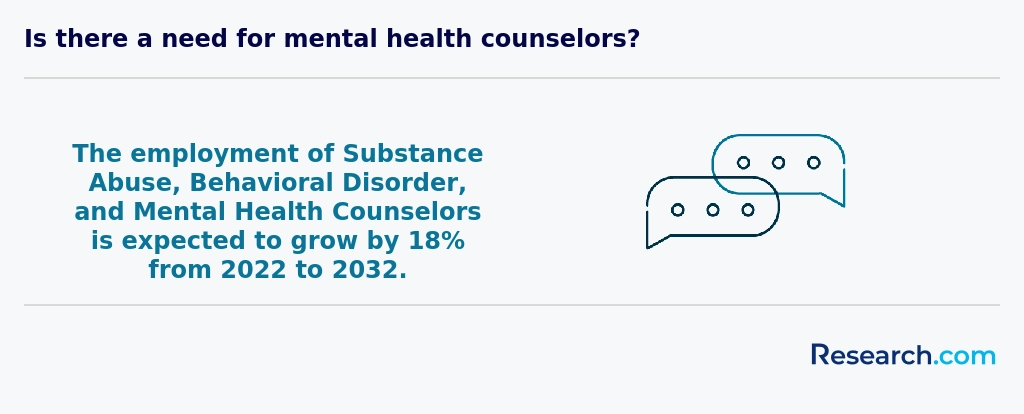
- Employment for mental health counselors in Illinois is projected to grow 14% from 2022 to 2032, faster than average for all jobs.
- Starting salaries for counselors range from $40,000 to $50,000 annually, with experienced counselors earning up to $75,000, especially in urban areas like Chicago.
How long does it take to complete counseling degree in Illinois?
Completing a counseling degree in Illinois typically takes two to three years for most full-time master's students, reflecting the common experience at institutions like Northern Illinois University or Illinois State University. Graduates often describe this period as both challenging and rewarding, balancing intense coursework with valuable practicum experiences that shape their professional identity.
For part-time students juggling work or family, the timeline can extend to three to five years, providing flexibility but requiring strong commitment. Those starting with a bachelor's degree usually spend four years on undergraduate studies before moving into graduate programs, which many find exciting as they transition into specialized counseling roles.
Doctoral candidates at Illinois universities may spend an additional four to seven years post-master's, immersing themselves in research and advanced clinical training. With emerging online and hybrid program options, future students could potentially reduce these timelines while maintaining the rigorous hands-on experiences Illinois demands for licensure. This evolving flexibility fosters optimism and accessibility for aspiring counselors across the state.
Licensure Requirements in Illinois
- Earn a master’s degree in counseling (minimum 60 semester hours) from a CACREP-accredited program like cacrep online counseling programs.
- Complete 3,360 hours of supervised clinical experience under an approved supervisor.
- Pass the National Counselor Examination (NCE) and the Illinois Jurisprudence Examination.
- Apply to the Illinois Department of Financial and Professional Regulation (IDFPR) with official transcripts, exam scores, and required fees.
- Maintain licensure by completing 20 continuing education credit hours every two years.
What's the difference between online and on-campus counseling degree?
Online and on-campus counseling degree programs in Illinois offer distinct experiences that shape both learning and professional growth. Graduates from popular universities like Northeastern Illinois University appreciate the online format's flexibility, enabling them to balance coursework with busy jobs or family life through asynchronous classes. Imagine studying late at night after work without a commute-this freedom resonates deeply with many working adults.
Conversely, graduates from on-campus programs at institutions such as Illinois State University often cherish the vibrant, face-to-face interactions with faculty and peers. They describe the hands-on practicum placements on or near campus as invaluable for building confidence and clinical skills needed for licensure in Illinois. On-campus students often experience a stronger sense of community, fostering lasting professional networks.
With Illinois institutions increasingly offering CACREP-accredited programs in both formats, future students might expect hybrid approaches that combine online convenience with in-person engagement. This evolving landscape promises greater accessibility without sacrificing the enriched experiences of traditional campus life.
Accreditation and Licensure Requirements in Illinois
Counselors in Illinois must graduate from an approved program and meet state board criteria before practicing.
- Enroll in a CACREP-accredited program, such as recommended cacrep online counseling programs
- Complete at least 60 semester hours of graduate coursework in counseling
- Accumulate a minimum of 700 supervised practicum and internship hours
- Pass the National Counselor Examination (NCE) or equivalent board exam
- Submit an application and supporting documents to the Illinois Department of Financial and Professional Regulation
- Fulfill continuing education requirements (30 hours every two years) to maintain Licensed Professional Counselor status
What is the average cost of counseling degree in Illinois?
The average cost of a counseling degree in Illinois often varies based on residency and institution type. For many in-state students pursuing a counseling degree at public universities like Illinois State University or the University of Illinois Urbana-Champaign, the median total cost typically hovers around $20,960. Graduates recall balancing tuition costs with the rewarding experience of immersive clinical internships, which although sometimes unpaid, offer invaluable hands-on training. Out-of-state students generally face a higher median cost near $38,115, reflecting increased tuition, which can feel challenging but also sparks motivation to secure scholarships or assistantships.
Private institutions such as Adler University and Loyola University Chicago tend to have higher tuition fees, which can approach or exceed the median total out-of-state cost. Students often describe the investment in these programs as worthwhile, given the personalized attention and extensive networking opportunities that enrich their professional development. Considering these factors helps frame the average cost of counseling degree in Illinois as a multifaceted commitment encompassing more than just tuition.
When exploring Illinois counseling degree tuition and fees, many graduates emphasize the importance of factoring in additional expenses like books, certification exam fees, and living costs. Their stories highlight how proactive financial planning and leveraging financial aid options can significantly ease these burdens, encouraging prospective students to view the cost as manageable.
For those seeking detailed comparisons and options, resources listing the cheapest counseling schools in illinois can provide a practical starting point for navigating affordability while pursuing meaningful counseling careers.
Licensure and Certification Requirements in Illinois
To practice counseling in Illinois, graduates must secure licensure through the Illinois Department of Financial and Professional Regulation (IDFPR). The most common credential is the Licensed Professional Counselor (LPC), which ensures practitioners meet rigorous standards for education, supervised experience, and competency. Key steps to licensure include:
- Earning a CACREP-accredited master’s degree in counseling or a closely related field.
- Completing a minimum of 3,000 hours of supervised clinical experience, with at least 1,500 hours in direct client contact and 150 hours of clinical supervision.
- Passing the National Clinical Mental Health Counseling Examination (NCMHCE) or an equivalent state-approved exam.
- Submitting a completed application to IDFPR, including official transcripts, verification of supervised hours, exam score report, and the required fee. Once licensed, LPCs must renew their credential biennially by completing 30 hours of continuing education, including at least 1 hour in ethics. Courses that address topics such as trauma-informed care, diversity, and telehealth best practices not only satisfy renewal requirements but also enhance clinical effectiveness. For students comparing tuition and delivery formats, it can be helpful to explore cost-effective online alternatives-see our 2025 Most Most Affordable Online Counseling Degree Programs Ranking in Los Angeles, CA for additional insights into program affordability.
What financial aid is available to counseling degree students in Illinois?
Many counseling students in Illinois rely on federal student aid, accessed through FAFSA, to make their education more affordable. One graduate from a well-known Chicago university recalls how the Pell Grant significantly eased their financial worries, allowing them to focus on clinical training without the heavy burden of loans. Similarly, the Illinois Monetary Award Program (MAP) offers vital grant support to residents attending public institutions like Northern Illinois University, creating opportunities for students who might otherwise be daunted by high tuition costs.
Merit-based scholarships targeted at counseling specialties continue to grow, with students at institutions such as Loyola University Chicago benefiting from these tailored awards. Graduates frequently share how scholarships from professional bodies like the Illinois Counseling Association have motivated them, providing both financial aid and a sense of belonging within their future profession.
Looking ahead, innovative employer tuition reimbursement programs in Illinois' health service sectors show promise, helping working students balance income with advancing their counseling credentials. Graduate assistantships offer another pathway; firsthand accounts from students at Illinois State University emphasize the dual benefit of financial support and practical experience crucial for licensure.
Licensure Requirements for Counselors in Illinois
Before practicing as a counselor in Illinois, candidates must meet specific licensure requirements set by the Illinois Department of Financial and Professional Regulation (IDFPR). These steps ensure graduates are fully prepared to provide safe, ethical, and effective mental health services. 1. Educational Credentials • Earn a master’s or doctoral degree in counseling (minimum 60 credit hours) from a CACREP-accredited institution. • Verify that your coursework includes core content areas such as human growth and development, group counseling, assessment, and ethics. 2. Supervised Clinical Experience • Complete at least 48 weeks (2,000 hours) of supervised clinical practice under a qualified licensed counselor or psychologist. • Ensure a minimum of 100 hours of direct client contact and 100 hours of supervision, as outlined by IDFPR. 3. Examination • Pass the National Counselor Examination (NCE) or the National Clinical Mental Health Counseling Examination (NCMHCE) administered by NBCC. • Submit official score reports to IDFPR as part of your licensure application. 4. Application and Fees • Submit a completed application form, official transcripts, verification of supervised experience, and examination scores to IDFPR. • Pay the non-refundable application and licensure fees, currently totaling approximately $200. 5. Continuing Education and Renewal • Maintain licensure by completing 36 hours of continuing education (CE) every two years, including at least 6 hours in ethics. • Report CE credits and renewal fees to IDFPR prior to your license expiration date. Navigating state licensure can vary, especially if you plan to relocate-explore additional pathways such as how to become a therapist in california for a comparative overview.
What are the prerequisites for enrolling in counseling degree program in Illinois?
To enroll in a counseling degree program in Illinois, prospective students typically need a bachelor's degree from an accredited institution, which doesn't always have to be in psychology but benefits from related coursework in social sciences or human services. Graduates from universities like the University of Illinois Urbana-Champaign often reflect on how their foundational studies strengthened their application. A minimum GPA around 3.0 is commonly expected, signaling readiness for graduate-level challenges.
Many programs still request GRE scores, though some Illinois schools are gradually waiving this requirement to increase access, a shift welcomed by recent applicants who found it relieving. Letters of recommendation and personal statements remain crucial, allowing candidates to showcase their passion and interpersonal strengths - skills vital in counseling, as graduates from Loyola University Chicago attest.
Real-world experience in mental health or social services is increasingly valued, with students who volunteered nearby sharing that it boosted confidence and acceptance chances. Illinois counseling institutions are clearly evolving to balance academic rigor with practical empathy, preparing hopefuls for fulfilling careers.
Most Affordable Counseling Schools in Illinois
To make an informed decision about pursuing a counseling degree in Illinois, it's essential to consider the financial implications. Many prospective students are concerned about the cost of tuition and how it might impact their future career prospects. Fortunately, there are several affordable options available in Illinois, offering high-quality education without the hefty price tag. For those interested in exploring these options, visiting the cheapest counseling schools in illinois can provide valuable insights into the most affordable programs in the state, enabling students to balance their educational aspirations with financial reality. By choosing an affordable counseling program, individuals can embark on a fulfilling career path in counseling without being burdened by excessive student debt, ultimately allowing them to focus on making a positive impact in their communities.
What courses are typically in counseling degree programs in Illinois?
Students enrolled in counseling programs at universities like the University of Illinois or Loyola often describe foundational courses such as Human Growth and Development and Counseling Theories and Techniques as eye-opening, revealing the complexities of human behavior through engaging lectures and case studies. Imagine understanding a client's background through lifespan development or mastering intervention strategies that graduates repeatedly find empowering and transformative in their practicum experiences.
Ethical and legal issues courses frequently spark meaningful discussions, helping students navigate real-world dilemmas, while assessments and testing classes equip them with practical skills to interpret psychological tools confidently. One graduate mentioned how the Multicultural Counseling course enhanced their ability to truly connect with clients from diverse backgrounds, a vital skill in Illinois' varied communities.
Specialized coursework like group counseling and research methods is complemented by hands-on practicum and internship opportunities, which Illinois students cherish. These experiences provide direct client engagement, blending theory with practice, and fostering professional growth in a supportive learning environment.
What types of specializations are available in counseling degree programs in Illinois?
Counseling degree specializations in Illinois often include Clinical Mental Health Counseling, School Counseling, Marriage and Family Counseling, and Addiction Counseling. Graduates from popular universities in Illinois frequently share their excitement about how these programs prepare them with real-world skills, such as diagnosing mental health disorders or providing support within K-12 schools. Clinical Mental Health Counseling remains a favorite for those aiming for Licensed Professional Counselor certification, combining academic rigor and practical experience tailored to Illinois licensure standards.
Other Illinois counseling degree program concentrations like gerontological counseling and rehabilitation counseling are gaining traction as students respond to the growing needs of aging populations and individuals with disabilities. Students appreciate hands-on practicum opportunities that allow them to engage directly with these communities, fostering a deep sense of fulfillment and impact.
Many students also explore emerging trends in addiction counseling, preparing for credentials like the Certified Alcohol and Other Drug Abuse Counselor. For those curious about various pathways, some reflect on their journey and recommend researching how to become a therapist in california as a supplementary resource to compare licensure approaches and broaden their perspective.
How do you choose the best counseling degree in Illinois?
Choosing the best counseling degree programs Illinois offers often depends on aligning your specialization interests with the strengths of particular universities. Graduates from schools known for clinical mental health counseling frequently share how the hands-on experience within Chicago's diverse communities enriched their learning and prepared them emotionally for real-world challenges. Meanwhile, others who pursued school counseling emphasize the importance of program flexibility, especially those balancing work and family through part-time or evening courses at institutions in the suburbs.
Considering affordable counseling degrees in Illinois can make a significant difference, as tuition varies widely. Many graduates highlight how finding programs with CACREP accreditation helped them meet Illinois's rigorous LPC licensure requirements without unnecessary detours. They also recommend looking into financial aid and assistantships that often ease the burden. One recently graduated student from a mid-sized public university found success in programs that had strong partnerships offering clinical internships nearby, providing valuable practical hours required for licensure.
Future students should explore programs with reliable licensure pass rates and mentorship opportunities tied to faculty with active research in counseling trends. Resources like the Illinois Counseling Association provide insightful guidance on evolving certification standards. For those eager to blend convenience with quality, reviewing the 2025 Most Most Affordable Online Counseling Degree Programs Ranking in Los Angeles, CA offers a glimpse into emerging online pathways that Illinois schools may soon embrace, enabling even greater access to top counseling education.
What career paths are available for counseling degree students in Illinois?
Career paths available for counseling degree graduates in Illinois are broad and evolving, reflecting increasing social awareness and community needs. Graduates from well-known institutions such as DePaul University and Illinois State University have found rewarding roles as Licensed Professional Counselors (LPCs), working in hospitals, community mental health centers, or private practice to provide vital mental health therapy and crisis intervention. Many report a deep sense of fulfillment helping individuals navigate complex emotional challenges.
Emerging trends suggest growth in school counseling as Illinois schools prioritize student mental health. Graduates often share how obtaining the state school counselor endorsement has opened doors in K-12 settings, supporting academic and social development. Counseling career options in Illinois also include addiction counseling, an expanding field where Certified Alcohol and Other Drug Abuse Counselors (CADC) play a crucial role in rehabilitation programs.
Others pursue specialized paths like marriage and family therapy or rehabilitation counseling. Vocational guidance roles are also gaining traction as career counselors. Illinois graduates looking for flexible study options might explore opportunities such as the top associate degree in 6 months online accredited, which can complement their educational journey and support faster entry into the workforce.
What is the job market for counseling degree in Illinois?
The job market for counseling degree holders in Illinois is promising, with strong growth driven by increasing mental health awareness and expanding healthcare access. Graduates from universities like Illinois State University often share how they were able to secure positions in diverse settings-from urban community health centers in Chicago to rural school districts-reflecting the broad range of career opportunities available. This outlook aligns well with the Illinois counseling degree job outlook, indicating sustained demand and competitive salaries that motivate many students.
Counseling graduates often highlight the value of state licensing credentials like the LPC and LCPC in advancing their careers, allowing them to specialize in areas such as marriage and family therapy or addiction counseling. Many feel hopeful about future roles as the state promotes mental health initiatives, especially in underserved communities. To those weighing educational costs, opportunities exist at public schools, contributing to more affordable paths. Some students even explore easiest bachelors degree options to enter the field efficiently.
Overall, counseling career opportunities in Illinois are expanding, offering graduates a supportive environment to build fulfilling careers that make a positive difference in people's lives.
Frequently Asked Questions About counseling
Counseling degree students in Illinois can maximize their learning by engaging actively in both coursework and practical experiences. Illinois requires supervised clinical hours for licensure, so students should seek internships or practicums early to gain hands-on skills, often offered through university partnerships with local agencies. According to the Illinois Department of Financial and Professional Regulation, accumulating these hours under qualified supervision is essential for future licensure as a Licensed Professional Counselor (LPC).
Students should also take advantage of Illinois-based professional associations, such as the Illinois Counseling Association, which provide networking, workshops, and updated industry information. Additionally, utilizing campus resources and staying informed about legislative changes affecting counseling practices in Illinois helps students prepare effectively for their careers.
Emerging niches in the counseling field reflect evolving societal needs and expanding opportunities for Illinois graduates. One growing specialty is trauma-informed counseling, addressing the long-term effects of adverse experiences. This area is critical given Illinois' diverse urban populations and increased awareness of mental health. Another key niche is gerontological counseling, focusing on aging-related issues such as dementia and end-of-life planning, relevant with Illinois' expanding senior population.
Substance abuse counseling continues to be vital, especially with the opioid crisis impacting many Illinois communities. Additionally, career counseling that incorporates technology and remote work trends is expanding, supporting clients in adapting to changing job markets. Data from the Illinois Department of Financial and Professional Regulation highlights increasing licensure in these specialties, signaling strong demand.
After earning a counseling degree in Illinois, preparing for the job market requires several strategic steps. First, graduates must pursue licensure through the Illinois Department of Financial and Professional Regulation (IDFPR), which typically involves completing supervised clinical hours and passing a licensing exam. According to IDFPR, most Licensed Professional Counselors (LPC) candidates need 3,360 hours of post-master's supervised experience.
Networking is essential; joining professional organizations such as the Illinois Counseling Association can provide job leads and continuing education opportunities. Recent employment data from the U.S. Bureau of Labor Statistics indicates a 12% growth in mental health counselor jobs in Illinois through 2030, highlighting increasing demand.
Building a strong resume with internships or practicum placements during studies also improves job prospects. Developing skills in specialty areas like trauma or addiction counseling can further differentiate candidates.
Employers hiring counseling degree graduates in Illinois prioritize a blend of interpersonal and technical skills. Effective communication is essential, enabling counselors to build trust with clients from diverse backgrounds. According to the Illinois Department of Financial and Professional Regulation, employers also highly value strong ethical judgment and the ability to maintain client confidentiality, which are critical in compliance with state laws.
Problem-solving and crisis intervention skills are frequently requested, as Illinois counselors often work with individuals facing complex mental health challenges. Additionally, knowledge of state-specific counseling regulations and experience with electronic health record systems improve employability.
Data from the Bureau of Labor Statistics indicates teamwork and cultural competency are increasingly important in the Illinois counseling field, given the state's diverse population.
Finding internships in Illinois related to a counseling degree typically begins with exploring university partnerships and local agencies. Many Illinois colleges with counseling programs, such as the University of Illinois or Loyola University Chicago, offer internship placement assistance through their career centers and counseling departments.
Statewide, organizations like the Illinois Counseling Association provide resources and networking opportunities to connect students with internships. Additionally, licensed mental health clinics, schools, and hospitals often offer internship positions that meet Illinois Department of Financial and Professional Regulation (IDFPR) requirements for supervised experience.
According to the IDFPR, counseling students in Illinois must accumulate at least 2,000 hours of supervised internship before licensure, encouraging early and active internship engagement.
Online databases such as Handshake and Indeed frequently list Illinois-specific counseling internships, making digital search an effective strategy alongside direct outreach.
In Illinois, earning a counseling degree significantly enhances career mobility and advancement opportunities. Graduates who complete accredited programs are eligible for state licensure, such as the Licensed Professional Counselor (LPC), which is required to practice independently. According to the Illinois Department of Financial and Professional Regulation, licensed counselors often see a faster career progression and higher salaries compared to non-licensed professionals.
Moreover, counseling degrees expand employment options beyond clinical settings, including school, mental health agencies, and private practice. Data from the U.S. Bureau of Labor Statistics projects a 19% growth in employment of substance abuse, behavioral disorder, and mental health counselors in Illinois by 2030, indicating positive job prospects for graduates.
Professional development is also supported by degree programs that offer specialized training, helping graduates qualify for supervisory or administrative roles. In summary, a counseling degree in Illinois is a vital credential that facilitates upward mobility within a growing and evolving mental health field.
Studying for a counseling degree in Illinois equips students for interdisciplinary roles by emphasizing collaboration across various health and social service fields. Illinois programs often include coursework in psychology, social work, education, and healthcare systems, reflecting the state's integrated approach to mental health services.
Many universities incorporate practical training through internships in diverse settings such as hospitals, schools, and community agencies. This exposure helps students understand different professional perspectives and develop skills to work effectively on interdisciplinary teams.
According to the Illinois Board of Higher Education, 70% of counseling graduates find roles that require coordination with medical, social, and educational professionals, highlighting the degree's relevance beyond traditional counseling.
When choosing between a thesis and a non-thesis counseling degree program in Illinois, consider your career goals and learning preferences. A thesis option typically involves conducting original research, appealing to students interested in clinical practice, counseling psychology, or pursuing a doctorate later. Non-thesis programs focus more on coursework and practical experience, which suits those aiming to enter the workforce quickly as licensed counselors.
In Illinois, the Board of Professional Counseling requires supervised experience and specific coursework, regardless of program type. According to the Illinois Department of Financial and Professional Regulation, about 60% of counseling graduates pursue non-thesis tracks, valuing hands-on internships.
Research-intensive students might prefer schools with accredited theses, such as those recognized by CACREP, to enhance future education or academic roles.
Students based in Illinois who wish to pursue counseling degrees abroad have several options through study abroad programs offered by their Illinois institutions. Many Illinois universities with counseling programs participate in exchange agreements or partnerships with overseas universities, allowing students to gain international experience while completing degree requirements.
Illinois State University and the University of Illinois system both support these global opportunities. Additionally, students may seek accredited counseling programs abroad but should verify that their credits transfer and meet Illinois licensure requirements. The Illinois Department of Financial and Professional Regulation provides guidance on how international coursework factors into state licensing.
Exploring counseling studies abroad can enrich students' cultural competence, a crucial skill in counseling diverse populations in Illinois, where nearly 22% of the population speaks a language other than English at home (U.S. Census Bureau, 2020).
Students pursuing counseling degrees in Illinois can benefit from various part-time job opportunities that enhance their educational experience. Working as a behavioral health technician or mental health aide in clinics provides hands-on exposure to patient care and therapeutic techniques. According to the Illinois Department of Employment Security, these roles often require less formal education but offer valuable practical skills relevant to counseling.
Additionally, positions such as case management assistant or peer support specialist in social service agencies provide direct client interaction. These roles allow students to develop communication and crisis intervention skills, crucial for future licensure.
Volunteer roles in school counseling departments also help students understand educational counseling frameworks.
Counseling students in Illinois have access to a variety of networking opportunities essential for their professional growth. Many universities with counseling programs maintain partnerships with local mental health agencies, offering students real-world internships and field experiences. The Illinois Counseling Association (ICA) plays a key role by hosting annual conferences, workshops, and regional meetings that connect students with licensed counselors and educators across the state.
Additionally, students can join campus-based counseling clubs or honor societies, which often invite guest speakers and organize networking events. According to the Illinois Board of Higher Education, programs in Illinois increasingly emphasize professional development through such connections, helping students build lasting careers.
Alumni networks play a crucial role in supporting counseling degree students in Illinois. These networks provide valuable connections to professionals who understand the state's licensing requirements and job market. According to the Illinois Counseling Association, strong alumni ties can improve job placement rates for graduates seeking licensure as Licensed Professional Counselors (LPCs).
Students benefit from mentorship opportunities, workshops, and career advice shared by experienced alumni. Networking events organized by alumni groups often include local healthcare providers and school counselors, increasing access to internships and employment.
Moreover, alumni networks facilitate staying updated on continuing education, which is required by the Illinois Department of Financial and Professional Regulation to maintain counseling licenses. Overall, active alumni communities enhance students' career readiness and professional growth.
In Illinois, counseling degree programs often offer several pathways to tailor your education to specific career goals. Many universities provide concentrations such as school counseling, clinical mental health counseling, or marriage and family therapy. Choosing a specialization aligns your studies with licensure requirements set by the Illinois Department of Financial and Professional Regulation (IDFPR).
Students can also select electives that enhance skills in areas like substance abuse counseling or trauma-informed care. Practical components, including internships or practicum placements, may be arranged to match your preferred work setting, whether schools, hospitals, or private practice.
According to the National Center for Education Statistics, Illinois has over a dozen accredited programs, supporting diverse career options within the counseling field.
Counseling students in Illinois often face several challenges during their academic journey. One major issue is the demanding clinical hour requirements that many programs enforce, typically ranging from 600 to 1,200 hours, which can be difficult to balance with work and personal commitments. According to the Illinois Department of Financial and Professional Regulation, these practicum and internship hours are necessary for licensure but often present scheduling conflicts and emotional stress.
Additionally, students encounter financial pressure as tuition and related expenses for counseling degrees in Illinois can be significant, especially for those attending private institutions. Mental health stigma in some communities also impacts students' ability to engage in fieldwork effectively. Navigating licensure exams, such as the National Counselor Examination, adds further complexity to their path.
With a counseling degree in Illinois, graduates can pursue several professional certifications to enhance their careers. The most common certification is the Licensed Professional Counselor (LPC), which requires completing a master's degree in counseling, supervised clinical hours, and passing the National Counselor Examination (NCE). According to the Illinois Department of Financial and Professional Regulation (IDFPR), LPC credential holders are authorized to provide mental health services across the state.
Additionally, counselors may seek certification as Licensed Clinical Professional Counselors (LCPC), which involves further supervised experience and testing. School counselors can pursue the Illinois Professional Educator License with a School Counseling endorsement, enabling them to work in educational settings. Other specialty certifications include certifications in addiction counseling through the Illinois Certification Board.
Writing a winning application for a counseling program in Illinois requires clear articulation of your motivation and relevant experience. Most programs value applicants who demonstrate a strong understanding of counseling roles and ethics, as outlined by the Illinois Department of Financial and Professional Regulation (IDFPR).
Highlight your academic background, emphasizing any psychology, social work, or human services courses, since Illinois counseling programs often expect foundational knowledge. Including volunteer work or internships in mental health settings can strengthen your profile.
Strong letters of recommendation are critical. Aim for references from professionals familiar with your interpersonal skills and commitment to counseling. Many Illinois programs also require a personal statement or essay, so focus on explaining why you want to serve diverse Illinois communities and how you meet accreditation standards set by bodies like CACREP.
The counseling profession holds strong recognition worldwide, with growing demand for mental health services. In the United States, including Illinois, counseling careers are shaped by global trends emphasizing holistic care and cultural competency.
Illinois reflects this with its increasing number of accredited counseling programs that align with standards from the Council for Accreditation of Counseling & Related Educational Programs (CACREP). This accreditation is respected internationally, supporting student mobility and career opportunities abroad.
According to the Illinois Department of Employment Security, the state anticipates a 14% growth rate for clinical, counseling, and school psychologists between 2020 and 2030, indicating stable job prospects influenced by global awareness of mental health.
Moreover, global perspectives encourage counselors in Illinois to integrate evidence-based approaches and embrace diversity, skills valued across many countries. This international outlook enhances career versatility for graduates entering the field locally or abroad.
Gaining practical experience while pursuing a counseling degree in Illinois is essential for licensure and career readiness. Students often engage in supervised internships or practicum placements, typically required by Illinois licensure boards. These experiences usually comprise 600 to 1,200 hours of direct client contact under supervision, allowing students to apply theoretical knowledge.
Many universities maintain partnerships with local hospitals, community mental health centers, and schools to provide these placements. Additionally, the Illinois Department of Financial and Professional Regulation outlines specific supervision standards to ensure quality training. Networking with professional associations like the Illinois Counseling Association can also help students find valuable fieldwork opportunities.
Choosing the right concentration within a counseling degree program in Illinois depends on your career goals and interests. Illinois offers concentrations such as clinical mental health, school counseling, and marriage and family therapy, each aligned with specific licensure paths regulated by the Illinois Department of Financial and Professional Regulation.
Consider job outlook data from the Illinois Department of Employment Security, which indicates that clinical mental health counselors and school counselors have steady demand growth in the region. Additionally, review the curriculum details and practicum opportunities for each concentration to ensure they match your professional aspirations.
Finally, assess program accreditation, such as CACREP approval, which assures quality education and eases the licensing process within Illinois.
Related Counseling Rankings for Nearby States
- 2027 Most Popular Counseling Degree Programs Ranking in Indiana
- 2027 Most Popular Counseling Degree Programs Ranking in Wisconsin
- 2027 Most Popular Counseling Degree Programs Ranking in Iowa
- 2027 Most Popular Counseling Degree Programs Ranking in Missouri
- 2027 Most Popular Counseling Degree Programs Ranking in Michigan
- 2027 Most Popular Counseling Degree Programs Ranking in Minnesota
- 2027 Most Popular Counseling Degree Programs Ranking in Ohio
- 2027 Most Popular Counseling Degree Programs Ranking in Tennessee
- 2027 Most Popular Counseling Degree Programs Ranking in West Virginia
- 2027 Most Popular Counseling Degree Programs Ranking in Oklahoma
Top Trending Counseling Rankings
See What Experts Have To Say About Studying Counseling
Read our interview with Counseling experts

Charles Figley
Counseling Expert
Kurzweg Distinguished Chair in Disaster Mental Health
Tulane University

References
- How to Become an Illinois School Counselor (2026) https://www.school-counselor.org/counselor/illinois-become-school-counselor/
- Counselor Education https://www.ilcounseling.org/page/counselor_education
- Interdisciplinary Training: Preparing Counselors for Collaborative Practice https://nexusipe.org/informing/resource-center/interdisciplinary-training-preparing-counselors-collaborative-practice
- 6 Therapy Niches to Consider for Your Practice - Talkspace https://www.talkspace.com/blog/therapy-niches/
- How to Choose a Niche in Private Practice (and Why It Matters) https://www.coastlinecounselingassociation.com/blog/how-to-choose-a-niche-in-private-practice-and-why-it-matters
- How To Attract Ideal Therapy Clients - Owl Practice https://owlpractice.ca/blog/therapy-niche-how-to-attract-ideal-clients/
- The Challenges of Guidance Counselors in Supporting Students’ Mental Health https://theaspd.com/index.php/ijes/article/view/2406
- Home https://www.husson.edu/online/blog/2025/10/benefits-of-alumni-networks
- What Degree Do I Need to Become a Counselor or Therapist? https://paloaltou.edu/resources/blog/what-degree-do-i-need-become-counselor-or-therapist
- 5 Ways Counselling Skills Can Boost Career Prospects - Open Colleges https://www.opencolleges.edu.au/blogs/articles/how-counselling-skills-can-boost-your-employability-and-help-you-excel


