2027 Most Affordable Online Criminal Justice Degree Programs Ranking in West Virginia

Co-Founder and Chief Data Scientist
Exploring a career in criminal justice can open doors to meaningful and impactful work in your community. This article introduces the 2027 Most Affordable Online Criminal Justice Degree Programs Ranking in West Virginia, created by the Research.com team of data scientists. It's designed to help you navigate your options with clear, data-driven insights.
By reading this, you'll discover which programs offer quality education without breaking the bank. Taking this step toward a degree can be both exciting and empowering, and we're here to support you in making an informed choice that fits your goals and budget.
Key benefits of getting online criminal justice degree in West Virginia
- Criminal justice graduates in West Virginia can earn competitive salaries, such as a Police Officer with a mean annual wage of $76,550 or a Crime Scene Investigator earning around $95,930.
- Graduates often find diverse career paths including roles like Correctional Officer, Court Clerk, and Forensic Science Technician, offering options to match your interests and goals.
- Online degrees provide flexibility for busy students, allowing you to balance work or family while earning your degree, which many West Virginia students find empowering and convenient.
- Key benefits of getting online criminal justice degree in West Virginia
- What can I expect from online criminal justice degree in West Virginia?
- Where can I work with online criminal justice degree in West Virginia?
- How much can I make with online criminal justice degree in West Virginia?
- 2027 Most Affordable Online Criminal Justice Degree Programs Ranking in West Virginia
- Key Findings
- How long does it take to complete online criminal justice degree in West Virginia?
- Student Support and Success Resources for Online Criminal Justice Degrees in West Virginia
- What's the difference between online and on-campus criminal justice degree?
- What is the average cost of online criminal justice degree in West Virginia?
- Job Outlook and Future Growth Projections
- What financial aid is available to online criminal justice degree students in West Virginia?
- What are the prerequisites for enrolling in online criminal justice degree program in West Virginia?
- What courses are typically in online criminal justice degree programs in West Virginia?
- What types of specializations are available in online criminal justice degree programs in West Virginia?
- How do you choose the best online criminal justice degree in West Virginia?
- What career paths are available for online criminal justice degree students in West Virginia?
- What is the job market for online criminal justice degree in West Virginia?
- Related Criminal Justice Rankings for Nearby States
- Top Trending Criminal Justice Rankings
- See What Experts Have To Say About Studying Criminal Justice
What can I expect from online criminal justice degree in West Virginia?
The average cost of an online criminal justice degree in West Virginia varies depending on the institution but tends to remain affordable, especially for in-state students. Graduates from prominent schools like West Virginia University or Marshall University often share that paying tuition on a per-credit basis allows greater control over their education expenses. Typically, tuition rates range from moderate to competitive within the region, making it feasible to balance budgets while pursuing degrees remotely.
Many students appreciate the availability of financial aid, scholarships, and flexible payment plans designed to ease out-of-pocket costs. For example, some graduates describe how scholarship awards helped reduce their tuition burden significantly, enabling them to focus more on their studies and internships. Others highlight how affordable tuition contributed to managing family and work commitments without sacrificing educational quality.
In practical terms, a student enrolling in an online criminal justice program in West Virginia can expect to invest a reasonable amount consistent with local standards, reinforced by regional accreditation. This foundation supports access to federal financial aid and credit transfer opportunities, essential for career advancement.
Where can I work with online criminal justice degree in West Virginia?
Graduates with an online criminal justice degree in West Virginia frequently secure positions within local, county, and state law enforcement agencies. Many find fulfilling careers as police officers, detectives, or crime scene investigators, particularly benefiting from the state's emphasis on hiring individuals familiar with regional needs. Those who studied at well-regarded institutions like West Virginia University or Fairmont State University often share positive experiences about how their education prepared them for these dynamic roles.
Correctional facilities throughout the state also offer meaningful opportunities. Alumni from these programs often work as correctional officers or probation officers, roles that enable them to contribute directly to inmate supervision and rehabilitation efforts under the West Virginia Division of Corrections and Rehabilitation.
Beyond public agencies, private sector jobs in security management, private investigation, and loss prevention attract graduates who appreciate the diverse career paths enabled by their degree. Hospitals, universities, and corporations increasingly seek security professionals with formal criminal justice credentials, reflecting growing demand in various sectors statewide.
How much can I make with online criminal justice degree in West Virginia?
Graduates of online criminal justice programs in West Virginia can expect varied earning potential depending on their chosen career path. For instance, police officers typically earn a mean annual wage of $76,550, significantly higher than the state median and reflecting the value of statewide law enforcement roles. Correctional officers earn an average of $58,810 per year, which aligns with the steady demand for these positions in West Virginia's correctional facilities.
For those focusing on forensic science, the earning potential increases, with forensic science technicians making around $71,540 annually, while crime scene investigators can reach an impressive $95,930. These figures highlight the benefit of pursuing specialized tracks available through institutions like West Virginia University and Marshall University. Graduates often find that their academic preparation enhances confidence and career satisfaction as they step into these roles.
Additionally, positions such as court clerks earn a mean wage near $48,760, offering stable employment opportunities for graduates seeking administrative roles within the legal system. These salary prospects, combined with the flexibility of online education, make pursuing a criminal justice degree in West Virginia an encouraging pathway for career advancement.
2027 Most Affordable Online Criminal Justice Degree Programs Ranking in West Virginia
How do we rank schools?
Investing in your education is a significant decision that can shape your future, and the Research.com team understands the importance of making informed choices. To assist prospective students in West Virginia, we have meticulously created the "2027 Most Affordable Online Criminal Justice Degree Programs Ranking." Our dedication to quality, credibility, and accuracy is demonstrated through thorough research and careful analysis conducted to produce this ranking.
We utilized the following reputable data sources to ensure a comprehensive evaluation of affordable online criminal justice programs:
By exploring this ranking, readers will gain valuable insights into the most affordable and credible online criminal justice degree options in West Virginia, empowering them to make well-informed educational decisions. For more information about how this ranking was developed, please visit our Research.com methodology page.

# 2 position
Glenville State University
Bachelor of Criminal Justice


Key Findings
- Online criminal justice bachelor's degrees in West Virginia require 120 to 130 credit hours, similar to on-campus programs.
- Tuition costs range from $250 to $400 per credit hour, totaling approximately $30,000 to $50,000 for the degree.
- In-state tuition rates may be available for online students living in West Virginia, reducing overall costs.
- Starting salaries for entry-level jobs like police or correctional officers typically range from $35,000 to $40,000 annually.
- Experienced professionals can earn median salaries between $50,000 and $60,000, with job growth near the national average of 5% over the next decade.
- Most programs include internships or practicum experiences and require regional accreditation recognized by state criminal justice agencies.
How long does it take to complete online criminal justice degree in West Virginia?
Completing an online criminal justice degree in West Virginia generally aligns with national trends but offers tailored flexibility for local students. Graduates from popular institutions such as West Virginia University often share that an associate degree typically takes about two years of full-time study, allowing them to balance work and family while covering essential topics like law enforcement and corrections. Bachelor's programs usually span four years of full-time coursework, with 120 credit hours emphasizing criminology and policy, though many students appreciate the option to study part-time, extending their timeline to six years if needed.
At the graduate level, master's degrees demand roughly two years full-time, focusing on specialized areas like forensic psychology. However, many find that part-time pacing fits their professional lives, stretching completion to three years or more. These flexible structures help local students manage careers and education simultaneously, providing a realistic path to advancing in West Virginia's growing criminal justice sector.
Student Support and Success Resources for Online Criminal Justice Degrees in West Virginia
Online criminal justice degree students in West Virginia can take advantage of a robust ecosystem of support services designed to boost academic performance, professional development, and well-being. Academic Advising and Tutoring • Dedicated academic advisors guide you through course selection, transfer credit reviews, and graduation planning. • Virtual tutoring centers offer on-demand assistance in subjects like criminal law, forensics, and research methods. Technical and Library Support • 24/7 technical help desks ensure seamless access to the learning management system, video lectures, and simulation labs. • Digital library portals provide access to journals, e-books, and legal databases crucial for course projects and capstone research. Career Services and Networking • Career counselors help you craft resumes, prepare for interviews, and connect with West Virginia law enforcement agencies. • Alumni mentorship programs and virtual networking events offer real-world insights and job leads. Wellness and Community Engagement • Online counseling and wellness resources support mental health, stress management, and work–study balance. • Student forums and virtual study groups foster community among peers facing similar challenges. Financial Literacy Workshops • Financial planning seminars and webinars explain budgeting, student loan management, and strategies to minimize debt. • These workshops complement your understanding of criminal justice degree cost, helping you make informed decisions about expenses. By leveraging these comprehensive student support services, West Virginia’s online criminal justice students can maximize learning outcomes, maintain work–life balance, and launch fulfilling careers in public safety and legal sectors.
What's the difference between online and on-campus criminal justice degree?
Online and on-campus criminal justice degree programs in West Virginia differ primarily in delivery and campus engagement. Online programs, often offered by institutions like West Virginia University and Fairmont State University, provide outstanding flexibility, allowing students to study asynchronously while managing work or family commitments. Graduates appreciate being able to complete coursework anytime, especially those working in West Virginia's law enforcement sectors who cannot relocate or adhere to strict class schedules.
Conversely, on-campus programs emphasize direct interaction with faculty and peers, fostering networking opportunities essential in criminal justice careers. Students at campuses in Charleston or Morgantown benefit from immediate access to libraries and career services, enriching their academic experience through face-to-face collaboration.
Tuition typically ranges from $8,000 to $12,000 annually for in-state students regardless of format, but online learners often save significantly on commuting and housing. Both formats maintain rigorous curricula and require practical field experiences within West Virginia agencies, ensuring hands-on skill development invaluable for career advancement.
What is the average cost of online criminal justice degree in West Virginia?
The average cost of an online criminal justice degree in West Virginia generally centers around $25,260, reflecting a median total expense that balances both in-state and out-of-state tuition scenarios. Public institutions such as West Virginia University and Marshall University provide robust online programs where tuition aligns closely with state averages, making them attractive to many students seeking affordable online criminal justice programs West Virginia tuition fees. Graduates from these universities often share how the manageable costs allowed them to focus on their studies and career ambitions without excessive financial stress.
In practical terms, students enrolling in these programs typically encounter tuition rates near $330 per credit hour at public universities, translating into overall expenses in the range of $30,000 to $45,000 for a full bachelor's degree. Alongside tuition, there are additional fees such as technology charges and course materials, though these costs remain comparatively modest. Many students find that financial aid and scholarships substantially ease the financial burden, offering real opportunities to pursue education without compromise.
The favorable cost structures encourage a diverse group of learners, including working adults and those shifting careers, who appreciate transparent pricing coupled with quality instruction. West Virginia's online options also prepare graduates for professional certification pathways, including roles supported by internal auditor certifications needed, enhancing employability in criminal justice fields.
Job Outlook and Future Growth Projections
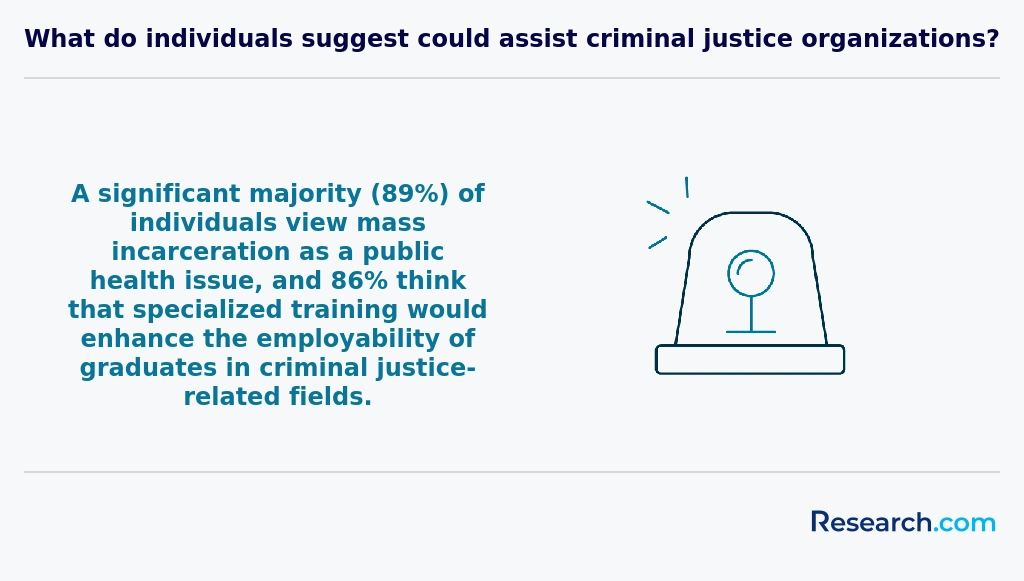
Understanding the long-term prospects for careers in criminal justice can help you balance potential earnings with the upfront criminal justice degree cost and make a sound investment in your future. According to the U.S. Bureau of Labor Statistics (BLS), overall employment for police and detectives is projected to grow 3% from 2022 to 2032, adding approximately 34,000 new positions nationwide. Correctional officer roles are expected to remain relatively stable, with a modest 2% increase over the same period, reflecting ongoing institutional staffing needs. • Forensic science technicians-an increasingly in-demand specialization within criminal justice-are forecast to experience 7% job growth between 2022 and 2032, faster than the average for all occupations. This uptick is driven by advances in DNA analysis, digital forensics, and a heightened emphasis on evidence-based investigations. • Opportunities in cybercrime and digital forensics are expanding even more rapidly, with some estimates suggesting up to 10% growth as law enforcement agencies and private firms tackle sophisticated online threats. Graduates with these skills often command starting salaries 5–10% above the industry mean. At the state level, West Virginia’s job market aligns closely with national trends. The West Virginia Department of Commerce reports a steady demand for law enforcement personnel, particularly in rural counties where recruitment challenges have led agencies to offer signing bonuses and tuition reimbursement-an immediate offset to educational expenses. Similarly, state agencies anticipate a need for 500 new correctional staff by 2028, underscoring the value of a degree that combines theoretical knowledge with hands-on online training. Career longevity is another important factor. Many criminal justice professionals retire after 20–25 years of service, creating a cycle of openings and advancement opportunities. Promotions to supervisory or administrative roles-such as detective sergeant or corrections superintendent-often require a bachelor’s or master’s degree in criminal justice, further enhancing return on investment. By comparing these growth projections and salary data against program costs and financing options, you can chart a clear pathway from enrollment to employment. With robust online offerings in West Virginia, you can position yourself to meet both current and future workforce needs in public safety, forensic science, and homeland security-fields where expertise and adaptability are rewarded with both financial and professional fulfillment.
What financial aid is available to online criminal justice degree students in West Virginia?
Online criminal justice students in West Virginia often rely on federal financial aid as their primary support. Graduates from institutions like West Virginia University have shared how completing the FAFSA unlocked Pell Grants that covered significant tuition portions without the burden of repayment. This made progressing through their degrees financially less stressful and more attainable.
The West Virginia Higher Education Grant (WVHEG) serves as an essential resource for many students attending regional colleges such as Fairmont State University. Need-based and resident-specific, these grants reduce reliance on loans, alleviating the anxiety associated with future debt.
Scholarships, although more limited for criminal justice majors, still play a role through local law enforcement foundations or university awards emphasizing merit and community involvement. Several graduates recall how small but targeted scholarships boosted their confidence and commitment to their studies.
Working students benefit from employer tuition assistance programs, particularly those employed in public safety fields across the state. This aid transforms education into a manageable financial step rather than a daunting expense. Private loans remain a last resort due to higher interest rates.
What are the prerequisites for enrolling in online criminal justice degree program in West Virginia?
To enroll in an online criminal justice degree program in West Virginia, applicants must first hold a high school diploma or GED certification, a requirement that ensures all students begin with a solid educational foundation. Graduates from well-known institutions in West Virginia often recall how completing foundational coursework in English, mathematics, and social sciences helped them develop the critical thinking and analytical skills essential for success in their studies and future careers.
Most programs also require submission of SAT or ACT scores, although many universities have adopted test-optional policies, allowing students to focus on their strengths demonstrated through personal statements and letters of recommendation. For example, students from West Virginia University frequently highlight how crafting a thoughtful personal essay allowed admissions committees to understand their passion for criminal justice and commitment to community safety.
Applicants may be asked to provide proof of relevant work or volunteer experience, especially when applying to accelerated tracks. Additionally, some programs require background checks due to the field's practical components, including internships with local law enforcement agencies. These requirements underscore the program's dedication to professional standards and help students confidently embark on meaningful careers in criminal justice.
What courses are typically in online criminal justice degree programs in West Virginia?
Online criminal justice degree programs in West Virginia typically include courses that provide a comprehensive understanding of the criminal justice system at both local and national levels. Graduates from universities like Fairmont State and West Virginia University often reflect on how foundational classes such as Introduction to Criminal Justice helped them grasp the interplay between law enforcement, courts, and corrections.
Courses in Criminology explore crime causes, integrating sociological and psychological perspectives, which graduates found essential for community-focused roles in West Virginia's unique social landscape. Law Enforcement Procedures and Legal and Ethical Issues prepare students to navigate the challenges officers face daily, often illuminated through real-world case studies from the state's coal-mining areas.
Practical courses like Corrections and Rehabilitation and Juvenile Justice resonate with students interested in reform and youth programs, reflecting local priorities. Additionally, research-focused classes equip learners with skills to evaluate crime data critically, a necessity stressed by graduates engaged in policymaking or social work across West Virginia.
What types of specializations are available in online criminal justice degree programs in West Virginia?
Online criminal justice degree specializations in West Virginia frequently include law enforcement administration, criminal investigation, corrections and rehabilitation, cybercrime and cybersecurity, and juvenile justice. Graduates from popular state institutions often describe how the law enforcement administration track prepared them for leadership roles in local police departments by emphasizing ethics, community engagement, and management skills. Similarly, students pursuing criminal investigation benefit from courses in forensic science and advanced evidence gathering, aiding them in careers as detectives or federal agents.
At well-regarded colleges in West Virginia, those focusing on corrections and rehabilitation gain practical insights into offender behavior and rehabilitation strategies, essential for work in prisons and probation services. The cybercrime and cybersecurity specialization reflects growing demand for expertise in digital forensics and cyber laws, equipping graduates to protect critical infrastructure. Juvenile justice tracks offer students training tailored to handling minors' legal challenges, a crucial area for community safety.
Students consistently praise the affordable criminal justice program concentrations West Virginia offers, which reduce financial stress while enabling focused professional development. For insights on expanding leadership skills alongside criminal justice, some turn to top executive MBA online degrees.top executive MBA online degrees.
How do you choose the best online criminal justice degree in West Virginia?
Choosing the best online criminal justice degree in West Virginia begins with verifying program accreditation, ensuring the degree holds value with employers and agencies. Graduates from West Virginia University's online Bachelor of Science in Criminal Justice frequently highlight the relevance of coursework tailored to local law enforcement and corrections systems, which enriches their career readiness. Prioritize programs that offer flexibility, as many students balance work and study; asynchronous courses that fit a busy schedule are common, though some hands-on training may require limited in-person attendance.
Affordability is also essential. Many find affordable criminal justice programs in West Virginia that align with the average tuition cost of roughly $9,000 per year, while also offering financial aid and scholarships. Consider programs with strong career support, internship opportunities with state agencies, and preparation for certification exams - key factors contributing to positive employment outcomes. Some students appreciate programs connecting coursework to real-world roles, helping them see a clear path ahead.
Finally, robust student services including advising and technical support enhance the experience. This comprehensive approach leads to confidence and satisfaction among alumni, who advise prospective students to evaluate all these aspects carefully. For those also weighing other career possibilities, understanding finance career potential can complement criminal justice knowledge in related administrative roles.
What career paths are available for online criminal justice degree students in West Virginia?
Graduates holding an online criminal justice degree in West Virginia pursue diverse career paths spanning law enforcement, corrections, legal services, and emerging fields like cybersecurity. Many find rewarding opportunities as police officers or sheriff's deputies, positions prevalent within West Virginia's Department of Public Safety. These roles demand application of criminal justice principles learned through accredited programs at popular institutions, fostering strong community engagement and investigative skills. Others excel as correctional officers or probation officers employed by the West Virginia Division of Corrections and Rehabilitation, where steady growth reflects the state's commitment to rehabilitation efforts.
Beyond traditional roles, the degree prepares graduates for legal system careers such as paralegals or victim advocates, requiring organizational acumen and collaboration with attorneys. In addition, students who specialize in digital forensics or homeland security can enter the expanding field of cybersecurity investigation, addressing increasingly complex online threats.
These criminal justice careers in West Virginia are complemented by practical academic experiences, with graduates sharing how programs encouraged adaptability and problem-solving. For those weighing alternatives, reviewing business administration job opportunities can also contextualize career decisions in public service fields.
What is the job market for online criminal justice degree in West Virginia?
The job market for online criminal justice degree holders in West Virginia remains robust, driven by steady demand across public safety, law enforcement, and corrections. Graduates from popular institutions such as West Virginia University and Fairmont State University find rewarding roles within state and local agencies, including the West Virginia State Police and Department of Corrections. Many have reported that their online degrees provided flexible learning alongside practical skills valued by employers, fitting into busy schedules while fulfilling educational requirements for law enforcement careers. This positive trend in online criminal justice jobs in West Virginia aligns with the broader workforce needs, where bachelor's degrees are increasingly essential for entry or advancement.
While salaries for police officers and sheriff's patrol positions average around $41,000 annually, many graduates appreciate the balance of compensation and cost of living in the state. Entry-level roles in corrections or private security start near $29,000, offering solid foundations for career growth. With tuition varying widely, prospective students often assess their options carefully; resources like the criminal justice degree cost help guide decisions toward affordable yet reputable online programs.
Strong analytical thinking, ethical judgment, and communication skills distinguish candidates in West Virginia's competitive market. Graduates frequently highlight that internships facilitated through local agencies amplify their real-world readiness, supporting a positive career outlook. This synergy between education and employment creates an encouraging environment for those pursuing a West Virginia criminal justice career outlook.
Frequently Asked Questions About criminal justice
Students pursuing online criminal justice degrees in West Virginia can maximize their learning by utilizing resources such as virtual libraries and academic support services offered by their institutions. Actively engaging in discussion forums and group projects builds critical thinking and practical application skills. According to the West Virginia Higher Education Policy Commission, nearly 60% of online learners benefit from dedicated tutoring and career counseling services tailored to criminal justice fields.
Additionally, students should seek internships or volunteer opportunities with local law enforcement agencies or correctional facilities, as West Virginia reported over 10,000 criminal justice professionals in 2023, providing varied practical experiences. Staying updated on state-specific laws and crime statistics via publicly available government databases strengthens theoretical knowledge with real-world context.
The criminal justice field in West Virginia is evolving, with emerging niches that reflect broader national trends. One key area is cybercrime investigation, driven by the rise in digital offenses. The FBI reports a 300% increase in cyber incidents nationally, impacting state-level law enforcement priorities.
Another growing niche is forensic psychology, which combines criminal justice with mental health expertise. This field helps in offender profiling and rehabilitation strategies.
Additionally, homeland security roles focusing on disaster response and counterterrorism are expanding. West Virginia's strategic infrastructure, including chemical plants, necessitates trained professionals in these areas.
Finally, restorative justice programs are gaining attention, promoting alternatives to incarceration that reduce recidivism rates locally.
After completing an online criminal justice degree in West Virginia, graduates should focus on practical experience and networking to enter the job market successfully. Internships with local law enforcement agencies or social services offer valuable hands-on learning. According to the West Virginia Division of Criminal Justice Services, the state's demand for corrections officers and probation officers is expected to grow by 5% through 2030.
Additionally, obtaining relevant certifications, such as Certified Protection Professional (CPP) or Crime Prevention Through Environmental Design (CPTED), can enhance employment prospects. Joining professional associations like the West Virginia Association of Chiefs of Police provides networking opportunities and access to job postings. Staying informed about state-specific requirements for licensing or training is also crucial for career readiness.
Employers in West Virginia consistently prioritize strong communication skills in criminal justice graduates. Being able to clearly report findings and interact with diverse populations is essential. Analytical thinking is also vital, helping graduates assess evidence and solve problems effectively. Additionally, a solid understanding of local laws and regulations is expected, considering the unique legal landscape in West Virginia.
Technical proficiency, including familiarity with crime databases and digital forensics, is increasingly important due to advances in law enforcement technology. According to the West Virginia Criminal Justice Training Center, adaptability and ethical judgment are among the top traits employers seek. Candidates who demonstrate professionalism and integrity often receive stronger consideration.
Finding internships in West Virginia that align with a criminal justice degree involves strategic research and networking. Prospective students should explore opportunities with local law enforcement agencies, such as the West Virginia State Police and county sheriff's offices, which often offer internship programs. Universities in West Virginia may also have partnerships with courts, corrections departments, and social services where internships are available.
The West Virginia Criminal Justice Training Center provides resources and connects students with practical experiences. Additionally, websites like Handshake and LinkedIn list state-specific internships. Students should also contact their academic advisors, as many online programs assist with finding relevant placements tailored to the criminal justice field.
An online criminal justice degree can significantly enhance career mobility and advancement opportunities in West Virginia. Employers in law enforcement, corrections, and related fields often prefer candidates with a bachelor's degree. According to the Bureau of Labor Statistics, jobs in fields like police work and probation services are expected to grow steadily in the region.
West Virginia's growing demand for skilled professionals makes an online degree practical for working adults seeking promotions or career shifts. Online programs offer flexibility, allowing students to balance work and study while gaining recognized credentials. Data from the West Virginia Higher Education Policy Commission shows that degree holders have a higher likelihood of securing supervisory or specialized roles, compared to those without degrees.
Furthermore, an accredited online criminal justice program often includes state-specific legal and procedural knowledge, which is valued by local agencies. This targeted education can improve job performance and increase eligibility for leadership positions within West Virginia's criminal justice system.
Studying for a criminal justice degree online in West Virginia offers students a foundation that supports interdisciplinary roles across the justice system. Programs often combine courses in law, sociology, psychology, and public administration, reflecting the complex nature of criminal justice work. This approach prepares graduates to collaborate effectively with professionals in social services, mental health, and law enforcement.
West Virginia's online degrees frequently emphasize skills such as critical thinking, communication, and ethical decision-making, which are vital in various roles like probation officers, forensic analysts, or policy advisors. According to the West Virginia Higher Education Policy Commission, these programs align with regional workforce needs, enhancing employability across sectors.
When choosing between a thesis and a non-thesis online criminal justice degree program in West Virginia, consider your career goals and learning preferences. Thesis programs emphasize research, requiring a substantial written project that develops analytical skills useful for roles in policy analysis or academia.
Non-thesis programs typically focus more on practical, coursework-based learning, better suited for students aiming to enter law enforcement, corrections, or social services quickly.
West Virginia's criminal justice field saw a steady job growth of 3% between 2020 and 2030, according to the Bureau of Labor Statistics, emphasizing applied knowledge for many roles.
Check if your chosen college's online program aligns with your professional goals and licensure requirements in West Virginia.
Students based in West Virginia seeking to study criminal justice abroad have limited direct options through fully online international programs. Most U.S. institutions, including those in West Virginia, focus on delivering online criminal justice degrees domestically. However, some colleges offer study abroad opportunities as part of their curricula, usually involving short-term international experiences or partnerships.
Currently, West Virginia University and Marshall University, leaders in criminal justice education, emphasize regional and online learning but occasionally provide global exposure through exchange programs. Due to visa and accreditation complexities, fully online degrees from foreign universities remain uncommon for U.S. students.
The U.S. Department of Education and the Bureau of Labor Statistics note that 2022 employment for criminal justice roles in West Virginia grew by 3.5%, further encouraging local online options to meet workforce demand.
Part-time jobs in West Virginia can effectively complement online criminal justice degrees by providing practical experience. Positions such as security officers, correctional officer aides, and court clerks allow students to apply theoretical knowledge in real-world settings. According to the West Virginia Division of Criminal Justice Services, the state employs over 4,000 correctional staff, highlighting local opportunities in this sector. Additionally, roles in local law enforcement agencies, like police cadet programs or community service aides, help develop essential skills and networking contacts. These part-time jobs often offer flexible schedules suitable for students managing coursework and work commitments simultaneously.
Online criminal justice students in West Virginia have various networking opportunities to enhance their academic and professional growth. Many state universities, like West Virginia University and Fairmont State University, offer virtual events and career fairs specifically for criminal justice students. These events connect students with law enforcement agencies, legal professionals, and alumni working in the field. Additionally, statewide organizations such as the West Virginia Criminal Justice Association provide online forums and conferences where students can engage with practitioners and policymakers.
West Virginia's Department of Homeland Security also supports internships and mentorship programs, helping online students build practical experience and local connections. According to the U.S. Bureau of Labor Statistics, West Virginia expects a steady demand for criminal justice professionals through 2030, making networking essential for job placement.
Alumni networks offer significant advantages to students pursuing online criminal justice degrees in West Virginia. These networks connect current students with graduates who have firsthand experience in the state's criminal justice system, providing valuable insights and career advice. Membership in such networks often leads to mentorship opportunities and professional referrals, which can be crucial in securing internships or employment in competitive agencies like the West Virginia State Police or local law enforcement.
According to the West Virginia Higher Education Policy Commission, graduates involved in alumni networks report a 25% higher job placement rate within one year after graduation compared to those without access to these connections.
Additionally, alumni events and online forums create spaces for networking and staying informed about industry trends, helping students remain competitive in a field where 6,000 criminal justice-related jobs are projected in the state by 2028, per the Bureau of Labor Statistics.
Students pursuing an online criminal justice degree in West Virginia can tailor their programs by selecting specialized courses and electives aligned with their career goals. Many West Virginia institutions offer options such as forensic science, homeland security, or corrections, allowing learners to focus on areas like law enforcement or rehabilitation. Additionally, students can often choose between research-oriented or applied tracks depending on whether they aim for academic roles or practical law enforcement careers. Internships and fieldwork placements within West Virginia's criminal justice agencies also enhance hands-on experience, improving job prospects in sectors growing locally.
According to the West Virginia Department of Military Affairs and Public Safety, priorities in cybersecurity and drug enforcement are strong career areas. Utilizing such focus areas offered by programs can help students align education with market needs. Furthermore, by consulting academic advisors, students can form individualized plans that incorporate emerging topics like criminal justice technology, making their qualifications more competitive in West Virginia's law enforcement landscape.
Online criminal justice students in West Virginia often face challenges related to limited local internship opportunities. The state's smaller urban centers can reduce access to practical, hands-on experience critical for understanding law enforcement and legal processes. According to the West Virginia Criminal Justice Statistical Report, local agencies report lower internship capacities compared to national averages.
Additionally, students may encounter difficulties balancing coursework with personal and professional responsibilities, as many learners are working adults. Reliable internet access in rural areas also poses barriers to consistent participation in virtual classes, reflecting West Virginia's ongoing struggles with broadband availability published by the FCC in 2023.
Furthermore, navigating state-specific criminal justice laws remotely requires careful academic support, which not all programs provide uniformly.
With an online criminal justice degree, West Virginia students can pursue various professional certifications to enhance their careers. Popular certifications include the Certified Protection Professional (CPP) and the Certified Criminal Justice Specialist (CCJS). These credentials demonstrate expertise and can improve job prospects in law enforcement, security, and corrections.
Additionally, individuals may seek certification as a Certified Fraud Examiner (CFE) or specialize in forensic analysis with credentials like the Certified Forensic Interviewer (CFI). West Virginia's Department of Homeland Security and Emergency Management supports certifications related to emergency response, which complement criminal justice degrees.
Such certifications often require passing exams and relevant work experience, providing graduates a competitive edge in the state's growing security and justice sectors.
Applying to an online criminal justice program in West Virginia requires careful preparation. Start by researching accredited institutions recognized by the Higher Learning Commission, ensuring your degree will hold value in the job market.
Strong applications include a well-crafted personal statement. Highlight your interest in criminal justice and relevant experiences, such as internships or volunteer work, which show commitment to public safety and law enforcement.
Academic records should demonstrate steady performance, especially in social sciences and related coursework. Many programs look for a minimum GPA of 2.5 to 3.0, but check individual requirements.
Lastly, secure solid letters of recommendation from educators or professionals familiar with your skills and character. This adds depth to your application and can increase admission chances.
The global perspectives on a criminal justice career emphasize the growing need for skilled professionals who understand diverse legal systems and human rights issues. In the United States, including West Virginia, a criminal justice degree equips students with knowledge applicable internationally, such as law enforcement, corrections, and forensic science.
West Virginia's criminal justice workforce is part of a broader global community facing challenges like cybercrime and transnational crime. According to the U.S. Bureau of Labor Statistics, employment in protective service occupations is projected to grow by 9% nationally through 2031, reflecting similar trends in West Virginia.
Many worldwide agencies seek professionals trained in ethical policing and justice reform, revealing that a degree from West Virginia institutions can open pathways beyond local or state roles. Understanding international standards enhances career versatility and impact.
Gaining practical experience while pursuing an online criminal justice degree in West Virginia is crucial. Many programs offer internship opportunities with local law enforcement agencies, courts, and correctional facilities. These internships provide hands-on exposure to the state's unique criminal justice system. Additionally, students can participate in virtual simulations and case studies that mirror real-world scenarios.
West Virginia students might leverage connections with the West Virginia Division of Corrections and Rehabilitation or local police departments. Engaging in volunteer work or part-time roles within these agencies helps bridge theory and practice. According to the West Virginia Higher Education Policy Commission, such experiences significantly improve job readiness upon graduation.
Choosing the right concentration within an online criminal justice degree program in West Virginia requires understanding your career goals and local job market demands. West Virginia's criminal justice system employs many professionals in law enforcement, corrections, and social services. According to the West Virginia Division of Justice and Community Services, corrections and rehabilitation roles are significant in the state's workforce.
Popular concentrations include forensic science, cybersecurity, law enforcement, and juvenile justice. Consider which area aligns with your interests and strengths. Research job growth projections via the U.S. Bureau of Labor Statistics or West Virginia's workforce reports to identify high-demand specializations.
Additionally, verify that your chosen concentration offers courses relevant to West Virginia laws and policies, which can enhance your practical knowledge and employment opportunities locally.
Related Criminal Justice Rankings for Nearby States
- 2027 Most Affordable Criminal Justice Degree Programs Ranking in Ohio
- 2027 Most Affordable Criminal Justice Degree Programs Ranking in Pennsylvania
- 2027 Most Affordable Criminal Justice Degree Programs Ranking in Maryland
- 2027 Most Affordable Criminal Justice Degree Programs Ranking in Tennessee
- 2027 Most Affordable Criminal Justice Degree Programs Ranking in Georgia
- 2027 Most Affordable Criminal Justice Degree Programs Ranking in New Jersey
- 2027 Most Affordable Criminal Justice Degree Programs Ranking in Illinois
- 2027 Most Affordable Criminal Justice Degree Programs Ranking in Alabama
- 2027 Most Affordable Criminal Justice Degree Programs Ranking in New York
- 2027 Most Affordable Criminal Justice Degree Programs Ranking in Connecticut
Top Trending Criminal Justice Rankings
See What Experts Have To Say About Studying Criminal Justice
Read our interview with Criminal Justice experts

James W. Marquart
Criminal Justice Expert
Associate Provost and Professor of Criminology
Texas Christian University

Frank Schmalleger
Criminal Justice Expert
Professor Emeritus
The University of North Carolina

David Carter
Criminal Justice Expert
Professor, School of Criminal Justice
Michigan State University

References
- Criminal Justice Studies (AA/AAS) | WVU Potomac State College | Admissions | West Virginia University https://admissions.potomacstatecollege.edu/academics/majors/criminal-justice-studies-aa-aas
- Explore Criminal Justice Certificate Programs https://www.criminaljusticedegreeschools.com/degrees/certificate/
- Criminal Justice Career Goals https://www.bartleby.com/essay/Criminal-Justice-Career-Goals-8B09294D4789A4A5
- Professional Networking in Criminal Justice https://www.criminaljustice.com/resources/professional-networking/
- West Virginia Associate in Criminal Justice Degree Programs https://www.criminaljusticeprograms.com/states/west-virginia/
- Social Work and Criminal Justice Professionals Alumni Network https://community.faualumni.org/topics/36974/feed
- Criminal Justice, A.A.S | Career Pathways & Programs | West Virginia Northern Community College | You Belong Here https://www.wvncc.edu/career-pathways-and-programs/criminal-justice-a.a.s/517
- CRIMINAL JUSTICE https://www.stmartin.edu/documents/criminal-justice-resume-and-cover-letter-packet
- Find Top Online Bachelor's In Criminal Justice Programs https://www.accreditedschoolsonline.org/criminal-justice/bachelors/
- Criminal Justice Salary - How Much Can I Make With a Criminal Justice Degree? - Grace Christian University https://gracechristian.edu/blog/criminal-justice-salary/