
2027 Easiest Online Logistics Degree Programs Ranking in the USA

Co-Founder and Chief Data Scientist
Are you considering a career in logistics and wondering which online degree programs are the easiest to pursue in 2027? This article introduces the 2027 Easiest Online Logistics Degree Programs Ranking in the USA, created by the Research.com team of data scientists.
Designed to help you make an informed choice, this ranking highlights programs that fit various lifestyles and learning preferences. Pursuing a logistics degree offers exciting opportunities in a growing industry, and this guide aims to support you on your educational journey.
Explore your options confidently and take a step toward a rewarding future.
Key benefits of getting online logistics degree in America
- Graduates with a logistics degree can expect competitive salaries, such as Logistics Coordinators and Specialists earning a mean annual wage of $84,640, and Customs Brokers earning about $63,130, reflecting strong financial rewards in the field.
- A logistics degree opens diverse career paths, with graduates from popular universities landing roles in transportation planning, supply chain coordination, and customs management, allowing for dynamic and fulfilling work experiences.
- Online logistics degrees from reputable schools offer flexible learning tailored to busy lifestyles, helping students balance work and study while gaining the same valuable skills as traditional programs.
- Key benefits of getting online logistics degree in America
- What can I expect from online logistics degree in America?
- Where can I work with online logistics degree in America?
- How much can I make with online logistics degree in America?
- 2027 Easiest Online Logistics Degree Programs Ranking in the USA
- Key Findings
- How long does it take to complete online logistics degree in America?
- What's the difference between online and on-campus logistics degree?
- Accreditation and Industry Partnerships
- What is the average cost of online logistics degree in America?
- Accreditation and Quality Assurance in Online Logistics Programs
- What financial aid is available to online logistics degree students in America?
- What are the prerequisites for enrolling in online logistics degree program in America?
- Accreditation and Quality Assurance
- What courses are typically in online logistics degree programs in America?
- What types of specializations are available in online logistics degree programs in America?
- How do you choose the best online logistics degree in America?
- What career paths are available for online logistics degree students in America?
- What is the job market for online logistics degree in America?
- Top Trending Logistics Rankings
What can I expect from online logistics degree in America?
The average cost of an online logistics degree in America can vary significantly, typically ranging from $15,000 to over $40,000 for a bachelor's program. Graduates from well-known public universities often report paying toward the lower end of that spectrum, appreciating the balance of affordability and quality instruction. Private institutions, by contrast, may charge more but frequently offer extensive support services and networking opportunities that can enhance the overall learning experience.
Many students find that these expenses translate into tangible benefits when they enter the workforce. For example, a graduate from a respected online program at a prominent state university shared how the investment felt justified by the flexibility offered, allowing them to maintain employment while studying, which alleviated financial pressure and added to personal satisfaction.
However, there are alternative viewpoints about cost versus value. Some graduates express concern about the high price tags at certain colleges and warn prospective students to assess whether the program's technological resources and career services align with their goals. This critical approach helps students make decisions rooted in realistic expectations rather than assumptions about prestige alone.
Where can I work with online logistics degree in America?
Graduates with an online logistics degree from well-known programs, such as those at Arizona State University or Penn State World Campus, often discover diverse employment opportunities in America's vast supply chain ecosystem. Many find themselves managing inventory and optimizing warehouse operations at major distribution centers like those run by Amazon or FedEx, where the skills in supply chain technology they developed feel immediately relevant and empowering.
Others pursue careers in transportation management within trucking firms or freight companies. Here, logistics graduates explain how their education helped them tackle real-world challenges like route optimization and cost management, fostering a rewarding sense of problem-solving. Manufacturing companies in states like Texas and Michigan also attract graduates to roles where they coordinate suppliers and buyers, requiring sharp organizational abilities they refined during coursework.
Some graduates choose consulting roles, applying strategic thinking to advise businesses on supply chain improvements. Meanwhile, public sector employment, such as with the Department of Defense, provides opportunities to work on complex logistics systems, appealing to those motivated by public service. These varied paths show how an online logistics degree in America can translate into meaningful, dynamic careers.
How much can I make with online logistics degree in America?
Graduates with an online logistics degree in America often find their earnings influenced by the specific career path they pursue. For example, logistics coordinators and specialists typically earn a mean annual wage of about $84,640, reflecting solid entry- to mid-level opportunities. Meanwhile, roles like transportation planners and supply chain coordinators tend to start lower, around $46,690 per year, which is still competitive for new graduates building experience.
Many who studied at well-known programs, such as those offered by Arizona State University or Pennsylvania State University, have shared positive experiences about landing positions with salaries near these figures shortly after graduation. They often describe how these earnings provide financial stability while they advance professionally.
More specialized roles like customs brokers earn around $63,130 annually, showing a potential boost with targeted credentials. While these numbers are encouraging, actual salaries can vary depending on geographic location and additional certifications.
The combination of an accredited online degree and industry certifications, such as CSCP, often helps graduates command higher salaries and move into management roles that pay even more, sometimes exceeding six figures over time.
2027 Easiest Online Logistics Degree Programs Ranking in the USA
How do we rank schools?
Investing in your education is a significant decision that can shape your professional future, and the Research.com team is fully aware of the importance of making well-informed choices. To support prospective students seeking accessible and effective online logistics degree programs, we have carefully developed the "2027 Easiest Online Logistics Degree Programs Ranking in the USA." Our unwavering commitment to quality, credibility, and accuracy is demonstrated through thorough research and rigorous analysis.
We utilized the following reputable data sources to ensure a comprehensive and trustworthy evaluation of logistics programs:
By exploring this ranking, readers will gain valuable insights into the most accessible online logistics degree programs, helping them confidently select the best educational path suited to their needs. For more information on how this ranking was created, please visit our Research.com methodology page.


# 5 position
Florida State College at Jacksonville
Bachelor of Logistics

# 6 position
Western Governors University
Bachelor of Supply Chain and Operations Management


# 9 position
Colorado Christian University
Bachelor of Logistics and Supply Chain Management


# 15 position
Embry-Riddle Aeronautical University-Worldwide
Master of Logistics and Supply Chain Management

# 16 position
Embry-Riddle Aeronautical University-Worldwide
Bachelor of Logistics and Supply Chain Management


Key Findings
- Online logistics degrees in the U.S. range from associate to master's levels, with bachelor's programs costing between $15,000 and $40,000 depending on the institution.
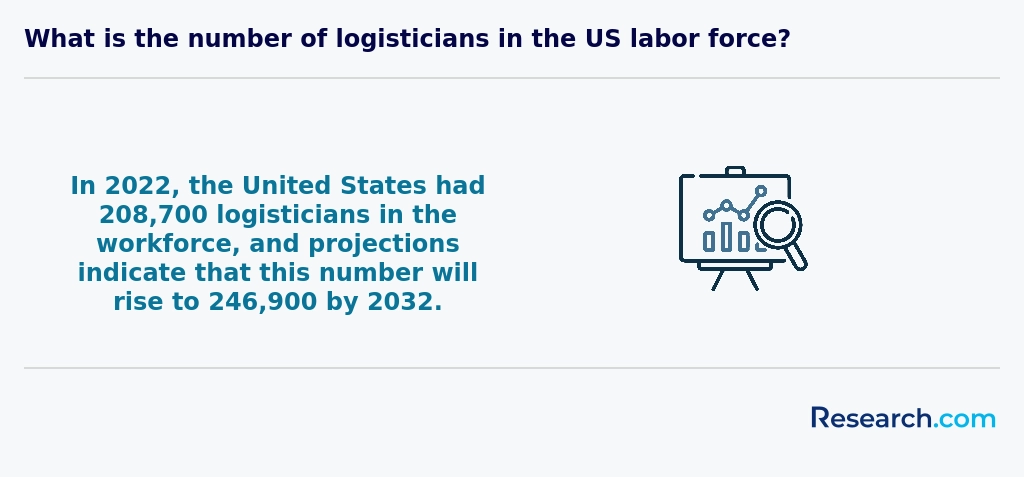
- Employment for logisticians is expected to grow 14% from 2022 to 2032, driven by global trade and e-commerce expansion.
- Starting salaries for logistics graduates typically fall between $50,000 and $60,000, rising to $80,000-$100,000 with experience and advanced certifications.
- Programs focus on practical skills such as inventory control and transportation management and often offer internships and networking opportunities.
- Most online logistics degrees come from regionally accredited schools, which is important for financial aid and job prospects.
How long does it take to complete online logistics degree in America?
Completing an online logistics degree in America typically takes around four years for a bachelor's program, mirroring traditional on-campus timelines. For example, graduates from well-known institutions like Arizona State University often report that balancing coursework with family or work commitments influenced their pace, making the flexibility of online study crucial. Associate degrees usually wrap up in about two years, focusing on core skills like inventory management, offering a quicker entry into the workforce.
Master's degrees, such as those offered by Michigan State University, vary between one and two years depending on whether students study full- or part-time. Many graduates appreciate how these programs combine practical projects with theory, even if it means a slightly extended timeline. Full-time enrollment accelerates progress, but many working professionals opt for part-time study, taking fewer credits per semester to manage work-life balance.
Factors like transfer credits or accelerated program options at institutions like Penn State can shorten completion times, exemplifying how personalization of study plans shapes each student's journey in online logistics education.
What's the difference between online and on-campus logistics degree?
Online and on-campus logistics degrees in America differ primarily in learning environment and flexibility. Graduates from universities like Arizona State or Penn State praise online programs for allowing them to balance full-time work with coursework, studying on their own schedule without relocating. This flexibility is a major advantage for those managing jobs or family commitments.
Conversely, on-campus students from institutions such as Michigan State often highlight the value of face-to-face interactions with professors and peers. They recall collaborative projects and hands-on workshops that enriched their grasp of complex supply chain concepts, benefiting from immediate feedback and strong alumni networks.
Cost is another important consideration. Public universities commonly charge $9,000 to $15,000 annually for in-state on-campus students, while online tuition can be lower, though some prestigious schools align fees to ensure quality.
Both formats maintain accreditation by bodies like AACSB, ensuring industry relevance. Though online students must be self-disciplined without constant supervision, employer acceptance of online logistics degrees has grown, reflecting shifting perceptions in the field.
Accreditation and Industry Partnerships
When evaluating online logistics degree programs, accreditation is your first assurance of academic rigor and quality. Look for regional accreditation from bodies recognized by the U.S. Department of Education-such as the Higher Learning Commission or the Southern Association of Colleges and Schools-and programmatic accreditation from organizations like the Accreditation Council for Business Schools and Programs (ACBSP). Accredited programs adhere to strict standards in curriculum design, faculty qualifications, and student outcomes, ensuring that your degree holds value with employers and meets transfer or licensure requirements. Equally important are industry partnerships that bridge classroom learning with real-world logistics practice. Leading online programs often collaborate with global carriers (e.g., UPS, FedEx), third-party logistics providers (e.g., C.H. Robinson, XPO Logistics), and technology innovators (e.g., SAP, Oracle Supply Chain). These alliances result in guest lectures by supply-chain executives, sponsored capstone projects, and early access to internships-critical experiences that sharpen your skills and expand your professional network. To balance cost with quality, consider programs that combine robust accreditation with strong industry ties while remaining budget-friendly. For insight into cost-effective options vetted for academic excellence and employer relevance, explore our Affordable Logistics Degree Programs Ranking in the Northeast, which highlights accredited programs that deliver both value and opportunity.
What is the average cost of online logistics degree in America?
The average cost of an online logistics degree in America generally centers around a median total cost of about $46,950. However, this number masks important distinctions, especially when considering in-state versus out-of-state tuition. For instance, in-state students often pay closer to $21,060, significantly reducing the financial burden, while out-of-state students tend to face costs near $48,152. Graduates of programs at universities like Arkansas State University or Eastern Michigan University often share that the affordability and flexibility of online logistics degrees helped them advance their careers without overwhelming debt.
When thinking about the average cost of online logistics degree USA, it's crucial to consider additional fees often overlooked. Technology fees for online platforms, textbooks, and occasional travel for residencies can add up. Some students recount budgeting carefully for these extras, which, when combined with tuition, change the overall financial picture.
Popular institutions sometimes price their logistics programs based on a per-credit-hour model, with fees ranging from $500 to $1,200, which can be beneficial for those balancing work and study. For prospective students exploring affordable options, it's worth visiting resources such as the affordable logistics colleges ranking to identify programs that align with both educational goals and budget constraints.
Looking ahead to online logistics degree tuition and fees 2027, trends suggest tuition rates might rise, but financial aid and scholarships can help offset costs. Many students find employer tuition assistance invaluable, enabling flexibility while gaining relevant logistics expertise.
Accreditation and Quality Assurance in Online Logistics Programs
Ensuring that your degree program is properly accredited is essential for verifying its quality and credibility, as well as guaranteeing that your education meets industry standards. Accreditation not only validates the curriculum and instructional methods used but also significantly influences transferability of credits, eligibility for federal financial aid, and the overall reputation of the institution among employers. Prospective students should look for programs accredited by recognized bodies such as the Accreditation Board for Engineering and Technology (ABET) or institutions approved by the Council for Higher Education Accreditation (CHEA). Additionally, accreditation serves as a mark of quality assurance and can be a critical deciding factor when comparing various online programs. For example, many students interested in pursuing trustworthy and cost-effective programs often explore options available at affordable logistics colleges, where accreditation and rigorous evaluation standards are key priorities. Emphasizing accreditation in your research can enhance your confidence in the program's ability to equip you with the necessary skills and recognition to thrive in the competitive logistics industry.
What financial aid is available to online logistics degree students in America?
Students pursuing an online logistics degree in America often rely on federal financial aid, which can make a significant difference in managing tuition costs that range from around $7,000 at public universities to over $30,000 at private schools. For example, graduates from well-known programs like those at Michigan State University recount how Pell Grants helped reduce their financial burden, providing up to $7,395 annually without repayment obligations.
Beyond grants, many students tap into federal Direct Subsidized and Unsubsidized Loans, appreciating the relatively low interest rates compared to private options. However, a cautious approach is common, as graduates reflect on the reality that average student loan debt in the U.S. hovers around $37,000, encouraging thoughtful borrowing.
Scholarships tailored to logistics or supply chain fields, such as those from the Council of Supply Chain Management Professionals, also feature prominently in students' financial planning. Those attending institutions like Arizona State University emphasize how these awards fueled their motivation.
In addition, employed learners at companies in retail or manufacturing share experiences of tuition reimbursement programs, which ease balancing work and study. State-specific grants add another layer of support, though availability varies widely, highlighting the importance of personalized research.
What are the prerequisites for enrolling in online logistics degree program in America?
Enrolling in an online logistics degree in America typically demands a high school diploma or GED as a baseline, especially for undergraduate tracks. Graduates from respected programs like those offered by Arizona State University recall submitting official transcripts early on, which confirmed their academic readiness. While standardized tests like the SAT have historically played a role, many schools now adopt test-optional policies, reflecting a more flexible approach post-pandemic. This shift accommodates diverse applicants and eases entry barriers.
For master's degrees, a completed bachelor's degree from an accredited institution is often required, ideally with coursework in business or engineering. However, some graduate students at Michigan State University found their relevant work experience in supply chain roles helped bypass strict academic prerequisites, demonstrating how professional background can supplement formal education.
Prospective students should also consider technical readiness-computer literacy and reliable internet are non-negotiable, as online classes and assignments demand consistent digital engagement. Many applicants appreciate universities' clear communication on these expectations, knowing it prepares them practically for success in virtual learning environments.

Accreditation and Quality Assurance
Choosing an accredited online logistics degree program ensures that your education meets rigorous academic and industry standards. Regional accreditation-such as from the Higher Learning Commission (HLC), Southern Association of Colleges and Schools Commission on Colleges (SACSCOC), or New England Commission of Higher Education (NECHE)-validates institutional quality, while specialized business accreditations like AACSB or ACBSP further confirm that curricula in logistics, supply chain management, and operations align with professional benchmarks. Employers often prioritize graduates from accredited programs because accreditation guarantees:
- Transferability of credits: Accredited institutions accept coursework from peer schools, minimizing lost credits when you switch programs.
- Eligibility for federal financial aid: Only regionally accredited institutions can offer federal grants and loans, reducing out‐of‐pocket expenses.
- Recognition by certification bodies: Graduates from accredited logistics programs are more competitive for APICS/ASCM and CSCMP certifications. Before enrolling, verify accreditation status on the U.S. Department of Education’s database or the school’s official website. Look for both institutional and programmatic accreditation seals. Additionally, some programs partner with industry leaders to integrate cutting-edge software, guest lectures, and internship pipelines-another hallmark of quality assurance. If you’re comparing pathways into supply chain roles, our guide on getting a online supply chain management bachelors degree easy provides in‐depth analysis of accredited program benefits and step‐by‐step enrollment processes. By prioritizing accreditation, you safeguard your investment, maximize career prospects, and build trust with future employers in the fast-evolving logistics sector.
What courses are typically in online logistics degree programs in America?
Online logistics degrees in America typically include a diverse set of courses aimed at preparing students for real-world challenges in supply chain and distribution management. Graduates from prominent programs at institutions like Arizona State University or the University of Tennessee often emphasize how courses such as Transportation Management gave them a practical grasp on coordinating freight across multiple modes-mirroring the complexities they later encountered in industry roles.
Core classes like Inventory Control and Warehousing frequently enable students to visualize managing stock efficiently within busy distribution centers, a scenario familiar to many logistics professionals. Similarly, Procurement and Purchasing courses highlight the importance of supplier relationships and cost negotiation, which graduates report as invaluable when navigating vendor contracts in their early careers.
Some programs also integrate business fundamentals-accounting, economics, or marketing-which provide a well-rounded understanding behind decisions made in daily logistics operations. Leadership and communication modules resonate with students seeking managerial responsibilities, equipping them with skills to inspire and guide teams in fast-paced environments.
This blend of theory and applied skills reflects a balanced curriculum, although some critics argue that certain online programs might not fully replicate hands-on experiences. Still, many students find themselves confidently ready to enter a growing field after completing these courses.
What types of specializations are available in online logistics degree programs in America?
Online logistics degree specializations USA typically include Supply Chain Management, Transportation and Distribution Management, Global Logistics, Warehouse and Inventory Management, and Logistics Analytics. Graduates from respected programs at popular American universities often share how focusing on Supply Chain Management helped them confidently navigate roles involving demand forecasting and supplier relationships. This careful emphasis on practical skills matches the dynamic needs of today's market.
Some students pursuing specialized logistics programs in America find Transportation and Distribution Management equips them to optimize freight routes and ensure legal compliance, adding tangible value in busy logistics hubs. Others appreciate the global outlook gained from Global Logistics, addressing real-world customs and cross-border challenges-skills especially vital as 90% of worldwide trade depends on logistics.
Warehouse and Inventory Management specialization draws praise for teaching automation strategies, reflecting industry trends seen in billions invested in U.S. warehouse technologies. Meanwhile, Logistics Analytics appeals to those excited by big data's role in efficiency, a fast-growing area. Those interested in a flexible and practical pathway can explore getting a online supply chain management bachelors degree easy to tailor their learning effectively.
How do you choose the best online logistics degree in America?
Choosing the best online logistics degree in America means balancing several essential factors. Graduates from well-known programs at universities popular for logistics often emphasize the importance of accreditation, such as regional recognition and credentials from bodies like the Accreditation Council for Business Schools and Programs. They recall how this assurance impacted their ability to secure internships and jobs in a competitive market. Curriculum depth also matters; programs that offer a mix of supply chain management, transportation, and data analytics tend to prepare students for real-world challenges, as seen in graduates' successes from various American colleges.
Flexibility is another key consideration. Many working professionals appreciate asynchronous classes that fit around their schedules, allowing them to progress without sacrificing work or family time. Cost plays a vital role, too, with tuition generally ranging from $8,000 to $20,000 annually. For those seeking affordable options, reviewing rankings like the Affordable Logistics Degree Programs Ranking in the Northeast offers helpful guidance.
Finally, career services cannot be overlooked. Graduates often highlight programs providing strong advising and internship placements, which bridge education with the booming logistics job market expected to grow 16% through 2032. Prioritizing these aspects helps ensure your choice supports your unique goals within the best online logistics degree programs USA.
What career paths are available for online logistics degree students in America?
Graduates with an online logistics degree in America frequently find diverse career paths due to the expanding demand for supply chain expertise. Many pursue roles such as Supply Chain Analyst, honing data-driven skills to enhance operational efficiency, or Logistics Manager, coordinating complex transportation and distribution networks. Others may work as Procurement Specialists managing supplier relations or as Transportation Coordinators ensuring timely shipments. Popular universities known for logistics programs often share stories of graduates thriving in these dynamic positions, highlighting the practical benefits of their education. However, while the field offers promising opportunities, students should also consider regional job markets and company sizes, as these factors influence career growth and compensation. For those weighing different academic options, exploring what are the most useful college majors can provide valuable guidance before committing to logistics.
The career flexibility associated with logistics management jobs in America reflects the sector's role in a vital industry, from retail giants to manufacturing hubs. Graduates often note increased confidence entering roles like Inventory Control Analyst or specialized fields such as green logistics. Yet, success typically depends on combining theoretical knowledge with real-world problem solving learned through online coursework and internships, illustrating that an online logistics degree career opportunities USA hinges on a learner's proactive engagement with evolving industry challenges.
What is the job market for online logistics degree in America?
The job market for online logistics degree graduates in America remains promising, characterized by robust growth in sectors like transportation, warehousing, and supply chain management. Graduates from well-known institutions often share how flexible online programs help them balance work and study while gaining relevant skills, enhancing their employability in an evolving industry. This positive trend is aligned with the strong employment outlook for logistics graduates America-wide, driven by rising e-commerce demands and increased reliance on technology such as warehouse automation.
Many graduates find entry-level roles such as supply chain analyst or logistics coordinator, often in larger companies seeking candidates familiar with digital tools. However, prospective students should also consider regional differences; for example, salaries and job availability tend to be higher in metropolitan areas with significant manufacturing or tech presence.
Cost remains a practical consideration, with some learners opting for the most affordable online associate's degree programs to minimize debt while gaining essential knowledge. Certifications like APICS CSCP further improve career prospects, underscoring how combining online education with industry credentials serves as a solid strategy in the competitive job market for online logistics degree job market USA.
Frequently Asked Questions About logistics
Students pursuing online logistics degrees in America can enhance their learning by actively engaging with interactive course materials and participating in virtual discussions. According to the Bureau of Labor Statistics, the logistics field is expected to grow 28% from 2021 to 2031, highlighting the value of gaining practical skills. Combining theoretical knowledge with real-world applications, such as internships or supply chain simulations, strengthens understanding.
Networking with industry professionals through online forums or local events also provides valuable insights and career opportunities. Utilizing resources like the Council of Supply Chain Management Professionals (CSCMP) can keep students informed on industry trends. Lastly, effective time management and setting clear goals are essential for success in self-paced online programs.
The logistics field is evolving with several emerging niches that offer promising career paths for students pursuing online logistics degrees in America. One significant growth area is supply chain sustainability, driven by increased demand for environmentally responsible practices. According to the Council of Supply Chain Management Professionals (CSCMP), over 60% of companies are investing in green logistics.
Another niche is e-commerce logistics, which has expanded rapidly due to the rise in online shopping, accounting for nearly 20% of all retail sales in the U.S. as reported by the U.S. Census Bureau. Additionally, technology-driven roles in logistics analytics and automation are gaining importance, with firms leveraging big data to optimize operations.
After completing an online logistics degree in America, preparing for the job market involves several key steps. First, gaining practical experience through internships or cooperative education programs can significantly enhance employability. According to the Council of Supply Chain Management Professionals (CSCMP), hands-on experience is highly valued by employers in this growing field.
Next, obtaining industry-recognized certifications, such as the Certified Supply Chain Professional (CSCP) or Certified Logistics Associate (CLA), can strengthen your resume. The U.S. Bureau of Labor Statistics projects a 22% growth rate for logisticians between 2020 and 2030, highlighting strong demand.
Networking is also crucial. Joining organizations like CSCMP or the American Production and Inventory Control Society (APICS) offers access to job boards and professional connections.
Employers in the United States highly value logistics degree graduates who demonstrate strong analytical skills. According to the Bureau of Labor Statistics, the ability to analyze supply chain data effectively is crucial for optimizing operations and reducing costs. Communication skills are also essential, as logistics professionals must coordinate with vendors, customers, and internal teams to ensure smooth workflows.
Problem-solving and technological proficiency rank near the top, especially familiarity with warehouse management systems and enterprise resource planning software, as highlighted by the Council of Supply Chain Management Professionals.
Additionally, leadership and project management abilities are important, preparing graduates to oversee logistics teams and complex projects efficiently.
Finding internships relevant to a logistics degree in America involves using multiple resources. Start with your online program's career services, which often offer listings tailored to logistics roles. National job platforms like Indeed and LinkedIn provide filters for logistics internships. According to the Council of Supply Chain Management Professionals (CSCMP), internships in logistics often focus on supply chain analysis, transportation, and inventory management.
Networking is crucial; join logistics-focused groups such as CSCMP or APICS, which frequently announce internship opportunities. Many companies partner with universities, so contact local warehouses, shipping firms, and distribution centers directly.
Additionally, internships are often concentrated in logistics hubs like Chicago, Los Angeles, and Dallas, reflecting industry trends reported by the U.S. Bureau of Labor Statistics (BLS).
An online logistics degree in America significantly enhances career mobility and advancement opportunities. According to the U.S. Bureau of Labor Statistics, employment in logistics-related fields is projected to grow 11% from 2020 to 2030, faster than the average for all occupations.
Graduates with logistics degrees often qualify for roles in supply chain management, transportation, and distribution-fields that value specialized education. Online programs provide flexibility, enabling working professionals to upskill without interrupting their careers.
Employers increasingly seek candidates with formal logistics education to fill managerial and analyst positions. Certifications combined with a degree can lead to higher earning potential and promotions.
Studying for a logistics degree in America equips students with a broad range of skills essential for interdisciplinary roles. The curriculum typically includes supply chain management, operations, business analytics, and information technology, reflecting the diverse demands of the logistics field. According to the Bureau of Labor Statistics, logistics-related jobs require collaboration across finance, marketing, and engineering to optimize supply chains effectively.
Online logistics programs emphasize practical problem-solving and data analysis, preparing graduates to work with multiple departments. Many schools partner with industry leaders, ensuring students gain relevant, real-world experience.
These programs foster communication and leadership skills, critical for managing interdisciplinary teams in the complex US logistics sector.
Choosing between a thesis and a non-thesis logistics degree program in America depends on your career goals and learning preferences. Thesis programs often suit students interested in research, deeper analytical skills, or pursuing a PhD later. They typically require completion of a research project under faculty supervision, helping develop critical thinking and academic writing abilities.
Non-thesis programs focus more on practical knowledge and professional skills, appealing to those aiming to enter or advance in the logistics industry quickly. These programs usually require additional coursework or a capstone project instead of a thesis. According to the Council of Supply Chain Management Professionals, practical skills are highly valued by employers in the logistics field.
Consider accreditation, time commitment, and how each path aligns with your career plans when deciding between the two formats.
American students interested in studying logistics abroad have several online options through U.S.-based universities offering international partnerships or global curricula. Many accredited schools provide fully online logistics degrees that include case studies and perspectives covering international supply chain management.
These programs often emphasize global trade regulations, transportation, and distribution networks, equipping students with skills relevant to multinational companies. According to the Council of Supply Chain Management Professionals (CSCMP), about 80% of logistics jobs in the U.S. require knowledge of global logistics concepts, making such programs valuable.
Additionally, some universities offer study-abroad components or virtual exchanges with foreign institutions, allowing students to gain international insight without traditional relocation.
Part-time jobs that complement a logistics degree in America often involve roles in supply chain management, warehouse operations, and transportation coordination. Positions such as inventory clerk, shipping assistant, or dispatcher provide practical experience aligning with academic learning.
According to the U.S. Bureau of Labor Statistics, the logistics sector is projected to grow 11% from 2020 to 2030, creating numerous opportunities for students to gain relevant work while studying.
Many companies offer flexible schedules for part-time workers in distribution centers, allowing students to balance education and employment effectively.
Additionally, internships and entry-level roles in procurement and data analysis can enhance skills applicable to logistics careers.
Online logistics degree students in America have several networking opportunities that help connect them with industry professionals and peers. Many universities offer virtual career fairs and online workshops, enabling students to engage with potential employers across the country.
Professional associations play a key role. Groups like the Council of Supply Chain Management Professionals (CSCMP) and the American Society of Transportation and Logistics (ASTL) provide online membership options, giving students access to webinars, forums, and local chapter events nationwide.
Additionally, LinkedIn and other social media platforms are valuable for building a professional network, especially in the logistics sector, which accounted for over 7 million jobs in the U.S. as of 2023 (Bureau of Labor Statistics).
Alumni networks offer significant benefits to students pursuing online logistics degrees in America. These networks connect current students with graduates who work in various sectors of the U.S. logistics industry, which is valued at over $1.6 trillion annually according to the Bureau of Transportation Statistics. Through these connections, students gain access to job leads, internships, and mentorship opportunities that may not be publicly advertised.
Strong alumni networks also facilitate knowledge sharing about industry trends and certifications, such as the Certified Supply Chain Professional (CSCP), enhancing students' professional development. Many universities report that active alumni engagement increases graduate employment rates within six months after graduation.
Customizing an online logistics degree in America allows students to align education with specific career goals. Many programs offer elective courses in areas such as supply chain management, transportation, procurement, or warehousing. This flexibility lets students focus on skills most relevant to their intended roles.
Students can also choose concentrations or certificates within logistics programs to enhance expertise. For example, specialized courses in global logistics can prepare graduates for international roles.
Additionally, some universities provide opportunities for internships or capstone projects remotely, which give practical experience tailored to various industries. According to the Bureau of Labor Statistics, logistics careers in the US are expected to grow 11% by 2032, emphasizing the importance of targeted skills.
Online logistics students in America often face unique challenges related to balancing work, family, and study commitments. Many are working professionals who must manage time effectively to keep up with coursework. According to the National Center for Education Statistics, nearly 30% of online students are part-time, which can extend degree completion times.
Another common issue is limited hands-on experience. Logistics involves practical skills like supply chain management and transportation systems, which some online programs struggle to simulate effectively. Students may miss networking opportunities that in-person settings naturally provide.
Additionally, adapting to technology platforms can be difficult for some learners, especially those new to online education environments. Reliable internet access is crucial, and technical difficulties may hinder progress.
With an online logistics degree in the USA, graduates can pursue several industry-recognized professional certifications to boost their careers. One popular choice is the Certified Supply Chain Professional (CSCP) offered by APICS, which validates skills in supply chain management and logistics operations. According to APICS, over 30,000 professionals globally hold this certification, enhancing credibility and job prospects.
Another key certification is the Certified in Logistics, Transportation and Distribution (CLTD), also by APICS, focusing on transportation and distribution skills essential for a logistics career.
The Six Sigma Green Belt certification is valuable for logistics professionals aiming to improve quality and efficiency in processes. These credentials are well-regarded across American industries, making them strategic choices after earning an online logistics degree.
Writing a winning application for an online logistics degree program in America requires clear organization and attention to detail. Start by researching accredited programs recognized by organizations such as the Council for Higher Education Accreditation (CHEA) to ensure quality education.
Highlight relevant work experience or internships in supply chain, transportation, or inventory management. This shows practical knowledge, which employers value highly in the logistics sector, projected to grow 4% annually through 2031 according to the U.S. Bureau of Labor Statistics.
Craft a compelling personal statement explaining your career goals and passion for logistics, using concrete examples. Emphasize skills like problem-solving, analytics, and communication, which are crucial in U.S. logistics careers.
Finally, submit strong letters of recommendation from academic mentors or supervisors who can vouch for your commitment and potential success in the field.
Logistics careers have gained global importance due to the rise of international trade and e-commerce. In the United States, the logistics sector is projected to grow about 11% from 2020 to 2030, according to the U.S. Bureau of Labor Statistics. This growth is driven by the increasing demand for efficient supply chain management worldwide.
American logistics professionals often work with multinational companies, requiring knowledge of global shipping regulations, customs compliance, and cross-border transportation challenges. A logistics degree from a U.S. institution equips students with skills recognized internationally, offering competitive advantages abroad.
Understanding global logistics trends is essential as the U.S. remains a hub in worldwide supply chains, linking producers and consumers across continents.
Gaining practical experience while studying for an online logistics degree in America is crucial for career success. Many programs encourage internships or cooperative education (co-op) placements with companies in the supply chain and transportation sectors. According to the Bureau of Labor Statistics, logistics internships can boost job prospects since employers value hands-on skills. Students should actively seek remote or local internships that align with their coursework. Additionally, some online programs partner with industry leaders to offer virtual simulations and project-based learning. Networking through professional groups like the Council of Supply Chain Management Professionals can also provide real-world insights and career opportunities.
Choosing the right concentration within an online logistics degree program in America begins with understanding your career goals. Logistics encompasses various specializations like supply chain management, transportation, or warehouse operations. According to the Bureau of Labor Statistics, employment in logistics-related fields is projected to grow 10% from 2022 to 2032, faster than average for all occupations.
Research industry demand and consider concentrations aligned with high-growth areas such as supply chain analytics or e-commerce logistics. Review course offerings and faculty expertise at your chosen school to ensure relevant, up-to-date training. Additionally, assess if certifications tied to concentrations, like APICS for supply chain, are supported within the curriculum.
Your choice should reflect both personal interests and market needs to maximize job prospects after graduation.
Top Trending Logistics Rankings
References
- 5 Key Logistics Management Challenges - PLS Logistic Services https://www.plslogistics.com/blog/5-challenges-that-logistics-managers-face-every-day/
- What are the Hottest Skill Niches in Supply Chain and Procurement? https://www.argentus.com/skill-niches-procurement/
- Requirements For A Transportation And Logistics Degree - Logistics Degree https://logisticsdegree.net/requirements-for-earning-a-degree-in-transportation-and-logistics/
- Alumni https://www.scm-network.com/alumni/
- Studying for a Career in Logistics https://www.shippingcollege.com/blog/studying-for-a-career-in-logistics-unlocking-opportunities-and-enjoyment
- Online Degree vs. Traditional: Choosing the Right Path https://beal.edu/online-degree-vs-traditional/
- Supply Chain Internships | Capital Placement https://capital-placement.com/supply-chain-internships/
- 8 Critical Challenges in Logistics (And How to Overcome Them) | Load One Transportation https://load1.com/8-critical-logistics-challenges-and-how-to-overcome-them/
- Salary in Logistics and Supply Chain Management Guide https://transorze.com/salary-in-logistics-and-supply-chain-management/
- Under Graduate https://iil.edu.in/alumni-connect/


