
2027 Most Affordable Psychology Degree Programs Ranking in Saint Louis

Co-Founder and Chief Data Scientist
Choosing the right psychology degree program in Saint Louis can feel overwhelming, but it doesn't have to be. This article introduces the 2027 Most Affordable Psychology Degree Programs Ranking in Saint Louis, carefully created by the Research.com team of data scientists to guide you toward smart educational decisions.
By exploring this ranking, you'll discover programs that offer quality education without breaking the bank. Pursuing a psychology degree opens doors to meaningful careers that make a difference, and this guide is here to support your journey with reliable, data-driven insights.
Key benefits of getting psychology degree in Saint Louis
- Psychology degree graduates can expect rewarding salaries in related fields such as Marketing Research Analyst, earning around $83,190 annually, or Human Resources Specialist, with a mean wage of $76,060 per year, offering financial stability.
- Graduates from universities in Saint Louis often pursue diverse career paths including clinical research, survey research, and childcare, reflecting flexible opportunities to match their interests and strengths.
- Obtaining a psychology degree online from a Saint Louis institution provides the convenience to balance life commitments while gaining the same valuable skills as traditional programs, enhancing both career prospects and personal growth.
- Key benefits of getting psychology degree in Saint Louis
- What can I expect from psychology degree in Saint Louis?
- Where can I work with psychology degree in Saint Louis?
- How much can I make with psychology degree in Saint Louis?
- 2027 Most Affordable Psychology Degree Programs Ranking in Saint Louis
- Key Findings
- How long does it take to complete psychology degree in Saint Louis?
- Accreditation and Licensure
- What's the difference between online and on-campus psychology degree?
- Licensure and Certification Pathways for Psychology Graduates
- What is the average cost of psychology degree in Saint Louis?
- Elevating Your Career with an Online Master's in Psychology
- What financial aid is available to psychology degree students in Saint Louis?
- Accreditation and Licensure for Psychology Programs in Saint Louis, MO
- What are the prerequisites for enrolling in psychology degree program in Saint Louis?
- The Importance of Accreditation in Psychology Programs
- What courses are typically in psychology degree programs in Saint Louis?
- What types of specializations are available in psychology degree programs in Saint Louis?
- How do you choose the best psychology degree in Saint Louis?
- What career paths are available for psychology degree students in Saint Louis?
- What is the job market for psychology degree in Saint Louis?
- Top Trending Psychology Rankings
- See What Experts Have To Say About Studying Psychology
What can I expect from psychology degree in Saint Louis?
The average cost of pursuing a psychology degree in Saint Louis typically ranges from about $25,000 to $35,000 per year at institutions like Saint Louis University and the University of Missouri-St. Louis. Graduates often recall balancing tuition with part-time jobs or scholarships, which helped make their education attainable without overwhelming debt. Many found that investing in these programs was rewarding because the hands-on research and practicum opportunities gave them confidence and practical skills.
When you walk the halls of these campuses, you'll hear about real-world experiences-students gaining internships in local healthcare clinics or collaborating with community organizations. These immersive moments often feel transformative and help justify the financial commitment. Knowing the city's strong healthcare sector, many psychology students feel inspired to envision themselves stepping into well-paying roles that start around $60,000 annually and grow with experience. This clear pathway from education to employment motivates countless students to embrace the costs as a valuable stepping stone toward a meaningful career.
Where can I work with psychology degree in Saint Louis?
With a psychology degree in Saint Louis, you're stepping into a city brimming with meaningful career paths. Graduates from universities like Washington University and Saint Louis University often find themselves drawn to the city's robust healthcare sector, working in hospitals such as Barnes-Jewish Hospital. Here, clinical psychologists and counselors make a real difference supporting patients' mental health every day. Imagine collaborating with a team to develop treatment plans or provide crisis intervention-these are the types of impactful roles waiting for you.
Many graduates also thrive in community agencies like Catholic Charities of St. Louis, where they help vulnerable groups-children, veterans, and individuals with disabilities-through counseling and case management. One alum described the fulfillment of guiding a child through emotional challenges as a truly rewarding experience.
School psychology is another vibrant avenue, especially through Saint Louis Public Schools, helping students succeed academically and emotionally. Business fields in Saint Louis, including tech and finance, are opening doors to industrial-organizational psychology roles, where understanding people boosts workplace success.
Remember, advancing often means pursuing graduate degrees and licensing, but the diversity of opportunities here promises a career that's both inspiring and grounded in making a difference.
How much can I make with psychology degree in Saint Louis?
Graduates with psychology degrees from Saint Louis institutions such as Washington University often find promising salary opportunities reflecting their dedication and studies. Entry-level roles like childcare workers may start around $32,070 annually, a practical stepping stone offering valuable experience in human development and care.
For those pursuing roles aligned with research, such as clinical research associates or survey researchers, the mean annual wage typically falls near $62,370. This salary range supports emerging professionals eager to impact clinical studies or community research, often collaborating with local health institutions and universities around Saint Louis.
Marketing research analyst positions attract psychology graduates interested in consumer behavior, offering higher pay with a mean wage around $83,190 per year. Meanwhile, human resources specialists working within Saint Louis companies earn approximately $76,060 annually, leveraging their understanding of human behavior to shape workplace environments.
Graduates recall how internships at local hospitals and universities helped them connect theory to practice while boosting their earning potential. Pursuing specialized paths or graduate degrees in this vibrant city truly opens doors to rewarding careers with competitive salaries and meaningful work.
2027 Most Affordable Psychology Degree Programs Ranking in Saint Louis
How do we rank schools?
Investing in your education is a significant decision that can shape your future, and the Research.com team understands the importance of making informed choices. To assist prospective students in Saint Louis, we have meticulously crafted the "2027 Most Affordable Psychology Degree Programs Ranking in Saint Louis." Our commitment to quality, credibility, and accuracy is reflected in the extensive research and analysis conducted to compile this ranking.
We utilized the following reputable data sources to ensure a comprehensive evaluation of psychology degree programs:
By exploring this ranking, readers will gain valuable insights into affordable and quality psychology programs available in Saint Louis, helping them make well-informed decisions about their educational paths. For more details on how this ranking was created, please visit our Research.com methodology page.


Key Findings
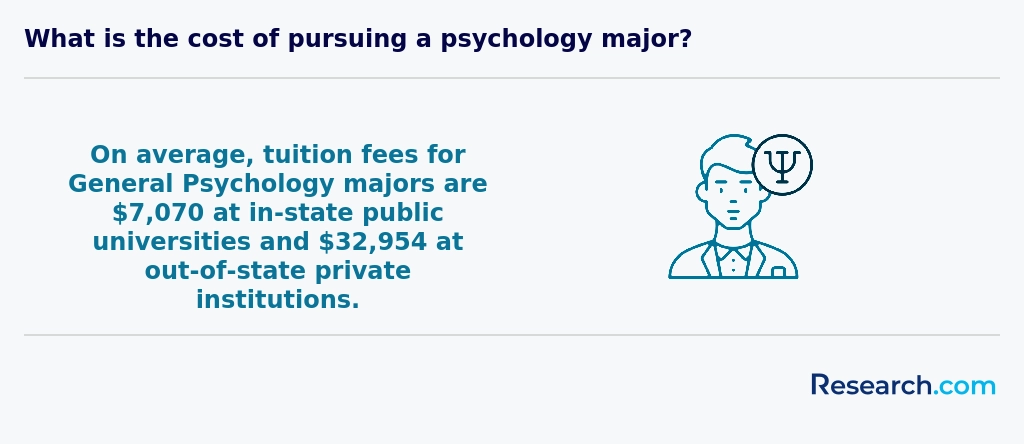
- Public universities in Saint Louis charge about $10,000 to $15,000 per year for in-state psychology students, while private schools can exceed $30,000 annually.
- Entry-level psychology jobs in Saint Louis offer salaries around $40,000 to $50,000 per year, with experienced professionals earning between $70,000 and $90,000 or more.
- Common psychology roles include clinical, counseling, and school psychologists, supported by growth in healthcare and social services sectors.
- Licensing in Missouri requires a relevant degree, supervised experience, and passing the Examination for Professional Practice in Psychology (EPPP).
- Saint Louis schools offer Bachelor's, Master's, and Doctoral psychology programs, with accreditation by bodies like the APA important for doctoral degrees.
How long does it take to complete psychology degree in Saint Louis?
Completing a psychology degree in Saint Louis is an exciting journey that varies by the level you choose. Most bachelor's students, whether at Saint Louis University or the University of Missouri-St. Louis, embrace about four years of full-time study, immersing themselves in roughly 120 credit hours. Graduates often share how this timeline allows them to balance academics with meaningful campus experiences and personal growth.
For those continuing to a master's degree, like at Washington University, expect around two to three years of dedicated study. Many find the process rewarding, especially when part-time options help juggle work and school.
Doctoral candidates prepare for a longer adventure-typically four to seven years-filled with in-depth research, internships, and dissertations. Those at Saint Louis institutions often mention how this immersive time equips them well for clinical or research careers, turning challenges into valuable expertise.
Keep in mind, part-time study, credit transfers, and internship requirements shape your timeline, but your passion will guide you steadily forward.
Accreditation and Licensure
Accreditation ensures your degree meets professional standards and qualifies you for licensure in Missouri. Key factors to verify include:
- Regionally accredited institutions recognized by the Higher Learning Commission (HLC)
- APA-accredited doctoral programs required for clinical psychology licensure
- Coursework covering ethics, assessment, research methods and state-mandated content
- Supervised practicum/internship hours (typically 1,500+) and passing the EPPP exam
For students seeking a shorter pathway, consider accredited accelerated psychology programs that align with Missouri’s licensing criteria and help you enter the workforce faster.
What's the difference between online and on-campus psychology degree?
Choosing between online and on-campus psychology degrees in Saint Louis means weighing your personal lifestyle and learning preferences. Graduates from Saint Louis University often highlight the rich, hands-on experiences they gained through lab work and internships, which were made possible by direct access to campus resources like counseling centers and research labs. This face-to-face engagement fosters strong connections with professors and peers, essential in a field centered on human behavior.
Conversely, alumni of University of Missouri-St. Louis's online programs praise the flexibility to balance coursework with jobs and family commitments. They thrive studying asynchronously, fitting classes around busy schedules without sacrificing academic rigor. Yet, they emphasize the importance of verifying state licensure requirements for clinical roles, since some practicum placements may require physical presence in the area.
Whether you choose traditional classrooms buzzing with collaborative energy or the freedom of remote learning, knowing these differences helps you find the right path in your psychology journey.
Licensure and Certification Pathways for Psychology Graduates
Obtaining a psychology degree in Saint Louis, MO, is just the first step toward a professional career-licensure and certification are essential to practice clinically and advance in specialized fields. In Missouri, aspiring clinical psychologists must complete a doctoral degree (Ph.D. or Psy.D.), accrue at least 2,000 supervised postdoctoral hours, and pass both the Examination for Professional Practice in Psychology (EPPP) and the Missouri Jurisprudence Examination. For those interested in counseling or school psychology, a master’s degree combined with 1,500 supervised hours and the National Counselor Examination (NCE) or the Praxis II School Psychologist Test, respectively, are required. Key steps include:
- Degree Verification: Ensure your institution holds accreditation from the American Psychological Association (APA) or the Council for Accreditation of Counseling and Related Educational Programs (CACREP).
- Supervised Experience: Secure placements in approved clinical or school settings to fulfill state-mandated internship and postdoctoral requirements.
- Examination Preparation: Utilize study resources, workshops, and mock exams to prepare for the EPPP, NCE, or Praxis.
- Application Submission: Compile official transcripts, supervision logs, and application fees to the Missouri Division of Professional Registration. Continuing education is mandated to renew licensure-psychologists must complete 30 professional development hours every two years, covering ethics, assessment, and cultural competence. Many graduates opt for advanced degrees to diversify their expertise; for example, exploring accredited psyd online programs can provide flexible pathways to meet doctoral requirements while maintaining professional responsibilities. By understanding these certification processes and planning early, students can seamlessly transition from academic training to clinical practice, ensuring they meet Missouri’s standards and deliver high-quality psychological services to their communities.
What is the average cost of psychology degree in Saint Louis?
The average cost of a psychology degree in Saint Louis varies depending on the institution and residency status, but students can typically expect a median total cost around $50,364. For in-state students, this figure is notably lower, with a median total cost near $29,458, making local options more affordable for many pursuing their degree. Graduates from universities such as the University of Missouri-St. Louis often share how managing in-state tuition helped them focus more on their studies and hands-on experiences rather than financial strain.
Public institutions in Saint Louis provide substantial opportunities for those aiming for a psychology degree with moderate tuition rates, while private universities, including Saint Louis University, typically have higher costs but offer rich research programs and strong networking prospects. Students frequently mention that the investment in private education is balanced by access to unique practicum sites and financial aid packages.
For those concerned about Saint Louis affordable psychology degree tuition fees, exploring options like scholarships, work-study programs, and community partnerships is essential. Many find comfort and reassurance in researching schools early to align their budget with their educational goals.
When budgeting your psychology studies, consider that additional expenses beyond tuition include fees, books, and living costs, especially when engaging in internships or practicum placements. To navigate these challenges effectively, prospective students often consult resources such as the cheapest psychology school in missouri, helping them find the best financial path forward in Saint Louis.

Elevating Your Career with an Online Master's in Psychology
For many aspiring professionals, advancing with an online master's degree in psychology offers not only flexibility but also a pathway to specialized career growth. With an online format, students can balance professional and personal commitments while engaging with a curriculum that emphasizes advanced research, contemporary clinical practices, and leadership in mental health services. The digital classroom experience is continuously evolving, offering interactive webinars, virtual labs, and opportunities for remote internships that broaden your practical understanding of psychological applications. Moreover, a master’s program often provides access to exclusive networking events and one-on-one mentorship with experienced practitioners, enabling you to stay ahead in this competitive field. Students keen on exploring program options that combine convenience with academic excellence can explore the best online psychology master's programs to identify the opportunity that best aligns with their career goals and lifestyle. Embracing an online master’s degree not only strengthens your expertise but also positions you to adapt to the emerging trends and technologies reshaping the field of psychology.
What financial aid is available to psychology degree students in Saint Louis?
When pursuing a psychology degree in Saint Louis, numerous financial aid options can lighten the burden of tuition costs, which range from $10,000 to $25,000 yearly depending on the institution. Many students at the University of Missouri-St. Louis or Saint Louis University find federal aid through FAFSA indispensable. Pell Grants, for example, provide up to $7,395 annually without repayment, helping students focus on their studies instead of finances. Others utilize federal loans with reasonable interest rates, balancing education with manageable repayment plans.
State programs like Missouri's Access Missouri Financial Assistance also offer crucial support, especially for residents attending local public universities. Graduates often share how this aid transformed their college experience by reducing financial stress and allowing them to pursue internships or research without worries.
Scholarships specific to psychology majors at Saint Louis colleges reward dedication and achievement, sometimes providing $1,000 to $5,000 annually. On top of that, prestigious fellowships from the American Psychological Association recognize academic excellence, enabling students to invest more in their education and less in debt.
Accreditation and Licensure for Psychology Programs in Saint Louis, MO
Choosing an accredited psychology program is crucial for ensuring educational quality and meeting Missouri’s licensing requirements. In Saint Louis, most reputable institutions hold Regional Accreditation from the Higher Learning Commission (HLC) and, for clinical training, American Psychological Association (APA) accreditation. Graduates of HLC- and APA-approved programs are eligible to sit for the Examination for Professional Practice in Psychology (EPPP), a national licensure exam required by the Missouri Committee of Psychologists. Beyond regional accreditation, look for programs that offer clear pathways to state licensure, including supervised clinical practicum hours and preparation for state jurisprudence exams. Many Saint Louis universities partner with local clinics and hospitals to provide the 1,500–2,000 supervised hours mandated for a clinical psychologist license. These partnerships also facilitate networking and job placement post-graduation. For students seeking flexible or online options that still meet licensure criteria, consider programs listed in the Affordable Online Psychology Degree Programs Ranking in Alabama. Although based in Alabama, these online degrees often carry the same HLC accreditation and APA standards required in Missouri, enabling seamless transfer of credits and fulfilment of supervised fieldwork in Saint Louis. Before enrolling, verify:
- Accreditation status via the U.S. Department of Education’s database
- State board requirements for supervised hours and exam eligibility
- Availability of licensed supervisors within your preferred practicum settings By prioritizing accredited programs and understanding licensure criteria, Saint Louis students will maximize return on investment and ensure a smooth transition from degree completion to professional practice.
What are the prerequisites for enrolling in psychology degree program in Saint Louis?
To enroll in a psychology degree program in Saint Louis, you'll want to demonstrate a solid academic foundation. Graduates from universities like Saint Louis University or the University of Missouri-St. Louis often recall how their strong high school coursework in English, math, science, and social studies prepared them well. Most programs expect a GPA around 2.5 to 3.0, reflecting consistent effort and dedication.
Standardized tests used to be a major hurdle, but many local schools now embrace test-optional policies, focusing on your overall academic achievements and involvement outside the classroom. This shift has made applying feel less daunting and more personal-as one graduate shared, it opened doors for them to showcase their passion through extracurriculars rather than just scores.
If you're aiming for a graduate degree, having completed a relevant bachelor's, along with research or internship experiences, can set you apart. Many students highlight how working as research assistants or volunteering locally deepened their understanding and boosted their confidence. Letters of recommendation and clear statements of purpose are essential, painting a picture of your commitment to psychology's real-world impact.

The Importance of Accreditation in Psychology Programs
When selecting a psychology program in Saint Louis, MO, one crucial factor to consider is accreditation. Accreditation ensures that the program meets certain standards of quality and can significantly impact the value of the degree. Students should look for programs accredited by recognized accrediting agencies, such as the American Psychological Association (APA), to ensure they receive a high-quality education. Additionally, accreditation can affect licensure and certification opportunities after graduation. For instance, to become a licensed psychologist, one must graduate from an accredited program. Furthermore, exploring options like the cheapest psychology school in missouri can help students make informed decisions about their educational investments, considering both the academic reputation and the financial aspects of their psychology degree. By prioritizing accreditation, students can set themselves up for success in their future careers in psychology.
What courses are typically in psychology degree programs in Saint Louis?
When you dive into a psychology degree in Saint Louis, you'll quickly encounter a rich mix of courses that lay a strong foundation for understanding the human mind. At popular universities here, graduates often recall how core classes like Introduction to Psychology and Developmental Psychology opened their eyes to the fascinating growth phases and behaviors that shape us from infancy onward.
Many found Abnormal Psychology especially eye-opening, as it paints real-life portraits of mental health challenges and therapeutic approaches. Imagine learning these concepts while walking through iconic campuses in Saint Louis, feeling the buzz of peers equally passionate about social and cognitive processes.
Research Methods and Statistics for Behavioral Sciences spark confidence in students, empowering them to design experiments and analyze data-skills vital for internships and labs offered locally. Graduates cherish how Social Psychology connected classroom lessons to everyday social interactions, enhancing their empathy and practical understanding.
Electives like forensic or health psychology add layers of specialization, making the learning experience here deeply personal and professionally fulfilling.
What types of specializations are available in psychology degree programs in Saint Louis?
Psychology degree specializations in Saint Louis offer vibrant paths tailored to your interests and ambitions. Graduates from popular universities in the area often highlight clinical psychology, where hands-on internships within local hospitals provide real growth experiences. This specialization equips students to support mental health through counseling and therapy, making a tangible community impact.
Another concentration gaining momentum is industrial-organizational psychology, perfectly suited for those drawn to boosting workplace wellbeing and leadership in Saint Louis's expanding business hubs. Many who choose developmental psychology find joy exploring human growth stages, especially children and adolescents, preparing for careers in education or pediatric settings.
Saint Louis psychology program concentration options also include social psychology, which empowers graduates with skills to influence marketing strategies or public policies through understanding human interactions. Other choices like forensic, neuropsychology, and health psychology provide fascinating avenues for those eager to combine psychology with law, brain science, or wellness.
If flexibility is key, consider exploring the best online psychology master's programs available, blending local expertise with global reach.
How do you choose the best psychology degree in Saint Louis?
Choosing the best psychology degree in Saint Louis means prioritizing programs with strong accreditation and practical opportunities. Graduates from popular universities in the city often highlight how regional accreditation and APA-approved programs gave them confidence and helped them meet licensure requirements. For many, affordability played a huge role; you can find affordable psychology degree programs in Saint Louis that balance quality education with manageable tuition, especially when considering in-state public options versus private schools. Reflecting on their experiences, students emphasize the importance of well-rounded curricula offering specializations like clinical psychology or counseling, which open doors to fulfilling career paths. The blend of campus life and access to local mental health facilities also provides invaluable real-world experience. If you aim for flexibility, exploring hybrid or fully online options can fit your busy schedule. Some students even turn to psyd online tracks to advance professionally. Considering these factors will help you find the best psychology schools in Saint Louis for cost and career readiness.
What career paths are available for psychology degree students in Saint Louis?
If you are considering a psychology degree career options in Saint Louis, there are numerous pathways that align with your passion for understanding human behavior and helping others. Graduates from universities here often pursue licensure as clinical or counseling psychologists, a journey requiring advanced degrees and supervised experience but leading to deeply fulfilling roles helping individuals overcome mental health challenges.
Many students find rewarding jobs for psychology graduates Saint Louis in community health settings or hospitals, working as behavioral health technicians or case managers. These positions offer a hands-on approach to support vulnerable populations while building valuable professional experience.
Saint Louis also provides excellent research opportunities, especially at top programs like Washington University, where graduates contribute to groundbreaking studies on cognition and social behavior. For those drawn to workplace dynamics, industrial-organizational psychology careers in local finance and manufacturing industries allow you to shape positive employee experiences.
If you want to explore affordable study options and kickstart your journey with confidence, check out the Affordable Online Psychology Degree Programs Ranking in Alabama for strategic planning of your education funding.
What is the job market for psychology degree in Saint Louis?
The job market for a psychology degree in Saint Louis remains promising, especially for those driven to make a difference in mental health and community well-being. Graduates from well-known institutions in Saint Louis often find rewarding roles in hospitals, mental health clinics, and public school systems, where their skills directly impact lives. Many alumni describe the satisfaction of supporting students or patients facing mental health challenges, knowing they are part of a larger healing process. The steady growth in behavioral health care aligns well with the national 6% growth projection for psychologists, reinforcing the positive psychology degree job outlook Saint Louis offers.
Career opportunities in psychology in Saint Louis extend beyond traditional practice. Some graduates have successfully applied their knowledge within social services, rehabilitation centers, or university research programs. The city's diverse economy also allows for roles in related fields such as human resources or forensic psychology. Missouri's licensure requirements encourage advanced degrees, so pursuing a master's or doctorate at local universities can enhance employment prospects significantly.
When considering costs, prospective students should weigh tuition fees against these prospects. Public universities in Missouri offer bachelor programs ranging between $9,000 and $15,000 annually, making the investment manageable. Those who want a quicker start might explore an associate degree in 6 months online before advancing further. Overall, Saint Louis fosters a career path filled with meaningful impact and steady growth for psychology graduates.
Frequently Asked Questions About psychology
Psychology degree students in Saint Louis can maximize their learning experience by engaging actively in both academic and practical opportunities offered locally. Saint Louis hosts several accredited institutions with strong psychology programs, such as Saint Louis University and University of Missouri-St. Louis, which provide access to research labs and community-based internships.
Students should seek out internships in local healthcare facilities or nonprofit organizations to apply theoretical knowledge in real-world settings. According to the Missouri Department of Higher Education, experiential learning significantly improves retention and job readiness for psychology graduates.
Additionally, participating in psychology clubs or attending regional conferences helps build professional networks, essential for career advancement in this competitive field.
Emerging niches in psychology are shaping the future of the field, particularly in Saint Louis. One growing area is neuropsychology, where professionals study brain-behavior relationships, which complements the city's strong medical research community. Another expanding specialty is health psychology, focusing on how psychological factors affect physical health, increasingly relevant due to Missouri's rising chronic illness rates. Additionally, industrial-organizational psychology is gaining traction, driven by local businesses seeking to improve workplace efficiency and employee well-being. According to the American Psychological Association, these niches offer promising career growth nationwide and reflect statewide trends in healthcare and business development.
Preparing for the job market after earning a psychology degree in Saint Louis involves strategic planning and gaining relevant experience. Internship opportunities in local hospitals, schools, and community centers are highly valuable, as they provide practical skills sought by employers. Saint Louis, with a growing healthcare sector, offers diverse roles in mental health services and counseling. According to the U.S. Bureau of Labor Statistics, the St. Louis metropolitan area expects a 10% growth in psychology-related jobs through 2031.
Networking with professionals through local organizations like the Missouri Psychological Association can enhance job prospects. Additionally, obtaining certifications in applied behavior analysis or mental health counseling improves employability. Continuing education and attending career workshops offered by Saint Louis universities also bolster readiness for competitive job markets.
Employers in Saint Louis seeking psychology graduates emphasize a blend of technical knowledge and interpersonal skills. According to the Bureau of Labor Statistics and local workforce analyses, strong critical thinking and research abilities are crucial for roles in clinical, counseling, and organizational psychology.
Effective communication is highly valued, as psychologists must explain complex ideas clearly to clients and colleagues. Additionally, Saint Louis employers prioritize cultural competence due to the area's diverse population, ensuring graduates can work effectively with varied communities.
Data analysis skills, including familiarity with statistical software, are increasingly important to interpret research findings accurately. Time management and ethical judgment also rank highly, reflecting the demands of professional psychology practice in the region.
Finding internships relevant to a psychology degree in Saint Louis involves exploring opportunities at local universities, hospitals, and mental health organizations. Institutions like Washington University and Saint Louis University often offer resources and career services that connect students with internships. The Missouri Psychological Association can be a useful contact for listings and networking.
Many internships focus on clinical, counseling, or research psychology. Saint Louis hosts several hospitals such as Barnes-Jewish and Grace Hill Health Centers, where psychology interns may gain practical experience. According to the Bureau of Labor Statistics, Saint Louis has a growing need for mental health professionals, increasing available internship options.
Networking at psychology conferences and joining student chapters of organizations like the American Psychological Association cannot be underestimated for accessing hidden internships. Internship requirements typically include background checks and recommendation letters, so early preparation is advised.
A psychology degree can significantly enhance career mobility and advancement opportunities in Saint Louis. According to the Bureau of Labor Statistics (BLS), the metropolitan area shows steady growth in psychology-related fields, including clinical, counseling, and industrial-organizational psychology. Employers in Saint Louis value candidates with psychology degrees because of their strong analytical and interpersonal skills.
Graduates holding a bachelor's or master's in psychology often find entry-level roles in social services, healthcare, and education. With further education, such as a PhD or PsyD, professionals can pursue licensed psychologist roles, which typically offer higher salaries and leadership positions.
Furthermore, Saint Louis hosts multiple research institutions and healthcare providers, providing practical experience and networking crucial for career advancement. Data from the Missouri Economic Research and Information Center confirms that individuals with psychology degrees in the region earn above the state's average annual wage, highlighting the degree's impact on professional growth.
Studying for a psychology degree in Saint Louis equips students with skills that bridge multiple disciplines. Local universities emphasize collaborative learning, integrating psychology with fields such as healthcare, education, business, and social services.
Programs often include coursework in research methods, data analysis, and communication, preparing graduates for roles beyond traditional psychology jobs. For example, Saint Louis University's psychology curriculum supports interdisciplinary projects involving neuroscience and public health, reflecting regional workforce needs.
The region's diverse population and healthcare infrastructure provide real-world training, fostering adaptability in complex settings. According to the Missouri Department of Higher Education, psychology graduates from Saint Louis schools have growing employment opportunities in cross-functional teams, making their education highly versatile.
When deciding between a thesis and a non-thesis psychology degree program in Saint Louis, consider your career goals first. A thesis option typically involves original research, which suits those aiming for doctoral studies or research-heavy roles. Non-thesis programs focus more on coursework and practical skills, ideal for students targeting applied psychology careers or immediate entry into the workforce.
Saint Louis hosts several universities with diverse program options. According to the Missouri Department of Higher Education, research-oriented programs often require 6 to 12 credit hours in thesis work. These can extend study duration but enhance research competencies.
Financial aspects are also important. Thesis programs might offer more assistantships or funding tied to research projects at institutions like Washington University. Meanwhile, non-thesis tracks may have a lower total cost due to shorter completion times.
Students based in Saint Louis who want to study psychology abroad have several options through their home institutions and external programs. Local universities such as Washington University in St. Louis and Saint Louis University offer study abroad partnerships with universities worldwide, including countries like the United Kingdom, Australia, and Spain. These programs often allow psychology majors to earn transfer credits toward their degree.
Additionally, organizations like IES Abroad and CIEE provide specialized psychology study abroad programs designed for U.S. undergraduates, including those from Saint Louis. According to the Institute of International Education, about 10% of psychology majors in U.S. universities participate in study abroad experiences, highlighting the growing interest in global perspectives within the field.
Financial aid and scholarships specific to psychology students are often available to help offset the costs of international study. Students should consult their university's study abroad office for tailored advice and application deadlines.
Students pursuing psychology degrees in Saint Louis have access to several part-time job opportunities that complement their education. Positions like research assistant roles at local universities, including Washington University in St. Louis, allow hands-on experience with experimental design and data analysis. According to the National Center for Education Statistics, such roles often pay between $12 to $18 an hour.
Internships in community mental health organizations or counseling centers provide exposure to clinical practices and client interaction. Additionally, positions in local schools as teacher's aides or behavioral assistants help develop skills in developmental psychology and behavior management.
The Missouri Psychological Association also promotes volunteer and part-time roles that help build relevant experience while studying.
Psychology students in Saint Louis have access to multiple networking opportunities that support their academic and professional growth. Local universities like Saint Louis University and University of Missouri-St. Louis offer psychology clubs and honor societies that connect students with peers and faculty. These organizations often host guest lectures, workshops, and career fairs focused on psychology fields.
Additionally, the Missouri Psychological Association, headquartered near Saint Louis, holds regular events, providing students chances to meet practicing psychologists and industry experts. According to the association, these events enhance networking and job placement efforts.
Internships and research assistant positions at Saint Louis-area hospitals and clinics further expand professional contacts. Such local connections are crucial for graduate school admissions and employment in psychology-related roles.
Alumni networks play a crucial role for psychology degree students in Saint Louis by opening doors to valuable professional connections. Graduates from local institutions, such as Saint Louis University and Washington University, form tight-knit communities that often provide mentorship and career advice.
These networks can help students access internships and job opportunities in the Saint Louis area's growing behavioral health sector. According to the Missouri Economic Research and Information Center, healthcare and social assistance are among the fastest-growing industries locally, increasing demand for psychology professionals.
Moreover, alumni often organize workshops, seminars, and networking events tailored to psychology fields, enhancing students' practical knowledge and professional development.
Customizing a psychology degree program in Saint Louis to align with your career goals involves selecting courses and experiences that focus on your area of interest. Many local universities, such as Saint Louis University and the University of Missouri-St. Louis, offer options in clinical, counseling, or industrial-organizational psychology. You can tailor your studies by choosing relevant electives, engaging in research projects, or completing internships with partner organizations in the region.
Saint Louis has a strong mental health and social services sector, providing ample internship opportunities that build practical skills. According to the Bureau of Labor Statistics, psychology-related jobs in Missouri are projected to grow 8% through 2031, making specialization valuable.
Additionally, some programs provide dual degree options or certificate tracks, allowing further customization to enhance credentials in specific fields within psychology.
Psychology students in Saint Louis often face a range of challenges during their education. One common difficulty is balancing rigorous coursework with practical experience requirements, such as internships and research projects. Many programs require students to complete a substantial number of clinical hours to qualify for licensure, which can be time-consuming.
Additionally, financial strain is a notable concern. According to data from the National Center for Education Statistics, tuition for psychology programs in Missouri averages around $9,000 per year for in-state students, and students must manage living expenses as well. This creates pressure to secure scholarships or part-time employment.
Mental health is another critical issue. The American Psychological Association reports that psychology students experience higher stress levels due to exposure to emotionally challenging topics and workload intensity. Access to campus support services varies across Saint Louis institutions.
With a psychology degree in Saint Louis, graduates can pursue various professional certifications to advance their careers. Common certifications include becoming a Licensed Professional Counselor (LPC) or obtaining credentials as a Certified Rehabilitation Counselor (CRC). Both certifications require additional supervised experience and passing national exams.
Psychologists can also aim for specialty certifications from the American Board of Professional Psychology (ABPP), which offers options like clinical or counseling psychology credentials. Saint Louis-area professionals benefit from Missouri's clear licensure requirements, governed by the Missouri Division of Professional Registration.
In addition, certifications related to school psychology or industrial-organizational psychology are accessible with appropriate graduate training and testing.
Writing a successful application for a psychology program in Saint Louis begins with thorough research on each school's requirements and faculty interests. Highlighting relevant academic achievements and volunteer or work experiences in mental health settings strengthens your profile. Many psychology programs in Saint Louis, including at Washington University and Saint Louis University, value strong personal statements that clearly express your passion and career goals in psychology.
Additionally, maintaining a competitive GPA-typically above 3.0-and submitting solid letters of recommendation are crucial. According to the National Center for Education Statistics, psychology remains among the top 10 majors in Missouri universities, indicating steady competition.
Demonstrating familiarity with current psychological research trends through coursework or internships can significantly improve your application.
Psychology careers in the United States, including Saint Louis, are influenced by growing global interest in mental health and behavioral sciences. Internationally, psychology professionals often address diverse cultural needs, which enhances the value of a U.S. psychology degree for global practice. According to the U.S. Bureau of Labor Statistics, the demand for psychologists is projected to grow 8% from 2021 to 2031, faster than average for all occupations.
Saint Louis offers access to respected institutions and research centers that collaborate globally, supporting students interested in international psychology work. Graduates often find opportunities in healthcare, education, and counseling fields both domestically and abroad.
Understanding global mental health trends is essential, as international perspectives shape approaches to therapy and research methodologies taught in Saint Louis programs, preparing students for diverse careers.
Gaining practical experience while studying for a psychology degree in Saint Louis is essential for career readiness. Many universities in the area, including Saint Louis University and University of Missouri-St. Louis, offer internship programs that connect students with local mental health clinics, hospitals, and community organizations. These internships provide hands-on work in counseling, research, or social services.
Students can also participate in research assistant positions, allowing involvement in ongoing psychological studies under faculty supervision. According to the APA, practical experience improves job prospects and is often required for graduate program admission.
Volunteer opportunities with groups like the Missouri Psychological Association further enhance skills and networking.
Choosing the right concentration within a psychology degree program in Saint Louis requires careful consideration of your career goals and interests. Many local universities offer varied focuses, such as clinical, developmental, or industrial-organizational psychology. According to the Saint Louis University 2023 program guide, concentrations that align with mental health services remain highly popular due to growing demand in the region.
It is beneficial to review each program's curriculum and faculty expertise. For example, Washington University emphasizes research in cognitive neuroscience, while University of Missouri-St. Louis highlights applied behavioral studies.
Additionally, exploring internship opportunities in local healthcare or business settings can guide your decision through practical experience. The US Bureau of Labor Statistics reports a 14% growth in psychology-related jobs nationally by 2031, underscoring the importance of specialized skills.
Related Psychology Rankings for Nearby Cities
- 2027 Most Affordable Psychology Degree Programs Ranking in Springfield
- 2027 Most Affordable Psychology Degree Programs Ranking in Indianapolis
- 2027 Most Affordable Psychology Degree Programs Ranking in Kansas City
- 2027 Most Affordable Psychology Degree Programs Ranking in Louisville
- 2027 Most Affordable Psychology Degree Programs Ranking in Chicago
- 2027 Most Affordable Psychology Degree Programs Ranking in Notre Dame
- 2027 Most Affordable Psychology Degree Programs Ranking in Fort Wayne
- 2027 Most Affordable Psychology Degree Programs Ranking in Lincoln
- 2027 Most Affordable Psychology Degree Programs Ranking in Wichita
- 2027 Most Affordable Psychology Degree Programs Ranking in Birmingham
Top Trending Psychology Rankings
See What Experts Have To Say About Studying Psychology
Read our interview with Psychology experts

Catherine Caldwell-Harris, Ph.D.
Psychology Expert
Associate Professor of Psychology
Boston University

Elizabeth L. Jeglic Ph.D.
Psychology Expert
Professor of Psychology
City University of New York

Robin M. Kowalski. Ph.D.
Psychology Expert
Professor of Psychology
Clemson University

References
- Mental Health Challenges Faced by Psychology Students | The Healthcare Guys https://healthcareguys.com/2023/11/23/mental-health-challenges-faced-by-psychology-students/
- Psychology Major Degree | Maryville University | St. Louis https://www.maryville.edu/as/social-sciences/psychology/
- Society for the Teaching of Psychology https://teachpsych.org/page-1784686/8675326
- Best Types Of Online Psychology Degrees 2025 https://www.psychology.org/degrees/
- Have You Found a Niche? https://www.apaservices.org/practice/business/marketing/building/niche
- Psychology - SWPS University https://english.swps.pl/academics/warsaw/ba-programs/psychology
- Know more about thesis vs non- thesis: what is the difference? https://studyfans.com/en/blogs/816
- Call for papers https://www.hogrefe.com/us/journal/international-perspectives-in-psychology-research-practice-consultation
- Study Psychology Abroad | Go Overseas https://www.gooverseas.com/study-abroad/psychology
- Saint Louis University Psychology, General Major | 85% Acceptance Rate, ROI 64/100 https://www.gradgpt.com/saint-louis-university/bachelors/psychology-general


