
2027 Most Popular Psychology Degree Programs Ranking in Minneapolis

Co-Founder and Chief Data Scientist
Choosing the right psychology degree program is an important step for students in Minneapolis who want a rewarding career in mental health, counseling, or research. This article presents the 2027 Most Popular Psychology Degree Programs Ranking in Minneapolis, created by the Research.com team of data scientists.
By exploring this ranking, you'll gain valuable insights to help you make informed decisions about your education path. A psychology degree opens doors to meaningful work and personal growth, making it a great choice for those passionate about understanding people and improving lives.
Key benefits of getting psychology degree in Minneapolis
- Salary for psychology degree graduates: Jobs related to psychology, such as Human Resources Specialists and Clinical Research Associates, offer solid pay, with mean annual wages ranging from $62,370 to $76,060, providing financial stability in Minneapolis.
- Career paths: Graduates from local universities often pursue roles in research, mental health services, or organizational psychology, opening doors to rewarding and impactful careers in various settings.
- Benefits of online degrees: Earning a psychology degree online from a Minneapolis university allows for flexible scheduling and learning at your own pace, making it easier to balance work and study commitments while still achieving career goals.
- Key benefits of getting psychology degree in Minneapolis
- What can I expect from psychology degree in Minneapolis?
- Where can I work with psychology degree in Minneapolis?
- How much can I make with psychology degree in Minneapolis?
- 2027 Most Popular Psychology Degree Programs Ranking in Minneapolis
- Key Findings
- How long does it take to complete psychology degree in Minneapolis?
- Why Pursue a Psychology Degree in Minneapolis, MN?
- What's the difference between online and on-campus psychology degree?
- Licensure and Certification Requirements
- What is the average cost of psychology degree in Minneapolis?
- Application and Admission Guidance for Prospective Psychology Students in Minneapolis, MN
- What financial aid is available to psychology degree students in Minneapolis?
- Licensure and Certification Pathways for Psychology Graduates in Minnesota
- What are the prerequisites for enrolling in psychology degree program in Minneapolis?
- Licensing and Certification in Minnesota
- What courses are typically in psychology degree programs in Minneapolis?
- What types of specializations are available in psychology degree programs in Minneapolis?
- How do you choose the best psychology degree in Minneapolis?
- What career paths are available for psychology degree students in Minneapolis?
- What is the job market for psychology degree in Minneapolis?
- Top Trending Psychology Rankings
- See What Experts Have To Say About Studying Psychology
What can I expect from psychology degree in Minneapolis?
The average cost of earning a psychology degree in Minneapolis varies but generally falls between $30,000 and $50,000 for a bachelor's degree at institutions like the University of Minnesota. Graduates often reflect on this investment as a transformative journey, emphasizing that the cost encompasses more than tuition-it includes access to unparalleled research opportunities and real-world clinical experiences. For example, students describe balancing coursework in behavioral neuroscience with hands-on internships at local health clinics, experiences that make the tuition meaningful and tangible.
Many who studied in Minneapolis appreciate how the city's diverse population and strong mental health advocacy enrich their learning beyond textbooks. The financial commitment feels justified when graduates step into roles where they apply ethical considerations and experimental design skills honed during their studies. This blend of theory and practice often makes the cost seem like a gateway to a fulfilling career rather than just an expense.
Ultimately, while tuition is a significant factor, students find that investing in a Minneapolis psychology degree means gaining capabilities and insights that extend deeply into community impact and personal growth.
Where can I work with psychology degree in Minneapolis?
Psychology graduates in Minneapolis discover a landscape rich with diverse and meaningful career paths, far beyond the clinical settings many expect. Take, for instance, those from the University of Minnesota who, inspired by on-campus research and internships, find themselves working in bustling hospital environments as counselors or therapists, directly impacting mental health in their communities.
Others, especially from local colleges, are drawn into educational roles within Minneapolis Public Schools, supporting students through counseling and academic advising, often witnessing firsthand the transformation their guidance fosters. The impact is tangible and deeply rewarding.
Nonprofit organizations like Tubman offer another compelling avenue. Graduates feel a profound sense of purpose as case managers or behavioral specialists, helping vulnerable populations navigate complex social challenges with empathy and expertise gained through their studies.
Moreover, the corporate sector rapidly embraces organizational psychology, where graduates from Minneapolis colleges apply their skills to enhance workplace wellness and employee development, turning theory into practice that uplifts corporate culture.
Even local government positions provide fulfilling roles in public health and community justice, proving that a psychology degree here opens doors to careers that resonate with both passion and purpose.
How much can I make with psychology degree in Minneapolis?
Graduates from psychology programs at institutions like the University of Minnesota often find themselves stepping into roles such as human resources specialists, where the mean annual wage stands at $76,060. This salary reflects not just entry-level potential but a foothold into broader organizational psychology applications. Others pivot toward marketing research analyst careers, drawing salaries averaging $83,190, which showcases the versatility of a psychology degree beyond traditional clinical paths.
Those beginning in positions like clinical research associates or survey researchers can expect median earnings near $62,370 annually. These roles provide valuable experience in data-driven environments, a common stepping stone embraced by many psychology graduates in Minneapolis seeking to understand human behavior in applied settings. While these figures may challenge the notion that psychology careers start with modest pay, the reality in Minneapolis points to promising opportunities when you leverage your degree in specialized job markets.
Such salary ranges highlight how the skills gained through Minneapolis's psychology programs translate into meaningful and financially rewarding careers. Students often describe their graduate experience as empowering, opening doors to impactful roles where both income and professional satisfaction grow together.
2027 Most Popular Psychology Degree Programs Ranking in Minneapolis
How do we rank schools?
Investing in your education is a significant decision that can shape your future, and the Research.com team understands the importance of making informed choices. To assist prospective students, we have meticulously crafted the "2027 Most Popular Psychology Degree Programs Ranking in Minneapolis." Our commitment to quality, credibility, and accuracy is reflected in the extensive research and analysis conducted to compile this ranking.
We utilized the following reputable data sources to ensure a comprehensive evaluation of psychology degree programs:
By exploring this ranking, readers will gain valuable insights into the most popular psychology programs in Minneapolis, enabling them to make well-informed decisions about their academic journey. For more details on how the ranking was developed, please visit our Research.com methodology page.


# 6 position
Capella University
Master of Science in Clinical Psychology

# 7 position
Capella University
Bachelor of Science in Psychology
# 8 position
Walden University
Master of Science in Clinical Psychology

# 9 position
Walden University
PhD in Psychology
# 10 position
Capella University
Doctor of Psychology in Clinical Psychology
Key Findings
- The average annual cost for a bachelor's degree in psychology in Minneapolis ranges from $10,000 to $15,000 at public universities and $30,000 to $50,000 at private institutions.
- Entry-level psychology graduates typically earn between $40,000 and $50,000 per year, with experienced professionals making $60,000 to over $90,000 depending on their education and specialization.
- Employment growth for psychology-related jobs is projected at 10-12% nationally through 2031, reflecting steady demand in the Minneapolis area.
- Key industries for psychology graduates in Minneapolis include healthcare, social services, education, and business, offering roles such as counseling, clinical psychology, and organizational development.
- Licensure in Minnesota usually requires completing an accredited doctoral program, supervised clinical work, and passing national and state exams.
- The University of Minnesota provides strong psychology programs with access to research, clinical experience, internships, and community partnerships essential for licensure.
How long does it take to complete psychology degree in Minneapolis?
Completing a psychology degree in Minneapolis often feels like navigating a layered journey rather than just ticking off years. At the University of Minnesota, many graduates recall that earning a bachelor's degree takes about four years of immersive study, balancing core classes alongside intriguing electives and hands-on internships. This timeframe mirrors the nationwide standard but comes alive through vibrant campus research opportunities that deepen learning.
For those opting to keep growing, adding a master's degree usually extends the timeline by two years. Graduates from local programs frequently share how flexible schedules at Minneapolis colleges enabled them to juggle evening classes with jobs, making the commitment feel manageable rather than overwhelming. The blend of thesis work and practical experience helps students connect theory to real-world counseling or organizational challenges.
Doctoral candidates, especially at the flagship university, often recount transformations during their 5 to 7 years of study. Grappling with dissertation hurdles alongside internships, these intense years are marked by evolving confidence and a true sense of readiness for clinical or academic careers. Ultimately, the timeline reflects personal dedication as much as institutional structure.
Why Pursue a Psychology Degree in Minneapolis, MN?
Pursuing a psychology degree in Minneapolis, MN, can be a highly rewarding decision, offering students a unique blend of academic rigor, practical experience, and career opportunities. By enrolling in a psychology program, students can gain a deep understanding of human behavior, develop critical thinking and analytical skills, and prepare themselves for a wide range of careers in fields such as mental health, education, and social services. For those interested in exploring the most popular psychology degree programs, visiting the best popular psychology degree can provide valuable insights into the top-ranked programs in Minneapolis, MN. This can help students make informed decisions about their educational path and ensure that they choose a program that aligns with their academic and career goals.
What's the difference between online and on-campus psychology degree?
Choosing between online and on-campus psychology degrees in Minneapolis means weighing distinct experiences that shape your education and future. On-campus students at places like the University of Minnesota Twin Cities often describe the energizing atmosphere of face-to-face discussions, hands-on labs, and direct mentorship from faculty deeply involved in groundbreaking research. These immersive moments cultivate confidence and foster connections that last beyond graduation.
Meanwhile, graduates from online programs appreciate the freedom to juggle studies with work or family, attending lectures and completing assignments from anywhere. Yet, they also recognize the challenge of coordinating local practicums to gain essential clinical experience. This blend of independence and responsibility builds a unique resilience that sets online learners apart.
Both paths spark growth differently: while the traditional route offers a vibrant social hub and rich resources like campus counseling centers, online students develop adaptability and digital communication skills crucial in today's psychology field. Deciding which suits you involves more than convenience; it's about how you want your academic journey to unfold within Minneapolis's diverse educational landscape.
Licensure and Certification Requirements
To practice as a licensed psychologist or counselor in Minneapolis, MN, graduates must meet specific education, examination, and supervised experience criteria set by the Minnesota Board of Psychology. First, candidates must hold a doctoral degree in psychology from a program accredited by the American Psychological Association (APA) or meet equivalent standards. Next, applicants complete at least 3,000 hours of supervised professional experience-commonly fulfilled through predoctoral and postdoctoral internships-under the mentorship of a licensed psychologist. Once these requirements are met, candidates register for and pass the Examination for Professional Practice in Psychology (EPPP), administered by the Association of State and Provincial Psychology Boards. After passing the EPPP, candidates apply directly to the Minnesota Board of Psychology, submitting official transcripts, proof of supervised hours, and a jurisprudence assessment on state laws and ethics. Upon approval, they receive their Psychologist license (Psy.P.), allowing them to diagnose, treat, and counsel clients across clinical, school, and organizational settings. Licensed Professional Clinical Counselors (LPCCs) follow a similar path but typically require a master’s degree, 4,000 hours of supervised experience, and passage of the National Clinical Mental Health Counseling Examination (NCMHCE). Maintaining licensure in Minnesota involves completing 40 hours of continuing education (CE) every two years, including ethics, diversity, and assessment training. Many practitioners join the Minnesota Psychological Association or the Minnesota Mental Health Counselors Association, which offer workshops and networking events to stay current with best practices. Prospective students weighing program costs and future licensure support might also explore the Most Affordable Psychology Degree Programs Ranking in Vermont to compare tuition rates and financial aid options.
What is the average cost of psychology degree in Minneapolis?
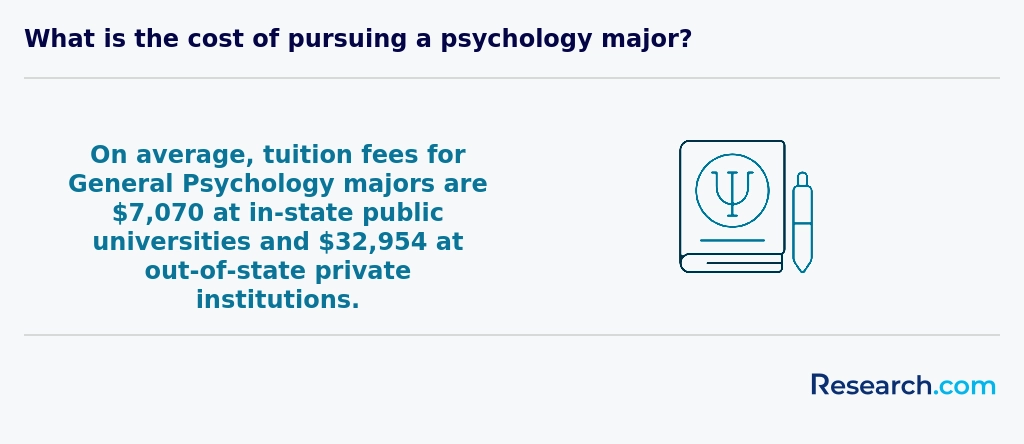
The average cost of a psychology degree in Minneapolis often surprises many prospective students. With the median total cost around $31,482 and median in-state total cost near $14,400, the financial commitment is substantial but not insurmountable. Graduates from popular universities in the area often share how they carefully balanced tuition expenses with part-time jobs or scholarships, making the experience rewarding and manageable despite initial concerns.
Exploring psychology degree tuition and fees Minneapolis highlights a landscape where public institutions offer more affordable options compared to private colleges, yet the overall educational investment remains significant. Many students find that the rich academic environment and local internship opportunities-particularly in well-known Minneapolis colleges-add invaluable experience that justifies the cost. This real-world engagement often sparks enthusiasm and fuels motivation for their future careers.
One common story among students is navigating financial aid and finding pathways to reduce expenses, which makes the journey more accessible and less daunting emotionally. It's crucial to reflect on how cost relates not only to price tags but to the holistic experience and long-term benefits. For those seeking further insight into which programs align best with their goals and budgets, exploring the best popular psychology degree programs in Minnesota can clarify the decision-making process.

Application and Admission Guidance for Prospective Psychology Students in Minneapolis, MN
Navigating the application process is a critical step for those aiming to join the vibrant psychology programs in Minneapolis. Prospective students should start by reviewing each institution’s admissions criteria and deadlines, preparing a portfolio that highlights academic achievements, extracurricular engagements, and any relevant volunteer or internship experiences. Carefully crafting your personal statement and securing strong letters of recommendation can set your application apart. Additionally, consider engaging in preparatory courses or webinars that guide you through application best practices. For instance, exploring resources on the best online psychology degree programs can offer insights into how to frame your academic interests and career goals effectively. Thorough research and early preparation can significantly enhance your chances of admission, ensuring that you present a well-rounded and compelling application to your chosen Minneapolis institutions.
What financial aid is available to psychology degree students in Minneapolis?
Many psychology students at the University of Minnesota share how federal aid through FAFSA transformed their education journey, making the daunting $10,000-$15,000 annual tuition feel more manageable. Imagine qualifying for Pell Grants up to $7,000 a year-grants that don't need repayment-allowing students to focus on their studies without excessive financial stress.
Beyond federal sources, residents benefit from the Minnesota State Grant, a lifeline for those attending local schools. Graduates recall receiving up to $5,000 annually, which bridged gaps that scholarships alone couldn't cover. Such aid turns the experience at colleges like Augsburg University or Hamline University into achievable realities.
Local scholarships, especially from organizations like the Minnesota Psychological Association, reward merit and community involvement, adding a personal touch to funding.
Institutional scholarships further enhance opportunities; some students vividly describe relief when securing aid tied specifically to psychology majors, easing their path at Minneapolis-based institutions.
Work-study programs also play a vital role, allowing hands-on engagement while earning-turning campus jobs into empowering stepping stones rather than mere paychecks.
These layered aids collectively reframe the typical financial struggle, inviting students to envision a supported, hopeful academic journey in psychology right here in Minneapolis.
Licensure and Certification Pathways for Psychology Graduates in Minnesota
Earning a psychology degree is only the first step toward professional practice in Minnesota. To become a licensed psychologist or counselor, graduates must navigate a multi-stage process overseen by the Minnesota Board of Psychology and related licensing boards. 1. Educational Requirements • Doctoral Path: Complete a Psy.D. or Ph.D. from an APA-accredited program, including at least 2,000 hours of supervised practicum and internship. • Master’s Path (for LPC/LPCC): Obtain a master’s in counseling or clinical psychology, often available as an accredited psychology degree online, with a minimum of 700 supervised practicum hours. 2. Supervised Post-Degree Experience • Psychologists: 1,500–2,000 hours of postdoctoral supervised practice, depending on degree level. • Licensed Professional Clinical Counselors (LPCC): At least 2 years or 2,000 hours under a board-approved supervisor. 3. Examinations • Examination for Professional Practice in Psychology (EPPP): Required for psychologist licensure. • Minnesota Jurisprudence Exam: Covers state statutes and ethical standards. • National Counselor Examination (NCE) or National Clinical Mental Health Counseling Examination (NCMHCE): For LPCC candidates. 4. Application and Fees • Submit transcripts, supervisor verification, and exam scores to the Minnesota Board of Psychology or Board of Behavioral Health and Therapy. • Pay application, examination, and licensure fees (approximately $300–$500 total). 5. Renewal and Continuing Education • Psychologists: 40 continuing education hours every two years, including 6 ethics credits. • LPCCs: 40 CE hours biennially, with 6 in ethics or law. Understanding these steps early helps align your academic choices and practicum planning, ensuring a smooth transition from graduate studies to a licensed psychology career in Minneapolis.
What are the prerequisites for enrolling in psychology degree program in Minneapolis?
Enrolling in a psychology degree program in Minneapolis is more than a checklist of academic achievements-it's a commitment to exploring the human mind in one of the country's vibrant educational hubs. Undergraduates typically need a high school diploma with solid grades in core subjects like English and science, often meeting GPA thresholds around 2.5 to 3.0. Some admittees recall how test-optional policies at local colleges eased pressures, allowing them to focus on personal growth and relevant experiences instead of solely standardized exams.
Graduate applicants at institutions such as the University of Minnesota or Augsburg University share a common narrative: a bachelor's degree with coursework in psychology or related fields sets the foundation. But what really distinguishes successful candidates are meaningful experiences-volunteering in clinics, research participation-that bring their applications to life. These stories reveal how a person's passion and dedication often outweigh pure numbers, painting a richer picture than transcripts alone.
Imagine the excitement of preparing a personal statement that captures your unique journey, backed by glowing recommendations from mentors who witnessed your growth firsthand. This is a journey both challenging and deeply rewarding within Minneapolis's psychology programs.
Licensing and Certification in Minnesota
To practice as a licensed psychologist or counselor in Minneapolis, you must meet state requirements set by the Minnesota Board of Psychology.
- Earn an APA-accredited doctoral degree in psychology (or a relevant master’s degree for certain counseling roles).
- Complete at least 2,000 hours of supervised post-doctoral clinical experience.
- Pass the national Examination for Professional Practice in Psychology (EPPP) and Minnesota’s jurisprudence exam.
- Submit your application, verification of supervised hours, background check, and payment of licensing fees to the Board.
Planning ahead can save time-most candidates finish licensure steps within 1–2 years after graduation. For students seeking to shorten the educational timeline, explore accelerated psychology programs online.
What courses are typically in psychology degree programs in Minneapolis?
Psychology degree programs in Minneapolis typically immerse students in courses like Introduction to Psychology, where graduates recall the excitement of uncovering the basics of human behavior and mental processes. At the University of Minnesota and other local institutions, students often describe how Research Methods and Statistics classes transform abstract numbers into meaningful insights, fueling their confidence in analyzing real-world data.
Developmental and Abnormal Psychology courses frequently lead to eye-opening moments, as students explore human growth and mental health challenges through case studies and discussions. These courses aren't just academic requirements-they resonate deeply when graduates reflect on applying this knowledge during internships at clinics or community organizations in Minneapolis.
Advanced courses such as Cognitive Psychology, Social Psychology, and Biopsychology deepen understanding by connecting theory with daily life experiences, like interpreting social interactions in bustling Minneapolis neighborhoods or examining the biological underpinnings of behavior. Ethics in Psychology rounds out the curriculum, encouraging students to wrestle with moral dilemmas they may face in practice, fostering a strong sense of professional responsibility.
What types of specializations are available in psychology degree programs in Minneapolis?
Psychology degree specializations Minneapolis students pursue often challenge the notion that one path fits all in this diverse field. Graduates from notable universities in the city describe their experiences with specializations like clinical psychology, where diagnosing and treating mental disorders becomes a deeply rewarding daily task. Counseling psychology, popular among students eager to make emotional and social impacts, offers vibrant opportunities in community agencies and schools. Industrial-organizational psychology stands out by transforming workplace dynamics, pushing graduates to rethink how productivity and mental wellbeing intersect. Developmental psychology students frequently share moments of breakthrough in understanding human growth through hands-on research at local colleges, enriching their personal and professional lives. Forensic psychology, a less expected yet fascinating option, immerses learners in the complex intersection of psychology and law within Minneapolis' legal community.
Choosing from these types of psychology programs in Minneapolis allows students not only to engage with theory but also to gain vital practicum experiences. Graduates often praise how the city's educational institutions connect them with internships that make psychological principles tangible and impactful. Many also explore the best online psychology degree programs to supplement their studies, ensuring flexibility and broader exposure.
How do you choose the best psychology degree in Minneapolis?
Choosing the best psychology degree in Minneapolis means looking beyond just the degree title. Consider how graduates from places like the University of Minnesota reflect on their experience: many emphasize the importance of faculty who are active in research and clinical practice, offering insights that spark excitement and deepen understanding. This real-world mentorship creates a sense of belonging and motivates students to push their limits.
Financially, affordable psychology schools Minneapolis tuition fees should not only fit your budget but also come with clear scholarship paths-several local institutions balance quality with cost, challenging the assumption that you must overspend for reputable study. Graduates often recall how this balance allowed them to focus fully on learning rather than financial stress.
Often overlooked is the value of local partnerships; community hospitals and organizations in Minneapolis provide internships that transform classroom lessons into tangible skills. These immersive experiences empower students to confidently envision their future roles.
Exploring options such as an accredited psychology degree online can also offer flexibility without sacrificing accreditation, appealing to those who juggle work and study or seek a nontraditional path.

What career paths are available for psychology degree students in Minneapolis?
Graduates with a psychology degree in Minneapolis find themselves at the crossroads of many compelling career opportunities, far beyond the familiar image of therapy or counseling rooms. Clinical psychology remains a prominent path, especially with the city's dense network of hospitals and outpatient clinics. Many graduates from the University of Minnesota describe fulfilling experiences working directly with diverse patient populations, shaping resilient communities. Yet, psychology career opportunities in Minneapolis extend outward-industrial-organizational psychology thrives amid corporate giants eager to enhance employee wellness and workplace culture, a field that graduates often discover through internships or collaborative research projects.
Moreover, the vibrant academic environment nourishes research and teaching roles. Graduates frequently recall how local colleges offer hands-on research assistantships that spark enthusiasm for scientific inquiry and deepen their understanding of human behavior. Among these avenues, school psychology holds a meaningful place, fueled by state support and the drive to improve student mental health outcomes.
Psychology degree job prospects in Minneapolis also encompass less traditional careers, such as forensic psychology or marketing research, demonstrating the field's versatility. For students seeking financial context, options like the Most Affordable Psychology Degree Programs Ranking in Vermont can guide those considering cost-effective educational investments.
What is the job market for psychology degree in Minneapolis?
The psychology degree job opportunities in Minneapolis reveal a dynamic landscape shaped by the city's expanding healthcare and education sectors. Graduates from local universities often find themselves immersed in environments such as hospitals, school districts, and government agencies, where their skills address real community needs. For example, a recent graduate from a prominent Minneapolis college shared how hands-on experience in outpatient mental health clinics prepared them for a rewarding role in counseling, underscoring the practical value of local programs.
It's important to challenge assumptions that only doctoral degrees lead to meaningful work; many clinical and counseling roles require strong master's level training combined with Minnesota Board of Psychology licensure. The salary outlook here supports sustained motivation, with median wages nearing $85,000-enough to inspire confidence despite tuition costs.
Students weighing their options benefit from considering one year online masters programs to accelerate entry into this vibrant job market. Embracing the specific opportunities within Minneapolis helps unlock diverse psychology career pathways tailored to this unique metropolitan area.
Frequently Asked Questions About psychology
Psychology degree students in Minneapolis can enhance their learning by actively engaging with the city's diverse clinical and research opportunities. Many local universities, such as the University of Minnesota, offer access to cutting-edge labs and community-based internships that provide real-world experience. According to the National Center for Education Statistics, nearly 70% of psychology undergraduates benefit from practical experience before graduation, which can be vital in Minneapolis' competitive job market.
Participating in psychology clubs and local professional groups helps students network and stay informed about regional developments in mental health. Additionally, seeking mentorship from faculty knowledgeable about Minnesota's healthcare laws sharpens professional skills tailored to the state.
Emerging niches within the psychology field in Minneapolis reflect broader national trends, with an increasing focus on areas such as neuropsychology, health psychology, and forensic psychology. Neuropsychology, which studies brain-behavior relationships, is growing due to advancements in brain imaging technologies and a rising demand for cognitive assessments in clinical settings.
Health psychology, emphasizing behavioral factors in physical health, benefits from Minneapolis's strong healthcare network, including the Mayo Clinic. Forensic psychology also sees growth as legal systems increasingly use psychological expertise for criminal profiling and rehabilitation.
According to the Minnesota Psychological Association, jobs in these specialties are projected to grow faster than average through 2028, mirroring U.S. Bureau of Labor Statistics data.
Graduates with a psychology degree in Minneapolis should focus on gaining practical experience to boost employability. Internships and volunteer work at local clinics or community centers help build relevant skills. The Minnesota Department of Employment and Economic Development notes that healthcare and social assistance are among the top industries hiring psychology graduates in the region.
Networking is crucial; attending local professional events like those hosted by the Minnesota Psychological Association can connect job seekers with potential employers. Additionally, obtaining certification in specialized areas such as behavioral analysis may enhance job prospects. Tailoring resumes to emphasize research experience and familiarity with psychological assessment tools is also recommended.
Employers in Minneapolis highly value psychology graduates who demonstrate strong critical thinking and analytical skills. These abilities enable professionals to assess complex behavioral data and contribute to evidence-based practices.
Communication is another essential skill, as psychology professionals often work with diverse populations and interdisciplinary teams. According to the Bureau of Labor Statistics, effective verbal and written communication improves client interactions and professional collaboration.
Minneapolis employers also seek graduates proficient in research methods and statistical analysis, reflecting the city's emphasis on data-driven psychological services within healthcare and social programs. Familiarity with ethical standards and cultural competence further enhances employability in this region.
Finding internships in Minneapolis relevant to a psychology degree involves leveraging local resources and networks. Universities such as the University of Minnesota and Augsburg University often have dedicated career centers listing internship opportunities in clinical, counseling, and research psychology fields. According to the Minnesota Department of Employment and Economic Development, health services and social assistance sectors in Minneapolis show a steady growth, offering various internship roles.
Students should also explore partnerships with local hospitals, mental health clinics, and nonprofit organizations like the Hennepin Healthcare or The Family Partnership. Additionally, joining professional associations like the Minnesota Psychological Association can provide tailored internship listings and networking events.
Online platforms such as Handshake and Indeed frequently post psychology-related internships specifically within the Minneapolis area. Many roles require at least sophomore standing or completion of foundational psychology courses.
A psychology degree in Minneapolis provides significant opportunities for career mobility and advancement due to the region's robust healthcare and social services sectors. Graduates often find roles in counseling, human resources, and research within local hospitals, non-profits, and corporate settings. According to the U.S. Bureau of Labor Statistics, employment for psychologists in Minnesota is projected to grow 6% from 2022 to 2032, matching the national average.
The degree also serves as a foundation for advanced certifications or graduate studies, which can lead to higher-paying roles such as clinical psychologist or school counselor. Minneapolis's proximity to healthcare hubs and research institutions offers many internships and networking prospects, enhancing professional growth.
Studying for a psychology degree in Minneapolis offers strong preparation for interdisciplinary roles, reflecting the city's diverse academic and professional landscape. Universities like the University of Minnesota emphasize collaboration, integrating psychology with fields such as health sciences, social work, and business. This approach equips students with skills to work effectively in varied environments, including healthcare settings and community organizations.
Minneapolis psychology programs often include applied research opportunities, supporting cross-disciplinary projects. According to the National Center for Education Statistics, over 30% of graduates in Minnesota pursue careers involving teamwork across multiple fields, signaling robust interdisciplinary training.
Additionally, local internships with healthcare providers and nonprofits allow students to gain real-world experience, enhancing their adaptability and communication skills-key for roles bridging psychology with other sectors.
Choosing between a thesis and a non-thesis psychology degree program in Minneapolis depends on your career goals and learning preferences. A thesis program emphasizes original research, requiring students to design, conduct, and present a study. This path suits those aiming for doctoral study or research-based roles.
Non-thesis programs focus more on coursework and practical skills, often including internships or projects. They appeal to students targeting clinical, counseling, or applied psychology careers.
At University of Minnesota and other local institutions, about 40% of psychology graduates opt for thesis tracks, reflecting a strong research community (source: National Center for Education Statistics, 2023).
Consider your time commitment and interest in research when deciding.
Students based in Minneapolis who wish to study psychology abroad have several options through U.S. institution partnerships and exchange programs. Universities like the University of Minnesota offer opportunities to study psychology coursework at partner schools in Europe, Asia, and Australia. These programs allow students to immerse themselves in different cultural and academic perspectives while earning credits towards their Minneapolis-based degrees.
According to the Institute of International Education, about 10% of U.S. psychology students participate in study abroad programs, reflecting growing interest. Minneapolis students can expect to find options ranging from summer research internships to semester-long exchanges. These experiences enhance cultural competence, a valued skill in psychology careers.
It is important for students to consult academic advisors early to ensure credits transfer properly and prerequisites are met. Scholarships specific to psychology students may also be available to help fund these international study opportunities.
Minneapolis offers various part-time job opportunities that complement psychology degree education, helping students gain relevant experience while studying. Many psychology students find roles as research assistants at local universities such as the University of Minnesota, where involvement in ongoing studies builds practical skills and familiarity with psychological methodologies.
Additionally, part-time positions in mental health facilities and community centers provide experience in client interaction and support services, vital for applied psychology careers. The Minnesota Department of Employment and Economic Development reports a steady demand for behavioral health aides and paraprofessionals in the Minneapolis area, giving students experiential learning aligned with their academic goals.
Other common part-time jobs include tutoring psychology courses or working as crisis hotline volunteers, which sharpen communication and counseling skills necessary for future psychologists and counselors.
Minneapolis offers robust networking opportunities for psychology students through its diverse academic and professional communities. The University of Minnesota, one of the city's leading institutions, hosts regular psychology department seminars, workshops, and conferences providing direct interaction with faculty and visiting experts. Additionally, organizations such as the Minnesota Psychological Association (MPA) hold local events where students can meet practicing psychologists and find internship opportunities.
Students can also benefit from connections with healthcare facilities and research centers concentrated in Minneapolis, increasing the chances for internships and collaborative projects. According to the Bureau of Labor Statistics, Minnesota's psychological services sector is expected to grow 10% through 2032, reflecting expanding opportunities for networking and employment.
Alumni networks provide vital support for psychology degree students in Minneapolis by offering access to professional contacts and mentorship opportunities. Graduates often connect students with internship and job openings within local clinics, hospitals, and research centers. According to the Minnesota Psychological Association, nearly 65% of psychology graduates find employment through networking efforts.
These networks also facilitate guidance on licensure and continuing education, which is critical in psychology careers regulated by state requirements. For students at Minneapolis institutions, alumni events foster collaboration and knowledge sharing, enhancing academic and career prospects.
Customizing a psychology degree program in Minneapolis allows students to tailor their education to specific career aspirations. Many local universities offer elective courses in areas such as clinical, counseling, or industrial-organizational psychology. Students can also pursue internships or research projects with Minneapolis-based organizations, providing practical experience aligned with their goals. Additionally, some programs provide the option to specialize through certificates or minors in fields like neuroscience or social work. According to the Minnesota Office of Higher Education, nearly 30% of psychology undergraduates in the state choose specialized tracks to improve employability in competitive job markets.
Psychology students in Minneapolis commonly face challenges related to balancing rigorous coursework with practical experience requirements. Many programs emphasize fieldwork, internships, or research participation, which demand significant time alongside classes. According to the Minnesota Department of Education, securing local internships in clinical or counseling settings can be competitive due to high demand.
Financial constraints also affect students, as the average annual tuition in the area ranges from $10,000 to $30,000 depending on the institution. Additionally, students may struggle with understanding evolving ethical guidelines and state licensing requirements, which are critical for future professional practice in Minnesota.
Networking opportunities are vital but sometimes limited by the student's access to mental health facilities or research labs. Overall, navigating academic expectations, gaining practical experience, and handling financial pressures are key hurdles for psychology students in Minneapolis.
With a psychology degree in Minneapolis, graduates can pursue several professional certifications to enhance their careers. The most common certification is the Licensed Psychologist credential, which requires completing a doctoral degree, supervised experience, and passing the Examination for Professional Practice in Psychology (EPPP). For those with a bachelor's or master's, certifications like Certified Alcohol and Drug Counselor (CADC) or Licensed Professional Clinical Counselor (LPCC) are options, both regulated by Minnesota's Board of Behavioral Health and Therapy.
Other certifications include Certified School Psychologist and Board Certified Behavior Analyst (BCBA), useful in education and behavioral therapy fields. These certifications increase employability and often meet state-specific standards for counseling roles.
To write a winning application for a psychology program in Minneapolis, start by thoroughly researching local universities, such as the University of Minnesota, which is renowned for its psychology department. Highlight your academic achievements, especially in psychology-related coursework. Admissions committees in Minneapolis place strong emphasis on research experience, so include any internships, volunteer positions, or independent projects you've completed.
Clearly articulate your career goals and explain why studying psychology in Minneapolis fits your aspirations. Tailoring your personal statement to address specific faculty interests or local community psychology initiatives can strengthen your application. According to data from the National Center for Education Statistics, competitive psychology programs often admit fewer than 30% of applicants, so a focused, well-written application is critical.
The career outlook for psychology graduates in the United States, including Minneapolis, reflects both local and global trends. According to the U.S. Bureau of Labor Statistics, employment of psychologists is expected to grow 8% from 2021 to 2031, which is about as fast as the average for all occupations. This growth is driven by increased demand for mental health services worldwide.
Internationally, psychology careers often vary by country due to different educational requirements and cultural attitudes toward mental health. However, a degree from a U.S. institution is widely respected, opening opportunities for research and clinical work globally.
In Minneapolis, a hub for healthcare and education, psychology graduates benefit from proximity to major hospitals and research centers. The University of Minnesota, for example, is recognized for its psychology programs and international collaborations, enhancing global perspectives for students.
Gaining practical experience while studying for a psychology degree in Minneapolis is essential for building skills and improving job prospects. Many local universities offer internship programs in partnership with hospitals, mental health clinics, and community organizations. For example, the University of Minnesota provides supervised clinical hours that count toward degree requirements.
Volunteering at places like Hennepin County Medical Center allows students to work directly with diverse populations, gaining hands-on experience. Additionally, research assistant roles at university labs help students develop vital skills in experimental design and data analysis.
According to the National Association of Colleges and Employers, 70% of psychology students who complete internships find jobs within six months of graduation, highlighting the importance of practical experience in Minneapolis.
Choosing the right concentration within a psychology degree program in Minneapolis involves evaluating your career goals and interests. Popular concentrations include clinical, counseling, developmental, and organizational psychology. Each has unique coursework and career paths.
Consider job prospects in Minneapolis: the Twin Cities region anticipates a 14% growth in psychology-related jobs through 2030, according to the Minnesota Department of Employment and Economic Development. Clinical and counseling psychology are highly in demand, especially with increased focus on mental health services.
Research programs at local schools like the University of Minnesota and Augsburg University to understand their specialized offerings and faculty expertise, which can influence your educational experience.
Also, look for programs that offer internships or practicum placements within Minneapolis healthcare or community organizations, as practical experience is vital for most concentrations.
Related Psychology Rankings for Nearby Cities
- 2027 Most Popular Psychology Degree Programs Ranking in Saint Paul
- 2027 Most Popular Psychology Degree Programs Ranking in Lincoln
- 2027 Most Popular Psychology Degree Programs Ranking in Saint Louis
- 2027 Most Popular Psychology Degree Programs Ranking in Springfield
- 2027 Most Popular Psychology Degree Programs Ranking in Detroit
- 2027 Most Popular Psychology Degree Programs Ranking in Cincinnati
- 2027 Most Popular Psychology Degree Programs Ranking in Tulsa
- 2027 Most Popular Psychology Degree Programs Ranking in Columbus
- 2027 Most Popular Psychology Degree Programs Ranking in Cleveland
- 2027 Most Popular Psychology Degree Programs Ranking in Denver
Top Trending Psychology Rankings
See What Experts Have To Say About Studying Psychology
Read our interview with Psychology experts

Catherine Caldwell-Harris, Ph.D.
Psychology Expert
Associate Professor of Psychology
Boston University

Robin M. Kowalski. Ph.D.
Psychology Expert
Professor of Psychology
Clemson University

Joann Farrell Quinn, Ph.D., MBA
Psychology Expert
Director at the College of Medicine Department of Medical Education
Morsani College of Medicine

References
- Psychology https://www.century.edu/programs/psychology/
- What can I do with a psychology degree? https://www.hull.ac.uk/study/undergraduate/courses/psychology-bsc-hons/what-can-i-do-with-a-psychology-degree
- Best Minnesota Psychology Degrees Updated for 2025, Online Included https://www.psychologydegrees.org/state/minnesota
- Study Psychology Abroad | Go Overseas https://www.gooverseas.com/study-abroad/psychology
- Have You Found a Niche? https://www.apaservices.org/practice/business/marketing/building/niche
- Minnesota Psychology Schools and Programs https://www.psychologycareercenter.org/minnesota-psychology-schools.html
- Study Psychology Abroad https://astarfuture.co.uk/study_psychology_abroad.html
- What Certifications Can I Get With A Bachelor's In Psychology? https://www.psychology.org/resources/certification-skills-for-psychology-major-resumes/
- Psychology Major https://www.hamline.edu/academics/undergraduate/psychology
- Mental Health Challenges Faced by Psychology Students | The Healthcare Guys https://healthcareguys.com/2023/11/23/mental-health-challenges-faced-by-psychology-students/


