2027 AAC Careers for Speech-Language Pathologists: Training and Opportunities

Co-Founder and Chief Data Scientist
Many professionals from unrelated fields face challenges when seeking to enter the specialized area of AAC careers within speech pathology. They often struggle to find accredited, flexible educational programs that accommodate their backgrounds and busy schedules. Navigating certification requirements and understanding the scope of AAC roles can also be overwhelming without clear guidance. This article explores current training pathways, certification options, and career opportunities in AAC for aspiring speech-language pathologists. It aims to provide a roadmap to help prospective students and career changers successfully transition into this dynamic and growing field.
Key Things You Should Know
- Augmentative and alternative communication (AAC) careers for speech-language pathologists are expanding rapidly, with employment projected to grow 18% from 2024 to 2034 according to the U.S. Bureau of Labor Statistics.
- Specialized AAC training programs and certifications are increasingly integrated into graduate curricula, emphasizing technology proficiency and interdisciplinary collaboration.
- Access to cutting-edge AAC devices and telepractice modalities enhances clinical opportunities, enabling speech-language pathologists to serve diverse populations remotely and efficiently.
What is a speech-language pathologist?
A speech-language pathologist (SLP) is a licensed healthcare professional specializing in evaluating, diagnosing, and treating communication and swallowing disorders. These conditions may affect speech, language, voice, fluency, cognitive-communication, and feeding abilities. SLPs support diverse populations, including children with developmental delays, adults recovering from strokes, and individuals with progressive neurological diseases. As part of AAC careers, speech-language pathologists help those who rely on augmentative and alternative communication methods, such as devices or sign language, to communicate effectively.
Typical duties include conducting assessments to pinpoint specific speech or language impairments, crafting individualized therapy plans, and delivering interventions to improve communication skills. For example, an SLP may assist a child struggling with articulation or help a stroke survivor regain sentence formation. Speech-language pathologist job description in AAC careers often involves adapting to patient needs using a variety of communication tools.
Employment growth for speech-language pathologists is strong, with a 15% increase projected from 2024 to 2034, driven by aging populations and greater awareness of communication disorders. Approximately 13,300 job openings are expected annually, making this field a secure career choice.
Training requirements for speech-language pathologists in AAC include earning a master's degree accredited by the Council on Academic Accreditation in Audiology and Speech-Language Pathology (CAA), completing supervised clinical hours, and passing the national certification exam. Many students explore fully online SLP master's programs to fulfill these educational requirements.
What education is required to become a speech-language pathologist?
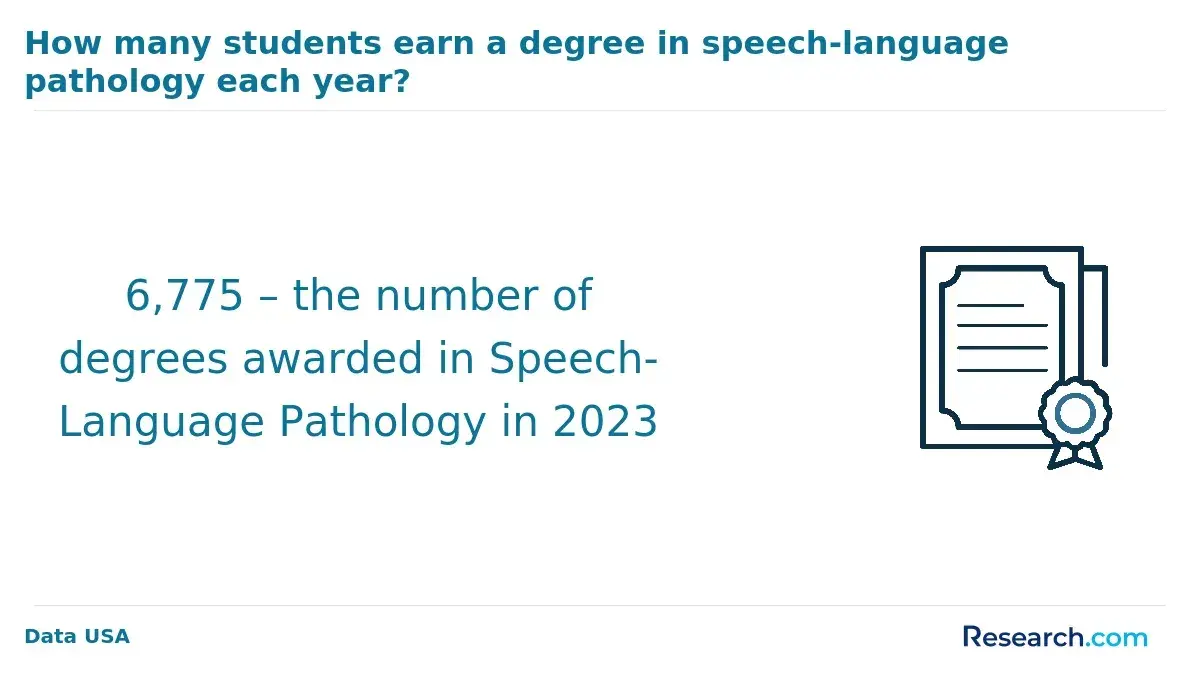
A master's degree in speech-language pathology from an accredited program is required to practice professionally. This typically follows a bachelor's degree and includes two years of graduate coursework covering anatomy, linguistics, neuroscience, and clinical methods. Students must complete a minimum of 400 supervised clinical practicum hours, gaining hands-on experience with diverse populations. When exploring speech-language pathology graduate programs in North America, it's essential to assess their clinical training opportunities as well as any specialization options.
Following graduation, candidates enter a Clinical Fellowship Year (CFY), a supervised professional practice required before obtaining state licensure and American Speech-Language-Hearing Association (ASHA) certification. State licensure requirements, which generally include passing the Praxis Examination in speech-language pathology and maintaining continuing education, vary across North America but are critical for legal practice.
Specializing in augmentative and alternative communication (AAC) often requires additional training such as certificate programs, workshops, or elective graduate courses focused on assistive technology and communication strategies. Given the projected 21% job growth for AAC specialists from 2021 to 2031, pursuing these pathways can improve career prospects. Professionals may also pursue continuing education units (CEUs) in AAC to remain competitive.
Those interested should understand state licensure requirements early for smoother career progression. For insight into compensation in this field, see SLP salary.
How do I get licensed as a speech-language pathologist?
Licensing requirements for speech-language pathologists in the United States involve several structured steps regulated by state boards. Candidates first complete a master's or doctoral degree in speech-language pathology from a program accredited by the Council on Academic Accreditation (CAA) of the American Speech-Language-Hearing Association (ASHA). This education provides essential training in diagnosing and treating communication disorders. For those seeking faster routes, 5-year accelerated speech pathology programs offer an efficient path to fulfill educational prerequisites.
Next, candidates undergo a Clinical Fellowship Year (CFY), a supervised professional experience typically lasting approximately 36 weeks full-time, to gain practical skills in clinical settings under mentorship. Passing the Praxis Examination in Speech-Language Pathology, administered by ETS, is mandatory to demonstrate core competence before applying for licensure.
Steps to become a licensed speech-language pathologist also vary with state-specific requirements, which commonly include education verification, completion of the CFY, and successful Praxis exam results. Some states may require additional exams or background checks.
Board certification by ASHA, known as the Certificate of Clinical Competence (CCC-SLP), is often pursued for advanced recognition and can enhance employment opportunities.
School-based speech-language pathologists face strong demand nationwide: 79% report staffing shortages, with openings exceeding applicants. Approximately 15% of public school students receive special education, many due to speech-language impairments, highlighting the critical need for licensed professionals in education settings.
What bachelor's degrees prepare for speech pathology graduate programs?
Bachelor's degrees for speech pathology graduate admission often come from communication sciences and disorders (CSD), linguistics, psychology, and education fields. A CSD bachelor's is the most direct route, covering foundational courses in phonetics, anatomy of speech and hearing, and language development, which aligns well with graduate prerequisites.
Undergraduate majors that lead to speech pathology programs also include linguistics, focusing on language structure, phonology, and syntax, though additional science prerequisites may be required. Psychology offers insight into cognitive and developmental processes related to language acquisition but usually needs complementary coursework in anatomy or hearing sciences.
Education majors, particularly in special education or early childhood development, may pursue speech pathology by completing necessary biology and communication disorder prerequisites. Allied health and biology degrees are less common but possible with extra language-focused courses.
Prospective speech pathology students must confirm specific graduate prerequisites that typically include anatomy and physiology of speech, audiology, statistics, and developmental psychology. Careful planning reduces delays in admission.
Salary prospects reflect preparation and experience. Entry-level AAC specialists earn $58,000-$68,000 annually; mid-career salaries rise to $68,000-$82,000; senior speech pathologists earn $95,000 to over $110,000. For those exploring options, checking the easiest speech pathology programs to get into can help streamline the path to graduate study.
What are top master's programs in speech-language pathology?
Top master's programs in speech-language pathology combine accredited curricula, extensive clinical experience, and research opportunities essential for certification and licensure. Leading programs accredited by the Council on Academic Accreditation in Audiology and Speech-Language Pathology (CAA) include the University of Iowa, University of Wisconsin-Madison, and Vanderbilt University. These schools emphasize evidence-based practice and work with diverse clinical populations, preparing graduates for various AAC and speech pathology careers.
Applicants should seek programs offering strong practicum placements across pediatric, adult, and neurological settings. For instance, the University of North Carolina at Chapel Hill features comprehensive clinical rotations, while the University of Washington integrates advanced AAC technology training. Such exposure builds competence in managing communication disorders, critical for evolving specialized roles.
Master's programs vary in their focus on research versus clinical experience. Candidates interested in academic or research careers may prefer schools with active speech-language research labs like the University of Arizona or the University of Pittsburgh. Those prioritizing clinical work benefit from affiliations with hospitals and rehabilitation centers.
The U.S. Bureau of Labor Statistics reports a median annual compensation of $95,410 for speech-language pathologists, highlighting how investing in a top-tier master's can boost job prospects and salary potential. Programs with interdisciplinary approaches and AAC specialization remain especially valuable in today's healthcare landscape.
Are there accredited online speech pathology programs?
Accredited online speech pathology programs meeting the Council on Academic Accreditation in Audiology and Speech-Language Pathology (CAA) standards are available. These programs offer flexibility through a mix of synchronous and asynchronous coursework, clinical observations, and in-person practicum placements, ensuring comprehensive training for students balancing work, family, or location constraints.
Many well-regarded online programs provide master's degrees and specialized certification courses aligned with American Speech-Language-Hearing Association (ASHA) certification requirements. Their curricula cover anatomy, disorders, diagnostics, intervention planning, and clinical methodologies.
It is essential to verify CAA accreditation before enrolling, as it is required for eligibility to sit for the Certificate of Clinical Competence in Speech-Language Pathology (CCC-SLP) exam. Without this accreditation, certification and employment opportunities may be limited.
Online programs often connect students to local clinical sites, allowing the completion of required practicum hours within their communities. According to ASHA, approximately 60% of certified speech-language pathologists work in educational settings, 34% in health care facilities, and 7% in nonresidential health care such as home health or private practice.
Prospective students should evaluate support services, faculty expertise, and graduate outcomes. Strong programs also provide networking and mentorship opportunities, which enhance career readiness across various work environments.
What does the speech pathology curriculum cover?
The speech pathology curriculum develops the skills needed to assess, diagnose, and treat communication disorders, with a strong focus on augmentative and alternative communication (AAC). Coursework covers anatomy, physiology, neuroanatomy, and language development, integrating clinical strategies for speech, language, cognitive-communication, and swallowing disorders across all ages.
Training emphasizes AAC device selection, symbol systems, and communication apps tailored to individual disabilities. Students learn to create personalized AAC plans and collaborate within multidisciplinary teams to meet diverse client needs.
Hands-on clinical practicum often includes telepractice, a growing method that allows remote service delivery to underserved populations, especially rural areas, as highlighted by Assessment.com. This requires proficiency in technology and adaptation of interventions for virtual settings.
The curriculum also addresses cultural and linguistic diversity, ethical standards, and outcome measurement to prepare students for evidence-based practice.
Key skills developed include:
- Assessment of aided and unaided communication systems
- Implementation of AAC in educational, medical, and community contexts
- Training family members and caregivers in AAC use
- Adapting interventions for cognitive and physical challenges
This comprehensive training equips graduates to adapt to workforce needs and evolving AAC technologies shaping careers in 2026 and beyond.
What is the average salary for speech-language pathologists?
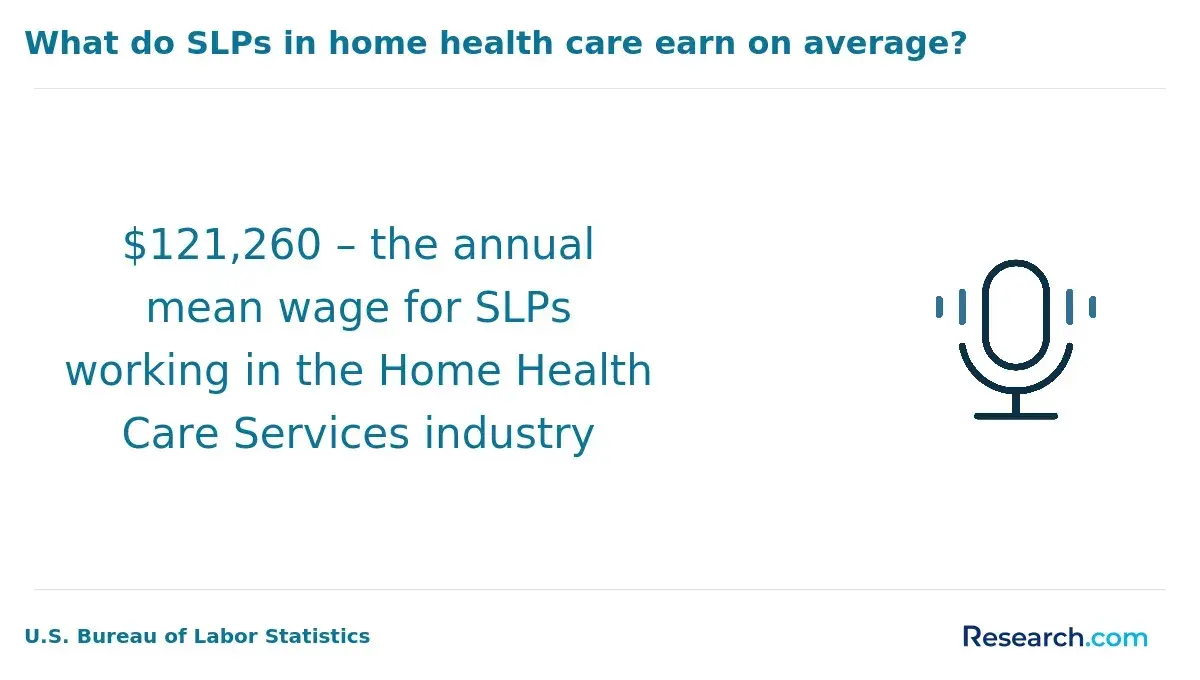
The average salary for speech-language pathologists is around $85,000 annually, with variations depending on location, work setting, experience, and specialty. Entry-level professionals often start near $60,000, while those with advanced certifications or supervisory roles can earn over $100,000. Hospitals and specialized clinics generally offer higher pay than schools.
Geographic location also plays a key role in salary differences. High-cost states like California and New York tend to provide larger salaries to balance living expenses, whereas rural areas or smaller school districts may offer lower compensation but include benefits such as loan forgiveness programs. Pursuing specialized certifications, for example in augmentative and alternative communication (AAC), can also boost career prospects and income.
With over 181,000 speech-language pathologists certified by the American Speech-Language-Hearing Association (ASHA), the field maintains strong competition yet a broad distribution nationwide. Key strategies for maximizing earnings and career growth include:
- Researching local job markets carefully
- Gaining specialized skills and certifications
- Targeting high-demand employment sectors
What is the job outlook for speech-language pathologists?
The job outlook for speech-language pathologists remains very positive, with an expected growth rate of 21% from 2024 to 2034, according to the U.S. Bureau of Labor Statistics. This growth is driven by an aging population facing increased rates of stroke and neurodegenerative diseases, which require advanced communication support. Early intervention programs in schools also play a major role in sustaining demand.
Specializing in augmentative and alternative communication (AAC) greatly improves career opportunities. Employers prefer candidates certified by AAC device manufacturers such as Tobii Dynavox or PRC-Saltillo. These certifications validate expertise with specialized technology, enhancing employability and salary potential as noted by Assessment.com.
Experience working with diverse groups-children with developmental delays, adults recovering from brain injuries, and patients with progressive conditions like ALS-broadens job prospects. SLPs can work in various environments including hospitals, schools, rehabilitation centers, and private practice.
Skills beyond clinical knowledge are vital. Familiarity with insurance procedures and telepractice tools allows SLPs to meet increasing demand for remote AAC services, expanding accessible care options.
Speech-language pathologists equipped with AAC expertise, certifications, and practical experience will find abundant opportunities for specialization and advancement in this growing field.
How do AAC specialists fit into speech pathology careers?
AAC specialists are vital within speech pathology careers, focusing on augmentative and alternative communication methods to assist individuals with complex communication needs. These professionals assess, design, and implement communication tools like speech-generating devices and communication boards, enabling patients to express themselves clearly. Their expertise is increasingly sought after in schools, hospitals, rehabilitation centers, and long-term care facilities.
Incorporating AAC skills broadens career paths for speech pathologists, allowing them to work with diverse populations, including children with autism spectrum disorders, adults recovering from strokes, and those with neurodegenerative diseases. This specialization typically requires additional training or certification, making AAC proficiency a valuable and distinctive skill within the field.
Key roles AAC specialists play include:
- Conducting tailored AAC assessments and interventions for clients with severe speech impairments.
- Collaborating with interdisciplinary teams to embed AAC in broader care or education plans.
- Training caregivers, educators, and families on effective AAC device use.
- Participating in research and development to improve AAC technologies and best practices.
The strong demand for speech pathologists is highlighted by rankings such as U.S. News and World Report naming the profession among the best jobs in healthcare, reflecting career stability and growth. Professionals equipped with AAC competencies are better positioned to meet evolving client needs and enhance their career opportunities.
Other Things You Should Know About Speech Pathology
Beyond state licensure, speech pathologists may pursue certifications such as the Certificate of Clinical Competence in Speech-Language Pathology (CCC-SLP) offered by the American Speech-Language-Hearing Association. This credential is widely recognized and can improve employment opportunities and professional credibility. Additional specialty certifications, like those in fluency disorders or swallowing disorders, can further differentiate a clinician's expertise.
Speech pathologists often participate in continuing education through workshops, webinars, and professional conferences focused on assistive technology and augmentative and alternative communication (AAC). Staying connected with professional organizations and subscribing to relevant journals also helps practitioners integrate new devices and software into therapy effectively. Collaboration with technology vendors can provide hands-on training and technology updates.
Speech pathologists specializing in AAC frequently work in a variety of settings including schools, hospitals, rehabilitation centers, and specialized clinics. They may also provide in-home therapy or consult for long-term care facilities. These diverse environments require flexibility and the ability to collaborate with educators, medical professionals, and caregivers.
References
- Is Speech-Language Pathology a Good Career? Salary, Demand & Outlook https://www.mghihp.edu/news-and-more/opinions/csd-discussions/speech-language-pathology-good-career-salary-demand-outlook
- Speech-Language Pathologist Salary Guide https://slponline.ithaca.edu/blog/speech-language-pathologist-salary-guide
- Best Online Speech-Language Pathology (SLP) Programs 2025 https://onlinespeechpathologyprograms.org/best-online-slp-programs/
- Speech-Language Pathology Jobs https://thesteppingstonesgroup.com/careers/speech-language-pathology-jobs/
- Assessment https://assessment.com
- 16 Speech Pathology Career Paths & Outlooks | USAHS https://www.usa.edu/blog/speech-pathology-career/
- What Degree Is Required for a Career in Speech Therapy? | Advanced Therapy Clinic https://www.advancedtherapyclinic.com/blog/what-degree-is-required-for-a-career-in-speech-therapy
- Becoming an SLP https://speechandhearingbc.ca/professional/careers/becoming-an-slp/
- Speech-Language Pathology Curriculum - Misericordia University https://www.misericordia.edu/speech-language-pathology/curriculum
- The Future Career Outlook for Speech-Language Pathologists https://shccares.com/blog/allied-health/the-future-career-outlook-for-speech-language-pathologists/