2027 The Best Time to Apply to Online SLP Programs

Co-Founder and Chief Data Scientist
Many prospective students struggle to determine the optimal time to apply to online speech pathology programs, especially when balancing work or shifting careers. Missing application windows or submitting materials too early can delay graduation and professional entry. Uncertainty about program cycles and prerequisites adds complexity, leading to frustration and wasted effort.
This article outlines key factors affecting application timing and provides guidance tailored to those aiming for a flexible, accredited path in speech pathology. Readers will gain clarity on scheduling their applications strategically to enhance acceptance chances and streamline their transition into the field.
Key Things You Should Know
- The application window for online Speech Pathology programs in 2026 opens early, with 65% of top programs receiving most applicants between January and March.
- Demand for online Speech Pathology degrees grew by 22% in 2025, making early application crucial to secure spots in competitive cohorts.
- Accreditation and updated clinical hour requirements emphasize applying to programs now that meet the 2024 ASHA standards for certification eligibility.
When is the best time to apply to online SLP programs?
The best time to apply for online speech pathology programs is typically the fall of 2025, aiming for enrollment in 2026. Most accredited programs follow traditional academic calendars with application deadlines from October to January. Meeting these deadlines maximizes chances of acceptance and allows enough time to complete prerequisites, secure recommendation letters, and prepare for required standardized tests. This timing aligns with the ideal application periods for online SLP programs and helps manage competitive admission processes.
Demand for speech-language pathologists continues to rise. In 2025, job openings increased by 18%, driven by telehealth growth and pediatric service needs (U.S. Bureau of Labor Statistics, Occupational Outlook Handbook, 2025 update). Higher demand increases competition for program spots, so early and thorough applications are essential.
Some hybrid online programs offer spring or summer application cycles, providing options outside the traditional fall start. However, most online speech pathology programs begin in fall. Applicants pursuing state licensure or certification should time their application and program completion to avoid gaps before clinical work or exams. For those researching affordable options, see SLP masters online programs to compare offerings and costs.
What are the top accredited online SLP programs?
The top accredited online speech pathology programs in the US offer rigorous curricula combined with flexible delivery to accommodate diverse student needs. Leading universities such as the University of Florida, the University of North Carolina at Greensboro, and the University of Wisconsin-Madison hold accreditation from the Council on Academic Accreditation in Audiology and Speech-Language Pathology (CAA), ensuring recognized standards and eligibility for certification exams.
These programs commonly provide master's degrees tailored for recent graduates and working professionals alike. They balance synchronous and asynchronous learning, helping students tackle complex clinical material while managing other commitments. Many programs include options for in-person clinical placements, often coordinated locally, which is crucial for hands-on experience.
Rolling admissions have become a key feature, with approximately 75% of online master's programs in speech pathology offering this option, enabling applicants to receive decisions within 4-6 weeks. This timely response supports students in planning finances, housing, and work. Part-time enrollment is also often available, benefiting professionals balancing their careers.
When choosing the best online SLP graduate programs with accreditation, students should consider program length, clinical placement support, faculty accessibility, and tuition. These factors ensure a strong pathway to certification and career advancement. Graduates can explore the highest paid SLP careers to maximize their investment in education.
How do online SLP programs differ from campus-based ones?
Online speech pathology programs differ significantly from campus-based ones in delivery format, offering flexibility for students to attend lectures, complete assignments, and engage in discussions remotely. This mode suits working professionals or those unable to relocate. Despite the distance, accredited online programs uphold the same academic rigor, clinical requirements, and certification standards as traditional programs.
Key differences between online and traditional SLP education include scheduling and interaction. Online students often benefit from asynchronous coursework that lets them study at their own pace, while campus programs follow fixed schedules. Some online programs incorporate synchronous sessions and local clinical placements, blending remote learning with hands-on experiences.
Students should carefully compare curriculum structure, clinical placement support, and accreditation status regardless of format. Clinical hours must be coordinated effectively since state licensure requires hands-on experience that cannot be completed purely online. Applying early is advantageous, especially for online cohorts that can have limited size; for example, in the Fall 2026 cycle, 62% of verified CSDCAS applications were submitted by December 2025, resulting in an 85% interview invitation rate.
Online programs often provide broader access to diverse faculty expertise and cutting-edge digital resources, while campus programs emphasize in-person networking but may entail relocation and higher expenses. Choosing between these depends on individual circumstances, preferences, and goals. For those seeking accelerated pathways, an accelerated SLP master's program can be an efficient option to consider.
What accreditation is required for SLP programs?
The essential accreditation for online slp programs in the US is the Council on Academic Accreditation in Audiology and Speech-Language Pathology (CAA) accreditation. This ensures programs meet strict national standards required for professional practice, licensure, and certification. Graduates from programs lacking CAA accreditation may struggle to obtain state licensure, certification from the American Speech-Language-Hearing Association (ASHA), and the Certificate of Clinical Competence (CCC-SLP), which is vital for many career paths.
Applicants should confirm that their chosen online speech pathology programs hold active CAA accreditation. While some offer regional accreditation, CAA accreditation is the key factor for clinical education quality and licensure acceptance. For instance, programs with only regional accreditation may not have recognized clinical practicum hours required by ASHA. This is particularly important considering rising enrollment trends; Spring and Summer Cohort opportunities in Spring 2026 recorded a 22% increase from 2025 due to mid-year hiring needs in schools and hospitals.
These steps protect career eligibility and licensing success. For further guidance on selecting quality programs, prospective students may explore online speech pathology programs vetted for accessibility and standards.
What are the admission requirements for online SLP degrees?
Admission requirements for online speech pathology degrees typically include a bachelor's degree in communication sciences, speech pathology, or a closely related field. Most programs expect a minimum GPA around 3.0 and require submission of official transcripts. Clinical experience or observation hours, usually between 25 and 50, demonstrate commitment to the field and familiarity with its practice.
The importance of standardized tests has diminished considerably. Around 95% of online programs waived GRE requirements in the recent admissions cycle, leading to a 28% increase in applicants, based on the ASHA EdFind Database Analysis, 2025. This shift has made pursuing an online speech pathology degree more accessible, especially for working professionals and those changing careers.
Applicants often need to provide two or three letters of recommendation from instructors or supervisors who can attest to their aptitude and motivation. Personal statements outlining career goals and interest in speech pathology are also commonly required.
International candidates may need to submit English proficiency scores such as TOEFL (minimum 80 iBT) or IELTS (minimum 6.5). Additional documentation like background checks and immunization records may be necessary for clinical placements involving in-person components. Prospective students should always verify individual program requirements, as these core criteria focus on academic preparation, clinical exposure, and clear communication of professional motivation.
How long do online SLP programs take to complete?
Online speech pathology master's programs typically take two to three years to complete, depending on whether students are enrolled full-time or part-time. Full-time students often finish within two years, while part-time students or working professionals may need up to three years or more to accommodate clinical and coursework demands. Accelerated options allow highly motivated students to graduate in as few as 18 months.
Program length hinges largely on clinical practicum requirements mandated by accreditation bodies such as the Council on Academic Accreditation in Audiology and Speech-Language Pathology (CAA). Most programs require at least 400 supervised clinical hours in approved healthcare or educational environments. Some programs facilitate these hours through partnerships with local clinics, but securing clinical placements can extend completion time.
Applicants with relevant bachelor's degrees or prior graduate coursework may benefit from credit transfers, shortening study time. However, foundational courses in anatomy, phonetics, and language development usually remain required to build comprehensive knowledge.
The earning potential for graduates supports timely completion. The median starting salary for online speech pathology master's graduates reached $82,000, a 12% increase from the previous year, according to the National Salary Survey by ASHA. Graduating sooner enables quicker entry into a growing job market, maximizing return on educational investment.
What is the curriculum like in online SLP programs?
Online speech pathology programs offer comprehensive curricula that mirror the rigor of traditional on-campus degrees. Core courses cover anatomy and physiology of speech and hearing mechanisms, neuroanatomy, phonetics, language development, and disorders affecting all age groups. These programs emphasize evidence-based practices to prepare students for varied clinical environments.
Learning typically combines synchronous and asynchronous formats, including lectures, interactive case studies, and multimedia tools. Clinical practicum is essential and usually completed at approved local sites, providing supervised, hands-on experience. This practical training aligns with standards set by the American Speech-Language-Hearing Association (ASHA).
Specialty focuses may include pediatric speech sound disorders, adult neurogenic communication disorders, and augmentative communication. Electives addressing bilingual or multicultural populations help expand competencies for serving diverse communities.
Skill assessments often utilize virtual simulations and recorded sessions for faculty review, supplemented by in-person clinical rotations that support ASHA's Clinical Fellowship requirements. Graduates experience excellent employment outcomes; 98% of those from accredited online programs secured jobs within six months, compared to 92% of on-campus peers.
What careers and salaries follow an SLP degree?
Graduates with an slp degree have diverse career options in clinical, educational, and telehealth settings, each offering different salary potentials. Common roles include certified speech-language pathologists working in hospitals, schools, private practices, and rehabilitation centers, with increasing opportunities in telehealth platforms. According to the U.S. Bureau of Labor Statistics, the median annual wage for speech-language pathologists stood at $85,050 as of May 2025.
Job growth is strongest in telehealth, where SLP positions increased by 35% and now represent 40% of new openings. This rise benefits graduates of flexible online SLP programs tailored to remote care demands. Additional roles encompass research, administrative jobs, and speech pathology educators at universities. Graduates from online programs gain critical training aligned with telepractice trends, essential as telehealth reshapes the profession.
What is the job outlook for speech-language pathologists?
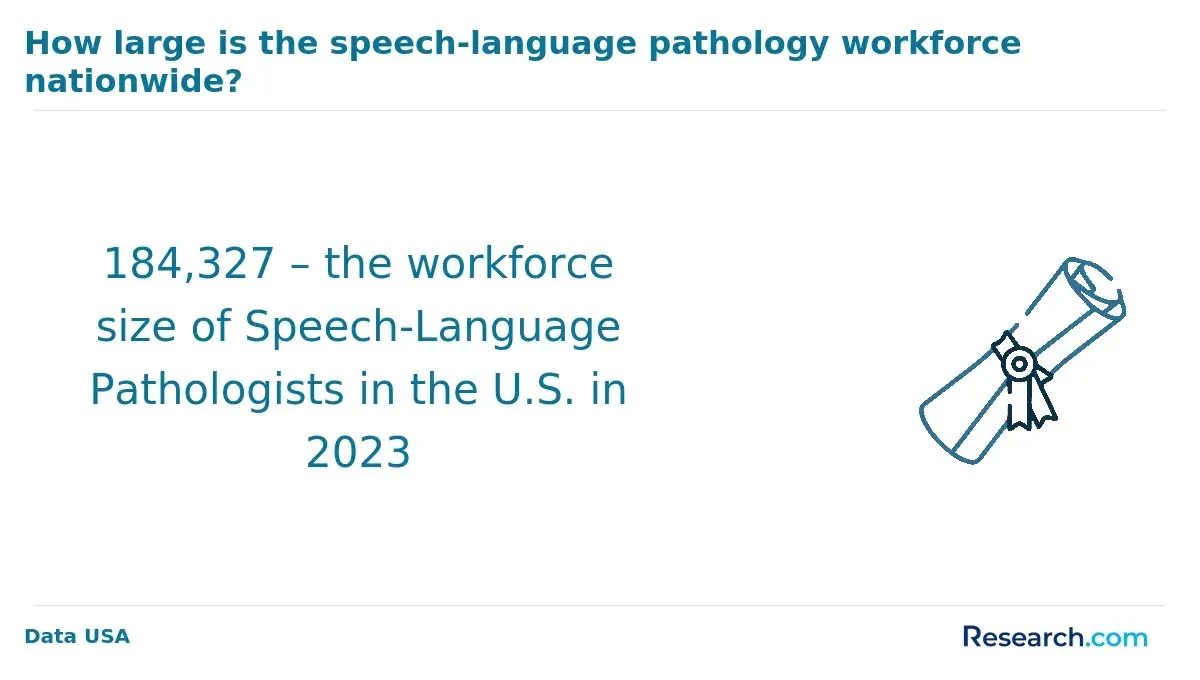
The job outlook for speech-language pathologists (SLPs) is robust, with a projected growth rate of 16% from 2024 to 2034, outpacing the average for all occupations. This surge is driven by factors such as an aging population needing rehabilitation, increased awareness of speech and language disorders, and expanded early intervention programs for children.
SLPs find diverse employment opportunities in hospitals, outpatient centers, schools, and specialized clinics. Graduates often work in pediatric, geriatric, and neurological specialties. Telepractice is also becoming a popular method for delivering services. Online SLP programs typically offer strong returns on investment, with 2025 cohorts showing an average 250% ROI within five years. This benefit is attributed to lower average tuition costs of $45,000 compared to $65,000 for residential programs, as reported by EducationData.org's Graduate ROI Report.
Key challenges include meeting state licensure requirements and earning certification from the American Speech-Language-Hearing Association (ASHA), essential for employment. Candidates can improve their prospects by gaining clinical experience and specializing in high-demand fields such as bilingual speech therapy or neurogenic disorders. Salary ranges generally fall between $70,000 and $90,000 annually, aligning with stable job prospects and competitive pay in this field.
How to choose the best online SLP program?
Choosing a quality online speech pathology program involves careful evaluation of several key aspects. Accreditation by the Council on Academic Accreditation in Audiology and Speech-Language Pathology (CAA) is essential, ensuring the curriculum meets national standards and enables graduates to pursue certification and licensure.
Clinical practicum opportunities are equally important. Top programs provide diverse, supervised hands-on experiences, and they clarify how remote students access in-person practicums, ideally near their location. Faculty expertise and student-to-teacher ratios also impact the learning experience, with licensed, experienced speech-language pathologists offering superior mentorship and networking.
Flexibility in program length and delivery matters. Some students prefer accelerated tracks, while others benefit from part-time or asynchronous classes to accommodate work or personal commitments. Tuition costs should be balanced against financial aid options and outcomes like graduation rates and employment.
Programs emphasizing up-to-date technology and telehealth training prepare students for the growing remote care field. The U.S. Bureau of Labor Statistics forecasts 14,000 annual job openings and 19% growth over the decade, fueled by aging populations and online education scalability.
Other Things You Should Know About Speech Pathology
After graduation, speech-language pathologists can earn certifications such as the Certificate of Clinical Competence in Speech-Language Pathology (CCC-SLP) offered by the American Speech-Language-Hearing Association (ASHA). This certification is often essential for clinical practice and demonstrates adherence to professional standards. Some states also require specific licensure, which may involve additional exams or supervised clinical hours.
Yes, speech pathology professionals have diverse career options beyond traditional healthcare environments. They can work in educational settings, including public and private schools, where they support children with communication disorders. Additionally, some work in research, rehabilitation centers, private practice, or corporate settings focusing on communication training and cognitive therapy.
The best time to apply to online SLP programs in 2027 is typically in the late fall or early winter before the desired start date. Many programs have deadlines around December to February, aligning applicants to start their studies in the summer or fall sessions. It's crucial to check individual program deadlines.
Students in online speech pathology programs should be proficient with video conferencing tools, electronic health records, and telepractice platforms commonly used in clinical settings. Familiarity with diagnostic and therapy software helps support remote assessment and intervention. Strong digital literacy enhances both learning outcomes and future professional effectiveness.
References
- New SLP Leveling Curriculum Opens Doors to Speech-Language Pathology at RMU • Rocky Mountain University https://rm.edu/news/slp-leveling-curriculum-launches/
- Homepage https://speechpathologymastersprograms.com/
- Top Careers in Speech and Language Pathology: A Guide https://www.growwithcoral.com/blog/top-careers-in-speech-and-language-pathology-a-comprehensive-guide
- Distance Education SLP Degree & Admission Details | TWU https://twu.edu/communication-sciences-oral-health/communication-sciences-coms/coms-programs/ms-in-speech-language-pathology/distance-education-slp-degree--admission-details/
- Speech-Language Pathologist (SLP) Salary Guide | Trusted Health https://www.trustedhealth.com/allied-career-guide/speech-language-pathologist/salary-guide
- Online Master of Science in Speech-Language Pathology - General Pathway https://slponline.ithaca.edu/programs/masters-speech-language-pathology-online
- Speech-Language Pathology Online Graduate Program https://www.uwec.edu/speech-language-and-hearing-sciences-department/graduate-program/speech-language-pathology-online
- The Future Career Outlook for Speech-Language Pathologists https://shccares.com/blog/allied-health/the-future-career-outlook-for-speech-language-pathologists/
- Master of Science in Speech-Language Pathology (M.S.) https://delval.edu/programs/graduate-programs/speech-language-pathology
- Is Speech-Language Pathology a Good Career? Salary, Demand & Outlook https://www.mghihp.edu/news-and-more/opinions/csd-discussions/speech-language-pathology-good-career-salary-demand-outlook