Can a 529 Plan Be Used to Pay for Room and Board for 2027?

Student Finance & Loan Expert
As college expenses rise, many students and families worry about covering essential costs such as room and board. Fortunately, 529 plans can cover many of these expenses to help reduce one's financial burden. The problem is, according to a 2024 survey, only 50% of Americans know what these plans are, thus I intend to shed light on the matter.
As a seasoned career planner, I prepared a guide about the 529 plan for room and board and the benefits of using the plan. I also added useful information for first-time users of 529 plans, like the types of expenses covered, eligibility requirements, and tax benefits.
Key Things You Should Know About Using the 529 Plan for Room and Board for 2027
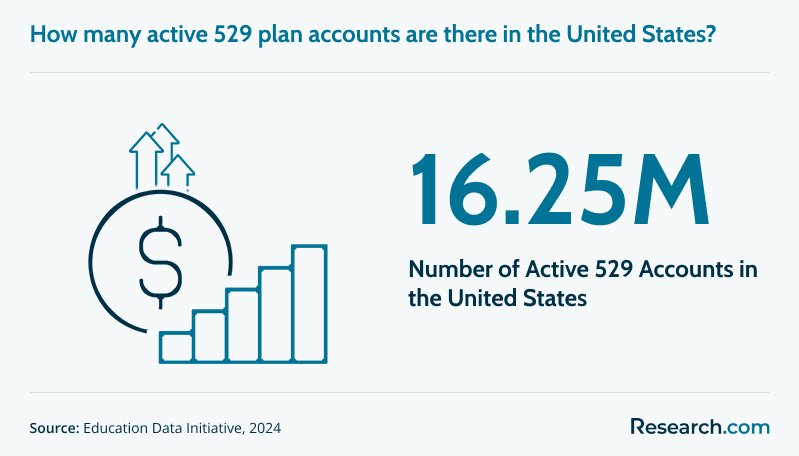
- As of June 2023, there were 16.25 million users of 529 plans in the United States.
- 43% of Americans saving money for college education through a 529 plan know that it can be used to cover room and board costs.
- In June 2023, the total 529 plan savings in the United States was $450.5 billion.
- Only 25% of Americans know that 529 plans can be leveraged to reduce the financial burden beyond the cost of higher education.
- The average annual room and board cost at four-year institutions is $12,917 and $7,717 at two-year institutions.
- What is a 529 plan?
- What are the benefits of using a 529 plan?
- Can a 529 plan be used to pay for room and board for 2027?
- Aside from room and board, what are the types of expenses covered by a 529 plan?
- What is the average cost of room and board?
- What are the eligibility requirements for using a 529 plan for room and board?
- How do you use a 529 plan to pay for room and board?
- What are the tax benefits of using a 529 plan?
- What are the key factors to consider when choosing a 529 plan?
- What are the potential risks of mismanaging a 529 plan for room and board?
- What happens to unused 529 plan funds after covering room and board?
- Have there been recent regulatory changes affecting 529 plans for room and board?
- Can a 529 plan be used for graduate education expenses?
- Can a 529 Plan Support Nontraditional Advanced Education Paths?
- What are the effects of 529 plan contributions on financial aid?
- Can a 529 Plan Fully Cover Specialized Training and Vocational Education Expenses?
- How Will Inflation and Market Trends Affect My 529 Plan's Value for Room and Board?
- How Do I Accurately Report 529 Plan Withdrawals for Room and Board on My Taxes?
- How Do 529 Plans Compare to Other Funding Options for Postsecondary Education?
- How can I maximize the benefits of a 529 plan for room and board?
- What if 529 Plan Funds Are Insufficient for Room and Board?
What is a 529 plan?
529 plans are investment accounts with a tax advantage, specifically designed to make saving for future educational expenses more manageable. Established under Section 529 of the Internal Revenue Code, these plans are typically sponsored by states, state agencies, or educational institutions.
The key attraction of a 529 plan lies in its tax benefits. Earnings within the plan grow tax-free, and qualified education expense withdrawals are also exempt from taxation. These qualified expenses encompass tuition, fees, books, supplies, and even room and board.
Types of 529 Plans
- Prepaid Tuition Plans. These plans let families pay for college tuition now, at today's prices, even if the student goes to college in the future. This means they don’t have to worry about tuition c osts going up. These plans are usually offered by states and are mostly for public colleges in that state, but some private and out-of-state schools also join. Families buy credits or units that can be used for tuition later. If the student goes to a school that doesn’t participate, the plan might pay a different amount.
- Education Savings Plans. These plans are like special savings accounts where families put money in, and this money can be invested in things like mutual funds or stocks. The account can grow over time, depending on how well the investments do. The money can be used for many education costs, like tuition, books, supplies, and even room and board, at most colleges, universities, and vocational schools. This includes schools in other states and even some schools in other countries. But since the money is invested, its value can go up or down, and there’s a chance of losing some money.
As of June 2023, there are 16.25 million users of these plans and counting, considering how useful they are.
The chart below shows the distribution of US families leveraging savings to settle college dues.
What are the benefits of using a 529 plan?
A 529 plan brings numerous advantages to users, from tax benefits to financial flexibility. It can be a crucial means of financial aid for those planning their finances for postsecondary education. In June 2023, the total 529 plan savings in the United States was $450.5 billion.
The plan's main benefits include the following:
- Tax-Free Growth. Earnings within the 529 plan grow tax-free as long as the funds are kept in the account and used for qualified education expenses. This allows your money to compound faster, maximizing its potential to cover future education costs.
- Tax-Free Withdrawals. Withdrawals used for qualified education expenses are completely exempt from federal income tax. This includes tuition, fees, room and board, books, supplies, and even certain K-12 education expenses (depending on state regulations).
- State Tax Benefits. Many states offer additional tax benefits on top of the federal advantages. This can include:
- State Tax Deduction or Credits. Some states allow residents to deduct or receive credits on their state income taxes for contributions made to their state's 529 plan.
- Tax-Free Withdrawals for Out-of-State Use. Some states may even offer tax-free withdrawals even if you use the funds for qualified education expenses at an out-of-state institution.
- Reduced Impact on Financial Aid. While 529 plans can affect your child's eligibility for need-based financial aid, the impact is typically less severe than other parental assets. Only a portion of the 529 plan's value is factored into the financial aid calculation.
- Estate Planning Tool. 529 plans can be a valuable estate planning tool. Contributions may reduce your taxable estate, potentially lowering your estate tax burden.
- Gift Tax Benefits. There are special gift tax rules for 529 plans. You can contribute up to five years' worth of gifts in a single year without triggering any gift taxes. This strategy allows for accelerated contributions and faster account growth.
- Flexibility for Various Educational Paths. 529 plans can be used for more qualified education expenses than traditionally thought.
- Easy Account Management. Many 529 plans offer user-friendly online platforms for managing contributions, investment changes, and withdrawals, simplifying saving for one's education.

Can a 529 plan be used to pay for room and board for 2027?
Yes, a 529 plan can be used to pay for room and board in 2024, provided certain conditions are met. The student must be enrolled at least half-time at an eligible educational institution, which includes most accredited post-secondary institutions such as colleges, universities, vocational schools, and some international institutions.
For on-campus housing, the amount used for room and board must not exceed the institution's actual charges. For off-campus housing, expenses must not exceed the institution's published allowance for room and board for students living off-campus, as determined by the cost of attendance (COA) for financial aid purposes.
Additionally, meal plan costs are covered if the student lives on campus, while grocery costs for off-campus living are included up to the school's COA allowance.
Proper documentation is essential to ensure the expenses qualify. For on-campus housing, the institution's billing statement is sufficient. For off-campus housing, a lease agreement and receipts for rent payments are necessary. Similarly, for meal plans, records of payments made to the institution or receipts for groceries should be kept.
By adhering to these requirements, families can use 529 plan funds tax-free for room and board expenses, providing a comprehensive solution for covering various educational costs beyond just tuition and fees.
According to the results of a 2024 survey, 43% of Americans saving money for college education through a 529 plan know that it can be used to cover room and board costs and 41% recognize that it can be leveraged for the repayment of student loans.
Aside from room and board, what are the types of expenses covered by a 529 plan?
The 529 plan is flexible in its coverage, enabling students and their families to use the accrued investment to settle different kinds of dues. Only 25% of Americans know that 529 plans can be leveraged to reduce the financial burden beyond the cost of higher education, so knowing their coverage helps.
Here are the common types of expenses covered in the investment plan:
- Tuition and Fees. This is the most common expense covered by 529 plans. It encompasses mandatory charges levied by the institution for attending classes and earning a degree.
- Books and Supplies. Required textbooks, course materials, notebooks, calculators, and other essential supplies for coursework are all considered qualified expenses under 529 plans.
- Computers and Technology. Laptops, desktops, related peripherals, and even internet access fees can be covered by a 529 plan, as long as they are deemed necessary for the beneficiary's education (student attendance typically required).
- Other Qualified Expenses. In some cases, 529 plans can also be used for certain fees associated with studying abroad, tools and equipment required for specific programs, and even qualified K-12 education expenses (depending on state regulations). It is always best to check with the plan administrator to confirm specific details on what constitutes a qualified expense.
What is the average cost of room and board?
Many students ask, "What is room and board in college in terms of cost?" According to 2024 data from the Education Data Initiative, the average annual room and board cost at four-year institutions is $12,917 and $7,717 at two-year institutions. Room and board at public four-year institutions have an average annual cost of $12,302 for boarding students and $11,983 for out-of-state boarders. Meanwhile, for private nonprofit institutions, boarding students usually pay $13,842, while out-of-state boarders pay $10,876.
For public two-year institutions, students who reside on campus pay an average annual room and board cost of $7,420 while out-of-state boarders pay $10,738. For private nonprofit two-year institutions, on-campus boarders pay $12,732 while out-of-state boarders pay $10,397.
What are the eligibility requirements for using a 529 Plan for room and board?
Before students can leverage a 529 plan for room and board, they must be formally enrolled in a college program and know the extent of the plan's coverage for different expenses. Here are the eligibility requirements that students and their parents should take note of:
- Enrollment Mode. The student must be enrolled at least half-time at an eligible educational institution. Half-time status is typically defined by the school and usually means taking at least half the number of credits considered full-time.
- Qualified Institution. The school must be an eligible educational institution, which generally includes most accredited post-secondary institutions, such as colleges, universities, vocational schools, and some international institutions.
- On-campus Housing. The costs must not exceed the amount the institution charges for room and board for students living on campus.
- Off-campus Housing. The costs must not exceed the institution’s published allowance for room and board for students living off-campus, as determined by the cost of attendance (COA) for financial aid purposes.
- Meals. If living on campus, meal plan costs provided by the institution are covered. If living off-campus, grocery costs can be included in the school’s cost of attendance allowance for room and board.
- Documentation. Proper documentation should be maintained, such as receipts for rent payments, meal plans, and grocery expenses. For off-campus housing, a copy of the lease agreement should be kept, and for on-campus housing, the institution’s billing statement should be sufficient.
How do you use a 529 plan to pay for room and board?
Using a 529 plan to settle room and board dues is typically a straightforward process. However, first-time plan users can get confused with all the details and activities involved. They also tend to ask, "By how much is online college cost reduced?"
To eliminate confusion, I prepared a step-by-step guide that first-timers can follow and refer to.
Step 1: Verify Eligibility
The student must be enrolled at least half-time at an eligible educational institution, which typically includes most accredited post-secondary institutions. Enrollment status should be confirmed with the institution to ensure compliance. This half-time status is usually defined as taking at least half the number of credits considered full-time.
Step 2: Determine Qualified Expenses
For on-campus housing, the amount used for room and board must not exceed the institution's actual charges for these expenses. For off-campus housing, the expenses must not exceed the institution’s published allowance for room and board for off-campus students, as determined by the cost of attendance (COA). It's important to check the institution’s COA to determine the maximum allowable expenses.
Step 3: Collect Documentation
For on-campus housing, obtain the institution’s billing statement detailing the room and board charges. For off-campus housing, gather a copy of the lease agreement and receipts for rent payments. Keep records of payments for meal plans if living on campus, or grocery receipts if living off-campus, to document food expenses.
Step 4: Request a Withdrawal
To request a withdrawal, contact the 529 plan administrator via email, phone, or their preferred means of communication. Specify that the funds are intended for room and board expenses so that they are properly classified. Decide whether the funds should be sent directly to the school, beneficiary, or account owner, depending on which is most convenient.
Step 5: Track Withdrawals
Maintain detailed records of all withdrawals from the 529 plan and how the funds are used. Accurate tracking is crucial for tax purposes and to verify that all withdrawals are for qualified expenses. This documentation will be necessary if there is any question about using the funds.
Step 6: Use Funds Appropriately
Ensure the withdrawn funds are used exclusively for room and board to avoid taxes and penalties. Misusing funds for non-qualified expenses can lead to significant financial consequences. Proper use of the funds will maximize the tax benefits of the 529 plan and ensure compliance with its regulations.
What are the tax benefits of using a 529 plan?
Leveraging 529 plans brings a slew of tax advantages to students and families, which can boost financial strategies to reduce costs. So, what exactly are these benefits?
- Contributions Not Tax-Deductible. While contributions to a 529 plan aren't typically deductible from your federal income taxes in the year they are made, this shouldn't deter you. The magic lies in the growth and eventual withdrawals.
- Tax-Free Growth. Earnings within the 529 plan grow tax-free as long as the funds are kept in the account and used for qualified education expenses. This allows your money to compound faster, maximizing its potential to cover future education costs.
- Tax-Free Withdrawals. The biggest perk – withdrawals used for qualified education expenses are completely exempt from federal income tax. This includes tuition, fees, room and board, books, supplies, and even certain K-12 education expenses (depending on state regulations).
- State Tax Deduction. Many states offer tax deductions or credits for contributions made to their own state's 529 plan. This incentivizes saving within the state's plan and can offer additional tax savings on top of the federal benefits.
- State Tax-Free Withdrawals. Some states may even offer tax-free withdrawals even if you use the funds for qualified education expenses at an out-of-state institution.
- Estate Planning Tool. 529 plans can be a valuable estate planning tool. Contributions may reduce your taxable estate, potentially lowering your estate tax burden.
- Gift Tax Benefits. There are special gift tax rules for 529 plans. You can contribute up to five years' worth of gifts in a single year without triggering any gift taxes. This strategy allows for accelerated contributions and faster account growth.
What are the key factors to consider when choosing a 529 plan?
When selecting a 529 plan, students or their parents should find a plan that offers low fees and plenty of tax benefits and investment options. The idea is to center on a plan that allows students and their parents to have substantial long-term savings.
I've listed some key factors to consider when it comes to 529 plans:
- Fees and Expenses. Lower management fees translate to more growth within the plan. Compare plans and choose those with competitive fees. In addition, Lower expense ratios significantly impact long-term growth. Analyze expense ratios of investment options within the plan.
- Investment Options. Seek a plan with diverse options like age-based portfolios (automatically adjust as a student nears college), individual investment choices (stocks, bonds), and risk-based options. Review the historical performance of the plan's investment options. Consistent performance can indicate a well-managed plan.
- Tax Benefits. Determine if the state offers tax breaks for contributions to its 529 plan. Some states provide significant benefits for in-state plans. Consider the plan's tax treatment, including tax-free growth and withdrawals for qualified expenses.
- Contribution Limits. Each plan has its contribution limits. Students or their parents should ensure the plan allows sufficient contributions to meet their savings goals. Some plans may have minimum initial and ongoing contribution requirements. Verify if these align with the budget.
What are the potential risks of mismanaging a 529 plan for room and board?
Misallocating 529 plan funds poses risks that extend beyond immediate tax penalties. Withdrawals that exceed the institution’s verified cost of attendance or are applied to non-qualified expenses can trigger income taxation and a 10% penalty on earnings. Inadequate documentation heightens the likelihood of regulatory scrutiny, while misjudgments in expense estimation may inadvertently reduce eligibility for need-based aid. Additionally, an imbalanced financial strategy might necessitate alternative remedies—such as private student loans for past due balances—to cover shortfalls in room and board expenses.
What happens to unused 529 plan funds after covering room and board?
Unused funds from a 529 plan are not lost—they can be strategically reallocated. Once room and board expenses are fully covered, remaining balances may be redirected to other qualified educational expenses such as tuition, books, or fees. Additionally, families can change the designated beneficiary to another eligible member, ensuring the tax-advantaged growth continues to support future education needs. Alternatively, if new career plans emerge, these funds may even help finance further professional development opportunities, including options like 12 month certificate programs that pay well. Each option maintains the flexibility inherent in 529 plans while optimizing the overall investment in education and career advancement.
Have there been recent regulatory changes affecting 529 plans for room and board?
Recent updates in regulatory policies have focused on clarifying the cost-of-attendance allowances and establishing more stringent documentation requirements. These changes aim to prevent misallocation of funds and further ensure that withdrawals for room and board remain within qualified limits. Regulators have also addressed discrepancies in how different institutions report allowable expenses, impacting both on-campus and off-campus calculations. Stakeholders are advised to monitor state-specific notifications and consult financial professionals for tailored advice, especially when comparing strategic alternatives like 6-month certificate programs that pay well.
Can a 529 plan be used for graduate education expenses?
Graduate education qualifies as higher education under current 529 plan regulations when the enrolled institution is eligible and the expenses meet IRS requirements. This includes costs such as tuition, fees, approved room and board, and necessary educational supplies. Graduate students can benefit from the same tax advantages as undergraduates if withdrawals are strictly applied to these qualified expenses, ensuring consistent support for advanced studies without triggering penalties. Strategic planning with a 529 plan may help align funding with expense schedules and long-term career goals, further enhancing financial planning for graduate pursuits. For additional insights on optimizing post-bachelor educational paths, consider exploring the fastest masters degree.
Can a 529 Plan Support Nontraditional Advanced Education Paths?
A 529 plan is primarily designed for undergraduate expenses, yet its flexibility can extend to nontraditional or advanced education pathways when expenses qualify under IRS guidelines. For example, certain institutions offer programs that may have alternative structures—such as online doctoral programs without dissertation—which could potentially meet the criteria for qualified education expenses. It is essential for beneficiaries targeting these advanced options to verify that program costs align with the institution’s cost of attendance and to maintain rigorous documentation to satisfy regulatory requirements. Professional financial and tax advice is recommended when coordinating nontraditional education funding strategies to ensure compliance and to optimize long-term financial planning.
What are the effects of 529 plan contributions on financial aid?
Contributions to a 529 plan for room and board and other education expenses can slightly reduce the financial aid received. The amount reduced is dependent on who owns the 529 plan.
Parent-owned 529 Plans
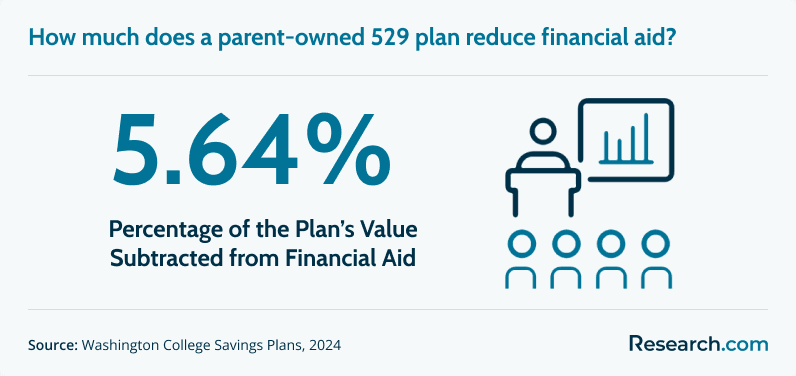
These plans are considered parental assets on the FAFSA. However, the good news is the assessment rate is relatively low. Only 5.64% of the plan's value is factored into the Expected Family Contribution (EFC) calculation each year. So, a $10,000 plan would potentially only reduce aid by $564 per year.
When a student uses funds from a parent-owned plan for qualified education expenses, they are not counted as student income, meaning no additional impact on financial aid.
Student-owned 529 Plans
These plans carry a bigger impact on the EFC than parent-owned plans. Student-owned plans are assessed at a higher rate – typically 20%. This means 20% of the plan's value is considered available to cover college costs annually.
Similar to parent-owned plans, withdrawals for qualified expenses don't count as student income.
Grandparent-owned 529 Plans
A grandparent-owned plan initially seems to have a positive effect. However, the plan's value is not reported as an asset on the FAFSA, so it does not directly affect the EFC calculation.
However, there is a catch. When funds are withdrawn from a grandparent-owned plan for the student's education, those withdrawals are considered untaxed student income on the following year's FAFSA. This income is assessed at a rate of up to 50%, potentially leading to a significant reduction in financial aid eligibility.
Regarding Institutional Financial Aid
Each college may have its own policies and formulas for evaluating financial need and awarding institutional aid. Some colleges might consider 529 plans as part of the financial aid assessment, while others may not. As such, students are advised to contact their school's financial aid office to learn about their policies.
Can a 529 Plan Fully Cover Specialized Training and Vocational Education Expenses?
While 529 plans are primarily designed to address traditional higher education costs, specialized training programs—such as vocational courses or aviation school—often have unique expense structures that may extend beyond standard cost-of-attendance guidelines. Evaluating these programs requires a careful cost–benefit analysis to determine whether a 529 plan can sufficiently cover all qualifying expenses. In some cases, additional financing solutions may be necessary to bridge the gap. For example, students pursuing aviation training might consider combining their 529 plan savings with a loan for flight school to fully address specialized costs without compromising tax advantages. Professional financial consultation is recommended to create a comprehensive funding strategy tailored to the specific demands of nontraditional educational paths.
How Will Inflation and Market Trends Affect My 529 Plan's Value for Room and Board?
Increasing room and board costs require careful attention to how inflation and market volatility may diminish the real value of 529 plan funds over time. Regularly reviewing your plan’s asset allocation and consulting with a financial advisor can help realign investments with future cost projections. Strategic adjustments may be needed to ensure that the plan’s growth outpaces rising expenses. For additional cost-saving education options, consider exploring cheap online college.
How Do I Accurately Report 529 Plan Withdrawals for Room and Board on My Taxes?
To ensure compliance with IRS requirements, maintain meticulous records for each 529 plan withdrawal used for room and board. Retain official billing statements, lease agreements, receipts, and any tax forms issued by your plan administrator. Proper documentation supports that withdrawals are allocated exclusively to qualified expenses and prevents possible tax penalties. For clarity on reporting details and the proper use of forms such as IRS Form 1099-Q, consult a tax professional. Additionally, evaluating advanced education financing—such as pursuing a highest paying masters program—can be integral to a comprehensive financial strategy.
How Do 529 Plans Compare to Other Funding Options for Postsecondary Education?
When planning to finance postsecondary education, it’s essential to explore all available options and weigh their benefits and limitations. While 529 plans offer tax-advantaged savings specifically tailored for education expenses—including tuition, books, and room and board—other funding solutions might cater to unique financial needs.
Flexibility of 529 Plans vs. Loans for Vocational Education
A 529 plan is an excellent option for families aiming to save long-term, especially when the focus is on traditional higher education. However, students interested in trade schools or specific career training programs may benefit from other funding options, such as student loans for career training. These loans are designed to support vocational goals while often offering lower interest rates or payment deferral options tailored to students’ needs.
Student Control vs. Parental Oversight
529 plans are typically owned by parents or guardians, granting them significant control over the account and its use. For students seeking more immediate accessibility to funds, personal loans or grants may provide more independence, allowing them to address expenses like off-campus housing or specialized certifications without parental involvement.
Tax Advantages vs. Immediate Liquidity
One of the key selling points of 529 plans is their tax-deferred growth and tax-free withdrawals for qualified educational costs. Other options, such as private loans or scholarships, might not offer similar tax perks but can provide more immediate liquidity for unexpected educational costs or emergencies outside the purview of pre-planned funds.
Impact on Financial Aid
As discussed, 529 plans can influence financial aid eligibility depending on who owns the account. In contrast, federal student loans, scholarships, and grants typically provide more predictable impacts on aid calculations, with some being excluded from income and asset assessments entirely. This makes them an essential consideration for families balancing multiple income sources or assets.
How can I maximize the benefits of a 529 plan for room and board?
Using a 529 plan effectively requires careful planning to ensure you make the most of its benefits while avoiding potential pitfalls. Below are actionable strategies to help you maximize the advantages of your 529 plan for room and board:
- Understand the Institution’s Cost of Attendance (COA). Each school publishes an official cost of attendance, which includes room and board estimates. This figure determines the maximum amount you can withdraw tax-free for housing expenses. Make sure your spending aligns with these limits to avoid penalties.
- Opt for On-Campus Housing Whenever Possible. If your institution’s on-campus housing charges are higher than the COA allowance for off-campus living, prioritize on-campus housing. This ensures all expenses are fully covered by your 529 plan without additional documentation.
- Keep Detailed Records. For off-campus housing or grocery expenses, maintain receipts, lease agreements, and any relevant documents. Proper documentation is critical to verify qualified expenses and avoid tax complications. This is particularly important if you are audited by the IRS.
- Plan Withdrawals Strategically. Coordinate withdrawals with the academic calendar. Request funds at the start of each semester to align with tuition and housing payment schedules. This approach helps avoid unintentional over-withdrawals that could incur penalties.
- Use Funds for Meal Plans When Applicable. Meal plans provided by your institution are considered qualified expenses under 529 rules. Taking advantage of these plans ensures you utilize the 529 funds while adhering to the guidelines.
- Review Tax Implications Annually. Although 529 withdrawals for qualified expenses are tax-free, it’s still essential to review your tax situation annually. Consider consulting a financial advisor to maximize state tax deductions if your state offers them.
- Explore Loan Repayment Options. As of recent updates, 529 plans can also be used to repay student loans up to $10,000 per beneficiary. If room and board costs don’t exhaust your plan, consider this option. For more insights, explore our detailed guide on how much is vet school loans.
Key Findings
- 43% of Americans saving money for college education through a 529 plan know that it can be used to cover room and board costs.
- The average annual room and board cost at four-year institutions is $12,917 and $7,717 at two-year institutions.
- Only 5.64% of a parent-owned 529 plan's value is factored into the Expected Family Contribution (EFC) calculation each year.
- Only 25% of Americans know that 529 plans can be leveraged to reduce the financial burden beyond the cost of higher education.
- Less than 25% of Americans have a 529 plan.
What if 529 Plan Funds Are Insufficient for Room and Board?
In cases where 529 plan funds do not fully cover the verified room and board expenses, it is essential to assess alternative financing strategies that bridge the funding gap without compromising long-term financial stability. Evaluating the shortfall against the institution’s published cost-of-attendance helps in determining the precise amount needed. In such situations, families might explore additional options, including considering a private student loan with no cosigner, which can provide needed support while maintaining a structured repayment plan aligned with overall financial goals.
Here's What Students Have to Say About Using the 529 Plan for Room and Board
"Knowing I had a 529 plan to cover room and board expenses really reduced my financial stress throughout college. It gave me peace of mind and allowed me to participate in more extracurricular activities without the burden of extra costs. Using a 529 plan for room and board was a huge advantage!" - Raymond
"Having a 529 plan for room and board gave me the freedom to choose the perfect off-campus apartment. It was close to my classes and had great amenities, which really helped me feel comfortable and focused during my college years. Thanks to the financial security of the 529 plan, I could prioritize both academics and enjoying the college experience." - Diego
"My 529 Plan covered my dorm fees and meal plan, making it much easier to manage my budget. Knowing my living expenses were taken care of allowed me to fully enjoy my college life and stay focused academically. It was a game-changer for me." - Myrene
References:
- Bendig, E. (2024, May 30). Half of Americans dont know what a 529 plan is. Are you missing out? Kiplinger
- Edward Jones (2024, May 20). Americans are saving for education but lack awareness of 529 plans, Edward Jones survey finds. Edward Jones
- Hanson, M. (2024, May 28). Average cost of college & tuition. Education Data Initiative
- Hanson, M. (2024, June 30). College savings statistics. Education Data Initiative
Other Things You Should Know About Using a 529 Plan for Room and Board
In 2027, using a 529 plan for room and board expenses requires that the student is enrolled at least half-time at a qualified institution. The expenses must not exceed the cost of attendance figures determined by the institution or, for students living off-campus, should reflect a reasonably comparable expense.
In 2027, 529 Plans cannot be used for incidental expenses such as summer storage rental fees. Qualified expenses are limited to tuition, fees, books, computers, and room and board. Room and board must meet the school's cost of attendance allowance for financial aid.
In 2027, a 529 plan can be used for room and board costs, whether on-campus or off-campus, as long as the student is enrolled at least half-time. Expenses must not exceed the college's published room and board allowance for that academic year.