
2027 Admission Requirements for Urban Planning Degree Programs

Co-Founder and Chief Data Scientist
The competition for admission into urban planning degree programs continues to intensify as interest in sustainable development and smart city design grows. Recent data reveals that overall college acceptance rates have declined by nearly 4% in the past five years, underscoring the need for applicants to understand key admission standards thoroughly. This article offers a clear and authoritative guide to the essential requirements prospective students should focus on when applying to urban planning programs, ensuring they are well-prepared to meet the expectations set by leading institutions across the United States.
Key Benefits of Urban Planning Degree Programs
- Understanding admission requirements helps applicants focus on needed academic achievements as the average GPA for accepted urban planning students in the U.S. has risen to around 3.5, reflecting increasing competition in this field.
- Knowing standardized test expectations, which remain important for many programs despite test-optional trends, allows candidates to better prepare and improve their chances amid roughly 60% of urban planning programs still requiring SAT or ACT scores.
- Awareness of prerequisite courses and relevant experience requirements enables students to strategically build portfolios that align with urban planning schools' emphasis on skills in environmental science, statistics, and community engagement, crucial for acceptance and success.
What GPA Do You Need to Get Into a Urban Planning Program?
GPA remains one of the most important factors in college admissions because it provides a standardized measure of an applicant's academic performance and ability to handle challenging coursework. Requirements for urban planning programs can vary significantly based on the institution, whether it's an undergraduate or graduate program, and the competitiveness of the school or department.
To help applicants understand what to expect, below are typical GPA expectations and factors that influence acceptance into urban planning programs.
- Minimum GPA Requirements: Most master's programs in urban planning require a minimum undergraduate GPA of around 3.0 on a 4.0 scale; however, some schools may accept applicants with GPAs as low as 2.75, especially for transfer or undergraduate admission. For example, schools like Arizona State University and the University of Southern California expect at least a 3.0 minimum, reflecting common minimum GPA for urban planning programs in the United States.
- Competitive GPA Range: Actual admissions tend to be more selective than minimum requirements suggest, with successful candidates often holding a GPA of 3.25 or higher. Particular focus may be placed on the GPA from the last 60 credit hours, highlighting recent academic achievement which is important for urban planning degree GPA requirements California programs and similar rigorous programs nationwide.
- Holistic Admissions and GPA Flexibility: Many programs use holistic review processes, considering professional experience, letters of recommendation, and personal statements alongside GPA. Applicants with GPAs below 3.0 may still gain admission by demonstrating strengths in other areas, such as strong GRE scores or planning-related work experience.
- Online vs. On-Campus Programs: Both formats typically uphold similar GPA standards, but online urban planning programs often provide greater flexibility for non-traditional students or those with extensive professional backgrounds, which can be beneficial for applicants with lower GPAs.
- Tips to Strengthen Applications: Applicants can enhance their profiles by excelling in relevant courses, submitting compelling statements of purpose, and demonstrating commitment through internships or community involvement. For those seeking alternative career paths, exploring quick 6 month certifications that lead to high paying jobs can also be worthwhile.
What Prior Education Is Required for a Urban Planning Program?
Prior education plays a crucial role in determining eligibility for urban planning degree programs, ensuring that students have the foundational knowledge needed for success. Requirements for admission vary depending on whether a student is applying to undergraduate, graduate, or professional levels of study.
Below is a summary of common educational prerequisites for urban planning programs:
- Undergraduate prerequisites: Most bachelor's programs require a high school diploma or equivalent with strong performance in math, social sciences, and English. Transfer students may need college-level coursework in microeconomics, statistics, or sociology, often accompanied by a minimum GPA around 2.0 to demonstrate readiness for advanced study.
- Preferred fields of study for undergraduate entry: While no specific major is mandatory, backgrounds in economics, geography, political science, architecture, environmental studies, or public health can provide a strong foundation. Exposure to history, public policy, and environmental science is also beneficial for prospective students.
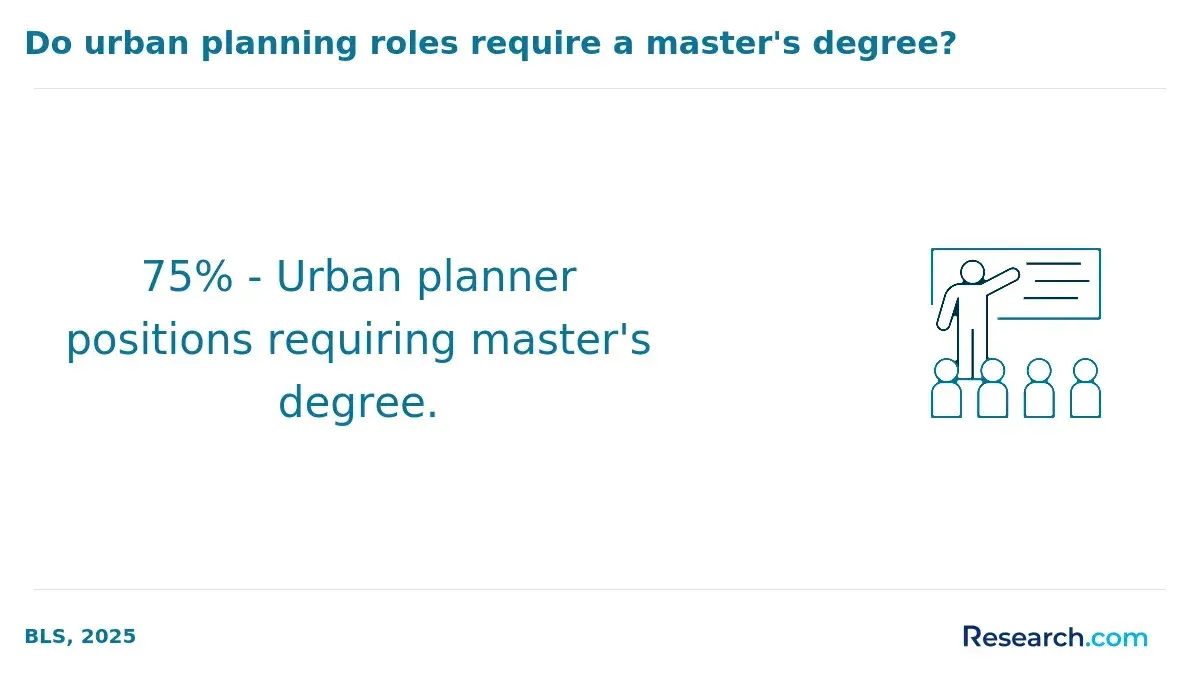
- Graduate-level expectations: Admission to master's programs typically requires a four-year bachelor's degree from an accredited institution. Many applicants hold degrees in related disciplines such as geography or civil engineering, but diverse academic backgrounds are accepted. Some programs may ask for prerequisite coursework or evidence of quantitative and analytical skills developed during undergraduate study.
- Bridge and foundational coursework: Applicants without traditional backgrounds in planning may need to complete bridge courses like statistics, GIS, or economics either before or during the program. These ensure students meet the necessary knowledge base for graduate-level work in urban planning.
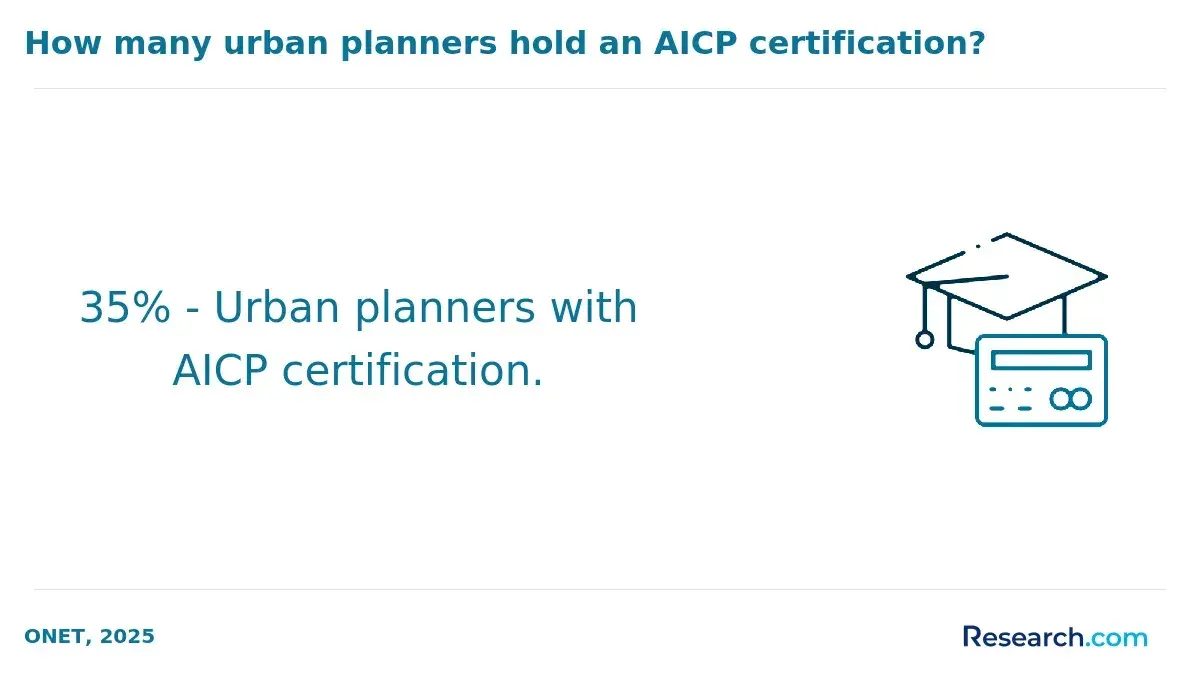
- Professional certification requirements: Some urban planning roles prefer candidates with certifications such as those from the American Institute of Certified Planners (AICP), which usually requires holding a relevant degree and passing an exam. While not always mandatory for admission, certification reflects professional readiness.
For older adults interested in expanding their education, exploring the best college courses for older adults online can be a great way to meet some of the prior coursework needed for urban planning programs while balancing other commitments.
Do Urban Planning Programs Require GRE, GMAT, or Other Standardized Tests?
Standardized tests such as the GRE and GMAT have long been key components of graduate admissions processes, often serving as indicators of an applicant's readiness for advanced study. However, shifting priorities within higher education-especially regarding accessibility, diversity, and a more holistic evaluation of candidates-are prompting many urban planning programs to reconsider or eliminate these requirements.
Here is a summary of the current testing expectations for urban planning degree programs across the United States:
- GRE/GMAT Not Required: A growing number of urban planning programs have removed the GRE and GMAT from their admissions criteria. Notably, Georgetown University's Master of Professional Studies in Urban & Regional Planning does not require these scores, and Rutgers University has waived the GRE for its 2025 Master of City and Regional Planning applications, reflecting a broader national trend.
- GRE Optional or Waived: Some programs allow applicants to submit GRE scores optionally. For example, Columbia University's MS in Urban Planning considers GRE scores supplemental, especially for those with strong analytical skills or professional experience, while NYU Wagner does not enforce minimum GRE thresholds and evaluates only the highest score if multiple tests are submitted.
- GRE Still Required in Some Cases: Certain advanced or research-focused programs, such as PhD tracks, continue to require GRE scores. The University of Wisconsin-Madison's PhD in Urban and Regional Planning typically expects GRE submission but may waive this for holders of master's degrees in planning or related fields.
- English Proficiency Tests for International Students: Regardless of GRE or GMAT policies, international applicants generally must demonstrate English proficiency through tests like TOEFL, IELTS, or Duolingo, ensuring readiness for graduate-level coursework in English-speaking environments.
What Materials Do You Need to Submit for Urban Planning Admission?
Applying to urban planning degree programs in the U.S. generally requires submitting multiple documents that collectively demonstrate your academic readiness, relevant experience, and potential fit for the program. These requirements can vary depending on the institution, the degree level, and whether you are applying to an online or on-campus program.
Below is a summary of the most common materials you will need to prepare for your application:
- Official Transcripts: These provide a detailed record of your undergraduate or previous academic performance. Most programs expect a minimum GPA, often around 3.0 for master's applicants, and look for strong grades in relevant subjects. Whether online or on-campus, transcripts from every college attended are typically required.
- Personal Statement or Statement of Purpose: This essay outlines your academic interests, career goals, and relevant experiences. Admissions committees use it to assess your fit and evaluate your writing skills. Some schools also request additional statements about your background or contributions to diversity.
- Résumé or Curriculum Vitae: This document summarizes your work experience, internships, research, and extracurricular activities. Urban planning programs especially value professional or volunteer experience linked to planning, urban studies, or community involvement.
- Letters of Recommendation: Most graduate programs require two to three letters from academic or professional references who can attest to your skills and potential. At least one academic reference is commonly recommended, whether you apply online or on campus.
- Test Scores: Some programs may ask for GRE scores, but many have made them optional or do not require them. International applicants often need TOEFL or IELTS scores to demonstrate English proficiency.
- Supplementary Materials: Optional work samples such as writing portfolios or project examples may be requested, particularly for applicants with professional experience.
- Application Fee: An application fee is typically part of the process, though fee waivers may be available for qualifying applicants.
What Are the Admission Requirements for International Students Applying to Urban Planning Programs?
International students applying to urban planning degree programs encounter additional admission requirements that go beyond standard academic qualifications. These often include language proficiency verification, credential evaluations, and documentation related to visa and financial eligibility. Such measures ensure applicants are prepared for the demands of U.S.-based coursework while complying with both institutional policies and immigration regulations.
To assist prospective international applicants, here are the key admission requirements to prepare for:
- English Proficiency Proof: Most urban planning programs require standardized test scores such as TOEFL, IELTS, or Duolingo English Test to confirm sufficient language skills. Minimum score expectations vary between institutions and may differ for online versus on-campus programs, with on-campus courses generally demanding higher proficiency due to interactive class environments. Applicants should aim to exceed the minimum scores and review specific subscore requirements in reading, writing, speaking, and listening to increase their chances.
- Credential Evaluation: Official transcripts from all previously attended institutions must be submitted, often alongside a credential evaluation by a recognized agency. This process verifies that your academic qualifications meet U.S. equivalency standards, which is critical for degree programs to assess your eligibility accurately. Some programs provide official lists of accepted evaluators, so selecting an approved agency expedites processing.
- Financial Documentation: To comply with visa regulations, applicants should provide proof of sufficient financial resources to cover tuition and living expenses throughout the program duration. Some universities require bank statements, affidavits of support, or scholarship award letters. Preparing these documents early prevents delays and helps in securing student visas timely.
- Visa and Immigration Documents: Universities typically request completed visa application forms and related immigration paperwork. This may include submitting the I-20 form for F-1 visa applicants or other institution-specific documents. International students should familiarize themselves with the visa process to ensure all documentation aligns with their admission timeline.
Do You Need Professional Experience to Get Into a Urban Planning Program?
Professional experience can significantly influence admission decisions for urban planning programs, especially at the graduate level, where schools value applicants with relevant background and practical skills. While some programs list work experience as recommended rather than required, others consider it a core admission criterion.
Below is an overview of how professional experience factors into admission decisions for both online and on-campus urban planning programs:
- Minimum Experience Requirements: Some graduate programs recommend professional or volunteer experience in planning or related fields but do not mandate it, particularly for traditional master's tracks. However, mid-career or highly competitive programs often require several years of relevant employment to qualify.
- Experience as a Competitive Edge: Relevant work or internship experience can offset a lower undergraduate GPA or limited academic preparation. Admissions committees frequently view this experience as proof of commitment and readiness for advanced study, improving chances at selective schools.
- Role in Application Materials: Applicants typically need to include a detailed resume outlining their professional history. Recommendation letters from employers or supervisors and personal statements that connect experience to career goals also play crucial roles in strengthening an application.
- Online vs. On-Campus Programs: While PAB-accredited on-campus programs often emphasize local engagement and prior experience, some online urban planning programs provide more flexibility for applicants with atypical backgrounds, though relevant experience remains beneficial.
- Doctoral Admissions: For PhD programs, professional experience is desirable but not mandatory. Preference is given to applicants whose research interests align with faculty expertise, and relevant work experience can help distinguish candidates in these highly competitive admissions.
Do Urban Planning Programs Have Different Admission Requirements by Concentration?
Many universities tailor their admission standards based on a program's concentration or specialization area within urban planning. While core requirements, such as minimum GPA, letters of recommendation, and personal statements, remain consistent, research-heavy or technical tracks often impose additional prerequisites like specific coursework or relevant professional experience. These tailored requirements reflect the diverse academic and skill demands across different planning specializations.
Below are key ways admission requirements can differ by concentration within urban planning programs:
- Technical or Quantitative Tracks: Concentrations such as Geographic Information Systems (GIS), transportation planning, or data analytics usually require applicants to have completed undergraduate coursework in statistics, mathematics, or computer science. Admissions committees may favor candidates with experience using technical tools or software, and online applicants might need to submit portfolios showcasing their technical proficiency.
- Research-Heavy or Policy Analysis Concentrations: These tracks often seek applicants with backgrounds in research methods, economics, or social sciences. Submission of a writing sample or prior research project is commonly required, and candidates with published work or research assistantships may have an advantage. Programs emphasize analytical and critical thinking skills for both online and on-campus applicants.
- Community Development and Environmental Planning: Specializations focused on community engagement or environmental policy look for relevant volunteer, internship, or professional experience in nonprofit, advocacy, or environmental organizations. Demonstrated commitment to social or ecological issues strengthens applications, whether through academic projects or work experience.
- Leadership and Management Concentrations: These tracks prioritize professional experience in public administration, project management, or leadership roles. Applicants with backgrounds in public policy or supervisory positions are preferred, and some programs may waive certain prerequisites for those with significant real-world management experience.
Prospective students should carefully review concentration-specific requirements when considering urban planning admission requirements by concentration. Understanding these nuances is critical, especially given that approximately 30% of graduate programs use additional prerequisites for specialized tracks.
Applicants interested in fields related to urban planning may also want to explore the most profitable major for broader context on career outlooks.
Are Admission Requirements the Same for Online and On-Campus Urban Planning Programs?
Most universities align their admission requirements for both online and on-campus urban planning programs to maintain academic consistency and uphold degree integrity. However, some variations occur to address differences in student demographics, delivery methods, and experiential learning components. Understanding these nuances helps prospective students evaluate their best fit.
Below is a summary of key similarities and differences commonly found in admission requirements for these two formats:
- Core Academic Standards: Admission to undergraduate urban planning programs, whether online or on-campus, generally requires a high school diploma or equivalent, with GPA thresholds typically between 2.5 and 3.0. Graduate programs expect a bachelor's degree and evidence of academic achievement to ensure preparedness for advanced study, consistent across both modalities.
- Standardized Test Policies: Many programs have adopted test-optional policies or eliminated SAT, ACT, and GRE requirements, reflecting broader trends in admissions. Nevertheless, some institutions may still request these scores from specific applicants or for scholarship and international student evaluation purposes.
- Application Materials: Both formats usually require personal statements, letters of recommendation, and for graduate applicants, resumes. These documents assess motivation, communication skills, and alignment with program goals equally, regardless of mode of attendance.
- Professional Experience Expectations: Graduate online programs often emphasize relevant work or volunteer experience more heavily to appeal to working adults seeking career advancement, which may result in slightly more flexible admissions. On-campus programs value experience as well but may place a more balanced focus on academic metrics.
- Experiential Requirements: On-campus programs might mandate in-person studio classes, fieldwork, or internships critical to progression, while online programs typically adapt these elements into virtual projects or alternative assessments. Prospective students should review these format-specific requirements closely, especially when seeking a Planning Accreditation Board accredited online urban planning degree.
For students exploring online options, it is also useful to consider online colleges with financial aid, which can ease the cost of pursuing their studies.
Can You Apply for Financial Aid Before Being Accepted into a Urban Planning Program?
Most financial aid applications, including the Free Application for Federal Student Aid (FAFSA), can be completed before you are formally accepted into a urban planning program. This early application process benefits students by allowing them to understand the types of funding available, estimate potential out-of-pocket costs, and meet crucial federal and institutional deadlines, which often occur before admission decisions are finalized. Submitting the FAFSA as early as October for the upcoming academic year maximizes opportunities for federal, state, and institutional aid.
Early financial planning is especially important since some universities award need-based grants and scholarships on a first-come, first-served basis. By applying early, students gain insight into their financial options well before enrollment, aligning their expectations with realistic funding scenarios.
There are, however, notable limitations regarding financial aid eligibility for urban planning students. While the FAFSA and certain general scholarships can be submitted prior to acceptance, many program-specific scholarships and grants require proof of admission or enrollment before they are officially awarded. Final confirmation of aid eligibility typically depends on the school verifying your admission status. Applicants are advised to list every school they are considering on their FAFSA to ensure each institution can access their information if they are accepted.
Coordinating financial aid applications with admissions timelines is essential; missing deadlines for aid-despite acceptance-can lead to lost funding opportunities. For those weighing career options, understanding potential expenses alongside factors such as trade school salary data can help shape a practical financial strategy.
When Should You Start Applying to Urban Planning Programs?
Timing is one of the most important factors in the urban planning application process because application windows are often tightly structured and highly competitive. Starting early increases the chances of acceptance and maximizes eligibility for merit-based financial aid, which is frequently awarded on a first-come, first-served basis. In fact, nearly 44% of institutions have reported increased application volume and earlier deadlines in recent years, highlighting the growing need to plan ahead.
Understanding the ideal timeline for preparing and submitting applications to both online and on-campus urban planning programs is crucial. Most programs begin accepting applications in early fall, with priority deadlines for scholarships and fellowships typically falling between December and February.
For example, UCLA's Master of Urban and Regional Planning program sets its deadline at December 15 for admissions and fellowship consideration, while schools like Cal Poly Pomona may have deadlines as late as mid-February. Some programs with rolling admissions or online offerings extend deadlines into spring or summer, but submitting early is strongly encouraged to secure funding and a place in the cohort.
Students should aim to research programs and prerequisites at least six to twelve months before the earliest deadline. After this, they should spend several weeks to months preparing key application materials, such as maintaining or improving GPA, gathering transcripts, requesting letters of recommendation, and crafting tailored personal statements or essays. Financial aid applications, including the FAFSA and institutional scholarships, usually open in October and should be completed promptly to align with priority funding deadlines.
Beginning this process early not only provides greater flexibility in program choices but also significantly reduces the stress and last-minute challenges common during the admissions process.
Here's What Graduates of Urban Planning Programs Have to Say About Their Degree
- Jasmeen: "Completing my urban planning degree opened doors I hadn't even imagined possible. The hands-on projects and internships gave me real-world experience that proved invaluable when I started my first job. I now work with a local government agency, actively shaping sustainable neighborhoods and helping communities thrive. This degree gave me both the technical skills and the confidence to be a leader in my field."
- Marcus: "Reflecting back on my time in the urban planning program, I realize how much it fostered my personal growth. Beyond learning about zoning laws and transportation systems, I found a deep passion for equity and inclusion in city design. The program's emphasis on community engagement helped me understand the power of involving residents in planning decisions. Now, I focus my career on creating accessible public spaces that truly serve diverse populations."
- Ximena: "As a professional with an urban planning degree, I've seen firsthand how this education fuels continuous career advancement. The analytical tools and policy knowledge I gained allowed me to specialize in environmental planning, which is becoming increasingly important. Earning this degree wasn't just about starting a job-it was about developing a versatile skill set that has kept me competitive and adaptable through industry changes. It's rewarding to know I'm contributing to resilient, future-forward urban environments."
Other Things You Should Know About Urban Planning Degree Programs
While not always mandatory, relevant work or volunteer experience can significantly strengthen your application for 2027 urban planning degree programs. It demonstrates a commitment to the field and provides practical insights that are valuable in your academic journey.
To gain admission to a 2027 urban planning degree program, students typically need a bachelor's degree, although no specific major is mandated. Schools expect fundamental knowledge in areas like geography, economics, and environmental science. A background in social sciences or geography can be advantageous.
References
- NUS DoA https://cde.nus.edu.sg/arch/admission/master-of-urban-planning/
- Grad / masters - Starting grad school applications for urban/city/regional planning – need some advice | Cyburbia | urban planning, placemaking, and more https://cyburbia.org/forums/threads/starting-grad-school-applications-for-urban-city-regional-planning-need-some-advice.59008/
- Online Bachelor of Science in Urban Planning https://urbanplanningdegree.com/online-bachelor-of-science-in-urban-planning/
- Master of Science in Urban and Regional Planning (2 year) https://www.ualberta.ca/en/graduate-programs/master-of-science-in-urban-and-regional-planning-2-year.html
- Master of City Planning https://www.design.upenn.edu/city-regional-planning/graduate/graduate-city-and-regional-planning-programs
- Financial Aid https://uppp.soceco.uci.edu/pages/financial-aid
- Entry requirements for Sustainable Urban Planning and Design | KTH | Sweden https://www.kth.se/en/studies/master/sustainable-urban-planning-and-design/entry-requirements-for-sustainable-urban-planning-and-design-1.48352
- Master of Urban Planning and Policy https://catalog.uic.edu/gcat/colleges-schools/urban-planning-public-affairs/upp/mupp/
- Planning degree | Undergraduate Programs | University of Waterloo https://uwaterloo.ca/future-students/programs/planning
- Urban Planning and Urban Studies Degree Program (BA) | Undergraduate Admissions - Apply Here - Concordia University https://www.concordia.ca/academics/undergraduate/urban-planning-urban-studies.html


