
2027 Are Online Agriculture Degrees Respected by Employers?

Co-Founder and Chief Data Scientist
The rise of online agriculture degrees reflects a significant shift in higher education, with over 40% of college students engaging in some form of online learning. This growth prompts an important question about the value employers place on online agriculture credentials. Understanding how industry leaders perceive these degrees is crucial for prospective students planning their careers.
This article aims to clarify employer attitudes toward online agriculture qualifications and identify the key factors that influence their acceptance in the job market. Insight into these elements will help candidates make informed decisions about pursuing agriculture education online.
Key Benefits of Online Agriculture Degrees Respected by Employers
- Employers increasingly recognize online agriculture degrees as credible with 78% of hiring managers stating they view these qualifications as equivalent to traditional degrees.
- Graduates develop practical skills in areas like sustainable farming and data analysis through virtual labs and real-world projects, enhancing their job readiness.
- Online agriculture degree holders report 20% higher employment rates within six months of graduation, reflecting improved career outcomes and industry acceptance.
Which Accrediting Bodies Make an Online Agriculture Degree Legitimate?
Accreditation plays a critical role in confirming the quality and legitimacy of online agriculture degrees, directly influencing employer recognition and the value of the education received. Without proper accreditation, graduates may face challenges with credit transfer, professional certification, or securing employment in competitive fields. Understanding the accrediting bodies involved helps clarify the assurance of educational standards and the respectability of the degree. Below are the main types of accreditation relevant to online agriculture programs:
- Regional Accreditation: This is regarded as the most prestigious and widely accepted form of accreditation. It evaluates entire institutions to verify that they meet high-quality standards. Regional accreditation affects credit transferability and is crucial for maintaining credibility with employers. Agencies such as the Southern Association of Colleges and Schools (SACS) provide this accreditation. Students considering programs should seek regional accreditation for online agriculture degrees to ensure their qualifications will be respected nationally.
- National Accreditation: Generally targeting career-specific or vocational schools, national accreditation is less common for agriculture degrees but may apply to specialized or technical programs. Agencies like the Accrediting Council for Independent Colleges and Schools (ACICS) fall under this category. While national accreditation can offer some benefits, it typically does not carry the same weight in credit transfer or employer recognition as regional accreditation.
- Programmatic Accreditation: This accredits specific programs rather than an entire institution. Although there is no dominant programmatic accrediting body exclusively for agriculture, related disciplines such as business or environmental sciences might have specialized accreditations. For example, the Association to Advance Collegiate Schools of Business (AACSB) accredits business-related aspects of agriculture programs, adding an extra layer of specialization and credibility.
Prospective students should look for Higher Learning Commission accredited agriculture programs and other recognized agencies to ensure their degree is legitimate and valuable. For those exploring ways to accelerate their education, the best accelerated associates degree options may also include programs with appropriate accreditation, helping to fast-track career outcomes without compromising quality.
Does University Reputation Affect Employer Views of Online Agriculture Degrees?
University reputation plays a pivotal role in shaping employer perceptions of online agriculture degrees, often serving as an initial benchmark of program quality and graduate reliability. Employers tend to associate degrees from well-regarded institutions with higher standards and better preparation, which positively impacts hiring decisions. This connection is particularly apparent when evaluating an online agriculture degree, where concerns about program rigor and credibility may arise.
Institutional prestige and accreditation remain key factors affecting employer views. Universities known for their excellence in agriculture education-such as traditional land-grant institutions or specialized agricultural colleges-transfer this credibility to their online programs. Accreditation further strengthens employer confidence by assuring that the curriculum meets established educational standards, which influences accredited online agriculture degree employer perception. For example, institutions with a long history of agriculture expertise, like the Royal Agricultural University, convey a sense of rigor and reliability in their online offerings.
Alumni success and strong industry partnerships also enhance employer trust. Universities maintaining active relationships with agriculture and agribusiness sectors demonstrate commitment to career outcomes, often reflected in better job opportunities for graduates. Statistics show that over 70% of companies have hired candidates with online degrees recently, and 96% of online program graduates report positive employment returns. However, prospective students may want to consider factors such as which associate degree is easiest as part of their broader education planning.
Despite these advantages, employers prioritize skills and experience above all. While a reputable university can open doors, the ultimate employment success depends on the graduate's practical expertise and demonstrated competencies. Combining a respected degree with strong technical skills and relevant experience remains essential for career advancement in agriculture.
Do Employers Treat Online and On-campus Agriculture Degrees Equally?
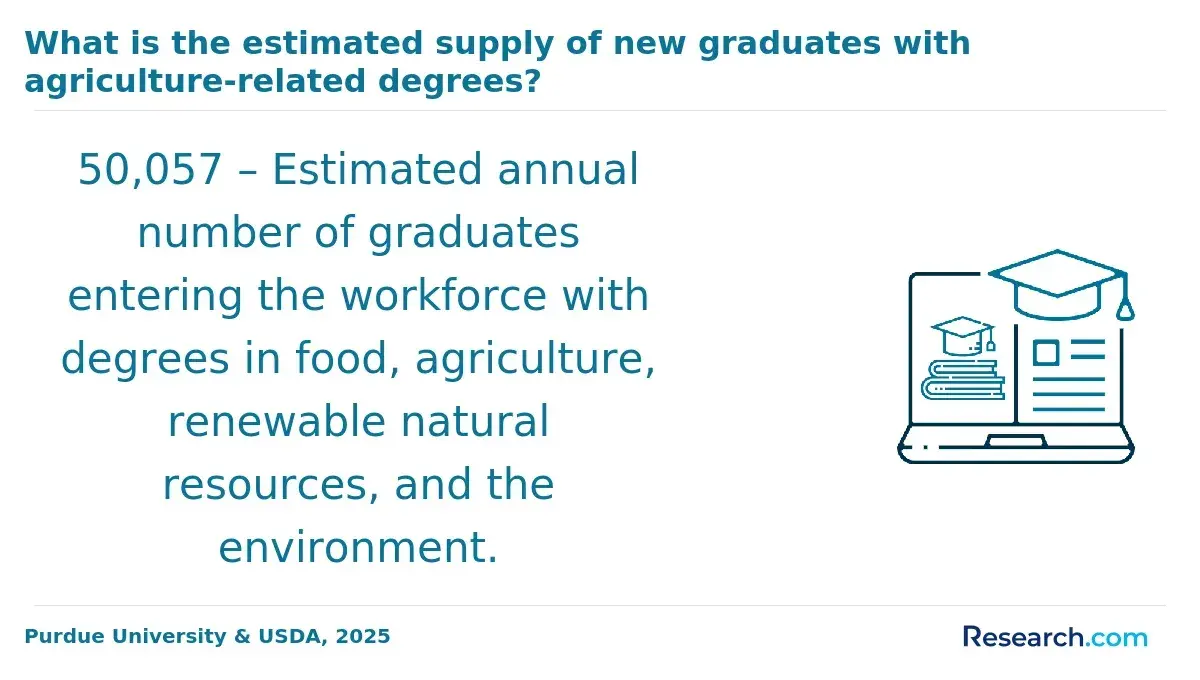
Employer perceptions of online agriculture degrees have improved significantly in recent years, with many recognizing the quality and rigor of accredited online programs. According to recent data, a large majority of employers have hired graduates with online degrees and offer them starting salaries equal to those of traditional degree holders. While some skepticism remains in certain sectors and regions, the overall trend in the US is toward greater acceptance, aligning with global views that online and on-campus agriculture degrees hold comparable value when issued by reputable institutions.
When assessing candidates, hiring managers typically prioritize factors beyond the degree format, such as the university's reputation, accreditation status, and the applicant's practical experience and technical skills. The agriculture industry increasingly values graduates who demonstrate adaptability with current technologies like farm management software, drones, and data analytics.
Accredited online programs that incorporate hands-on learning opportunities, internships, or fieldwork help online students bridge any perceived gaps compared to traditional campus experiences. For graduates of online agriculture degrees to establish equal credibility, it is crucial to select programs with recognized accreditation, gain relevant practical experience, and clearly communicate industry-relevant skills acquired through their studies. By focusing on these aspects, online degree holders can confidently compete in a robust agricultural job market with strong opportunities for skilled professionals.
Do Employers Trust Online Agriculture Degrees from AI-powered Virtual Classrooms?
AI-powered virtual classrooms significantly enhance the quality and credibility of online agriculture education through advanced technologies such as adaptive learning systems, virtual simulations, and AI tutors. Adaptive learning platforms customize coursework to fit a student's individual strengths and weaknesses, promoting mastery of complex agricultural topics at a personalized pace. Virtual simulations provide realistic, hands-on experience by replicating scenarios like crop management, soil analysis, and equipment operation, helping students develop practical skills in a controlled environment. AI tutors contribute further by offering immediate feedback, answering questions, and guiding learners through difficult material, which increases engagement and comprehension. Together, these tools create interactive and tailored learning experiences that mirror traditional fieldwork, strengthening the academic rigor of online programs and equipping graduates with relevant, industry-ready knowledge.
These AI-driven advancements have positively influenced employer perceptions of online agriculture degrees, leading to growing acceptance in professional hiring decisions. Accredited institutions that integrate such technologies and maintain strong internship partnerships enjoy higher trust levels, as demonstrated by Utah State University's 98% graduate recommendation rate. Employers increasingly recognize that graduates of AI-enhanced programs possess the skills necessary for modern agribusiness, sustainability, and food system careers.
However, some skepticism remains, particularly concerning the authenticity of hands-on experience and inconsistencies across less established programs. Consequently, employers tend to favor degrees from well-accredited universities with clear industry connections and practical training opportunities. As AI-powered virtual classrooms become more common and standardized, this trust is expected to increase, gradually legitimizing online agriculture education in the eyes of employers.
What Skills Do employers Value from Online Agriculture Graduates?
Employers in the agriculture sector highly value online graduates who blend strong professional expertise with essential soft skills, making them adaptable to the industry's rapid changes. These graduates stand out by mastering both the technical skills for online agriculture graduates and the interpersonal abilities needed in modern agricultural careers.
Among the many attributes developed, the following are the most in-demand skills employers seek in online agriculture degree holders.
- Technical Proficiency with Agri-Tech Tools: Online agriculture programs offer extensive hands-on experience with technologies such as GIS, drones, data modeling, and decision-support software. This practical knowledge prepares graduates to efficiently manage technology-driven agricultural operations, a key factor employers prioritize when hiring.
- Business and Economics Acumen: Coursework focused on agricultural economics, resource management, and supply chain logistics equips students with skills to analyze markets and maximize farm profitability. Such economic insight is especially valued as agriculture businesses navigate increasingly complex financial environments.
- Communication Skills: Online learning emphasizes constant written and digital communication, enhancing graduates' abilities to convey technical information clearly to diverse stakeholders. This reflects the critical role of communication and problem-solving in agriculture careers, as employers look for candidates who can collaborate effectively across teams.
- Leadership and Teamwork: Virtual group projects and collaborative assignments help students build leadership qualities and interpersonal skills, enabling them to guide teams and coordinate projects in dynamic agricultural settings.
- Problem-Solving and Adaptability: Through case studies and exposure to technological advances, students develop critical thinking and flexible problem-solving skills. These capabilities enable graduates to respond effectively to evolving challenges in agriculture, aligning with employer requirements for innovation and resilience.
- Sustainability and Environmental Awareness: Many programs integrate regenerative agriculture and sustainable practices into their curriculum, fostering graduate expertise that meets current industry demands for environmentally responsible farming.
Graduates equipped with these skills are well-prepared for success in agriculture careers, and those interested in understanding the value of their credentials can explore the best paying 4 year degrees to learn more about career prospects informed by skill sets and educational background.
Do Professional Certifications Help Validate Online Agriculture Degrees?
Earning professional certifications can greatly enhance the credibility of an online agriculture degree by showcasing a graduate's mastery of specialized industry skills and up-to-date practical knowledge. These certifications serve as clear proof that a candidate not only understands academic concepts but also possesses applied expertise valued by employers in the agriculture sector. Building on these advantages, the following points outline how professional certifications strengthen the value of online agriculture degrees in the eyes of employers.
- Industry-Recognized Skills Certification: Credentials such as the Organic Farming Systems Certificate from Oregon State University or the Digital Agriculture Professional Certificates from the University of Illinois Urbana-Champaign demonstrate specialized proficiency in areas like organic production, digital agriculture, or precision farming. These certifications assure employers that graduates are well-prepared and familiar with current industry practices and technologies.
- Demonstrated Practical Experience: Many certification programs emphasize applied learning through hands-on projects or labs, particularly in fields like sustainable agriculture or organic farming. This focus on practical skills assures employers that online graduates have real-world experience and can contribute effectively from day one.
- Career Advancement and Specialization: Specialized certificates in seed business management, biosecurity, or sustainable food systems allow graduates to tailor their expertise toward niche sectors. This not only improves job prospects but also positions graduates for leadership roles within the agriculture industry.
- Enhanced Employer Trust in Online Education: Employers increasingly prefer candidates who hold targeted certifications, which reduces training time and mitigates hiring risks. Certifications originating from reputable colleges, especially those developed with industry partnerships, boost confidence in the credibility and seriousness of online agriculture graduates.
- Meeting Regulatory and Teaching Requirements: Some certifications, like the Agriculture Graduate Certificate from the University of Central Missouri, qualify graduates to teach dual-credit high school courses or fulfill state regulatory criteria. This expands career opportunities and highlights the practical value of online credentials.
Do Online Agriculture Graduates Earn the Same Salaries as On-campus Graduates?
Current data shows that online agriculture graduates tend to earn salaries similar to their on-campus peers, with national trends indicating minimal differences in starting pay. Industry reports from reputable universities reveal median salary ranges for online program graduates that closely mirror those of traditional agriculture graduates, highlighting the growing acceptance of remote degree delivery.
This parity in earnings depends on several critical factors that influence whether online agriculture graduates experience comparable employment outcomes to on-campus students:
- Institutional Reputation: Graduating from a well-known, accredited university remains a major factor driving higher salary offers. Employers tend to emphasize the prestige and quality of the institution over whether the degree was obtained online or through traditional means.
- Accreditation and Program Quality: Degrees from regionally accredited online agriculture programs are viewed as equivalent to their on-campus counterparts, ensuring that graduates meet industry standards critical to competitive salaries.
- Employer Perception: With rising workforce demand in agriculture, many employers have become neutral regarding degree modality, focusing instead on practical skills, certifications, and relevant experience regardless of the learning format.
- Location and Job Market Demand: Regional influences significantly shape earnings, as shown in the regional online agriculture graduate earnings comparison. Agricultural job markets with strong demand often offer higher salaries across the board, benefiting both online and traditional graduates.
- Relevant Experience and Networking: Internships, hands-on work, and professional connections frequently play a bigger role in salary negotiation than degree format. Many online programs incorporate career support to help graduates develop these advantages.
For students considering cost-effective educational options that do not sacrifice recognition or earning potential, exploring the cheapest accredited online college offerings can provide valuable pathways into the agriculture sector.
How Do Online Agriculture Degrees Impact Career Growth and Promotions?
Earning an online agriculture degree can significantly influence long-term career advancement and promotion opportunities by equipping graduates with essential knowledge and skills relevant across multiple sectors. This form of education provides the flexibility to gain expertise in a growing field while enhancing competencies that employers highly value. The following points highlight key ways online agriculture degrees support professional growth and facilitate upward mobility:
- Enhanced Communication Skills: Online agriculture programs emphasize effective communication, enabling graduates to bridge the gap between scientific knowledge and public understanding. These capabilities help professionals excel in roles such as agricultural communication, policy development, and extension education, where articulating complex ideas clearly is critical for leadership and influence.
- Industry Versatility: The diversity of topics covered, from sustainable agriculture to agribusiness, prepares graduates to adapt to various roles and sectors. This wide-ranging expertise increases employability and opens doors for advancement by allowing individuals to transition smoothly across industries and responsibilities.
- Leadership and Strategic Roles: Graduates develop leadership, strategic planning, and problem-solving skills that position them for management and decision-making positions. Such abilities are crucial for driving innovation and growth within organizations, often leading to promotions and higher levels of responsibility.
What Companies Actively Hire Graduates from Online Agriculture Programs?
Employers across various industries are increasingly open to hiring candidates with online agriculture degrees, recognizing the flexibility and practical skills these graduates bring. As remote work becomes more common, companies value the adaptability and technical knowledge that online agriculture programs cultivate.
The following examples highlight the types of companies and industry sectors that regularly hire graduates from online agriculture programs:
- Agribusiness and Food Production Firms: These companies often seek online agriculture graduates for positions in farm management, crop consulting, and supply chain operations. They appreciate the up-to-date technical and business skills developed in online coursework, hiring for roles in sales, logistics, and quality assurance.
- Government Agencies and Nonprofits: Federal, state, and local agencies as well as nonprofits hire online agriculture graduates for policy analysis, resource management, and community outreach roles. The analytical and research skills gained through online programs are highly valued, especially for conservation and ecosystem restoration projects.
- Financial Institutions and Agri-Lenders: Banks and lending organizations employ graduates as loan analysts, credit officers, and relationship managers within agricultural finance divisions. Their understanding of agriculture-specific issues and digital fluency is critical for evaluating loans and supporting rural clients, making remote agriculture jobs hiring now common in this sector.
- Education and Training Providers: Schools and universities often hire online agriculture graduates as instructors or curriculum developers, valuing their ability to leverage technology effectively in remote learning environments. Many adjunct and full-time teaching opportunities are available online for these professionals.
- Environmental and Sustainability Organizations: Organizations focused on sustainable agriculture and land management recruit graduates for project management and technical consulting roles. They seek expertise in digital tools and sustainability frameworks that online agriculture programs typically emphasize.
The increasing availability of work from home agriculture careers reflects employer confidence in graduates of these programs. For more insights on careers suited to different personality types, you might find the best careers introverts report helpful.
What Future Trends Will Shape Online Agriculture Degrees' Credibility?
Technology, accreditation standards, and employer attitudes are rapidly evolving, significantly shaping how online agriculture degrees are perceived in today's job market. These changes ensure that online programs produce graduates equipped with relevant skills valued by employers.
Several key trends are driving the future credibility and recognition of online agriculture programs, strengthening their position among employers and academic institutions:
- AI-Driven Learning Validation: Artificial intelligence is being used to personalize learning experiences and provide real-time feedback on student performance. This allows for more accurate assessment of both theoretical knowledge and practical skills, reassuring employers that graduates meet industry expectations.
- Global Accreditation Collaboration: Institutions are partnering with international accrediting bodies to unify standards for online agriculture education. This cooperation enhances graduate mobility and builds greater employer trust by ensuring credentials are widely accepted.
- Increased Employer Partnerships: Online programs are expanding collaborations with leading agricultural employers to offer internships, practical placements, and curriculum input. These partnerships align training with real-world needs, improving graduate employability and program reputation.
- Skill-Based and Microcredential Hiring: Employers increasingly value practical skills demonstrated through microcredentials within degree programs. Stackable certificates in areas like precision agriculture help students showcase specialized expertise and improve job prospects.
- Blockchain Credential Verification: Blockchain technology is being explored to provide secure, tamper-proof verification of academic credentials. This innovation reduces fraud and boosts confidence in the authenticity of online qualifications.
Here's What Graduates of Respected Online Agriculture Programs Have to Say About Their Degree
- Armel: "Completing my online agriculture degree opened doors I never imagined possible. The flexibility allowed me to work full-time while studying, and upon graduation, I secured a position with a leading sustainable farm consulting firm. The program's focus on modern agricultural technologies gave me a competitive edge in the job market, and now I'm advancing rapidly in my career. It feels rewarding to contribute to environmentally responsible farming practices that benefit communities. "
- Melvin: "Choosing an online agriculture degree was a thoughtful decision for me as a single mother balancing family and education. The course content was practical and directly applicable, which helped me transition smoothly into an extension agent role where I educate local farmers on improving crop yields. This career growth has enhanced my confidence and allowed me to make a meaningful impact in rural areas by supporting sustainable development. The degree truly empowered me to grow both professionally and personally. "
- Wei: "My online agriculture degree equipped me with the knowledge and skills to enter the agri-business sector with confidence. The program's flexibility meant I could take internships and build industry connections even before graduating. Today, I work in supply chain management for a major agricultural exporter, where career advancement opportunities continue to expand. Having earned my degree online, I appreciate the blend of convenience and rigor that prepared me for real-world challenges in a dynamic field. "
Other Things You Should Know About Respectable Online Agriculture Degree Programs
In 2027, an online agriculture degree can significantly impact job prospects positively, especially if earned from an accredited institution. Employers are increasingly recognizing the practical skills gained through online programs, although networking opportunities and hands-on experience should be maximized by students for full career benefits.
Yes, employers trust online agriculture education when it comes from reputable universities that maintain accreditation and rigorous standards. The rise of technology and the pandemic have made online learning more mainstream, reducing skepticism. Graduates must highlight relevant experience and skills to reinforce their credibility.
In 2027, employers often assess online agriculture degrees based on accreditation, the reputation of the institution, curriculum quality, and the practical skills graduates demonstrate. Increasing industry familiarity with online education also plays a crucial role.
References
- Insights from the Job Demands–Resources Model: AI's dual impact on employees’ work and life well-being - ScienceDirect https://www.sciencedirect.com/science/article/pii/S0268401225000192
- Certifications https://www.agronomy.org/certifications
- Online or Distance Learning Programs in Agriculture https://ijoear.com/online-or-distance-learning-programs-in-agriculture
- The Impact of AI and Machine Learning on Elearning Platforms for HR Training https://blogs.psico-smart.com/blog-the-impact-of-ai-and-machine-learning-on-elearning-platforms-for-hr-training-168501
- Online Agriculture Degrees - Degrees & Guides https://www.academicinfo.net/agriculture
- Agriculture’s connected future: How technology can yield new growth https://www.mckinsey.com/industries/agriculture/our-insights/agricultures-connected-future-how-technology-can-yield-new-growth
- How digital communications contribute to shaping the career paths of youth: a review study focused on farming as a career option - Agriculture and Human Values https://link.springer.com/article/10.1007/s10460-022-10335-0
- Can Online Colleges Offer Competitive Career Outcomes? https://www.onlineu.com/magazine/popular-online-schools-career-outcomes
- Purdue University & USDA. (2025). Employment Opportunities for College Graduates in Food, Agriculture, Renewable Natural Resources, and the Environment; 2025-2030. https://www.purdue.edu/usda/employment/
- Bureau of Labor Statistics / FRED. (2026). Lns12034560. https://fred.stlouisfed.org/series/LNS12034560


