
2027 Are Online Information Systems Degrees Respected by Employers?

Co-Founder and Chief Data Scientist
Online information systems degrees have surged in popularity as technology reshapes education and the workforce. Recent studies show that over 60% of employers now view online degrees as equivalent to traditional ones when earned from accredited institutions.
This article examines how employers perceive online information systems degrees today and explores the factors that affect their credibility. Understanding these perceptions is essential for prospective students and graduates considering online education to ensure their qualifications meet professional standards and enhance career prospects in a competitive job market.
Key Benefits of Online Information Systems Degrees Respected by Employers
- Employers increasingly view online information systems degrees as credible, with a survey showing 72% of hiring managers valuing online credentials equally to traditional degrees.
- Graduates gain practical skills in data analysis, cybersecurity, and IT management that align with industry demands, improving their job readiness and performance.
- Holding a respected online information systems degree often results in higher employment rates and salary growth, with studies indicating a 15% increase in starting salaries compared to non-degree holders.
Which Accrediting Bodies Make an Online Information Systems Degree Legitimate?
Accreditation is essential for ensuring the quality, legitimacy, and employer recognition of online information systems degrees. Accredited programs meet rigorous academic standards, enhancing students' credibility in the job market, enabling credit transfers, and improving long-term career outcomes.
Understanding the recognized accrediting bodies for online information systems programs helps prospective students identify degrees that hold value with employers and other institutions.
The following are the main types of accreditation relevant to online information systems programs:
Regional Accreditation
This is the highest standard for US colleges and universities. Regional accrediting bodies like the Higher Learning Commission (HLC) and Middle States Commission on Higher Education assess the entire institution's quality and rigor.
Impact: Enhances overall credibility and reputation, ensures credits are widely transferable between institutions, and is often required by employers and graduate schools. Nearly all top-ranked online information systems programs are regionally accredited.
National Accreditation
Often provided by agencies such as the Distance Education Accrediting Commission (DEAC), national accreditation typically applies to vocational, technical, or career-focused institutions.
Impact: While legitimate and ensuring basic educational standards, national accreditation is generally less prestigious, may limit credit transferability, and some employers prefer regionally accredited degrees.
Programmatic Accreditation
This focuses on specific degree programs and evaluates their industry relevance and quality. Leading bodies include the Accreditation Council for Business Schools and Programs (ACBSP) and the Association to Advance Collegiate Schools of Business (AACSB).
Impact: Signals that the curriculum aligns closely with professional standards, is highly valued by employers in business and IT, and can improve career prospects, certifications, and graduate study opportunities. For example, Old Dominion University's AACSB-accredited online information systems degree exemplifies top-quality programmatic accreditation.
Students seeking ABET-accredited online information systems degrees or other reputable programs can also explore options highlighted among popular college majors for career growth and stability. Choosing a properly accredited online information systems degree ensures recognition by employers and academic institutions alike.
Does University Reputation Affect Employer Views of Online Information Systems Degrees?
University reputation plays a significant role in shaping employer perceptions of online information systems degrees. Employers often consider how the institution is viewed in terms of prestige and credibility when evaluating candidates, which directly impacts the value they assign to an online degree. This is especially relevant in the context of online information systems degrees employer recognition, where program quality and institutional backing influence hiring confidence.
Several factors contribute to this perception. Institutional prestige remains a leading influence; degrees from well-known, reputable universities tend to be regarded more favorably than those from lesser-known schools.
Additionally, alumni success is a critical measure - employers may assess the track record of graduates from a program to gauge potential workforce performance. Accreditation status also plays a vital role, as it reassures employers that the program meets rigorous academic and industry standards, thereby increasing trust in the degree's validity.
Partnerships with industry further enhance program credibility by demonstrating that universities align their curriculum with real-world demands, ensuring graduates possess skills that employers currently require. However, while reputation can open doors, employers equally prioritize practical skills and relevant experience. Evidence of hands-on work, such as projects, internships, or continuous professional development, often weighs heavily in hiring decisions.
For individuals exploring educational options, understanding this balance is important. Selecting one of the best online information systems programs 2025 may improve job prospects, but demonstrating applicable skills remains crucial. Students might also consider an easy bachelor degree pathway that balances reputation with skill acquisition for a well-rounded profile.
Do Employers Treat Online and On-campus Information Systems Degrees Equally?
Employer perceptions of online information systems degrees have evolved significantly in recent years. Many now regard these degrees as equally credible to traditional on-campus programs, particularly in technology-related fields like information technology and computer science.
Advances in online learning platforms and the growth of remote work have played a major role in increasing acceptance of online credentials in the job market. As a result, hiring managers are more open to considering candidates with online degrees, especially when those degrees come from well-established institutions.
When evaluating candidates, employers focus on factors beyond the mode of education. Accreditation and university reputation remain critical, with degrees from brick-and-mortar schools that offer both online and traditional programs often viewed more favorably. Practical experience and professional history tend to carry more weight than whether a degree was earned online or in person.
Graduates can improve their credibility by emphasizing relevant skills, certifications, and the quality of their institution's accreditation. This approach aligns with recent data showing that over 70% of organizations have hired applicants holding online degrees, underscoring the growing legitimacy of online education in information systems.
Do Employers Trust Online Information Systems Degrees from AI-powered Virtual Classrooms?
AI-powered technologies significantly enhance the quality and credibility of online information systems degrees by creating personalized and immersive learning experiences. Adaptive learning systems customize coursework based on individual student strengths and weaknesses, helping learners master technical concepts at their own pace. Virtual simulations recreate complex real-world scenarios such as cyberattacks or database management, allowing students to practice essential skills in a controlled environment.
AI tutors offer immediate feedback and support, assisting students in overcoming challenges and maintaining consistent progress. Together, these innovations foster interactive, hands-on learning that closely mirrors traditional classroom settings, equipping students with practical, job-ready skills demanded by employers.
These technological advancements are gradually shaping employer perceptions of online information systems degrees, with growing acceptance but some persistent skepticism. Studies indicate that a majority of HR managers now recognize the quality of online education; for example, 61% from a Northeastern University survey believe online learning matches or exceeds in-person education.
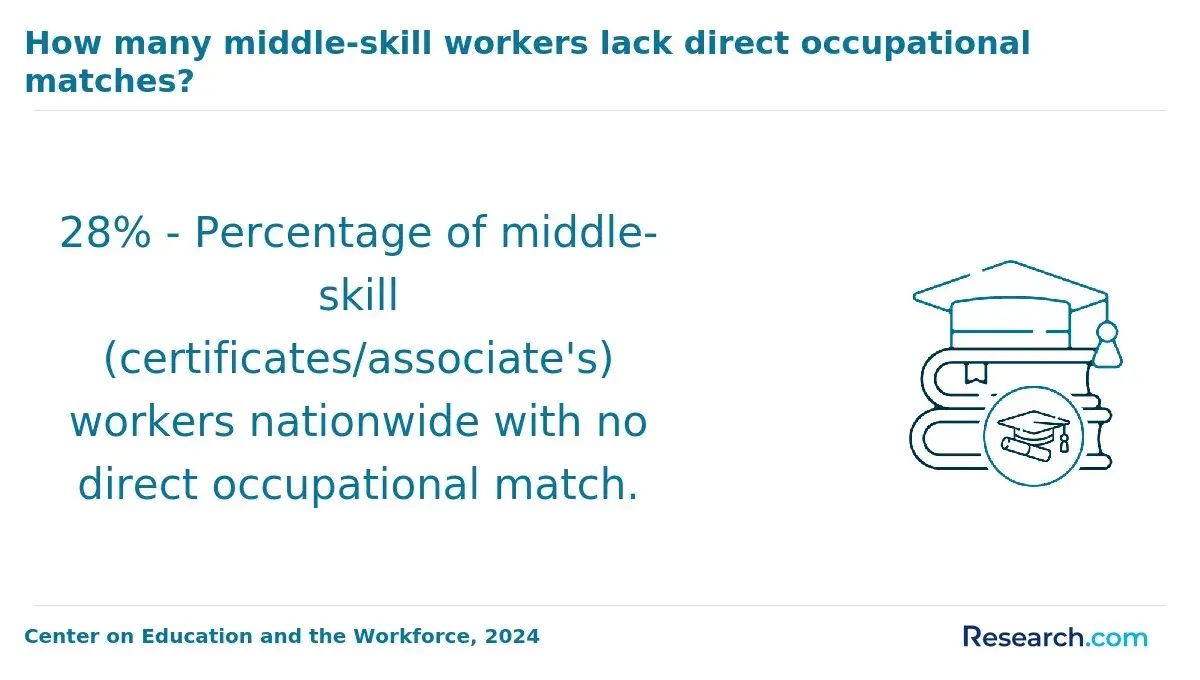
Furthermore, 92% of employers surveyed by the Society of Human Resource Managers view online degrees from well-known brick-and-mortar institutions favorably, often equating them with campus-based credentials. However, the 2025 GMAC Corporate Recruiters Survey shows that in the U.S., only 28% of employers strongly agree that online degrees carry the same value as traditional degrees.
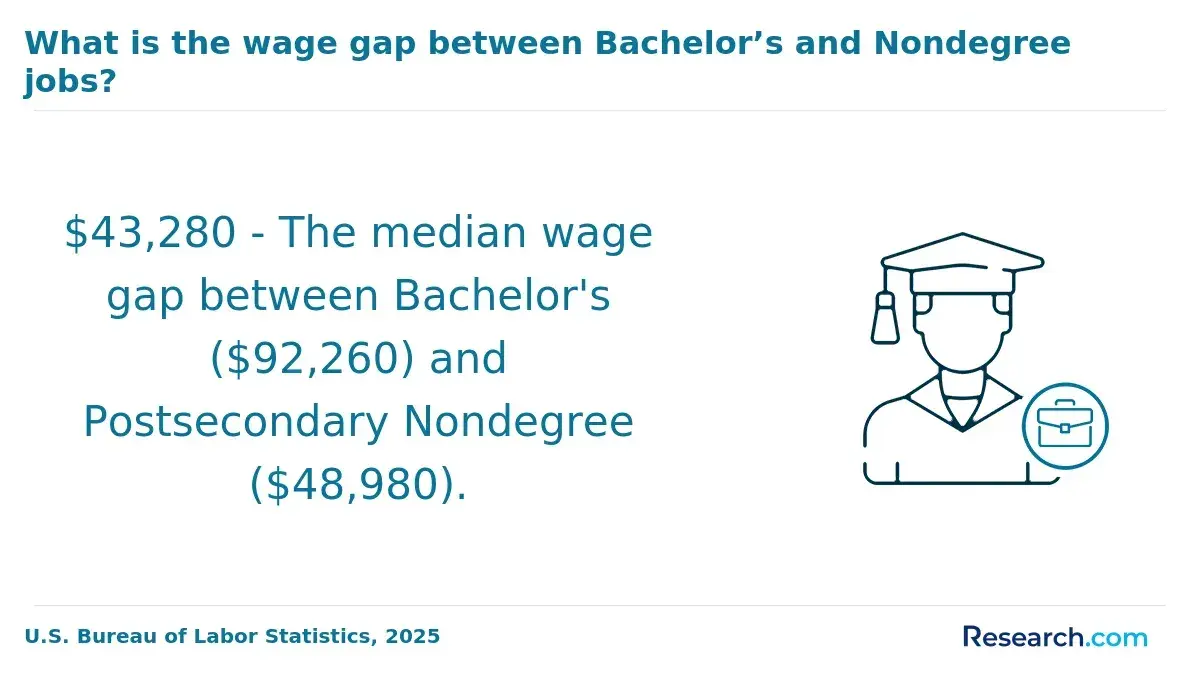
Despite this cautious stance, AI-enabled, industry-validated curricula and real-world training are steadily improving program reputation and career outcomes. Median salaries now surpass $100,000 within a few years of completion.
What Skills Do Employers Value from Online Information Systems Graduates?
Online information systems graduates enter the workforce equipped with a blend of technical expertise in information systems and essential soft skills, making them highly competitive in today's job market. These graduates demonstrate both mastery of IT concepts and the interpersonal abilities that support collaboration and adaptability in diverse workplaces.
Employers seek candidates who exhibit a range of competencies developed through online learning. The following are the most in-demand skills that graduates from online information systems programs typically acquire and that drive their professional value:
- Digital Literacy and Data Literacy: Online programs immerse students in digital environments, enhancing their ability to analyze and manage data using the latest tools and platforms. This foundation in digital literacy and problem-solving skills enables graduates to support data-driven decision-making, which employers highly value.
- Problem-Solving and Critical Thinking: Through practical coursework and real-world scenarios, students sharpen their problem-solving abilities. Employers expect graduates to effectively diagnose issues and implement innovative solutions, vital for adapting to fast-changing technologies.
- Systems Analysis and Design: Curriculum focus on how IT components interact helps students translate complex business needs into effective technical solutions. This technical expertise in information systems prepares graduates to design systems that support organizational goals.
- Communication and Collaboration: Virtual group projects and online discussions foster strong teamwork and clear communication skills. These competencies are essential, as employers rank communication highly among desirable traits for IT professionals.
- Time Management and Self-Motivation: Completing an online degree requires disciplined scheduling and independent initiative. Employers recognize graduates who have developed these traits as capable of managing projects and deadlines with minimal supervision.
Information technology roles continue to grow rapidly and offer competitive compensation, especially for candidates demonstrating both technical proficiency and interpersonal effectiveness. For individuals interested in pursuing a respected and financially rewarding career path, exploring the high paying masters degrees in related fields can provide valuable insights.
Do Professional Certifications Help Validate Online Information Systems Degrees?
Earning professional certifications alongside an online information systems degree can significantly enhance the degree's credibility by demonstrating industry-specific competencies validated by recognized organizations. This combination allows graduates to showcase mastery of critical skills that employers actively seek in candidates, reinforcing the practical value of their education.
In the following, we explore the main ways professional certifications strengthen the perceived value of online information systems degrees in the eyes of employers.
- CompTIA Certifications: Credentials like CompTIA A+, Network+, and Security+ serve as benchmarks for foundational IT knowledge and hands-on technical skills. These certifications are often embedded within online curricula, ensuring that graduates meet employer expectations for entry-level and specialized IT roles.
- Certified Information Systems Security Professional (CISSP) and CISM: Advanced certifications such as CISSP and CISM highlight expertise in cybersecurity and information security management. Holders of these credentials are frequently considered for senior or managerial positions, commanding salaries that typically exceed $149,000 annually.
- ITIL Foundation Certification: This credential confirms a professional's understanding of IT service management best practices, making certified individuals more attractive to employers looking to align IT operations with business objectives, especially in project and operations management roles.
- Employer Confidence: Certifications act as third-party validation of skills, helping to dispel doubts about the rigor or quality of online education. Research indicates that IT professionals who acquire new certifications experience average salary increases of around $13,000, reflecting strong employer trust in certified competencies.
- Career Mobility and Advancement: Many organizations accept certifications as substitutes for years of experience or formal degrees, providing greater access to higher-level positions. Additionally, ongoing certification keeps graduates current with evolving technologies, enhancing their competitiveness in a dynamic job market.
One professional who pursued an online information systems degree shared insights about how certifications validated his expertise and eased his job search. Initially, he felt uncertain whether employers would value his online education, but earning industry certifications strengthened his confidence and opened doors.
He described the certification process as challenging yet rewarding, involving rigorous study and practical application that complemented his coursework. "The certifications gave me concrete proof of my skills when employers asked for experience," he said, reflecting on how this third-party validation was pivotal during interviews.
The professional also noted feeling more prepared for technical discussions and leadership roles after achieving certifications, which helped him advance faster than he expected. This experience illustrates how combining an online degree with professional certifications can overcome skepticism and demonstrate readiness for real-world IT challenges.
Do Online Information Systems Graduates Earn the Same Salaries as On-campus Graduates?
National trends indicate that salaries for online Information Systems graduates are generally comparable to those earned by their on-campus counterparts. While some variations exist, many employers in tech and business sectors view online degrees as equally valid credentials.
Several primary factors influence salary parity between online and traditional graduates, shaping outcomes in the job market as follows:
- Cost and Affordability: Online degrees often come with lower tuition fees, making education more accessible to a diverse group of students. This affordability can reduce financial strain and expand career opportunities, although it does not always correlate directly with higher starting salaries.
- Career Field and Specialization: Salary expectations vary considerably depending on the chosen specialization within information systems. Graduates pursuing roles in IT management or specialized technical fields tend to secure higher-paying positions, regardless of whether their degree was earned online or on-campus.
- Employer Perception and Industry: In sectors such as technology and business, online education is widely accepted, supporting similar salaries for graduates from both delivery formats. However, industries demanding significant hands-on experience might show a preference for traditional on-campus education, potentially affecting salary offers.
Students interested in pursuing a degree should also consider looking into no application fee accredited online colleges as a cost-effective option that maintains broad employer acceptance and competitive salary prospects in information systems careers.
How Do Online Information Systems Degrees Impact Career Growth and Promotions?
Earning an online information systems degree can significantly enhance long-term career advancement and promotion opportunities across various industries. As businesses increasingly rely on technology, professionals equipped with this degree often gain a competitive edge in securing leadership roles.
Below are the main ways online information systems degrees support professional growth and upward mobility:
- Accelerated Job Growth: The demand for skilled information systems professionals is expanding rapidly, creating abundant opportunities for advancement. Graduates of online programs are well-positioned to benefit from this growth, often experiencing faster career progression.
- Leadership Preparation: These programs emphasize key management and strategic skills necessary for supervisory and executive roles. By cultivating strong decision-making abilities, graduates can confidently pursue higher-level positions.
- Skill Versatility and Industry Adaptability: The broad technical and analytical skill set acquired allows professionals to transition smoothly between industries. This flexibility unlocks a wider range of career paths and promotional prospects.
- High Earning Potential: Completing an online information systems degree correlates with access to higher-paying roles. Many graduates see significant salary increases as they move into specialized or managerial positions.
- Respected Credentials for Promotion: Accredited online degrees validate a professional's up-to-date knowledge, boosting employer trust. This recognition is key in achieving internal promotions and leadership opportunities.
- Future-Proof Career Path: With ongoing heavy investment in technology, degree holders maintain relevance despite economic fluctuations. This stability supports continuous professional development and upward mobility.
When I spoke with a professional who completed an online information systems program, she shared how the degree was transformative for her career. Initially, she struggled to balance work with earning her degree online, but found that the program's flexibility was crucial for sustaining progress. She mentioned, "The leadership courses gave me the confidence and vocabulary to engage with executive teams."
After completing the degree, she quickly secured a promotion to project manager and later to a strategic role overseeing cross-departmental initiatives. Reflecting on her journey, she emphasized how the program's practical curriculum helped her immediately apply new skills on the job, leading to measurable improvements in team performance. Her experience highlights how an online information systems degree can not only open doors but also equip graduates with the tools to thrive once promoted.
What Companies Actively Hire Graduates from Online Information Systems Programs?
Employers across various industries are increasingly open to hiring candidates with online information systems degrees due to the practical skills and flexible learning environment these programs offer. This growing acceptance reflects a broader trend where businesses value the ability to adapt to rapidly evolving technology landscapes.
As a result, several types of companies actively seek graduates from online information systems programs, making them a key segment among top companies hiring online information systems graduates.
- Technology and IT Services: These companies frequently recruit online degree holders for roles in systems administration, software development, and IT project management. They appreciate the specialized technical skills and adaptability gained through online learning, which support critical tasks like data management and seamless system integration.
- Financial Services: Employers in this sector hire graduates for positions such as financial analysts and risk managers, where expertise in financial systems and data analysis is essential. Online information systems graduates bring valuable insights to optimize processes and enhance analytical capabilities within financial institutions.
- Healthcare and Biotech: This industry values online degree holders for roles in healthcare IT, focusing on improving healthcare delivery and managing patient data securely. Their understanding of information systems helps streamline operations and supports compliance with regulatory requirements.
- Government and Defense: Agencies in these areas employ online information systems graduates for IT assurance, cybersecurity, and complex system integration roles. The ability to manage and secure sophisticated technology infrastructures is highly prized, making remote information systems degree holders attractive candidates for these employers.
For potential students interested in entering these fields, understanding which employers recruit remote information systems degree holders can guide career planning effectively. To learn more about career paths suitable for individuals with different working styles, check out this resource on careers for introvert.
What Future Trends Will Shape Online Information Systems Degrees' Credibility?
Technology, accreditation standards, and employer attitudes continue to evolve, directly influencing how online information systems degrees are perceived in today's job market. As digital innovation and workforce requirements shift, the credibility and career value of these online programs are being reshaped accordingly.
The following key trends are expected to further strengthen the legitimacy and recognition of online information systems programs:
- AI-driven learning validation: Artificial intelligence increasingly validates student outcomes and personalizes learning paths, allowing institutions to clearly demonstrate skill mastery to employers. This data-driven approach builds confidence in the rigor and effectiveness of online assessments.
- Global accreditation collaboration: International cooperation among accrediting bodies raises quality standards and transparency in online education. These stronger, universally recognized accreditations assure employers that programs meet high benchmarks for academic excellence.
- Increased employer partnerships: Universities are forging stronger ties with employers to align curricula with industry needs, offering internships and project-based experiences. Surveys indicate growing employer acceptance of online degrees, reflecting this collaborative approach.
- Skill-based hiring: Employers focus more on demonstrated technical and problem-solving skills than on the delivery method of education. Research shows the quality of online learning matches or surpasses traditional methods, supporting positive employment outcomes for online graduates.
- Integration of real-world problem solving: Online curricula emphasize applied projects and practical scenarios, enhancing job readiness. Programs prioritizing hands-on learning earn greater trust from employers looking for graduates who can immediately address business challenges.
Here's What Graduates of Respected Online Information Systems Programs Have to Say About Their Degree
- Aden: "Completing my online information systems degree was a game-changer for my career. The flexibility allowed me to balance work, family, and study while gaining the technical skills employers demand. Shortly after graduation, I secured a role in cybersecurity with a leading tech firm, where my background opened doors that might have been closed otherwise. Beyond job stability, this program gave me confidence to network and grow professionally, which is invaluable in today's competitive market. The experience ignited a passion in me to mentor other nontraditional students pursuing tech careers. "
- Trevor: "Enrolling in an online information systems program deepened my understanding of how businesses leverage technology for competitive advantage. Reflecting on my journey, I appreciate how the coursework's real-world applications prepared me to confidently manage IT projects and lead teams remotely. This degree empowered me to transition from a support role to a strategic position within my company, significantly increasing my responsibilities and salary. It also allowed me to contribute to my community by volunteering to teach coding basics to local youth, merging my tech expertise with a desire to make a positive impact. "
- Demi : "Starting my career with an online information systems degree offered unique advantages in professional development. The digital learning environment mirrored the tech-driven workplaces I wanted to join, helping me adapt quickly to virtual collaboration tools and agile project management. Employers valued my self-motivation and ability to learn independently, which resulted in rapid promotions and leadership opportunities. Personally, the degree strengthened my problem-solving skills and fueled a passion for innovating how organizations use data to improve decision-making. It changed my approach to work and life in profound ways. "
Other Things You Should Know About Respectable Online Information Systems Degree Programs
In 2027, many employers respect online information systems degrees similarly to traditional ones. They increasingly recognize the value of accredited programs and the skills acquired. However, the degree's credibility can depend on the institution's reputation and the program's quality.
In 2027, employers typically verify online information systems degrees by checking the accreditation of the institution and reviewing the program's curriculum. They may also look for endorsements from relevant industry bodies and assess graduates' skills through interviews or technical assessments.
In 2027, the credibility of online information systems degrees depends on accreditation status, the reputation of the institution, and the curriculum's industry alignment. Employers prefer degrees from accredited programs offering hands-on experience and updated knowledge on current industry trends, ensuring graduates possess relevant skills.
References
- 9 Information Technology Skills Employers Love to See | Rasmussen University https://www.rasmussen.edu/degrees/technology/blog/9-information-technology-skills-employers-love-to-see/
- Skills You'll Gain in an Information Systems Degree | Baker https://www.baker.edu/about/get-to-know-us/blog/skills-youll-gain-in-information-systems-degree/
- How employers see your online degree https://www.calcoast.edu/news/truth-about-how-employers-view-your-online-degree
- Your Ultimate Guide to Cybersecurity Certifications https://cybersecurityguide.org/programs/cybersecurity-certifications/
- Computer and Information Technology Occupations : Occupational Outlook Handbook: : U.S. Bureau of Labor Statistics https://www.bls.gov/ooh/computer-and-information-technology/
- Accredited Online Information Technology Degree Programs https://www.accreditedonlinecolleges.org/information-technology/
- Careers to explore after MBA in Information Systems - Online Manipal https://www.onlinemanipal.com/blogs/jobs-after-mba-information-systems
- 7 Reasons Why You Should Earn a Computer & Information Systems Degree https://online.champlain.edu/blog/why-information-systems-degree
- Best Computer Certifications for Tech Professionals https://www.computerscience.org/degrees/certifications/
- How Online Degrees are Changing the Job Market https://www.educlaas.com/blog/how-online-degrees-are-changing-the-job-market/


