
2027 Are There Any One-Year Online Science Degree Programs Worth Considering?

Co-Founder and Chief Data Scientist
The key question is not whether a science credential can be completed online in one year, but what kind of credential is realistic, accredited, and useful for your goals. A full online bachelor’s degree in a science field is rarely a true one-year option unless you already have substantial transfer credit, prior coursework, or an eligible completed degree. Shorter online science pathways are more often certificates, post-baccalaureate programs, graduate programs, or accelerated bachelor’s completion tracks.
This guide explains what “one-year online science degree” usually means, where the limits are, and how to evaluate programs without being misled by speed-focused marketing. It is designed for working adults, transfer students, career changers, military learners, and professionals who want stronger science credentials in areas such as biology, health sciences, environmental science, biotechnology, science education, or data-related scientific work.
You will learn how feasible a one-year timeline is, what alternatives exist, what admissions requirements to expect, how costs and financial aid typically work, and what to check before enrolling. The goal is to help you choose a program that is fast enough to fit your plans but still credible enough to support employment, graduate study, or professional advancement.
Key Points About One-Year Online Science Degree Programs
- One-year online science degrees are rare due to lab and research requirements typical for Science majors, contrasting with longer traditional programs emphasizing hands-on experiments.
- These accelerated degrees often focus on data science, environmental studies, or biotechnology theory, appealing to working professionals seeking skill upgrades without full time campus commitment.
- Students should expect rigorous coursework and limited lab work options, with about 15% of Science undergraduates enrolling in exclusively online or hybrid formats as of recent data.
Is It Feasible to Finish a Science Degree in One Year?
For most students, finishing an accredited online bachelor’s degree in a science field in one year is not feasible. Science degrees typically require a broad sequence of general education courses, major-specific coursework, laboratory components, upper-division electives, and often a capstone, practicum, or research-based project. Even online programs must meet academic standards that cannot usually be compressed into a single year.
A one-year timeline becomes more realistic only in limited cases. You may be able to finish quickly if you enter with a large number of accepted transfer credits, an associate degree that fits the bachelor’s curriculum, advanced placement or prior learning credit, or professional experience that the school evaluates for credit. Even then, completion depends on the institution’s transfer policy, course availability, lab requirements, and maximum credit load per term.
In science fields, acceleration is also harder than in some non-lab majors. Biology, chemistry, health science, environmental science, and related programs may require lab work, clinical exposure, fieldwork, or research methods courses. These components can involve scheduled sessions, approved local sites, or campus visits, which may slow the timeline.
One-year online options are more common at the certificate, post-baccalaureate, or master’s level than at the bachelor’s level. If your goal is a complete undergraduate science degree, expect most accredited programs to take longer unless you already have significant college credit. If a school advertises a full science bachelor’s degree that anyone can complete in one year, verify accreditation, credit requirements, lab expectations, and graduate outcomes before applying.
Are There Available One-year Online Science Degree Programs?
There are currently no accredited one-year online bachelor’s degree in biology or other Science fields available in the United States. Most accredited science bachelor’s programs require three to four years of full-time study, although students with extensive transfer credit may finish faster. For that reason, “one-year online science degree” usually refers to a completion pathway, certificate, post-baccalaureate program, or accelerated graduate option rather than a full bachelor’s degree from start to finish.
Students who want the fastest credible route should look for transfer-friendly and competency-based programs rather than programs that simply promise unrealistic speed. A fast-track online associates degree may also be a practical first step if you do not yet have enough college credit to enter a bachelor’s completion program.
Examples of faster or flexible online science-related pathways include the following:
- Western Governors University (WGU): WGU offers competency-based online bachelor's degrees in Health Information Management and Science Education. Students progress at their own pace and often complete their studies in about three years depending on prior knowledge and dedication. The program includes general education, science courses, and a capstone project.
- Arizona State University Online (ASU Online): ASU provides fully online bachelor's degrees in Biological Sciences and related fields. Coursework includes core science classes, labs that may sometimes be completed locally, and electives. While four years is typical, students with transfer credits may finish earlier.
- University of Florida Online (UF Online): UF offers a fully online Bachelor of Science in Biology covering genetics, ecology, and cell biology alongside general education and electives. The program is flexible but usually requires four years to complete at a traditional pace.
When comparing programs, separate marketing language from actual degree requirements. Ask the admissions office how many credits are required, how many transfer credits are accepted, whether labs can be completed online or locally, and how many terms per year you can enroll. A program may be accelerated, but that does not mean it is a one-year degree for every student.
Why Consider Taking Up One-year Online Science Programs?
Students usually consider one-year online science programs because they want a faster credential without leaving work, relocating, or committing to a traditional four-year schedule. The strongest candidates for these programs are not usually first-time college students starting from zero credits. They are more often transfer students, working professionals, career changers, or degree holders who need targeted science coursework for advancement, graduate prerequisites, teacher certification preparation, or a shift into a science-related role.
The main benefits are practical rather than magical: speed, flexibility, and focused coursework. A shorter online science program can help you build relevant knowledge, refresh prerequisites, or document new skills while maintaining your current responsibilities.
- Flexibility: Many online programs use asynchronous coursework, which allows students to complete lectures, assignments, and discussions outside standard work hours. This is useful for adults balancing employment, caregiving, or military responsibilities.
- Targeted skill development: Shorter science programs often focus on a specific area such as health sciences, biology foundations, biotechnology concepts, environmental science, or data-related scientific methods. That focus can be more efficient than taking a broad degree if you only need a defined credential or skill set.
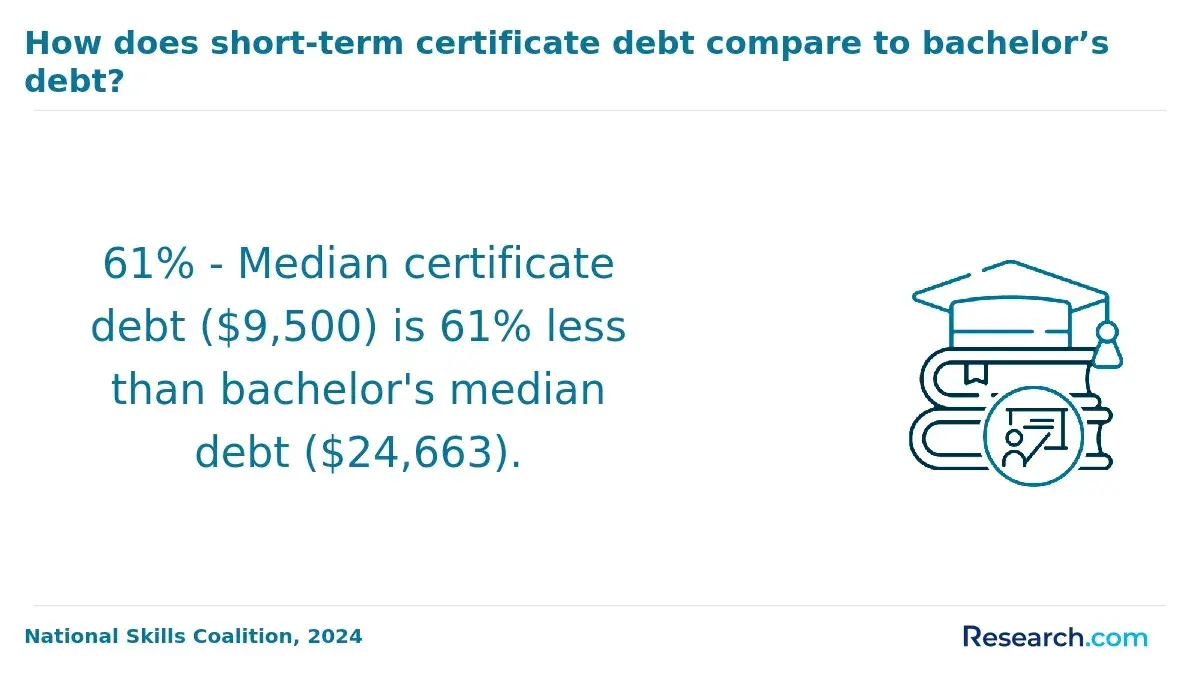
- Potentially faster graduation: Accelerated formats may use year-round terms, shorter sessions, or competency-based progression. Compressing degree timelines enables bachelor's degrees in about two years and some master's programs in 18 months or less, depending on the program and student background.
- Career advancement: A science-related credential may support promotion, lateral movement, graduate admission, or eligibility for roles that require documented coursework. It is especially useful when your employer values formal education alongside experience.
- Local or virtual practical work: Some online science programs use virtual labs, simulations, lab kits, or approved local facilities. This can make hands-on requirements more manageable, although students should confirm exactly how labs are completed before enrolling.
- Lower opportunity cost: A shorter program may reduce time away from the workforce. However, the total value depends on accreditation, cost, transferability, and whether the credential is recognized in your target field.
These advantages are strongest when the program matches a clear goal. If you need preparation for graduate school, confirm that the coursework satisfies prerequisite requirements. If you need career mobility, ask whether employers in your field recognize the credential. If you are an older learner seeking flexible study options, resources on the best college degrees for seniors online may also help you compare online formats and support services.
What Are the Drawbacks of Pursuing One-year Online Science Programs?
The biggest drawback of one-year online science programs is that speed can work against learning quality. Science courses often build in sequence: introductory concepts support later work in lab methods, statistics, research interpretation, anatomy, ecology, genetics, chemistry, or data analysis. Compressing that sequence can leave little time to practice, review, and apply complex material.
Before choosing an accelerated option, consider these limitations:
- Heavy workload: A compressed calendar can mean multiple demanding science courses at the same time. Students may need to manage lectures, readings, problem sets, lab reports, exams, and group projects with little downtime between terms.
- Less time for mastery: Fast completion may be suitable for students reviewing familiar material, but it can be difficult for those encountering scientific concepts for the first time. Rushing prerequisites can also hurt performance in later courses.
- Lab and fieldwork constraints: Online science programs may use virtual labs or simulations, but some fields still require hands-on work. If a program requires local labs, clinical hours, or field experiences, scheduling and site approval can become complicated.
- Fewer networking opportunities: Online learners may have less spontaneous contact with faculty, classmates, research groups, and campus-based mentors. This can matter if you plan to pursue research, graduate school, or competitive science roles.
- Reduced access to facilities: Campus-based students may have easier access to laboratories, equipment, research assistantships, tutoring centers, and faculty office hours. Online students should check what equivalent support is available.
- High need for self-direction: Accelerated online study requires planning, discipline, and comfort with digital learning systems. Students who need frequent in-person feedback may find the format difficult.
- Risk of weak or misleading programs: Because true one-year science degrees are uncommon, students should be alert to schools that overpromise. Lack of recognized accreditation can limit credit transfer, financial aid access, employer acceptance, and graduate school options.
A fast program is not automatically a poor choice, but it should have strong advising, clear lab arrangements, transparent accreditation, realistic credit requirements, and accessible academic support. If those elements are missing, a slightly longer accredited pathway may be the safer investment.
What Are the Eligibility Requirements for One-year Online Science Programs?
Eligibility requirements vary because one-year online science programs are not all the same type of credential. Some are bachelor’s completion programs for transfer students, some are post-baccalaureate programs for students who already hold a degree, and others are certificates or accelerated graduate pathways. The faster the program, the more likely it is to expect prior preparation.
Common eligibility requirements include the following:
- Prior College Credits: Many accelerated pathways require substantial previously earned credits, often from an associate degree, another bachelor’s program, or completed coursework in biology, chemistry, physics, mathematics, or general education.
- Prerequisite Coursework: Programs may require foundational courses such as calculus, statistics, introductory biology, general chemistry, anatomy, environmental science, or other discipline-specific prerequisites before admission to upper-level work.
- Minimum GPA: Schools commonly review past academic performance, especially in science and math courses. A higher GPA may be required for competitive, clinical, or graduate-level options.
- Professional Experience: Relevant work experience in healthcare, laboratory settings, education, environmental services, data analysis, or technical fields can sometimes strengthen an application. In some competency-based programs, it may also help students move faster through familiar content.
- Placement Exams: Some institutions use placement exams to determine readiness for math, writing, or advanced science coursework.
- Background Checks: Programs involving clinical, school-based, or lab-site placements may require background screening, immunization records, drug screening, or other compliance steps.
- Interviews: Some programs use interviews to assess motivation, career fit, communication skills, or readiness for an intensive online format.
- Technology Requirements: Online science courses may require reliable internet, a webcam, specific software, proctoring tools, or access to approved lab materials.
Applicants should read admissions pages carefully because a “one-year” program may require a completed bachelor’s degree, a large transfer-credit base, or specific prerequisites before the clock effectively starts. If you still need lower-division credits, a fast associates degree may be a more realistic route into a later bachelor’s completion program.
Before applying, ask the school for a preliminary credit evaluation. This is especially important if your goal is rapid completion, because the number of accepted credits often determines whether the advertised timeline is possible for you.
What Should I Look for in One-year Online Science Degree Programs?
The most important thing to look for is credibility. A fast science program is only useful if the credential is accredited, academically sound, and accepted by employers, licensing bodies, or graduate schools relevant to your goals. Because true one-year online science bachelor’s degrees are rare, careful evaluation matters more than speed.
- Accreditation: Confirm that the institution is accredited by an agency recognized by the U.S. Department of Education or the Council for Higher Education Accreditation. Accreditation affects federal financial aid eligibility, credit transfer, graduate admissions, and employer confidence. If a program is tied to licensure or certification, check whether specialized accreditation or state approval is also required.
- Clear degree type: Verify whether the program is a bachelor’s degree, master’s degree, certificate, post-baccalaureate program, or degree-completion pathway. Do not assume that a one-year program leads to a full undergraduate degree.
- Transfer credit policy: Ask how many credits the school accepts, whether science courses expire after a certain period, and whether credits must come from regionally accredited institutions. A generous transfer policy can shorten completion time, but only if your credits apply directly to the program.
- Lab format and requirements: Science education often depends on applied work. Confirm whether labs are virtual, completed through kits, scheduled live online, completed during campus intensives, or arranged at approved local sites.
- Curriculum quality: Review the course list, prerequisites, learning outcomes, and capstone or research requirements. The curriculum should be current, rigorous, and aligned with the field you want to enter.
- Faculty expertise: Look for instructors with advanced degrees, relevant research, industry experience, teaching experience, or professional credentials in the subject area.
- Student support: Strong advising, tutoring, writing support, library access, technical help, and career counseling are especially important in accelerated programs where falling behind can be difficult to recover from.
- Schedule design: Check whether courses are asynchronous, live, hybrid, or self-paced. Also confirm term lengths, exam proctoring rules, weekly time expectations, and whether courses are available every term.
- Total cost: Look beyond tuition. Include fees, books, lab kits, technology, proctoring, travel for labs or intensives, and possible costs tied to local placements. Cost comparisons with cheap accredited online colleges can help you judge whether a program is competitively priced.
- Outcomes and fit: Ask about graduation rates, transfer outcomes, graduate school placement, employer partnerships, and career services. If the school cannot clearly explain where graduates go next, proceed carefully.
A useful program should be able to answer direct questions about accreditation, timeline, labs, transferability, cost, and outcomes. If admissions representatives focus only on speed and avoid specifics, that is a warning sign.
How Much Do One-year Online Science Degree Programs Typically Cost?
One-year online Science degree programs in the U.S. usually cost between $4,000 and $12,000, varying by school and discipline. Public universities often offer lower tuition, around $7,000-$8,500, while private institutions may charge over $10,000 annually.
Those figures should be interpreted carefully because many “one-year” options are not full bachelor’s degrees from start to finish. The total amount you pay depends on the credential level, the number of credits you still need, whether previous coursework transfers, and whether the program charges by credit, term, or subscription period.
Several factors can affect the final cost:
- Institution type: Public institutions are often less expensive than private institutions, although online pricing varies by school.
- Residency status: Some public universities charge different rates for in-state and out-of-state students, while others use a separate online tuition rate.
- Credit requirements: A student who transfers many credits may pay far less than a student who must complete most requirements at the new school.
- Program fees: Science programs may charge additional fees for labs, lab kits, simulations, software, technology, proctoring, or clinical-site requirements.
- Course load: Accelerated students may pay for more credits in a shorter period, which can make each term more expensive even if the total program cost is lower than a longer pathway.
- Financial aid eligibility: Accredited degree programs may qualify for federal aid if the institution and program participate, while some certificate or non-degree programs may not.
Compared to traditional four-year Science degrees, which total approximately $40,000 to $60,000 in tuition, one-year online programs may appear more economical. The better comparison, however, is cost per usable outcome: Will the credential transfer, qualify you for graduate study, meet employer expectations, or support your career goal? A low-cost program that is not recognized can be more expensive in the long run.
What Can I Expect From One-year Online Science Degree Programs?
You can expect an accelerated, structured, and time-intensive learning experience. Online science programs usually combine readings, recorded or live lectures, assignments, discussion boards, exams, lab activities, and projects through a learning management system. In a compressed format, coursework moves quickly, and students need to stay organized from the first week.
The exact experience depends on the type of program. A bachelor’s completion pathway may focus on upper-division science courses and remaining general education requirements. A certificate may focus on a narrower skill area. A post-baccalaureate program may prepare students for graduate or professional prerequisites. A master’s program may emphasize advanced theory, research methods, applied projects, or leadership in a scientific field.
Common expectations include:
- Year-round study: Accelerated programs may use consecutive terms with shorter breaks. This can shorten the calendar but leaves less time to recover between courses.
- High weekly time commitment: Science courses often require substantial reading, problem-solving, lab preparation, reports, and exam study. Working students should plan their schedules before enrolling full time.
- Online interaction: Students may communicate with faculty and classmates through discussion boards, video meetings, email, group projects, and online office hours. Interaction can be meaningful, but it is usually more deliberate than on campus.
- Lab or practical components: Some programs use virtual labs, simulations, home lab kits, or data-based lab assignments. Others may require in-person labs, campus intensives, or approved local facilities.
- Proctored assessments: Exams may require online proctoring, identity verification, lockdown browsers, or scheduled testing windows.
- Capstone or applied project: Many science-related programs include a final project, research paper, portfolio, practicum, or competency demonstration.
Graduates of accredited online programs generally receive the same type of credential as students in comparable on-campus formats, but the value of that credential depends on the school, program quality, accreditation, and fit with your target field. If your career goal involves licensure, certification, graduate school, teaching, clinical work, or laboratory employment, confirm requirements before enrolling rather than after graduation.
Are There Financial Aid Options for One-year Online Science Degree Programs?
Financial aid may be available for one-year online science programs, but eligibility depends on the institution, the specific program, your enrollment status, and your personal financial-aid profile. The most important first step is confirming that the school is properly accredited and that the program itself is eligible for aid. Not every short certificate or non-degree program qualifies.
Common funding options include:
- Federal and State Aid: Eligible students may receive Pell Grants, federal loans, and work-study funding if their program is accredited by the U.S. Department of Education. Applicants must submit the FAFSA and meet citizenship, income, and enrollment criteria.
- Institutional and Third-Party Scholarships: Many universities and external organizations provide scholarships based on academic merit or financial need, often tailored for Science majors or online learners. Deadlines vary and awards are typically granted at the start of terms.
- Employer Tuition Assistance: Working professionals may qualify for employer-sponsored tuition help if their coursework aligns with job roles. Eligibility depends on company policies and might require continued employment or service after graduation.
- Payment Plans: Some schools allow students to divide tuition across a term. This can help with cash flow, but it does not reduce the total cost.
- Private Grants or Professional Funds: Scientific foundations, professional associations, and workforce development programs may provide targeted support. Eligibility is often narrow, so students should review requirements closely.
Accelerated programs can have unusual billing and aid disbursement schedules. A student taking more credits in a shorter period may face higher upfront costs, while a competency-based program may charge by term rather than by course. Contact the financial aid office before enrolling and ask how aid is applied, whether the program is aid-eligible, what happens if you reduce your course load, and whether lab or technology fees are covered.
What Science Graduates Say About Their Online Degree
-
: "The accelerated one-year Science degree completely transformed my career path. I was able to complete the program in under a year, which allowed me to quickly apply my new skills and land a job in environmental research. Considering the average cost of attendance was reasonable, I feel it was an excellent investment in my future.
— Trace"
-
: "Pursuing the competency-based Science degree online gave me the flexibility to learn at my own pace while balancing work and family. The curriculum was rigorous, but finishing within a year empowered me with a deep understanding of complex scientific concepts. The experience truly exceeded my expectations and opened numerous doors for advancement.
— Sutton"
-
: "Enrolling in the one-year Science program was a bold decision, but it paid off professionally and personally. The focused coursework and hands-on virtual labs ensured I gained practical knowledge swiftly. The cost-efficiency combined with fast completion made it the ideal choice for someone looking to upgrade skills without long-term commitments.
— Ezekiel"
Other Things You Should Know About Pursuing One-Yeas Science Degrees
A one-year online science degree can enhance career prospects by equipping students with specific skills and knowledge quickly. Employers may value such degrees for roles needing rapid job market entry or upskilling, particularly in emerging and high-demand fields.
Some one-year online science degrees incorporate virtual labs or simulations to replicate practical work. Others may require periodic in-person sessions or partnerships with local facilities for hands-on experiences. It is essential to review the program's structure to understand how practical components are delivered to meet science field requirements.
In 2027, the recognition of one-year online science degrees depends on factors such as accreditation by reputable agencies, the reputation of the institution offering the program, and industry connections. Programs with strong employer partnerships and comprehensive curricula are more likely to be valued.
References
- 5 Pros and Cons for Studying a Distance Learning Degree in 2025 | Distancelearningportal https://www.distancelearningportal.com/articles/174/why-study-distance-learning-degree.html
- Why choose an online degree? - FutureLearn https://www.futurelearn.com/info/blog/why-choose-an-online-degree
- Science Prerequisites for Health Professions https://online.une.edu/science-prerequisites/
- How to Choose an Online Degree Program: 5 Helpful Tips | University of Cincinnati https://online.uc.edu/blog/5-tips-for-choosing-an-online-degree-program/
- Financial Aid for On-Campus & Online University Courses https://www.nu.edu/admissions/financial-aid-and-scholarships/
- Online Degrees https://www.snhu.edu/online-degrees
- Why Choose a One-Year Online Master's Degree Program? https://www.schiller.edu/blog/why-choose-a-one-year-online-masters-degree-program/
- Access to HE Diploma (Science) Online - City of Oxford College https://oxford.activatelearning.ac.uk/courses/detail/access-to-he-diploma-science-online/


