
2027 BS vs. BA in Accounting: Explaining the Difference

Co-Founder and Chief Data Scientist
Choosing between a Bachelor of Science in Finance and a Bachelor of Arts in Accounting is not just a choice of major title. It affects the courses you take, the skills you build, the internships you target, and the entry-level roles you are most likely to pursue after graduation.
A BS in Finance is generally the stronger fit for students who want to analyze markets, evaluate investments, model business decisions, or work in banking, corporate finance, asset management, or advisory roles. A BA in Accounting is usually better aligned with students who want to prepare financial records, understand tax and audit rules, support compliance, and build toward accounting credentials or accounting-centered business careers.
This guide compares the two paths across curriculum, skills, difficulty, career outcomes, cost, and decision factors so you can choose the degree that fits your strengths, learning style, and long-term career goals.
Key Points About Pursuing a BS vs. BA in Accounting
- BS in Finance programs often emphasize quantitative skills and financial analysis, with average tuition around $15,000-$25,000 per year and typical completion in four years.
- BA in Accounting programs focus on accounting principles and auditing, usually lasting four years, with tuition costs similar to finance degrees, often enabling CPA exam eligibility.
- Career outcomes differ: BS graduates lean towards financial analyst roles, while BA holders frequently pursue accounting, auditing, and tax preparation positions.
What are BS in Finance Programs?
A Bachelor of Science in Finance is an undergraduate business degree focused on how money is managed, invested, borrowed, and allocated by individuals, companies, financial institutions, and public organizations. The degree typically takes four years of full-time study and requires about 120 semester credit hours or 180 quarter credit hours.
Finance students study the business core first, then move into more specialized financial analysis. Common foundational courses include accounting, economics, business law, marketing, statistics, and business communication. Upper-level finance coursework often covers investment analysis, portfolio management, corporate finance, financial modeling, derivatives, and risk evaluation.
Many programs also let students tailor the degree through electives or concentrations. Depending on the school, these may include corporate finance, real estate, financial technology, banking, insurance, or wealth management. Students who want a market-facing or data-heavy career should compare how much each program emphasizes modeling, analytics software, internships, and applied finance projects.
Admission usually requires a high school diploma and evidence of readiness for college-level math and business coursework. Strong preparation in algebra, statistics, economics, or computer applications can make the transition easier.
By graduation, students are expected to interpret financial statements, evaluate investment and financing options, assess risk, and communicate recommendations clearly. Practical learning may include case studies, financial simulations, student-managed investment funds, internships, or projects using real-world market data.
Graduates commonly pursue entry-level roles in investment banking, asset management, commercial banking, corporate finance, financial planning, insurance, and financial advisory services. The strongest candidates usually combine technical finance knowledge with spreadsheet skills, data interpretation, professional communication, and relevant internship experience.
What are BA in Accounting Programs?
A Bachelor of Arts in Accounting is an undergraduate degree that combines core accounting preparation with a broader liberal arts education. Students learn how organizations record, report, analyze, and verify financial information while also developing communication, reasoning, and contextual thinking through humanities, social sciences, and related electives.
The degree typically requires about 120 credit hours and is designed for completion in four years of full-time study. Compared with a more technical accounting or finance track, a BA may offer more room for general education, writing-intensive courses, interdisciplinary electives, or foreign language study. That broader structure can be useful for students who want accounting knowledge but also want flexibility for roles involving communication, policy, management, nonprofit work, or international business.
Core accounting subjects often include financial reporting, auditing, cost accounting, business law, economics, ethics, and tax-related topics. Many programs also introduce accounting information systems and business technology because modern accounting work depends heavily on software, data accuracy, documentation, and internal controls.
Admission usually requires a high school diploma or equivalent. Some programs may also consider GPA, standardized test scores, and prior coursework in mathematics, economics, or business-related subjects.
Students considering a BA in Accounting should look closely at whether the curriculum supports their intended next step. If the goal is public accounting or CPA eligibility, students should confirm whether the program’s coursework helps meet the educational requirements in the state where they plan to practice. If the goal is a broader business role, the BA structure may be an advantage because it allows accounting to be combined with communication, analytics, public administration, or another field.
What are the similarities between BS in Finance Programs and BA in Accounting Programs?
BS in Finance and BA in Accounting programs are different, but they share a business foundation. Both degrees prepare students to understand financial information, evaluate organizational performance, and support business decisions. They also require comfort with numbers, attention to accuracy, and the ability to explain financial concepts to non-specialists.
- Undergraduate business structure: Both are typically four-year bachelor’s degrees that include general education courses, a business core, major requirements, and electives.
- Similar admission expectations: Both programs typically require a high school diploma, standardized test scores, and a strong background in mathematics. Students with prior coursework in economics, accounting, statistics, or business often enter with a stronger foundation.
- Overlapping business coursework: Students in both fields may study financial accounting, economics, statistics, business law, ethics, and management principles. These shared courses help students understand how financial decisions affect organizations.
- Quantitative and analytical training: Finance students use data to evaluate investments, capital decisions, and risk. Accounting students use data to prepare, verify, and interpret financial records. In both cases, students must be able to work carefully with financial information.
- Practical learning opportunities: Internships, case studies, simulations, and applied projects help students connect classroom concepts with real business problems. These experiences can be especially important for competing for entry-level roles.
- Professional certification pathways: Graduates from both fields may later pursue credentials such as CPA or CFA, depending on their career goals and eligibility. Coursework alone does not automatically guarantee certification, so students should verify exam and licensing requirements before enrolling.
Students who need more flexibility because of work or family obligations may also compare traditional programs with accelerated adult degree programs online. The key is to confirm that the program still covers the business, accounting, and finance fundamentals required for the roles you want.
What are the differences between BS in Finance Programs and BA in Accounting Programs?
The main difference is the direction of the work. Finance is more forward-looking: it focuses on how to allocate money, evaluate risk, forecast outcomes, and grow value. Accounting is more record-focused and compliance-oriented: it emphasizes how financial activity is documented, reported, reviewed, and explained according to established standards.
| Comparison area | BS in Finance | BA in Accounting |
| Primary focus | Capital decisions, investments, markets, valuation, and financial strategy | Financial reporting, auditing, taxation, cost accounting, and compliance |
| Typical academic emphasis | Quantitative analysis, forecasting, modeling, portfolio management, and risk assessment | Accuracy, documentation, accounting rules, internal controls, and ethical reporting |
| Common career direction | Investment banking, financial analysis, corporate finance, wealth advisory, banking, and asset management | Auditing, tax preparation, bookkeeping, public accounting, controllership, and financial reporting |
| Type of financial question asked | What should we invest in, finance, buy, sell, or build next? | What happened financially, how should it be recorded, and is it reported correctly? |
| Best fit for students who enjoy | Markets, business strategy, data interpretation, risk, and performance-based decision-making | Structure, rules, accuracy, documentation, process improvement, and financial accountability |
Course content reflects these differences. Finance programs commonly include financial modeling, investment analysis, portfolio management, corporate finance, and derivatives. Accounting programs more often emphasize GAAP, auditing procedures, cost analysis, tax concepts, business law, and accounting information systems.
The work environments can also differ. Finance roles may be more tied to market conditions, deal flow, sales goals, or performance targets. Accounting roles often follow reporting cycles, audit deadlines, tax seasons, and regulatory requirements. Neither path is automatically easier or better; the better choice depends on whether you prefer forward-looking financial strategy or structured financial reporting and control.
What skills do you gain from BS in Finance Programs vs BA in Accounting Programs?
A BS in Finance and a BA in Accounting both build financial literacy, but they train students for different kinds of judgment. Finance students learn to evaluate opportunities and uncertainty. Accounting students learn to produce, verify, and interpret reliable financial records.
Skills developed in BS in Finance programs
- Financial analysis: Students learn to interpret market data, company performance, and economic conditions to support investment or business decisions.
- Financial modeling: Coursework often develops spreadsheet-based modeling skills used to estimate value, compare scenarios, and evaluate risk.
- Investment and portfolio thinking: Students study asset allocation, diversification, portfolio management, and how investors respond to risk and return.
- Strategic decision-making: Corporate finance coursework helps students analyze budgeting, capital structure, financing options, and long-term business strategy.
- Risk assessment: Finance majors learn to weigh uncertainty, market volatility, credit concerns, and business exposure when making recommendations.
- Presentation and advisory communication: Students practice explaining complex financial concepts to managers, clients, investors, or other stakeholders.
Skills developed in BA in Accounting programs
- Financial reporting accuracy: Students learn how transactions are recorded and reported so that financial statements are consistent and usable.
- Attention to detail: Accounting coursework strengthens the ability to identify errors, reconcile records, and document financial activity precisely.
- Regulatory and standards awareness: Students study GAAP, auditing procedures, tax concepts, managerial accounting, and cost accounting.
- Audit and control thinking: Accounting students learn how organizations test records, reduce errors, monitor processes, and support accountability.
- Accounting systems knowledge: Programs often introduce software and accounting information systems used to process, organize, and review financial data.
- Ethical judgment: Accounting work requires careful handling of sensitive financial information and an understanding of professional responsibilities.
The practical difference is this: finance skills help you recommend what an organization should do next with its money, while accounting skills help you determine what happened financially and whether it was recorded correctly. Students mapping long-term academic options can also review resources such as easiest phd program options, although graduate study should be chosen based on career purpose rather than perceived difficulty alone.
Which is more difficult, BS in Finance Programs or BA in Accounting Programs?
Neither degree is universally more difficult. A BS in Finance tends to be harder for students who struggle with quantitative modeling, markets, statistics, and open-ended analysis. A BA in Accounting tends to be harder for students who dislike detailed rules, structured procedures, technical standards, and precision-driven work.
Finance programs can be challenging because the coursework often requires students to work with uncertainty. Financial modeling, investment analysis, forecasting, and risk evaluation may not always have one clear answer. Students are expected to make assumptions, defend recommendations, and interpret data in changing business or market conditions. This can be demanding for students without a strong math background or comfort with spreadsheets and analytical tools.
Accounting programs are challenging in a different way. Students must learn how financial information is classified, recorded, reconciled, audited, and reported. Mistakes that seem small can affect an entire financial statement. Accounting also requires discipline in applying standards, understanding compliance expectations, and preparing for cumulative exams or credential-related coursework.
| If you are strong in... | You may find this path more manageable | Why |
| Math, modeling, markets, and strategic analysis | BS in Finance | The work rewards comfort with uncertainty, scenarios, and forward-looking decisions. |
| Rules, organization, accuracy, and documentation | BA in Accounting | The work rewards precision, consistency, and careful application of standards. |
| Writing, communication, and interdisciplinary study | BA in Accounting | The BA format may provide more space for liberal arts and communication-heavy coursework. |
| Data analysis and business decision support | BS in Finance | The degree often emphasizes analytics, valuation, risk, and financial planning. |
Students who are unsure can reduce risk by starting with shared business courses such as accounting, economics, statistics, and business law before committing deeply to one major. Some students also explore quick associate degree programs as a stepping stone, but credits, transfer rules, and program accreditation should be checked carefully before enrolling.
What are the career outcomes for BS in Finance Programs vs BA in Accounting Programs?
BS in Finance graduates usually move toward roles involving investment decisions, lending, financial planning, valuation, or corporate strategy. BA in Accounting graduates more often move toward bookkeeping, auditing, tax, reporting, and financial control roles. Both paths can lead to advancement, but they reward different strengths and may have different income patterns.
Career outcomes for BS in Finance programs
BS in Finance career paths often involve competitive, performance-oriented environments. Some roles are closely tied to market activity, client growth, deal flow, or organizational financial performance. Finance careers can be volatile but typically offer high earning potential through bonuses and commissions, especially in fields such as investment banking or advisory services.
- Junior Financial Analyst: Assists with market research, financial data analysis, budgeting, forecasting, and investment or business planning decisions.
- Loan Officer: Evaluates loan applications by reviewing creditworthiness, financial information, repayment capacity, and lending risk.
- Insurance Analyst: Assesses risk factors, reviews financial exposure, and helps develop or evaluate insurance products and policy recommendations.
Career outcomes for BA in Accounting programs
BA accounting job prospects tend to emphasize accuracy, compliance, reporting cycles, and steady organizational demand. The accounting field can offer more predictable work environments, especially for professionals who build experience, pursue certification, or specialize in tax, audit, systems, or managerial accounting. Median salaries are more stable, ranging roughly between $78,000 and $104,000 annually.
- Bookkeeper: Maintains financial records, records transactions, reconciles accounts, and supports daily accounting operations.
- Public Accountant (CPA): Provides auditing, tax preparation, financial reporting, and consulting services to individuals, companies, or other clients.
- Controller: Oversees accounting operations, internal controls, reporting accuracy, budgeting support, and financial close processes within an organization.
Both degrees can support long-term advancement, but students should understand the trade-off. Accounting roles often provide clearer credential pathways and recurring demand tied to reporting, audit, and compliance needs. Accounting positions see steady growth, projected at about 5% from 2024 to 2034 for roles such as certified management accountants. Finance roles, especially in investment banking, may fluctuate more with market conditions but can reward high performers handsomely.
Students comparing delivery formats and cost structures may also review accredited online colleges no application fee. When comparing schools, prioritize accreditation, career services, internship access, transfer policies, and whether the curriculum supports your intended career or certification path.
How much does it cost to pursue BS in Finance Programs vs BA in Accounting Programs?
The cost difference between a BS in Finance and a BA in Accounting usually depends more on the school than on the major. Institution type, residency status, online versus campus format, fees, housing, books, transfer credits, and time to graduation typically have a larger effect on total cost than whether the degree is finance or accounting.
For BS in Finance programs, public four-year colleges charge an average of about $9,750 annually, while private institutions reach around $35,250 each year. Private universities can exceed $140,000 for a bachelor's degree in these areas. Online finance degrees may reduce expenses by lowering housing and commuting costs, although students should not assume online tuition is automatically cheaper.
BA in Accounting programs typically have similar tuition costs to BS degrees at comparable schools. National University offers an online accounting degree at $4,162 per year, showing how online options can reduce costs in some cases. Florida State University's BS in Accounting tuition costs $604 per credit for in-state students and $1,110 for those out of state, totaling roughly $29,000 to $53,000 over four years depending on residency.
Curriculum differences may affect the kind of courses students take, but they do not usually change tuition by much. A BA may include more general education or liberal arts coursework, while a BS may include more major-specific quantitative or technical courses. What matters most financially is whether credits apply cleanly to graduation requirements and whether the student can finish on time.
Students should compare the full cost of attendance, not tuition alone. Important cost factors include:
- Tuition and mandatory fees
- Books, software, and course materials
- Housing, meals, and transportation
- Online learning fees or technology requirements
- Transfer credit acceptance
- Internship requirements that may affect work schedules
- Additional expenses for graduate programs or certifications like CPA
Financial aid, scholarships, grants, employer tuition assistance, and part-time work can reduce net cost. However, working while enrolled may lengthen time to graduation, so students should balance affordability with academic progress.
How to choose between BS in Finance Programs and BA in Accounting Programs?
Choose a BS in Finance if you want to analyze investments, advise on money decisions, evaluate risk, or work in market-oriented and strategy-focused financial roles. Choose a BA in Accounting if you want to prepare or review financial records, understand tax and audit processes, support compliance, or build a career around accurate financial reporting.
Use these questions to decide
- Do you prefer future-focused decisions or historical accuracy? Finance looks ahead to forecast, invest, and allocate capital. Accounting looks closely at what happened and whether it was recorded and reported correctly.
- Are you more comfortable with uncertainty or rules? Finance often involves assumptions, scenarios, and market movement. Accounting often involves standards, documentation, and exact procedures.
- What kind of work environment appeals to you? Finance roles may be competitive and performance-driven. Accounting roles may be more cycle-driven, deadline-based, and compliance-focused.
- Do you want a broader liberal arts structure? A BA in Accounting can be useful if you want accounting knowledge combined with communication, policy, international business, or interdisciplinary study.
- Are you planning for certification? If CPA licensure is a goal, confirm that the accounting program’s courses align with the requirements in the state where you plan to practice. If CFA is a long-term goal, review whether the finance curriculum supports investment analysis and related preparation.
- How important are internships? For both degrees, internship access can be as important as course titles. Look for programs with employer relationships, career coaching, and applied projects.
| Choose this degree if... | Better fit |
| You enjoy markets, valuation, financial planning, investment analysis, and risk | BS in Finance |
| You enjoy structure, records, auditing, tax concepts, and financial accuracy | BA in Accounting |
| You want a path toward investment banking, corporate finance, banking, or advisory work | BS in Finance |
| You want a path toward bookkeeping, audit, tax, controllership, or public accounting | BA in Accounting |
| You want more room for liberal arts, communication, or interdisciplinary electives | BA in Accounting |
| You want a more quantitative business degree centered on analysis and financial decision-making | BS in Finance |
There is no universally better option. The better degree is the one that matches your strengths and the work you actually want to do after graduation. Students who are comparing personality fit and work settings may also find it useful to review career resources such as what is the best career for introverts.
Before enrolling, compare accreditation, course sequence, faculty experience, internship support, career outcomes, online or campus format, and total cost. If you are still undecided, start with shared business courses and speak with advisors in both departments before declaring a major.
What Graduates Say About Their Degrees in BS in Finance Programs and BA in Accounting Programs
- Shmuel: "Enrolling in the BS in Finance program challenged me academically more than I anticipated, but the rigorous curriculum was worth it. The hands-on case studies with real market data sharpened my analytical skills, preparing me thoroughly for a career in financial analysis. As a result, I secured a position at a top investment firm within months of graduation."
- Shlomo: "The BA in Accounting offered unique learning opportunities, especially through its internships with local CPA firms. This practical exposure complemented the theoretical knowledge, giving me confidence in handling real-world accounting tasks. Reflecting on my time there, I feel the program significantly boosted my professional growth and expanded my network."
- Santiago: "The industry outlook for accounting professionals remains strong, and my degree in BA Accounting has been instrumental in accelerating my career. The coursework was intensive but rewarding, particularly the advanced auditing modules that made me stand out during job interviews. I'm now thriving in a multinational corporation's finance department with a steadily increasing income."
Other Things You Should Know About BS in Finance Programs & BA in Accounting Programs
In 2027, BS in Accounting programs typically emphasize technical and quantitative skills, often integrating ethical considerations in business contexts. In contrast, BA programs focus more on ethical issues tied to broader societal impacts, aligning with their liberal arts orientation.
The BS in Accounting typically offers more quantitative and technical coursework, which can better prepare students for the Uniform CPA Exam. While both the BS and BA meet the general education and accounting credit requirements for CPA eligibility, the BS often includes more advanced accounting and auditing classes. Still, candidates should confirm specific state board requirements as they can vary.
Employer preference often depends on the job role and company. Positions that require strong technical accounting skills or data analysis might favor candidates with a BS degree. However, many employers value the communication and analytical skills gained from a BA. Ultimately, relevant experience and certifications often carry more weight than the degree type alone.
References
- What jobs can an accounting degree get you in 2025? https://und.edu/blog/what-can-you-do-with-an-accounting-degree.html
- What Does an Accountant Do? Responsibilities, Skills, and Trends https://bachelors-completion.northeastern.edu/knowledge-hub/what-does-an-accountant-do/
- Finance BS | Webster University https://www.webster.edu/business-and-technology/bs-finance.php
- Is a Business Degree a BA or BS? What’s the Difference? | American Public University https://www.apu.apus.edu/area-of-study/business-and-management/resources/is-a-business-degree-a-ba-or-bs/
- Career Paths for Accounting Majors | Barton College https://www.barton.edu/career-paths-for-accounting/
- Finance Major BS Degree | Metro State https://www.metrostate.edu/academics/programs/finance-bs
- Accounting, Bachelor of Accounting, Full-time/Part-time (8630BACC) - BCIT https://www.bcit.ca/programs/accounting-bachelor-of-accounting-full-time-part-time-8630bacc/
- Accounting Degree: Associate or Bachelor’s | Monroe University https://www.monroeu.edu/news/accounting-degree-associate-or-bachelors
- Tuition fees | Finance and Accounting - Banking and Financial Innovations | Bachelor's degree programs, Bachelor's degree programs, licencjackie i inżynierskie | WSB Merito University in Warsaw https://www.merito.pl/english/warszawa/our-offer/bachelors-degree/programs/finance-and-accounting-banking-and-financial-innovations/tuition-fees
- What Can You Do with a Finance Degree? 7 Career Paths for 2025 https://www.coursera.org/articles/what-can-you-do-with-a-finance-degree-careers-for-the-21st-century
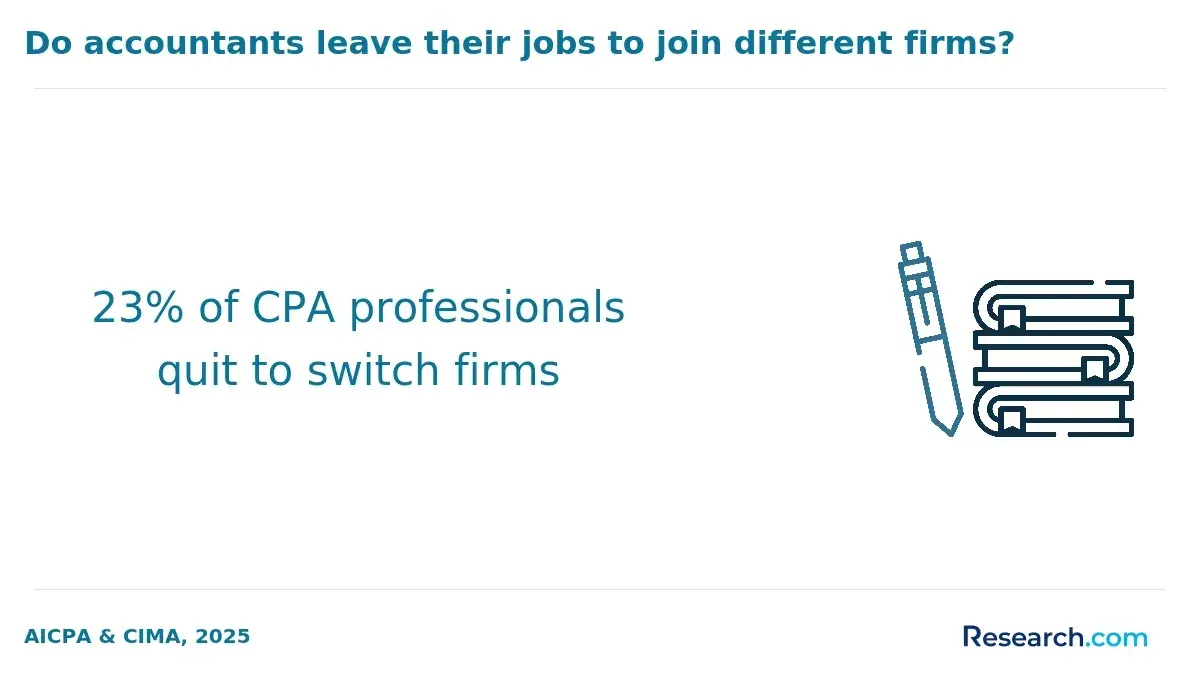
- AICPA & CIMA. (2025). MAP survey executive summary. https://www.aicpa-cima.com/resources/download/map-survey-executive-summary
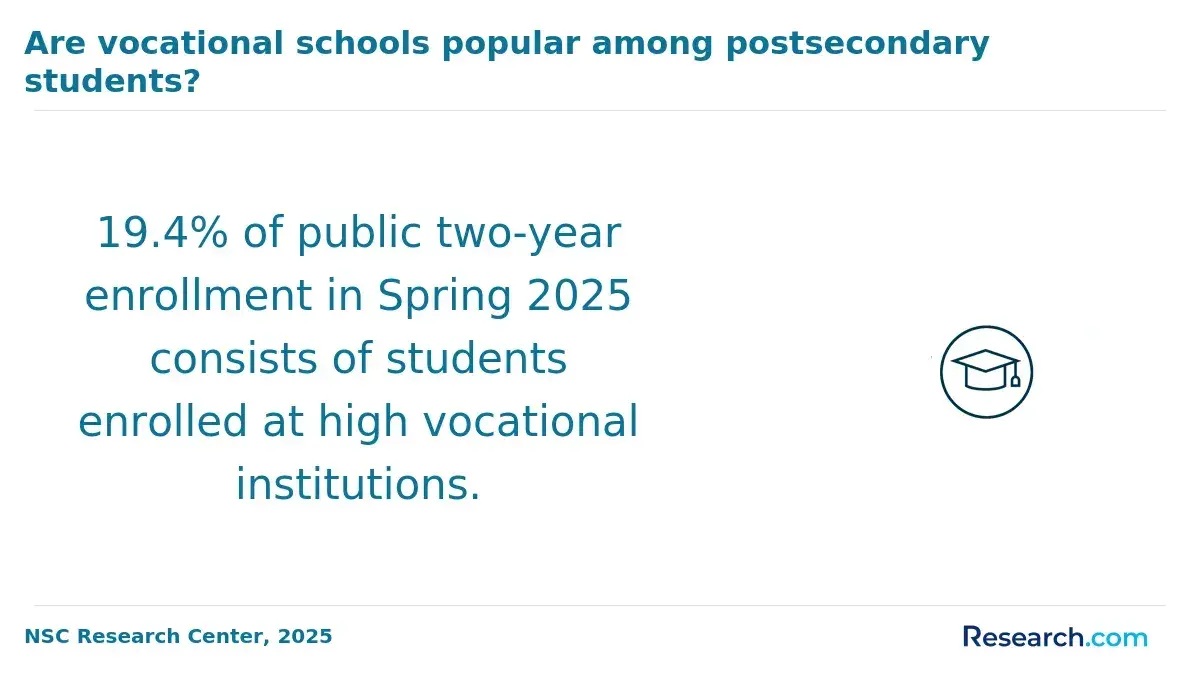
- National Student Clearinghouse Research Center. (2025). Clearinghouse Enrollment Insights Series: Final Fall Enrollment Trends. https://nscresearchcenter.org/final-fall-enrollment-trends/


