
2027 Business Administration Degree vs. Certificate: Which Should You Choose?

Co-Founder and Chief Data Scientist
Choosing between a business administration degree and a certificate is really a choice between breadth, speed, cost, and career leverage. A degree usually builds a full academic foundation in management, accounting, marketing, finance, operations, and strategy. A certificate is shorter and more targeted, often designed to help working adults gain practical business skills quickly.
The better option depends on what you need the credential to do. If you are aiming for management tracks, broader job mobility, graduate school, or roles that list a bachelor’s degree as a minimum requirement, a business administration degree is usually the stronger long-term credential. If you need to strengthen your resume, prepare for an entry-level office or support role, or add business knowledge without committing several years to school, a certificate may be the more efficient choice.
This guide compares both paths by time to completion, online availability, admissions requirements, credits, tuition, accreditation, transfer options, jobs, and salary potential. It also explains where each credential tends to fit best so you can choose based on your career goals, schedule, and budget. Approximately 60% of business graduates find higher-level management roles, while certificate holders often benefit most from specialized expertise that can be applied quickly in the workplace.
Key Points About Business Administration Degree vs. Certificate Programs
- Business administration degrees provide comprehensive knowledge and higher salary potential-average bachelor's degree holders earn 20% more than certificate-only professionals.
- Certificates offer faster completion and targeted skill development, ideal for those seeking quick entry or advancement in specific roles.
- Degrees generally enhance long-term career growth with managerial opportunities; certificates support immediate skill application but may limit upward mobility.
What Are the Differences Between Business Administration Degree and Certificate Programs?
The main difference is scope. A business administration degree is a comprehensive academic credential, while a certificate is a shorter skills-focused credential. Both can be useful, but they serve different career purposes.
A degree is usually better for students who want broader business preparation, more career options, and eligibility for positions that require a college degree. A certificate is usually better for learners who already have work experience, need a faster credential, or want focused training in areas such as management basics, accounting, office administration, or entrepreneurship.
- Career advancement: Degrees generally support broader career pathways and are more suitable for people targeting leadership, analyst, management, or graduate-study options. Certificates are better for quick skill upgrades, entry-level business support roles, or adding a business credential to an existing background.
- Depth of learning: Degree programs cover business concepts in greater depth and usually include general education, quantitative reasoning, communication, economics, finance, marketing, management, and strategic decision-making. Certificates usually focus on a smaller set of job-ready topics with less theory and fewer electives.
- Time commitment: Degrees require a longer commitment, often several years of study. Certificates are typically shorter and may fit better for working adults, career changers, or students testing whether business is the right field before pursuing a full degree.
- Cost and investment: Degrees usually cost more because they require more credits and more time in school. Certificates usually cost less and may produce a faster return if the goal is to qualify for a specific entry-level role or improve performance in a current job.
- Employer signal: A degree signals broad academic preparation and persistence over a longer program. A certificate signals targeted training, but employers may weigh it differently depending on the issuing institution, curriculum, and relevance to the job.
In practical terms, choose a degree if you want the credential to carry you across many business roles over time. Choose a certificate if your immediate priority is speed, affordability, and focused skill development.
How Long Does It Take to Complete a Business Administration Degree vs. a Certificate Program?
A business administration degree usually takes much longer than a certificate because it requires a larger curriculum and more credits. For many students, the time difference is the deciding factor.
- Typical duration: A business administration degree typically requires about four years of full-time study and usually totals around 120 credit hours. Students who already hold an associate degree or have transferable credits may finish in as little as two years. By comparison, business administration certificate program duration is much shorter, often ranging from a few months to one year, with 12 to 30 credit hours required.
- Flexibility: Degree programs often follow semester schedules and may be offered full-time or part-time. Certificate programs are frequently built for working professionals and may offer evening, part-time, or online options. Some accelerated and online degree formats can also shorten the path compared with a traditional on-campus schedule.
- Factors affecting timeline: Enrollment status has a major impact. Full-time students usually finish faster than part-time students. Transfer credits, prior college coursework, and program structure can reduce business administration degree completion time. Work schedules, family responsibilities, course availability, and academic prerequisites can also extend the timeline.
If your priority is the fastest credential for immediate workplace use, a certificate is usually the more practical option. If you want a credential with broader long-term value, a degree may be worth the longer timeline. Students comparing accelerated options can review fast track college courses to understand how some programs balance speed with academic depth.
Can You Complete a Business Administration Degree or Certificate Entirely Online?
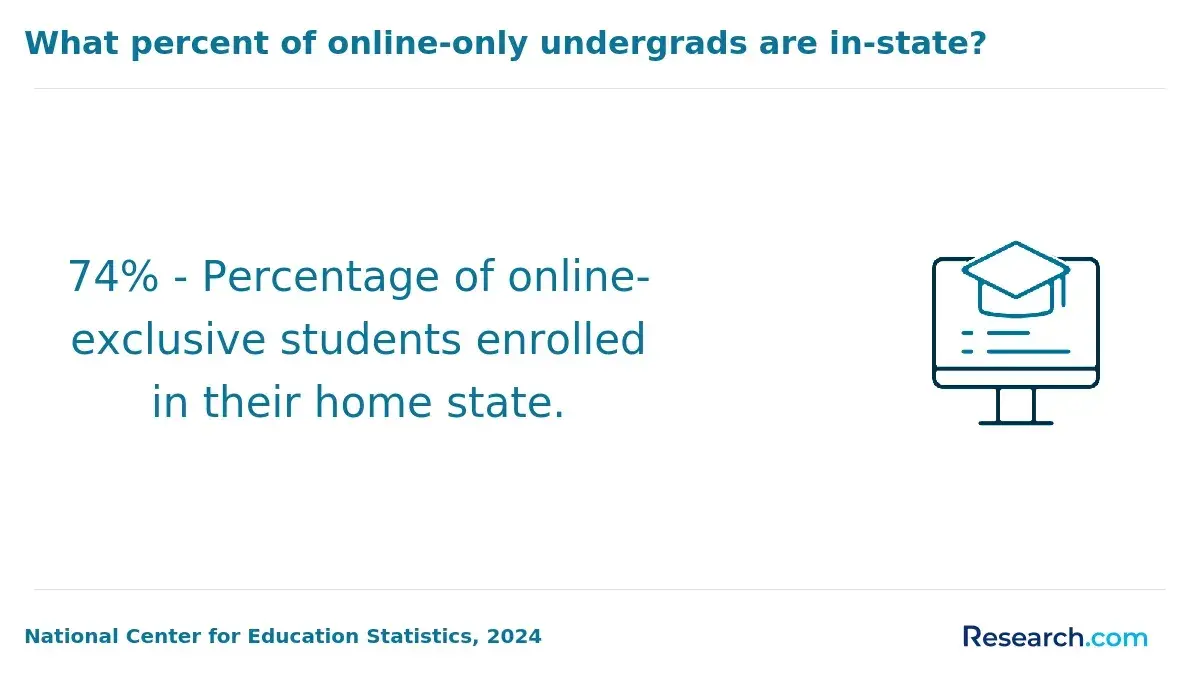
Yes. Many business administration degrees and certificates can be completed fully online, although program format varies by school. Online study is especially common in business because much of the coursework can be delivered through case studies, discussions, projects, simulations, presentations, and group collaboration tools.
Students can now pursue fully online business administration degree programs in California and beyond without attending campus classes. Accredited institutions such as Arizona State University, San Diego State University, and Iowa State University offer 100% online bachelor's degrees in business administration that are designed with the same rigorous standards and faculty expertise as traditional programs.
Online business programs often use asynchronous coursework, which lets students complete assignments on a weekly schedule rather than logging in at fixed class times. Some courses may still require live sessions, group projects, proctored exams, internships, or capstone projects. Certificate programs tend to be even more flexible, making an online business administration certificate for working professionals a common option for learners who need short-term training.
Before enrolling, confirm whether the program is fully online or only mostly online. Ask whether any campus visits, synchronous meetings, local internship hours, proctored exams, or residency requirements apply. If practical experience is required, check whether it can be completed locally or virtually under the school’s policies. Licensure requirements, when applicable, may also affect format.
For students who want a lower-friction online route, resources on the easiest degree course pathways can help clarify how online degree options differ in structure, workload, and completion expectations.
What Are the Admission Requirements for a Business Administration Degree vs. a Certificate Program?
Business administration degree programs usually have more detailed admissions requirements than certificate programs. This is because degrees are longer, carry more credits, and may require students to meet institutional and major-specific standards before taking upper-level business courses.
Certificate programs are often easier to enter. Many are designed for adult learners, career changers, or professionals who need targeted business training without applying to a full degree program.
Admission Requirements for Business Administration Degree Programs
- Educational background: Most bachelor's degree programs require a high school diploma or equivalent for first-year applicants. Transfer or degree-completion students typically need 60+ college credits.
- GPA minimums: Schools often expect a minimum cumulative GPA between 2.0 and 3.0, depending on the institution and program. For example, the University of Illinois Chicago's BBA program requires a 2.5 GPA.
- Prerequisite courses: Applicants may need courses in accounting, mathematics, statistics, economics, or related subjects, often completed with a grade of C or better.
- Official transcripts: Degree programs typically require official transcripts from all previously attended schools to verify academic history and transfer eligibility.
- Additional requirements: Some programs ask for essays, letters of recommendation, interviews, placement steps, or advising meetings before students enter upper-level business coursework.
- Conditional admission: Some schools allow conditional admission when prerequisites are still in progress, provided students meet minimum in-progress GPA standards.
Admission Requirements for Business Administration Certificate Programs
- Educational background: Many certificate programs require a high school diploma or GED, but they usually have fewer academic prerequisites than degree programs.
- GPA requirements: Many certificate programs do not require a minimum GPA, which can make them more accessible to students with varied academic records.
- Prerequisite courses: Most entry-level certificates do not require completed college-level business courses, although some may expect basic math, writing, or computer skills.
- Application materials: The application process is often simpler and may require only an application form, proof of education, and sometimes a short statement of interest.
- Professional experience: Some post-baccalaureate or graduate-level certificates may prefer or require relevant work experience, especially when the curriculum is designed for managers or professionals.
The practical takeaway is straightforward: a degree usually requires more preparation before admission, while a certificate is usually built for faster access. Students who plan to continue beyond undergraduate study can also compare future options such as affordable master's degrees online when mapping a longer education path.
How Many Credits Do You Need to Complete a Business Administration Degree vs. a Certificate?
Credit requirements show why the two credentials feel so different in workload. A degree requires a broad set of general education, business core, major, and elective courses. A certificate requires far fewer credits and usually concentrates on the most immediately useful business topics.
- Business administration degree: Usually requires between 120 and 180 credits, depending on the school and credit system. This generally reflects about four years of full-time study.
- Business administration certificate: Generally requires 12 to 30 credits. The curriculum is narrower and is commonly designed to be completed within a few months to a year.
The smaller credit load is one of the strongest advantages of a certificate. It can be manageable for students who are working full time, supporting a family, or trying to gain a credential without delaying employment plans. The trade-off is that fewer credits also mean less coverage of advanced business theory, analytics, strategy, leadership, and general education.
One student enrolled in a business administration certificate program described the shorter credit load as a good match for a busy work schedule and a need to update business skills quickly. He said, "Balancing part-time study and a full-time job was tough, but the focused curriculum meant I wasn't overwhelmed by unrelated courses."
That experience reflects the main advantage of certificates: they reduce the academic scope so students can focus on practical skills sooner. A degree, by contrast, asks for more time and credits but gives students a broader academic base that can support more career changes and advancement opportunities later.
What Is the Average Tuition for a Business Administration Degree vs. a Certificate?
Tuition is one of the clearest differences between a business administration degree and a certificate. Degrees cost more because they require more credits, more semesters, and often more fees. Certificates usually cost less because they are shorter and rarely require housing, meal plans, or a full campus experience.
Average Tuition for Business Administration Degree Programs
- Tuition range: Annual tuition for undergraduate business administration degree programs ranges from about $9,400 for in-state public institutions to $26,900 for out-of-state public universities, with private colleges charging up to $58,600 per year.
- Online vs. on-campus: Online degree programs generally have lower costs, averaging around $4,250 annually after financial aid, compared to $6,600 for on-campus study.
- Program length: A typical bachelor's degree takes around four years, making total tuition fees range from $39,000 for in-state public students to over $234,500 at private nonprofit schools.
- Public vs. private: Public universities are usually more affordable for residents. Private schools often charge higher tuition, although grants, scholarships, and institutional aid can reduce the net price.
- Additional costs: Books, supplies, housing, transportation, technology, and fees can add between $10,000 and $20,000 each year depending on location and living arrangements.
Average Tuition for Business Administration Certificate Programs
- Tuition range: Business administration certificate tuition costs usually fall between $1,000 and $7,000 total, making certificates more accessible financially than degree programs.
- Program length: Certificates are short-term, lasting from a few months up to one year, which keeps total tuition and related costs lower.
- Public vs. private: Community colleges and public institutions usually offer the lowest certificate tuition, while private providers often charge more.
- Online vs. on-campus: Online certificates may cost under $2,000, while on-campus options often carry higher fees because of facility and campus-based costs.
- Additional costs: Housing and meal plans are rarely required for certificates, and books or supplies are usually less expensive than they are for full degree programs.
When comparing cost, look beyond posted tuition. Calculate total program cost, expected completion time, financial aid eligibility, transfer potential, and whether the credential matches the jobs you want. Students comparing online bachelor's options can also review business administration degree online cost to better understand affordability across programs.
The right financial choice depends on your goal. A certificate may be the lower-risk option if you need quick skills at a modest price. A degree may justify the higher cost if it helps you qualify for positions with stronger advancement potential. If you are comparing shorter routes to career mobility, quick degrees with high pay can help you evaluate alternatives.
Can You Transfer Certificate Credits Toward a Business Administration Degree Later On?
Yes, certificate credits can sometimes transfer toward a business administration degree, but transfer is never automatic. Each college decides whether credits apply based on accreditation, course content, grades, credit level, and how closely the certificate courses match the degree curriculum.
Credits are more likely to transfer when the certificate was earned at a regionally accredited college and includes standard business courses such as accounting, management, marketing, economics, business communication, or business law. Credits from noncredit training providers, professional workshops, or unaccredited programs are less likely to count toward a degree.
Schools may also limit how many certificate credits can be applied to a degree. Many require a minimum grade, often a C or higher, before accepting transfer credits. Even if credits transfer to the institution, they may count as electives rather than major requirements if the course outcomes do not align with the business administration curriculum.
Before enrolling in a certificate with the hope of later earning a degree, ask the target degree program these questions:
- Is the certificate offered for academic credit or noncredit training?
- Is the institution regionally accredited?
- Which certificate courses apply directly to the business administration major?
- What minimum grade is required for transfer?
- Is there a maximum number of certificate credits that can be applied?
- Will credits count toward major requirements, general education, or electives?
- What documentation is needed for evaluation, such as syllabi or course descriptions?
One student who completed a business administration certificate before pursuing a degree said the transfer process required more documentation than expected. She had to gather syllabi and detailed course descriptions for review. "I didn't realize how important that documentation was until I started the transfer evaluation," she explained.
Her experience shows why planning matters. If you think you may pursue a degree later, choose a certificate from an accredited institution, keep course records, and speak with an academic adviser before you register. That preparation can help you avoid paying for credits that do not move you closer to graduation.
Are Certificate Programs Accredited the Same Way as Business Administration Degrees?
No. Business administration certificates are not always accredited in the same way as business administration degrees. The most important distinction is between institutional accreditation and program-level business accreditation.
Both degrees and certificates may be offered by institutions with recognized regional accreditation. That matters because institutional accreditation can affect credit transfer, employer recognition, and eligibility for certain forms of financial aid. However, specialized business accreditation—such as AACSB, ACBSP, or IACBE—is much more common for business degree programs, especially bachelor's and MBA programs.
Many business administration degrees hold institutional accreditation and may also be housed in a business school with specialized accreditation. Certificates may benefit from that same business school environment, but many certificate programs are designed for quick skill development and may not undergo the same level of specialized program review.
Before enrolling, verify the school’s accreditation through recognized sources and ask how the credential appears on transcripts. Also ask whether the certificate is credit-bearing, whether it can transfer into a degree, and whether employers in your target field recognize it. This is especially important if you plan to use the certificate as a stepping stone rather than as a standalone credential.
What Jobs Can You Get with a Business Administration Degree vs. a Certificate?
A business administration degree generally prepares graduates for a wider range of business roles, including positions with management, analysis, finance, marketing, operations, or human resources responsibilities. A certificate more often supports entry-level administrative, coordination, customer-facing, bookkeeping, or support roles.
The exact job you can get depends on your prior work experience, industry, location, internships, technical skills, and how employers in your area evaluate credentials. A certificate can be valuable, but it may not satisfy postings that require a bachelor’s degree.
Jobs You Can Get with a Business Administration Degree
- Business analyst: Reviews data, workflows, and processes to help organizations improve performance and solve business problems.
- Operations manager: Oversees daily business activities, staffing, resources, procedures, and efficiency across teams or departments.
- Marketing manager: Plans and manages campaigns, market research, branding, and promotional strategies for products or services.
- Human resources specialist: Supports recruiting, employee relations, benefits, compliance, onboarding, and workforce policies.
- Sales manager: Leads sales teams, sets targets, monitors performance, and develops strategies to increase revenue.
- Financial analyst: Evaluates budgets, financial data, forecasts, and investment information to support business decisions.
Jobs You Can Get with a Business Administration Certificate
- Administrative assistant: Provides clerical and organizational support, manages calendars, prepares documents, and coordinates office tasks.
- Customer service representative: Helps customers resolve questions, orders, complaints, or service issues in retail, office, or call center settings.
- Office coordinator: Organizes office logistics, supplies, communication, scheduling, and day-to-day administrative processes.
- Sales support specialist: Assists sales teams with records, customer follow-up, proposals, order processing, and CRM updates.
- Junior project coordinator: Helps track project timelines, meetings, documentation, resources, and communication among team members.
- Bookkeeper: Maintains financial records, records transactions, reconciles accounts, and supports basic accounting functions.
For career mobility, the degree usually offers more room to grow. For fast entry into business support work or targeted skill development, the certificate can be a practical starting point.
What Is the Average Starting Salary for a Certificate vs. Business Administration Degree Graduates?
Starting salary is typically higher for business administration degree graduates than for certificate holders, largely because degree holders may qualify for roles with broader responsibility and stronger advancement paths. However, salary outcomes vary by job title, employer, location, industry, experience, and technical skills.
- Typical salary range: Business administration degree graduate starting salary USA averages approximately $65,276 per year for recent graduates, while the average salary for business administration certificate holders in the US typically falls between $35,000 and $45,000 annually in entry-level positions.
- Experience: Prior work experience, internships, military experience, or industry-specific skills can raise starting pay for both certificate and degree holders.
- Industry: Degree holders often have access to higher-paying fields such as finance, consulting, and technology. Certificate holders more commonly start in administrative, customer support, sales support, or office coordination roles.
- Location: Metropolitan areas and regions with a higher cost of living often pay more, although higher wages may be offset by higher expenses.
- Career outlook: Degree graduates usually have stronger long-term advancement potential. Certificate holders may need additional education, experience, or credentials to move into higher-level management or analyst roles.
For students focused on pay, the question is not only what you can earn immediately after graduation. It is also whether the credential helps you move into better roles over time. A certificate can provide a fast start, but a degree often creates more options for promotion, graduate study, and career changes. Students considering personality fit and work environment can also explore the best career path for introverts when comparing business roles.
Here's What Graduates of Business Administration Programs Say About Their Degree or Certificate
- Armando: "Pursuing the business administration certificate allowed me to gain targeted skills quickly without taking on the financial burden of a full degree. The faster pace worked with my schedule and helped me apply what I learned right away. I also understood that the certificate might not open as many long-term doors as a degree."
- Damien: "Choosing the business administration degree was a major commitment, but it gave me a broader learning experience than a short certificate could. The program helped me understand business more deeply and build a professional network. It cost more and took more time, but for my career goals, the return on investment was worth it."
- Aiden: "After completing both a certificate and a degree in business administration, I see them as different tools. The certificate helped me build practical skills quickly and at a lower cost. The degree gave me broader knowledge and more room to grow. Using both at different stages helped me match my education to my career goals."
Other Things You Should Know About Business Administration Degrees
Business administration certificates are generally recognized by employers as proof of specialized knowledge or skills in a particular area, such as project management or marketing. However, they may not carry the same weight as a full degree when it comes to advancement or leadership roles, which often require more comprehensive education and experience.
In some cases, credits earned from a business administration certificate can be applied toward a related degree program if the institution operates both certificate and degree pathways. It is important to verify transfer policies with the school before enrolling, as transferability varies widely among colleges and universities.
Certificate programs in 2027 often emphasize practical skills ideal for immediate application in the workplace, while degree programs typically cover broader theoretical foundations and a comprehensive understanding of business concepts, preparing students for long-term career growth and diverse roles.
References
- 2025 Business Administration and Management Tuition https://www.collegetuitioncompare.com/majors/52.0201/business-administration-and-management/
- Home https://www.husson.edu/online/blog/2023/09/certificate-vs-certification
- Choosing a Business Graduate Certificate vs. a Degree | University of Wisconsin MBA Consortium - Online MBA Program https://www.wisconsinonlinemba.org/our-program/news/choosing-business-graduate-certificate-vs-degree/
- Can I Transfer Credits to MBA Certificate Programs Online? https://www.lsib.co.uk/2022/answers.aspx
- Business Administration - General Certificate (C25120G) - Cleveland Community College https://clevelandcc.edu/program-finder/business-administration-general-certificate-c25120g/
- What's the Difference Between a Certificate and a Certification? | UVA SCPS https://www.scps.virginia.edu/whats-difference-between-certificate-and-certification
- Graduate certificate vs. master's degree: What business credential is right for you? - D'Amore-McKim School of Business https://damore-mckim.northeastern.edu/resources/cc-graduate-certificate-vs-masters-degree-what-business-credential-is-right-for-you/
- Transfer Credits & Waivers - Iowa MBA https://tippie.uiowa.edu/iowa-mba/admissions/transfer-credits-waivers
- Is an MBA or graduate certificate program worth it? | UNSW https://www.unsw.edu.au/news/2024/04/is-an-MBA-or-graduate-certificate-worth-it
- Certificate vs. degree programs: What's the difference? | edX https://www.edx.org/resources/what-is-the-difference-between-a-certificate-and-a-degree


