
2027 Business Administration vs. Healthcare Administration Degree: Explaining the Difference

Co-Founder and Chief Data Scientist
Choosing between business administration and healthcare administration is really a choice between broad management flexibility and specialized leadership in the health sector. Both degrees teach how organizations run, how budgets are managed, how teams are led, and how decisions affect performance. The difference is the context: business administration applies across many industries, while healthcare administration prepares students to manage services, staff, compliance, finances, and quality in healthcare settings.
This distinction matters because the two degrees can lead to different coursework, internships, job titles, employer expectations, and long-term career paths. A business administration student may study marketing strategy, corporate finance, entrepreneurship, or operations across sectors. A healthcare administration student may study health policy, medical ethics, patient safety, healthcare law, reimbursement, and facility management.
This guide compares the two options in practical terms: what each program covers, where they overlap, how they differ, what skills they build, which may feel more difficult, what career outcomes are available, how costs compare, and how to decide which path better fits your goals.
Key Points About Pursuing a Business Administration vs. Healthcare Administration Degree
- Business administration degrees offer broad training in management and finance, with average tuition around $15,000 per year and careers in diverse sectors like marketing and finance.
- Healthcare administration programs focus on medical facility management, typically costing slightly more, about $18,000 yearly, with many graduates working in hospitals and clinics.
- Both degrees usually take four years for a bachelor's, but healthcare administration may include healthcare policy coursework, aligning with specialized industry needs.
What are business administration degree programs?
A business administration degree is a general management program designed to prepare students for business, operations, finance, marketing, human resources, and leadership roles across many types of organizations. It is often chosen by students who want a flexible degree that can apply to corporate, nonprofit, government, technology, retail, finance, consulting, or entrepreneurial settings.
The curriculum usually combines general education requirements with core business courses. Students commonly study management, finance, accounting, marketing, human resources, economics, business law, organizational behavior, operations management, business communication, and information systems. Many programs also include math and statistics so students can interpret data, evaluate performance, and support decisions with evidence.
At the upper-division level, business administration programs often move from foundational concepts to applied decision-making. Courses such as strategic management, business ethics, and organizational leadership may require students to analyze cases, develop business plans, evaluate financial statements, or recommend operational improvements.
Most bachelor's degree programs in business administration take around four years of full-time study to finish. Admission typically requires a high school diploma or GED, along with meeting the school’s GPA criteria and any other institutional requirements. Some programs also offer concentrations, allowing students to focus on areas such as finance, marketing, management, analytics, entrepreneurship, or human resources.
What are healthcare administration degree programs?
A healthcare administration degree is a management program focused on the business, operational, legal, ethical, and policy issues that affect healthcare organizations. Instead of preparing students for management in any industry, it trains them for leadership roles in settings such as hospitals, clinics, physician practices, long-term care facilities, health systems, and related healthcare organizations.
Coursework typically covers healthcare systems, leadership principles, health policy, healthcare finance, health information management, legal and ethical issues in healthcare, quality improvement, healthcare marketing, and project management. These topics help students understand how healthcare organizations must balance patient care, staffing, reimbursement, compliance, budgets, technology, and service quality.
Many programs include applied learning through internships, practicums, capstone projects, or case-based assignments. These experiences are especially valuable because healthcare administration requires students to understand how policies and management decisions affect patients, clinicians, administrators, payers, and regulators.
Healthcare administration programs generally require around 120 to 121 credit hours and are completed over four years of full-time study. Admission typically requires a high school diploma or an equivalent qualification. Some degree completion tracks may also review prior college coursework or relevant professional experience. Students should also review accreditation, internship expectations, and whether a program is designed for entry-level administrative roles, advancement within healthcare, or preparation for graduate study.
What are the similarities between business administration degree programs and healthcare administration degree programs?
Business administration and healthcare administration degrees share a management foundation. Both teach students how organizations operate, how leaders make decisions, how resources are allocated, and how teams work toward measurable goals. The key similarity is that both programs develop administrative and leadership skills; the key difference is where those skills are applied.
- Core management coursework: Both programs may include finance, accounting, human resource management, marketing, operations management, organizational behavior, and business communication.
- Leadership development: Students learn how to manage teams, evaluate organizational performance, communicate with stakeholders, and make strategic decisions.
- Analytical and problem-solving skills: Both degrees require students to interpret data, identify operational problems, compare options, and recommend practical solutions.
- Applied learning formats: Programs often use case studies, projects, presentations, research assignments, group work, and experiential learning to connect theory with workplace decisions.
- Similar degree timelines: Bachelor's degrees commonly take four years, while master's programs may take around two years full-time.
- Comparable admission patterns: Undergraduate programs usually require a high school diploma or equivalent, while graduate programs generally require a bachelor's degree and may request test scores, recommendation letters, or professional materials. Prior healthcare experience is usually not required for many healthcare administration programs, though it can be helpful.
The overlap can make either degree useful for students who want management training. It also means that a student who begins in one path may still be able to pivot through electives, internships, certificates, graduate study, or work experience. For example, a business administration graduate can move into healthcare operations with the right exposure, while a healthcare administration graduate can apply general management skills in adjacent health-related organizations.
The practical difference is specialization. Business administration gives broader industry mobility, while healthcare administration gives earlier exposure to healthcare regulations, patient-centered operations, health policy, and ethical issues. Students who want shorter skill-building options before committing to a full degree may also compare 6-month certificate programs that pay well online in related fields.
What are the differences between business administration degree programs and healthcare administration degree programs?
The main difference is scope. Business administration is broad and industry-neutral. Healthcare administration is narrower and healthcare-specific. That difference affects what students study, where they complete projects or internships, what employers expect, and which roles they are most directly prepared to pursue.
| Comparison point | Business administration | Healthcare administration |
| Primary focus | General business management across many industries. | Management of healthcare organizations, services, systems, and facilities. |
| Typical coursework emphasis | Finance, marketing, accounting, operations, management, economics, business law, and strategy. | Healthcare policy, healthcare law, medical ethics, health information, quality improvement, patient safety, and healthcare finance. |
| Industry preparation | Prepares graduates for roles in sectors such as retail, finance, technology, consulting, manufacturing, and nonprofits. | Prepares graduates for settings such as hospitals, clinics, physician practices, long-term care facilities, and health systems. |
| Career flexibility | Usually broader because the degree is not tied to one sector. | More specialized, which can be an advantage for students committed to healthcare leadership. |
| Regulatory context | Covers business law and ethics in a general organizational context. | Emphasizes healthcare regulations, compliance, patient privacy, safety, reimbursement, and ethics tied to patient care. |
Business administration may be the stronger fit for students who want flexibility, are still exploring industries, or plan to move between business functions over time. Healthcare administration may be the stronger fit for students who already know they want to work in healthcare management and want coursework that reflects the realities of medical organizations.
Career outcomes also differ. Business administration graduates may pursue roles such as business analyst, operations manager, marketing manager, or other administrative positions across multiple sectors. Healthcare administration graduates more commonly pursue roles such as hospital administrator, medical and health services manager, practice manager, or health policy analyst. Healthcare administration also benefits from strong healthcare-sector demand, with employment projected to increase 28% through 2031, while business administration offers flexibility but can be more affected by industry-specific shifts.
What skills do you gain from business administration degree programs vs. healthcare administration degree programs?
Both degrees build management skills, but they develop them for different operating environments. Business administration emphasizes transferable business tools that can be used across industries. Healthcare administration adds specialized skills for working within complex healthcare systems where patient outcomes, compliance, staffing, reimbursement, and service quality are closely connected.
Skills gained in business administration degree programs
- Analytical reasoning: Students learn to interpret financial data, market trends, operational metrics, and business performance indicators to support decisions.
- Financial and managerial decision-making: Coursework in accounting, finance, economics, and strategy helps students evaluate costs, revenues, risks, and growth opportunities.
- Project management: Students learn to coordinate resources, set timelines, manage teams, track deliverables, and improve workflow.
- Marketing and customer insight: Programs often teach students how organizations identify customer needs, position products or services, and measure campaign performance.
- Technical proficiency: Students may build experience with CRM and ERP software such as Salesforce and SAP, digital marketing tools like SEO and analytics platforms, advanced Excel, and basic coding.
- Business communication: Graduates practice writing reports, presenting recommendations, negotiating, and communicating with managers, clients, vendors, and teams.
Skills gained in healthcare administration degree programs
- Healthcare system knowledge: Students learn how healthcare organizations function, including care delivery structures, administrative workflows, and the role of stakeholders across the health sector.
- Healthcare finance and resource management: Graduates develop skills in budgeting, forecasting, staffing, and allocating resources while working within healthcare laws and payer requirements.
- Quality improvement and patient-centered operations: Programs often emphasize performance improvement, patient safety, service quality, and operational efficiency in clinical environments.
- Regulatory and ethical decision-making: Students study compliance, legal responsibilities, medical ethics, and the consequences of administrative decisions in patient care settings.
- Health information and data use: Graduates may learn how health information supports reporting, compliance, planning, quality measurement, and management decisions.
- Communication with diverse stakeholders: Healthcare administrators must communicate with clinicians, executives, patients, insurers, regulators, and community partners.
In practical terms, business administration skills are more portable across industries, while healthcare administration skills are more directly aligned with healthcare leadership. Students who want broad management options may value the wider business skill set. Students who want to work in hospitals, clinics, or health systems may benefit from healthcare-specific training earlier in their education.
Employment for project management specialists, which can be relevant to both fields, is expected to grow 6 percent until 2034. That outlook reflects the value of planning, coordination, budgeting, and implementation skills in many organizational settings.
Which is more difficult, business administration degree programs or healthcare administration degree programs?
Neither degree is automatically harder for every student. The more difficult option depends on your strengths, interests, and prior experience. Business administration can feel more challenging for students who dislike quantitative analysis, finance, economics, or broad strategic problem-solving. Healthcare administration can feel more challenging for students who are unfamiliar with healthcare systems, regulations, ethics, policy, and the operational complexity of patient care environments.
Why business administration may feel difficult
- Broad subject range: Students may need to perform well in accounting, finance, marketing, economics, operations, management, and statistics rather than specializing early.
- Quantitative coursework: Finance, accounting, analytics, and economics can be demanding for students who are less comfortable with numbers.
- Open-ended case analysis: Business problems often have no single correct answer, so students must justify recommendations using data, logic, and strategy.
- Competitive career paths: Because the degree is broad, students may need internships, concentrations, networking, or certifications to stand out for specific roles.
Why healthcare administration may feel difficult
- Specialized terminology and systems: Students must learn how healthcare organizations operate, including policy, reimbursement, quality measures, and service delivery structures.
- Regulatory and ethical complexity: Administrative decisions in healthcare can affect patient care, privacy, safety, compliance, and organizational liability.
- Applied learning expectations: Healthcare administration may include more applied research, clinical practicum experiences, internships, or projects tied to real healthcare settings.
- Multiple stakeholder demands: Healthcare administrators must consider the needs of patients, clinicians, executives, insurers, regulators, and communities.
Students with strong math, analytics, and general business interests may find business administration manageable. Students who are motivated by healthcare systems, public service, policy, and patient-centered operations may find healthcare administration more engaging, even if the regulatory content is demanding.
A good way to judge difficulty is to review actual course requirements before enrolling. Look at required math, statistics, finance, law, policy, internship, and capstone expectations. Also consider how the degree connects to your financial goals; many students compare what major make the most money before choosing a program.
What are the career outcomes for business administration degree programs and healthcare administration degree programs?
Both degrees can lead to management and administrative careers, but they position graduates differently. Business administration is broader, so graduates may compete for roles across many sectors. Healthcare administration is more specialized, so graduates are more directly aligned with healthcare employers and health-related management roles.
Career outcomes for business administration degree programs
Career opportunities with a business administration degree remain broad across industries such as finance, retail, technology, consulting, nonprofits, and operations-driven organizations. Employment growth is moderate, with an 8% projected increase for business and financial occupations. Salaries typically start around $72,250, with advancement potential leading to senior corporate roles.
- Business analyst: Evaluates processes, performance data, and organizational needs to recommend improvements.
- Operations manager: Oversees daily business activities, staffing, workflows, productivity, and process improvement.
- Marketing manager: Develops campaigns and strategies to promote products, services, brands, or market growth.
A business administration degree can be especially useful for students who want to keep multiple career doors open. However, because the degree is broad, students should build a clear career direction through internships, concentrations, work experience, software skills, or industry-specific projects.
Career outcomes for healthcare administration degree programs
The healthcare administration degree job outlook and salaries are strong because healthcare organizations need leaders who understand operations, finance, compliance, staffing, and quality improvement. The U.S. Bureau of Labor Statistics projects a 23% increase in medical and health services manager roles until 2034, far exceeding average occupation growth. Median wages start at $110,680, with executive healthcare administrators earning over $250,000.
- Hospital administrator: Manages hospital operations with attention to service quality, staffing, budgets, compliance, and patient care efficiency.
- Medical and health services manager: Coordinates healthcare facilities, departments, programs, or staff to support effective service delivery and regulatory compliance.
- Practice manager: Oversees the daily operations of a medical practice, including staffing, scheduling, billing processes, budgeting, and patient flow.
Healthcare administration is often a strong fit for students who want a management career tied to healthcare delivery, health systems, or health policy. Students comparing flexible degree options may also research an online college that accepts FAFSA to find programs that match their schedule and financial aid needs.
How much does it cost to pursue business administration degree programs vs. healthcare administration degree programs?
The cost of a business administration or healthcare administration degree depends less on the major itself and more on the school, degree level, residency status, delivery format, transfer credits, fees, and financial aid. At the undergraduate level, costs are often similar. At the master's level, prices may vary more because of program format, specialization, accreditation expectations, and institutional pricing.
| Cost factor | Business administration | Healthcare administration |
| Bachelor's-level cost pattern | Online bachelor's degrees average around $7,547 in tuition and fees, with the net price reducing to approximately $4,256 after financial aid. | Often follows a similar undergraduate cost pattern, depending on the school and delivery format. |
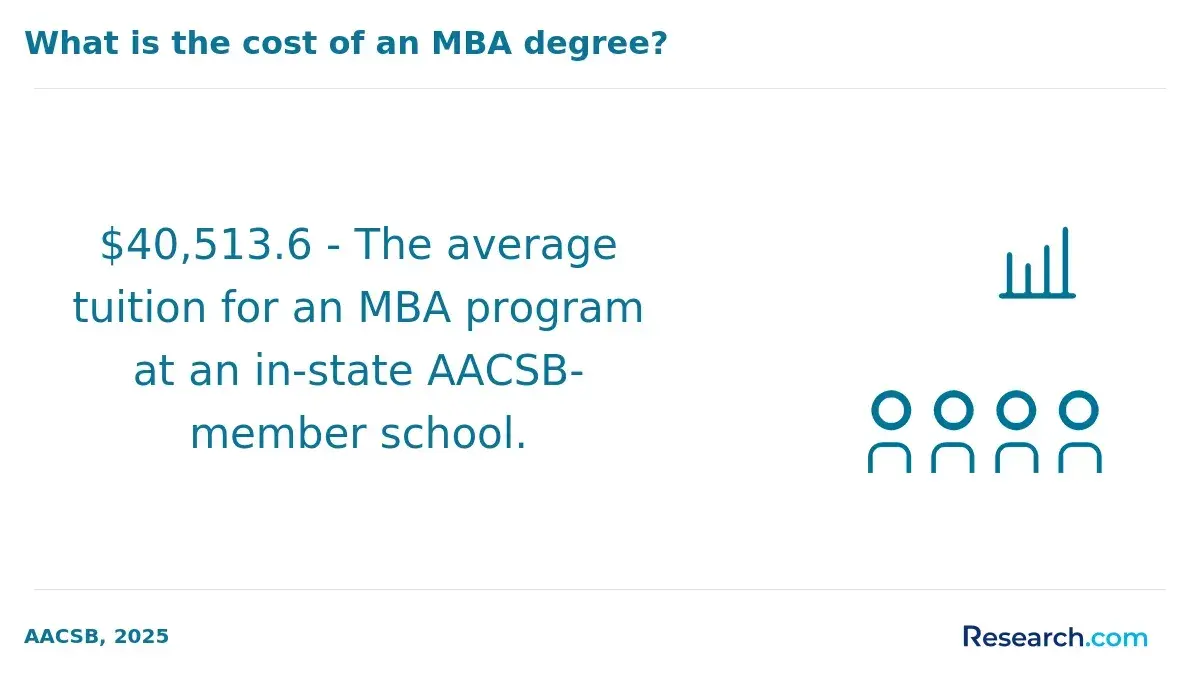
| Master's-level cost pattern | MBA tuition typically ranges between $27,360 and $32,832 in tuition alone, exclusive of other fees. | Master's tuition can vary more based on specialization, program structure, and accreditation standards. |
| Lower-cost options | Public universities, online formats, transfer credits, employer tuition benefits, and financial aid may reduce out-of-pocket cost. | Public universities, online formats, transfer credits, employer tuition benefits, healthcare scholarships, grants, and financial aid may reduce out-of-pocket cost. |
| Costs to verify | Technology fees, books, course materials, graduation fees, residency requirements, and internship-related expenses. | Technology fees, books, course materials, graduation fees, practicum or internship costs, background checks if required, and professional requirements. |
For business administration bachelor's degrees pursued online, the average tuition and fees hover around $7,547, with the net price reducing to approximately $4,256 after accounting for financial aid. Master's programs, such as the MBA, typically range between $27,360 and $32,832 in tuition alone, exclusive of other fees.
Healthcare administration degrees generally follow a comparable cost pattern at the bachelor's level. At the master's level, tuition may vary more because programs can differ in specialization, healthcare management focus, and accreditation-related expectations.
Before enrolling, compare the full cost of attendance rather than tuition alone. Review financial aid, scholarships, grants, employer reimbursement, transfer credit policies, online course fees, and whether internships or practicums create additional expenses. The cheapest option is not always the best value if it lacks the support, accreditation, flexibility, or career preparation you need.
How to Choose Between Business Administration Degree Programs and Healthcare Administration Degree Programs
Choose business administration if you want broad career flexibility across industries. Choose healthcare administration if you are confident you want to work in healthcare management, health systems, healthcare operations, or health policy. The best choice depends on where you want to work, what problems you want to solve, and how specialized you want your degree to be.
Questions to ask before choosing
- Which work environment interests you more? Business administration can lead to roles in technology, finance, retail, consulting, nonprofits, and other sectors. Healthcare administration is focused on hospitals, clinics, health systems, long-term care, and related healthcare organizations.
- Do you want flexibility or specialization? Business administration offers broader mobility. Healthcare administration offers more direct preparation for healthcare leadership.
- What subjects match your strengths? Business administration may suit students interested in finance, analytics, strategy, marketing, or operations. Healthcare administration may suit students interested in healthcare systems, policy, ethics, compliance, and service quality.
- How important is industry growth? Healthcare administration jobs are projected to grow 28% through 2031, indicating strong demand. Business administration provides diverse career options, though outcomes can vary by industry and specialization.
- What kind of impact do you want? Healthcare administration may be a better fit if you want your management work to influence patient care, access, quality, or health policy. Business administration may be better if you want to improve organizations, products, services, markets, or operations across sectors.
- Do you already have healthcare experience? Prior experience is not always required, but it can make healthcare administration coursework more meaningful and may help with career entry.
- What credentials do employers in your target role prefer? Review job postings for the roles you want. Some employers may accept either degree, while others may prefer healthcare-specific coursework or experience.
Best fit by student goal
| If your goal is... | Consider this degree |
| Keeping the widest range of career options open | Business administration |
| Working in hospitals, clinics, health systems, or healthcare operations | Healthcare administration |
| Studying finance, marketing, entrepreneurship, or general management | Business administration |
| Studying health policy, patient safety, healthcare law, or quality improvement | Healthcare administration |
| Building a career connected to patient care systems without becoming a clinician | Healthcare administration |
| Preparing for management roles in multiple industries | Business administration |
For students who are undecided, business administration may provide a broader starting point. For students who are already committed to healthcare leadership, healthcare administration usually offers a more targeted path. Working adults and cost-conscious students may also compare programs at the cheapest online schools for working students to balance affordability, flexibility, and career goals.
What Graduates Say About Their Business Administration Degree Programs and Healthcare Administration Degree Programs
-
: "Completing the business administration degree was challenging but incredibly rewarding. The combination of case studies and real-world projects prepared me to lead confidently in a fast-paced corporate environment. The faculty's industry connections also opened many doors, and I'm now seeing a steady rise in my career growth.
— Louie"
-
: "The healthcare administration program gave me hands-on experience with hospital management software and quality assurance protocols, which was crucial for understanding the complexities of patient care settings. Balancing academic rigor with practical skills made the transition to the workforce seamless. I highly recommend this program to anyone passionate about healthcare leadership.
— Zamir"
-
: "What stood out for me in the business administration degree was the focus on strategic thinking and data-driven decision-making, essential skills that are in high demand. The internship opportunities provided a unique glimpse into multinational corporations, boosting my confidence and salary prospects significantly. Pursuing this program was a smart investment in my future.
— Matthew"
Other Things You Should Know About Business Administration Degree Programs & Healthcare Administration Degree Programs
In 2027, Business Administration graduates often pursue roles in finance, consulting, or management within diverse industries. Healthcare Administration graduates typically focus on managing healthcare facilities, policy implementation, and overseeing medical staff, emphasizing leadership in medical settings.
In 2027, business administration graduates often pursue certifications such as PMP (Project Management Professional) and CFA (Chartered Financial Analyst). Healthcare administration graduates typically earn credentials like CPHQ (Certified Professional in Healthcare Quality) and FACHE (Fellow of the American College of Healthcare Executives) to enhance career opportunities.
In 2027, Business Administration programs often focus on finance, marketing, and strategy, whereas Healthcare Administration degrees emphasize health policy, medical ethics, and healthcare systems management. These core curriculum distinctions define the unique skill sets required for each field.
References
- Business Administrator Job Description (Duties, Skills & Roles) https://www.allbusinessschools.com/business-administration/job-description/
- What Are the Differences in Salary Level for Different Degrees in Healthcare Management? | MHA Salary https://www.healthcare-management-degree.net/faq/what-are-the-differences-in-salary-level-for-different-degrees-in-healthcare-management/
- MHA vs. MBA: Which One is Best for Your Healthcare Career? https://potomac.edu/mha-vs-mba-which-should-you-choose/
- MHA vs Healthcare MBA program – which is right for you? | FIU College of Business https://business.fiu.edu/academics/graduate/insights/posts/mha-vs-healthcare-mba-program-which-is-right-for-you.html
- 3 Degrees of Healthcare Management: MSHCM vs. MBA vs. MHA https://www.michiganstateuniversityonline.com/resources/healthcare-management/degrees-in-healthcare-management-mba-vs-mha-mshcm/
- Comparing Healthcare Management vs. Healthcare Administration | University of Phoenix https://www.phoenix.edu/blog/healthcare-management-vs-healthcare-administration.html
- Healthcare Administration vs. Healthcare Management: What's the Difference? | Concorde Career Colleges https://www.concorde.edu/blog/healthcare-administration-vs-healthcare-management-whats-difference
- What Is Business Administration? | CTU Online https://www.coloradotech.edu/degrees/studies/businesss-and-management/articles/what-is-business-administration
- How is a Health Administration Degree Different from a Business Management Degree? - Healthcare Administration Degree Programs https://www.healthcare-administration-degree.net/faq/how-is-a-health-administration-degree-different-from-a-business-management-degree/
- Unpacking the pros and cons of MBA vs MPH for careers in digital health: which degree is right for you? — Halle Tecco https://www.halletecco.com/blog/should-i-get-an-mba-or-mph-if-i-want-to-work-in-digital-health


