
2027 Business Analytics vs. Finance Degree: Explaining the Difference

Co-Founder and Chief Data Scientist
Choosing between a business analytics degree and a finance degree is really a choice between two ways of solving business problems. Business analytics uses data, statistical methods, and technology to explain what is happening in an organization and predict what may happen next. Finance focuses on how money is raised, invested, managed, and protected.
Both degrees can lead to analytical, business-facing careers. The better fit depends on the type of problems you want to work on: messy datasets, dashboards, and operational decisions, or markets, investments, budgets, and financial risk. This guide compares the two paths by curriculum, skills, difficulty, career outcomes, cost, and decision factors so students can choose a program that matches their strengths and long-term goals.
Key Points About Pursuing a Business Analytics vs. Finance Degree
- Business Analytics programs emphasize data skills and technology, preparing graduates for roles like data analyst; Finance degrees focus on markets and investment, leading to careers in banking or financial planning.
- Tuition for Business Analytics averages around $30,000 annually, often matching or slightly exceeding Finance, with both degrees typically completed in four years for undergraduates.
- Business Analytics curricula include statistics, coding, and data visualization, while Finance covers accounting, economics, and risk management; both offer strong job growth but in distinct sectors.
What are Business Analytics Degree Programs?
Business analytics degree programs teach students how to turn business data into useful decisions. Instead of focusing only on theory, these programs train students to collect, clean, analyze, interpret, and communicate data in ways managers can use.
Typical coursework includes statistics, data management, business intelligence, predictive analytics, data visualization, and programming languages such as Python or R. Many programs also include SQL, database systems, machine learning foundations, spreadsheet modeling, and analytics strategy. Depending on the school, students may apply these tools to marketing analytics, financial analytics, supply chain analytics, operations, or customer behavior.
At the undergraduate level, students usually complete around 120 to 122 credits, which commonly takes about four years of full-time study. Graduate programs are often shorter and commonly span two to three semesters for full-time enrollees.
Admissions expectations vary by institution, but successful applicants generally need strong quantitative preparation. For undergraduate programs, that usually means readiness for college-level math and business coursework. Graduate applicants may be expected to show prior coursework or experience in statistics, economics, math, computer science, or business, and some programs may require standardized test scores.
Best fit for this degree
- Students who like working with data, software tools, and evidence-based problem solving.
- Professionals who want roles in analytics, business intelligence, consulting, operations, marketing analytics, or data-informed strategy.
- Learners comfortable building technical skills and explaining results to nontechnical decision-makers.
What are Finance Degree Programs?
Finance degree programs prepare students to understand how individuals, companies, governments, and institutions manage money. The field is centered on capital, risk, valuation, investment decisions, budgeting, markets, and financial planning.
Students typically study corporate finance, investments, accounting, economics, financial institutions, financial statement analysis, risk management, and portfolio theory. Some programs also offer electives in financial technology, real estate finance, international finance, insurance, derivatives, or wealth management.
A Bachelor of Science in Finance typically requires around 120 semester credit hours, which most full-time students complete in four years. At the graduate level, finance programs may be offered as specialized master’s degrees, MBA concentrations, or quantitative finance tracks, depending on the institution.
Admissions requirements differ by school, but applicants generally need a high school diploma, solid academic performance, and mathematical aptitude, including preparation in algebra and calculus. Competitive SAT or ACT scores and a strong GPA may also be considered for undergraduate admission.
Best fit for this degree
- Students interested in markets, investing, banking, corporate decision-making, or financial advising.
- Learners who enjoy quantitative analysis but want it tied directly to money, valuation, and risk.
- Professionals aiming for roles in financial analysis, investment banking, asset management, corporate finance, or planning.
What are the similarities between Business Analytics Degree Programs and Finance Degree Programs?
Business analytics and finance programs overlap because both prepare students to make better business decisions using quantitative evidence. Neither degree is limited to abstract theory: students are expected to interpret information, evaluate trade-offs, and explain recommendations clearly.
- Analytical decision-making: Both programs require students to examine data, identify patterns, and support business recommendations with evidence.
- Quantitative coursework: Students in both fields use math, statistics, spreadsheets, models, and structured problem-solving.
- Business foundation: Economics, accounting, management, and business communication often appear in both curricula.
- Applied learning: Case studies, group projects, presentations, internships, simulations, and capstone projects are common in both degree paths.
- Similar timelines: Undergraduate programs typically take four years, while master’s programs often range from one to two years.
- Comparable graduate admissions themes: Graduate applicants generally need a bachelor’s degree, a strong GPA, quantitative proficiency, and may submit GRE/GMAT scores, recommendations, and statements of purpose.
The biggest shared outcome is business fluency. Graduates from either path can learn to translate complex information into decisions executives, clients, or teams can act on. That is why both degrees can support careers such as business analyst, financial analyst, consultant, operations analyst, or strategy associate, depending on the student’s electives and experience.
Students comparing timelines and formats may also want to review fast track college programs, especially if finishing sooner is a major factor in the decision.
What are the differences between Business Analytics Degree Programs and Finance Degree Programs?
The main difference is the object of analysis. Business analytics focuses on data from across an organization, while finance focuses on money, markets, assets, liabilities, and financial performance. Both use numbers, but they ask different questions.
| Comparison point | Business Analytics | Finance |
| Primary focus | Using data to improve business decisions, operations, forecasting, and strategy. | Managing capital, investments, budgets, risk, and financial performance. |
| Typical tools | Python, R, SQL, Tableau, Power BI, statistical software, databases, and visualization tools. | Excel, financial models, valuation tools, accounting systems, Bloomberg tools, and market data platforms. |
| Core questions | What does the data show? What is likely to happen next? How can the business improve? | What is this worth? How should money be allocated? What financial risks matter most? |
| Common career direction | Data analysis, business intelligence, operations analytics, marketing analytics, consulting, and analytics management. | Financial analysis, corporate finance, banking, investment management, financial planning, and risk management. |
| Industry reach | Broadly used across technology, healthcare, retail, logistics, consulting, manufacturing, and finance. | Strongest concentration in banking, corporate finance, insurance, asset management, fintech, and advisory services. |
Business analytics is usually more technology-centered. Students spend more time learning how to manage datasets, build models, and communicate findings through dashboards or reports. Finance is usually more market- and valuation-centered. Students spend more time learning how money moves, how investments are evaluated, and how financial risk affects decisions.
A simple way to choose is to look at the work you want to do every week. If you want to build dashboards, query databases, test hypotheses, and support decisions across departments, business analytics may fit better. If you want to evaluate companies, manage budgets, study markets, or advise on investments, finance may be the stronger match.
What skills do you gain from Business Analytics Degree Programs vs Finance Degree Programs?
Both degrees build quantitative judgment, but the skill mix is different. Business analytics develops technical data skills and business interpretation. Finance develops financial modeling, valuation, and risk assessment skills.
Skills gained in business analytics degree programs
- Data management: Students learn how to organize, clean, query, and prepare datasets for analysis.
- Programming and analytics tools: Coursework may include SQL, Python, R, spreadsheets, and analytics platforms used to process and analyze business data.
- Visualization and reporting: Tools such as Tableau and Power BI help students present findings clearly through dashboards, charts, and executive-ready reports.
- Statistical modeling and forecasting: Students learn to identify trends, test relationships, and build projections that support planning.
- Business translation: Strong programs teach students not only to analyze data but also to explain what the results mean for operations, customers, revenue, or strategy.
These skills are valuable because many organizations want employees who can connect data analysis to business action. The need is reflected in the point that 80% of business leaders seek expertise in data analysis but often lack it.
Skills gained in finance degree programs
- Financial modeling: Students learn to build models that estimate performance, compare scenarios, and support investment or corporate decisions.
- Valuation: Finance programs teach students how to assess the value of companies, assets, projects, and securities.
- Risk management: Coursework develops the ability to evaluate uncertainty, portfolio exposure, interest rate risk, credit risk, and market risk.
- Accounting interpretation: Students learn to read financial statements and connect accounting information to business performance.
- Investment analysis: Finance students study securities, markets, portfolios, and the trade-offs between risk and return.
Finance degree analytical and quantitative skills are especially useful for roles where decisions depend on capital allocation, investment judgment, and financial planning.
Students who want to add targeted credentials alongside either degree can also compare certificate programs that pay well, particularly in areas such as analytics tools, financial modeling, or project management.
Which is more difficult, Business Analytics Degree Programs or Finance Degree Programs?
Neither degree is universally harder. Business analytics is usually more difficult for students who dislike coding, statistics, databases, or technical tools. Finance is usually more difficult for students who struggle with financial theory, valuation logic, accounting detail, and decision-making under uncertainty.
Business analytics programs often require programming skills in Python or R, data analysis, statistical modeling, machine learning, and predictive analytics. Students may need to work with large datasets, troubleshoot code, interpret model outputs, and present findings in a business context. The difficulty often comes from combining technical execution with practical business interpretation.
Finance programs require comfort with financial statements, investment analysis, corporate finance, risk assessment, economics, and advanced quantitative methods. Students may complete timed exams, case analyses, valuation assignments, and financial models where small assumptions can significantly change the result. The difficulty often comes from understanding how theory, market behavior, and financial judgment interact.
Survey data reveals that finance students often struggle with advanced math, while analytics students find coding and managing large datasets more challenging. For that reason, the better question is not “Which degree is harder?” but “Which type of difficulty are you more willing to practice?”
- Choose business analytics if you are willing to build technical fluency and learn data tools through repeated practice.
- Choose finance if you are willing to study markets, accounting, valuation, and risk in depth.
- Be cautious with either path if you want to avoid quantitative work altogether; both programs require analytical discipline.
For students weighing graduate school based partly on earnings potential, masters that make the most money can provide additional context for comparing advanced degree options.
What are the career outcomes for Business Analytics Degree Programs vs Finance Degree Programs?
Both degrees can lead to strong career outcomes, but they send graduates toward different kinds of roles. Business analytics graduates usually work with organizational data to improve decisions, operations, products, marketing, or strategy. Finance graduates usually work with capital, investments, budgets, transactions, or financial risk.
Career outcomes for business analytics degree programs
Business analytics graduates often pursue roles that require them to interpret complex data and turn it into recommendations. Employment for management analysts is projected to grow 11% from 2023 to 2033, outpacing average occupational growth. The median annual salary is approximately $99,410 as of May 2023.
- Business Analyst: Evaluates data, processes, and stakeholder needs to improve business performance.
- Data Analyst: Cleans, analyzes, and interprets datasets to support planning and decision-making.
- Marketing Analytics Manager: Uses customer and campaign data to improve marketing strategy and engagement.
Analytics careers can appear in many industries because nearly every sector collects data. Graduates may work in consulting, healthcare, retail, technology, logistics, finance, education, or government, depending on their domain knowledge and technical preparation.
Career outcomes for finance degree programs
Finance graduates often pursue careers in financial analysis, investment management, planning, banking, and corporate finance. Demand for financial analysts is expected to rise 9% from 2023 to 2033. The median annual salary for financial analysts stands at about $99,890, with additional earning potential from bonuses in investment banking and asset management sectors.
- Financial Analyst: Reviews financial data, market conditions, and business performance to support investment or corporate decisions.
- Investment Banker: Supports capital raising, mergers, acquisitions, and other major financial transactions.
- Portfolio Manager: Oversees investment portfolios and makes decisions designed to meet client or institutional objectives.
Long-term advancement can look different in each field. Business analytics graduates may move toward analytics management, data strategy, product analytics, consulting leadership, or chief data officer roles. Finance graduates may move toward senior financial analyst, finance manager, portfolio manager, treasurer, controller, or chief financial officer roles.
Students looking for lower-cost entry points into either field can compare most affordable online colleges while also checking accreditation, transfer policies, employer recognition, and career support.
How much does it cost to pursue Business Analytics Degree Programs vs Finance Degree Programs?
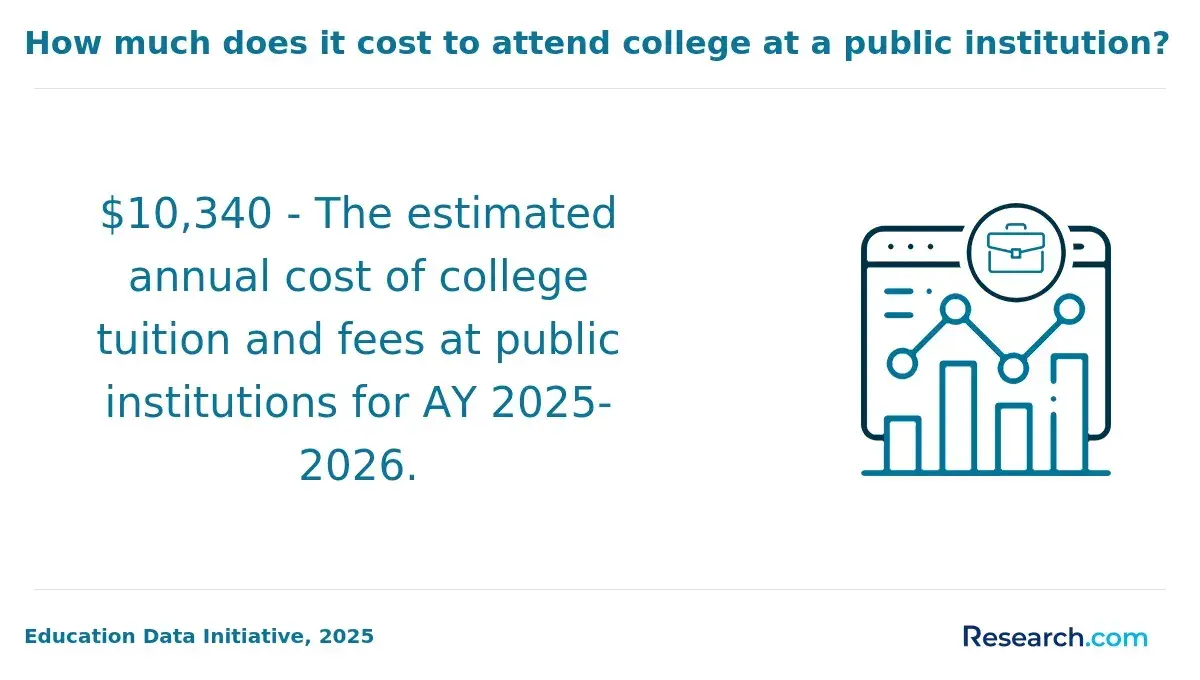
The cost of a business analytics degree and a finance degree can be similar, but the final price depends heavily on the school, degree level, residency status, delivery format, and financial aid. Students should compare total cost, not just published tuition.
For Business Analytics, elite universities typically charge between $45,000 and $85,000 annually for master's programs, with two-year on-campus tuition reaching up to $170,000. Mid-tier and regional schools often have total tuition costs from $70,000 to $140,000. Online Business Analytics degrees offer a more budget-friendly alternative, with entire programs averaging around $70,000.
Finance master's degrees at top private institutions generally fall in the $50,000 to $80,000 per year range for full-time, on-campus study. Public universities tend to offer lower rates, especially for in-state students, commonly in the $30,000 to $50,000 annual bracket. Online options in Finance can be even more affordable, sometimes costing less than $40,000 total tuition.
Students should also budget for living expenses, including housing, meals, insurance, and books, which can add $25,000 to $45,000 annually. Depending on the applicant, additional expenses may include application fees, standardized test fees, enrollment deposits, technology, commuting, relocation, and visa-related costs.
Cost factors to compare before enrolling
- Program format: Online programs may reduce relocation and housing costs, but students should still check technology fees and access to career services.
- Public vs private institution: Public universities may offer lower tuition, especially for in-state students.
- Program length: A shorter program may reduce living expenses, but only if the course load is manageable and the credential supports your goals.
- Employer support: Working professionals should check whether their employer offers tuition reimbursement or professional development funding.
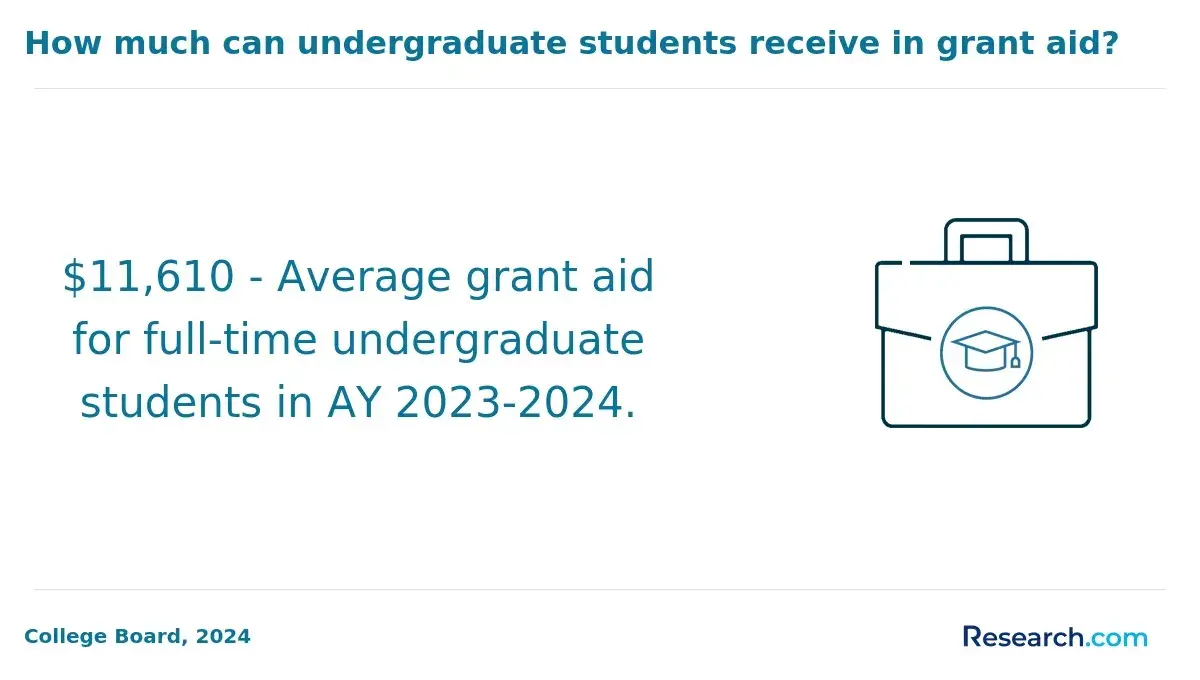
- Financial aid: Scholarships, assistantships, grants, and loans vary by institution and program competitiveness.
- Return on investment: Compare cost against likely career outcomes, location, internship access, alumni network, and placement support.
Financial assistance and scholarships are available in both disciplines, but availability varies significantly by school prestige and program competitiveness. Before committing, students should request a full cost of attendance estimate and compare it with realistic salary expectations, debt tolerance, and career goals.
How to choose between Business Analytics Degree Programs and Finance Degree Programs?
The best choice depends on the problems you want to solve, the tools you want to use, and the career environment you prefer. A finance degree is usually better if you want to work directly with investments, corporate finance, banking, budgeting, or financial planning. A business analytics degree is usually better if you want to work with data systems, dashboards, predictive models, and business performance across functions.
Choose business analytics if:
- You enjoy finding patterns in data and explaining what they mean.
- You want to build skills in Python, R, SQL, Tableau, Power BI, or similar tools.
- You are interested in roles such as data analyst, business analyst, business intelligence analyst, marketing analytics manager, or analytics consultant.
- You want flexibility across industries, including technology, retail, healthcare, logistics, consulting, and finance.
- You are comfortable learning technical tools that may change over time.
Choose finance if:
- You are interested in markets, investments, banking, corporate budgets, or financial strategy.
- You want to build skills in Excel-based financial modeling, valuation, accounting analysis, and risk assessment.
- You are considering roles such as financial analyst, investment banker, portfolio manager, financial advisor, or corporate finance associate.
- You want to understand how organizations raise, invest, and manage capital.
- You are comfortable working with financial statements, regulations, market information, and performance metrics.
Questions to ask before deciding
- Do I prefer analyzing broad business data or financial information specifically?
- Would I rather learn programming and data tools or valuation and investment models?
- Which internships are available through the programs I am considering?
- Do employers in my target industry prefer one degree, or do they value either with the right skills?
- Does the program include projects, career services, alumni connections, and employer partnerships?
- Can I afford the program without taking on debt that does not match my expected career path?
Students passionate about technology, data, and cross-department collaboration may find business analytics the stronger fit. Students motivated by financial markets, capital decisions, and economic planning may prefer finance. Both paths can be valuable, but the stronger choice is the one that matches your strengths and the work you are willing to do every day.
For additional career-fit perspective, review the top high paying introvert professions, which include many analytics and finance roles with strong compensation and job stability.
What Graduates Say About Their Degrees in Business Analytics Degree Programs and Finance Degree Programs
- : "Enrolling in the Business Analytics Degree Program stretched my analytical thinking to new heights. The hands-on projects with real business data were challenging but incredibly rewarding, allowing me to develop skills that are highly sought after in the industry. Since graduating, I've secured a role that offers excellent growth opportunities and a competitive salary. —Jake"
- : "The Finance Degree Program provided a unique blend of rigorous coursework and practical internships that gave me a clear view of the financial sector's fast-paced environment. Learning from experienced professionals and working through complex case studies prepared me well for my career in investment banking. I appreciate how the program's structure mirrors real-world challenges, making me confident in my skills. —Cesar"
- : "Reflecting on my time in the Business Analytics Degree Program, I value the program's emphasis on emerging technologies like machine learning and data visualization. These learning opportunities set me apart in my job market and helped me land a position in a top consulting firm. The economic outlook for analytics professionals is promising, and I feel well-equipped to navigate the evolving landscape. —Jackson"
Other Things You Should Know About Business Analytics Degree Programs & Finance Degree Programs
Yes, a Business Analytics degree can lead to careers in finance, particularly in roles that require strong data analysis skills, such as financial modeling, risk assessment, and portfolio management. Graduates often work in areas that combine finance knowledge with data-driven decision-making, including financial technology (FinTech) and quantitative analysis.
In 2027, a Business Analytics degree is generally better suited for data-driven roles. It focuses on data analysis, business intelligence, and quantitative skills essential for roles in data science, while Finance emphasizes financial principles and economics.
Finance graduates are commonly hired by banks, investment firms, insurance companies, and corporate finance departments across various industries. Business Analytics graduates find opportunities in technology companies, consulting firms, retail, marketing departments, and any organizations focused on data-driven strategy and operations. Many companies hire professionals from both backgrounds, depending on their specific analytical and financial needs.
References
- What Can You Do With A Degree In Finance? | Hult International Business School https://www.hult.edu/blog/what-can-you-do-with-a-degree-in-finance/
- Types of Finance Degrees | Accounting.com https://www.accounting.com/degrees/finance/
- Data Analytics vs Finance Master's Programs | Maryville Online https://online.maryville.edu/online-masters-degrees/business-data-analytics/resources/msbda-vs-msf/
- Business Analytics vs. Finance: Which Master’s Degree Is Right for You? | Freeman News https://freemannews.tulane.edu/2025/06/09/business-analytics-vs-finance-which-masters-degree-is-right-for-you
- What is Business Analytics? | University of Phoenix https://www.phoenix.edu/articles/business/what-is-business-analytics.html
- Roles and Responsibilities of a Business Analyst in 2025 https://www.edstellar.com/blog/business-analyst-roles-and-responsibilities
- What is an MSc in Finance? Definition, program, careers - IUM https://www.monaco.edu/en/what-is-an-msc-in-finance-definition-program-careers/
- Business and Financial Occupations : Occupational Outlook Handbook: : U.S. Bureau of Labor Statistics https://www.bls.gov/ooh/business-and-financial/
- MS in Finance, MS in Business Analytics, and MS in Management: Admissions in Three Flavors [Episode 582] https://blog.accepted.com/ms-in-finance-ms-in-business-analytics-and-ms-in-management-admissions-in-three-flavors-episode-582/
- Business Analyst vs Financial Analyst: Check Comparison https://www.knowledgehut.com/blog/business-management/business-analyst-vs-financial-analyst


