
2027 Can You Get Into a Data Science Program with a Low GPA? Admission Chances & Workarounds

Co-Founder and Chief Data Scientist
A low GPA makes admission to a data science program harder, but it does not automatically end your chances. Data science admissions committees usually care about evidence of quantitative readiness, programming ability, academic maturity, and fit for the program—not just one cumulative number on a transcript.
The challenge is that many competitive programs still use GPA as an important screening factor. Studies show that more than 70% of admitted students to competitive data science programs tend to have GPAs above 3.5. That means applicants with lower GPAs need a more deliberate strategy: choose programs carefully, address weaknesses directly, and provide stronger proof through recent coursework, projects, work experience, recommendations, or test scores when accepted.
This guide explains how GPA is evaluated in data science admissions, when a low GPA can be offset, and which practical steps can improve your application before you apply.
Key Things to Know About Admission Chances Into a Data Science Program with a Low GPA
- Highlighting relevant professional experience can offset a low GPA; 62% of data science programs value work history and projects as admission strengths.
- Completing additional coursework in statistics, programming, or data analysis through accredited platforms improves academic readiness and signals commitment.
- Strong letters of recommendation and a well-crafted personal statement explaining challenges and growth correlate with higher admission success in competitive data science programs.
What Is the Minimum GPA Required to Apply for a Data Science Program?
The minimum GPA required to apply for a data science program in 2026 is commonly between 2.5 and 3.0 on a 4.0 scale at many institutions. However, meeting the minimum only means your application may be reviewed. It does not mean you are competitive for admission.
More selective data science programs, especially research-intensive universities and specialized master’s programs, often expect applicants to have GPAs closer to 3.5 or higher. According to Peterson’s and U.S. News reports, the average GPA for admitted students into selective data science programs usually falls between 3.3 and 3.7.
Applicants with lower GPAs should look beyond the published minimum and study how each program evaluates academic readiness. In data science, committees often pay close attention to performance in math, statistics, computer science, and programming courses because those subjects are directly tied to success in the curriculum.
| GPA factor | Why it matters for data science admission |
| Overall GPA | Shows broad academic performance and may be used for initial screening. |
| STEM or quantitative GPA | Can matter more than the overall GPA if the program emphasizes statistics, calculus, linear algebra, programming, or machine learning preparation. |
| Recent GPA trend | Some schools recalculate GPA based only on the last 60 credit hours completed to better assess current academic ability. |
| Prerequisite grades | Strong grades in required courses can reassure committees that you are ready for graduate-level data science work. |
If your GPA is below the published minimum, contact the admissions office before applying. Ask whether the cutoff is strict, whether exceptions are considered, and whether additional coursework can strengthen your file. For students who need to rebuild their academic record before applying, a fast-track associates degree or targeted college-level coursework may help demonstrate recent academic improvement.
How Do Admissions Committees Evaluate Data Science Program Applicants with Low GPAs?
Admissions committees evaluate low-GPA applicants by asking a practical question: does the rest of the application show that the student can handle advanced data science coursework? GPA is important, but it is usually reviewed alongside academic trends, technical preparation, recommendations, projects, and professional experience.
For data science programs, the most persuasive applications show that the applicant has the quantitative foundation and work habits needed for a demanding curriculum. A low GPA is less damaging when the weak grades are older, unrelated to data science, or followed by clear improvement in relevant courses.
- Coursework rigor: Committees look for challenging classes in statistics, programming, calculus, linear algebra, databases, or computer science. Strong performance in difficult, relevant courses can carry more weight than easier coursework with higher grades.
- Positive academic trends: An upward trend in recent semesters signals maturity and improved study habits. This is especially useful when the applicant can explain what changed and show sustained improvement.
- Relevant data science activity: Research projects, internships, analytics work, coding portfolios, and independent projects can show applied ability that a transcript alone may not capture.
- Letters of recommendation: Strong recommendations from professors, supervisors, or technical leads can help validate that the applicant is capable, disciplined, and ready for graduate-level work.
- Statement of purpose: A focused statement can explain the GPA context without making excuses and connect the applicant’s experience to the program’s curriculum and career goals.
Nearly 40% of programs recognize this broader approach, according to recent GMAC surveys. Applicants can strengthen this part of the application by building proof of current skill, including through projects, employer-supported training, or certification programs that pay well when those credentials are relevant to analytics, programming, or data science.
Can Professional Experience Offset a GPA Below the Data Science Program's Minimum?
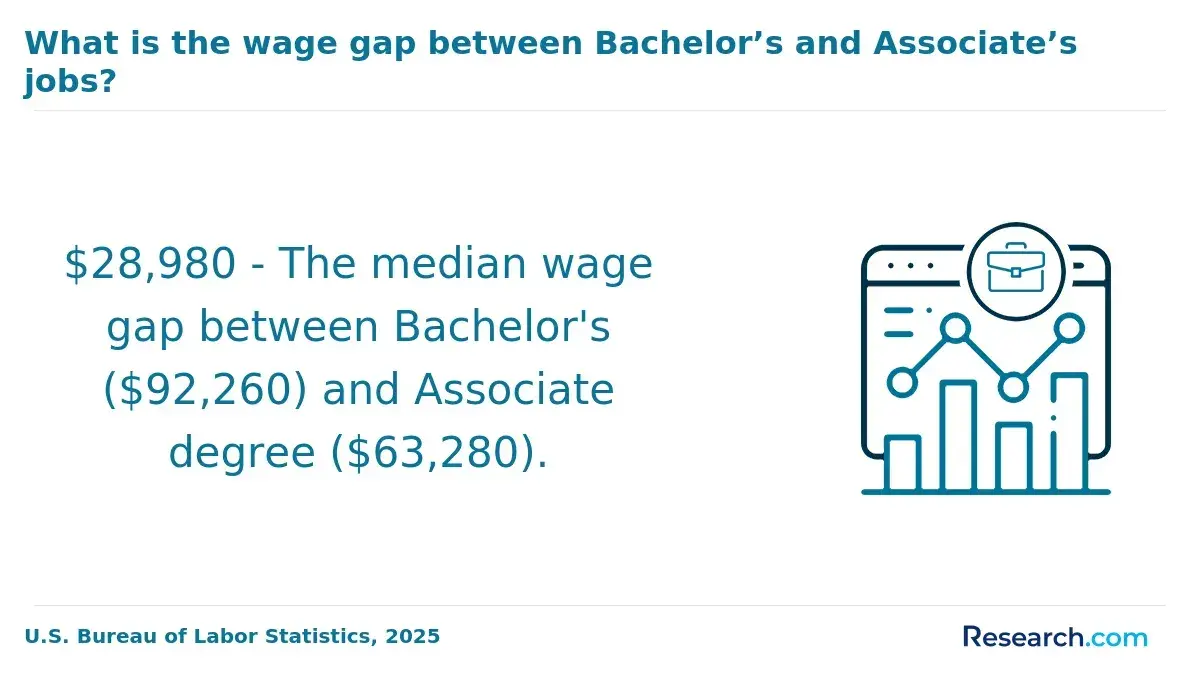
Professional experience can help offset a low GPA, especially when the work is directly connected to analytics, software development, statistics, machine learning, business intelligence, or data engineering. It is most effective when the applicant can show measurable responsibilities and technical outcomes rather than simply listing job titles.
Experience does not always override a strict institutional GPA cutoff. Some programs must follow minimum standards set by the graduate school. But when a program uses holistic review, relevant work history can provide strong evidence that the applicant has already performed data-related tasks in a professional setting.
- Leadership roles: Leading data-driven initiatives, managing analysts, or coordinating technical projects can show communication, planning, and accountability. These qualities matter in graduate programs that include team-based projects or capstones.
- Industry experience: Work in analytics, software development, machine learning, database administration, or reporting can demonstrate familiarity with real-world data problems and tools.
- Technical skills: Hands-on use of programming languages, statistical software, visualization tools, cloud platforms, or data pipelines can help prove readiness beyond classroom performance.
- Documented impact: Admissions committees respond better to specific examples, such as building dashboards, improving a model, automating a workflow, or supporting business decisions with data.
According to recent data science education trends, nearly 40% of programs place significant emphasis on work experience when GPAs are below the standard. Applicants should make that experience easy to evaluate by including a concise resume, project links when appropriate, and a statement of purpose that connects professional work to the program’s academic requirements.
Can Standardized Test Scores Help Offset a Low GPA for Data Science Admission?
Strong standardized test scores can help offset a low GPA when the program accepts or considers them. In data science admissions, quantitative performance is usually the most relevant because it provides another signal of readiness for statistics, optimization, machine learning, and technical coursework.
Test scores are most useful when they answer a specific concern raised by the transcript. For example, if an applicant has weak older math grades but earns a strong quantitative score, the committee may view the score as evidence of current ability. However, test scores rarely erase a low GPA by themselves. They work best alongside recent coursework, projects, recommendations, and a clear academic plan.
- Score thresholds: Some programs set minimum test expectations, especially for quantitative sections, to confirm that applicants have the analytical foundation needed for data science.
- Subject relevance: Math-intensive performance is usually more persuasive than scores in areas unrelated to the curriculum. Evidence tied to statistics, computing, or quantitative reasoning is especially valuable.
- Percentile rankings: Scores above the 80th percentile can help demonstrate stronger academic potential compared with the broader test-taking pool.
- Consistency with the application: Test results are more convincing when they align with recent grades, technical projects, and recommendations rather than standing alone as the only strong element.
Before spending time and money on an exam, verify the program’s testing policy. If scores are optional, submit them only if they strengthen your profile. If your score is average or weak, your application may benefit more from prerequisite coursework, a portfolio, or stronger professional evidence.
Can Completing Prerequisite Courses for a Data Science Program Improve Your Admission Chances with a Low GPA?
Yes. Completing prerequisite courses can improve admission chances for low-GPA applicants because it gives committees recent, relevant evidence of academic readiness. This is especially important when the low GPA comes from older coursework or from classes unrelated to data science.
Prerequisites are not just a box to check. They are a way to show that you can succeed in the subjects that data science programs rely on most: statistics, calculus, linear algebra, programming, databases, and sometimes probability or discrete mathematics.
- Show mastery of core subjects: Strong grades in linear algebra, calculus, statistics, and programming give admissions committees concrete evidence that you can handle technical coursework.
- Improve the relevant academic record: A stronger recent record in data science prerequisites can offset concerns about a weaker cumulative GPA, especially if the program reviews your most recent or quantitative coursework separately.
- Demonstrate commitment: Taking extra coursework before applying shows that you understand the field’s academic demands and are willing to close preparation gaps.
- Reduce the risk of conditional admission: Applicants who complete prerequisites in advance may be less likely to need remedial or bridge coursework after admission.
One graduate of a data science program used this approach after applying with a sub-3.0 GPA. She enrolled in targeted prerequisites to rebuild her academic profile and described the process as demanding but useful: “It was challenging balancing the workload, but each course helped me rebuild confidence in my technical skills.”
By the time she reapplied, the improved grades gave the admissions committee stronger evidence of readiness. She called the coursework “a meaningful investment that ultimately made the difference.” For low-GPA applicants, the lesson is clear: recent performance in the right classes can be more persuasive than a general promise to improve.
Can Applying Early Improve Your Chances of Getting Into a Data Science Program If Your GPA Is Low?
Applying early can help a low-GPA applicant, but only if the application is already strong. An early weak application is still weak. The advantage comes from giving the admissions committee a complete, polished file before deadlines become crowded and before program seats are more limited.
Early application is most useful when you have already addressed the main GPA concern. That may mean finishing prerequisite courses, obtaining strong recommendations, preparing a technical portfolio, or writing a clear statement that explains academic growth without sounding defensive.
- More available seats: Many programs have more flexibility earlier in the cycle because fewer admission decisions have been finalized.
- More time for review: Earlier files may receive closer attention, especially when the applicant’s profile requires context beyond GPA.
- Time to resolve missing items: Applying early gives you more room to correct transcript issues, recommendation delays, or documentation questions.
- Better planning for alternatives: If the result is not favorable, you still have time to apply to other programs, complete more coursework, or consider bridge options.
Do not apply early simply to beat other applicants. Apply early when your materials are complete and your strongest evidence is ready. If you are still waiting on a key grade in statistics, a major project, or a stronger recommendation, a later deadline may be the better choice.
Students comparing long-term academic pathways and costs may also want to research cheap phd programs, especially if they are considering advanced study beyond a master’s-level data science credential.
Can You Get Conditional Admission to a Data Science Program with a Low GPA?
Yes. Some data science programs offer conditional admission to applicants who do not fully meet the standard GPA requirement but show enough promise to be considered. Conditional admission allows the school to admit the student with specific academic requirements that must be met before full standing is granted.
This pathway can be useful for applicants with strong professional experience, recent academic improvement, or clear technical potential. However, it should be taken seriously. Conditional admission is not a guaranteed pass into the program; it is a probationary opportunity to prove readiness.
- Bridge or prerequisite coursework: Students may be required to complete foundational courses in programming, statistics, mathematics, or related subjects before moving into advanced data science classes.
- Minimum grade requirements: Programs often require a specific grade, often a B or higher, during initial coursework. Falling below that standard may prevent the student from continuing.
- Probationary period: Some programs monitor academic performance closely during the first term or first set of courses before granting full admission.
- Advising requirements: Conditional students may need to meet regularly with an advisor to choose courses carefully and stay on track.
Before accepting conditional admission, ask what happens if you do not meet the conditions, whether financial aid applies during the conditional period, and whether conditional credits count fully toward the degree. These details can affect both cost and graduation timeline.
Can Starting in a Related Field and Transferring to the Data Science Program Help Low-GPA Applicants?
Starting in a related field can help low-GPA applicants if it gives them a realistic way to prove academic readiness before entering a data science program. Common related areas include computer science, statistics, applied mathematics, information systems, business analytics, or engineering.
This route works best when the related program shares foundational coursework with data science. The goal is not to avoid the admissions standard but to create a stronger academic record in subjects that matter to the data science curriculum.
- Demonstrating relevant skills: Strong performance in programming, statistics, linear algebra, databases, or algorithms can reassure admissions committees that the applicant is prepared.
- Improving the academic record: Completing rigorous related coursework can raise or strengthen the applicant’s recent academic profile.
- Aligning with program expectations: Coursework in mathematics, statistics, or computer science can fill gaps that may have made the original application less competitive.
- Gaining practical experience: Research, analytics projects, or technical assignments in the related field can provide portfolio evidence for a later transfer or reapplication.
One graduate described initially enrolling in computer science because his GPA was not strong enough for direct admission to data science. The transfer process was challenging, but succeeding in the core courses helped him build a stronger case. “It was tough knowing I had to prove myself all over again, but succeeding in those core classes gave me confidence,” he said.
Before choosing this path, confirm whether credits will transfer, whether internal transfers are competitive, and whether the data science program reserves seats for transfer students. Without that information, you may spend time and money on coursework that does not lead to your intended program.
Are There Scholarships for Data Science Program Applicants to Help Improve Their GPA?
Scholarships do not improve a GPA directly, but they can make it easier for applicants to take the courses and use the academic support needed to strengthen their record. For low-GPA data science applicants, funding can help cover prerequisite classes, retakes, tutoring, software, bootcamps, or part-time enrollment that allows more focused study.
Several funding options can indirectly support GPA improvement before applying to a data science program:
- Merit-recovery scholarships: These awards may support students who show potential despite lower grades. Funds can help pay for retaking courses or completing additional classes that strengthen the academic profile.
- Need-based grants: These grants may reduce financial pressure and help students access tutoring, academic support services, or required course materials.
- Academic support program funding: Some institutions and nonprofit organizations offer support for preparatory coursework or bootcamps in statistics, math, programming, or related areas.
- Institutional aid: Colleges may offer internal grants, tuition discounts, or payment options for students completing prerequisites or certificate coursework before applying to a degree program.
Financial aid recipients who use targeted academic support are statistically 15% more likely to improve their GPA over a semester. For applicants trying to rebuild their academic standing at a lower cost, comparing low tuition online colleges can be a practical way to complete additional coursework without taking on unnecessary debt.
When researching financial aid options for low GPA Data Science candidates, focus on funding that supports a clear academic plan. The strongest use of scholarship money is coursework or support that produces transcript evidence admissions committees can evaluate.
Can Mentorship or Academic Advising Help Overcome GPA Barriers for Data Science Program Applicants?
Mentorship and academic advising can help low-GPA applicants build a stronger, more strategic application. Advisors cannot erase grades, but they can help students choose the right courses, explain academic weaknesses appropriately, and identify programs where holistic review is more likely.
Good advising is especially valuable because low-GPA applicants often make avoidable mistakes: applying only to highly selective programs, ignoring prerequisite gaps, writing defensive personal statements, or submitting applications before they have new evidence of improvement.
- Personalized study strategies: Mentors can help students focus on high-impact subjects such as statistics, programming, and machine learning rather than spreading effort across unrelated courses.
- Course selection guidance: Advisors can recommend prerequisite or supplemental courses that show readiness for data science and produce useful transcript evidence.
- Academic accountability: Regular check-ins can help students stay on schedule, complete assignments, and avoid repeating the habits that contributed to a lower GPA.
- Application enhancement: Mentors can help applicants present internships, work experience, projects, and academic growth clearly and credibly.
- Program targeting: Advisors can help identify schools where the applicant’s strengths match the curriculum and admissions philosophy.
Research shows that academic advising benefits for low GPA data science applicants are measurable. The Journal of STEM Education (2022) found that students engaged with mentors improved their GPA by 25% within one academic year and gained greater confidence when applying to competitive programs.
Students thinking about long-term career fit after completing a data science program may also benefit from exploring the best careers for introverts, especially if they prefer analytical, independent, or project-based work environments.
What Graduates Say About Getting Into a Data Science Program with a Low GPA
- : "Even with a low GPA, I applied strategically to programs that valued professional experience and potential rather than grades alone. The cost hovered near $18,000, which felt reasonable for the specialized training I received. Professionally, the degree gave me credibility and advanced skills that expanded my opportunities in a competitive job market. — Walker"
- : "Getting into a data science program with a less-than-ideal GPA was intimidating, so I focused on building skills through online courses and preparing carefully for interviews. The average tuition was affordable enough to avoid crushing debt, which made the process less stressful. Looking back, the knowledge and credential opened doors to roles I had not imagined before. — Casen"
- : "Despite my lower undergraduate GPA, I earned a spot in a reputable data science degree program by emphasizing my work experience and interest in analytics. The program cost was manageable compared to other tech fields, averaging around $20,000, and it felt like a worthwhile investment. Since graduating, I have been able to lead data projects that influence business decisions. — Mordechai"
Other Things You Should Know About Data Science Degrees
In 2027, strong personal projects are vital for applicants with low GPAs. They showcase practical skills, demonstrate initiative, and provide tangible proof of passion and expertise. Such projects can significantly bolster applications, highlighting potential beyond academic scores.
Professional experience is crucial for applicants with low GPAs seeking admission to data science programs in 2027. It demonstrates practical skills and industry knowledge, often outweighing academic shortcomings. Highlighting relevant work experiences can significantly enhance an applicant’s portfolio, showcasing their ability to apply data science concepts effectively.
In 2027, standardized test scores such as the GRE can significantly bolster an application for data science programs if an applicant's GPA is low. High scores may demonstrate aptitude and readiness, offsetting concerns regarding academic performance reflected by the GPA.
References
- Universities accepting low GPA in USA: Complete Guide https://gradright.com/universities-accepting-low-gpa-in-usa/
- How to Get a Data Science Internship With No Experience https://www.theforage.com/blog/careers/data-science-internship
- Data Science FAQs https://www.sfu.ca/datascience/contacts
- Data Scientist https://www.mastersindatascience.org/careers/data-scientist/
- Why You Should Submit Scores to Test-Optional Schools https://www.c2educate.com/submit-scores-test-optional-schools/
- How To Get Into Grad School With A Low GPA https://www.accreditedschoolsonline.org/resources/grad-school-low-gpa/
- Transferring Colleges with Bad Grades https://mycollegeguide.org/colleges-that-accept-low-gpa-transfer-students/
- Low GPA but High SAT/ACT: Best Strategies for Success https://www.jamboreeindia.com/know-how/low-gpa-but-high-sat-act-what-should-you-do
- Get Into Grad School With a Low Undergrad GPA https://toptieradmissions.com/get-into-grad-school-with-a-low-undergrad-gpa/


