2027 Cheapest and Shortest Online Mechanical Engineering Degree Programs That Pay Well: Cost, Duration, and Salary Outlook

Co-Founder and Chief Data Scientist
Choosing an online mechanical engineering degree usually comes down to three questions: Can you afford it, can you finish it fast enough, and will employers take it seriously? For working adults, transfer students, military learners, and first-time undergraduates trying to limit debt, the best option is not simply the lowest advertised tuition. It is the program that combines legitimate accreditation, realistic completion timelines, strong engineering coursework, and enough flexibility to stay enrolled.
Online enrollment for engineering degrees has grown by over 20% in recent years, reflecting stronger demand for flexible pathways into technical fields. Still, mechanical engineering is not an easy degree to compress. Students should expect math-heavy courses, design projects, lab components, simulation software, and disciplined weekly study time.
This guide explains what cheap and short online mechanical engineering degree programs typically cost, how financial aid works, what accelerated formats look like, which skills students gain, and how to judge whether a fast online program is credible. It also covers salary potential, job placement considerations, and practical selection criteria so you can compare programs with less guesswork.
Key Benefits of the Cheapest and Shortest Online Mechanical Engineering Degree Programs That Pay Well
- Lowest tuition in online mechanical engineering programs reduces student debt, with median costs around 40% less than traditional on-campus degrees, making education more accessible.
- Accelerated degree options typically shorten completion to 2-3 years, enabling faster entry into the workforce compared to the usual 4-year timeline.
- Mechanical engineers earn a median annual salary of $90,160, ensuring that affordable, quick online degrees offer a strong return on investment in a growing job market.
How Much Does an Affordable Online Mechanical Engineering Degree Typically Cost?
An affordable online mechanical engineering degree usually costs less than many campus-based alternatives, but the final price depends on residency rules, transfer credits, lab requirements, technology fees, and whether the school charges online students a flat rate. Recent data shows online tuition per credit hour typically ranges from $300 to $700, so students should compare total program cost rather than focusing only on the per-credit figure.
For a full bachelor’s degree, the cost of an affordable online mechanical engineering degree generally falls between $15,000 and $40,000. Most programs require approximately 120 to 130 credit hours, which means even small differences in per-credit tuition can change the total bill substantially.
- Tuition range: Expect total tuition between $15,000 and $40,000 for many affordable bachelor’s options. Public universities often cost less for in-state students, while private institutions may use one online rate for all learners.
- Cost per credit hour: Most programs charge between $300 and $700 per credit hour. Specialized engineering courses, labs, software-supported classes, or proctored exams may increase the effective cost.
- Online vs. on-campus costs: Online programs may reduce costs tied to housing, commuting, parking, and some campus services. According to the National Center for Education Statistics, these reductions can create meaningful savings for cost-conscious students, although online learners may still pay technology or distance-learning fees.
- Additional expenses: Budget for textbooks, engineering software, computer hardware, calculators, virtual lab tools, exam proctoring, and possible short residencies or in-person lab experiences. A low tuition rate is less useful if required fees are high.
- Transfer-credit value: Students with prior college credit, military training, or completed general education courses may reduce both cost and time. Always ask for an official transfer evaluation before enrolling.
Students looking at accelerated options should calculate whether a shorter timeline actually lowers the total price. A faster program may reduce living expenses and help students return to full-time earnings sooner, but it can also require heavier course loads that are difficult to manage while working.
For broader affordability comparisons in online education, students may also review Research.com’s guide to affordable online MBA programs, especially to understand how tuition structures and online fees vary across degree types.
Can You Get Financial Aid in the Cheapest Online Mechanical Engineering Programs?
Yes. Students in the cheapest online mechanical engineering programs may qualify for financial aid if the institution is properly accredited and participates in eligible aid programs. Approximately 53% of undergraduate online students benefit from some form of financial assistance, which can make a major difference when tuition typically ranges from $200 to $400 per credit in lower-cost options.
The most important first step is completing the FAFSA and confirming that the school is eligible for federal student aid. Students should also verify whether the mechanical engineering program itself meets professional expectations, especially if they plan to pursue engineering licensure later.
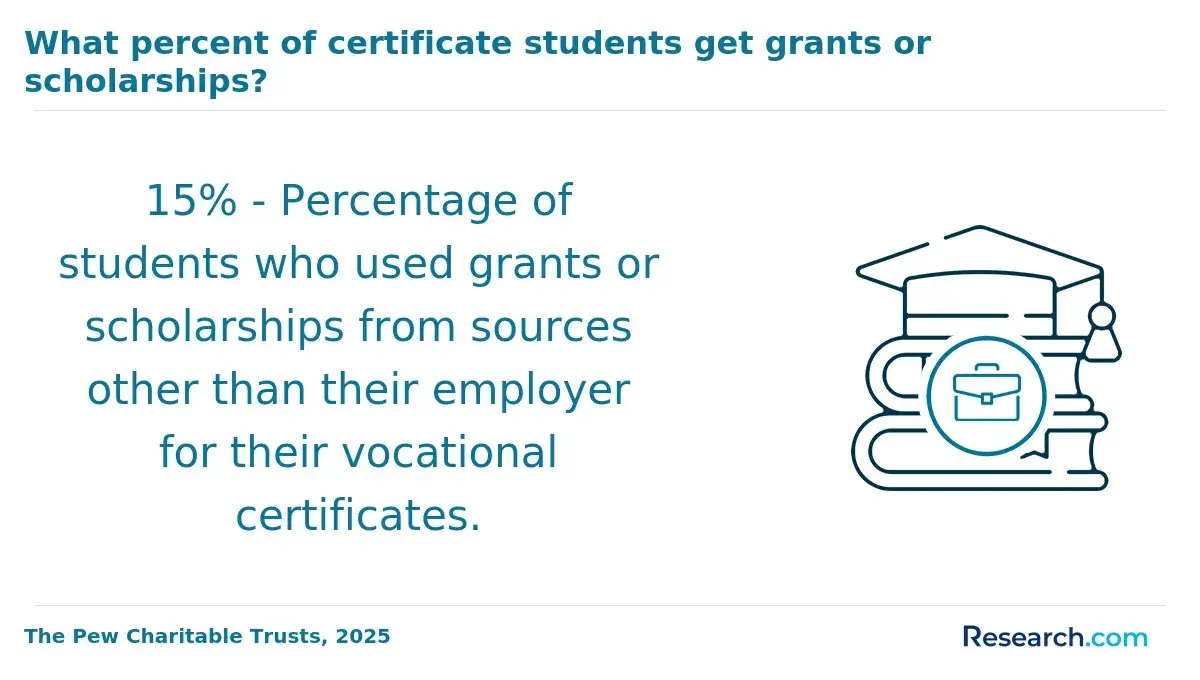
- Federal grants: Need-based aid such as the Pell Grant does not need to be repaid. Grant eligibility depends on financial need, enrollment status, and federal aid rules.
- Scholarships: STEM, engineering, first-generation, transfer-student, military, and employer-sponsored scholarships can reduce out-of-pocket costs. Some awards are competitive and require a minimum GPA, essays, recommendations, or documented engineering interest.
- Federal and private student loans: Loans can fill funding gaps but must be repaid with interest. Federal loans usually offer borrower protections that private loans may not provide, so students should compare repayment terms carefully.
- Employer tuition assistance: Working adults should check whether their employer offers tuition reimbursement, direct billing, or professional development funding. Some companies require employees to remain with the organization for a set period after receiving assistance.
- State and institutional aid: Public universities may offer state grants, transfer scholarships, or online learner discounts. Availability varies by residency and program policy.
Financial aid can improve return on investment, but it does not make every program a good choice. Students should avoid enrolling only because aid is available. A low-cost degree should still offer credible engineering coursework, access to faculty, practical design work, and transparent career outcomes.
Students comparing aid models across online professional programs may also find Research.com’s resource on CACREP accredited online counseling programs useful for understanding how accreditation and aid eligibility interact in another regulated field.
What Are the Shortest Online Mechanical Engineering Degree Programs?
The shortest online mechanical engineering degree programs are typically accelerated bachelor’s pathways designed for students who can handle a heavier academic pace. Nearly 40% of students now prefer online programs that allow quick completion, but mechanical engineering remains rigorous because it requires calculus, physics, materials science, thermodynamics, mechanics, design, and applied problem-solving.
Many accelerated programs aim to condense the standard four-year path into about 2.5 to 3 years. This faster timeline is most realistic for students who enter with transfer credits, take courses year-round, or can study full time.
- Fast-paced semesters: Accelerated courses often run in shorter terms with fewer long breaks. This structure can help students graduate in roughly 2.5 to 3 years, but it requires consistent weekly work and little room for falling behind.
- Modular or competency-based formats: Some programs let students progress by proving mastery rather than sitting through a fixed semester schedule. This can shorten completion time for students who already understand certain technical concepts, but engineering competencies still require careful assessment.
- Transfer-friendly pathways: The fastest routes often serve students who have already completed general education, math, science, or lower-division engineering courses. Without transfer credit, the shortest advertised timeline may be difficult to achieve.
- Year-round enrollment: Programs with summer, winter, or multiple start dates can help students maintain momentum and reduce idle time between terms.
Many programs require approximately 120 credit hours, and accelerated tuition costs often range from $300 to $600 per credit. Finishing sooner can reduce total tuition exposure and minimize lost income from time spent out of the workforce. Mechanical engineering roles offer median salaries above $90,000 annually, and graduation rates for accelerated paths often exceed 65%, which helps explain why fast-track programs appeal to career-focused students.
Before choosing the shortest option, confirm whether labs, exams, senior design projects, or internships require in-person attendance. A program may be described as online while still requiring limited campus visits or approved local lab arrangements.
Students comparing affordability in other online fields may review Research.com’s guide to the most affordable online psychology degree programs to see how low-cost degree structures can differ outside engineering.
What Is the Typical Format of the Shortest Online Mechanical Engineering Degree Programs?
The shortest online mechanical engineering programs usually use compressed terms, structured weekly deadlines, and a mix of recorded and live instruction. A recent study found that over 60% of accelerated engineering classes use modular learning, which helps organize complex technical material into shorter, focused units.
- Term length: Courses typically last 5 to 8 weeks instead of traditional 15-week semesters. This format can support degree completion in about two to three years instead of four, but each course moves quickly.
- Course delivery: Fully online formats often include recorded lectures, readings, simulations, problem sets, discussion boards, digital labs, and occasional live sessions. Engineering students should expect more structured work than in many self-paced online courses.
- Weekly workload: Students usually dedicate 15 to 20 hours per week, and that estimate may rise during advanced math, mechanics, design, or lab-heavy courses. Working adults should be realistic about how many courses they can take at once.
- Student interaction: Collaboration often happens through discussion forums, video meetings, group design projects, shared modeling files, virtual office hours, and instructor feedback. Strong online programs make interaction intentional rather than optional.
- Assessment style: Students may complete timed exams, proctored tests, CAD assignments, lab reports, design reviews, and capstone projects. A credible program should test both theory and applied engineering judgment.
The best accelerated formats are not simply shorter. They are carefully sequenced so students build from foundational math and science into engineering analysis, modeling, design, and project-based work.
How Do Online Classes Work for Accelerated Mechanical Engineering Degrees?
Online classes in accelerated mechanical engineering degrees combine flexibility with strict pacing. Students may watch lectures on their own schedule, but assignments, exams, design milestones, and lab activities usually follow firm deadlines. The format works best for learners who can study several times per week rather than waiting until the end of the term.
- Asynchronous and synchronous learning: Many courses combine recorded lectures and self-paced materials with scheduled live sessions, office hours, or project meetings. The asynchronous portion provides flexibility, while live interaction helps students ask questions and work through difficult engineering concepts.
- Condensed course timelines: Instead of typical 15-week semesters, accelerated courses usually run for 6 to 8 weeks. Students cover the same core material in less time, so missing even one week can create a serious backlog.
- Regular assignment pacing: Weekly problem sets, quizzes, lab reports, simulations, and project checkpoints keep students moving. This structure can help prevent procrastination, but it requires strong calendar management.
- Instructor and peer interaction: Communication usually occurs through learning platforms, email, discussion boards, video conferencing, and collaborative project tools. Timely feedback matters because errors in math, modeling, or design assumptions can compound quickly.
- Virtual labs and software: Students may use CAD platforms, finite element analysis tools, simulation software, remote lab kits, or institution-provided applications. Before enrolling, confirm whether the school supplies licenses or expects students to buy them.
- Time efficiency benefits: Flexible access plus structured pacing can reduce total time in school. Many accelerated students finish their degrees within 2 to 3 years, significantly faster than the traditional 4-year route.
The main trade-off is intensity. Accelerated online classes can be convenient, but they are not light. Students who work full time should ask academic advisors for sample weekly schedules before committing to a heavy course load.
What Skills Do Students Gain from a Shortest-Track Online Mechanical Engineering Degree?
A shortest-track online mechanical engineering degree should build the same core engineering foundation as a traditional program, but in a more compressed format. Students gain technical, analytical, and professional skills that support work in manufacturing, product design, energy, aerospace, automotive, robotics, and related industries.
- Technical competencies: Students develop skills in computer-aided design, thermodynamics, materials science, mechanics, manufacturing processes, and simulation software. Proficiency in tools such as CAD and finite element analysis can strengthen employability in technical roles.
- Engineering analysis: Coursework trains students to use mathematics, physics, and engineering principles to evaluate systems, estimate performance, identify constraints, and compare design alternatives.
- Problem-solving under pressure: Accelerated courses require students to diagnose complex problems quickly, test assumptions, and revise solutions based on data, calculations, and feedback.
- Design and project execution: Students often complete design assignments, modeling tasks, lab reports, and capstone projects that require planning, documentation, testing, and iteration.
- Communication skills: Online teamwork, technical reports, presentations, and peer collaboration help students explain engineering decisions clearly to both technical and nontechnical audiences.
- Time management and professionalism: Managing a compressed course load builds discipline, prioritization, and accountability. These habits matter in engineering workplaces where deadlines, safety, cost, and performance all intersect.
Students should review course descriptions carefully. A strong program should not skip essential engineering content simply to finish faster. The goal is acceleration through efficient delivery, not reduced academic depth.
Are Cheap and Fast Online Mechanical Engineering Degree Programs Considered Legitimate?
Cheap and fast online mechanical engineering degree programs can be legitimate, but only if they meet recognized academic and professional standards. Low tuition or an accelerated schedule is not automatically a warning sign. The concern is whether the program has credible accreditation, qualified faculty, sufficient engineering rigor, and a curriculum that supports employment or licensure goals.
Students should evaluate legitimacy before applying, not after enrolling.
- Accreditation: Look for institutional accreditation and, when relevant, programmatic accreditation from ABET. ABET accreditation is especially important for students who may later pursue Professional Engineer licensure or roles where employers expect an accredited engineering degree.
- Faculty credentials: Instructors should have advanced degrees, engineering experience, research expertise, or relevant industry backgrounds. Faculty access also matters in an online format.
- Curriculum quality: A credible mechanical engineering program covers core areas such as calculus-based physics, statics, dynamics, thermodynamics, fluid mechanics, materials, machine design, controls, CAD, and engineering design.
- Lab and design components: Mechanical engineering is applied. Legitimate programs should explain how students complete labs, simulations, experiments, and senior design or capstone work.
- Licensing eligibility: Students interested in engineering licensure should confirm whether the degree supports the educational requirements in their state. Licensure rules vary, and not every online engineering-related program leads to the same eligibility.
- Industry recognition: Review graduate employment outcomes, employer partnerships, alumni roles, and salary data when available. A legitimate program should be transparent about student outcomes.
- Red flags: Be cautious of schools that promise unusually easy completion, avoid naming accreditors, offer vague engineering coursework, or provide no clear faculty and career information.
The safest choice is a program that is both affordable and verifiably rigorous. Students should never sacrifice accreditation or licensure alignment just to save a few months or reduce tuition.
What Are the Highest-Paying Roles for Online Mechanical Engineering Degree Graduates?
Online mechanical engineering degree graduates can qualify for many of the same roles as campus graduates when the degree is from a credible, accredited institution and the student has developed strong technical skills. Pay depends on industry, location, experience, specialization, licensure, and the complexity of the work.
Several career paths offer strong earning potential for graduates with mechanical engineering training.
- Mechanical Design Engineer: Mechanical design engineers create, test, and improve mechanical components, products, and systems. They often work with CAD tools, prototypes, manufacturing teams, and performance requirements in industries such as automotive, industrial equipment, consumer products, and advanced manufacturing.
- Aerospace Engineer: Aerospace engineers work on aircraft, spacecraft, propulsion systems, defense systems, and related technologies. These roles often require advanced analysis, systems thinking, and collaboration with large engineering teams. Median salaries typically fall between $106,000 and $120,000.
- Petroleum Engineer: Petroleum engineers apply engineering principles to improve oil and gas extraction, drilling systems, production methods, and field operations. Market demand, geography, and specialized expertise can push average annual salaries close to $130,000.
- Manufacturing Engineer: Manufacturing engineers improve production systems, tooling, quality control, automation, and process efficiency. Graduates with strong CAD, materials, and operations knowledge may find opportunities in plants, suppliers, and advanced manufacturing environments.
- Robotics or Automation Engineer: These professionals work with mechanical systems, sensors, controls, actuators, and automated equipment. Mechanical engineering graduates may need additional experience in programming or controls to compete for these roles.
The U.S. Bureau of Labor Statistics highlights that mechanical engineers earn a median wage of about $95,000 annually, with experienced professionals exceeding $140,000. Online mechanical engineering degree programs, often costing between $300 and $700 per credit, may offer an accelerated pathway to enter these lucrative roles within two years.
Students should treat salary data as a planning benchmark, not a guarantee. A graduate’s actual pay will depend on experience, internships, portfolio quality, location, industry, and whether the role requires licensure or specialized technical skills.
For a broader comparison of salary potential by field, review Research.com’s guide to high paying degrees.
What Is the Job Placement Rate for Online Mechanical Engineering Graduates?
Job placement rates for online mechanical engineering graduates can be strong when the program is accredited, respected by employers, and connected to industry opportunities. Recent data shows that job placement rates for these graduates often fall between 70-90% within six months of graduation, but students should always ask how each school defines and measures placement.
- Program reputation and accreditation: Employers are more likely to trust degrees from recognized, accredited institutions. Accreditation also matters for students who may need licensure eligibility or graduate school admission later.
- Industry demand: Mechanical engineers work in aerospace, automotive, manufacturing, energy, robotics, defense, and renewable energy. The U.S. Bureau of Labor Statistics forecasts a 7% growth in mechanical engineering employment from 2022 to 2032, supporting continued demand for qualified graduates.
- Internships and practicum experience: Practical experience can significantly improve job readiness. Look for programs that help online students access internships, co-ops, local lab options, industry projects, or employer-sponsored capstones.
- Alumni networks and career services: Resume support, interview preparation, employer events, job boards, alumni mentoring, and career coaching can help students move from graduation to employment faster.
- Student initiative: Placement rates are not automatic outcomes. Students who build portfolios, complete projects, pursue internships, learn relevant software, and network early often have stronger prospects.
Cost-conscious students and career changers should weigh placement support alongside tuition and program length. Typical degrees take 2.5 to 4 years and cost between $300 and $600 per credit hour. The strongest employment outcomes for accelerated mechanical engineering degrees usually come from programs that combine affordable tuition, credible academics, practical experience, and active career services.
Students seeking a balance of cost and quality can also compare affordable online colleges that accept FAFSA.
How Do You Choose the Best Cheap Online Mechanical Engineering Degree Program?
To choose the best cheap online mechanical engineering degree program, compare total value rather than tuition alone. A low-cost program is only worthwhile if it provides recognized credentials, rigorous engineering training, realistic scheduling, and career support.
Use the following criteria before applying.
- Accreditation: Confirm institutional accreditation and determine whether the program is recognized by ABET. This is one of the most important checks for students interested in engineering licensure, employer recognition, or graduate study.
- Curriculum quality: Review whether the degree covers thermodynamics, materials science, fluid mechanics, mechanics, CAD, manufacturing, controls, design, and capstone work. Avoid programs that use broad engineering technology language if your goal is a mechanical engineering role requiring a traditional engineering degree.
- Program length: Shorter degree paths can reduce cost, especially when they accept transfer credit or prior learning. Typical programs range from three to five years depending on pacing, course availability, and student enrollment intensity.
- Total cost: Add tuition, fees, books, software, lab expenses, travel, proctoring, and equipment. A program with a slightly higher tuition rate may be cheaper overall if it accepts more credits or includes required software.
- Lab and hands-on requirements: Ask how online students complete labs, design work, and applied projects. Mechanical engineering requires more than lecture-based coursework.
- Student support: Look for tutoring, advising, technical support, library access, faculty office hours, writing help, and career services built for online learners.
- Career outcomes: Review graduation rates, employment statistics, internship access, employer partnerships, and alumni roles. Strong career support can help graduates pursue mechanical engineering roles with median earnings around $95,300 annually.
- Schedule fit: Accelerated programs require discipline. Before enrolling, compare weekly workload expectations with your work, family, and financial responsibilities.
A practical approach is to shortlist accredited programs first, eliminate any that do not support your career or licensure goals, and then compare total cost and completion time. The cheapest program is not always the best bargain if it limits your employment options later.
What Graduates Say About Their Cheapest and Shortest Online Mechanical Engineering Degree
- : "Finding an affordable and accelerated online mechanical engineering degree changed my options. At just around $15,000 total, it fit my budget and allowed me to complete the program in under two years. The coursework helped me build essential skills quickly and supported a promotion that moved my career forward. — Avery"
- : "I chose an online mechanical engineering program because it balanced cost and time well, averaging about $12,000 to finish in a condensed timeline. Looking back, the fast-track format helped me gain focused technical training without taking on heavy debt while I established myself in the engineering field. — Diem"
- : "Pursuing a short and affordable mechanical engineering degree online was a strategic way to advance without leaving my job. Costing roughly $10,000, the program offered an intensive curriculum that updated my industry skills and improved my credibility within my company. — Jorie"
Other Things You Should Know About Mechanical Engineering Degrees
Students should compare program accreditation, faculty qualifications, curriculum relevance, and student reviews. Additionally, researching graduate outcomes, like employment rates and average starting salaries, provides insight into the program's value. Engaging with alumni and academic advisors can also offer practical perspectives on costs and benefits.
In 2027, students should compare tuition fees, accreditation status, average graduate salaries, and program length to evaluate cost-effectiveness. It's beneficial to consider internship opportunities and industry partnerships offered by the program, which can enhance employability and justify costs.
References
- Mechanical Engineers https://www.bls.gov/ooh/architecture-and-engineering/mechanical-engineers.htm
- Online Mechanical Engineering Undergraduate Tutors Spires | Is a Degree in Mechanical Engineering Worth It? https://spires.co/online-mechanical-engineering-tutors/undergraduate/is-a-degree-in-mechanical-engineering-worth-it
- 2025 Best Online Mechanical Engineering Degrees https://www.onlineu.com/degrees/mechanical-engineering
- Financial Aid And Scholarships For STEM Students https://www.affordablecollegesonline.org/college-resource-center/financial-aid-for-stem/
- 10 Highest Paying Mechanical Engineering Jobs 2025 (Inc Salaries) | Nexford University https://www.nexford.edu/insights/highest-paying-mechanical-engineering-jobs
- Mechanical Engineering Degree Career Prospects - Immerse Education https://www.immerse.education/career-exploration/engineering/careers-in-mechanical-engineering/
- The 28 Cheapest Online Mechanical Engineering Degree Programs https://www.geteducated.com/online-college-ratings-and-rankings/online-masters-mechanical-engineering/
- Mechanical Engineering by Flexible Open Learning HNC https://www.tees.ac.uk/undergraduate_courses/engineering_&_construction/hnc_mechanical_engineering_by_flexible_open_learning.cfm
- Most Affordable Mechanical Engineering Degree Programs Online https://careerkarma.com/blog/cheapest-online-mechanical-engineering-degree/
- Can You Actually Earn an Engineering Degree Online? How It Works and What It Costs https://money.com/online-engineering-degrees/