2027 Fastest Online Nutrition Degree Programs You Can Finish in Under 2 Years

Co-Founder and Chief Data Scientist
The fastest online nutrition degree is usually not a shortcut; it is a more intensive path that compresses coursework, accepts prior credits, and expects students to study year-round. For working adults, career changers, and health professionals who cannot spend several years in a traditional campus program, that speed can make the difference between postponing school and moving forward now.
Demand for flexible nutrition education has grown as more students look for programs they can complete while working or managing family responsibilities. Recent data shows that online nutrition programs have grown by 35% in enrollment over the past five years, which reflects a clear shift toward online and fast-track options. Still, not every “accelerated” program is equally useful. Some save time through strong transfer policies and well-designed course schedules; others simply pack too much work into too little time.
This guide explains what makes an online nutrition program accelerated, which formats can realistically be completed in under two years, what admissions and transfer-credit rules to expect, how employers may view fast online degrees, and how to compare cost, technology requirements, and career outcomes before enrolling.
Key Benefits of Online Nutrition Degree Programs You Can Finish in Under 2 Years
- Completing nutrition degrees in under 2 years enables faster workforce entry, with the Bureau of Labor Statistics projecting 8% job growth in dietetics by 2032.
- Accelerated online programs generally cost 20-30% less, reducing student debt while maintaining accreditation and quality education standards.
- Flexible online formats accommodate working adults, supported by a 35% increase in online nutrition enrollments over the past five years, enhancing accessibility and career advancement.
What features make an online nutrition program accelerated?
An online nutrition program is accelerated when its structure helps students complete required credits faster than a standard semester-based schedule. The speed usually comes from shorter terms, year-round enrollment, transfer credits, heavier course loads, or competency-based progress. A credible accelerated program should still cover the same core nutrition, science, health promotion, and research skills expected in a slower program.
Interest in flexible online study is not limited to nutrition. A growing share of students now complete coursework fully online; for example, 23.8% of undergraduate students were enrolled exclusively in distance education courses by 2024, according to recent data from the National Center for Education Statistics. For nutrition students, the key is choosing a program that combines flexibility with academic quality.
Common features of accelerated online nutrition programs
- Compressed course terms: Instead of a traditional semester, classes may run 5-8 weeks. This allows students to complete more courses in a year, but it also means assignments, exams, labs, and discussion work arrive quickly.
- Higher credit loads per term: Some students take more than the traditional 12-15 credits per term. This can shorten time to graduation, but it requires strong time management and may not be realistic for students working full time.
- Asynchronous scheduling: Many accelerated online programs let students watch lectures, complete readings, and submit assignments on their own schedule within weekly deadlines. This format helps working adults but still requires consistent study time.
- Year-round start dates: Programs with multiple start dates and limited breaks can reduce waiting time between courses. This is especially useful if a prerequisite sequence would otherwise delay graduation.
- Transfer-friendly policies: The fastest route often depends less on course speed and more on how many previous credits the school accepts toward the degree.
Students comparing accelerated health programs may also find useful pacing lessons from accelerated DNP programs, especially around workload planning, course sequencing, and the discipline required in intensive online formats.
What are the online nutrition degree formats you can finish in under 2 years?
The online nutrition degree formats most likely to finish in under 2 years are accelerated bachelor’s completion programs, associate degrees, master’s programs for students who already hold a bachelor’s degree, and competency-based programs. A full bachelor’s degree from zero credits is rarely a realistic under 2 years option unless the student brings substantial prior coursework, takes heavy loads, and studies without long breaks.
According to the National Center for Education Statistics, accelerated online nutrition degree programs can cut completion times by 30-50% compared to traditional schemas. The format matters because it determines whether students move through fixed terms, self-paced modules, or continuous year-round study.
Fast online nutrition degree formats
| Format | How it speeds completion | Best fit |
| Accelerated term-based programs | Courses run in shorter blocks, allowing students to take more classes across the academic year. | Students who want structure, deadlines, and a predictable calendar. |
| Competency-based education (CBE) | Students advance by showing mastery instead of spending a fixed amount of time in each course. | Self-motivated learners with prior knowledge or related work experience. |
| Full-time intensive tracks | Students take heavier course loads each term to accumulate credits faster. | Students who can reduce work hours or dedicate significant weekly time to school. |
| Year-round enrollment models | Programs reduce long breaks between terms, keeping students in continuous progress. | Students who want the shortest possible calendar time and can maintain momentum. |
Students interested in other accelerated, career-oriented healthcare pathways can also review accredited medical billing and coding schools online with financial aid, which often use similar online scheduling and condensed-course models.
What are the admission requirements for accelerated online nutrition degrees?
Accelerated online nutrition programs often look for applicants who are ready for a faster academic pace from the first week. Admissions requirements vary by school and degree level, but the goal is the same: to confirm that students have the academic foundation, time management skills, and technology readiness needed to succeed in a compressed format.
Common requirements include:
- Minimum GPA: Many programs expect a cumulative GPA around 3.0 on a 4.0 scale, especially for competitive or upper-division tracks.
- Prerequisite coursework: Applicants may need prior classes in biology, chemistry, anatomy, physiology, statistics, or introductory nutrition before starting advanced coursework.
- Official transcripts: Schools evaluate previous college work to determine admission eligibility and possible transfer credit.
- Relevant work experience: Experience in food service, wellness, healthcare, fitness, public health, or community programs can strengthen an application, particularly for adult learners and career changers.
- Placement assessments: Some programs assess writing, math, or science readiness before allowing students into accelerated coursework.
- Statement of purpose or interview: Programs may ask applicants to explain why they want an accelerated path and how they plan to manage intensive online study.
- Recommendations: Letters from instructors, supervisors, or healthcare professionals can help show readiness for independent work.
Applicants should also ask whether the program prepares them for their intended career outcome. Nutrition-related job titles and credential rules can vary by state, and not every online nutrition degree leads to eligibility for dietitian licensure or professional certification. If your goal is a regulated credential, verify the program’s accreditation, supervised practice expectations, and state requirements before enrolling.
Students comparing accelerated healthcare pathways, including a healthcare administration degree online, will notice similar admissions themes: stronger academic screening, evidence of readiness, and expectations for independent learning.
How many transfer credits do fast online nutrition programs accept?
Transfer credit is often the biggest factor in whether a student can finish an online nutrition degree quickly. Some fast online nutrition programs allow students to transfer up to 90 semester credits, which can dramatically reduce the number of courses still required at the new institution.
For a typical 120-credit degree, many schools allow between 50% and 75% of total credits to be transferred. That may mean 60 to 90 transfer credits, depending on the program, the school’s residency requirement, and whether prior courses match the nutrition curriculum.
What affects transfer-credit approval?
- Course match: General education courses may transfer more easily than specialized nutrition, lab, or clinical courses. Schools usually compare course descriptions, credit hours, and learning outcomes.
- Grade requirements: Programs may only accept transfer courses completed with a minimum grade. Policies vary, so students should check the catalog before applying.
- Accreditation of the previous school: Credits from appropriately accredited institutions are more likely to be considered for transfer.
- Age of science credits: Some programs limit how old biology, chemistry, anatomy, physiology, or nutrition science courses can be.
- Residency requirements: Even transfer-friendly schools usually require students to complete a certain number of credits through the degree-granting institution.
- Practicum or internship requirements: Hands-on or supervised components often must be completed through the new school and may not transfer.
When asked about his experience completing an accelerated online nutrition degree in under two years, one graduate described the transfer process as both “exciting and overwhelming.” He said documentation mattered: syllabi, official transcripts, catalog descriptions, and quick follow-up helped the school evaluate his previous work. Some courses he expected to transfer were not accepted, which meant retaking material he thought he had already completed.
“It was a bit frustrating to redo material I thought would transfer,” he said, “but knowing I could still finish so quickly kept me motivated.” His experience highlights a practical point: before choosing a fast program, request a preliminary transfer evaluation and ask which credits will apply directly to major requirements, not just elective credit.
How many classes do you take at once in a fast online nutrition program?
Students in fast online nutrition programs may take one or two compressed courses at a time, or they may carry a heavier full-time schedule across shorter terms. The right load depends on term length, course difficulty, work schedule, family responsibilities, and whether the program uses fixed deadlines or self-paced progress.
Recent data shows nearly 60% of learners in fast-paced online programs enroll in four or more classes simultaneously to stay on track for graduation. That approach can work for students with strong study habits and enough weekly availability, but it can also lead to burnout if science-heavy courses overlap.
Factors that determine a manageable course load
- Course sequencing: Nutrition programs often require students to complete foundational courses before advanced topics. Biology, chemistry, physiology, and introductory nutrition may unlock later courses.
- Term length: Compressed terms, typically eight to twelve weeks, require faster reading, writing, testing, and project completion than 16-week semesters.
- Course type: A writing-heavy public health course may feel different from a lab-based science course or a statistics course. Count workload, not just credit hours.
- Pacing model: Self-paced programs allow students to accelerate when they have time and slow down when needed. Cohort-based programs usually require everyone to move together.
- Outside obligations: Full-time work, caregiving, commuting, and unpredictable schedules can make an aggressive load harder to sustain.
A practical strategy is to start with a demanding but realistic schedule, then increase course load after proving you can meet deadlines. Students who overload too early may protect the timeline but risk lower grades, missed prerequisites, or withdrawal from courses, all of which can delay graduation.
Do employers respect accelerated online nutrition degrees?
Employers are more likely to respect an accelerated online nutrition degree when it comes from an accredited school, includes relevant coursework, and is supported by practical experience. The delivery format matters less than whether the graduate can demonstrate credible skills in nutrition education, wellness programming, food systems, communication, and evidence-based decision-making.
Nearly 72% of employers now consider online degrees credible when they come from accredited institutions and reflect applicable skills, especially in practical fields like nutrition. However, employer acceptance can still vary by role. A wellness company, school food service employer, hospital department, or public health agency may each value different experiences and credentials.
What employers usually evaluate
- Accreditation: A degree from an accredited institution signals that the school meets recognized academic standards. For roles tied to dietetics or licensure, students should verify whether the program meets the specific pathway required for that credential.
- Relevant curriculum: Employers look for coursework in nutrition science, lifecycle nutrition, community health, health behavior, food safety, research interpretation, and program planning.
- Applied experience: Internships, practicums, volunteer work, food service experience, coaching experience, or supervised projects can make an online degree more convincing.
- Communication skills: Nutrition work often involves translating technical information into realistic guidance for clients, patients, students, or communities.
- Program rigor: Employers may ask about projects, capstones, fieldwork, or measurable outcomes to understand whether the accelerated format was academically serious.
Students can strengthen employer confidence by keeping a portfolio of projects, case studies, presentations, meal-planning work, education materials, and data-based assignments. The more clearly you can connect your degree to workplace skills, the less the “accelerated” label becomes a concern.
How much does a fast online nutrition degree cost?
The cost of a fast online nutrition degree depends on tuition, transfer credits, fees, course load, textbooks, technology, and how the accelerated schedule affects your work income. A shorter program can reduce time in school, but it does not automatically guarantee the lowest total cost.
Most fast nutrition programs charge between $300 and $600 per credit hour. If an accelerated degree requires 30 to 40 credits, tuition alone can total $9,000 to $18,000, depending on the institution. Students should also budget for mandatory fees, technology charges, course materials, and possible exam or graduation fees. These additional expenses can add several hundred to over a thousand dollars.
Major cost factors to compare
- Per-credit tuition: A lower per-credit rate can reduce total cost, but only if the program accepts enough credits and does not require many extra electives.
- Total credits required after transfer: The fastest and cheapest option is often the school that applies your existing credits most efficiently toward the degree.
- Fees: Online programs may charge technology, registration, assessment, or student-service fees in addition to tuition.
- Books and materials: Nutrition courses may require textbooks, lab kits, software, or access codes.
- Financial aid and scholarships: Eligible students should compare federal aid, institutional scholarships, employer tuition assistance, and payment plans.
- Opportunity cost: Accelerated study may require cutting work hours, arranging childcare, or paying for support services during heavy terms.
A graduate of an accelerated online nutrition program said completing her degree in less than two years helped reduce her education expenses. She used transfer credits to remove several courses from her plan, saving thousands in tuition, and applied for scholarships designed for online learners.
“It was intense, but knowing I could finish sooner meant less loan interest and an earlier start on my career,” she reflected. Her experience shows why students should compare both sticker price and time-to-completion. The best-value program is not always the cheapest per credit; it is the one that gets you to your goal with the fewest unnecessary credits and the strongest career fit.
What jobs can you get with a fast online nutrition degree?
A fast online nutrition degree can prepare graduates for roles in wellness, community health, food service, health education, and nutrition support. Career options depend on the degree level, curriculum, state rules, and whether the program meets requirements for any regulated credential. Students should be especially careful with job titles such as dietitian, nutritionist, or certified nutritionist, because legal use of those titles can vary by location.
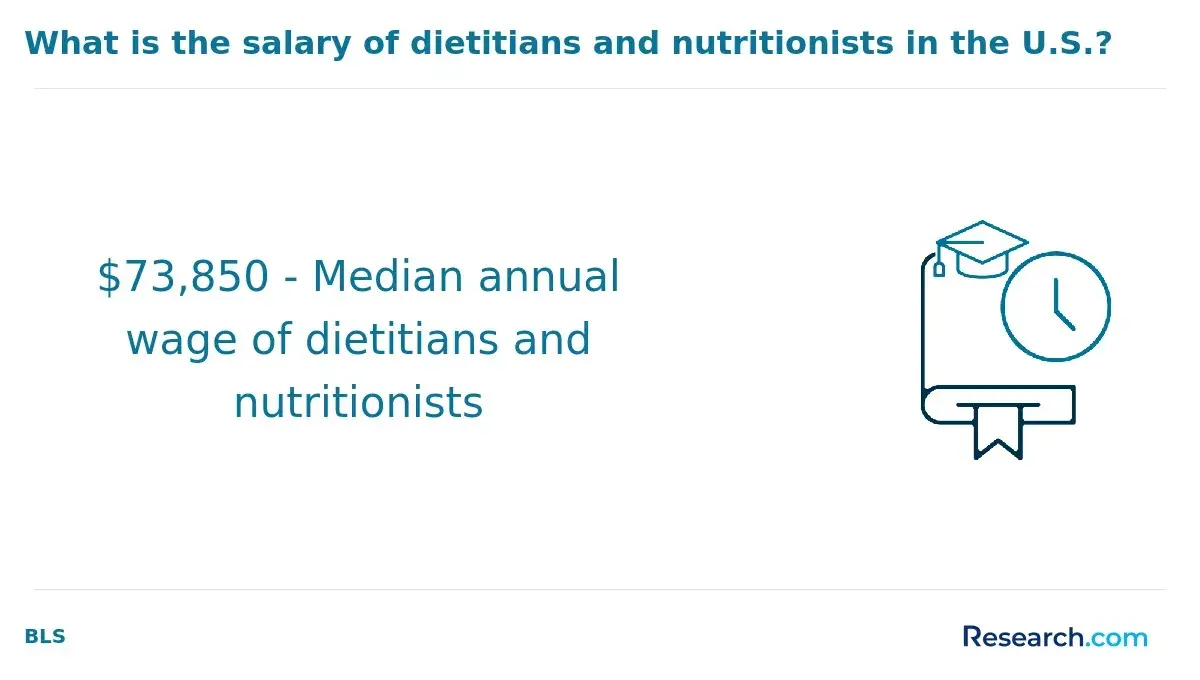
Job prospects in this field are strong; the U.S. Bureau of Labor Statistics projects a 7% growth in employment for dietitians and nutritionists from 2023 to 2033, reflecting increasing public interest in healthful eating and personalized nutrition.
Possible roles after a fast online nutrition degree
- Dietetic Technician: Supports registered dietitians by helping with nutrition screening, meal planning support, client education, and documentation. This role requires strong communication and organization skills, with median annual pay near $46,000.
- Nutrition Educator: Works in community health, schools, nonprofits, public agencies, or wellness programs to teach nutrition principles and promote healthier choices. This job often earns between $40,000 and $55,000 per year.
- Wellness Coach: Helps clients set health goals, improve diet quality, build routines, and stay accountable. Salaries typically range from $35,000 to $60,000 depending on experience and location.
- Food Service Manager (Entry-Level): Supports meal planning, nutrition standards, staffing, purchasing, and compliance in schools, hospitals, senior living facilities, or other institutions. Median wages are around $60,000 annually.
Students who want broader healthcare options may compare nutrition programs with related degrees such as the cheapest online BSN programs. Nursing and nutrition lead to different scopes of practice, but both can support careers focused on prevention, patient education, and health improvement.
Before enrolling, match the degree to the role you want. If your goal is wellness coaching or community education, a fast online nutrition degree may be a practical entry point. If your goal is clinical dietetics or a licensed role, confirm the exact education, supervised practice, exam, and state requirements before committing.
What technology is required for accelerated online nutrition programs?
Accelerated online nutrition programs move quickly, so unreliable technology can become an academic problem. Students need a setup that supports video lectures, online exams, research assignments, group projects, file uploads, and frequent communication with instructors.
Data from the National Center for Education Statistics reveals that 95% of online students consider stable internet vital for their academic success. For accelerated learners, stable access is especially important because missed deadlines can be harder to recover from in short terms.
Technology students should have before classes begin
- Reliable high-speed internet access: Students need stable service for streaming lectures, joining live sessions, submitting assignments, and accessing cloud-based course materials.
- A dependable computer: A laptop or desktop is usually better than relying only on a phone or tablet, especially for writing papers, building presentations, using spreadsheets, and taking proctored exams.
- Learning Management System (LMS) access: Students should learn how to find modules, readings, quizzes, discussion boards, gradebooks, rubrics, announcements, and instructor feedback inside the LMS.
- Video conferencing tools: Live sessions, office hours, advising appointments, and group presentations often require a webcam, microphone, and familiarity with meeting software.
- Productivity software: Word processing, spreadsheet, presentation, citation, and PDF tools are commonly needed for nutrition research, meal analysis, community education projects, and reports.
- Backup plan: Accelerated students should identify a backup internet location, cloud storage option, and technical support contact before a deadline emergency happens.
Students comparing online healthcare programs can also review resources such as the cheapest online RN to BSN programs, where technology expectations are often central to program success. Regardless of major, online learners should treat technology readiness as part of academic readiness.
How do you choose the fastest online nutrition degree program?
To choose the fastest online nutrition degree program, start with your career goal and work backward. Speed only helps if the degree is accredited, affordable, transferable, and aligned with the role or credential you want. A program that finishes quickly but does not meet employer, graduate school, or licensure expectations may cost more in the long run.
Key factors to compare
- Program Length: Look for year-round courses, multiple start dates, and credit for prior learning that can support completion within 24 months. Confirm whether the published timeline assumes transfer credits or a prior degree.
- Curriculum Structure: Review the course plan carefully. Strong programs include core nutrition science, health promotion, food systems, research literacy, and applied projects without loading the plan with unrelated electives.
- Accreditation: Choose a properly accredited institution. If your goal involves dietetics, licensure, or a protected professional title, verify whether the program meets the specific accreditation and supervised-practice requirements for that pathway.
- Transfer Credit Policy: Ask for a transcript evaluation before enrolling. The fastest program is often the one that applies the most previous coursework directly to degree requirements.
- Cost: Compare total program cost, not just tuition per credit. Include fees, books, technology, transfer-credit limits, financial aid, and the income impact of accelerated study.
- Scheduling Fit: Determine whether the format is asynchronous, synchronous, cohort-based, self-paced, or hybrid. A fast program that conflicts with your work schedule can quickly become unmanageable.
- Student Support: Look for academic advising, transfer advising, tutoring, library access, career services, technical support, and faculty availability.
- Career Outcomes: Ask about internships, practicums, employer partnerships, graduate placement, certification preparation, and alumni outcomes.
A good final test is simple: can the school show exactly how you will finish, what courses you will take, what credits will transfer, what the total cost will be, and what career or credential the program supports? If the answers are vague, keep comparing programs.
What Graduates Say About Their Fastest Online Nutrition Degree Programs
- Reena: "Enrolling in an accelerated online nutrition degree was a game-changer for me. I found that completing the program in under two years saved both time and money, costing roughly $15,000 compared to traditional programs. This fast-track path allowed me to quickly advance in my career as a clinical dietitian, giving me an edge in competitive job markets."
- Fatima: "Choosing a fast online nutrition degree was a reflective decision driven by my tight budget and career goals. The total cost, just under $18,000, felt manageable for a program completed in less than two years. This experience deepened my understanding and helped me transition smoothly from a general wellness coach to a certified nutritionist."
- Sebastian: "The professional pace of an accelerated nutrition program appealed to my busy schedule and career ambitions. At around $16,500 for completion in under two years, it was a financially smart investment. Since graduating, I've been able to take on leadership roles in community health, applying my knowledge immediately."
Other Things You Should Know About Nutrition Degrees
The fastest online nutrition degree programs available in 2027 that can be finished within two years typically include accelerated bachelor’s programs from universities like Purdue Global and Arizona State University, which offer flexible courses tailored for swift completion.
In 2027, several online nutrition degree programs can be completed in under two years. Some top options include Purdue University Global, Arizona State University Online, and the University of Alabama's online program. These schools offer accelerated courses designed to fast-track students through their studies, allowing for quicker degree completion.
References
- Online Master's Degrees in Nutrition | Guide to Top Schools https://www.edumed.org/online-schools/nutrition-degrees/masters/
- Accelerated Coordinated Program https://dhn.mgcafe.uky.edu/acp
- Careers - Nutrition International https://nutritionintl.org/careers/job-seekers/
- UU.S. Bureau of Labor Statistics. (2024, August 29). Dietitians and Nutritionists: Occupational Outlook Handbook. https://www.bls.gov/ooh/healthcare/dietitians-and-nutritionists.htm
- Master’s in Nutrition Online Degree https://www.bridgeport.edu/academics/programs/nutrition-ms/
- National Center for Health Workforce Analysis. (2025, December). State of the U.S. Health Care Workforce, 2025. https://bhw.hrsa.gov/sites/default/files/bureau-health-workforce/data-research/State-of-US-Health-Care-Workforce-2025.pdf
- Online Master of Science in Nutrition Education | American University, Washington, DC https://www.american.edu/cas/health/nutrition/
- Master of Science in Health Sciences with a concentration in Nutrition https://link.utrgv.edu/mshs-nutrition-online/
- Bachelor of Science in Nutrition - In-person or online - National University of Natural Medicine - NUNM https://nunm.edu/programs/bscn/