
2027 Communication Degree vs. Certificate: Which Should You Choose?

Co-Founder and Chief Data Scientist
Today's students and professionals face key decisions when choosing between earning a communication degree or a certificate. Both options can enhance career opportunities but vary in time, cost, and depth of study. A degree provides comprehensive knowledge and broader skills, while a certificate focuses on specific areas and quicker entry into the workforce.
Communication degrees often require two to four years and cover theory, research, and practical skills, appealing to those seeking leadership roles. Certificates, typically lasting a few months, suit professionals wanting targeted expertise or career shifts. This article compares their main differences, helping you select the best fit for your career goals and lifestyle.
Key Points About Communication Degree vs. Certificate Programs
- A communication degree offers comprehensive theory and practice, supporting advanced roles with a median salary about 20% higher than certificate holders.
- Certificate programs focus on specific skills, ideal for quick upskilling or career shifts without the time commitment of a degree.
- Degrees enable broader professional growth and leadership opportunities, while certificates may suit those prioritizing immediate job-ready expertise or continuing education.
What Are the Differences Between Communication Degree and Certificate Programs?
Both communication degrees and certificate programs offer valuable career opportunities but differ in several important ways. Understanding these differences can help prospective students select the right educational path based on their professional goals and available time. Below is a comparison highlighting key factors that distinguish the two options.
- Depth of Learning: Communication degrees provide comprehensive knowledge over multiple aspects of the field, including theory, research, and practical skills. Certificates focus on specific competencies or tools, benefiting those seeking targeted expertise quickly.
- Time Commitment: Degree programs typically require several years to complete, making them suitable for students ready to invest more time for broader education. Certificates can often be finished in months, ideal for professionals needing faster upskilling.
- Career Advancement: A communication degree may open doors to leadership or specialized roles due to its thorough preparation, while certificates can enhance existing skills for immediate application but might have limitations in career progression.
- Cost and Accessibility: Certificates usually involve lower costs and flexible formats, appealing to working adults or those with limited budgets. Degrees often demand a higher financial investment and greater scheduling commitment.
- Networking Opportunities: Degree programs often provide more extensive interaction with faculty and peers, which can be valuable for long-term professional connections. Certificate courses might offer fewer networking benefits due to their shorter duration.
How Long Does It Take to Complete a Communication Degree vs. a Certificate Program?
One of the most important factors for students deciding between a communication degree vs. certificate is the time required for completion. Understanding the average time to complete a communication degree compared to the shorter communication certificate program length can help candidates choose the best path for their career goals and schedules.
- Typical Duration: A bachelor's communication degree typically involves about four years of full-time study, while a master's degree may require an additional one to two years. In contrast, certificate programs usually range from a few months up to two years, offering a much shorter path to credentialing.
- Flexibility: Both degrees and certificates allow for full-time or part-time study. Full-time students complete programs faster; however, part-time learners-often working professionals-may extend timelines, especially for degrees that demand more credits and comprehensive coursework.
- Factors Affecting Timeline: Degree programs generally require 30 to 45 credit hours, whereas graduate certificates involve 9 to 18 credits. Prior experience and transfer credits can shorten degree completion times, though certificates offer less leeway here. Additionally, degrees frequently include capstone projects or theses, which can add months, while certificate programs typically forgo these requirements.
On average, the communication certificate program length is under two years and sometimes less than one, making it an appealing option for those seeking focused skills quickly. Meanwhile, the average time to complete a communication degree reflects a multi-year commitment suitable for students pursuing broader academic and career advancement. For individuals evaluating the best fit, exploring short certificate programs that pay well may reveal practical opportunities aligned with both time investment and professional outcomes.
Can You Complete a Communication Degree or Certificate Entirely Online?
The growth of online education has significantly expanded access to flexible learning opportunities, enabling many students to balance work, family, or geographic constraints. Several accredited institutions in the United States offer fully remote programs, including 100% online communication degree programs. Universities like Southern New Hampshire University and LSU Alexandria provide online communication bachelor's degrees, allowing students to complete coursework entirely at their own pace. In addition to degrees, students can also complete a communication certificate online, which is often designed for professionals seeking targeted skill development without the time commitment required by a full degree program.
When comparing these online options, it's important to consider factors beyond virtual coursework. Degree programs may include hands-on training, internships, or capstone projects that sometimes require local arrangements or synchronous participation, making them potentially hybrid rather than purely online. Certificates tend to be shorter with fewer practical components, offering a more streamlined path.
Prospective students should assess their career goals, licensure requirements, and need for networking when deciding between formats. For those interested in the broadest range of options, exploring easiest masters degrees online can provide additional insight into flexible graduate-level study paths.
What Are the Admission Requirements for a Communication Degree vs. a Certificate Program?
Admission requirements are important to consider when choosing between pursuing a communication degree or enrolling in a certificate program, as they influence accessibility and suitability based on background and goals. To better understand these differences, a side-by-side comparison of typical admission requirements for communication degree programs and certificate programs in the United States is shown below.
Admission Requirements for Communication Degree Programs
- Educational Background: Most bachelor's degree programs require a high school diploma or equivalent. Transfer students usually need to have completed at least 60 semester or 90 quarter transferable units including prerequisite courses like introductory communication, statistics, and social science.
- Minimum GPA: A minimum GPA is commonly required; for example, the University of North Texas demands a 2.5 minimum GPA for communication studies, while Florida State University's limited access programs require 3.0 or higher.
- Standardized Test Scores: Some public universities require ACT or SAT scores. For instance, the University of Arkansas asks for an ACT composite score of 20 or higher for freshmen.
- Prerequisite Coursework: Applicants often must complete foundational courses such as introductory communication, statistics, psychology, or linguistics before applying to the major.
- Application Process: Degree programs usually involve a formal application with a statement of purpose and sometimes letters of recommendation, especially for competitive or "limited access" majors.
Admission Requirements for Communication Certificate Programs
- Educational Background: Most certificate programs require only a high school diploma or GED. These programs are designed with accessibility in mind for working adults and those seeking targeted skill development.
- Minimum GPA: Certificate program eligibility criteria for Communication majors typically do not include minimum GPA requirements, making them more inclusive.
- Standardized Test Scores: ACT or SAT scores are rarely required for certificate admissions.
- Prerequisite Coursework: Few, if any, prerequisite courses are necessary as certificate programs aim to provide foundational knowledge during the program.
- Application Process: The process is minimal, often requiring only an online form and proof of educational background, with letters of recommendation or essays seldom needed.
Understanding these communication degree admission requirements in the United States can help prospective students decide which academic path fits their career plans. For those curious about long-term benefits, exploring what 4 year degree makes the most money can offer additional insight into the value of degree programs.
How Many Credits Do You Need to Complete a Communication Degree vs. a Certificate?
Knowing the number of credits required for a communication degree versus a certificate helps students map out their education plans and manage their time effectively. Understanding these credit demands clarifies the difference in commitment between the two paths.
Here's a straightforward comparison of credit expectations for communication degree and certificate programs:
- Communication degree: Usually requires around 120 credits, covering general education, major courses, and electives, typically completed over four years of full-time study.
- Communication certificate: Involves significantly fewer credits, generally between 12 and 18, allowing concentrated study in a specific area and often finishing within several months to a year.
Students should consider how each program’s credit requirements align with their academic goals, career plans, and available time. Understanding the differences between a full communication degree and a shorter certificate helps learners choose the path that best supports their ambitions, whether they’re seeking broad, comprehensive training or a faster, more focused skill-building option.
What Is the Average Tuition for a Communication Degree vs. a Certificate?
Tuition costs play a significant role when choosing between obtaining a communication degree and pursuing a certificate program, as they directly affect both your financial commitment and potential return on education. Comparing typical tuition ranges provides clarity to students and professionals evaluating which pathway aligns with their budget and career objectives.
Below is a clear comparison of the average tuition for a communication degree versus a Communication certificate program cost to help inform your decision.
Average Tuition for Communication Degree Programs
- Tuition range: Undergraduate communication degrees usually cost between $10,195 and $10,247 per year for in-state students at public universities, while out-of-state tuition is higher, ranging from $30,120 to $30,712 annually.
- Online degrees: Accredited online bachelor's programs in communication tend to be more affordable, with costs typically from $9,480 to $11,130 per year at nonprofit public institutions.
- Private schools: Tuition at private colleges can exceed public averages, often surpassing $40,000 per year, depending on the university and location.
- Program length: Most bachelor's degrees require three to four years of study, resulting in total tuition costs ranging from roughly $30,000 to $120,000 over the duration for public institutions and significantly more for private ones.
- Graduate degrees: Master's programs typically average $10,890 annually for in-state students and $22,408 for out-of-state students.
Average Tuition for Communication Certificate Programs
- Tuition range: The Communication certificate program cost usually spans from a few hundred dollars up to $16,664 total for four graduate-level courses at major universities.
- Shorter duration: Certificate programs commonly involve four to six courses and can be completed within months to a year, greatly reducing total tuition compared to degrees.
- Online options: Online certificates often offer lower tuition rates, typically in the hundreds to low thousands of dollars.
- Additional fees: Some programs apply extra fees like technology charges, which can be around $130 per course for online formats.
- Financial aid eligibility: Many certificate courses do not qualify for federal student loans, although alternatives such as private loans or employer reimbursement may be available.
For students seeking affordable options, exploring accredited online colleges with no application cost can be a valuable resource to minimize upfront expenses while pursuing communication education.
Can You Transfer Certificate Credits Toward a Communication Degree Later On?
Yes, you can often transfer credits from a communication certificate program toward a communication degree, but it depends largely on the institution's transfer credit policies, the accreditation status of the certificate program, and how closely the completed courses align with degree requirements. Some universities allow seamless transfer within their own programs, especially when both certificates and degrees fall under the same academic department. However, credits from different schools usually must meet similar academic standards in content and rigor to be considered. Transferability hinges on institutional acceptance, the relevancy of certificate courses, and whether the original program holds recognized accreditation.
Key factors affecting credit transfer include limits on the number of certificate credits accepted-often capped at a set number like 12 credits-as well as minimum grade requirements, typically a C or higher. Only courses that closely match degree curriculum or electives generally qualify; unrelated courses may not transfer or may only count as electives. It's crucial to confirm transfer policies and obtain written pre-enrollment credit evaluations from admissions or advisors to avoid surprises. Verifying these details before committing helps students maximize their educational investment and academic progress.
Are Certificate Programs Accredited the Same Way as Communication Degrees?
Certificate programs in communication are not accredited in the same manner as communication degree programs. Degrees-such as associate, bachelor's, or master's-are generally accredited by regional bodies recognized by the U.S. Department of Education, ensuring standards for academic quality and faculty are met. Communication certificate programs may lack specific program-level accreditation, though if offered by an accredited institution, they benefit indirectly from that institution's regional accreditation.
However, the content, credit hours, and formats of these certificates vary widely, and they rarely hold the same rigorous, program-specific accreditation as degrees. Only a minority of schools offering communication-related graduate degrees also provide certificates with comparable focus or consistency.
Accreditation matters because it guarantees a program meets accepted educational standards, making credits easier to transfer and credentials more credible to employers. For certificate seekers, it's important to verify that the institution holds regional or national accreditation and to check if the certificate has any industry-specific recognition.
Some certificates may simply confirm course completion without external validation of mastery. Students should especially consider accreditation when planning further study or targeting jobs requiring recognized credentials. Always ensure any program pursued is accredited by a reputable agency before enrolling.
What Jobs Can You Get with a Communication Degree vs. a Certificate?
Both communication degrees and certificates offer pathways to various career opportunities, though they often prepare graduates for different roles and levels of responsibility. Understanding the distinctions in job prospects can help you determine which credential suits your professional goals.
Below is a comparison of typical positions you might pursue with either a communication degree or certificate.
Jobs You Can Get with a Communication Degree
- Social media manager: Oversees social media strategies and content creation to build brand presence across platforms, often leading a team or department.
- Public relations specialist: Develops and manages communication plans to maintain a positive public image for organizations or clients.
- Marketing manager: Plans and directs marketing campaigns, analyzing market trends to maximize product or service reach.
- Content manager: Coordinates content production and publishing across multiple media channels, ensuring consistency and quality.
- Digital journalist: Researches, writes, and edits news or feature stories for online media outlets, utilizing multimedia tools.
- Media producer: Creates and supervises audio or video content production projects, often collaborating with creative teams.
Jobs You Can Get with a Communication Certificate
- Communications assistant: Supports communication professionals by managing schedules, drafting simple messages, and coordinating events.
- Social media coordinator: Implements social media posts and monitors engagement, focusing on day-to-day platform activities.
- Public relations assistant: Assists in executing PR campaigns, handling media lists, and preparing materials for outreach efforts.
- Digital marketing assistant: Supports online marketing initiatives through content updates, data tracking, and campaign assistance.
- Content creator: Produces written or visual content tailored to specific platforms or audiences, often focusing on tactical communication tasks.
What Is the Average Starting Salary for a Certificate vs. Communication Degree Graduates?
Salary potential often varies significantly between communication certificate holders and those with degrees, reflecting differences in education depth and career opportunities. To understand these differences better, here is a side-by-side look at the average starting salary for communication degree graduates in the US compared to certificate holders.
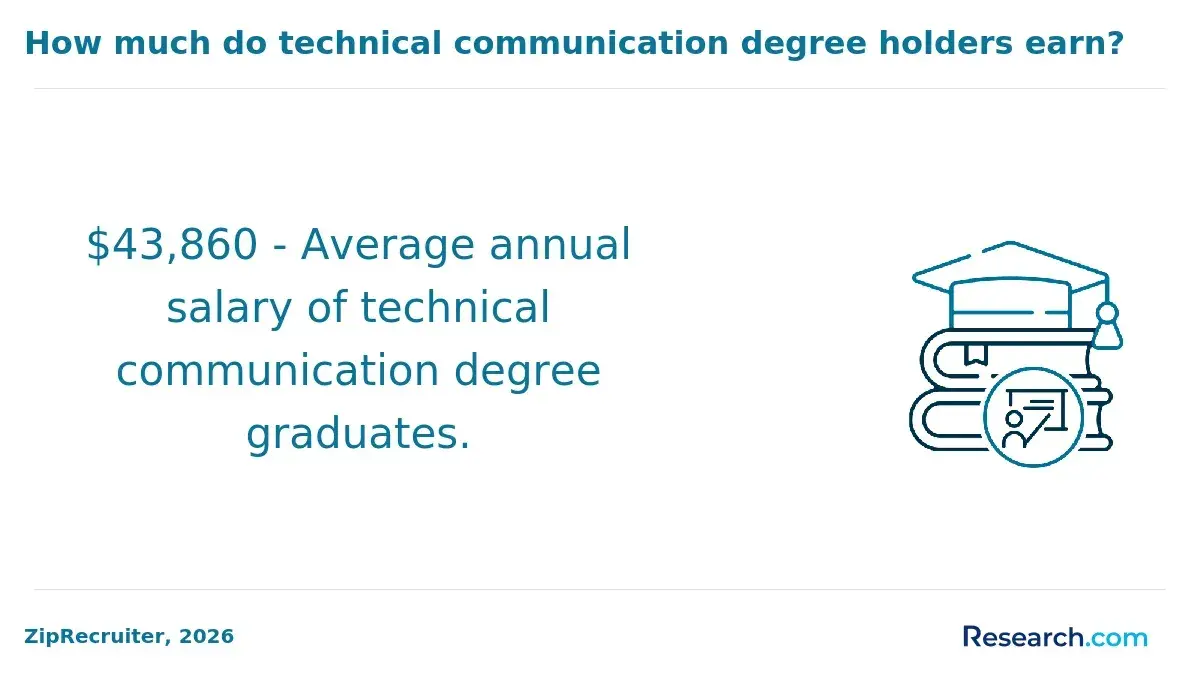
- Typical Salary Range: Degree graduates usually start with salaries between $49,000 and $58,000 per year, while communication certificate holders typically earn between $35,000 and $45,000 annually.
- Communication certificate vs degree salary comparison: According to ZipRecruiter, the national average starting salary for communication degree holders is about $49,064, with the 25th to 75th percentile ranging from $41,500 to $55,500 per year. In contrast, certificate holders' lower ranges reflect shorter programs with narrower specialization.
- Influencing Factors: Key factors such as industry type, location, and prior experience influence offers. Graduates in marketing, public relations, or technical writing sectors tend to earn more, especially in urban areas with higher costs of living. Internships or additional skills also boost starting salaries, regardless of credential level.
- Career Outlook: The overall career prospects and earnings potential are stronger for degree holders, particularly as experience grows and advanced roles are pursued.
- Accreditation and Quality: When considering educational options, it's valuable to research what online schools are accredited nationally to ensure quality and recognition in the job market.
Here's What Graduates of Communication Programs Say About Their Degree or Certificate
- Paxton: "Choosing the communication certificate program was a smart move for me because it offered a faster, more focused learning experience compared to a degree. The cost was much lower, allowing me to gain essential skills without breaking the bank. It really helped jumpstart my career in marketing, and I appreciated how practical the classes were."
- Ameer: "Pursuing a communication degree was a rewarding but long journey, and the pace allowed me to dive deep into theory and practice. Although it was more expensive, the comprehensive curriculum opened doors for advanced career opportunities and personal growth. When deciding between degree and certificate, I reflected a lot on my long-term goals and chose the degree to build a solid foundation. "
- Nathan: "After completing both the certificate and degree programs in communication, I can confidently say each served a unique purpose. The certificate offered quick, cost-effective skill-building, while the degree provided extensive knowledge and credibility for leadership roles. Balancing the cost and time commitment made me realize how valuable both options are depending on your career stage and priorities. "
Other Things You Should Know About Communication Degrees
In 2027, the major differences between a communication degree and a certificate often lie in depth and duration. Degrees generally offer a comprehensive education covering various communication theories and practices, while certificates focus on specific skills for quicker career entry. Degrees may lead to broader career opportunities compared to more specialized, entry-level roles.
In 2027, a communication degree offers comprehensive education covering theory and practice, enhancing critical thinking and broad skills across the field. This can lead to higher-paying jobs and more diverse career opportunities compared to a certificate, which focuses on specific skills for immediate application.
References
- What's the Difference Between a Professional Certificate and a Degree? https://sopa.tulane.edu/blog/whats-difference-between-professional-certificate-and-degree
- The Difference Between Certificates and Degrees | UT San Antonio Online https://online.utsa.edu/blog-content/difference-certificates-degrees/
- Degrees vs. Certificate Programs: What's the Difference? https://www.snhu.edu/about-us/newsroom/education/certificates-vs-degrees
- Degree vs Certificate Programs - Understand the Differences and Pick Right for You https://pg-group.online/degree-vs-certificate/
- COM Requirements and Courses https://comminfo.rutgers.edu/undergraduate-programs/communication-major/com-requirements-and-courses
- What Is the Average Salary for Communication Majors? https://degree.lamar.edu/online-programs/undergraduate/bachelor-science/communication/average-salary-for-communication-majors/
- Degrees vs. certificates: what's best for your career? https://knowledgeenthusiast.com/2025/10/14/degrees-vs-certificates/


