
2027 Different Types of Aerospace Engineering Degrees and Their Salaries

Co-Founder and Chief Data Scientist
The aerospace engineering sector is experiencing significant growth driven by expanding commercial space programs and innovations in aviation technology, creating a strong demand for highly skilled professionals. According to recent labor statistics, employment in this field is projected to grow faster than the average for all occupations over the next decade, reflecting the sector's critical role in national defense and space exploration. Selecting the right educational program plays a crucial role in positioning graduates for success in this competitive industry.
This article provides a comprehensive overview of the various types of aerospace engineering degrees available and outlines what graduates can expect in terms of earning potential across these different educational paths.
Key Points About Different Types of Aerospace Engineering Degrees and Their Salaries
- Obtaining a bachelor's degree in aerospace engineering opens the door to most entry-level engineering positions, with a median annual salary around $115,000 in the U.S., making it the most common and versatile degree for starting a career in this field.
- Master's degree holders in aerospace engineering tend to earn significantly higher salaries, often between $130,000 and $150,000 annually, and have greater access to specialized roles in research, management, or advanced design due to their deeper technical expertise.
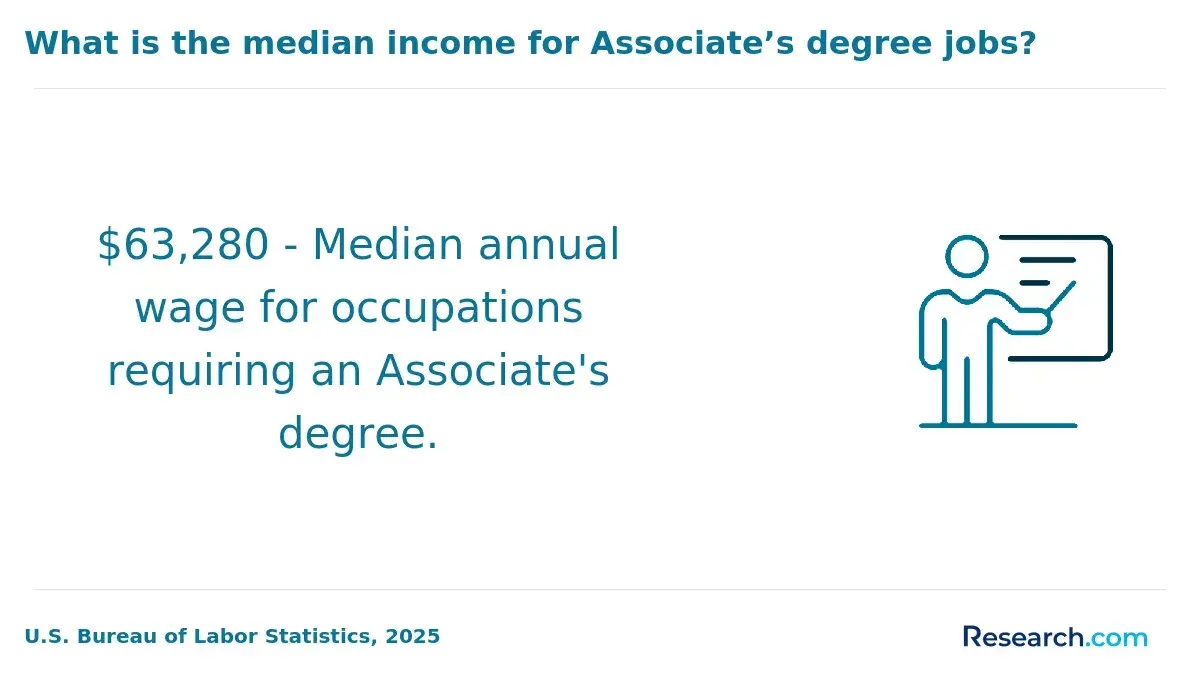
- Associate degrees in aerospace-related fields generally lead to technician or support roles with a median salary near $65,000, offering quicker entry into the workforce but with more limited long-term growth compared to bachelor's or master's degrees.
What Are the Different Types of Aerospace Engineering Degrees Available?
Understanding the different aerospace engineering degree types and levels is crucial for students before selecting a program, as each option offers a unique foundation and focus tailored to distinct educational backgrounds and career aspirations. Choosing the right degree helps align your academic journey with your long-term goals and personal interests.
To clarify these options, here is an overview of the main types of aerospace engineering degrees and what distinguishes each one:
- Associate degree in aerospace engineering: Provides a basic introduction to engineering concepts, mathematics, and physical sciences. Coursework typically includes general education, introductory physics, chemistry, and calculus, serving as a foundation for further study or career entry.
- Bachelor's degree in aerospace engineering: Centers on core aerospace principles such as design, mechanics, aerodynamics, and propulsion. Students engage in foundational courses in engineering, physics, and mathematics, alongside specialized classes in aircraft and spacecraft systems, flight dynamics, and materials science.
- Master's degree in aerospace engineering: Focuses on advanced technical knowledge and research methods. Coursework delves into topics like orbital mechanics, aerospace control, and sophisticated aerodynamic theories, equipping students for research or technical leadership roles.
- Doctorate degree (Ph.D.) in aerospace engineering: Emphasizes original research and developing new scientific knowledge within aerospace engineering. Students undertake advanced coursework, independent research, and dissertation work concentrating on specialized or theoretical fields in aerospace science.
The U.S. Bureau of Labor Statistics reports that the median annual salary for aerospace engineers was $126,880 in 2023, with higher earnings closely linked to advanced degrees and specialized skills. For those seeking foundational education, exploring the fastest online associate's degree programs can be an efficient start to entering this field.
What Specializations Are Available in Aerospace Engineering Degrees?
Specialization is an important factor when choosing an aerospace engineering degree because it helps students focus their education on specific career paths and industries. Aligning your education with targeted goals ensures that you develop relevant skills and boost your employability in a competitive job market.
Below are some of the most common Aerospace Engineering specializations, each offering distinct technical expertise and career opportunities:
- Aeronautics: Focuses on the design, development, and testing of aircraft and atmospheric flight systems such as commercial jets and unmanned aerial vehicles. Key skills include aerodynamics, propulsion, and flight mechanics, with career options ranging from aircraft design to aviation safety and operations.
- Astronautics: Centers on spacecraft, satellites, and space exploration technologies, emphasizing orbital mechanics, rocket propulsion, and mission analysis. Graduates often pursue roles in satellite systems engineering, space mission planning, or work with space agencies and private spaceflight companies.
- Avionics: Deals with electronic systems for both aircraft and spacecraft, including navigation and communication systems. This specialization hones expertise in embedded systems and software engineering, preparing graduates for careers in aviation, defense, and the expanding commercial space sector.
- Flight Dynamics and Controls: Explores flight mechanics, stability, and control systems, including autonomous and robotic vehicles. Students develop skills in simulation, optimization, and system design, leading to roles in flight simulation engineering and autonomous vehicle development.
- Aerothermodynamics: Focuses on fluid mechanics, heat transfer, and propulsion, essential for high-speed vehicle engine and thermal system design. Skills acquired include thermodynamics and computational fluid dynamics, with graduates frequently working in engine design and propulsion research.
- Defense Technologies: Involves military aerospace systems such as missiles, drones, and defense satellites. This combines advanced electronics and weapon systems knowledge, preparing students for careers in military aerospace engineering and defense research and development.
For prospective students wondering what is the easiest bachelor's degree to pursue, aerospace engineering offers diverse paths with specialized options that can match both interests and strengths, making it a versatile and rewarding field.
How Long Does It Take to Complete Each Type of Aerospace Engineering Degree?
Understanding the typical duration of aerospace engineering programs is essential for students who want to plan their education and career paths effectively. Knowing how long each degree takes helps manage expectations and align academic goals with personal and professional timelines.
Below is a concise overview of the main aerospace engineering degree types and their usual completion times.
- Associate Degree in Aerospace Engineering: This program usually takes about 2 years of full-time study to complete. Part-time enrollment can extend the length, while transfer credits from prior coursework may shorten it. Accelerated options are less common, but some community colleges offer hybrid or online classes for flexibility.
- Bachelor's Degree in Aerospace Engineering: Typically, a bachelor's degree requires 4 years of full-time study. Students attending part-time, changing majors, or completing co-op programs may take longer. Many universities provide accelerated tracks or online courses that can reduce the timeframe for motivated students.
- Master's Degree in Aerospace Engineering: On average, this graduate degree takes 1 to 2 years to complete after earning a bachelor's. The timeline varies with full-time versus part-time enrollment and thesis versus non-thesis options. Online and accelerated master's programs are increasingly available to accommodate working professionals.
- Doctorate (Ph.D.) in Aerospace Engineering: Earning a Ph.D. can take anywhere from 3 to 6 years post-master's, depending largely on research progress and dissertation completion. Part-time study and funding availability also influence duration. While traditional programs are mostly campus-based, some universities now offer hybrid formats to help balance commitments.
Are There Accelerated Aerospace Engineering Degree Programs?
Yes, accelerated aerospace engineering degree programs do exist in the United States, typically designed for highly motivated students aiming to complete both bachelor's and master's degrees more quickly than traditional routes. These programs, often labeled as "4+1" or accelerated master's tracks, enable finishing both degrees in about five years compared to the standard six or more years.
The shortened time frame is achieved through condensed courses, year-round enrollment including summer terms, and the ability to count up to nine graduate credits earned during undergraduate study toward both degrees. Additionally, some programs accept transfer credits or advanced placement coursework to further reduce overall duration. This structure requires a highly focused academic plan, often limiting electives and emphasizing a tight sequence of required courses to ensure timely completion.
Common formats feature undergraduate students enrolling in graduate-level courses early, participating in intensive summer or winter sessions, and following a structured curriculum with few breaks. Eligibility requirements are stringent, mandating a high GPA-usually 3.5 or above-along with specific course prerequisites and applications during junior or early senior years.
The workload intensity is significantly higher than traditional paths, requiring students to balance overlapping undergraduate and graduate requirements simultaneously. While these programs save time and potentially reduce tuition costs, they demand excellent time management skills and sustained academic performance.
Prospective students should consider the impact on opportunities for internships, extracurricular activities, and personal well-being. Graduates with a master's degree in aerospace engineering typically earn notably higher median salaries $122,270 per year-making accelerated programs a strategic choice for those prepared for the challenge.
When speaking with a graduate of an accelerated aerospace engineering degree program, he reflected on the demanding but rewarding experience. He recalled that managing graduate and undergraduate courses concurrently was "like juggling two full-time jobs," often leaving weekends dedicated to projects and studies.
The tight scheduling meant little room for setbacks, and maintaining a 3.7 GPA required "sheer discipline and constant focus." However, he also emphasized the sense of accomplishment gained by completing both degrees in five years, remarking that it "opened doors faster" in his engineering career and enabled him to start earning earlier than many peers.
Though the pace was intense and social life sometimes took a backseat, he found that the support from faculty and peers in the cohort was invaluable, describing it as "a challenging but deeply rewarding journey." This personal insight confirms that accelerated aerospace engineering degree programs are indeed available but are best suited to students ready for an intensive academic experience.
Are Online Aerospace Engineering Degrees as Credible as Traditional Ones?
Online aerospace engineering degrees from accredited institutions maintain rigorous academic standards comparable to traditional programs. Both formats follow curricula set by recognized accreditation bodies such as ABET, covering fundamental subjects like aerodynamics, propulsion, and systems integration.
While traditional programs often provide more hands-on technical and laboratory experiences through access to advanced facilities, many online programs address this gap with hybrid models or require short on-campus residencies for practical lab work.
This approach helps ensure students still gain essential engineering skills. Additionally, traditional degrees may offer more opportunities for specialization, which can benefit students seeking deeper technical expertise, though online degrees provide greater flexibility and affordability.
Recent trends indicate a growing employer acceptance of online aerospace engineering degrees, especially when they come from well-established and reputable schools such as Embry-Riddle Aeronautical University or Vaughn College. Employers in the aerospace sector increasingly value online degrees if the program is accredited and the institution has a strong reputation.
Graduates, regardless of whether they studied online or in person, can expect competitive starting salaries typically ranging from $70,000 to $90,000 annually for entry-level roles. Ultimately, the credibility of an aerospace engineering degree is more strongly influenced by the institution's status and accreditation than by whether the degree was earned online or on campus.
How Much Does Each Type of Aerospace Engineering Degree Typically Cost?
Understanding the differences in tuition costs across aerospace engineering degree levels is essential for effective budgeting and long-term financial planning. These costs vary significantly based on degree type, institution, residency status, and program format.
The following list outlines typical tuition ranges for each aerospace engineering degree to help prospective students navigate their options.
- Associate Degree in Aerospace Engineering: These programs, often offered by community colleges, typically charge between $4,000 and $10,000 per year for in-district students. Tuition tends to be higher for out-of-district or out-of-state attendees. Many students benefit from federal Pell Grants, state financial aid, and school-based scholarships that help lower their overall expenses.
- Bachelor's Degree in Aerospace Engineering: Tuition at public universities averages about $12,000 annually for in-state students and can reach approximately $36,000 for out-of-state students. Private institutions usually charge between $27,000 and $65,000 per year, while online programs may provide more affordable alternatives, sometimes ranging from $4,000 to $15,000 annually. Financial support often includes grants, merit scholarships, and work-study opportunities.
- Master's in Aerospace Engineering: Graduate tuition at public universities averages around $12,900 annually, whereas private schools can charge from $23,500 to $55,000 per year. Some programs bill tuition per credit hour, with rates such as $1,840 per credit at certain institutions. Many master's students offset costs via teaching or research assistantships, employer tuition reimbursement, or fellowships.
- Doctorate (Ph.D.) in Aerospace Engineering: Doctoral tuition is often comparable to or slightly above master's tuition, with per-credit charges ranging between $1,100 and $1,500 at top schools. Most Ph.D. candidates receive tuition waivers and stipends through assistantships and research funding, which significantly reduce their financial burden.
When I spoke with a graduate of an aerospace engineering degree program, she reflected on how she managed the costs throughout her educational journey. She highlighted that securing a combination of scholarships and teaching assistant positions was instrumental in making her graduate studies affordable.
"It wasn't easy," she said, "but balancing work and study helped me avoid large student loans." She also noted that the investment paid off, as she successfully transitioned into a rewarding career where her degree opened doors to opportunities she had only dreamed about. Her experience underscores the importance of exploring all financial aid options and staying proactive about managing expenses while pursuing aerospace engineering degrees.
What Jobs Can You Get with Each Type of Aerospace Engineering Degree?
The level of degree in aerospace engineering greatly influences the types of career opportunities available and the roles graduates are qualified for. Higher degrees typically open the door to more specialized, senior, and research-focused positions, while entry-level degrees prepare students for technical and support roles.
Below is an outline of common jobs associated with each aerospace engineering degree type.
- Associate Degree in Aerospace Engineering: Graduates often start as aerospace technicians, CAD drafters, or maintenance assistants. These positions involve assisting engineers with design, drafting, and equipment testing, usually in manufacturing, repair facilities, or testing laboratories.
- Bachelor's Degree in Aerospace Engineering: This degree is the standard qualification for entry-level aerospace engineers, design engineers, and systems engineers. Job duties typically include aircraft and spacecraft design, structural analysis, and testing for organizations such as NASA or defense contractors.
- Master's Degree in Aerospace Engineering: Holding a master's degree allows professionals to take on specialized roles like propulsion engineer, avionics engineer, or research scientist. These roles often involve leading advanced projects, conducting research, and working in consultancy or management within aerospace companies or government agencies.
- Doctoral Degree (PhD) in Aerospace Engineering: PhD holders frequently pursue careers in academia as professors or principal investigators or serve as R&D leaders in government laboratories and cutting-edge industries. Their work centers on innovation, publishing groundbreaking research, and securing leadership roles that often offer high compensation. For individuals interested in advanced study options, looking into cheap online PhD programs can be a practical pathway.
How Do Salaries Differ by Aerospace Engineering Degree Type?
The level of education attained in aerospace engineering often influences earning potential, making it important for students to understand these differences before choosing a degree path. Recognizing how salaries vary by degree type can help students make informed educational and career decisions.
Below are typical salary ranges associated with each degree level in aerospace engineering.
- Bachelor's degree in aerospace engineering: This is the most common entry-level degree, with starting salaries generally between $69,000 and $76,293 annually. Factors such as location and industry-especially aerospace manufacturing, research and development, or federal government work-play a significant role in pay. Over time, bachelor's degree holders can reach median salaries of approximately $134,830, with senior-level roles earning $160,000 or more.
- Master's degree in aerospace engineering: Although specific salary data is less readily available, engineers with a master's degree often take on specialized or leadership roles that command higher compensation than bachelor's degree holders. Those with advanced degrees are more likely to work in research or management positions, which generally offer increased earning potential, especially in research-driven industries.
- Doctorate in aerospace engineering: Ph.D. graduates usually pursue careers in research, academia, or highly specialized fields. These roles frequently come with premium salaries, particularly in federal research labs and advanced aerospace companies, though exact pay varies significantly by specialization and employer.
Experience level also strongly influences salaries; entry-level aerospace engineers average about $76,293 per year, while mid-level professionals with five to seven years of experience earn closer to $131,746 annually. For individuals interested in quick education for high paying jobs, understanding these salary trends can provide valuable insight into which aerospace engineering degree might be the best fit for their goals.
Is There High Demand for Aerospace Engineering Degree Holders in the Job Market?
There is a notably high demand for aerospace engineering degree holders in the U.S. job market, driven by a combination of emerging technologies and evolving industry needs. Employment for aerospace engineers is expected to grow by 6% from 2023 to 2033, which is faster than the average for all occupations, resulting in approximately 4,200 to 4,500 new positions annually.
Factors contributing to this demand include the development of fuel-efficient and environmentally conscious aircraft, expansion in the commercial space sector, and advancements such as AI-powered predictive maintenance, digital twins, and additive manufacturing. Employers increasingly seek candidates who combine strong technical knowledge with skills in creative problem solving and digital transformation, highlighting the importance of adaptability in this rapidly changing field.
For students evaluating career options, it is valuable to consider certifications that pay the most to complement a degree and enhance job prospects.
Regional differences significantly influence aerospace engineering job opportunities in the U.S. States like Texas, Florida, and California lead in demand, hosting major manufacturers such as Boeing alongside numerous smaller companies. The commercial aerospace industry alone anticipates a need for an additional 123,000 technicians in the next 20 years, reflecting a broad shortage intensified by workforce disruptions following the COVID-19 pandemic.
Salaries remain competitive, with a median annual wage of $130,720 reported in 2023, considerably higher than the overall median wage. Entry-level positions start lower but offer rapid advancement for those with relevant digital and interdisciplinary expertise. Overall, the outlook for aerospace engineering graduates entering the workforce is robust, supported by strong growth, technological innovation, and regional expansion.
What Factors Should You Consider When Picking a Type of Aerospace Engineering Degree?
Choosing the right degree level in aerospace engineering is a critical decision that shapes your educational journey and future professional opportunities. It ensures your studies align well with your career ambitions and personal circumstances.
To help guide this process, consider the following key factors when selecting a degree type:
- Career Goals: The level of degree you pursue should match your intended career path. Most aerospace engineering roles require at least a bachelor's degree, while advanced positions in research or academia often demand a master's or doctorate. Certain technician roles may require only an associate degree, but professional engineering positions usually need higher qualifications.
- Salary Potential: Your earning potential is influenced by the degree level achieved. The median wage for aerospace engineers with a bachelor's degree was $126,880 in 2023, while advanced degrees can open doors to better-paid leadership and research roles.
- Time Commitment: Different degree levels require varying amounts of time. Associate degrees typically take two years, bachelor's four, and graduate degrees can add two to six more years. Accelerated programs combining bachelor's and master's degrees in five years are options for motivated students.
- Academic Preparation: Aerospace engineering programs are competitive and require strong math and science backgrounds. Assess your readiness to meet these academic challenges, especially if aiming for top-tier schools.
- Specialization and Flexibility: Look for degree programs that offer specialized tracks or dual majors if you have specific interests within aerospace, such as aeronautics or astronautics. This can enhance your expertise and employability.
- Industry Requirements: Some employers accept related engineering degrees, like mechanical engineering, particularly at the undergraduate level. Flexibility in degree choice can broaden your job prospects within related fields.
What Aerospace Engineering Graduates Say About Their Degree and Salary
- Jamal: "Completing my bachelor's degree in aerospace engineering was a transformative experience that opened doors I hadn't even imagined. The hands-on projects and internship opportunities gave me real-world skills and confidence to step directly into a design engineer role in the aerospace industry. I appreciate how foundational the degree was in developing both technical expertise and critical problem-solving skills needed for innovation. The network of peers and professors also inspired me to pursue continuous learning and leadership within aerospace teams."
- Marisol: "Pursuing a master's degree in aerospace engineering was not only an academic challenge but a personal journey towards advancing my ability to impact the aerospace community. It deepened my understanding of propulsion systems and fluid dynamics, which helped me contribute to new research while working in aeronautical consulting. Beyond technical growth, the collaborative environment enhanced my communication and mentoring abilities, allowing me to foster a more inclusive environment for underrepresented students entering STEM."
- Wei: "After finishing my PhD in aerospace engineering, focusing on unmanned aerial systems, I gained a unique professional perspective that significantly improved my career trajectory. The advanced research skills and specialization propelled me into a leadership role at an aerospace startup, where I now lead projects that push the boundaries of drone technology. This degree also taught me perseverance and critical thinking under pressure, essential for navigating the complexities of aerospace innovation and positively impacting industry standards."
Other Things You Should Know About Aerospace Engineering Degree Programs & Salaries
In 2027, aerospace engineering programs at top universities like MIT and Stanford are highly regarded. However, the "best" university often depends on factors like specialties, resources, and individual career goals. Admission statistics and program rankings can provide a more comprehensive picture.
In 2027, aerospace engineering salaries are significantly influenced by the sector of employment. Graduates in the defense sector may earn higher starting salaries due to specialized skills requirements, while those in academia might start with lower pay. Industry demands and government budgets also play crucial roles.
References
- Ques: What is the duration of Aerospace Engineering courses? https://www.amecet.in/questions/what-is-the-duration-of-aerospace-engineering-courses
- Aerospace Engineering: Best Subjects, Top Universities & Careers | Abbey Cambridge https://www.abbeycambridge.co.uk/2025/04/28/aerospace-engineering-subjects-universities-careers/
- What is the Best Way to Study Aerospace Engineering? - GD Goenka Aerospace Department https://aerospace.gdgoenka-university.com/what-is-the-best-way-to-study-aerospace-engineering/
- 9 Top Career Paths After Aerospace Engineering – Scope & Jobs https://geu.ac.in/blog/career-in-aerospace-engineering/
- Areas of Interest in Aerospace Engineering https://mae.ucdavis.edu/undergraduate/areas-interest-aerospace-engineering
- Aerospace Engineering BSAE Major https://www.wvu.edu/academics/programs/aerospace-engineering-bsae
- Engineering Salary Statistics https://www.mtu.edu/engineering/about/salary
- Is Online Learning Effective for Engineering Courses? An In-Depth Analysis with iLearn Engineering® - iLearn Engineering® https://www.ilearnengineering.com/online-engineering-courses/is-online-learning-effective-for-engineering-courses-an-in-depth-analysis-with-ilearn-engineering
- Aerospace Engineer: Salary, Job Description and Outlook https://und.edu/blog/aerospace-engineer-salary.html


