
2027 Different Types of General Studies Degrees and Their Salaries

Co-Founder and Chief Data Scientist
As the labor market evolves, the demand for versatile and skilled professionals continues to rise, making the choice of an educational pathway more critical than ever.
Employment projections show a steady increase in roles suited for individuals with broad-based knowledge and adaptable skills, reflecting a growing appreciation for the flexibility that general studies programs provide. Understanding the range of general studies degrees and the potential earnings associated with each is vital for informed career planning.
This article offers a detailed exploration of the various types of general studies degrees available in the United States and what graduates can typically expect to earn, equipping readers with the insights needed to align their education with future job market opportunities.
Key Points About Different Types of General Studies Degrees and Their Salaries
- Individuals with an associate degree in general studies typically earn a median annual wage of around $38,000, which offers entry-level access to roles in administration, sales, and support services but may limit long-term career advancement compared to higher degrees.
- Bachelor's degrees in general studies generally open doors to higher-paying positions with an average salary closer to $55,000 per year, benefiting from broader skill sets that employers value in fields like business, education, and social services.
- Master's degree holders in general studies often experience greater salary growth and leadership opportunities, with median earnings rising above $75,000 annually, reflecting advanced critical thinking skills and eligibility for management or specialized roles.
What Are the Different Types of General Studies Degrees Available?
Understanding the different types and levels of general studies degrees is crucial for students to make informed decisions that align with their career goals and educational background.
Here are the main types of general studies degrees and what makes each unique:
- Associate Degree in General Studies: This entry-level degree offers foundational coursework across key subjects like language, mathematics, natural sciences, and humanities. It emphasizes a broad general education, preparing students for entry-level roles or further academic pursuits.
- Bachelor of General Studies: A flexible interdisciplinary program that allows students to tailor their curriculum by combining core courses with electives from various disciplines such as business, communications, and the arts. It encourages exploration and personalization based on individual academic interests.
- Interdisciplinary Studies Degree: Designed for students seeking a customized curriculum that integrates multiple fields, often focusing on practical career-oriented applications. Course selections typically blend areas like management, behavioral sciences, and technology to create a cohesive study plan.
- Liberal Studies Degree: Emphasizing critical thinking and cultural literacy, this degree centers on literature, arts, and social sciences. It offers a more academic approach compared to general studies, focusing on communication skills and broad intellectual development.
Salaries for graduates with these degrees can vary widely, with bachelor's-level holders reporting median incomes between $60,000 and $91,000 in fields such as technical writing or market research analysis.
For those interested in exploring flexible education options that fit work schedules, programs like quickest online bachelor degree programs for working adults provide valuable pathways to earning a degree while continuing professional commitments.
What Specializations Are Available in General Studies Degrees?
Specialization plays a critical role in choosing a general studies degree because it allows students to align their educational experience with specific career goals. By focusing on a particular field, students can develop targeted skills and knowledge that increase their employability and prepare them for meaningful work in their chosen industries.
Below are some common general studies specializations that illustrate the diverse options available to students pursuing broad academic foundations while aiming for specialized career paths.
- Communications and Media: This specialization focuses on public speaking, writing, media studies, and digital communication. Students gain skills in critical messaging, content creation, and audience analysis that prepare them for roles such as public relations specialist, communications coordinator, or technical writer.
- Business and Administration: Concentrating on business fundamentals, organizational behavior, and project management, this track prepares graduates for positions like business analyst, office manager, or administrative assistant. Many also pursue further training for career advancement.
- Behavioral and Social Sciences: Emphasizing psychology, sociology, and human behavior, this specialization develops analytical, research, and interpersonal skills. Graduates often find careers in social services, human resources, or community outreach.
- Information Technology: Offering courses in computer science, data analysis, and IT fundamentals, this specialization equips students with technical problem-solving and digital literacy skills. Graduates may seek roles such as IT support, lab assistant, or data analyst.
- Hospitality and Tourism: Focused on hospitality management, tourism, and customer service, this track prepares students for careers in hotel management, travel coordination, or event planning-areas known for strong growth and competitive salaries.
For prospective students exploring options, selecting the right specialization ensures a purposeful education experience and improves employment outcomes.
Those interested in pursuing easy degrees to get online may find that general studies with a targeted concentration offers a flexible and practical pathway to meet their goals.
How Long Does It Take to Complete Each Type of General Studies Degree?
Understanding the typical duration of general studies degree programs is crucial for students as it helps them plan their education and career paths efficiently. Knowing how long each type of degree usually takes ensures realistic expectations and better management of time and resources.
Here is an overview of the main general studies degree types and their typical completion times.
- Associate Degree in General Studies: This degree generally takes about two years to complete when attending full-time. Students who transfer in credits from prior coursework or who enroll part-time may experience shorter or longer timelines. Many programs offer online or accelerated options to provide added flexibility.
- Bachelor's Degree in General Studies: Typically requiring four years of full-time study, a bachelor's degree can sometimes be completed faster with transfer credits from an associate degree or prior college courses.
- Master's Degree in General Studies: These graduate programs usually take one to two years to complete, depending on the specific curriculum and student pace. Part-time study options and online formats are common, allowing students to balance other responsibilities while earning their degree.
Are There Accelerated General Studies Degree Programs?
There are accelerated general studies degree programs available in the United States that help students complete their degrees faster than traditional paths.
These programs often achieve shortened timelines through several strategies, including condensed course formats where terms last around 7 or 8 weeks instead of the typical 15-week semester.
Year-round enrollment is another key feature, allowing continuous study through multiple start dates and summer terms, which reduces downtime between semesters.
Additionally, many programs have generous policies for accepting transfer credits, so students with prior college coursework can apply those credits toward their degree and finish more quickly.
Some institutions even offer combined bachelor's/master's pathways, commonly known as "4+1" programs, enabling students to earn both degrees in as few as five years by overlapping graduate and undergraduate credits.
While accelerated general studies programs offer clear advantages in pace, they also demand a higher level of commitment and time management. The intensity of coursework can be challenging, especially for students balancing jobs or family responsibilities.
Eligibility often requires meeting certain academic standards, such as a minimum number of completed credits and maintaining good standing; combined degree tracks may have additional application steps.
Prospective students are advised to work closely with academic advisors to assess their readiness for an accelerated schedule and to maximize the transfer of relevant credits. These factors are essential to succeeding in an environment where the workload is condensed and the pace significantly faster than in traditional programs.
When I spoke with a graduate of an accelerated general studies degree program about his experience, he described the journey as both demanding and rewarding.
He recalled that managing multiple 7-week courses simultaneously often felt like juggling "a dozen plates spinning in the air," yet the structure helped him stay focused and avoid the procrastination common in longer semesters.
He appreciated that the program's flexibility allowed him to continue working part-time, though "there were moments when the pressure was intense," especially during consecutive exams and project deadlines.
His transfer credits also proved invaluable, shortening his path and enabling him to graduate within three years instead of four. Reflecting on the process, he noted that while the accelerated pace required discipline and sacrifice, the satisfaction of finishing early and entering the workforce sooner outweighed the challenges.
His story underscores how accelerated general studies programs can be an effective option for self-motivated students ready to embrace a rigorous, time-efficient academic experience.
Are Online General Studies Degrees as Credible as Traditional Ones?
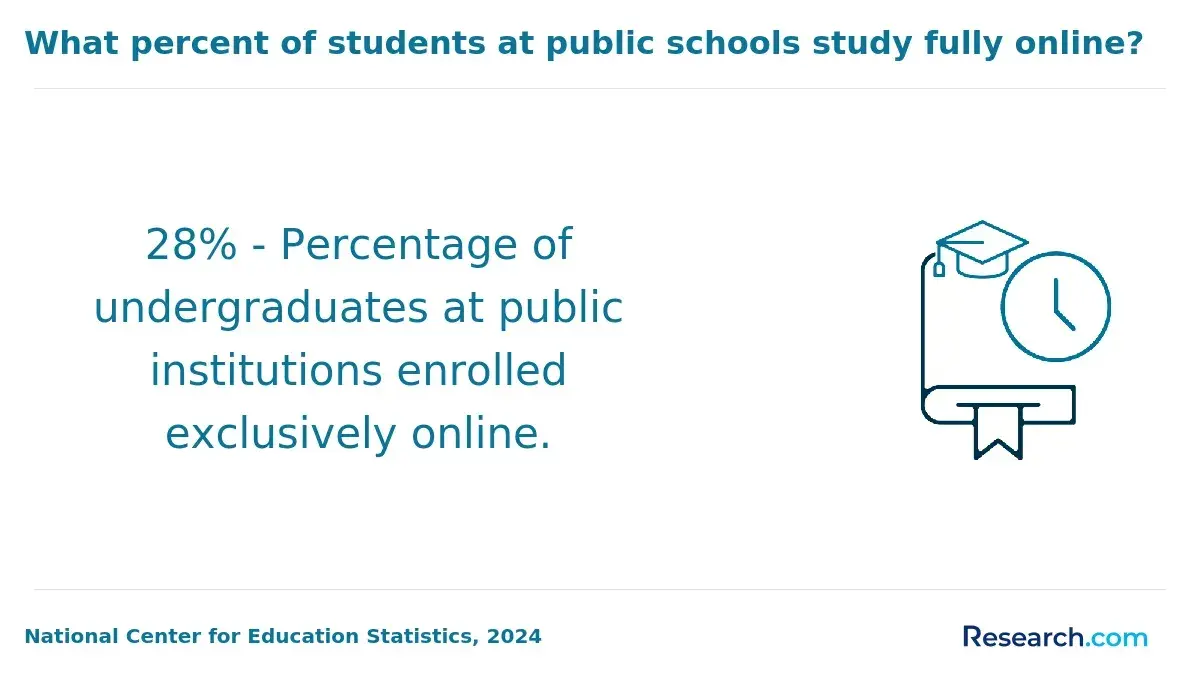
Online general studies degree programs and their traditional, campus-based counterparts maintain comparable academic standards and rigor. Accredited universities offering these degrees online are required to meet the same criteria as their in-person programs, ensuring consistent curricula, assessment methods, and qualified faculty.
Advances in online education technology have made virtual classrooms more interactive and engaging, with some studies indicating that online learners can even outperform those in traditional settings. Regular assessments in online courses often allow for closer monitoring of student progress.
Additionally, retention and knowledge retention rates tend to be higher among online learners, with figures ranging from 25% to 60%, compared to 8% to 10% for face-to-face formats.
Employer acceptance of online general studies degrees has improved notably in recent years. Many academic leaders recognize that learning outcomes for online programs are on par with or better than traditional ones.
The majority of employers now value online degrees, especially when awarded by accredited and reputable institutions. Surveys show that most online students feel their degrees provide good value and that their learning experience equals or surpasses classroom learning.
Nonetheless, some employers still prefer traditional degrees due to perceived advantages like networking or hands-on opportunities. Ultimately, the credibility of a general studies degree hinges more on the institution's reputation and accreditation status than on whether the degree was earned online or on campus.
How Much Does Each Type of General Studies Degree Typically Cost?
Understanding how tuition costs differ across various general studies degree levels is crucial for effective budgeting and long-term financial planning. Knowing what to expect financially can help prospective students make informed decisions about their education pathways.
The following list outlines the typical tuition ranges for each type of General Studies degree along with key factors that influence costs and available financial aid options.
- Certificate in General Studies: The average tuition at state colleges for a certificate or vocational program in general studies is about $6,032. Costs tend to be lower at community colleges and may decrease further for in-district students.
- Associate Degree in General Studies: Tuition for a two-year associate degree varies widely, typically ranging from $3,598 per year at public community colleges for in-district students to total costs between $8,940 and $12,864 depending on residency status.
- Bachelor's Degree in General Studies: The cost of a four-year bachelor's degree fluctuates broadly. Public universities charge an average of $9,750 per year for in-state tuition, while private universities can have tuition exceeding $39,000 annually.
- Master's in General Studies: Tuition for master's programs is typically charged per credit hour, averaging about $420 per quarter credit hour at some institutions like Purdue Global. Overall costs usually range between $15,000 and $40,000 depending on credit requirements and the university.
One graduate of a General Studies degree program I spoke with shared that she had to carefully balance work and financial aid to cover her tuition over four years. She reflected, "Initially, I underestimated the total cost, especially when factoring in living expenses and books.
But by applying early for scholarships and choosing some online courses, I was able to reduce what I owed out-of-pocket." She also mentioned how federal grants and a part-time job helped her stay afloat financially without accumulating overwhelming debt.
Looking back, she felt her careful financial planning paid off as the degree opened up new career opportunities that justified the investment.
Ultimately, her experience highlights how proactive research and combining multiple funding sources can make pursuing a General Studies degree financially manageable.
What Jobs Can You Get with Each Type of General Studies Degree?
The level of a general studies degree-whether associate, bachelor's, or multidisciplinary-significantly influences the range of career opportunities and the types of roles graduates can pursue. Higher degree levels tend to open doors to broader and higher-paying positions with more responsibility.
Below is an overview of common jobs for each type of general studies degree to help you understand potential career paths.
- Associate Degree in General Studies: This degree equips students with foundational skills in communication, math, and critical thinking. Typical roles include administrative or executive assistant, customer service representative, bank teller, marketing assistant, and IT support specialist.
- Bachelor's Degree in General Studies: Common jobs include business analyst, public relations specialist, technical writer, market research analyst, and human resources specialist. Graduates typically work in corporate settings, non-profit organizations, educational institutions, or government agencies.
- Multidisciplinary or Specialized General Studies Degrees: These programs allow students to focus on particular areas like business, digital media, political science, or health, which enables them to qualify for more specialized roles. Examples include content writer, policy analyst, social media manager, and education administrator.
General studies degrees offer flexibility and a broad skill set that can be advantageous for adapting to various industries or pursuing further education.
Students aiming to advance quickly may also want to explore options such as the quickest online masters degree programs, which can build on their general studies foundation for specialized career growth.
How Do Salaries Differ by General Studies Degree Type?
Degree level often influences earning potential for graduates, with higher degrees generally leading to better salaries over time. Understanding these differences can help students make informed educational and career decisions.
Below is an overview of typical salary ranges for each type of general studies degree.
- Associate Degree in General Studies: Graduates can expect an average base salary ranging from $50,000 to $64,000 per year. Starting salaries vary depending on region and industry, affecting opportunities. While this degree allows access to entry-level roles, advancing often requires further education or experience.
- Bachelor's Degree in General Studies: This degree typically results in higher starting salaries, generally between $60,000 and $71,000 annually. It increases earning potential by over $17,000 compared to an associate degree and opens doors to a broader range of jobs with stronger long-term growth possibilities.
- Master's Degree in General Studies or Related Fields: Earning a master's degree usually raises median annual salaries to around $81,867 or more. Advanced degrees unlock specialized opportunities in management, education, or consulting, where pay scales tend to be significantly higher.
Is There High Demand for General Studies Degree Holders in the Job Market?
There is moderate demand for general studies degree holders in the job market, though it generally does not reach the levels seen with specialized degrees like engineering, computer science, or healthcare.
he primary appeal of a general studies degree lies in its flexibility and the broad skill set it offers, including critical thinking, communication, research, and problem-solving.
Emerging technologies such as automation and artificial intelligence have reshaped workforce needs by reducing routine tasks and emphasizing creativity, complex problem-solving, and interpersonal skills-areas where general studies graduates often excel.
Regional differences also affect demand: urban centers with diverse industries typically provide more opportunities, while rural or niche markets may favor more narrowly focused degrees.
Salary potential for holders of this degree varies widely, with roles like human resources manager offering $75,000 to $125,000 and marketing specialists earning between $55,000 and $100,000, though entry-level salaries can be lower and require strategic skill development for advancement.
As technology continues to evolve and job roles shift rapidly in the US, employers increasingly seek adaptable, well-rounded candidates capable of managing change and ongoing learning-qualities often demonstrated by general studies graduates.
Students interested in this degree might also explore options at an online school for trade skills to complement their education with practical expertise.
While general studies degrees do not top the list of most in-demand majors, they equip graduates with versatility and future-proof skills valuable across industries such as business, education, healthcare administration, nonprofits, and government.
Success in the workforce depends largely on graduates' initiative to build additional skills and communicate their value effectively, enabling access to a broad spectrum of rewarding roles despite moderate overall demand.
What Factors Should You Consider When Picking a Type of General Studies Degree?
Choosing the right general studies degree level is a critical decision that directly impacts your career opportunities and how well your education fits your personal circumstances.
Consider the following when selecting your degree level:
- Career Goals: Your intended career path should guide your choice of degree level. An associate general studies degree can open doors to entry-level jobs and serve as a stepping stone toward a bachelor's, while a bachelor's degree typically leads to higher earning potential and more advanced positions.
- Time Commitment: Associate degrees usually require about two years of full-time study, compared to four years for bachelor's programs. If entering the workforce quickly or maintaining flexibility is important, an associate degree might be preferable.
- Transferability and Flexibility: Many general studies programs allow easy transfer of credits from prior coursework. This is especially valuable if you plan to pursue further education later or want options for specialization, which bachelor's degrees often provide.
- Program Accreditation: Choosing a degree from an accredited program is essential for professional licensure, certifications, and qualifying for federal financial aid. Accreditation ensures your education meets recognized quality standards.
- Cost and Financial Aid: Tuition costs vary between institutions and degree levels, with associate degrees generally costing less upfront. However, bachelor's degrees can offer a higher return on investment in the long term. Look for accredited programs to access financial aid and compare costs carefully.
What General Studies Graduates Say About Their Degree and Salary
- Bernadette: "Completing my associate degree in general studies gave me the flexibility to explore different subjects before committing to a specific career path. This explorer's approach helped me discover my passion for social work, which I wouldn't have realized without such a broad academic foundation. Now, I work with local youth programs, and I find joy in making a tangible difference in my community's well-being. The adaptability that comes with a general studies background has been invaluable in a rapidly changing job market."
- Holly: "As a graduate with a bachelor's degree in general studies, I gained a diverse skill set that has opened doors to varied professional opportunities. The program's interdisciplinary focus improved my critical thinking and communication skills, essential for my current career in project management. Reflecting on my journey, I appreciate how the flexibility allowed me to tailor my coursework to fit my goals, setting a solid stage for career advancement. This degree truly equipped me to thrive in dynamic professional environments."
- Jimmy: "My experience earning a master's in general studies deepened my understanding across several disciplines, which has been a tremendous asset in my role as an educator. The degree challenged me to think holistically and approach problems creatively, qualities I incorporate into my teaching every day. It's not just about professional growth but also personal development-this program strengthened my commitment to fostering positive change in my students' lives. I'm proud to say my general studies degree empowered me to inspire and lead."
Other Things You Should Know About General Studies Degree Programs & Salaries
Yes, the choice of a General Studies degree major can influence the expected salary in 2027. Specialized majors within General Studies may lead to higher salaries due to targeted skills and industry demand, compared to more generalized tracks.
In 2027, General Studies graduates typically earn less than those with specialized degrees. While entry-level salaries for General Studies graduates may range from $40,000 to $50,000, specialized degrees can command higher starting salaries, often exceeding $60,000, depending on the field and industry demand.
In 2027, General Studies degrees include associate, bachelor's, and master's levels. Associate degree holders may earn around $35,000 annually. Bachelor's degree graduates can expect salaries averaging $50,000, while master's degree holders might earn around $65,000, depending on the field and location.
References
- General Studies Associate Degree | Germanna Community College https://germanna.edu/programs/general-studies-associate-degree
- Careers https://clas.iusb.edu/general-studies/information-for-students/careers.html
- Accelerated Bachelor of General Studies / Master of Education https://education.und.edu/academics/tlpp/accelerated-bgs-med.html
- 10 Exciting Careers You Can Pursue with a General Studies Degree https://louisiana.edu/online/blog/10-exciting-careers-you-can-pursue-general-studies-degree
- Top 10 Highest Paying Jobs With General Studies Degree 2025 | Nexford University https://www.nexford.edu/insights/highest-paying-jobs-with-general-studies-degree
- What You Can Do with a General Studies Associate Degree https://www.bluefield.edu/blog/what-do-general-studies-associate-degree/
- Why Earn a General Studies Associate Degree? - Baker College https://www.baker.edu/about/get-to-know-us/blog/benefits-of-a-general-studies-associate-degree/
- What Is a General Studies Degree? https://www.columbiasouthern.edu/blog/blog-articles/2022/february/general-studies-degree/
- Tuition & Aid | Cost of a General Studies Degree https://und.edu/programs/general-studies-bgs/cost.html


