
2027 Different Types of Information Technology Management Degrees and Their Salaries

Co-Founder and Chief Data Scientist
The demand for skilled professionals in information technology management continues to rise sharply as businesses increasingly rely on technology to drive growth and innovation. Recent data highlights that employment in this field is projected to grow significantly faster than average, reflecting the critical need for effective management of complex IT systems and teams.
This article provides a detailed guide to the various types of information technology management degrees and explores the earning potential graduates can expect in each, equipping prospective students with the knowledge needed to make informed decisions about their academic and professional futures.
Key Points About Different Types of Information Technology Management Degrees and Their Salaries
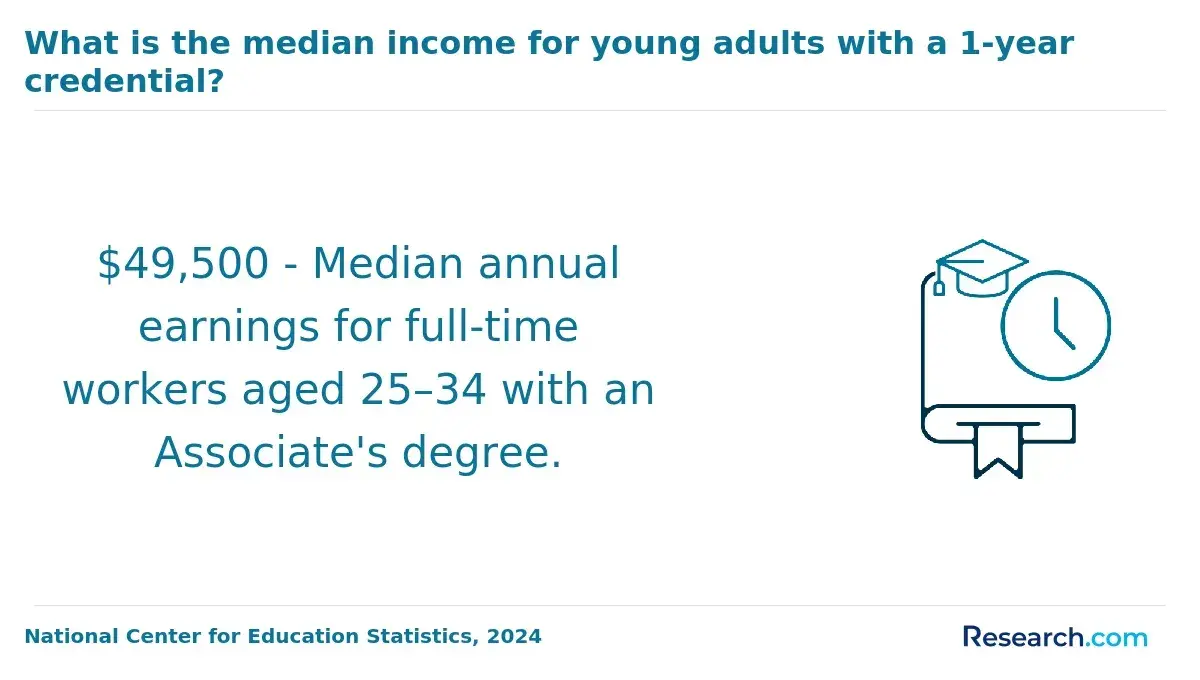
- Graduates with an associate degree in information technology management often qualify for entry-level positions such as IT support specialists, with average salaries around $50,000 per year, making it a viable option for those seeking quicker entry into the workforce.
- Those holding a bachelor's degree typically access a broader range of roles including IT project managers and systems analysts, with median salaries near $85,000 annually, reflecting higher responsibility and career advancement opportunities compared to associate degree holders.
- A master's degree in information technology management significantly boosts earning potential and leadership prospects, with median salaries often exceeding $110,000, as advanced education equips graduates for senior management and strategic roles in the IT sector.
What Are the Different Types of Information Technology Management Degrees Available?
Understanding the different types and levels of information technology management degrees is important for students to align their education with their career ambitions and prior knowledge.
Each degree option offers tailored academic focuses that cater to diverse career goals and educational backgrounds, ensuring students develop the relevant skills for their desired roles.
Below is a summary of the main types of information technology management degrees and what distinguishes each from the others in terms of academic content and emphasis:
- Associate Degree in Information Technology Management: This degree provides foundational knowledge in IT systems, networking, and basic management principles. Coursework generally covers introductory programming, database basics, and IT support topics aimed at practical, entry-level technical skills.
- Bachelor's Degree in Information Technology Management: Offering a balanced curriculum, this degree combines technical IT skills with business and management principles. Typical courses include software development, database administration, IT business analysis, and project management to cover both strategic and operational IT aspects.
- Master of Science (M.S.) in Information Technology Management: Focused on advanced technical and managerial concepts, the M.S. prepares students for technical leadership roles. The curriculum often features technology operations, sourcing and planning, risk management, and solutions development.
- Master of Business Administration (MBA) in Information Technology Management: Emphasizing business leadership and strategic decision-making, this program blends business strategy, financial management, and data-driven decision-making with IT project management to align technology goals with overall business objectives.
- Information Systems Management Degree: This degree integrates IT fundamentals with strong focuses on business processes, systems design, and organizational strategy. Coursework includes information systems analysis, business analytics, and project management to bridge technology with business needs.
Data from sources like the U.S. Bureau of Labor Statistics and industry surveys show that median salaries for IT management roles can exceed $159,000, but the specific salary often depends on the degree type and focus.
For those exploring advanced education pathways, exploring 1 year masters programs USA can provide options that balance time and career impact effectively.
What Specializations Are Available in Information Technology Management Degrees?
Choosing a specialization in an information technology management degree is crucial because it directs the specific technical and leadership skills you develop, which in turn aligns with your career ambitions.
This focused approach helps students tailor their education to meet the demands of targeted industries and roles, optimizing both employment opportunities and salary prospects.
Below are some common information technology management specializations that highlight different career paths and skill sets:
- Information Technology Management: Cybersecurity: Concentrates on defending organizations against cyber threats through training in risk assessment, ethical hacking, and incident response. Graduates typically pursue roles such as information security analysts, cybersecurity managers, or compliance officers.
- Information Technology Management: Data Analytics and Management: Emphasizes skills in data analysis, database systems, and decision support technologies. Career options often include data analyst, business intelligence manager, or data science consultant positions across diverse industries.
- Information Technology Management: Project Management: Covers essential project skills such as planning, agile methodologies, and resource allocation. Graduates frequently become IT project managers, program coordinators, or technology consultants leading critical initiatives.
- Information Technology Management: Information Systems Management: Integrates business strategy with IT infrastructure management to enhance organizational effectiveness. Common roles include IT director, systems manager, or chief information officer.
- Information Technology Management: Web Design and Application Development: Focuses on creating and managing user applications with coursework in web development, UI/UX design, and programming. Graduates often find careers as web developers, application architects, or digital product managers.
- Information Technology Management: Network and Infrastructure Management: Teaches network design and IT system administration. Career paths include network administrator, systems engineer, or cloud infrastructure manager, ensuring reliable technology operations.
For students considering education options later in life, exploring the top degrees for 60 year olds can provide guidance on flexible programs that still offer robust specialization opportunities in fields like IT management.
How Long Does It Take to Complete Each Type of Information Technology Management Degree?
Understanding the duration of different information technology management degree programs is crucial for students as it helps in planning their education and aligning it with their career goals. Knowing how long each program typically takes also assists in managing financial and personal commitments effectively.
The following list highlights the main types of information technology management degrees and their average completion times.
- Associate Degree in Information Technology Management: Typically completed in about two years of full-time study, this degree offers a foundational education in IT management. Part-time students may take longer, while some programs offer accelerated paths. Online options are commonly available, providing flexibility for working students.
- Bachelor's Degree in Information Technology Management: This degree generally requires four years of full-time study. Students with transfer credits from an associate degree might finish earlier. Many institutions provide online and accelerated programs that can reduce the duration to three years or less.
- Master's Degree in Information Technology Management: Master's programs usually take one to two years of full-time study to complete. Part-time schedules can extend this to three or more years. Accelerated and online formats are frequently offered to accommodate professionals balancing work and study.
- Doctorate Degree in Information Technology Management: Doctoral programs often span three to six years, depending on the research intensity and whether the student studies full- or part-time. Online options exist but are less common, and factors like dissertation progress greatly influence completion time.
Are There Accelerated Information Technology Management Degree Programs?
Accelerated information technology management degree programs do exist in the United States, providing an efficient path for students eager to enter the workforce faster than traditional formats allow. These programs reduce the typical timeframe by employing strategies such as condensed courses, year-round academic terms, and dual-credit options where certain classes fulfill both undergraduate and graduate requirements simultaneously.
This approach often enables students to complete both a bachelor's and a master's degree in as little as four to five years, rather than the six or more years usually needed when pursuing the degrees separately.
Common program structures include 4+1 formats, which permit students to start graduate-level coursework during their final undergraduate year, and bachelor's-to-master's bridge programs that allow undergraduates to earn up to 9-12 graduate credits early.
Additionally, competency-based online programs offer flexible pacing, and many accelerated paths accept transfer credits or prior learning assessments to further decrease time to completion.
While accelerated programs offer significant time and cost savings, they demand a notably intense academic workload. Students typically must maintain a high GPA—often between 3.0 and 3.5 or above—and possess junior or senior standing before qualifying.
The intertwined undergraduate and graduate requirements can overlap, requiring strong time management and sustained motivation. Because of the condensed nature of courses and year-round schedules, students often face less downtime between terms and a heavier credit load each semester.
Tuition models for these programs sometimes charge per term instead of per credit, helping students better control costs despite the accelerated pace. Prospective candidates should carefully assess their readiness for the demanding pace and workload such programs require to succeed.
When I spoke with a graduate of an accelerated information technology management degree program, he reflected on the experience with both pride and honesty.
He described the initial surprise of managing simultaneous undergraduate and graduate coursework, saying, "It was daunting at first, juggling multiple projects and exams every few weeks with barely any breaks."
However, he emphasized that the condensed timeline kept him focused and prevented burnout from lingering over less challenging work. Early on, he leveraged faculty support and peer study groups, noting that "building a strong support system was crucial to keep up momentum."
Despite the workload intensity, the graduate felt his time management skills sharpened remarkably and that entering the workforce sooner than his peers gave him a competitive edge.
"It wasn't easy, but looking back, I'd do it all over again because the fast pace pushed me to excel and adapt quickly," he concluded, framing the accelerated path as both challenging and ultimately rewarding.
Are Online Information Technology Management Degrees as Credible as Traditional Ones?
Online information technology management degree programs maintain academic standards comparable to traditional formats by using the same curriculum, faculty, and learning outcomes.
Accrediting bodies ensure both types of programs uphold rigorous quality, with coursework covering key subjects like project management, systems analysis, and IT strategy. While traditional programs benefit from face-to-face collaboration, immediate feedback, and campus networking, online programs utilize digital platforms for interactive learning, discussion forums, and simulations.
This approach aligns with increasing demand for tech-savvy graduates in today's digital economy. Both delivery formats typically require similar time to completion and cover comparable material; however, online programs often offer more flexible pacing and may reduce overall costs, potentially saving students over $30,000 compared to traditional degrees.
Employer acceptance of online information technology management degrees has grown significantly, especially since many respected universities now offer both online and in-person options.
The COVID-19 pandemic accelerated this shift, with over 40% of community college classes now online versus 21% before 2020. Employers increasingly appreciate the flexibility, digital skills, and self-management shown by online graduates, though some still favor traditional programs for leadership or hands-on roles.
Ultimately, the credibility of an information technology management degree-whether completed online or on campus-is largely determined by the reputation and accreditation of the issuing institution rather than the delivery method. Prospective students should prioritize selecting well-regarded, accredited universities to ensure their degree holds value with employers.

How Much Does Each Type of Information Technology Management Degree Typically Cost?
Understanding tuition differences across information technology management degree levels is crucial for effective budgeting and long-term financial planning. Since costs can vary widely depending on the degree type, delivery format, and institution, prospective students benefit greatly from knowing what to expect.
The following outlines the typical tuition ranges for each type of Information Technology Management degree, along with key cost factors and common financial aid opportunities.
- Associate Degree in Information Technology Management: Tuition for an associate degree generally ranges from $3,000 to $10,000 per year at public community colleges, with private colleges often charging much more. Many students offset these costs by using federal Pell Grants, state grants, and institutional scholarships, making community colleges a budget-friendly starting option.
- Bachelor's Degree in Information Technology Management: Tuition for online bachelor's programs typically runs from $249 to $448 per credit, resulting in total program costs around $28,000 to $54,000 depending on the institution and transfer credits. Public universities usually have lower rates than private schools, and some institutions offer flat-rate tuition per term, helping students save by accelerating their pace. Financial aid often includes federal loans, scholarships, and credit transfers to reduce expenses.
- Master's in Information Technology Management: Master's programs vary significantly, but online options generally cost between $7,000 and $20,000 for the full degree. Price differences depend on credit requirements and institutional type, with public universities tending to offer more affordable rates. Graduate students commonly use federal loans, assistantships, employer tuition reimbursements, and merit scholarships to manage costs.
- Doctoral Degree in Information Technology Management: Doctoral tuition at public universities can range from $15,000 to $30,000 annually, while private schools may charge considerably higher fees. Many PhD programs help alleviate expenses through teaching or research assistantships that cover tuition and provide stipends, making these degrees more accessible despite the higher sticker price.
One graduate of an information technology management degree program shared insightful reflections on managing the cost of her education.
She emphasized the importance of early financial planning and seeking diverse aid opportunities. "I combined part-time work with employer tuition assistance, which really helped me avoid accumulating excessive debt," she said.
She also highlighted how utilizing transfer credits and carefully selecting an online program reduced her overall expenses without compromising educational quality. Reflecting on her journey, she noted, "Investing time in exploring funding options upfront paid off; it allowed me to focus fully on my studies and later advance quickly in my career."
Her practical approach underscores that with strategic planning, students can successfully manage tuition costs and achieve valuable outcomes in information technology management careers.
What Jobs Can You Get with Each Type of Information Technology Management Degree?
The level of an information technology management degree significantly shapes the range of career opportunities and types of roles graduates can pursue. Higher degree levels generally qualify individuals for more advanced leadership, technical, and strategic positions, while entry-level degrees prepare graduates for foundational or specialized support roles.
Below is an overview of common jobs associated with each type of information technology management degree.
- Associate degree in information technology management: Graduates typically enter entry-level roles such as desktop support specialist, cybersecurity intern, or technical support manager. These positions focus on troubleshooting, maintaining IT systems, and providing front-line technical assistance in industries like business, healthcare, or education.
- Bachelor's degree in information technology management: This degree opens doors to jobs like software applications developer, information security analyst, computer systems analyst, and network administrator. Professionals in these roles design software, analyze security risks, optimize systems, and manage network infrastructure, with median annual salaries often ranging from $77,000 to over $100,000, reflecting strong demand through 2033.
- Master's degree in information technology management: Graduates often advance to positions such as IT project manager, IT systems architect, or management analyst. These roles involve leading cross-functional teams, overseeing large IT projects, and developing organizational technology strategies. For detailed insights on salary expectations, consider exploring the highest earning master's degrees.
- Doctoral degree (PhD) in information technology management: Earning a doctorate prepares graduates for academia, research, or executive leadership roles such as university faculty, computer and information research scientist, or chief technology officer (CTO). These careers emphasize research, teaching, technology innovation, and guiding an organization's IT vision at the highest level.
How Do Salaries Differ by Information Technology Management Degree Type?
Degree level often plays a significant role in determining earning potential in information technology management. Understanding how salaries differ by degree type can help students make informed decisions about their education and career paths.
Below is an overview of typical salary ranges associated with each major degree level in information technology management.
- Associate Degree in Information Technology Management: Entry-level roles like IT support specialist typically start with salaries ranging from $48,000 to $59,000 annually. While pay may be lower in areas with less demand for IT skills, gaining experience and earning certifications can help increase earning potential over time.
- Bachelor's Degree in Information Technology Management: Graduates often qualify for roles such as network administrator or IT manager, with starting salaries between $67,000 and $116,000 per year. Median wages for experienced IT managers with a bachelor's degree can reach around $171,200, with variations depending on the industry and geographic location.
- Master's Degree in Information Technology Management: Advanced degrees like an MBA or master's in IT management open doors to senior positions, including IT director or senior program analyst. Salaries for these roles generally range from $122,000 to $138,000 annually, and such degrees often facilitate faster career advancement, particularly in metropolitan areas.
- Doctoral Degree in Information Technology Management: Less common but highly specialized, doctorates can lead to careers in academia, high-level consulting, or executive roles. Salaries frequently exceed $150,000, reflecting the extensive expertise and leadership responsibilities involved.
Industry trends and location continue to influence salary outcomes at every degree level, especially in high-growth sectors and larger cities.
For students considering the quickest schooling highest pay options, exploring degree programs linked to earning potential, such as through quickest schooling highest pay pathways, can provide valuable insight into which educational investments may yield the best long-term rewards.
Is There High Demand for Information Technology Management Degree Holders in the Job Market?
There is considerable demand for information technology management degree holders in today's U.S. job market, driven by rapid technological advancements and expanding digital infrastructure. Emerging technologies such as artificial intelligence, big data, and cloud computing are revolutionizing industries and increasing the need for IT managers who can strategically integrate these tools.
Employers value not only technical skills but also leadership, project management, and communication abilities, which are often cultivated through formal education. Regional differences do influence job availability and compensation, with technology hubs seeing faster growth; for example, Wisconsin expects a 7% increase in IT management positions by 2029.
The demand is also supported by a persistent shortage of professionals who combine technical expertise with business acumen, making this field particularly promising for graduates aiming to enter management roles.
Regarding career prospects, the job market outlook for information technology management degree holders is favorable. Median salaries for IT managers in 2024 are around $130,390 annually, with higher-tier roles such as CIOs and IT directors earning substantially more.
Students seeking to boost their marketability should consider advanced degrees or professional credentials, including relevant job certifications that pay well, to meet evolving employer expectations. These factors together signal robust career opportunities and salary potential across regions.
Overall, information technology management graduates can expect strong demand for their skills, particularly if they stay current with industry trends and emerging technologies.
What Factors Should You Consider When Picking a Type of Information Technology Management Degree?
Choosing the right degree level in information technology management is a crucial step that directly impacts your career trajectory and personal goals. Aligning your education with your desired professional path and individual circumstances ensures you make the most efficient and rewarding investment in your future.
Below are key factors to evaluate when selecting your degree program:
- Career Goals: Your targeted job roles should guide your degree choice. An associate degree suits entry-level IT support roles with median salaries around $41,000-$52,000, while a bachelor's degree opens higher-level management and analyst opportunities, earning $75,000-$120,000. Consider whether you want a curriculum focused on technical skills or business management to best fit your ambitions.
- Time Commitment: Associate degrees generally take two years or less, enabling quicker workforce entry. Bachelor's degrees typically require four years, though some accelerated programs can shorten this to 19-39 months. Assess your availability and urgency to start working when choosing the program length.
- Tuition and Financial Aid: Costs vary, with bachelor's programs at public schools charging roughly $249 to $322 per credit hour. Evaluate total expenses alongside financial aid options, scholarships, and transfer credit availability to balance affordability with long-term salary potential.
- Curriculum and Certifications: Look for programs that include in-demand certifications such as CompTIA, AWS, or ITIL in the tuition. These credentials can enhance your employability and boost salary prospects after graduation.
- Program Flexibility: Some institutions offer diverse degree tracks (B.A., B.S., B.A.S.) and online formats. This flexibility helps you customize your education to fit your prior experience, language preferences, or learning style.
- Accreditation and Reputation: Select accredited schools with strong reputations to ensure quality education and employer recognition. Research rankings and graduate job placement rates to make an informed choice.
What Information Technology Management Graduates Say About Their Degree and Salary
- Jayvon: "Completing my bachelor's degree in information technology management was a transformational experience that opened doors I never thought possible. The program balanced technical skills with leadership training, which helped me seamlessly transition into a project management role at a major tech firm. What I appreciate most is the practical approach to problem-solving and team collaboration that prepared me for real-world challenges. I now lead diverse teams and feel confident driving innovation while supporting my colleagues' growth."
- Solana: "Earning a master's degree in information technology management gave me the strategic insights necessary to advance rapidly within my organization. The curriculum's focus on IT governance and cybersecurity was crucial during a time when these areas are increasingly important. Personally, it was empowering to develop skills that allowed me to contribute to safer, more resilient systems that protect sensitive data. This degree didn't just enhance my career-it deepened my commitment to safeguarding information in a digital world."
- Kane: "My experience with an executive degree in information technology management was challenging yet incredibly rewarding. The program's emphasis on leadership and innovation helped me evolve from a technical expert to a strategic leader capable of influencing company-wide technology decisions. I am proud to mentor aspiring IT managers from underrepresented backgrounds, helping to diversify our industry. This degree fostered both my professional development and my passion for community impact."
Other Things You Should Know About Information Technology Management Degree Programs & Salaries
In 2027, students can pursue bachelor’s, master’s, and MBA degrees in Information Technology Management. Salaries vary by degree level, with bachelor's graduates earning around $70,000 annually, master’s degree holders averaging $95,000, and those with MBAs potentially making $120,000 or more depending on their specific role and experience.
Salaries for information technology management graduates can vary significantly by industry. For example, finance and healthcare sectors typically offer higher salaries due to the critical nature of IT systems, while government roles may offer stable but comparatively lower pay. Industry demand and budget sizes influence compensation levels.
References
- Information Technology Management BS, Information Technology Specialization https://catalog.acalog.cwu.edu/preview_program.php
- 2025 Most Affordable Online IT Degrees https://www.onlineu.com/most-affordable-colleges/information-technology-degrees
- Computer and Information Technology Occupations: Occupational Outlook Handbook. U.S. Bureau of Labor Statistics https://www.bls.gov/ooh/computer-and-information-technology/
- University of Information Technology and Management - UITM in Rzeszow https://en.uitm.edu.eu/
- Highest Paying Information Technology Degrees | Best IT Bachelors https://www.itcareerfinder.com/brain-food/blog/entry/highest-paying-information-technology-degrees.html
- Master's in IT Management | Golden Gate University https://ggu.edu/programs/ms-information-technology-management/
- Online vs Traditional Degrees: Similarities and Differences https://www.aiu.edu/blog/online-vs-traditional-degrees/
- Information Technology and Management (M.A.S.) https://www.iit.edu/academics/programs/information-technology-and-management-mas
- Affordable Online Master’s In Information Technology | Grad School Hub https://www.gradschoolhub.com/affordable/online/masters/information-technology/


