
2027 Director of Engineering Careers: Skills, Education, Salary & Job Outlook

Co-Founder and Chief Data Scientist
Becoming a Director of Engineering is not a first job in engineering; it is a leadership destination that usually follows years of technical work, team leadership, and business-facing decision-making. The central question is whether you want to move from solving engineering problems yourself to building the teams, systems, budgets, and technical direction that allow many engineers to solve the right problems at scale.
The role can be attractive for experienced engineers, engineering managers, technical leads, and technically trained professionals who want broader organizational influence. It can also feel difficult to evaluate because requirements vary by industry: software companies, manufacturers, government agencies, research organizations, and infrastructure firms may all use the title differently.
This guide explains what Directors of Engineering do, which skills and credentials matter, how the career path typically develops, what the compensation and job outlook look like, and how to decide whether this leadership track fits your strengths. With median salaries between $160,000 and $195,000 and steady job growth near 4%, the role can offer strong rewards, but it also requires sustained accountability, cross-functional communication, and the ability to keep technical work aligned with business goals.
Key Things You Should Know About Director of Engineering Career
- The typical earning potential for a director of engineering in the United States ranges from about $159,573 to $194,709 annually, with many sources placing the median near $194,709 as of 2025.
- This role is in high demand with a very active job market, offering strong long-term stability and ample opportunities for advancement and salary growth based on experience, skills, and location.
- A bachelor's degree in engineering or a related technical field is the standard entry requirement, while many positions prefer a master's degree or significant management experience to reach the director level.
- Success depends on advanced technical engineering knowledge, leadership, project management, strategic planning, excellent communication, and the ability to manage cross-functional teams effectively.
- Career progression typically follows the path of engineer to senior engineer to engineering manager and then director of engineering, with further advancement possible toward vice president of engineering or chief technology officer roles.
What do Directors of Engineering do?
Directors of Engineering lead engineering organizations rather than individual engineering tasks. Their job is to translate business priorities into technical plans, decide how engineering resources should be used, and make sure teams deliver reliable work that supports the company’s goals.
In practice, this means setting direction for multiple teams, coaching engineering managers or senior technical leads, reviewing project risks, improving delivery processes, and communicating progress to executives and other departments. The role sits between hands-on engineering and executive leadership: Directors of Engineering must understand the technical details well enough to make sound judgments, but their main output is alignment, execution, and team performance.
A day in the life of Directors of Engineering
A typical day is usually built around decisions, trade-offs, and coordination. A Director of Engineering may meet with product leaders to prioritize a roadmap, review staffing needs with managers, evaluate whether a system design is scalable, discuss budget constraints with executives, and help remove blockers that slow delivery.
Most directors write little or no production code. Instead, they rely on their technical background to ask better questions, identify risks early, and judge whether proposed solutions are realistic. Common deliverables include engineering roadmaps, hiring plans, performance reviews, project status updates, budget recommendations, vendor evaluations, and process improvements.
The best directors create clarity. They help teams understand what matters most, why it matters, and how success will be measured. Poor directors often become bottlenecks by staying too close to every technical detail or too distant from the realities facing their teams.
What are the key responsibilities of Directors of Engineering?
The key responsibility of a Director of Engineering is to make engineering teams more effective at delivering business-critical work. That requires a mix of technical judgment, people leadership, planning, budgeting, and cross-functional collaboration.
- Set engineering strategy: Convert company goals into technical priorities, delivery plans, and measurable outcomes.
- Lead engineering managers and senior engineers: Coach leaders, resolve conflicts, clarify expectations, and build accountability across teams.
- Manage resources and budgets: Decide how to allocate headcount, tools, contractors, and infrastructure spending without overextending the organization.
- Improve execution: Strengthen planning, estimation, quality control, release processes, incident response, and project visibility.
- Partner across departments: Work with product, design, operations, finance, marketing, compliance, and executive teams to keep engineering aligned with broader priorities.
- Maintain technical standards: Ensure systems are reliable, secure, maintainable, compliant, and appropriate for current and future business needs.
- Build and retain talent: Shape hiring plans, interview senior candidates, support career development, and improve team culture.
The most challenging vs. the most rewarding tasks
The hardest part is often balancing competing priorities when there is no perfect answer. Directors of Engineering may have to choose between speed and quality, innovation and reliability, hiring and budget control, or short-term delivery and long-term architecture. They are also accountable for outcomes delivered by teams rather than work they personally complete.
The most rewarding part is seeing a group of engineers become more capable because of better leadership. Successful directors help teams deliver complex projects, develop future leaders, reduce chaos, and create technology that has visible value for customers and the organization.
If you are early in your career and want a faster way to build targeted technical or business skills, reviewing the best 6 month certificate programs that pay well online can help you compare short training options before committing to a longer degree path.
What are the key skills for Directors of Engineering?
Directors of Engineering need enough technical depth to earn trust and enough leadership range to guide people, budgets, and strategy. The strongest candidates are not simply the best engineers on the team; they are the professionals who can connect technical execution to organizational outcomes.
Key hard skills
- Systems architecture: Understanding how to design, evaluate, and maintain scalable systems, platforms, products, or physical engineering solutions.
- Project and program management: Coordinating work across teams, timelines, dependencies, risks, vendors, and budgets.
- Software development or engineering discipline expertise: Applying practical technical knowledge to review proposals, set standards, and identify flawed assumptions.
- Cloud technologies: Understanding cloud deployment, operations, cost control, security, and reliability where cloud infrastructure is part of the organization’s work.
- Quality and compliance management: Building processes that reduce defects, safety risks, rework, audit problems, and operational failures.
- Data-informed decision-making: Using performance metrics, delivery data, incident trends, cost information, and customer impact to guide priorities.
Essential director of engineering leadership and management skills
- Leadership: Setting direction, creating accountability, and helping teams perform without micromanagement.
- Strategic thinking: Connecting engineering plans to business goals, market needs, customer expectations, and long-term technical health.
- Communication: Explaining technical trade-offs clearly to executives, nontechnical stakeholders, managers, and engineers.
- Problem solving: Breaking down ambiguous issues, identifying root causes, and choosing practical solutions under constraints.
- Decision-making under uncertainty: Acting with incomplete information while managing risk responsibly.
- Talent development: Coaching managers and engineers, identifying leadership potential, and creating growth paths that improve retention.
The overlooked skill that separates good directors from great ones
Business acumen is often the difference between a technically respected director and a truly influential one. A Director of Engineering must understand how engineering choices affect revenue, cost, risk, customer experience, compliance, and competitive advantage.
For example, a director with strong business judgment can recognize when a technically elegant project is no longer the best use of resources, then redirect the team toward work with stronger ROI. This does not mean ignoring quality or long-term architecture. It means making engineering decisions with a clear understanding of organizational value.
Professionals who want to strengthen advanced technical, research, or executive-level credentials may also compare easiest doctoral programs, especially when considering roles in research-heavy or highly specialized engineering environments.
Director of Engineering Careers: A Step-by-Step Guide to Getting Started
The path to Director of Engineering is usually gradual. Most people move from technical contributor to senior contributor, then into management, and eventually into a director-level role overseeing multiple teams or a major engineering function.
- Build a technical foundation. Start with education or training in a relevant engineering, computer science, technology, or engineering management field.
- Gain hands-on engineering experience. Work in roles where you design, build, test, maintain, or improve technical systems and learn how engineering decisions affect real products or operations.
- Develop senior-level judgment. Take ownership of larger projects, mentor less experienced engineers, improve processes, and learn how to evaluate technical trade-offs.
- Move into team leadership. Become a technical lead, project lead, supervisor, or engineering manager to build experience with planning, feedback, hiring, and performance management.
- Strengthen business and cross-functional skills. Learn how budgets, product priorities, customer needs, regulatory expectations, and company strategy shape engineering work.
- Lead managers or multiple teams. Director-level roles usually require evidence that you can deliver results through other leaders, not only through direct supervision of individual engineers.
- Build a track record of measurable impact. Document improvements in delivery, reliability, cost control, team performance, hiring, retention, quality, or revenue-supporting technical work.
A useful way to plan this career is to identify your next leadership gap. If you are an engineer, the gap may be people management. If you are an engineering manager, it may be strategy, budgeting, or leading through other managers. If you are already a senior manager, the gap may be executive communication and broader organizational influence.
What education, training, or certifications are required?
A Director of Engineering typically needs a bachelor’s degree in a relevant technical field. Common backgrounds include Civil, Electrical, Mechanical, Software, Computer, Chemical, or Aerospace Engineering. Some employers may also consider degrees in Engineering Management or Business Administration with an emphasis on engineering management or IT, especially when the candidate has substantial technical experience.
Education alone is not enough. Employers usually expect a record of progressive engineering responsibility, including internships or early engineering roles, senior technical work, and formal or informal leadership. Candidates generally complete engineering internships and spend 3 to 5 years in entry-level engineering roles. Progression to supervisory or senior roles for 5 to 10 years is common before becoming a director, with mostly experiential on-the-job training rather than formal residency or supervised hours.
Certifications can help, particularly when they match the employer’s industry and leadership needs. Common examples include the Certified Professional in Engineering Management (CPEM) from the American Society for Engineering Management and the Project Management Professional (PMP) from the Project Management Institute. These credentials can demonstrate knowledge of engineering management, project controls, stakeholder communication, and structured delivery.
Are advanced degrees or niche certifications worth the investment?
Advanced degrees can be valuable, but they are not automatically required for every Director of Engineering job. A Master of Science in Engineering Management, MBA with an engineering focus, or Doctor of Engineering may improve competitiveness for executive, research-intensive, highly regulated, or large-enterprise roles. Certifications such as the Certified Technology Manager (CTM) can also strengthen a leadership profile when the work involves technology strategy and organizational change.
The trade-off is cost, time, and opportunity. Advanced programs can cost $30,000 to over $120,000 and may slow short-term career progress if they reduce your ability to take on leadership responsibilities at work. In many companies, especially fast-moving technology firms or smaller organizations, a strong record of managing teams, delivering complex projects, and influencing business outcomes can matter more than another credential.
Before investing, compare the credential against actual job postings in your target industry. If most director roles require a graduate degree or PMP, the return may be stronger. If postings emphasize scale, leadership, system ownership, and business impact, focus first on building that evidence. If you are at the beginning of your education path, an accelerated associate degree online may help you evaluate faster routes into technical study before moving toward higher-level engineering preparation.
What is the earning potential for Directors of Engineering?
Director of Engineering compensation is typically strong because the role carries responsibility for people, technical direction, delivery outcomes, and often substantial budgets. Pay varies by industry, company size, location, technical specialty, and the scale of the teams being managed.
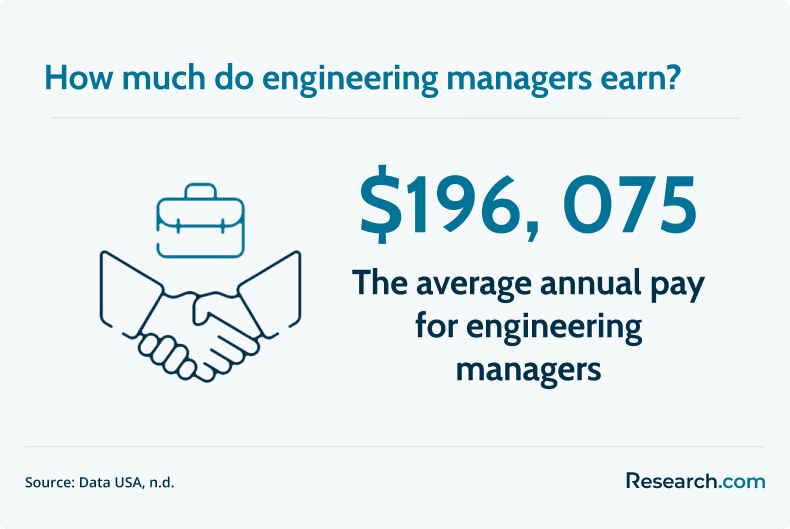
The median salary for a Director of Engineering is $194,709 per year. The Director of Engineering salary range 2025 spans from approximately $141,500 at entry level to up to $253,000 for senior-level roles. These figures should be treated as benchmarks rather than guarantees, since director titles can differ significantly across employers.
Several factors can push compensation higher or lower:
- Industry: Technology, healthcare, hospitality, manufacturing, government, and research employers may define and pay the role differently.
- Location: Major metropolitan areas, including Houston, TX, often offer higher salaries, though cost of living and competition may also be higher.
- Scope of responsibility: Directors managing multiple teams, mission-critical systems, or large budgets often command higher pay than directors overseeing a smaller function.
- Technical specialization: Expertise in high-demand or high-risk areas can increase earning power when paired with leadership experience.
- Performance history: A record of improving delivery, reducing costs, scaling teams, or stabilizing major systems can strengthen negotiation leverage.
When evaluating an offer, look beyond base salary. Bonus eligibility, equity, retirement benefits, health coverage, relocation support, severance terms, and workload expectations can substantially change the real value of the role.
What is the job outlook for Directors of Engineering?
The employment outlook for directors of engineering is projected to grow by 4% from 2022 to 2032, which is close to the average growth rate for all occupations. That suggests a stable but competitive market: opportunities exist, but director roles usually go to candidates with proven technical leadership and measurable management impact.
The key factors shaping the future outlook
Technology change is a major driver. Automation, AI, connected devices, cloud platforms, advanced manufacturing, and data-intensive products all increase the need for leaders who can manage complex engineering work across disciplines. Directors who understand both technical risk and business value will be better positioned than those who rely only on past technical expertise.
Infrastructure renewal and reshoring of manufacturing also support demand. Aging facilities, modernization projects, and new production capabilities require engineering leaders who can coordinate large projects, manage safety and quality expectations, and keep work on schedule.
Workforce dynamics matter as well. A tight labor market, retirements, and talent shortages make it harder for organizations to recruit and retain experienced engineers and engineering managers. Directors who can build strong teams, develop leaders internally, and reduce turnover may be especially valuable.
If you are still choosing an education route and want to compare shorter paths into technical fields, fast degree programs that pay well can provide a starting point for evaluating practical options.
What is the typical work environment for Directors of Engineering?
Directors of Engineering usually work in office-based or hybrid professional environments, but the exact setting depends heavily on the industry. Many are employed within architectural, engineering, and related services (24%), manufacturing (19%), or government sectors (7%). Because of that mix, some directors spend nearly all their time in meetings and planning sessions, while others also visit manufacturing plants, laboratories, construction sites, or client locations.
The work is highly collaborative. Directors regularly interact with engineering managers, senior engineers, product leaders, executives, finance teams, operations staff, vendors, clients, and compliance professionals. The role requires frequent context-switching: one hour may involve a technical risk review, while the next may focus on budget approvals, hiring priorities, or executive reporting.
The director of engineering typical work schedule is full time and often exceeds 40 hours per week. Evening or weekend work may be necessary during product launches, critical incidents, audits, construction milestones, production issues, or deadline-heavy project phases.
Remote or hybrid work is possible in some organizations, especially for software and administrative leadership tasks. However, roles tied to physical facilities, regulated environments, hardware, manufacturing, laboratories, or construction may require more on-site presence. Candidates should clarify travel, on-call expectations, and after-hours responsibilities before accepting a role.
What are the pros and cons of Directors of Engineering careers?
A Director of Engineering career can be highly rewarding for people who enjoy leadership, strategy, and technical problem-solving at scale. It is less suitable for professionals who want most of their time to remain hands-on with design, coding, testing, or analysis.
Pros
- High influence: Directors help shape technical direction, team structure, delivery standards, and long-term engineering priorities.
- Strong earning potential: The role often pays well because it combines technical expertise, people leadership, and business accountability.
- Broader organizational impact: Decisions can affect product quality, customer experience, operational reliability, revenue, and company strategy.
- Talent development: Directors can mentor managers and engineers, create promotion paths, and build healthier engineering cultures.
- Varied work: The role blends strategy, operations, hiring, budgeting, technical review, and executive communication.
Cons
- Less hands-on technical work: Many directors miss building or designing systems directly after moving into senior leadership.
- High accountability: Directors are responsible for team and project outcomes, even when they are not personally doing the work.
- Competing priorities: Budget, deadlines, quality, staffing, customer demands, and executive expectations can conflict.
- People-management complexity: Conflict resolution, performance issues, hiring challenges, and morale problems require patience and emotional intelligence.
- Stress and long hours: Critical incidents, delayed projects, and executive pressure can create demanding work periods.
This career fits best if you want to multiply your impact through teams rather than measure your success mainly by individual technical output. If you are a working adult trying to build management or technical credentials while staying employed, cheap online universities for working adults may help you compare flexible education options.
What are the opportunities for advancement for Directors of Engineering?
Director of Engineering is a senior role, but it is not necessarily the end of the path. Advancement can move upward into executive leadership, outward into broader operations or product roles, or deeper into specialized technical leadership.
Advancement path beyond Director of Engineering
- Vice President of Engineering: Oversees larger engineering organizations, sets broader technical strategy, manages directors or senior managers, and works more closely with executive leadership.
- Chief Technology Officer (CTO): Guides company-wide technology vision, innovation priorities, technical investment, and the relationship between technology and business strategy.
- Senior or Principal Engineer to Technical Director: Offers an alternative route for professionals who want high-level technical authority without managing large teams directly.
- General management or operations leadership: Some directors move into roles that oversee engineering plus product, operations, delivery, or business unit performance.
Specialization opportunities for Directors
- Operational Engineering Director: Focuses on execution, reliability, process improvement, delivery efficiency, and cross-functional coordination.
- Strategic Engineering Director: Leads long-range technology planning, investment decisions, growth initiatives, and major organizational priorities such as mergers.
- Risk Management Engineering Director: Concentrates on technical risk, compliance, safety, security, resilience, and governance, especially in regulated industries.
- Transformational Engineering Director: Leads major change efforts, such as adopting new technologies, restructuring teams, improving delivery models, or modernizing legacy systems.
- Startup Engineering Director: Combines technical leadership with rapid hiring, product-market uncertainty, fundraising support, and hands-on organizational building.
- Compliance-focused Director: Ensures engineering work meets legal, safety, quality, industry, and customer requirements.
The strongest advancement strategy is to match your next move to the kind of influence you want. If you want to lead larger organizations, build executive communication and financial skills. If you want deeper technical authority, keep your expertise current and pursue high-impact architecture or innovation work. If you want to move toward CTO, develop a track record of connecting technology choices to company strategy.
What other careers should you consider?
If Director of Engineering is close to your interests but not an exact fit, several related careers may offer a better match depending on how much you want to manage people, shape strategy, or stay close to technical execution.
- Vice President of Engineering: A stronger fit if you want broader executive responsibility, larger teams, and greater ownership of engineering strategy.
- Chief Technology Officer (CTO): A better option if your goal is to define technology vision, guide innovation, and influence company-wide business direction.
- Engineering Manager: A good fit if you prefer leading one or a few teams directly, coaching engineers, and improving day-to-day delivery.
- Technical Program Manager: Suitable for professionals who enjoy coordinating complex technical projects across teams but do not necessarily want direct people-management responsibility.
- Technical Consultant: A strong alternative if you want to advise organizations, solve specialized problems, and apply engineering expertise without staying inside one company’s management structure.
Choose based on the work you want to do every week, not just the title. If you enjoy coaching managers, negotiating priorities, and building systems of execution, Director of Engineering may fit well. If you prefer deep technical problem-solving, a senior technical track may be more satisfying. If you want company-wide authority, VP of Engineering or CTO may be the longer-term target.
Here's What Professionals Say About Their Director of Engineering Careers
- : "Transitioning from coding every day to leading a rapidly growing engineering team was both exciting and daunting. I suddenly had to focus on hiring, coaching, and scaling rather than pushing code. What helped me most was genuinely engaging with each engineer's work, asking detailed questions because I wanted to understand and support them better. Over time, I noticed how open they became, sharing challenges and solutions freely once they trusted my curiosity was sincere. That shift from individual contributor to team enabler changed how I measure impact. Hana"
- : "I hit my breaking point when managing a dozen features I had built while also supporting the entire platform and juggling vendor meetings. One night, an alert woke me because a system I developed was down, and the next morning I had to prepare for integration talks. I told leadership I needed more hands on deck before burning out, which was hard because I was used to owning everything myself. After building a team starting with just two engineers, I watched us grow into a solid ten-person group managing critical systems. That change relieved so much pressure and allowed me to focus on leadership instead of firefighting. Marcus"
- : "Starting as a Director of Engineering at a company where I lacked deep technical context felt overwhelming at first. I wasn't sure how to gain credibility without the same hands-on experience my teams had. But I found that showing genuine curiosity and asking thoughtful questions about their projects helped build trust faster than trying to assert authority. Meeting so many skilled engineers opened my eyes to what kind of leader I wanted to become, attentive and supportive rather than just directive. Those meaningful connections and shared learning moments became the highlight of my role. Leila"
Key Findings
- Directors of Engineering lead engineering organizations by aligning technical work with business goals, budgets, staffing, quality standards, and delivery expectations.
- The role usually requires a bachelor’s degree in a relevant engineering or technical field, plus years of progressive hands-on and leadership experience.
- Common credentials include the Certified Professional in Engineering Management (CPEM) and Project Management Professional (PMP), though experience and measurable leadership impact often carry significant weight.
- The median salary for a Director of Engineering is $194,709 per year, with a Director of Engineering salary range 2025 from approximately $141,500 at entry level to up to $253,000 for senior-level roles.
- The employment outlook is projected to grow by 4% from 2022 to 2032, supported by technology change, infrastructure needs, manufacturing shifts, and demand for experienced engineering leadership.
- The career offers high influence and strong earning potential, but it also brings pressure, long hours, complex people-management challenges, and less hands-on technical work.
- Advancement options include Vice President of Engineering, Chief Technology Officer, Technical Director, operational leadership, strategic engineering leadership, and specialized risk or compliance roles.
Other Things You Should Know About Director of Engineering Careers
A common career path to becoming a director of engineering in 2027 includes earning a bachelor's degree in engineering, gaining 10+ years of experience in technical roles, and progressing to management positions. Advanced degrees or certifications, like an MBA, enhance leadership skills and career prospects.
In 2027, directors of engineering frequently use Agile methodologies to optimize project management and development processes. Tools like Jira for tracking progress and collaboration, alongside CI/CD platforms such as Jenkins, are critical for maintaining efficient operations and scaling innovation.
References
- Resume Skills for Director Of Engineering (+ Templates) - Updated for 2025 https://resumeworded.com/skills-and-keywords/director-of-engineering-skills
- Head Of Engineering Job Titles in 2025 - Most Popular Titles by Career Level https://www.tealhq.com/job-titles/head-of-engineering
- What does an Engineering Director do? Career Overview, Roles, Jobs | KAPLAN https://jobs.community.kaplan.com/career/engineering-director
- What a director of engineering really does https://www.okoone.com/spark/leadership-management/what-a-director-of-engineering-really-does/
- Architectural and Engineering Managers https://www.bls.gov/ooh/management/architectural-and-engineering-managers.htm
- What does an Engineering Director do? Career Overview, Roles, Jobs | AIAS https://careers.aias.org/career/engineering-director
- Ways to Speed Up the Hiring Process as a Director of Engineering https://medium.com/@neshkoskam/ways-to-speed-up-the-hiring-process-as-a-director-of-engineering-e2203265da83
- 9 Engineering Management Career Paths https://ep.jhu.edu/news/9-engineering-management-career-paths/
- 6 Director Engineering Interview Questions | EngCen https://engcen.com/interview-questions/director-engineering
- 6 Soft Skills That Make a Good Engineer Great https://interpro.wisc.edu/6-soft-skills-that-make-a-good-engineer-great/


