
2027 Disaster Mental Health Specialist Careers: Skills, Education, Salary & Job Outlook

Co-Founder and Chief Data Scientist
Becoming a disaster mental health specialist is not a casual career move. It usually requires a graduate-level mental health credential, state licensure, supervised clinical experience, and disaster-specific training. The work can place you in shelters, community recovery centers, hospitals, government programs, or field response teams where people are coping with loss, displacement, trauma, and uncertainty.
For the right person, the career can be both practical and deeply meaningful. The field offers steady growth, with about 900 openings annually, and competitive pay around $84,000 nationally. It also demands emotional stamina, ethical judgment, cultural humility, and the ability to work inside complex emergency response systems.
This guide explains what disaster mental health specialists do, what education and credentials are typically required, how much they can earn, where they work, and how to decide whether this path fits your strengths, values, and long-term career goals.
Key Things You Should Know About Disaster Mental Health Specialist Career
- The typical earning potential for roles related to disaster mental health specialists ranges from $60,000 to $120,000 annually, with mental health specialists averaging about $60,221 per year.
- Although there is no specific job outlook data for disaster mental health specialists, demand for mental health professionals is generally high, and emergency management careers grow increasingly important due to rising natural disasters.
- A bachelor's degree in psychology, social work, or a similar field is usually required to start, while advanced roles often need a master's degree or professional licensure.
- Success in this field depends on skills like crisis intervention, counseling, clear communication, resilience, adaptability, and knowledge of disaster response protocols and psychological assessment tools.
- Career advancement can lead to specialization in disaster psychology, leadership positions in emergency management, or senior roles such as counselors or directors in disaster mental health services.
What do Disaster Mental Health Specialists do?
Disaster mental health specialists provide psychological and emotional support before, during, and after disasters. Their role is not to “fix” grief or trauma in a single conversation. Instead, they help survivors stabilize, understand common stress reactions, regain a sense of control, and connect with the right short- and long-term resources.
They may support people affected by floods, fires, storms, violence, public health emergencies, displacement, or other major disruptions. Some work directly with survivors; others support first responders, families, schools, healthcare teams, or community organizations. The work often combines clinical skill with public health, emergency management, and community outreach.
A Day in the Life of Disaster Mental Health Specialists
A typical day depends heavily on whether the specialist is deployed to an active disaster, working in a local recovery program, or serving in a planning and preparedness role. During active response, the day may include brief crisis counseling, psychological first aid, needs assessment, referrals, team briefings, and documentation. In recovery settings, the work may shift toward follow-up counseling, group support, case coordination, and community education.
Unlike a traditional office-based counseling role, disaster mental health work is often mobile, unpredictable, and team-based. Specialists may meet people in shelters, community centers, schools, hospitals, call centers, or affected neighborhoods. They must be able to provide calm, practical support even when privacy is limited, emotions are high, and information changes quickly.
What are the key responsibilities of Disaster Mental Health Specialists?
Disaster mental health specialists focus on emotional stabilization, risk identification, practical support, and continuity of care. Their responsibilities vary by employer, license, deployment setting, and disaster phase, but most roles combine direct support with coordination and documentation.
Common responsibilities include:
- Providing crisis counseling and emotional support: Specialists listen, validate distress, help survivors manage immediate reactions, and support safer decision-making in shelters, recovery centers, or community settings.
- Using psychological first aid principles: They offer practical, nonintrusive support that emphasizes safety, calming, connection, self-efficacy, and hope.
- Assessing urgent mental health needs: They screen for acute distress, traumatic stress reactions, suicidal ideation, impaired functioning, substance-related concerns, or other risks that may require immediate referral.
- Educating survivors and communities: They explain common reactions to disaster-related stress, coping strategies, warning signs, and when to seek additional professional help.
- Connecting people to resources: They help survivors access counseling, healthcare, housing assistance, peer support, faith-based support, family services, and community recovery programs.
- Coordinating with response teams: They work with emergency responders, social workers, case managers, healthcare providers, schools, nonprofits, and government agencies to align support.
- Documenting encounters and referrals: Accurate records help maintain continuity, protect clients, support program evaluation, and meet organizational requirements.
The Most Challenging vs. The Most Rewarding Tasks
The hardest part of the job is often delivering care in chaotic environments where need is high and resources are limited. Specialists may support people who have lost homes, loved ones, routines, medications, income, or a sense of safety. They also have to manage ethical boundaries, confidentiality concerns, fatigue, and secondary traumatic stress.
The most rewarding part is seeing immediate human impact. A brief conversation can help someone breathe, make a phone call, reunite with family, accept a referral, or take the next practical step. Over time, specialists can also help communities rebuild trust, strengthen support networks, and prepare better for future crises.
If you are still at the beginning of your education path, a fast associate degree may help you build an academic foundation before moving toward the graduate training usually required for licensed mental health practice.
What are the key skills for Disaster Mental Health Specialists?
Disaster mental health specialists need both clinical competence and field readiness. Strong counseling skills matter, but they are not enough on their own. The role also requires quick assessment, cultural responsiveness, teamwork, documentation, and the ability to function within emergency response systems.
Hard Skills
- Crisis intervention techniques: Specialists must know how to stabilize people in acute distress, reduce immediate risk, and determine when higher-level intervention is needed.
- Psychosocial assessment: They need to identify emotional, behavioral, family, cultural, medical, and practical needs quickly without overpathologizing normal stress responses.
- Trauma-informed care: They should understand how trauma affects safety, trust, memory, emotion, behavior, and help-seeking.
- Knowledge of incident management structure: Disaster response is coordinated. Specialists must understand how to integrate with emergency operations, agencies, and multidisciplinary teams.
- Referral and resource navigation: Effective support often depends on knowing how to connect people to appropriate services, not only providing counseling in the moment.
- Documentation and confidentiality: Specialists must record essential information while respecting privacy and organizational protocols.
- Culturally competent communication: They must adapt support to different languages, beliefs, family structures, disability needs, and community experiences.
Soft Skills
- Active listening: Survivors need to feel heard without being rushed, judged, or pressured to share more than they want.
- Empathy with boundaries: Specialists must be compassionate while maintaining professional judgment and emotional steadiness.
- Critical thinking: Disaster settings require quick decisions based on incomplete information.
- Calm communication: A steady tone, simple language, and clear next steps can reduce panic and confusion.
- Teamwork and collaboration: Specialists rarely work alone. They coordinate with responders, clinicians, volunteers, case managers, and community leaders.
- Adaptability: Plans change quickly during disaster response, and specialists must adjust without losing focus.
The One Overlooked Skill That Separates The Good From The Great
One often overlooked skill is leadership in multidisciplinary environments. In disaster mental health, leadership does not always mean holding a formal management title. It can mean clarifying roles, reducing duplication, communicating risk concerns, supporting overwhelmed colleagues, or helping a team stay focused on survivor needs.
For example, when multiple agencies respond at the same time, services can overlap or gaps can go unnoticed. A strong disaster mental health specialist can help align efforts, identify who needs follow-up, and make sure mental health support is integrated into the broader response rather than treated as an afterthought.
Additional training can strengthen these skills, especially for professionals moving into trauma, emergency management, or leadership roles. Well-chosen certificate programs that pay well may help broaden your qualifications when they match your licensure path and career goals.
Disaster Mental Health Specialist Careers: A Step-by-Step Guide to Getting Started
The disaster mental health career path is usually built in stages. Most professionals first prepare for a licensed mental health role, then add disaster-specific experience and training. The exact route depends on whether you become a social worker, counselor, psychologist, psychiatrist, school psychologist, or another qualified mental health professional.
- Complete foundational education. Start with undergraduate coursework that supports graduate study in psychology, social work, counseling, human services, public health, emergency management, or a related field.
- Choose a graduate-level mental health pathway. Most disaster mental health roles require a master's degree or higher in a qualifying discipline such as social work, counseling, psychology, school psychology, or a related clinical field.
- Gain supervised clinical experience. Use internships, practicums, field placements, and post-graduate supervised work to build competence with assessment, counseling, crisis response, documentation, ethics, and referral.
- Meet state licensure requirements. Licensure rules vary by state and profession, so confirm requirements early with the appropriate state board. Do not assume one state’s rules apply everywhere.
- Add disaster-specific training. Pursue training in psychological first aid, crisis intervention, trauma response, emergency operations, and agency-specific deployment procedures.
- Build field experience. Volunteer, intern, or work with organizations involved in disaster response, community mental health, hospitals, schools, nonprofits, or public agencies.
- Maintain continuing education and professional networks. Disaster response practices, ethics, technologies, and community needs change. Ongoing learning helps you remain deployable and effective.
A common mistake is trying to enter disaster mental health through short training alone. Certificates can be useful, but they do not replace the education, licensure, and clinical judgment required for many professional roles.
What education, training, or certifications are required?
A master's degree is essential for many disaster mental health specialist roles. Common graduate options include a Master of Social Work (MSW), a Master of Science (MS) or Master of Arts (MA) in Counseling, Psychology, or related fields, or a master's in School Psychology or Counseling. Some professionals enter through psychology, psychiatry, social work, professional counseling, marriage and family therapy, school mental health, or related licensed professions.
State licensure is also central. Depending on your discipline, you may need licensure as a social worker, psychologist, professional counselor, or psychiatrist through the relevant state board. Requirements typically include an approved degree, supervised experience, examinations, background checks, and continuing education, but the details differ by state and profession.
Disaster-specific preparation may include a Disaster Mental Health Certificate and eligibility for American Red Cross Disaster Mental Health volunteer training. Practical training is usually built through supervised field internships during graduate study, direct client contact, agency training, and response-specific instruction.
How to evaluate a program or credential
Before enrolling in a degree or certificate program, check whether it supports the license or role you actually want. Ask these questions:
- Does the degree meet educational requirements for licensure in your state?
- Is the institution and program appropriately accredited for your profession?
- Does the curriculum include trauma, crisis, community practice, assessment, ethics, and cultural competence?
- Are supervised field placements available in relevant settings?
- Does the program prepare you for state licensing exams or post-graduate supervised practice?
- Are disaster mental health opportunities part of the curriculum, or would you need separate training?
Are advanced degrees or niche certifications worth the investment?
Advanced credentials can be worthwhile when they match your goals. A Ph.D. or specialized training in trauma and disaster mental health may support leadership, research, teaching, supervision, or specialized clinical work. These credentials can also expand professional networks and improve eligibility for certain teams or programs.
However, more education is not always better if it is not required for the role you want. Doctoral study and niche certificates can add tuition costs, time away from full-time work, and continuing maintenance requirements. For many professionals, the best return comes from an accredited, licensure-aligned master's program plus targeted disaster response training.
If cost is a major concern, comparing low-cost online master's degree options can help you balance affordability, flexibility, accreditation, and licensure preparation. Always verify that an online program meets the requirements in the state where you plan to practice.
What is the earning potential for Disaster Mental Health Specialists?
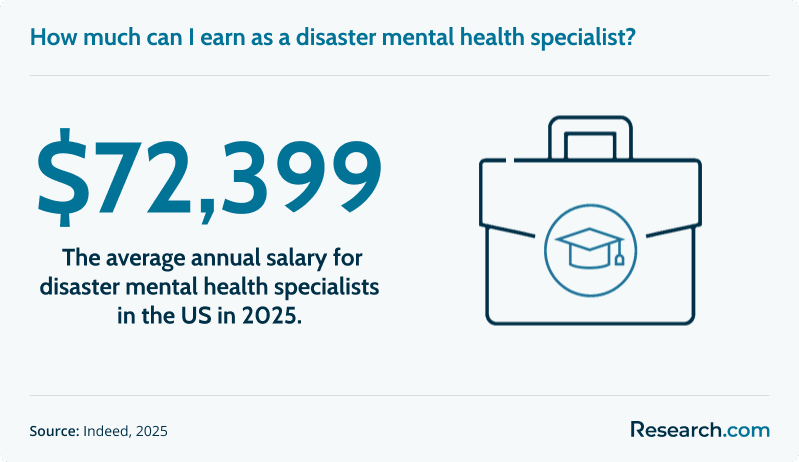
Disaster mental health specialist pay varies by license, employer, location, deployment status, and level of responsibility. The salary for a Disaster Mental Health Specialist typically ranges from $44,500 for entry-level positions to around $87,000 for senior roles, with a median annual salary of about $60,221.
Those figures should be used as a planning range, not a guaranteed outcome. A newly licensed counselor in a nonprofit setting may earn differently from a psychologist, program director, government employee, hospital-based clinician, or specialist deployed through a disaster response program.
What can influence salary?
- Licensure level: Independent clinical licensure often improves access to higher-responsibility roles.
- Experience: Specialists with years of crisis, trauma, supervisory, or program coordination experience may qualify for senior positions.
- Employer type: Government agencies, hospitals, specialized disaster response programs, and large organizations may offer different pay structures.
- Location: Higher pay is seen in areas like Santa Clara, California, and Ohio.
- Specialization: Trauma care, emergency management collaboration, program evaluation, leadership, and training roles can strengthen earning potential.
- Schedule and deployment demands: Some roles may involve irregular hours, travel, temporary deployments, or emergency assignments that affect compensation arrangements.
When evaluating offers, look beyond salary. Benefits, supervision, licensure support, training, travel expectations, safety protocols, workload, and burnout prevention can have a major impact on long-term career sustainability.
What is the job outlook for Disaster Mental Health Specialists?
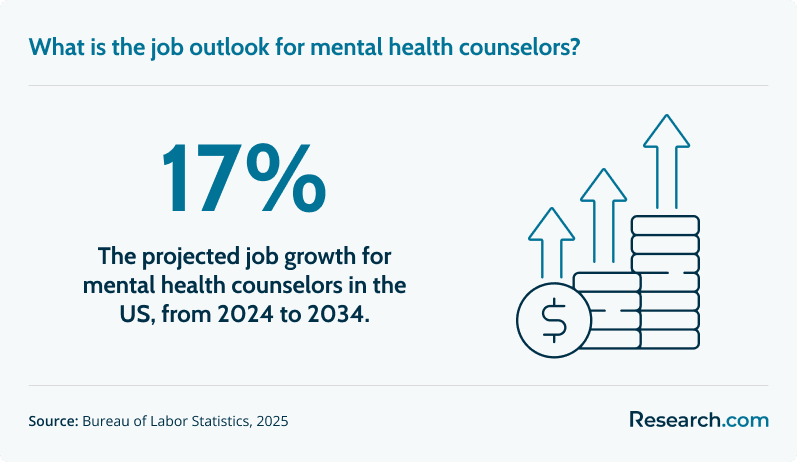
The demand for disaster mental health specialists is projected to grow between 15% and 18% from 2025 to 2035, which is much faster than the average growth rate for all occupations. The outlook is supported by growing recognition that disaster recovery includes emotional, behavioral, family, and community needs—not only physical rebuilding.
The Key Factors Shaping the Future Outlook
Several forces are shaping demand. Climate disasters, pandemics, displacement, violence, and geopolitical conflicts increase the need for trauma-informed mental health support. Communities, schools, healthcare systems, employers, and emergency response agencies are also paying closer attention to psychological recovery and resilience planning.
Healthcare systems are integrating behavioral health more deeply, supported by expanding insurance coverage and parity laws. This can improve access to trauma-related care and create more opportunities for licensed professionals with crisis and disaster experience.
Telehealth also changes the field. While many disaster response roles still require in-person work, remote care can support follow-up counseling, consultation, coordination, and access for people who cannot easily travel. Specialists who are comfortable with both in-person and virtual service delivery may be better positioned for future roles.
If you are comparing education options, some quick degrees that pay well may help you enter adjacent support roles sooner, but licensed disaster mental health practice usually requires graduate education and state licensure.
What is the typical work environment for Disaster Mental Health Specialists?
Disaster mental health specialists work wherever affected people need support. Common environments include emergency shelters, community centers, hospitals, schools, mobile outreach sites, call centers, government offices, nonprofit agencies, and disaster-affected neighborhoods. The work can be local, regional, national, or deployment-based.
Employment data shows that 19% work in individual and family services, 15% in state and local government outside education and hospitals, and 14% in various hospitals. These settings reflect the field’s mix of direct service, public response, healthcare coordination, and community recovery.
The schedule is often less predictable than traditional counseling work. Disaster mental health specialists may work 8-12 hour shifts, evenings, weekends, holidays, or consecutive days during active deployments. Local responders may serve several shorter shifts each month, while deployed specialists may commit to multi-day assignments.
Remote work is generally limited during immediate disaster response because specialists often need to assess needs, coordinate with teams, and support survivors in person. However, remote work may be used for follow-up care, consultation, training, planning, or telehealth services when appropriate and permitted.
What are the pros and cons of Disaster Mental Health Specialist careers?
A disaster mental health specialist career can be highly meaningful, but it is not a low-stress path. The work suits people who can remain grounded during crisis, collaborate well, respect boundaries, and recover emotionally after intense assignments.
Pros
- High sense of purpose: Specialists support people during some of the most difficult moments of their lives.
- Direct community impact: The work can help individuals, families, and neighborhoods begin to regain stability.
- Varied work settings: Professionals may work in shelters, hospitals, government programs, nonprofits, community agencies, or response teams.
- Interdisciplinary collaboration: The role offers frequent interaction with emergency responders, healthcare providers, social workers, public agencies, and community leaders.
- Long-term growth potential: Experience can lead to supervision, training, program leadership, policy, research, or emergency management collaboration.
Cons
- Emotional exposure: Specialists regularly hear stories of loss, fear, displacement, injury, grief, and trauma.
- Irregular schedules: Disaster response can involve long shifts, weekends, travel, and short-notice assignments.
- Limited resources: Professionals may need to help people when housing, transportation, healthcare, or counseling options are scarce.
- Burnout risk: Compassion fatigue and secondary traumatic stress are real risks without strong supervision, peer support, and self-care habits.
- Credential requirements: The education and licensure path can take significant time and money.
The best fit is someone who wants a helping profession but also accepts the realities of crisis work. If you are exploring hands-on careers with a different training model, reviewing the best trade school careers may help you compare options based on time, cost, and work environment.
What are the opportunities for advancement for Disaster Mental Health Specialists?
Advancement in disaster mental health can happen in two main ways: moving into leadership or developing specialized expertise. Some professionals stay close to direct service, while others shift toward supervision, program development, training, policy, research, or emergency management.
Career Advancement for Disaster Mental Health Specialists
- Entry-level or associate roles: Professionals may begin as disaster mental health service associates, crisis workers, case support staff, or volunteers while gaining supervised experience.
- Licensed practitioner roles: With the right graduate degree and state licensure, specialists can provide more advanced assessment, counseling, consultation, and referral.
- Supervisory and management positions: Experienced specialists may oversee teams, coordinate services, manage volunteer responders, or lead regional response operations.
- Senior leadership opportunities: Advanced professionals may become program directors, division advisors, regional leads, trainers, or policy contributors shaping disaster mental health systems.
Specialization Options in Disaster Mental Health Careers
- Community resilience and preparedness: Focuses on helping communities build psychological readiness before disasters occur.
- Trauma counseling and crisis intervention: Centers on short- and long-term support for survivors, responders, and families affected by traumatic events.
- Children, schools, and family systems: Supports young people, caregivers, educators, and school communities after disaster-related disruption.
- Responder support: Provides mental health support for emergency personnel, healthcare teams, volunteers, and other frontline workers.
- Research, education, and consultation: Involves teaching, program evaluation, best-practice development, and organizational training.
- Program development and emergency management collaboration: Integrates behavioral health into disaster planning, response, and recovery systems.
To advance, document your field experience, pursue supervision and continuing education, build cross-agency relationships, and choose credentials that align with the roles you want—not simply the most impressive-sounding certificate.
What other careers should you consider?
If you are interested in disaster mental health, compare it with related careers before committing to a graduate pathway. The best choice depends on whether you prefer direct therapy, emergency coordination, healthcare-based support, field response, research, or program leadership.
- Crisis Intervention Specialist: Provides immediate support to people in acute emotional distress. This path may suit those who like fast-paced assessment and stabilization work.
- Trauma Therapist: Helps clients recover from traumatic experiences over time using trauma-informed clinical approaches. This path offers deeper ongoing therapeutic relationships.
- Medical Social Worker: Supports patients and families dealing with illness, injury, hospitalization, end-of-life care, or complex healthcare needs.
- Emergency Management Director: Coordinates disaster preparedness, response, and recovery operations. This path is more systems-focused and less centered on direct counseling.
- Disaster Assistance Employee (FEMA Reservist): Supports disaster operations on the ground, often as part of multidisciplinary response teams.
- Community Mental Health Counselor: Provides counseling and support for individuals and families, often including clients affected by trauma, poverty, housing instability, or crisis.
- Public Health Emergency Preparedness Specialist: Works on planning, communication, and systems readiness for emergencies that affect communities.
Use the comparison to clarify what energizes you most. If you want direct therapeutic work, licensure-focused counseling, social work, or psychology may be the right foundation. If you prefer coordination and logistics, emergency management may fit better. If you want both, disaster mental health can offer a strong bridge between clinical care and community response.
Here's What Professionals Say About Their Disaster Mental Health Specialist Careers
- Jorge: "Transforming the pain I witnessed during a flood into meaningful support was the moment I realized how deeply this work impacts lives. Survivors are thrust into such difficult situations, but the sense of community within this 'club' is remarkable. I never planned to become a disaster mental health specialist, but helping others find strength after loss gave my own struggles new purpose. Being part of that healing process reminds me every day why this role matters so much."
- Allan: "Every disaster I respond to involves intense emotions and complex challenges that can weigh heavily. To manage this, I make self-care a top priority, swim almost daily, and lean on my close friends and family to stay grounded. The moments when I can offer comfort and guide survivors through their grief are difficult yet profoundly rewarding. It's demanding work, but knowing I'm helping people find hope after devastation keeps me going."
- Malik: "One of the most powerful moments in my work was assisting a mother who had lost her home to fire while also pregnant and caring for several children. Helping her connect to resources for housing and long-term support was more than a task-it was a chance to ease some of her overwhelming burden. Seeing her gratitude reminded me how crucial this role is in restoring stability. I believe survivors don't have to face recovery alone, and being part of that support network is incredibly fulfilling."
Key Findings
- Disaster mental health specialists support survivors, responders, families, and communities after crises by providing emotional stabilization, crisis counseling, referrals, education, and recovery support.
- The career usually requires a master's degree, state licensure, supervised clinical experience, and disaster-specific training.
- Common graduate pathways include social work, counseling, psychology, school psychology, and related mental health fields.
- The salary for a Disaster Mental Health Specialist typically ranges from $44,500 for entry-level positions to around $87,000 for senior roles, with a median annual salary of about $60,221.
- Demand is projected to grow between 15% and 18% from 2025 to 2035, driven by disaster frequency, trauma awareness, behavioral health integration, and telehealth expansion.
- Work environments can include shelters, hospitals, government agencies, nonprofits, community centers, schools, outreach teams, and disaster-affected neighborhoods.
- The work is meaningful but demanding. Irregular hours, emotional exposure, limited resources, and burnout risk should be weighed carefully before entering the field.
- Advancement opportunities include supervision, program leadership, disaster preparedness, trauma specialization, responder support, research, education, and emergency management collaboration.
Other Things You Should Know About Disaster Mental Health Specialist
A common misconception about disaster mental health specialists is that their work is limited to providing therapy. In reality, their role encompasses crisis intervention, community outreach, and coordination with emergency services to ensure comprehensive mental health support during and after disasters.
Becoming a Disaster Mental Health Specialist in 2026 typically takes 4 to 6 years. This includes earning a relevant bachelor's degree, gaining experience through internships or supervised practice, and potentially completing a master's program specifically focused on mental health or crisis intervention before obtaining necessary certifications.
References
- Careers in Disaster Relief: 5 Fields for People Who Want to Respond https://www.rasmussen.edu/degrees/human-services/blog/careers-in-disaster-relief/
- Disaster Mental Health https://www.redcross.org/about-us/our-work/disaster-relief/disaster-mental-health.html
- Trauma And Disaster Mental Health https://www.newpaltz.edu/tdmh-cert/
- What does a Crisis Intervention Specialist do? Career Overview, Roles, Jobs | NASWDC https://metrodcjobs.socialworkers.org/career/crisis-intervention-specialist
- “I Felt a Sense of Mission during Moments of Crisis”: Mental Health Professionals’ Perspectives on Their Initial Treatment of Evacuees during the Israel–Hamas Conflict https://pmc.ncbi.nlm.nih.gov/articles/PMC11171488/
- Disaster Mental Health Associate (Lake City, Florida) https://hirelatinos.org/job/59976/disaster-mental-health-associate/
- Career Outlook - Institute for Disaster Management UGA https://idm.publichealth.uga.edu/academics/student-involvement/career-outlook/
- How to Become an Emergency Management Specialist https://www.publichealthdegrees.org/careers/emergency-management-specialist/


