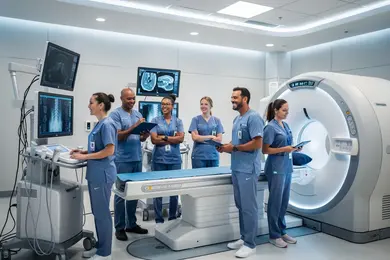
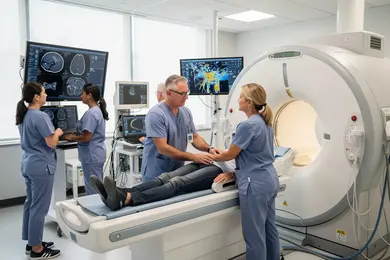
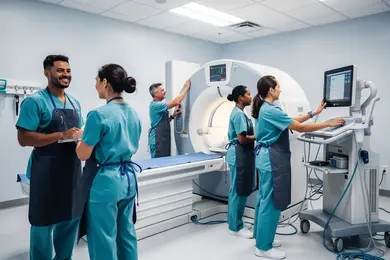
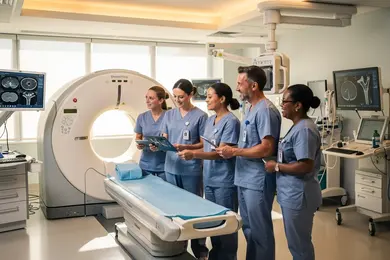
2027 Fastest Online Radiology Technician Degree Programs You Can Finish in Under 2 Years

Co-Founder and Chief Data Scientist
Choosing a fast online radiology technician degree is really a question of timing, eligibility, and clinical access. You may want to enter the imaging workforce quickly, but radiologic technology is a patient-facing field, so even online programs must prepare you for hands-on clinical practice, certification expectations, and employer scrutiny.
Workforce demand is one reason students are comparing shorter pathways. Recent workforce data shows a 12% growth in radiologic technologist jobs through 2031, but speed should not come at the expense of accreditation, clinical placement quality, or exam readiness. A program that looks fast on paper can still delay graduation if prerequisites, transfer reviews, or clinical site approvals take too long.
This guide explains how accelerated online radiology technician programs are structured, what formats may be completed in under two years, how admissions and transfer credits affect your timeline, what employers typically look for, and how to compare cost, technology requirements, and career outcomes before enrolling.
Key Benefits of Online Radiology Technician Degree Programs You Can Finish in Under 2 Years
- Programs under 2 years enable faster entry into the workforce, with Bureau of Labor Statistics estimating a 9% job growth for radiologic technologists through 2032.
- Accelerated online degrees often reduce tuition and living costs, making education more affordable compared to traditional on-campus programs.
- Flexible online formats accommodate working adults, supported by a 21% increase in online healthcare education enrollments in recent years.
What features make an online radiology technician program accelerated?
An online radiology technician program is accelerated when it shortens the time to completion without removing the academic and clinical training needed for safe imaging practice. The strongest accelerated programs do this through tighter scheduling, year-round progression, transfer-credit planning, and carefully coordinated clinical experiences. Enrollment in accelerated online programs has increased by 15%, reflecting growing demand for efficient training options in radiology technician fields.
Students should understand that “online” usually refers to didactic coursework such as anatomy, imaging procedures, patient care, radiation protection, and medical terminology. Clinical education generally must be completed in person at an approved healthcare site.
- Compressed course terms: Instead of traditional semester pacing, courses may run in six to eight weeks. This lets students complete more courses in a calendar year, but it also means assignments, exams, and lab-related preparation arrive quickly.
- Higher course loads: Some fast-track radiology tech programs with simple admissions allow or expect students to take more credits each term. This can reduce the total timeline, but it is best suited for students with dependable study time and strong academic preparation.
- Flexible scheduling: Online lectures, recorded modules, evening discussions, and weekend study options can help working adults stay enrolled. Flexibility does not mean the program is easy; it means students have more control over when they complete academic work.
- Condensed clinical practicum: Accelerated programs may organize clinical rotations in tighter blocks or use more efficient scheduling with partner sites. Students should confirm how placements are assigned, whether travel is required, and what happens if a local site is unavailable.
- Streamlined curriculum: A well-designed accelerated curriculum focuses on essential radiologic sciences, patient care, radiation safety, image production, and clinical competencies rather than unnecessary electives.
The main advantage is speed: motivated students may begin earning sooner and may reduce certain education-related costs. The trade-off is intensity. Missing deadlines, failing a prerequisite, or delaying clinical documentation can quickly erase the time savings.
Students comparing healthcare pathways may also look at adjacent options, such as RN to BSN programs without clinicals, but radiology technician programs usually require direct clinical training because graduates work with patients and imaging equipment.
What are the online radiology technician degree formats you can finish in under 2 years?
The fastest online radiology technician degree programs usually combine online coursework with in-person clinical education. The format matters because it determines how quickly you can complete prerequisites, move through imaging courses, and satisfy clinical requirements.
Common accelerated radiology technician online degree formats include the following:
- Accelerated term-based programs: These programs shorten course terms, often to around eight weeks, so students can complete more classes each year. They work best for students who can keep up with frequent deadlines and exams.
- Competency-based education: This model allows students to progress after demonstrating mastery rather than sitting through a fixed schedule. It can be faster for learners with prior healthcare coursework or strong science preparation, but clinical competencies still require supervised practice.
- Full-time intensive tracks: Students take a heavier academic and clinical load each term. This can be one of the quickest options, but it may be difficult to combine with full-time employment or major caregiving responsibilities.
- Year-round enrollment models: Programs that reduce long breaks between terms can move students through the curriculum more efficiently. According to the American Society of Radiologic Technologists (ASRT), this model can shorten the overall program duration by up to 30%.
| Format | Best for | Main caution |
| Accelerated term-based | Students who want a structured schedule and faster course turnover | Short terms leave little room to recover from missed work |
| Competency-based | Students with prior knowledge, transfer credits, or healthcare experience | Clinical requirements may still follow site availability |
| Full-time intensive | Students who can prioritize school for the duration of the program | Work-life balance can be challenging |
| Year-round enrollment | Students who want fewer breaks and continuous progress | Burnout risk is higher without planned rest periods |
If you are exploring other accelerated healthcare options, a medical assistant degree online 6 weeks illustrates how focused training can shorten entry into certain healthcare roles. Radiologic technology, however, generally involves more extensive clinical preparation because of imaging procedures, radiation safety, and certification expectations.
What are the admission requirements for accelerated online radiology technician degrees?
Accelerated online radiology technician admission requirements are designed to identify students who can handle fast science coursework, online learning, and clinical responsibilities. Because the schedule is compressed, schools often want evidence that applicants are academically prepared before entering the core program.
- Minimum GPA: Many programs require a GPA of around 2.5 to 3.0. A stronger GPA can be especially helpful when seats are limited or clinical placements are competitive.
- Prerequisite coursework: Programs commonly expect prior coursework in anatomy, physiology, and medical terminology. Completing these before admission can shorten the timeline and reduce the risk of falling behind.
- Work experience: Healthcare-related experience may strengthen an application, especially if it shows patient-care exposure, professionalism, and comfort in clinical settings. It is not always mandatory.
- Placement tests or assessments: Some schools use assessments to evaluate reading, math, science, or college-readiness skills. These results may determine whether a student can begin the accelerated track immediately.
- Self-motivation and technical skills: Online students need reliable study habits, comfort with learning platforms, and the ability to communicate quickly with instructors and clinical coordinators.
Applicants should also ask about background checks, immunizations, drug screening, CPR certification, physical requirements, and clinical documentation deadlines. These items can affect eligibility for clinical placement, and a delay in any one of them can slow completion.
Students comparing fast track radiology tech program entry criteria may also benefit from reviewing broader healthcare education pathways, including a healthcare administration degree online, especially if they are interested in management, operations, or nonclinical leadership roles.
How many transfer credits do fast online radiology technician programs accept?
Transfer credits can shorten a fast online radiology technician program, but policies vary widely. On average, about 60% of transfer credits are accepted in similar online health-related programs, which gives prospective students a useful benchmark. The actual number depends on the school, the age of the credits, course equivalency, accreditation, and whether the credits apply to general education or radiologic technology requirements.
- Maximum transferable credits: Programs typically allow students to transfer between 25% and 75% of required coursework. Many cap transfer acceptance at 30 to 45 semester hours, depending on the total credit load.
- Credit source requirements: Credits usually must come from regionally accredited institutions and must match required general education, science, or radiologic sciences coursework.
- Evaluation process: Schools may review official transcripts, course descriptions, syllabi, lab hours, and credit levels. This review can take time, so students should begin it before committing to an accelerated start date.
- Impact on program length: Accepted credits can make a sub-two-year timeline more realistic, especially for students who have already completed anatomy, physiology, English, math, psychology, or other general education requirements.
- Currency of coursework: Many programs require transfer credits to be recent, generally completed within the past 5 to 7 years, particularly for science and healthcare-related courses.
The most important step is to request a written transfer evaluation, not just an informal estimate. Ask which credits apply directly to graduation requirements, which count only as electives, and whether transfer credits affect financial aid eligibility, full-time status, or clinical sequencing.
When asked about his experience, a professional who completed an accelerated online radiology technician program in under two years described the transfer process as “challenging but ultimately rewarding.” He spent considerable time collecting transcripts and detailed course descriptions, but the approved credits allowed him to “skip redundant classes and focus directly on clinical skills.” His advice was simple: start early, keep records organized, and communicate often with academic advisors.
How many classes do you take at once in a fast online radiology technician program?
In a fast online radiology technician program, students commonly take enough courses each term to maintain full-time progress, but the exact number depends on term length, clinical scheduling, and program design. Nearly 40% of students in accelerated allied health programs enroll full-time with at least three courses per term.
The right course load is not simply the highest number of classes allowed. Radiology coursework often includes science-heavy content, imaging procedures, patient-care concepts, and clinical preparation. Taking too much at once can reduce comprehension and clinical readiness.
- Term length: Shorter terms, often between 5 to 8 weeks, make each class more intense. A course that would normally unfold over a longer semester may require weekly exams, labs, discussions, and assignments.
- Course sequencing: Some programs use block scheduling, where students focus on one or two subjects at a time. Others overlap courses to accelerate progress. Block scheduling can feel more manageable, while overlapping courses may shorten the total timeline.
- Pacing models: Self-paced or competency-based formats may let students adjust their course load based on work, family obligations, and prior knowledge. However, clinical rotations often follow fixed schedules set by healthcare sites.
A practical way to choose your load is to calculate weekly study time before enrolling. Accelerated students should also account for commuting to clinical sites, documentation, exam preparation, and possible make-up time if clinical hours are missed.
Do employers respect accelerated online radiology technician degrees?
Employers can respect accelerated online radiology technician degrees when the program is properly accredited, includes supervised clinical training, and prepares graduates for certification or licensure expectations. The word “online” is usually less important than whether the graduate can perform safely, communicate with patients, follow radiation safety protocols, and produce quality images.
Recent data shows that over 70% of employers accept online radiology technician degrees when they come from accredited programs. Still, hiring managers may look closely at the program’s clinical structure and graduate readiness, especially for candidates from shorter programs.
- Accreditation: Employers tend to favor programs accredited by recognized agencies such as the Joint Review Committee on Education in Radiologic Technology (JRCERT), because accreditation signals that the program meets established education and clinical standards.
- Skills relevance: Employers want graduates who understand imaging procedures, anatomy, patient positioning, radiation protection, and patient care. A short program must still prove that it teaches the same essential competencies.
- Hands-on experience: Supervised clinical practicums or internships are critical. Employers want evidence that graduates have practiced in real healthcare environments, not only completed online coursework.
- Program rigor: A credible accelerated program should be demanding, organized, and transparent about outcomes. If a program advertises speed but says little about clinical training, certification preparation, or accreditation, that is a warning sign.
Before enrolling, ask admissions staff how graduates document clinical competencies, whether the program prepares students for required certification exams, and how it supports students in states with licensure rules. Employer respect is earned through program quality, not speed alone.
How much does a fast online radiology technician degree cost?
A fast online radiology technician degree can reduce time in school, but students should compare total program cost rather than only tuition per term. Accelerated programs may concentrate expenses into a shorter period, which can affect payment planning, financial aid timing, and the ability to work while enrolled.
- Per-credit tuition: Most programs charge by credit, with rates commonly between $200 and $600 per credit. Accelerated degrees typically require around 60 to 70 credits, so even small per-credit differences can meaningfully affect total tuition.
- Total program costs: The full price of a fast online radiology technician degree can range from approximately $12,000 to $42,000. Costs vary by public or private status, in-state tuition eligibility, fees, and delivery model.
- Additional fees: Students may pay for technology access, applications, background checks, uniforms, textbooks, imaging supplies, liability insurance, exam preparation, and clinical practicum expenses. Some programs list these clearly; others separate them from tuition.
- Cost-saving opportunities: Transfer credits, scholarships for healthcare students, employer tuition reimbursement, and careful scheduling can reduce the amount borrowed. Finishing faster may also reduce commuting, housing, and opportunity costs compared with longer on-campus study.
When comparing programs, request a full cost sheet that includes tuition, mandatory fees, clinical costs, and estimated out-of-pocket expenses. Also ask whether tuition is locked for the program, whether online students pay different fees, and whether financial aid covers every term in an accelerated calendar.
A graduate of one accelerated online program said finishing in under two years helped reduce overall college expenses. By transferring earlier coursework and working part time, she minimized student loans. “It was challenging managing the workload quickly,” she said, “but finishing sooner eased the financial pressure and got me into the workforce faster, which was a huge relief.”
What jobs can you get with a fast online radiology technician degree?
A fast online radiology technician degree can prepare students for imaging-related roles, but job eligibility depends on program accreditation, clinical training, certification, state requirements, and employer preferences. Students should verify the exact credential awarded and whether it aligns with the roles they want.
The U.S. Bureau of Labor Statistics projects a 7% growth in employment for radiologic and MRI technologists from 2021 to 2031, reflecting the continued use of diagnostic imaging in healthcare. Common career paths include the following:
- Radiologic Technologist: Radiologic technologists operate X-ray and related imaging equipment, position patients, follow radiation safety procedures, and work with radiologists and other clinicians. Salaries typically range from $50,000 to $65,000 annually, depending on location and experience.
- MRI Technologist: MRI technologists specialize in magnetic resonance imaging. The role requires knowledge of MRI equipment, patient screening, safety protocols, and patient communication. MRI technologists often earn higher salaries, commonly between $60,000 and $70,000 per year.
- CT Technologist: CT technologists operate computed tomography scanners to create cross-sectional images. Duties include accurate patient positioning, equipment preparation, image-quality review, and radiation safety practices. Salary ranges are comparable to radiologic technologists, influenced by specialization and region.
Some positions may require additional certification, modality-specific training, or experience beyond the initial degree. If your goal is MRI or CT, ask whether the program includes exposure to those modalities or whether graduates typically pursue additional training after entry-level employment.
Students evaluating affordable healthcare education may also compare affordable nursing programs online, especially if they are deciding between imaging, nursing, and other allied health routes.
What technology is required for accelerated online radiology technician programs?
Accelerated online radiology technician programs rely heavily on technology because students must move quickly through lectures, assignments, simulations, exams, and communication with instructors. A weak setup can cause missed deadlines, poor participation, and avoidable stress.
- Reliable high-speed internet with minimum 25 Mbps download: A stable connection supports streamed lectures, video meetings, learning platforms, and large files. Students in accelerated courses cannot afford repeated access problems.
- Robust learning management system for organizing coursework: The LMS is where students typically find syllabi, modules, assignments, quizzes, grades, discussion boards, and instructor announcements. Checking it daily is often necessary in compressed terms.
- Video conferencing tools for live instruction and collaboration: Real-time sessions may be used for lectures, office hours, group work, case discussions, or virtual demonstrations. Students should have a working camera, microphone, and quiet space.
- Productivity software for assignments and schedule management: Document tools, spreadsheets, calendar apps, and reminder systems help students track overlapping deadlines, clinical requirements, and exam dates.
Students should also ask whether the program requires a specific computer operating system, webcam proctoring software, secure testing browser, mobile apps, or access to virtual lab tools. Technical requirements can vary, and some software may not work well on tablets or older devices.
For broader cost comparisons in healthcare education, resources on the cheapest DNP programs can be useful for understanding how tuition, fees, and online delivery models differ across advanced healthcare programs.
How do you choose the fastest online radiology technician degree program?
Choose the fastest online radiology technician degree program by looking beyond the advertised completion time. The best program is not simply the shortest; it is the shortest credible option that meets accreditation expectations, provides clinical access, prepares you for certification or licensure requirements, and fits your budget and schedule.
- Program length and curriculum structure: Look for a clear timeline, typically between 12 and 20 months, and confirm how online coursework, labs, and clinical rotations are sequenced. Ask what could delay graduation.
- Accreditation: Verify accreditation through recognized bodies such as the Joint Review Committee on Education in Radiologic Technology (JRCERT) or regional agencies. Accreditation can affect certification eligibility, credit transfer, financial aid, and employer confidence.
- Clinical placement process: Ask whether the school assigns clinical sites, whether students must find their own, and whether placements are available near your location. Clinical bottlenecks are one of the most common reasons a fast program becomes slower than expected.
- Cost: Compare tuition and fees carefully. A shorter program may reduce some expenses, but accelerated calendars can concentrate payments and limit work hours.
- Career outcomes: Review graduate employment rates, certification exam pass rates, and employer partnerships when available. These indicators help show whether the program’s speed translates into real career readiness.
- Student support: Prioritize programs with responsive advising, technical support, tutoring, clinical coordination, and clear communication. Accelerated students have less time to solve problems once a term begins.
Before enrolling, ask for written answers to three questions: Is the program accredited for my career goal? Where will I complete clinical training? What certification or licensure steps will I still need after graduation? If a school cannot answer clearly, keep looking.
What Graduates Say About Their Fastest Online Radiology Technician Degree Programs
- James: "Enrolling in an accelerated online radiology technician program was a game changer for me. I found a program that fit my busy schedule and typically costs around $15,000, which felt reasonable given how quickly I could finish-under two years! Finishing so fast meant I was able to start working in imaging departments way sooner, and my confidence has soared since stepping into my professional role."
- Paul: "I chose a fast online radiology technician degree because it was the most efficient path to entering a healthcare field I truly respect. The total cost was about $14,000, which helped me avoid long-term debt. This compact program not only saved time but also prepared me well, allowing me to advance steadily in my career without unnecessary delays."
- Natalie: "After researching various options, I was drawn to the accelerated online radiology technician program because it combined affordability and speed-typically costing between $13,000 and $16,000 to complete in under two years. This swift completion timeline gave me an edge in the competitive job market and demonstrated my dedication to potential employers. The professional impact has been clear: more opportunities and a faster path to specialization."
Other Things You Should Know About Radiology Technician Degrees
Yes, many fast online radiology technician degree programs are designed flexibly, allowing students to work full-time while studying. Courses are often offered asynchronously, enabling learners to balance their work and educational commitments efficiently over the course duration.
Working full-time can be challenging due to the intensive coursework and clinical hours required in accelerated programs. However, some students successfully balance employment and study by managing part-time or flexible work schedules. It is important to assess your personal time management skills before committing.
The fastest online radiology technician degree programs in 2027 offer flexibility and speed, enabling students to start their careers sooner. These programs typically incorporate hybrid components, allowing students to complete theoretical coursework online while scheduling hands-on training at nearby clinical sites.
References
- Affordable Online Bachelor's in Radiology Programs 2020 https://www.healthcare-administration-degree.net/best/affordable-online-radiology-degree-programs-bachelors-2/
- Admissions and Transfer of Credit Policies https://www.gradyhealth.org/training-programs/radiologic-technology-program/admissions-and-transfer-of-credit-policies/
- Accredited Online Radiologic Technologist Programs (RT) https://www.medicaltechnologyschools.com/radiologic-technologist/online-radiology-tech-programs
- Online Radiology Tech Programs: Finding the Right School https://www.edumed.org/online-schools/radiology-tech-programs/
- BS in Radiologic Sciences, Bridge Program | Georgia Southern https://www.georgiasouthern.edu/degrees/bs-radiologic-sciences/online-bridge-program
- Radiology technologist working from home https://www.siemens-healthineers.com/perspectives/working-from-home-in-radiology
- Radiologic Technology https://www.rrcc.edu/academic-programs/radiologic-technology
- Online Radiologic Technology - Associate of Applied Science Degree Completion Program https://www.chcp.edu/degrees-certificates/online/radiologic-technology-aas-completion-program/
- Radiologic Technology Associates https://an.edu/programs/associates/radiologic-technology-associates/
- Discover Top Online Radiology Tech Programs https://www.accreditedschoolsonline.org/healthcare/radiology-technician/