
2027 How Fast Can You Get a Cybercrime Degree Online?

Co-Founder and Chief Data Scientist
An online Cybercrime degree can be a practical route if you want to move into digital investigations, cybersecurity, cyber law, fraud prevention, or incident response without pausing your career. The main decision is not simply whether to study online; it is whether a standard, accelerated, competency-based, or credit-transfer-friendly program will get you to your goal at the right speed, cost, and level of credibility.
Completion time varies widely. A first-time bachelor’s student may need the traditional four years, while students with transfer credits, military training, certifications, or relevant work experience may finish much sooner. Graduate students often have shorter timelines, but accelerated formats usually require heavier weekly workloads and stronger time management.
This guide explains how long online Cybercrime degrees typically take, what can shorten or lengthen your timeline, how accelerated options compare with traditional programs, and what to check before enrolling so you choose a program that employers are more likely to respect.
What are the benefits of pursuing a degree in Cybercrime online?
- Accelerated online Cybercrime degrees often allow completion within 12 to 18 months, appealing to working professionals seeking swift career advancement.
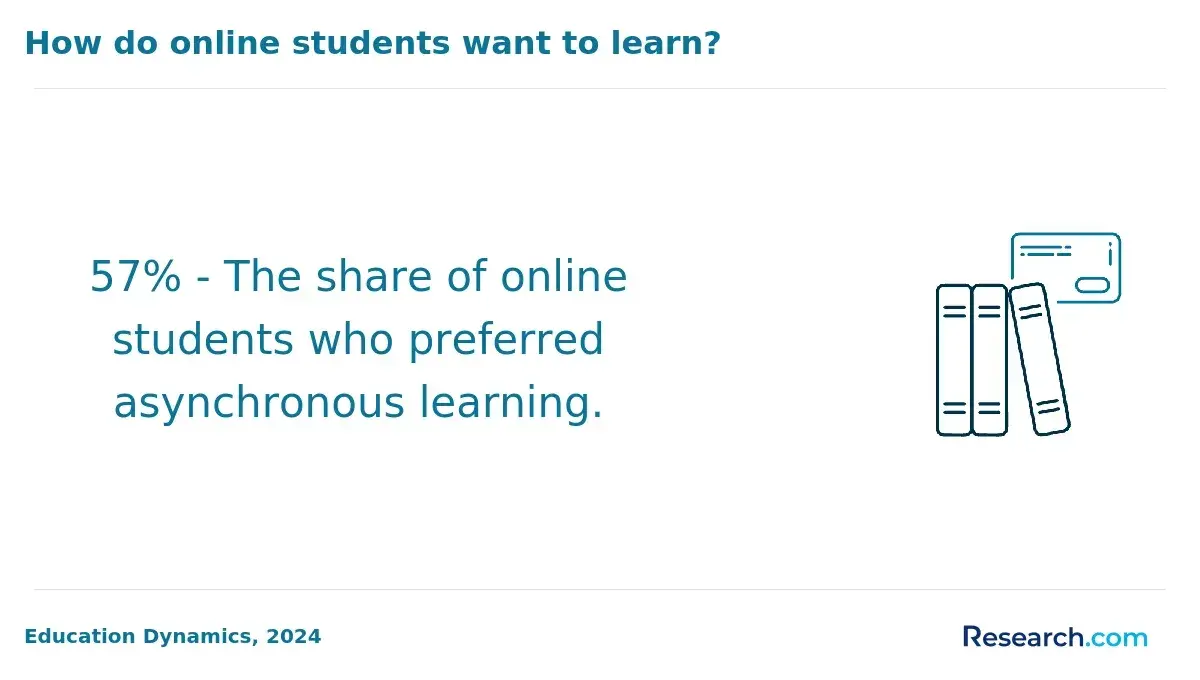
- Flexible scheduling supports students balancing jobs and family, enabling asynchronous coursework access anytime, enhancing retention and practical application.
- With cybersecurity job growth projected at 35% through 2031, fast-track degrees can quickly supply employers with urgently needed, industry-ready specialists.
How long does it typically take to earn a degree in Cybercrime?
The time required to earn a Cybercrime degree depends on the degree level, enrollment intensity, transfer credits, prior learning, and whether the program follows a traditional semester calendar or a faster online format. The same degree title can take very different amounts of time from one student to another.
For an online bachelor’s degree, a common full-time pathway is about four years to complete 120 credit hours. This timeline assumes a traditional course load and limited transfer credit. Students who enter with previous college coursework, military training, certifications, or professional experience may shorten that timeline substantially.
Some universities report a majority of students graduating in under 30 months by using prior experience and transfer credits. Other programs with shorter courses may still take up to five years on average, depending on how the curriculum is sequenced and how many credits students take at once. Part-time students commonly need five to six years because they spread coursework around work, caregiving, or military responsibilities.
Graduate timelines are usually shorter. A full-time master’s program typically takes between one and two years. A specialized option such as an LL.M. in Cybercrime, Cybersecurity, and International Law may span roughly 13 months, making it a focused route for professionals who already have the required academic background.
| Program type | Typical completion time mentioned | Best fit |
| Bachelor’s degree, traditional full-time pace | About four years for 120 credit hours | First-time students who want a standard undergraduate pathway |
| Bachelor’s degree with transfer credit or prior experience | Some universities report a majority of students graduating in under 30 months | Students with previous coursework, certifications, military training, or relevant work experience |
| Part-time bachelor’s degree | Five to six years | Working adults who need a lighter course load |
| Master’s degree | Between one and two years full time | Students who already hold a bachelor’s degree and want advanced preparation |
| Specialized LL.M. | Roughly 13 months | Professionals seeking focused study in cybercrime, cybersecurity, and international law |
Are there accelerated Cybercrime online programs?
Yes. Accelerated online options are available, although many are not labeled only as “Cybercrime” degrees. Students often find faster pathways through cybersecurity, criminal justice, digital forensics, information assurance, or cyber criminology programs that include cybercrime-focused coursework.
Accelerated programs usually shorten completion time through compressed terms, year-round course availability, generous transfer policies, or curricula designed for working adults. The trade-off is intensity: a shorter calendar does not mean less work. It usually means more reading, labs, writing, and technical practice in a condensed period.
Examples of relevant accelerated or flexible online pathways include:
- Lasell University: Lasell University offers a Master of Science in Criminal Justice with a concentration in Cybercrimes and Cyber Criminology. This fully online 36-credit program includes cybercrime and data security, human factors in cybercrime, and cyber criminology. It is structured for flexible completion, which can help working professionals move through graduate coursework efficiently.
- Ivy Tech Community College: Ivy Tech Community College provides a Cybersecurity/Information Assurance program in online and hybrid formats. While it is not exclusively a cybercrime program, the curriculum can support skills used in cybercrime prevention, investigation, and information protection.
- University of Cincinnati: The University of Cincinnati offers an accelerated online Master’s in Criminal Justice. Although it is not solely dedicated to cybercrime, it can provide a fast-paced graduate foundation for students who want to connect criminal justice, technology, and cybercrime-related professional goals.
When comparing accelerated programs, look beyond the advertised speed. Confirm whether the program includes hands-on labs, digital forensics exposure, cyber law or policy content, and support for industry certifications if those matter for your career path. Students comparing broader fast-track options can also review the quickest online degree programs for working adults for additional context on accelerated formats.
How do accelerated Cybercrime online programs compare with traditional ones?
Accelerated Cybercrime online programs and traditional campus-based programs can lead to similar academic outcomes, but they differ in pace, scheduling, student support needs, and learning environment. The better choice depends on how quickly you need the credential, how much time you can study each week, and whether you learn well in a highly structured online format.
| Factor | Accelerated online Cybercrime program | Traditional program |
| Pacing | May allow completion in about 2.5 years rather than the typical four years by using shorter, more intensive terms | Usually follows a standard semester or quarter sequence with more time between major deadlines |
| Course structure | Often uses focused online modules, compressed assignments, labs, and milestone-based projects | Often spreads similar learning outcomes across a longer academic calendar |
| Flexibility | Commonly offers asynchronous coursework, which can help students study around work or family obligations | May require scheduled class meetings, commuting, or more fixed availability |
| Workload | Requires a heavier weekly time commitment because the same material is completed faster | Usually provides more time to absorb technical material and complete assignments |
| Student experience | Best for disciplined students who can work independently and meet frequent deadlines | Best for students who prefer face-to-face interaction, campus resources, or a steadier pace |
Accelerated online learning can be especially useful for adults who already have IT, law enforcement, military, or criminal justice experience. However, students who are new to programming, networking, operating systems, or digital evidence handling may benefit from a slower pace, especially if they need more time for labs and technical practice.
Accreditation and curriculum quality matter more than delivery format. A fast online program should still teach core concepts such as cybercrime investigation, digital forensics, network defense, cyber law, ethics, and incident response. If a program advertises speed but provides limited hands-on work, weak advising, or unclear career outcomes, treat that as a warning sign.
Students seeking a more accessible starting point may also compare open enrollment online colleges, which can reduce traditional admission barriers while still offering flexible academic pathways.
Will competency-based online programs in Cybercrime affect completion time?
Competency-based online programs can shorten completion time for students who already know some of the material. Instead of advancing only when a semester ends, students progress by demonstrating mastery of required competencies. This model can work well for experienced IT professionals, military personnel, law enforcement staff, or students with prior cybersecurity training.
In a Cybercrime-related program, competencies may involve digital forensics, cyber law, risk management, incident response, evidence handling, network security, and investigative documentation. Students may complete assessments, projects, simulations, or performance tasks to show that they can apply these skills.
The main advantage is efficiency. If you already understand a topic, you may not need to sit through weeks of instruction before moving forward. The main risk is underestimating the discipline required. Competency-based learning is often self-paced, which means students must set their own study rhythm, prepare for frequent evaluations, and stay organized without the structure of weekly class meetings.
Completion time in this format depends on three factors: how much relevant knowledge you bring in, how quickly you can complete assessments at the required standard, and how the school controls course sequencing. A competency-based program may help you finish faster, but it is not automatically easier than a traditional program.
Can you work full-time while completing fast-track Cybercrime online programs?
Yes, many students work full-time while completing fast-track online Cybercrime programs, but it requires a realistic plan. Accelerated courses compress deadlines, labs, readings, discussion posts, exams, and projects into shorter windows. A student who treats the program like a casual side activity is likely to fall behind quickly.
Cybercrime coursework can be time-intensive because it often includes practical work such as virtual labs, simulations, digital evidence exercises, capstone projects, incident response scenarios, and technical writing. Topics such as digital forensics, network defense, cyber law, and investigative procedures may require uninterrupted study blocks rather than short bursts of review.
Before enrolling while working full time, ask the program for a clear estimate of weekly study expectations. Also check whether courses are asynchronous, whether exams require live proctoring, whether labs are available around the clock, and whether deadlines are flexible across time zones.
- Choose asynchronous courses when possible: They make it easier to study before work, after work, or on weekends.
- Protect longer lab blocks: Technical assignments often take more time than reading-based coursework.
- Talk with your employer early: Flexible scheduling, occasional time off, or tuition support can make an accelerated program more manageable.
- Avoid overloading the first term: Start with a course load you can sustain, then increase only if your grades and workload allow it.
- Plan for deadline-heavy weeks: Capstones, exams, and group projects can create short periods of high pressure.
Working full-time is most manageable when the program is designed for adults, provides strong advising, and offers predictable course schedules. If your job already requires overtime, shift work, travel, or emergency response, a part-time or non-accelerated option may be the safer choice.
Can prior learning assessments (PLAs) shorten Cybercrime degree timelines?
Yes. Prior learning assessments, or PLAs, can shorten an online Cybercrime degree timeline by awarding credit for verified college-level learning gained outside a traditional classroom. This may include military training, professional certifications, standardized exams, workplace learning, or previous coursework.
Schools commonly evaluate PLA through transfer credit review, certification mapping, military records, portfolio assessment, or exams such as CLEP and DSST. The key issue is relevance: experience must usually align with specific course outcomes, such as networking fundamentals, cybersecurity operations, digital forensics, cyber law, risk management, or incident response.
Transfer and PLA limits vary by institution. Southern New Hampshire University accepts up to 90 credits, while SANS.edu permits as many as 70 from accredited sources. Even when a school accepts many outside credits, students are usually required to complete a minimum number of credits through the degree-granting institution, commonly between 30 and 50.
| PLA source | How it may help | What to verify |
| Professional certifications | May satisfy technical or elective requirements when certification content matches course outcomes | Whether the school recognizes the certification and how recently it was earned |
| Military training | May convert formal training into academic credit after transcript review | Whether credits apply to major requirements or only electives |
| CLEP and DSST exams | May replace general education or lower-division requirements | Minimum score requirements and exam limits |
| Portfolio assessment | May document work-based learning for possible credit | Required evidence, fees, faculty review process, and eligible courses |
| Prior accredited coursework | May reduce the number of remaining credits needed for the degree | Grade requirements, course equivalency, and transfer caps |
PLA is valuable, but it is not automatic. Ask for a preliminary credit review before enrolling, and request written confirmation of how credits will apply to the Cybercrime major, general education requirements, electives, and residency requirements.
Can prior college credits help you get a degree in Cybercrime sooner?
Prior college credits can help you complete an online Cybercrime degree sooner if the receiving school accepts them and applies them toward your program requirements. Transfer credit can also reduce tuition costs by helping you avoid repeating courses you have already completed.
The most useful transfer credits are those that satisfy general education, lower-division technology, criminal justice, computer science, statistics, writing, or elective requirements. Credits that do not match the curriculum may still transfer as electives, but they may not shorten the path as much as major-specific credits.
Use these steps to evaluate transfer credit before committing to a program:
- Check accreditation: Confirm that your previous coursework came from an accredited college, since most schools require transfer credits from recognized institutions.
- Review grade requirements: Many schools require a minimum grade of "C" or higher for transferable coursework.
- Compare course content: Academic advisors may request official transcripts and syllabi to determine whether prior courses match the Cybercrime curriculum.
- Understand transfer caps: Some universities accept up to 75% of program credits as transfers, while institutions like SANS.edu may allow up to 70 credits from other schools.
- Ask where credits apply: A credit that transfers only as an elective may be less useful than one that replaces a required major course.
- Get the evaluation in writing: Do not rely only on general admissions statements. Request an official or preliminary degree audit.
Transfer policies differ widely, so always confirm the rules directly with each institution. Students comparing career value should also consider how Cybercrime-related programs connect to the broader market for lucrative college majors, while remembering that outcomes depend on skills, experience, location, certifications, and employer demand.
Can work or military experience count toward credits in a degree in Cybercrime?
Work or military experience may count toward credits in a Cybercrime degree, but only if the school has a formal process for evaluating that experience. Colleges do not usually award credit just because a student has worked in IT, law enforcement, intelligence, investigations, or the military. They award credit when documented learning matches college-level course outcomes.
Military students are often evaluated through official records such as the Joint Services Transcript (JST). Schools may also consider recommendations from organizations such as the American Council on Education (ACE). Relevant training may include cybersecurity operations, intelligence work, networking, systems administration, information assurance, or related technical instruction.
Some programs may grant up to 51 credits for specialized military training. However, not all of those credits will necessarily apply to core Cybercrime requirements. Depending on the institution, some may satisfy electives, general education, or lower-division technical requirements instead.
Professionals without military experience may have other options, including certification review, credit-by-examination through CLEP or DSST, or portfolio-based PLA. The strongest cases usually include documentation such as training records, certification transcripts, job descriptions, project samples, supervisor verification, or evidence of formal workplace instruction.
Before enrolling, ask these questions:
- Does the program award credit for military or professional learning?
- Which office evaluates JST, ACE recommendations, certifications, or portfolios?
- How many credits can apply to the Cybercrime major rather than electives?
- Are there fees for PLA, portfolio review, or credit-by-exam processing?
- Will awarded credits reduce both completion time and total tuition?
What criteria should you consider when choosing accelerated Cybercrime online programs?
Choosing an accelerated online Cybercrime program should be a quality decision first and a speed decision second. A faster degree is useful only if the credential is credible, the curriculum is relevant, and the program prepares you for the kind of work you want to do.
Use the following criteria when comparing accelerated Cybercrime degree programs online:
- Accreditation and institutional reputation: Choose a properly accredited institution. Programmatic recognition can also matter in technical fields; for example, ABET accreditation may signal rigorous academic standards in eligible computing-related programs.
- Cybercrime-specific curriculum: Look for coursework in digital forensics, cyber law, cyber criminology, network security, incident response, ethics, risk management, and evidence handling. A general cybersecurity program may still be useful, but confirm that it supports your cybercrime goals.
- Faculty qualifications: Instructors with cybersecurity, digital forensics, law enforcement, legal, intelligence, or incident response experience can connect theory to real cases and current professional practice.
- Hands-on learning: Strong programs include labs, simulations, case analysis, investigative reports, or capstone projects. Cybercrime is an applied field, so practical work matters.
- Course delivery format: Asynchronous classes may be best for working adults, while cohort-based learning may provide more structure and peer interaction. Match the format to your schedule and learning style.
- Student support services: Accelerated online students need reliable academic advising, technical support, library access, writing help, career counseling, and clear communication from faculty.
- Credit transfer and PLA policies: Programs that accept substantial transfer credits, prior learning assessments, certifications, or military training can shorten completion time significantly.
- Certification alignment: If your target jobs value industry credentials, check whether coursework helps prepare you for relevant cybersecurity, forensics, or networking certifications.
- Career outcomes: Ask about graduate roles, internship options, employer partnerships, career services, and whether students move into cybersecurity, investigations, compliance, or digital forensics positions.
- Total cost: Compare tuition, fees, technology costs, exam fees, transfer-credit value, and financial aid eligibility. Students comparing affordability can review resources on the least expensive online college options while still prioritizing accreditation and program fit.
A common mistake is choosing the shortest timeline without checking whether the course sequence is realistic. Ask for a degree plan showing how many courses you must take each term, when required courses are offered, and whether prerequisites could slow you down.
Are accelerated online Cybercrime degrees respected by employers?
Accelerated online Cybercrime degrees can be respected by employers when they come from credible institutions and demonstrate rigorous, job-relevant preparation. Employers are usually less concerned with whether a degree was online or accelerated and more concerned with accreditation, technical competence, hands-on experience, certifications, and the reputation of the school.
Programs connected to recognized cybersecurity standards may carry additional credibility. Some employers value schools or programs associated with a Center of Academic Excellence (CAE) designation from organizations such as the NSA or DHS. This designation is not the only marker of quality, but it can be a helpful signal when comparing cybersecurity-related programs.
Employer perception of fast track Cybercrime degrees is generally positive when students graduate with practical skills, evidence of completed projects, and relevant experience such as internships, labs, capstones, or professional work. Completing a bachelor's degree in as little as 12 months may be increasingly accepted in some contexts, but speed alone does not create employer trust. Academic quality, assessment rigor, and demonstrated ability matter more.
To strengthen the value of an accelerated online degree, students should build a portfolio of projects, document lab work, pursue relevant certifications when appropriate, and seek internships or applied experience. Graduates who can explain what they investigated, built, analyzed, or secured are usually more competitive than graduates who rely on the degree title alone.
Students looking for credible online institutions can compare online colleges nationally accredited while also verifying whether the specific program fits their Cybercrime career goals.
What Cybercrime Graduates Say About Their Online Degree
- Jase: "Completing the accelerated Cybercrime degree online helped me move into a high-demand field without leaving my job. The practical coursework made the transition feel realistic because I could connect assignments to real cybersecurity problems. Considering the average cost of attendance was quite reasonable, I felt the program was a smart investment in my future."
- Kyro: "The flexibility of the online Cybercrime program mattered as much as the content. I could keep working while studying cyber threats, defense strategies, and the theory behind investigations. The pace was efficient, but the program still gave me enough depth to build confidence in the field."
- Aaron: "As an IT professional, I wanted a structured way to formalize skills I was already using at work. The accelerated Cybercrime online degree helped me do that quickly, especially through courses in cyber laws, ethical hacking, and digital forensics. The cost-to-value ratio felt strong because I could apply what I learned almost immediately."
Other Things to Know About Accelerating Your Online Degree in Cybercrime
In 2027, prerequisites for an online Cybercrime degree often include a high school diploma or equivalent. Some programs may require foundational courses in computer science or relevant work experience in IT or cybersecurity. It's important to check specific program requirements as they can vary.
Internships provide practical experience and networking opportunities that are crucial in the cybercrime field. They allow students to apply theoretical knowledge in real-world scenarios, enhancing their skills and employability post-graduation.
References
- How to Use Prior Learning to Graduate with Your Bachelor’s Sooner https://www.snu.edu/degrees/blog/how-to-use-prior-learning-to-graduate-with-your-bachelors-sooner
- Do Tech Employers Prefer Cyber Degrees, or Cyber Skills? https://www.nasdaq.com/articles/do-tech-employers-prefer-cyber-degrees-or-cyber-skills-2021-08-16
- Do College Credits Expire? | The University of Olivet https://www.uolivet.edu/do-college-credits-expire/
- Best Online Bachelor's Degrees In Cybersecurity Of 2025 https://www.forbes.com/advisor/education/it-and-tech/best-online-bachelors-cybersecurity-degree/
- 25 Best Online Cybersecurity Degree Programs https://cybersecurityguide.org/online/cybersecurity-bachelors-degree/
- Do College Credits Expire? https://www.coursera.org/articles/do-college-credits-expire
- Cybersecurity Degree: Online Bachelor’s Program | National University https://www.nu.edu/degrees/cybersecurity-and-technology/programs/bachelor-of-science-cybersecurity/
- Exploring Career Paths in Cybersecurity for Military Veterans - CertLibrary Blog https://www.certlibrary.com/blog/exploring-career-paths-in-cybersecurity-for-military-veterans/
- What Degree Do I Need for a Career in Cybersecurity? | Cyber Degrees https://www.cyberdegrees.org/resources/degree-required-for-cybersecurity-career/
- What Do Employers Think of Online Courses & Certificates? [2025] https://digitaldefynd.com/IQ/employers-think-of-online-course/


