
2027 How Fast Can You Get an Urban Planning Degree Online?

Co-Founder and Chief Data Scientist
Choosing an online Urban Planning degree is usually a timing decision: how quickly can you earn the credential you need without weakening your preparation for planning practice? The answer depends on the degree level, accreditation, transfer credits, course load, and whether the program uses accelerated, hybrid, or competency-based formats.
Urban planning programs prepare students to analyze land use, transportation, housing, environmental policy, zoning, community development, and sustainable growth. Online delivery can make that training more accessible for working adults, career changers, military students, and professionals who need graduate credentials but cannot relocate or pause employment.
This guide explains how long online Urban Planning degrees typically take, when accelerated options make sense, how prior credits or experience may shorten the timeline, and what to check before enrolling. It also covers employer respect, workload expectations, and the trade-offs that come with trying to finish faster.
What are the benefits of pursuing a degree in Urban Planning online?
- Online fast-track Urban Planning degrees enable completion in as little as 12 to 18 months, accelerating entry into a growing job market expected to grow 11% by 2031.
- Flexible schedules allow working professionals and parents to balance studies with jobs and family, enhancing retention and focus on practical applications.
- Programs often include interactive tools, virtual workshops, and real-world projects, fostering hands-on learning that prepares students for immediate industry impact.
How long does it typically take to earn a degree in Urban Planning?
The time required to earn an Urban Planning degree depends mainly on the credential level and how many courses you take each term. A full-time bachelor’s degree in urban planning typically takes about four years. Students usually study environmental design, public policy, sustainable development, land-use analysis, and spatial planning while building the research and communication skills needed for entry-level roles.
An associate degree usually takes two years. This route can be useful for students who want lower initial tuition costs, need a transfer pathway into a bachelor’s program, or want foundational preparation before pursuing planning-related support roles.
A master’s in urban planning (MUP) generally requires two to three years. Online and hybrid formats may not reduce the academic requirements, but they can make the schedule easier to manage for employed students. Some accelerated or dual-degree options can shorten completion time to as little as 18 months.
Typical completion timelines by degree level
- Associate degree: Usually two years and best for foundational study or transfer preparation.
- Bachelor’s degree: Typically about four years for full-time students preparing for entry-level planning or related roles.
- Master’s degree: Generally two to three years, though accelerated or dual-degree options may be faster.
The fastest path is not always the best path. Urban planning coursework often includes project work, GIS-related analysis, policy research, writing, and applied studio-style assignments. Students should compare not only the advertised program length but also the weekly workload, course sequencing, internship or capstone requirements, and accreditation status.
Are there accelerated Urban Planning online programs?
Yes. Accelerated online Urban Planning programs are available, although their structure varies by school. Some shorten the calendar through year-round enrollment or heavier course loads. Others combine undergraduate and graduate study so students can begin master’s-level coursework before finishing the bachelor’s degree.
These programs are best for students who can handle compressed deadlines, frequent writing and analysis assignments, and sustained project work. They may be less suitable for students who need a lighter schedule, are new to college-level study, or require substantial flexibility around work and caregiving responsibilities.
Examples of fast-track urban planning options include:
- University of Florida: Offers a fully online, Planning Accreditation Board (PAB)-accredited Master of Urban and Regional Planning (MURP) with flexible pacing. Students typically take two courses per semester but may accelerate through heavier course loads or year-round enrollment.
- University of Kansas: Provides an Accelerated Master of Urban Planning program for current KU undergraduates. This PAB-accredited track enables completion of both bachelor's and master's degrees in five years by sharing credits and starting graduate courses during the senior undergraduate year.
- Arizona State University: Features a Bachelor's plus Master's accelerated pathway in Urban Planning tailored for high-achieving students. This option allows students to earn both degrees in as little as five years and prepares them for advanced professional roles in planning.
Before choosing an accelerated format, ask whether the shorter timeline comes from reduced breaks, overlapping credits, shorter terms, or a higher course load. Those are very different experiences. Students comparing broader graduate options may also review one-year online master’s programs in the USA to understand how fast-track models work across related fields.
How do accelerated Urban Planning online programs compare with traditional ones?
Accelerated online Urban Planning programs usually cover similar planning competencies as traditional programs, but they compress the schedule or allow students to move through requirements more efficiently. The main difference is not necessarily the amount of work; it is how quickly that work must be completed and how much independence the student needs.
Key differences include:
- Pacing and course structure: Online programs may use shorter course lengths. For example, Liberty University's Master of Public Administration in Urban Planning uses 8-week sessions, which can support quicker completion compared with the typical 16-week semester format.
- Flexibility: Online Urban Planning masters program duration may be easier to manage because students can study from any location and avoid regular campus travel. This matters most for working professionals, military students, and students who live far from planning schools.
- Workload management: The coursework is often comparable to traditional programs, but asynchronous classes can give students more control over when they read, write, complete projects, and participate in discussions.
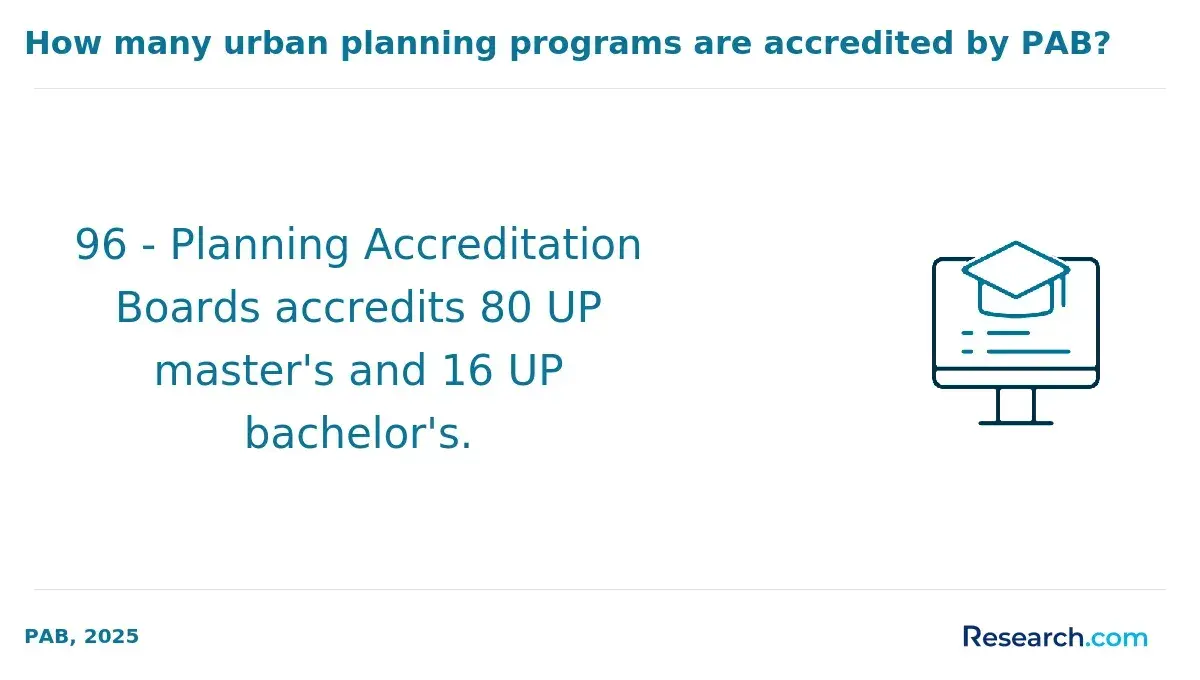
- Accreditation standards: Accelerated online and traditional programs can follow the same rigorous standards, typically overseen by the Planning Accreditation Board (PAB), when the program is PAB-accredited.
- Peer and faculty interaction: Traditional programs may offer more face-to-face studio and networking opportunities, while online programs require more intentional participation in virtual collaboration, advising, and professional events.
The better format depends on your learning style and schedule. Students who need structure, in-person critique, and regular campus engagement may prefer a traditional program. Students who are self-directed and need location flexibility may benefit more from an accelerated online format.
If workload is a major concern, it can help to compare degree formats more broadly, including guides on the easiest online college degrees and majors. Urban planning should not be chosen because it seems easy; it should be chosen because its policy, design, data, and community-development focus match your career goals.
Will competency-based online programs in Urban Planning affect completion time?
Competency-based education (CBE) can affect completion time because progress is based on demonstrated mastery rather than time spent in a classroom. In a CBE model, students advance when they prove they have learned the required skills, which can potentially shorten a traditional four-year timeline to around two years.
For Urban Planning students, competency-based learning may involve demonstrating skills in zoning, urban design, policy analysis, community planning, and applied problem-solving. This can benefit students who already have relevant professional knowledge, strong writing ability, or prior exposure to planning-related work.
The trade-off is that CBE requires discipline. Students may have fewer fixed deadlines, but that freedom can slow progress if they do not set a consistent weekly schedule. Because urban planning involves applied judgment and real-world context, students should confirm that any CBE program still offers rigorous feedback, faculty access, and opportunities to apply concepts to planning problems.
Completion time in a CBE program depends on the program design, the student’s prior knowledge, the number of competencies required, and how quickly the student can produce acceptable work. It is not automatically faster for everyone.
Can you work full-time while completing fast-track Urban Planning online programs?
Yes, it is possible to work full-time while completing a fast-track online Urban Planning program, but it is demanding. Accelerated formats compress reading, writing, research, group work, and project deadlines into a tighter schedule. Students who succeed usually treat the program like a second major commitment, not a casual evening activity.
The challenge is that urban planning coursework is often project-based. Assignments may require policy memos, mapping or spatial analysis, public-engagement planning, design critiques, case studies, and collaboration with classmates. These tasks can be difficult to complete only during short gaps in the week.
How to decide if full-time work and accelerated study are realistic
- Review weekly time expectations: Ask the program how many hours students typically spend per course each week.
- Check synchronous requirements: Live sessions, group meetings, or presentations may conflict with work schedules.
- Look at course sequencing: Some required courses may be offered only in certain terms, which can affect acceleration.
- Plan for intensive weeks: Midterms, final projects, studio-style assignments, and capstones may require extra time.
- Use support early: Academic advising, faculty office hours, writing support, library help, and online forums can prevent small delays from becoming major setbacks.
A practical approach is to start with a manageable course load, confirm how the workload fits your job, and then accelerate if your grades, schedule, and stress level remain sustainable.
Can prior learning assessments (PLAs) shorten Urban Planning degree timelines?
Prior learning assessments (PLAs) can shorten an online Urban Planning degree timeline, but they rarely eliminate the core planning curriculum. PLAs award credit for college-level learning gained outside a traditional classroom, such as professional experience, certifications, military training, or independent study.
Common PLA methods include portfolio review, standardized exams such as CLEP or DSST, and evaluation of professional licenses or formal training. In practice, many Urban Planning programs give more predictable credit for prior college coursework than for PLA submissions.
Students should also understand the limits. PLA credit usually requires strong documentation, may involve extra fees, and may apply mainly to electives rather than required planning courses. Programs often cap PLA credit at 25-30%. Courses tied to accreditation, planning methods, studios, capstones, or advanced policy analysis may still need to be completed through the institution.
PLA is most useful when you have clearly documented, relevant, college-level learning. It is less useful when your experience is informal, hard to verify, or unrelated to the degree requirements.
Can prior college credits help you get a degree in Urban Planning sooner?
Yes. Prior college credits can be one of the most effective ways to finish an online Urban Planning degree sooner, especially at the undergraduate level. Transfer credit can reduce the number of courses you need to take, lower total tuition costs, and help you avoid repeating general education or related prerequisite coursework.
To evaluate transfer credit, follow these steps:
- Review program transfer policies: Each institution sets its own limits. For example, Liberty University allows up to 50% of the credits to be transferred, while others like the University of Florida's online MURP program accept transfers but don't specify maximums.
- Check course alignment: Credits are more likely to transfer when they match degree requirements in areas such as urban economics, policy analysis, research methods, statistics, public administration, environmental planning, or geographic information systems.
- Meet grade requirements: Most programs require transferred courses to have grades of at least a B and to come from regionally accredited institutions.
- Prepare documentation: Submit official transcripts and, when requested, course descriptions or syllabi so the school can judge equivalency.
- Confirm course currency: Courses taken over seven years ago might require additional review or may not qualify for transfer.
Transfer credits can accelerate urban planning degree completion with college credits, but they are not automatic. Send transcripts early, request a written transfer evaluation, and ask which credits apply to major requirements versus electives. A large number of transferred credits is less valuable if they do not count toward the actual degree plan.
Students thinking beyond the master’s level may also compare alternative doctoral formats, including a PhD without dissertation, when planning long-term academic and career pathways.
Can work or military experience count toward credits in a degree in Urban Planning?
Work or military experience can sometimes count toward credits in an online Urban Planning degree, but the decision is school-specific. Institutions look at whether the experience represents documented, college-level learning and whether it fits the degree requirements.
Military training is often reviewed through evaluations from organizations such as the American Council on Education (ACE). Students may also use credit-by-examination options such as CLEP and DSST to demonstrate knowledge without taking a traditional course.
Professional experience may help most when it connects clearly to planning-related competencies, such as public administration, GIS, environmental review, housing policy, transportation, community engagement, or land-use processes. Even then, many universities limit experience-based credit and apply it to electives rather than core Urban Planning courses.
Before enrolling, ask the admissions or registrar’s office three specific questions: how much experience-based credit is allowed, which documentation is required, and whether those credits can satisfy major requirements. This prevents surprises after you have already committed to the program.
What criteria should you consider when choosing accelerated Urban Planning online programs?
When choosing an accelerated online Urban Planning program, focus on quality first and speed second. A faster degree is only valuable if it prepares you for planning work, is credible to employers, and fits your schedule and budget.
Important selection criteria include:
- Academic reputation and accreditation: A respected program can support employer confidence and professional mobility. For planning degrees, check whether the program is accredited by the Planning Accreditation Board (PAB) when that matters for your goals.
- Faculty qualifications: Look for instructors with advanced academic preparation and practical planning experience in areas such as land use, housing, transportation, sustainability, public policy, or GIS.
- Course delivery format: Determine whether the program uses synchronous live sessions, asynchronous coursework, or a mix. The best choice depends on your work schedule and need for structure.
- Student support services: Accelerated students benefit from strong advising, career counseling, library access, writing support, technical help, and responsive faculty communication.
- Credit transfer and dual-credit policies: Some accelerated programs allow credits to count toward both bachelor's and master's degrees, shortening the path to graduation.
- Curriculum alignment with career goals: Review electives or concentrations in areas like sustainability, housing, transportation, environmental planning, public administration, or GIS.
- Tuition costs and financial aid: Compare total program cost, not just per-credit tuition. Include fees, technology requirements, books, residency requirements, and available aid.
- Capstone, studio, or applied project requirements: These can strengthen your portfolio but may also affect scheduling and workload.
- Career outcomes and employer connections: Ask how the program supports internships, local government connections, alumni networking, and job-search preparation for online students.
For accelerated online urban planning program admissions requirements, also check GPA expectations, prerequisite coursework, application deadlines, statement or portfolio requirements, and whether the program is designed for students with prior planning experience.
Some students reduce cost by starting with a lower-cost credential and transferring later. For example, comparing the easiest way to get an associate's degree can help students plan a staged pathway before advancing into bachelor’s-level planning study.
Are accelerated online Urban Planning degrees respected by employers?
Accelerated online Urban Planning degrees can be respected by employers when they come from credible institutions, have strong academic standards, and provide practical planning preparation. The delivery format matters less than the program’s quality, accreditation, curriculum, and evidence that graduates can apply planning concepts in real settings.
Accreditation is especially important. Programs accredited by reputable bodies like the Planning Accreditation Board (PAB) signal that the curriculum meets recognized professional education standards. Employers are also more likely to respect online programs that mirror the rigor of on-campus offerings, such as the University of Florida's MURP online program.
Students can strengthen employer confidence by building a portfolio of applied work, including policy analysis, GIS projects, community development proposals, zoning research, transportation or housing studies, and capstone projects. Work experience, internships, local government exposure, and professional references can also matter as much as the format of the degree.
An accelerated degree may even demonstrate strong time management if the student balanced school with employment or other responsibilities. Still, applicants should be ready to explain what they learned, how the online format worked, and how their projects connect to the employer’s planning needs.
Students comparing career routes may also review top vocational degree careers for broader context on practical education pathways and job-focused training options.
What Urban Planning Graduates Say About Their Online Degree
-
: "Earning my Urban Planning degree online was a game-changer for my career. The accelerated pace allowed me to finish in less than two years, saving on tuition costs and jumping straight into a city development role. The practical knowledge I gained was immediately applicable to my job, making the investment well worth it.
Elle"
-
: "Reflecting on my experience, the online Urban Planning program offered incredible flexibility while maintaining rigorous coursework. Balancing work and studies was manageable, and I appreciated how the program integrated real-world case studies that deepened my understanding of sustainable urban design. The ability to complete the degree faster than traditional routes was a distinct advantage for me personally.
Zane"
-
: "As a professional aiming to enhance my skills, the accelerated online Urban Planning degree provided high-quality education without disrupting my schedule. The comprehensive curriculum and expert faculty ensured that I developed strong analytical and planning skills, enabling me to lead complex urban projects confidently. Considering the competitive tuition rates, this program was a cost-effective way to advance my expertise.
Gael"
Other Things to Know About Accelerating Your Online Degree in Urban Planning
Many accelerated Urban Planning degree programs offer the option to complete all coursework online, providing flexibility for students balancing other commitments.
However, some programs may require occasional on-campus visits for workshops, labs, or internships. It is important to verify the specific program's delivery format before enrolling.
Even online programs typically require some form of hands-on experience. This may include virtual simulations, group projects, and internships arranged in your local area. Many programs partner with community organizations or governmental bodies to provide real-world project involvement.
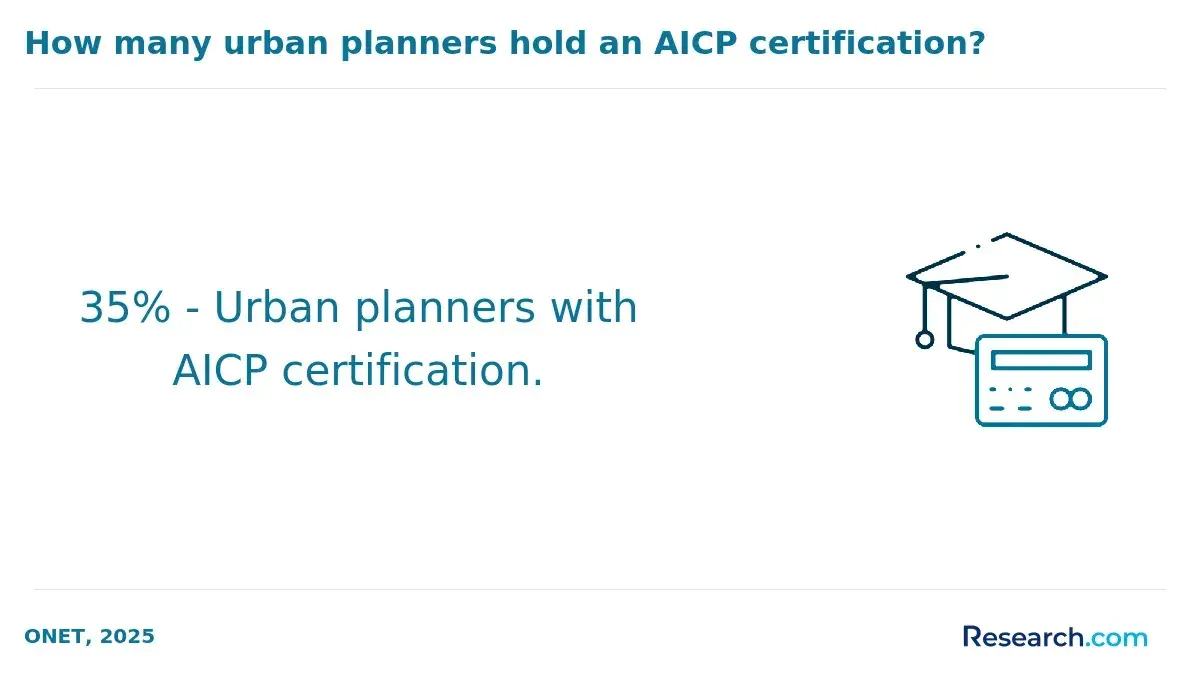
Some accelerated Urban Planning degrees integrate preparation for professional certification or licensure, such as the American Institute of Certified Planners (AICP) exam.
Students should confirm whether their chosen program offers guidance or coursework tailored to these credentials. This focus can help graduates enter the workforce with recognized qualifications faster.
References
- RCPL Accelerated Programs https://architecture.ou.edu/rcpl-accelerated-programs/
- Time-Based, Competency-Based, or Hybrid Programs? | Urban Institute https://www.urban.org/research/publication/time-based-competency-based-or-hybrid-programs
- MURP Online Program | Department of Urban and Regional Planning https://dcp.ufl.edu/urp/academics/murp_online_program/
- Urban Planning Master of Science Program https://www.tyyc.itu.edu.tr/ProgramHakkinda.php
- Public Administration, City Planning (BAAS) Competency-Based https://www.etamu.edu/public-administration/
- Master of Urban Planning (MUP) Accelerated Degrees https://spaa.ku.edu/master-urban-planning-accelerated-degrees
- Master of City Planning https://online.uc.edu/masters-programs/city-planning/
- Zippia. (2026). Urban planner demographics and statistics in the United States. https://www.zippia.com/urban-planner-jobs/demographics/


