
2027 How to Become a Geoscientist: Education, Salary, and Job Outlook

Co-Founder and Chief Data Scientist
Becoming a geoscientist is a strong fit for people who want to understand Earth systems and apply that knowledge to practical problems: water supply, natural hazards, energy resources, land use, climate impacts, and environmental protection. The career can involve field investigations, laboratory testing, computer modeling, data interpretation, technical reporting, and communication with engineers, regulators, communities, or business leaders.
The main decision is whether the training, work settings, and career trade-offs match your goals. Geoscience can be rewarding and well compensated in some sectors, but it also requires rigorous science preparation, comfort with uncertainty, and a willingness to keep learning as technology, regulations, and environmental priorities change.
This guide explains the credentials, skills, career path, salary expectations, internship options, advancement strategies, work settings, challenges, and self-assessment questions that can help you decide whether becoming a geoscientist is the right move.
What are the benefits of becoming a geoscientist?
- The geoscience field is projected to grow by 6% through 2027, reflecting steady demand driven by environmental and energy challenges.
- Median annual salary for geoscientists in 2027 is expected around $93,000, offering competitive compensation relative to many STEM careers.
- Choosing geoscience means engaging in impactful work addressing climate change, resource exploration, and natural disaster prediction, making it a socially rewarding profession.
What credentials do you need to become a geoscientist?
Most geoscientist roles require at least a bachelor's degree in geosciences, geology, or a closely related field. Employers usually look for a strong science foundation, field experience, and the ability to interpret geological data, not just a general interest in Earth science.
The exact credentials you need depend on the type of work you want to do. Environmental consulting, resource exploration, hazard assessment, government research, and academic careers can have different expectations for education, licensure, and experience.
- Bachelor's degree: A bachelor's degree in geosciences, geology, earth science, geophysics, environmental science, or a closely related field is the usual entry point. A competitive program should include geology, chemistry, physics, mathematics, data analysis, and fieldwork. Many paths also require substantial geological science coursework, commonly including at least 30 semester hours in geological sciences.
- Field and laboratory preparation: Field camps, mapping projects, core logging, mineral identification, groundwater sampling, and laboratory analysis help turn classroom knowledge into employable skills. Students who skip hands-on experience may have a harder time competing for entry-level roles.
- Advanced degrees: A master's degree or Ph.D. is often important for research, university teaching, senior consulting, technical leadership, and specialized areas such as volcanology, seismology, hydrogeology, geochemistry, or geophysics. A graduate degree can also help professionals move into higher-responsibility roles faster.
- State licensure: In 31 states, professional geologists must obtain state licensure. Licensure commonly involves meeting education and experience requirements and passing the ASBOG Fundamentals of Geology Exam. Requirements vary by state, so students and early-career professionals should review the rules where they plan to work, especially if they want to sign reports, provide consulting services, or work in regulated practice areas.
- Continuing education: Geoscientists often need ongoing training in software, safety, environmental regulations, sampling standards, data management, and emerging technologies. This is especially important in consulting, government, energy, mining, and environmental compliance roles.
When choosing a major, look beyond the degree title. Compare required field courses, faculty expertise, lab facilities, internship access, GIS or coding options, and alumni outcomes. Students comparing geoscience with other options can use college majors and career paths resources to see how academic choices connect to job markets.
What skills do you need to have as a geoscientist?
Geoscientists need a mix of scientific judgment, technical software skills, field competence, and communication ability. The best candidates can move between outdoor observations, laboratory evidence, spatial data, computer models, and written recommendations.
Technical knowledge matters, but employers also value people who can explain risk, document assumptions, work safely, and make decisions when data are incomplete. The following skills are especially important:
- Geological mapping and cartography: Geoscientists must understand landforms, rock units, structures, and spatial relationships. Mapping may be done in the field, in GIS platforms, or with remote sensing data.
- Data analysis and interpretation: Many projects require interpreting seismic readings, well logs, core samples, soil samples, geochemical results, groundwater data, or time-series environmental measurements.
- Mineralogy, petrology, and stratigraphy: These foundations help geoscientists understand Earth materials, rock formation, depositional environments, and the sequence of geological events.
- Geophysics and exploration geophysics: Physical methods help professionals investigate subsurface structures, resources, hazards, and groundwater conditions without relying only on direct excavation or drilling.
- GIS proficiency: Geographic Information Systems are central to spatial analysis, site selection, hazard mapping, environmental assessment, and data visualization.
- Remote sensing: Satellite and aerial imagery support monitoring of land change, erosion, vegetation patterns, coastal processes, volcanic activity, and other environmental or geological conditions.
- Field safety and observation: Fieldwork requires careful note-taking, sample handling, navigation, risk awareness, and the discipline to follow safety protocols in remote or difficult conditions.
- Technical writing and presentation: Geoscientists write reports, maps, memos, permit documents, research papers, and client or agency presentations. Clear writing is essential because technical findings often influence expensive or high-stakes decisions.
- Project management and teamwork: Many projects involve engineers, hydrologists, environmental scientists, regulators, construction teams, landowners, or business stakeholders. Geoscientists must coordinate deadlines, budgets, sampling plans, and deliverables.
- Problem-solving and critical thinking: Geological systems are complex. Professionals must test hypotheses, evaluate uncertainty, and avoid overclaiming what the data can prove.
A practical way to build these skills is to combine coursework with applied projects. For example, a student might pair sedimentology with field mapping, GIS with a watershed analysis project, and technical writing with an environmental site assessment report.
What is the typical career progression for a geoscientist?
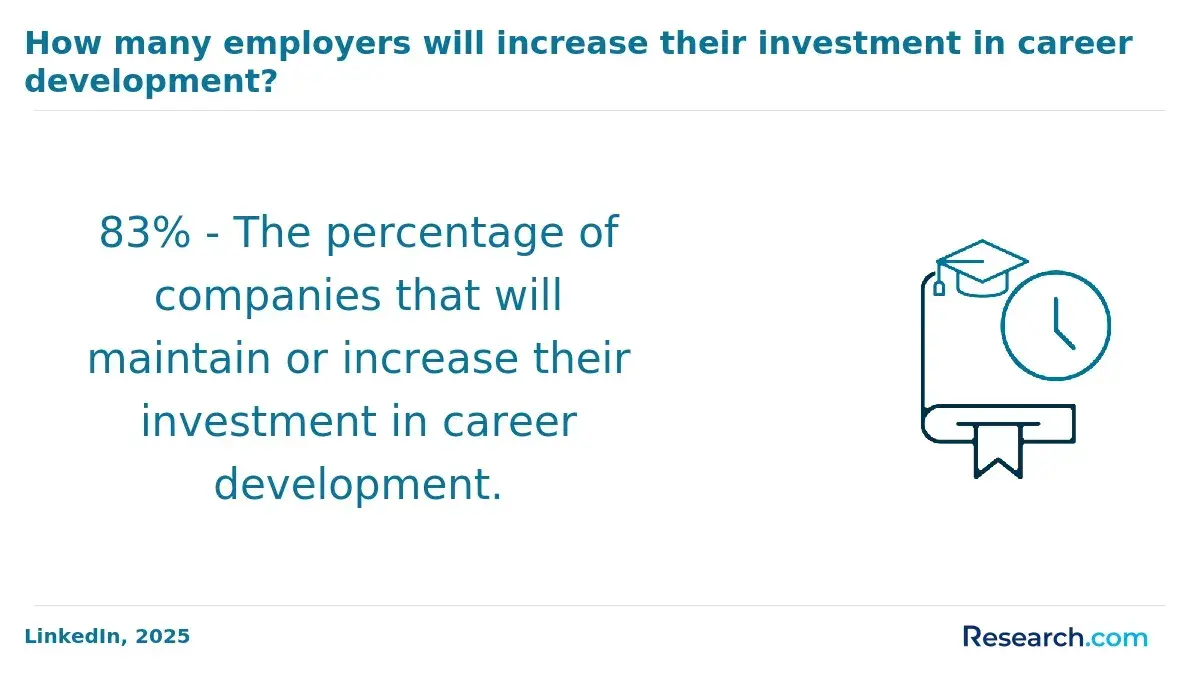
A geoscientist's career progression usually moves from data collection and technical support to project ownership, specialization, and leadership. The pace depends on education, industry sector, licensure, field experience, and the ability to communicate findings to non-specialists.
- Entry-level roles: These positions often last 2 to 5 years and may include titles such as geologist, geophysicist, environmental scientist, staff geoscientist, or field technician. Work may involve core logging, site sampling, mapping, field notes, laboratory coordination, data cleaning, safety procedures, and basic report preparation.
- Mid-level positions: With experience or a master's degree, professionals may move into roles such as Project Geologist, Resource Development Geoscientist, Hydrogeologist, Geophysicist, or Environmental Consultant. Responsibilities often expand to project planning, client communication, 3D modeling, regulatory documentation, quality control, and supervision of junior staff.
- Senior and leadership roles: After 10 to 15 years, experienced professionals may become Geoscience Managers, Technical Leads, Principal Geologists, Senior Consultants, or Superintendents. These roles require strategic judgment, risk management, mentoring, budget oversight, and the ability to defend technical conclusions.
- Specialization paths: Some geoscientists deepen expertise in hydrogeology, environmental remediation, petroleum geology, mining geology, geotechnical work, seismology, geochemistry, climate-related risk, or hazard assessment. Specialization can increase credibility and open higher-level consulting or research opportunities.
- Lateral moves: Career growth is not always vertical. Geoscientists may shift between government, consulting, energy, mining, nonprofits, academia, and technology-focused roles. These moves can broaden expertise and reduce dependence on one industry cycle.
Early-career professionals should track the skills required for the next role before they are ready to apply. For many geoscientists, the key transition is moving from “collecting data correctly” to “interpreting data responsibly and advising decisions.”
How much can you earn as a geoscientist?
Geoscientist pay varies widely by sector, education level, specialization, location, licensure, and years of experience. Roles tied to petroleum, mining, geophysics, and high-stakes consulting often pay more than many academic or entry-level environmental positions, though compensation is only one factor to consider.
According to the latest data, the median annual wage for geoscientists reached $99,240 in May 2024, with the top 10% earning over $154,000. Entry-level professionals typically start at around $55,000 to $64,000, while senior technical experts and managers can earn substantially more depending on sector and responsibility.
Several factors can influence where you fall within the salary range:
- Industry: Petroleum, mining, and some geophysics roles tend to offer higher compensation because projects can involve major capital investment and specialized technical risk.
- Education: A master's degree or Ph.D. can improve access to research, consulting, leadership, and specialized technical roles.
- Licensure: Professional licensure can matter in consulting and regulated practice, especially when reports require formal sign-off.
- Experience: Pay generally rises as geoscientists move from field support into project management, technical leadership, client advisory work, or organizational strategy.
- Location and travel: Some roles pay more because they require remote field assignments, relocation, irregular schedules, or work in higher-cost labor markets.
The geoscientist average salary in the United States 2025 is best understood as a broad benchmark rather than a guarantee. A student choosing this career should compare likely earnings with tuition cost, graduate school plans, desired sector, and tolerance for fieldwork or industry volatility.
If you are still comparing degree options and want to understand how academic difficulty, flexibility, and career value may differ across programs, reviewing online degree options and major choices can help with early planning.
What internships can you apply for to gain experience as a geoscientist?
Internships are one of the strongest ways to test whether geoscience fits your interests and work style. They also help students build field records, software experience, professional references, and examples of applied work for future job applications.
Good geoscience internships may involve field mapping, sample collection, GIS work, geophysical data processing, environmental monitoring, hazard research, laboratory analysis, technical writing, or participation in active project teams. The best choice depends on whether you are aiming for environmental consulting, government research, energy, mining, conservation, or graduate school.
- Geo-Launchpad Program by EarthScope Consortium offers a paid internship for community college students, with emphasis on geoscience research, fieldwork, and professional skills such as resume development and science communication.
- SLB (formerly Schlumberger) provides internships across geology, geophysics, petrophysics, and petroleum engineering. Students may work on teams aligned with their academic background and gain exposure to applied industry projects.
- USGS Earthquake Science Center offers internship opportunities connected to research and scientific projects that contribute to understanding geological hazards and Earth processes.
- Scientists in Parks program by the Geological Society of America connects interns with environmental conservation and geological research opportunities, helping students build both technical skills and professional networks.
When evaluating internships, ask what you will actually do each week. A strong internship should provide supervised technical work, safety training if fieldwork is involved, feedback on your performance, and a final product you can discuss in future interviews.
Students interested in advanced study or lucrative masters degrees should treat internships as more than resume lines. They can clarify research interests, strengthen graduate applications, and reveal whether a sector’s day-to-day work matches expectations. The path to becoming a geoscientist in 2027 is stronger when academic preparation is paired with applied experience.

How can you advance your career as a geoscientist?
Career advancement in geoscience usually comes from combining technical depth with credibility, communication, and broader business or policy awareness. Doing fieldwork well is important, but it is not enough for long-term growth.
- Pursue advanced education when it supports your goals: A master's degree or Ph.D. can be valuable for research, technical specialization, leadership, policy, or higher-level consulting. Graduate school is most useful when it aligns with a clear career direction, not when it is used simply to delay entering the workforce.
- Earn relevant credentials: Professional licensure, where applicable, can expand responsibility and consulting opportunities. Certifications from organizations such as the American Institute of Professional Geologists may also strengthen professional standing, depending on employer and sector.
- Build digital competency: GIS, data analysis, modeling tools, database management, and coding can make a geoscientist more competitive. Professionals who can interpret Earth systems and manage large datasets are better positioned for modern project work.
- Develop cross-disciplinary knowledge: Environmental policy, climate science, sustainability, hydrology, engineering concepts, and risk communication can broaden career options. Many geoscience decisions sit at the intersection of science, regulation, infrastructure, and public concern.
- Seek mentorship and professional networks: Conferences, workshops, alumni networks, professional societies, and workplace mentors can lead to job leads, research collaborations, licensure guidance, and better career decisions.
- Improve public and stakeholder communication: Senior geoscientists often need to explain technical uncertainty to clients, policymakers, community groups, or executives. The ability to be accurate without being confusing is a major career advantage.
- Make strategic sector moves: Moving between academia, government, consulting, industry, or international work can broaden expertise. However, each move should build a coherent skill set rather than simply changing titles.
A useful advancement strategy is to review job descriptions for roles two levels above your current position. Identify repeated requirements, then build those skills through projects, training, mentorship, or targeted credentials.
Where can you work as a geoscientist?
Geoscientists work in far more settings than traditional oil, gas, and mining roles. Their expertise is used wherever organizations need to understand subsurface conditions, natural hazards, resources, land stability, environmental risk, or Earth system change.
- Energy and Mining: Companies such as ExxonMobil, Chevron, and Freeport-McMoRan employ geoscientists to locate, evaluate, and manage oil, gas, and mineral resources. These roles can be technically demanding and may offer strong pay, but they can also be affected by commodity cycles and changing regulations.
- Consulting Firms: Firms such as AECOM, Golder Associates (now WSP), and Tetra Tech hire geoscientists for environmental impact assessments, groundwater investigations, site remediation, permitting support, and contamination studies.
- Engineering and Architecture: Companies such as Bechtel and Jacobs Engineering Group rely on geoscientists to assess geological hazards, subsurface conditions, slope stability, groundwater issues, and site suitability for infrastructure projects.
- Federal Agencies: Organizations including the U.S. Geological Survey (USGS), EPA, and NASA employ geoscientists in research, hazard monitoring, environmental protection, planetary science, policy support, and data analysis.
- State and Local Agencies: Departments of Natural Resources and Environmental Protection in states such as California and Texas hire geoscientists for water management, land-use planning, conservation, permitting, hazard preparation, and environmental regulation.
- Nonprofits and Advocacy: Groups such as The Nature Conservancy and the Union of Concerned Scientists use geoscience expertise to support conservation, public education, climate-related work, and evidence-based policy.
- Academia and Research: Universities including Stanford, MIT, and the University of Texas at Austin employ geoscientists as educators and researchers in areas such as climate science, seismology, geochemistry, hydrology, and planetary geology.
- International Organizations: Global bodies such as the United Nations Environment Programme and the World Bank may involve geoscientists in sustainable development, disaster risk reduction, resource management, and environmental planning.
Before choosing a sector, compare travel expectations, salary potential, public mission, job stability, fieldwork intensity, and advancement options. A role that looks attractive on paper may feel very different if it requires frequent remote assignments or highly regulated reporting.
If you need a flexible academic route into the field, you may want to compare accredited online colleges with no application fee while confirming that any program you consider includes the science and field preparation expected by geoscience employers.
What challenges will you encounter as a geoscientist?
Geoscience can be intellectually rewarding, but it also brings practical and ethical challenges. Many projects involve incomplete data, uncertain forecasts, environmental risk, public concern, or commercial pressure. Successful geoscientists learn to work carefully within those limits.
- Industry volatility: Petroleum and mining can move through cycles of hiring and contraction. Professionals in these areas may need to adapt, relocate, specialize, or move into adjacent sectors when markets shift.
- Fieldwork demands: Some roles require travel, outdoor work, remote sites, difficult terrain, irregular schedules, and strict safety procedures. This can be exciting for some people and draining for others.
- Emotional strain: Work involving contamination, natural disasters, climate impacts, or community risk can carry emotional weight. Geoscientists may have to communicate difficult findings clearly and calmly.
- Ethical pressure: Scientific conclusions may conflict with business goals, political preferences, or public expectations. Professionals must protect the integrity of their data, methods, and reporting.
- Regulatory change: Environmental rules, permitting requirements, safety standards, and sustainability expectations can change over time. Geoscientists must stay current to remain compliant and effective.
- Technology demands: Modern geoscience increasingly depends on GIS, remote sensing, modeling, data analytics, and digital collaboration. Professionals who avoid technology may limit their career options.
- Communication complexity: Geoscientists often need to explain uncertainty. Saying “the evidence suggests” or “the model indicates” is scientifically appropriate, but nontechnical audiences may want simple yes-or-no answers.
The most prepared geoscientists are comfortable saying what the data show, what remains uncertain, and what additional information would reduce risk.
What tips do you need to know to excel as a geoscientist?
To excel as a geoscientist, focus on becoming useful in real decisions. That means building strong science fundamentals, learning the tools employers use, documenting your work carefully, and communicating conclusions in a way that others can act on.
- Strengthen your core science foundation: Geology is connected to chemistry, physics, mathematics, biology, hydrology, and environmental science. The stronger your foundation, the better you can interpret complex Earth systems.
- Learn GIS and data tools early: Geographic Information Systems, data visualization, and programming languages like Python can help you analyze spatial and numerical data more effectively.
- Keep detailed field and project records: Good notes, clear sample labels, organized data files, and documented assumptions can protect the quality of your work and make your conclusions easier to defend.
- Seek feedback on technical writing: Reports are a major work product in many geoscience roles. Practice writing concise methods, clear findings, and well-supported recommendations.
- Build a professional network before you need a job: Faculty, internship supervisors, alumni, professional society contacts, and peers can help you find opportunities and understand sector-specific expectations.
- Use internships to test career fit: Try to experience more than one setting if possible, such as consulting, research, government, or industry. The work environment can matter as much as the subject area.
- Stay current: Attend conferences, complete relevant certifications, follow developments in climate change and resource management, and keep learning new analytical tools.
- Understand the decision context: A technically correct answer is not always enough. Learn who will use your analysis, what constraints they face, and what risks they need to manage.
How do you know if becoming a geoscientist is the right career choice for you?
Becoming a geoscientist may be a good fit if you enjoy scientific investigation, outdoor and analytical work, complex problem-solving, and evidence-based decision-making. It may be a poor fit if you dislike uncertainty, detailed documentation, technical coursework, or changing work environments.
Use the following questions to assess your fit honestly:
- Do you enjoy investigative work? Geoscientists spend a lot of time asking what the evidence means, testing explanations, and recognizing patterns in rocks, landscapes, maps, samples, or datasets.
- Are you comfortable with both fieldwork and desk-based analysis? Some roles are field-heavy, while others involve modeling, GIS, reports, or laboratory work. Many careers include a mix.
- Can you handle uncertainty? Geological systems are rarely perfectly known. You must be able to make careful interpretations without overstating confidence.
- Do you value independence and responsibility? Many projects require self-direction, sound judgment, and accountability for data quality and technical conclusions.
- Are you physically and logistically adaptable? Some roles involve remote locations, difficult weather, travel, or unusual schedules. Not every geoscience job is rugged, but field readiness can expand options.
- Are you motivated by environmental, resource, hazard, or Earth-system questions? Long-term satisfaction is more likely when the subject matter itself holds your interest.
- Are you willing to keep learning? Software, regulations, scientific methods, and employer needs change. A geoscientist’s education does not end at graduation.
If you are interested in the field but concerned about cost, compare affordable education routes carefully. Options such as affordable online bachelor's degrees may help with general planning, but you should verify that any program supports the laboratory, field, and science coursework expected for geoscience careers.
The best indicator is not whether you like the idea of Earth science. It is whether you are willing to do the technical work, field preparation, data interpretation, and communication required to practice it professionally.
What Professionals Who Work as a Geoscientist Say About Their Careers
- Enoch: "Working as a geoscientist has given me incredible job stability in an ever-changing market. The demand for expertise in natural resources and environmental consulting ensures consistent opportunities, and the salary potential reflects the specialized skills required. It's a career that truly rewards dedication and expertise."
- Keanu: "The geoscience field presents unique challenges that keep every project exciting, from exploring remote landscapes to analyzing complex geological data. This dynamic environment has expanded my problem-solving skills and exposed me to diverse workplace settings that most professions don't offer. It's a journey filled with adventure and discovery."
- Jonah: "Pursuing a career as a geoscientist has opened numerous doors for professional development through specialized training and cross-disciplinary collaboration. The constant evolution of technology and industry practices means continuous learning is part of the job, which I find highly rewarding for long-term career growth."
Other Things You Should Know About Becoming a Geoscientist
Becoming a geoscientist typically requires a minimum of four years to complete a bachelor's degree in geosciences or a related field. Many positions, especially those in research or specialized sectors, often require a master's degree or Ph.D., which can add an additional two to six years of study. Overall, the educational path can range from four to ten years depending on career goals and specialization.
A degree in geology or earth sciences is the most common route, but it is not the only path. Degrees in environmental science, geophysics, geochemistry, or engineering can also lead to geoscientist roles if combined with appropriate coursework and experience. Employers often value a strong foundation in earth science concepts alongside technical skills.
In 2027, the job market for geoscientists is predicted to remain stable but competitive. Candidates with advanced degrees and specialization in emerging fields like environmental geology or sustainable resource management will have a distinct advantage. The growing focus on alternative energy and climate change solutions drives demand, yet market entrants face tough competition.
The job outlook for geoscientists in 2027 is positive, with a projected employment growth rate of approximately 5% according to the U.S. Bureau of Labor Statistics. This growth is driven by the need for energy, environmental protection, and responsible land and resource management.
References
- How to find your career path with a geoscience degree https://www.grow-geocareers.com/
- Geological Sciences: Directory of Internships, Research Opportunities, Scholarships & Fellowships https://www.pathwaystoscience.org/Discipline.aspx
- Geology Career Pathways https://www.geolsoc.org.uk/geologycareerpathways
- Geoscientists Canada - THE PROFESSION https://geoscientistscanada.ca/profession.php
- Essential Excel Skills for Geologists - Perth, Australia - Snowden Optiro https://snowdenoptiro.com/events/essential-excel-skills-for-geologists/
- Critical workforce skills for bachelor-level geoscientists: An analysis of geoscience job advertisements | Geosphere | GeoScienceWorld https://pubs.geoscienceworld.org/gsa/geosphere/article/19/2/628/620368/Critical-workforce-skills-for-bachelor-level
- How to Become a Geoscientist | EnvironmentalScience.org https://www.environmentalscience.org/career/geoscientist


