
2027 How to Become an Algorithm Engineer: Education, Salary, and Job Outlook

Co-Founder and Chief Data Scientist
Becoming an algorithm engineer means preparing for one of the most technically demanding roles in software, data, and artificial intelligence. The job is not simply about writing code; it is about turning complex problems into efficient computational methods that can rank search results, detect fraud, optimize logistics, analyze medical data, train machine learning systems, or support autonomous technology.
This guide is for students, career changers, software developers, data professionals, and graduate-degree seekers who want to understand what the path actually requires. You will learn which credentials matter, what skills employers look for, how career progression and pay commonly work, where algorithm engineers are hired, and how to decide whether this career fits your strengths and work style.
The main takeaway is straightforward: algorithm engineering rewards people who combine strong mathematics, disciplined programming, practical system design, and continuous learning. It can lead to high-value work and strong compensation, but it also requires patience, technical depth, and the ability to keep up with fast-moving tools and research.
What are the benefits of becoming an algorithm engineer?
- Algorithm engineers are projected to see job growth of over 15% by 2025, driven by AI, machine learning, and data-intensive technologies.
- The average salary for algorithm engineers in the US ranges from $110,000 to $150,000, reflecting high demand for specialized skills.
- Professionals in this field influence innovation across industries, making it a forward-looking career with opportunities in tech, healthcare, and finance sectors.
What credentials do you need to become an algorithm engineer?
Most algorithm engineer roles require a strong technical education, evidence of advanced problem-solving ability, and a portfolio of applied work. There is no mandatory U.S. license for algorithm engineers, but employers commonly use degrees, internships, projects, publications, technical interviews, and certifications to assess readiness.
The usual starting point is a bachelor’s degree in computer science, mathematics, software engineering, or a closely related field. Students comparing undergraduate options can use resources on college majors with strong career value to evaluate programs that build durable technical skills.
Common credentials for algorithm engineering roles
| Credential | Why it matters | Best fit |
| Bachelor's degree | Builds the foundation in programming, data structures, algorithms, discrete mathematics, statistics, and systems thinking. | Entry-level software, data, and algorithm-focused roles. |
| Master's degree | Can strengthen preparation for machine learning, optimization, high-performance computing, and specialized research-driven roles. | Candidates targeting AI, advanced analytics, robotics, computer vision, NLP, or technical leadership tracks. |
| Doctorate | Signals deep research ability and may be valuable for highly specialized roles involving new algorithm development or advanced AI research. | Research labs, advanced AI teams, quantitative research, academia, and highly specialized industry roles. |
| Industry certifications | Can demonstrate applied knowledge in cloud platforms, software development, project workflows, or user-facing systems. | Candidates who need to prove job-ready skills or pivot into cloud, finance, healthcare, or applied AI environments. |
| Portfolio and technical projects | Shows that you can design, test, optimize, and explain algorithms in real use cases. | All candidates, especially students and career changers with limited work experience. |
Certifications such as AWS Certified Developer, CompTIA Project+, and CIW User Interface Designer can support your profile, but they rarely replace a strong technical degree or demonstrated coding ability. They are most useful when they connect directly to the job you want, such as cloud deployment, applied software engineering, or industry-specific systems.
Advanced education is not always required, but it becomes more valuable as roles become more research-intensive. Employers working on machine learning, large-scale optimization, financial modeling, medical analytics, or high-performance computing may prefer candidates with a master's degree or doctorate. If you are unsure how far to go academically, compare actual job postings in your target field and note whether they ask for graduate study, research experience, or production engineering experience.
The strongest credential strategy is not “collect as many certificates as possible.” It is to combine a rigorous academic foundation with practical proof: efficient code, measurable optimization work, deployed models, open-source contributions, research projects, or internships that show you can solve hard problems under real constraints.
What skills do you need to have as an algorithm engineer?
Algorithm engineers need a mix of theory, programming discipline, mathematical reasoning, and communication. The best candidates can move between abstract analysis and production realities: they understand why an algorithm works, when it fails, how much it costs to run, and how to explain the trade-offs to a team.
Core technical skills
- Algorithm design and optimization: You need to design algorithms for search, ranking, prediction, classification, routing, recommendation, compression, scheduling, or other complex tasks. Just as important, you must improve performance without breaking reliability.
- Data structures and complexity analysis: Employers expect fluency with arrays, hash tables, trees, graphs, heaps, queues, dynamic programming, and Big O notation. These concepts help you choose solutions that scale instead of merely working on small examples.
- Programming expertise: Python is common for experimentation and machine learning workflows, while C++ and Java often matter for performance-sensitive systems. The goal is not language collecting; it is writing clear, tested, efficient code in the environment your employer uses.
- Mathematical foundation: Discrete mathematics, linear algebra, probability, statistics, and optimization are central to algorithmic thinking. These skills are especially important in machine learning, signal processing, quantitative finance, computer vision, and AI systems.
- Machine learning and AI integration: Many algorithm roles now involve model selection, feature engineering, neural networks, evaluation metrics, model deployment, or improvement of AI-driven systems. You should understand not only how to use models, but how to test and tune them responsibly.
- Distributed and parallel computing: Large-scale data problems often require Hadoop, Spark, cloud infrastructure, parallel processing, or GPU-aware workflows. Knowing how to reduce computational bottlenecks can separate a good algorithm from a deployable one.
- Signal processing and data mining: For roles in healthcare, robotics, media, cybersecurity, and sensor-heavy systems, you may need to extract useful patterns from high-volume, noisy, or fast-moving data streams.
Professional skills that employers notice
- Problem framing: Strong engineers clarify the objective, constraints, edge cases, and success metrics before coding. Poor framing often leads to elegant algorithms that solve the wrong problem.
- Testing and validation: Algorithm engineers must test correctness, robustness, latency, accuracy, and failure modes. This is especially important when algorithms affect financial decisions, health outcomes, safety, or fairness.
- Communication: You may need to explain technical trade-offs to product managers, executives, researchers, data scientists, compliance teams, or customers. Clear communication prevents costly misunderstandings.
- Collaboration: Algorithm work rarely happens in isolation. It often sits between research, engineering, data infrastructure, product strategy, and operations.
- Lifelong learning: Frameworks, hardware, model architectures, and research practices change quickly. Continuous learning is part of the job, not an optional extra.
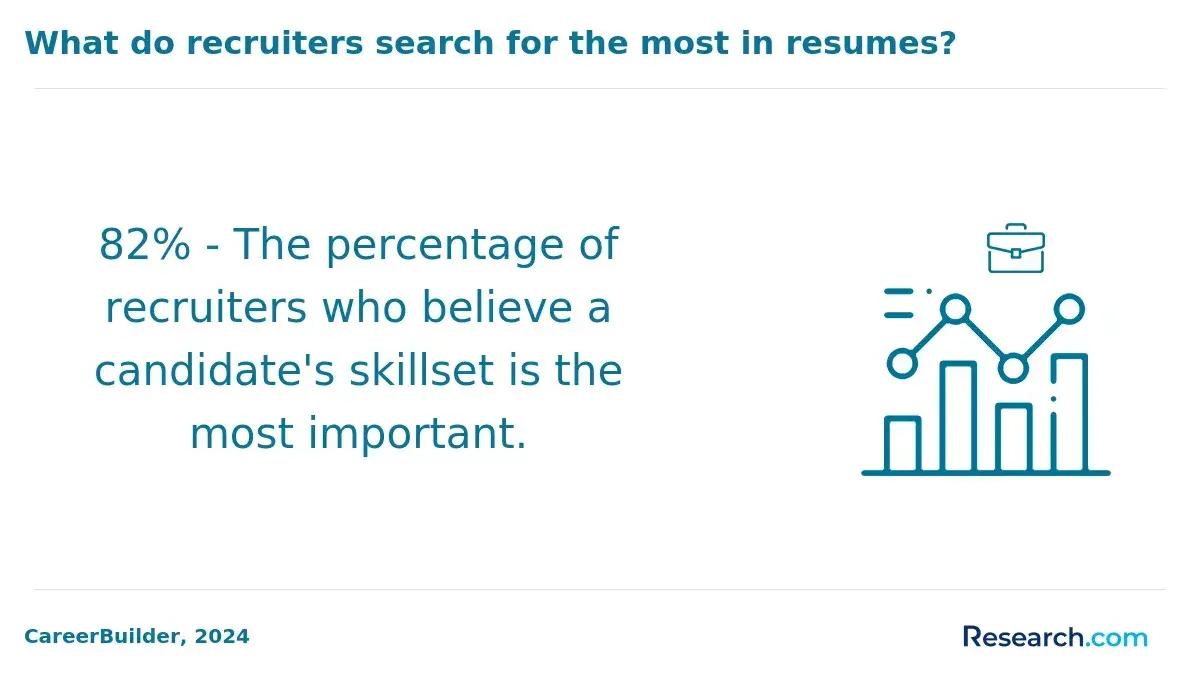
A useful way to assess your readiness is to ask whether you can do three things with the same problem: explain the theory, implement the solution, and defend the trade-offs. If one of those areas is weak, that is where your next learning goal should be.
What is the typical career progression for an algorithm engineer?
Algorithm engineer careers usually begin with implementation and debugging, then move toward independent algorithm design, system ownership, technical leadership, and specialization. Progression is not always linear: some engineers become managers, while others remain individual contributors in highly specialized technical roles.
Typical progression by experience level
| Career stage | Common focus | What helps you move up |
| Entry-Level (0-2 years) | Coding, debugging, testing, data workflow support, and learning production standards. | Internships, strong projects, clean code, comfort with data structures, and evidence that you can learn quickly. |
| Mid-Level (2-4 years) | Designing scalable algorithms, improving model efficiency, and contributing to production systems. | Experience with Python, cloud services such as AWS and Azure, and ML frameworks such as TensorFlow or PyTorch. |
| Senior-Level (5-8 years) | Owning system architecture, making technical trade-offs, mentoring others, and influencing product or research direction. | Depth in a specialization, cross-team communication, performance optimization, and sound engineering judgment. |
| Lateral and emerging specializations | AI ethics, MLOps, product management, applied research, AI deployment, or data science integration. | The ability to connect algorithms with business goals, compliance needs, user outcomes, and scalable operations. |
At the entry level, the biggest challenge is proving that you can apply classroom knowledge to real systems. Internships, research assistantships, coding competitions, open-source work, and well-documented portfolio projects can help compensate for limited professional experience.
At the mid-level, employers expect more independence. You may be asked to reduce latency, improve model performance, evaluate algorithmic alternatives, or redesign part of a data pipeline. This is often when engineers begin specializing in areas such as natural language processing, computer vision, reinforcement learning, recommendation systems, or quantitative modeling.
At the senior level, the work becomes less about solving isolated tasks and more about choosing the right technical direction. Senior Algorithm Engineers and Principal ML Engineers may review designs, mentor teams, set evaluation standards, manage trade-offs between accuracy and cost, or lead high-risk technical initiatives.
Some professionals move into management, while others become deep technical experts. Emerging paths such as AI Deployment Specialist and Data Science Integrator reflect the growing need for professionals who can move AI systems from research prototypes into reliable, ethical, scalable use.
How much can you earn as an algorithm engineer?
Algorithm engineering can be a high-paying career, especially for professionals who combine advanced mathematics, machine learning, systems engineering, and industry-specific expertise. Pay varies widely by employer, location, specialization, education, performance, and compensation structure.
The algorithm engineer salary in the US typically ranges from $121,500 to $157,862 annually. Several reports indicate an average salary between $126,000 and $131,000, which reflects a broad baseline for many professionals in the field. Engineers with advanced expertise, leadership responsibilities, or roles at top technology companies often report median earnings near $170,000. The top 10% of earners, especially those receiving bonuses and equity, can surpass $580,000 annually.
What affects algorithm engineer pay?
- Experience level: Early-career engineers tend to start near the lower end of the range, while senior specialists, principal engineers, and technical leaders can command much higher compensation.
- Education: Many algorithm engineers hold a master's or PhD. Graduate education can be especially valuable for research-heavy roles or advanced machine learning work, although strong industry experience can also carry significant weight.
- Specialization: Deep learning, reinforcement learning, high-frequency trading, computer vision, medical analytics, and large-scale recommendation systems may offer stronger earning potential when demand is high and talent is limited.
- Industry: Finance, major technology firms, AI infrastructure companies, and specialized healthcare technology employers may pay differently from government, nonprofit, or academic organizations.
- Compensation mix: Base salary is only one part of pay at some employers. Bonuses and equity can materially change total compensation, particularly at large technology firms and high-growth companies.
When comparing salaries, look beyond the headline number. Consider cost of living, remote-work policies, equity vesting, bonus reliability, expected hours, job stability, and the technical growth you will gain. A slightly lower salary in a role with stronger mentorship and better project ownership may lead to higher long-term earning power.
If graduate study is part of your plan, review options carefully rather than choosing only by speed or convenience. Resources on the easiest masters degrees can provide context, but algorithm engineering roles usually reward rigorous programs that strengthen mathematics, computing, and applied problem-solving.
What internships can you apply for to gain experience as an algorithm engineer?
Internships are one of the most effective ways to enter algorithm engineering because they give you proof of applied skill. A strong internship can show that you can work with real data, real constraints, production code, research workflows, and multidisciplinary teams.
Look for internships that involve algorithm design, model development, optimization, large-scale data processing, systems performance, or applied AI. The title may not always say “algorithm engineer”; relevant roles may appear under machine learning engineering, software engineering, data science, quantitative research, robotics, AI infrastructure, or research engineering.
Internship pathways to consider
- TikTok, ByteDance, and major AI firms: These opportunities may involve machine learning model development, infrastructure design for large language models, optimization of high-concurrency systems, data management, model training, and performance tuning.
- Hudson River Trading and quantitative trading firms: Interns may work with traders and developers to research trading strategies and implement high-frequency trading algorithms. These roles are a strong fit for students interested in optimization, probability, statistics, and real-time financial systems.
- Healthcare providers and research labs: These internships may focus on signal processing, medical imaging, patient data analytics, and algorithm refinement for clinical or operational problems.
- Government agencies and nonprofits like the National Fair Housing Alliance: These roles can involve experimental algorithms for social and public-sector problems, with attention to ethical design, model evaluation, compliance, and workflow orchestration.
- Zillow, Waymo, and emerging tech companies: Internships may include work in generative AI, agentic systems, multimodal data processing, autonomous systems, forecasting, personalization, or marketplace optimization.
How to make your internship application stronger
- Build projects that show measurable improvement, such as faster runtime, better prediction accuracy, lower memory use, or stronger evaluation results.
- Prepare to explain trade-offs, not just final answers. Interviewers often want to know why you selected one algorithm over another.
- Use clean documentation. A well-explained project can be more convincing than a larger project that is hard to evaluate.
- Practice technical interviews involving data structures, algorithms, probability, system design, and machine learning fundamentals.
- Apply beyond famous technology companies. Smaller firms, research labs, healthcare organizations, logistics companies, and public agencies can provide excellent hands-on experience.
Students planning for advanced research or specialized AI roles may also explore graduate pathways. A resource on the most affordable online phd programs can help compare cost-conscious options, although applicants should still verify academic fit, faculty expertise, research expectations, and accreditation.
How can you advance your career as an algorithm engineer?
Career advancement in algorithm engineering depends on more than years of experience. To move up, you need to show that your work improves systems, reduces costs, increases reliability, supports better decisions, or enables new products. Advancement also requires judgment: knowing when a sophisticated algorithm is useful and when a simpler, more maintainable approach is better.
Practical ways to grow
- Deepen your technical specialization: Choose an area where demand is strong and depth matters, such as machine learning, natural language processing, computer vision, cloud computing, optimization, AI infrastructure, or high-performance computing.
- Keep learning through targeted education: Advanced degrees, specialized classes, bootcamps, and online certificates can help when they fill a clear skill gap. Prioritize programs that include rigorous projects, mathematical depth, and applied implementation.
- Use certifications strategically: Credentials in deep learning, computer vision, AI ethics, cloud platforms, or related areas can support advancement when they match your target role. A certification is most valuable when paired with evidence that you can apply the skill.
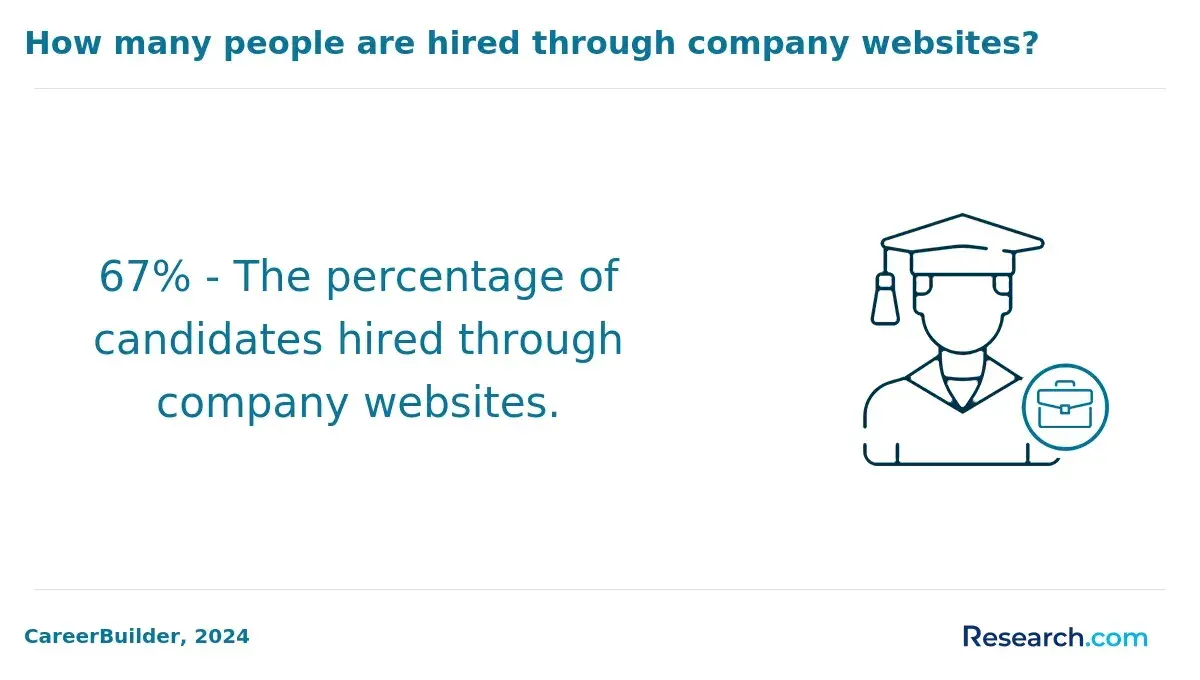
- Build visible technical proof: Publish technical write-ups, contribute to open-source projects, present internal findings, or maintain a portfolio that documents your algorithms, evaluation methods, and results.
- Develop system-level judgment: Senior roles require understanding latency, scalability, monitoring, security, privacy, maintainability, and business impact. Do not focus only on model accuracy or theoretical elegance.
- Network with intent: AI-focused conferences, technical communities, professional organizations, and online forums can expose you to emerging tools, job leads, collaborators, and mentors.
- Seek mentorship: A strong mentor can help you choose specializations, prepare for promotions, navigate research-to-production transitions, and avoid common career mistakes.
If your goal is leadership, start practicing leadership before you receive the title. Volunteer to review designs, mentor junior engineers, improve documentation, define evaluation standards, or coordinate cross-functional decisions. These activities demonstrate readiness for senior engineering, principal engineering, or management roles.
Where can you work as an algorithm engineer?
Algorithm engineers work anywhere organizations need better prediction, automation, optimization, ranking, simulation, or decision support. While major technology companies are highly visible employers, opportunities also exist in finance, healthcare, logistics, government, research, retail, and emerging AI companies.
Industries and employers that use algorithm engineers
| Industry | Examples | Typical algorithm work |
| Tech Industry | Google, Meta, Microsoft, Amazon, Apple, Tesla, and NVIDIA | Search, recommendation, autonomous vehicles, cloud computing, AI infrastructure, consumer products, and large-scale optimization. |
| Finance | Goldman Sachs, JPMorgan Chase, and Citadel | Algorithmic trading, risk modeling, fraud detection, pricing, forecasting, and portfolio analytics. |
| Retail & Logistics | Walmart, Target, FedEx, and UPS | Inventory optimization, routing, demand forecasting, supply chain planning, personalization, and pricing. |
| Healthcare | Mayo Clinic, Kaiser Permanente, Tempus, and Flatiron Health | AI-powered diagnostics, medical imaging, patient data analytics, personalized medicine, and operational efficiency. |
| Government | NSA, NASA, and the Department of Energy | Cybersecurity, climate modeling, national security, scientific computing, and large-scale simulations. |
| Academia & Research | MIT, Stanford, and NIH | Foundational research, applied AI studies, scientific discovery, and translation of research into practical tools. |
Remote and hybrid work models have expanded access to algorithm engineering roles, although availability depends on employer policy, data sensitivity, security requirements, and team structure. Candidates looking for algorithm engineer jobs in New York, for example, may find opportunities in technology, finance, healthcare, media, and startups, but they should also compare remote roles based elsewhere.
Emerging roles such as AI strategist and deployment specialist show how the field is broadening. Some positions emphasize research; others focus on putting algorithms into reliable production. Before applying, read the job description closely and decide whether the role is primarily research, software engineering, data science, MLOps, product analytics, or applied AI deployment.
Professionals considering advanced education can review the shortest online doctoral programs as one starting point, but should also evaluate research quality, accreditation, faculty fit, and whether the program genuinely supports algorithm engineering goals.
What challenges will you encounter as an algorithm engineer?
Algorithm engineering is rewarding, but it is not an easy career. The work can be intellectually demanding, highly competitive, and sensitive to rapid changes in AI, regulation, infrastructure, and business needs. Knowing the challenges early can help you prepare realistically.
- Growing technical complexity: Many modern algorithms are part of larger AI and machine learning systems. You may need to understand data pipelines, model behavior, deployment environments, monitoring, and feedback loops—not just the algorithm itself.
- Harder technical interviews: Employers increasingly use live coding, system design, supervised assessments, and practical case problems to verify skills. Strong candidates prepare to reason out loud, test assumptions, and explain trade-offs under pressure.
- Pressure to deliver measurable results: Algorithm work is often tied to performance targets such as speed, accuracy, cost, reliability, or business impact. Deadlines can be intense, especially when models affect revenue, safety, compliance, or user trust.
- High competition: The field attracts strong candidates from computer science, mathematics, physics, statistics, software engineering, and data science. Standing out requires both technical depth and evidence of applied impact.
- Ethical and regulatory responsibility: Data privacy, algorithmic fairness, transparency, and compliance are increasingly important. Engineers may need to evaluate bias, document decisions, protect sensitive data, and work with legal or policy teams.
- Rapid technological change: Tools, frameworks, model architectures, and best practices evolve quickly. You must keep learning without chasing every trend blindly.
- Ambiguous problems: Real-world problems are often messy. Data may be incomplete, objectives may conflict, and the “best” algorithm may not be the one with the highest theoretical performance.
The most successful algorithm engineers learn to manage uncertainty. They test carefully, document assumptions, communicate risk, and choose approaches that balance accuracy, speed, cost, fairness, and maintainability.
What tips do you need to know to excel as an algorithm engineer?
To excel as an algorithm engineer, build depth before chasing novelty. Employers value people who understand fundamentals, can implement efficient solutions, and know how to evaluate results honestly. Advanced AI techniques matter, but they are most powerful when grounded in strong mathematics and computer science.
- Master the foundations: Focus on discrete mathematics, statistics, probability, linear algebra, optimization, data structures, and computational complexity. These skills remain useful even as tools change.
- Write efficient, readable code: Maintain proficiency in Python and C++, and learn the language ecosystem used in your target industry. Clear code, tests, profiling, and documentation matter in professional settings.
- Understand algorithms from first principles: Do not rely only on libraries. Learn why an approach works, what assumptions it makes, where it fails, and how it scales.
- Specialize thoughtfully: Natural language processing, deep learning, prompt engineering, retrieval-augmented generation, computer vision, and reinforcement learning can be valuable areas, but choose based on your interests and market demand.
- Practice abstraction: Strong algorithm engineers can translate messy real-world problems into clean mathematical or computational models without ignoring practical constraints.
- Read research carefully: Academic papers, technical blogs, and open-source repositories can keep you current. Focus on reproducible ideas and practical relevance rather than hype.
- Build a serious portfolio: Showcase projects that include the problem, baseline, algorithmic approach, evaluation method, results, limitations, and possible improvements.
- Contribute to open source: Meaningful contributions demonstrate collaboration, code quality, and familiarity with real engineering workflows.
- Explain your work publicly: Technical blogging, presentations, or project documentation can establish credibility and improve your ability to communicate complex ideas.
- Network in technical communities: Conferences, research groups, AI communities, and engineering forums can help you learn what skills are actually being used and where opportunities are emerging.
- Keep ethics in the workflow: Consider fairness, privacy, misuse, and explainability early. Ethical concerns are easier to address during design than after deployment.
A practical habit is to review every project with four questions: Does it solve the right problem? Is it correct? Is it efficient enough? Can others understand and maintain it? If the answer to any question is weak, the algorithm is not finished.
How do you know if becoming an algorithm engineer is the right career choice for you?
Algorithm engineering is a strong fit for people who enjoy abstract problem-solving, mathematical reasoning, and building systems that must work under real constraints. It may not be the right fit if you dislike ambiguity, avoid math-heavy work, or prefer roles with limited technical upkeep.
Signs this career may fit you
- You enjoy difficult problems: Algorithm engineers spend much of their time breaking down complex tasks, testing alternatives, and improving performance.
- You are comfortable with mathematics: Linear algebra, statistics, probability, and discrete math are not side topics; they often shape the work directly.
- You like both theory and implementation: The role rewards people who can reason formally and still write practical code that runs reliably.
- You are curious and self-directed: Because tools and methods change quickly, you need the motivation to keep learning without waiting for formal instruction.
- You can collaborate across disciplines: Many projects involve software engineers, data scientists, product managers, researchers, domain experts, and compliance teams.
- You can handle focused independent work: Some tasks require long periods of concentration, debugging, experimentation, and careful analysis.
- You want long-term technical growth: The demand for algorithmic innovation across industries suggests strong career stability for adaptable professionals.
Reasons to think carefully before choosing this path
- You want a career with minimal ongoing study.
- You prefer quick visible results over slow technical refinement.
- You dislike technical interviews, mathematical reasoning, or performance debugging.
- You are uncomfortable working with uncertainty, incomplete data, or changing requirements.
- You want a role focused mainly on people management, sales, or general business operations.
If you are still unsure, start with a small test: complete a project that requires you to design an algorithm, implement it, analyze runtime, evaluate results, and explain your choices. Your reaction to that process will tell you a lot about your fit.
Students asking whether algorithm engineering is a good career in the US should also explore education pathways carefully. Resources on the best online vocational schools may help some learners compare flexible training options, but algorithm engineering typically requires substantial preparation in programming, mathematics, and computer science fundamentals.
What Professionals Who Work as an Algorithm Engineer Say About Their Careers
- : "Working as an Algorithm Engineer offers impressive job stability and salary potential, especially in tech-driven industries where demand continues to grow. The complexity of problems I get to solve daily keeps me motivated and eager to learn more. It's a rewarding career path that balances challenge with financial security. — Ameer"
- : "The unique opportunities in Algorithm Engineering often place me at the forefront of innovation, tackling problems that impact various sectors from healthcare to finance. While the challenges can be intense, they foster creativity and critical thinking, making the work incredibly fulfilling. — Riggs"
- : "My career as an Algorithm Engineer has opened many doors for professional development through advanced training and collaborative projects. The field encourages continuous growth, allowing me to refine my skills and take on leadership roles over time. It's a dynamic profession that truly values expertise and progression. — Jax"
Other Things You Should Know About Becoming an Algorithm Engineer
In 2027, algorithm engineers should focus on mastering programming languages like Python and C++, understanding machine learning frameworks such as TensorFlow or PyTorch, and developing strong problem-solving skills. Additionally, proficiency in data analysis and familiarity with AI advancements are essential given the evolving technological landscape.
In 2027, key industries fueling the demand for algorithm engineers include technology, healthcare, finance, and automotive sectors. These industries are increasingly relying on sophisticated algorithms for automation, data analysis, and machine learning applications, necessitating skilled professionals to develop and optimize such systems.
The demand for algorithm engineers is anticipated to grow significantly by 2026, driven by advancements in artificial intelligence, machine learning, and big data analytics. These technologies require sophisticated algorithms, increasing the need for skilled engineers in industries spanning finance, healthcare, and technology.
References
- How to Become an Algorithm Engineer https://www.wgu.edu/career-guide/information-technology/algorithm-engineer-career.html
- How to become an Algorithm Engineer - Skills & Job Description – Jobstreet https://sg.jobstreet.com/career-advice/role/algorithm-engineer
- Working as an Algorithm Engineer | DataJobs https://www.datajobs.nl/en/knowledge-base/career-guide/careers-in-data-and-analytics/working-as-an-algorithm-engineer
- What does an Algorithm Engineer do? Career Overview, Roles, Jobs | KAPLAN https://jobs.community.kaplan.com/career/algorithm-engineer
- Algorithm Engineer - Hiring People https://www.hiringpeople.co.uk/job-descriptions/algorithm-engineer
- What are the challenges Algorithm Engineers face? | Algorithm Engineer FAQs | JobzMall https://www.jobzmall.com/careers/algorithm-engineer/faqs/what-are-the-challenges-algorithm-engineers-face
- Student Opportunities | Hudson River Trading https://www.hudsonrivertrading.com/student-opportunities
- Engineering Your Breakthrough: Career Growth Strategies for Tech Pros at Every Stage - MentorCruise https://mentorcruise.com/blog/engineering-your-breakthrough-career-growth-strategies-for-tech-pros-at-every-stage
- What Is A Algorithm Engineer? Required Skills, Salary, & More! - Skillcrush https://skillcrush.com/tech-jobs/algorithm-engineer


