
2027 Instructional Design Degree vs. Certificate: Which Should You Choose?

Co-Founder and Chief Data Scientist
Choosing between an instructional design degree and an instructional design certificate is really a decision about career direction, time, cost, and how much academic depth you need. A degree usually makes more sense if you want a broader foundation in learning theory, research, assessment, and leadership. A certificate is often the better fit if you already have professional experience and need job-ready skills in course design, eLearning tools, or workplace training.
The difference matters because employers may view the credentials differently. Instructional design degrees may support advancement into senior or leadership roles, with graduates reporting a 15% higher salary on average. Certificates can be valuable for faster upskilling, portfolio building, or testing whether instructional design is the right career move before committing to a longer program.
This guide compares instructional design degrees and certificates by time to completion, online availability, admissions, credits, tuition, accreditation, transfer options, jobs, and starting salary so you can choose the path that best fits your goals and constraints.
Key Points About Instructional Design Degree vs. Certificate Programs
- Degree programs often offer broader theoretical knowledge and research opportunities, enhancing long-term career growth and leadership chances in instructional design.
- Certificate programs typically focus on practical skills, providing faster entry into the workforce and specialization in tools or methodologies.
- Salary potential is generally higher with a degree due to comprehensive training, but certificates can boost earnings in niche skill areas, supporting professional advancement.
What Are the Differences Between Instructional Design Degree and Certificate Programs?
The main difference between an instructional design degree and a certificate is scope. A degree is a more comprehensive academic credential that usually covers theory, research, design models, evaluation, learning technologies, and project work. A certificate is shorter and more focused, often built around practical competencies that working professionals can apply quickly.
Neither option is automatically better. The right choice depends on whether you need a recognized academic credential for long-term advancement or a faster, lower-commitment way to build targeted skills.
| Factor | Instructional Design Degree | Instructional Design Certificate |
| Best for | Career changers, aspiring senior instructional designers, curriculum leaders, and professionals seeking deeper academic preparation | Working professionals, educators, trainers, and career changers who want faster skill development |
| Depth of study | Broad coverage of learning theory, instructional systems, assessment, research, and design strategy | Focused coverage of applied design skills, tools, and selected instructional design methods |
| Time commitment | Longer and more structured | Shorter and often easier to fit around full-time work |
| Credential recognition | Typically stronger for roles that prefer or require a graduate degree | Useful for demonstrating specific skills, especially when paired with a portfolio or related experience |
| Career use | Can support advancement into senior, management, academic, or strategic learning roles | Can support entry-level, lateral, or upskilling moves into instructional design and eLearning development |
- Choose a degree if you want the broadest preparation, are aiming for leadership, or expect employers to screen for graduate-level education.
- Choose a certificate if you need practical skills quickly, want to build a portfolio, or are exploring the field before making a larger investment.
- Compare curricula carefully. A strong certificate with portfolio projects may be more useful than a weak degree for some roles, while a rigorous degree may provide better long-term mobility.
How Long Does It Take to Complete a Instructional Design Degree vs. a Certificate Program?
An instructional design certificate is usually the faster path, while a degree requires a longer commitment. Degree programs generally take about one to two years of full-time study, although some accelerated or online options allow completion in as little as 12 months. Certificate programs are often equivalent to 4 to 8 graduate-level courses and may be completed within one semester, about 4-6 months, or up to a year.
| Program type | Typical completion time | Common pacing options | What can extend the timeline |
| Instructional design degree | About one to two years of full-time study; some accelerated or online options may take as little as 12 months | Full-time, part-time, online, accelerated, or cohort-based | Capstone projects, research requirements, internships, limited course availability, or part-time enrollment |
| Instructional design certificate | Often one semester, about 4-6 months, or up to a year | Part-time, online, intensive, self-paced, two-course, or eight-week formats | Work schedule, course sequencing, employer reimbursement timing, or limited start dates |
The biggest timeline advantage of a certificate is that it is designed for focused skill-building. This can be helpful if you already work in education, training, human resources, corporate learning, or technology and need to add instructional design capability without pausing your career.
A degree takes longer because it usually includes more academic depth and may require ongoing coursework, research-based assignments, and a capstone. That additional time can be worthwhile if your goal is to compete for roles that require stronger theoretical knowledge or a more recognized credential.
For readers comparing compressed academic timelines more broadly, the best accelerated associate degree programs show how some programs shorten completion time while still requiring careful planning.
Can You Complete a Instructional Design Degree or Certificate Entirely Online?
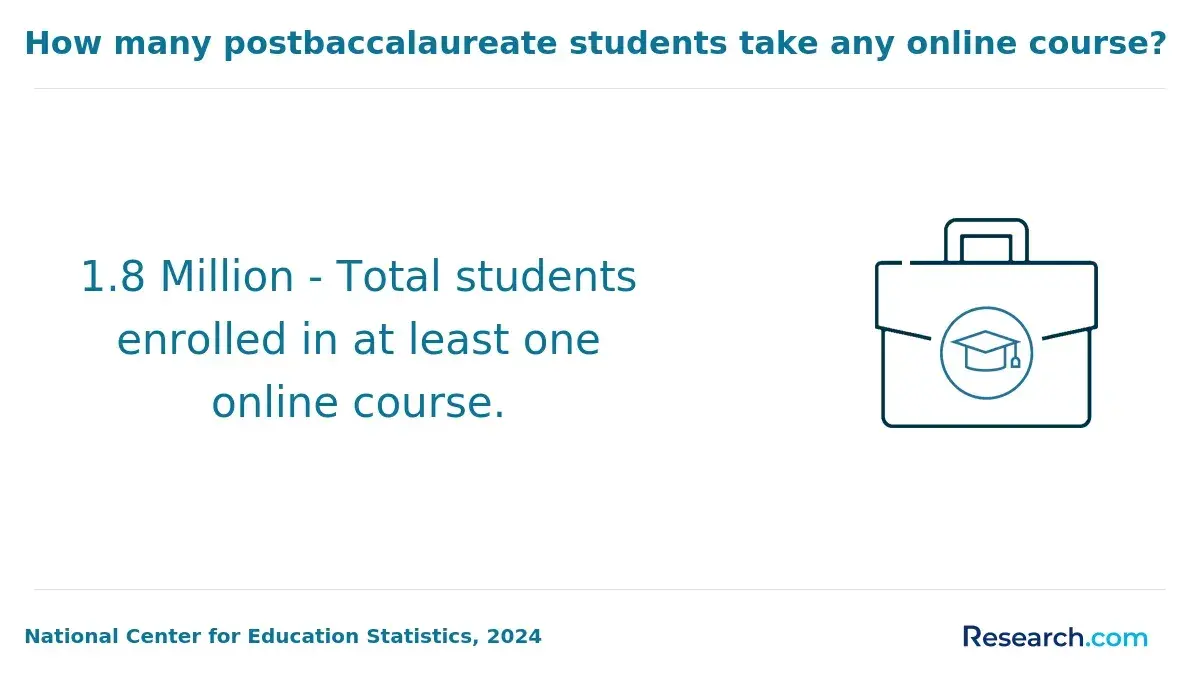
Yes. Many instructional design degrees and certificates can be completed entirely online, which makes the field especially accessible for working adults, educators, trainers, and career changers. San José State University offers a 100% online master's degree, and the University of West Florida provides a fully online bachelor's degree. Certificate options are also widely available online, including programs offered by UNC Charlotte and San Francisco State University.
Online formats are especially common because instructional design work itself often involves digital learning platforms, multimedia tools, virtual collaboration, and online course development. UNC Charlotte's certificate, for example, has a 13-week completion time, making it a faster option for professionals seeking targeted upskilling.
What to check before enrolling online
- Delivery format: Confirm whether courses are asynchronous, live online, cohort-based, self-paced, or a mix of formats.
- Portfolio work: Strong online programs should help you produce practical samples such as course outlines, eLearning modules, assessments, storyboards, or design documents.
- Technology requirements: Ask what software, learning management systems, authoring tools, or multimedia tools you will use.
- Capstone or internship expectations: Some degrees may include practical components, but these are often arranged through remote-friendly options.
- Student support: Look for academic advising, library access, career support, technical support, and instructor feedback.
There are no licensure requirements specific to instructional design, which makes online study more practical than in fields that require in-person clinical, teaching, or supervised practice hours. Still, students should not assume all online programs are equal. The best option is one that matches your career goal: broad academic preparation for a degree path or rapid, targeted skills development for a certificate path.
If you are still deciding what level of college credential fits your situation, reviewing which associate degree is easiest can help you think through workload, flexibility, and program expectations.
What Are the Admission Requirements for a Instructional Design Degree vs. a Certificate Program?
Instructional design degree programs usually have more formal admission requirements than certificate programs. Degree admissions often involve a complete graduate application, transcripts, recommendations, a personal statement, and a resume or CV. Certificate programs are usually more streamlined, especially when they are designed for non-degree students or working professionals.
Requirements vary by institution, so applicants should always verify the current admissions checklist directly with the school. The comparison below shows common expectations.
Admission Requirements for Instructional Design Degree Programs
- Educational Background: Most degree programs require a bachelor's degree from an accredited institution.
- GPA Minimum: A minimum undergraduate GPA is typically required, often 2.5 to 3.0 on a 4.0 scale for master's programs, with some allowing exceptions.
- Transcripts: Submission of official or unofficial transcripts from all colleges or universities attended is standard.
- Application Form and Fee: Completion of a formal application, usually online, and payment of an application fee, commonly between $50 and $100.
- Letters of Recommendation: Many programs require two or three letters of recommendation from academic or professional references.
- Personal Statement: A statement of purpose or personal statement explaining the applicant's interest in instructional design and career goals is frequently requested.
- Resume or CV: Submission of a current resume or curriculum vitae is common.
- English Proficiency, if applicable: International applicants often need to provide TOEFL or IELTS scores.
- Additional Materials: Some programs may request a portfolio or a reference letter from a working professional in the field, though these are less common.
Admission Requirements for Instructional Design Certificate Programs
- Educational Background: Most certificate programs require a bachelor's degree, but they may accept a wider variety of undergraduate majors or professional experience.
- GPA Minimum: Graduate certificates usually require a minimum 3.0 GPA in upper-division undergraduate coursework, although this varies by institution.
- Application Process: Applicants must submit a university application and a specific certificate program admissions form.
- Enrollment Status: Eligibility as a non-degree seeking student is often sufficient; current graduate students may also apply.
- Transcripts: Transcripts from previous academic work are typically required but with a less rigorous process than degree programs.
- English Proficiency, if applicable: International applicants must show English language proficiency following general university standards.
- Letters of Recommendation and Personal Statement: These are typically not required, although some programs may request a brief personal statement or reference.
How to decide if you meet the requirements
- If your GPA is below the stated minimum, ask whether the program offers conditional admission or considers professional experience.
- If you lack education or training experience, highlight project management, communication, technology, writing, coaching, or curriculum-related work.
- If you are applying to a certificate first, ask whether successful completion can strengthen a later degree application.
- If you are comparing advanced online study options, including the cheapest doctoral degree online, review admissions standards carefully before assuming affordability equals accessibility.
In general, degree programs require more documentation and are more selective, while certificate programs provide a more accessible entry point into instructional design.
How Many Credits Do You Need to Complete a Instructional Design Degree vs. a Certificate?
Instructional design degrees require substantially more credits than certificates. Degree credit loads vary by level, while certificates are designed to be shorter and more concentrated.
| Credential | Typical credit requirement | What the credits usually cover |
| Instructional design degree | 33 to 120 credits, depending on the degree level | General education for bachelor's programs, major courses, learning theory, instructional design models, assessment, research, technology, electives, and often a capstone or major project |
| Instructional design certificate | Between 12 and 15 credits | Foundational instructional design concepts, applied course design, eLearning development, learning technologies, and professional skill-building |
The credit difference affects more than completion time. It also affects tuition, workload, advising needs, and how deeply you study the field. A bachelor's degree usually demands the most credits because it includes general education and upper-division requirements. Master's and doctoral programs require fewer total credits than a bachelor's degree, but the coursework is typically more advanced and specialized.
A certificate's shorter credit load can be more manageable for full-time professionals. It can also help students build confidence before pursuing a degree. The trade-off is that a certificate may not provide the same breadth of theory, research preparation, or long-term credential recognition as a degree.
Questions to ask about credits
- Are the credits graduate-level? This matters if you plan to transfer them into a master's program later.
- Do courses count toward a degree at the same university? Some schools allow this, while others do not.
- Are there prerequisites? A short certificate may still require specific technical skills or prior academic preparation.
- Is there a capstone or portfolio requirement? Portfolio-based courses can be especially valuable for job searches.
What Is the Average Tuition for a Instructional Design Degree vs. a Certificate?
Instructional design certificates usually cost less than degrees because they require fewer credits and take less time to complete. However, the cheaper option is not always the better value. Students should compare total tuition, fees, transferability, employer reimbursement, and whether the program helps them build job-ready work samples.
Average Tuition for Instructional Design Degree Programs
- Tuition Range: Master's degree programs in instructional design generally cost between $8,000 and $22,000, with some elite programs reaching as high as $64,000.
- Institution Type: Public universities often offer more affordable tuition, such as $6,990-$18,700 for in-state students, while private schools and out-of-state rates can exceed $25,000.
- Online vs. On-campus: Fully online master's degrees can be notably cheaper, with many respected programs available for under $10,000, catering to working professionals.
- Per-credit Costs: Tuition per credit typically ranges from $390 to $924, with most degree programs requiring 30 to 36 credits for completion.
- Additional Fees: Expect extra costs for technology, registration, and facility fees often totaling $1,000 to $2,000 or more.
Average Tuition for Instructional Design Certificate Programs
- Tuition Range: Graduate certificate programs usually cost between $3,000 and $9,000 depending on the institution and credit requirements.
- Program Length: Certificates generally require 12 to 18 credits, completed within 4 to 8 months, making them shorter and less expensive than degree programs.
- Online Options: Many certificate programs are offered fully online, often providing more affordable tuition and greater flexibility.
- Institutional Prestige: High-ranking universities may charge more per credit, but certificate tuition typically remains below degree costs; some charge around $3,220 per course totaling about $8,608.
- Fees and Hidden Costs: Fees like technology or administrative charges exist but are usually lower than those associated with degree programs.
| Cost factor | Why it matters |
| Total program price | Per-credit tuition can be misleading if one program requires far more credits than another. |
| Fees | Technology, registration, facility, and administrative fees can change the real cost of attendance. |
| Financial aid eligibility | Degree programs are more likely to connect to federal financial aid, while certificate eligibility varies by institution and program. |
| Employer support | Some employers reimburse tuition for job-related certificates or degrees, but policies differ. |
| Career goal | A lower-cost certificate can be a smart first step, but a degree may have stronger value for advancement into higher-responsibility roles. |
When comparing the average cost of instructional design degree vs certificate, look beyond sticker price. A certificate may be the most cost-effective option for immediate skill development, while a degree may make more sense if you need a stronger academic credential for long-term advancement.
Students looking for lower-cost online options can also review affordable online universities that accept financial aid.
Can You Transfer Certificate Credits Toward a Instructional Design Degree Later On?
Yes, certificate credits can sometimes transfer into an instructional design degree, but transfer is never guaranteed. Many universities allow a portion of certificate credits, commonly up to 12 credit hours, to apply toward a related master's degree in instructional design if the courses match degree requirements and were completed with acceptable grades.
The most important rule is to confirm transfer policy before you enroll in the certificate. A certificate may be offered by an accredited university and still not automatically apply to a later degree. In some cases, credits transfer only within the same institution. In others, they require department approval, syllabus review, or a minimum grade such as a B or higher.
What affects whether certificate credits transfer?
- Institutional policy: Each university sets its own transfer limits and approval process.
- Accreditation status: Credits are more likely to be considered when they come from an accredited institution recognized by the degree-granting school.
- Course alignment: Courses must usually match degree requirements in content, level, and learning outcomes.
- Grades earned: Programs often require a minimum grade threshold, commonly a B or higher.
- Time limits: Some schools restrict how old transfer credits can be.
- Student status: Credits earned as a non-degree student may be treated differently from credits earned after formal admission to a degree program.
How to protect yourself before enrolling
- Ask the certificate provider whether credits are graduate-level and transcripted.
- Request a written explanation of how many credits may apply to a related degree.
- Confirm whether credits transfer only to the same university or may be reviewed by other schools.
- Save syllabi, course descriptions, assignments, and grade records for future evaluation.
- Meet with an academic advisor before assuming the certificate will shorten a later degree.
Transfer planning can reduce both cost and completion time, but only if the certificate is chosen strategically. If your long-term plan includes a master's degree, prioritize certificate programs that clearly publish degree pathway options.
Are Certificate Programs Accredited the Same Way as Instructional Design Degrees?
No. Instructional design certificate programs are not accredited in the same way as instructional design degrees. Degree programs are typically offered by institutions accredited by recognized regional or national agencies that meet standards established through the Department of Education or CHEA. That institutional accreditation is important for federal financial aid, credit transfer, graduate admission, and broad employer recognition.
Certificate programs are more varied. Some certificates are offered by accredited colleges or universities and appear on an official transcript. Others are offered by professional associations, private companies, bootcamps, or online learning providers. These may be useful for skills development, but they may not carry the same academic recognition or transfer value as a university credential.
| Credential type | How accreditation usually works | Why it matters |
| Instructional design degree | Usually offered by an institution with regional or national accreditation | Supports federal financial aid, credit transfer, graduate study, and employer confidence |
| University certificate | May be backed by the institution's accreditation but not separately accredited as a standalone program | Can carry academic value, especially if credits are transcripted and transferable |
| Non-university certificate | May not have formal academic accreditation | Can still teach useful skills, but transferability and employer recognition may be limited |
How to verify quality
- Check the institution's accreditation through recognized accrediting agencies rather than relying only on marketing language.
- Ask whether credits are transcripted if you may pursue a degree later.
- Review instructor qualifications and whether faculty have practical instructional design experience.
- Examine portfolio outcomes because employers often want to see what you can build, not only what credential you earned.
- Look for employer relevance by checking whether the curriculum includes current tools, design processes, evaluation methods, and real-world projects.
Accreditation does not guarantee a job, and lack of separate programmatic accreditation does not automatically make a certificate poor. But accreditation affects financial aid, transfer credit, and long-term credential value, so it should be part of every program comparison.
What Jobs Can You Get with a Instructional Design Degree vs. a Certificate?
Both instructional design degrees and certificates can lead to jobs in learning design, training, curriculum development, and eLearning. The difference is often the level of responsibility. A certificate can help you qualify for applied or entry-level roles, especially if you already have related experience. A degree can support broader roles and may help with advancement into senior, strategic, or management positions.
Jobs You Can Get with a Instructional Design Degree
- Instructional Designer: Designs and develops educational materials, training programs, assessments, and learning experiences for corporate, academic, nonprofit, or government settings.
- Senior Instructional Designer: Leads larger instructional projects, reviews design quality, supports strategy, and may mentor junior designers.
- Learning Experience Designer: Builds learner-centered experiences across digital, blended, and in-person environments.
- Curriculum Developer: Plans course sequences, learning objectives, instructional materials, and assessment strategies.
- eLearning Specialist: Develops digital training solutions using multimedia, learning platforms, and online course tools.
- Training Manager: Oversees training programs, teams, timelines, vendors, and workforce development initiatives.
Jobs You Can Get with a Instructional Design Certificate
- Instructional Design Assistant: Supports course development, organizes content, prepares materials, and assists senior designers.
- eLearning Developer: Builds interactive digital modules and learning assets, often with a stronger focus on tools and production.
- Content Developer: Creates, edits, and organizes instructional content for courses, workshops, or training programs.
- Corporate Trainer: Delivers employee training and may help adapt materials for workplace learning needs.
- Learning Technologist: Supports learning platforms and tools, helping organizations implement and maintain educational technology.
How employers may evaluate you
Employers rarely look at the credential alone. They often evaluate your portfolio, software skills, writing ability, learning design process, collaboration experience, and understanding of assessment. A degree can strengthen your profile, but a certificate paired with a strong portfolio and relevant work experience can also be competitive for many applied roles.
If you are new to the field, prioritize programs that help you create job-search materials, including sample storyboards, course modules, needs analyses, assessment plans, and learning objectives.
What Is the Average Starting Salary for a Certificate vs. Instructional Design Degree Graduates?
Starting salaries in instructional design vary by credential, industry, location, prior experience, portfolio quality, and technical skills. In general, certificate holders can be competitive for entry-level or applied roles, while degree graduates may start higher and have better access to advanced roles.
| Credential | Typical starting salary information | Important context |
| Instructional design certificate | Entry-level salaries generally range from $50,000 to $65,000 annually | Pay depends heavily on prior experience, industry, location, and whether the candidate has a strong portfolio |
| Instructional design degree | Master's degree graduates often start between $65,000 and $80,000 per year, with some averages reported between $78,000 and $83,800 | Degree holders may have stronger access to senior, academic, research-oriented, or management-track roles |
- Industry matters: Corporate and technology sectors tend to pay more than K-12 or non-profit organizations.
- Location matters: Urban areas with higher demand for digital training often offer elevated salaries.
- Experience matters: Prior teaching, training, curriculum, technology, project management, or human resources experience can raise starting pay regardless of credential.
- Advancement matters: A master's degree can provide greater opportunities for higher-paying managerial positions where salaries can exceed $100,000 annually.
- Education level matters: National surveys suggest each additional degree level can increase starting salary by approximately $3,000 annually.
For readers comparing shorter credentials with strong earning potential, certifications programs that pay well can provide additional perspective.
The practical takeaway: choose a certificate if you need a lower-cost, faster route into applied work, and choose a degree if you are investing in broader credibility, advancement, and long-term salary growth.
Here's What Graduates of Instructional Design Programs Say About Their Degree or Certificate
- : "Choosing the instructional design certificate program was the perfect fit for me because of its fast-paced learning experience and manageable cost. I appreciated the focused curriculum that allowed me to quickly gain practical skills without the long commitment or higher expense of a degree. It gave me the confidence to advance my career in instructional design without overwhelming my schedule or budget. — Kaysen"
- : "Pursuing an instructional design degree was a rewarding experience, providing a deep and comprehensive education that a certificate alone couldn't offer. The structured pace allowed me to thoroughly understand theory alongside practical applications, although it required a larger financial investment and more time. This degree opened doors to advanced roles and gave me credibility in the field that's difficult to achieve otherwise. — Jalen"
- : "Having completed both an instructional design certificate and degree, I can say each has distinct advantages. The certificate offered a quick, affordable introduction, while the degree provided depth, academic rigor, and broader career opportunities. For anyone weighing cost versus career goals, I recommend starting with a certificate to test the waters before committing to the comprehensive but lengthier and more expensive degree path. — Beau"
Other Things You Should Know About Instructional Design Degrees
In 2027, instructional design degrees typically emphasize comprehensive theoretical education and research skills. In contrast, certificates often focus on practical skills, such as utilizing instructional technology and developing e-learning modules. These distinctions can impact your decision based on whether you're seeking a broad academic foundation or targeted, practical expertise.
In 2027, instructional design certificates provide career changers with a focused skill set and practical experience, helping them transition more rapidly into the field. Certificates often emphasize hands-on projects and real-world applications, proving advantageous for those seeking a swift entry or pivot within their careers.
Instructional design certificates can be particularly beneficial for career changers in 2027 as they offer focused training in core skills like curriculum development and technology integration. These programs are typically shorter than degree courses, allowing for quicker entry into a new field, and they demonstrate a commitment to professional development to potential employers.
References
- The 28 Best Instructional Design Certificate Programs in 2025 | Devlin Peck https://www.devlinpeck.com/content/instructional-design-certifications
- Instructional Design Graduate Certificate https://www.ucf.edu/degree/instructional-design-certificate/
- Degrees vs. Certificate Programs: What's the Difference? https://www.snhu.edu/about-us/newsroom/education/certificates-vs-degrees
- How To Choose The Right Online Instructional Design Certificate Program https://elearningindustry.com/how-to-choose-the-right-online-instructional-design-certificate-program
- Tuition & Fees – Instructional Design – Graduate Certificates & Minors | Oregon State Ecampus https://ecampus.oregonstate.edu/online-degrees/tuition/
- Post-Bachelor's Certificate in Instructional Design | UNC Greensboro https://www.uncg.edu/degrees/instructional-design-p-b-c/
- Instructional Design Certificate | ATD https://www.td.org/education-courses/instructional-design-certificate
- Instructional Design Certificate or Masters Degree - Experiencing Elearning https://christytuckerlearning.com/instructional-design-certificate-or-masters-degree/comment-page-1/
- Certificate, Certification, or Both? https://www.credentialingexcellence.org/Accreditation/New-to-Accreditation/Certificate-vs-Certification
- Top instructional design careers: A guide to high-paying learning design jobs in 2025 https://www.boisestate.edu/online/2025/08/22/top-instructional-design-careers-a-guide-to-high-paying-learning-design-jobs-in-2025/


