
2027 Is a 2-Year Criminal Justice Degree Worth It: Accelerated Bachelor's ROI & Time Trade-Offs

Co-Founder and Chief Data Scientist
A 2-year criminal justice degree can be a practical way to enter the field sooner, but it is not automatically the best return on investment for every student. The right choice depends on whether you are comparing an associate degree, an accelerated bachelor’s pathway, or a traditional four-year program—and how each option affects cost, eligibility for jobs, transfer plans, and long-term advancement.
The appeal is clear: with the criminal justice workforce expected to grow 7% from 2022 to 2032, finishing faster may help students start earning, build experience, and qualify for entry-level roles earlier. The trade-off is that some higher-paying or supervisory positions may favor or require a bachelor’s degree, additional training, agency certification, or relevant work experience.
This guide explains how 2-year criminal justice programs typically work, what admissions and weekly workload look like, how online options compare, what costs and financial aid to review, and how salaries and career paths differ from traditional bachelor’s degrees. It is designed to help you decide whether a faster criminal justice credential fits your career goals, budget, and schedule.
Key Benefits of a 2-Year Criminal Justice Degree
- Accelerated 2-year criminal justice degrees often reduce tuition costs and allow earlier workforce entry, improving overall return on investment compared to traditional 4-year programs.
- Graduates typically enter roles like law enforcement or corrections faster, gaining valuable experience that enhances long-term salary prospects despite starting with an associate-level credential.
- Some positions may require a bachelor's, but this degree offers a timely stepping stone, enabling professionals to upgrade education while working, balancing time and career growth effectively.
How do 2-year criminal justice programs work?
A 2-year criminal justice program usually refers to an associate degree or an accelerated pathway that helps students complete lower-division criminal justice coursework quickly. Some students use it to qualify for entry-level roles; others use it as a transfer step toward an accelerated bachelor’s degree. The key is to confirm which credential the program awards and whether its credits will apply to your next goal.
Most programs are built around core topics such as policing, courts, corrections, criminal law, criminology, ethics, and report writing. The faster format can be convenient, but it also leaves less room for falling behind.
- Compressed academic terms: Many programs use shorter sessions, including 8-week formats, so students complete material more quickly than in a traditional semester. This can reduce calendar time but increases the pace of reading, assignments, and exams.
- Year-round scheduling: Some schools offer continuous enrollment with fewer long breaks. This helps motivated students maintain momentum, but it can make work-life balance more difficult.
- Heavier credit expectations: Students may carry 15 to 18 credits during busy terms. That load can be manageable for organized students, but it may be unrealistic for those working long hours or managing major family responsibilities.
- Online, hybrid, or campus delivery: Online courses are common, especially for working adults. Hybrid formats may be useful if you want face-to-face interaction or local networking.
- Frequent assessments: Expect regular quizzes, case analyses, discussion posts, papers, and applied assignments. Criminal justice courses often require careful reading of statutes, policies, and case scenarios.
- Transfer-credit planning: If your goal is a bachelor’s degree, ask early whether the associate degree has an articulation agreement with a four-year institution. Transferability can affect both completion time and total cost.
The best candidates for this format are students who want a structured, career-focused path and can commit steady weekly time to coursework. Students comparing flexible degree-completion models in other fields may also review options such as RN to BSN online no clinicals, which reflect a similar demand for shorter, working-adult-friendly pathways.
What are the admission requirements for a 2-year criminal justice degree?
Admission to a 2-year criminal justice program is often more accessible than admission to a traditional four-year bachelor’s program, especially at community colleges. Still, requirements vary by school, delivery format, and whether the program is open admission, selective admission, or part of an accelerated bachelor’s track.
- High school diploma or equivalent: Most programs require a high school diploma or GED. This is the baseline credential for college-level enrollment.
- Minimum GPA: Many programs expect a minimum GPA between 2.0 and 2.5 on a 4.0 scale. A higher GPA may improve your transfer options later.
- Placement or readiness review: Some schools evaluate English, math, or reading readiness before enrollment. If you need developmental coursework, your timeline may be longer than advertised.
- Limited standardized testing: Many community colleges do not require SAT or ACT scores for associate-level criminal justice programs, which can make the process easier for adult learners and returning students.
- Prerequisite or general education courses: Programs may require or recommend English, math, communications, psychology, sociology, or introductory social science courses. These courses matter because criminal justice work depends heavily on writing, analysis, and ethical reasoning.
- Relevant experience: Security, military, public safety, or law enforcement-adjacent experience is rarely required for admission, but it can help you connect coursework to practice.
- Transfer pathway requirements: If you plan to continue into an accelerated bachelor’s degree, ask about minimum GPA, transferable credits, course equivalencies, and deadlines before you enroll.
Before applying, confirm whether the school is institutionally accredited and whether the program is eligible for federal financial aid. Also ask whether any career you want requires academy training, a background check, physical fitness standards, state certification, or additional testing beyond the degree itself.
Students comparing accelerated education models across fields may find it useful to review how other flexible programs describe admissions and pacing, including easy DNP programs. The lesson is the same: an easier admissions process does not necessarily mean an easier academic workload.
What does a typical week look like in a 2-year criminal justice program?
A typical week in a 2-year criminal justice program is structured around fast movement through lectures, readings, assignments, and applied work. The workload is manageable for students who plan ahead, but the pace can be unforgiving if you miss deadlines or underestimate the reading.
- Class sessions: Students may attend several classes or lectures, sometimes lasting two to four hours each. Online students may watch recorded lectures or attend live virtual meetings.
- Reading and case review: Coursework often includes textbook chapters, legal concepts, policy materials, and case examples. Careful reading is essential because small details can change how a criminal justice issue is interpreted.
- Written assignments: Expect essays, short responses, case studies, reports, and discussion posts. Strong writing matters in criminal justice because many roles require documentation, incident reports, and clear professional communication.
- Quizzes and exams: Accelerated terms often include frequent assessments. These help keep students on track but can create pressure when multiple courses have deadlines in the same week.
- Group projects: Some courses include team presentations or collaborative research. These assignments build communication skills, but they require coordination, especially in online programs with students in different time zones.
- Instructor contact: Office hours, email, learning-management-system messages, and discussion boards are important. Students who ask questions early usually recover faster from confusion than those who wait until the end of a term.
- Independent study time: The biggest time commitment often happens outside scheduled class. Students need consistent study blocks for reading, note review, writing, and exam preparation.
One graduate described the pace this way: “The toughest part was keeping up with the relentless pace. Some weeks felt overwhelming with back-to-back deadlines and multiple group meetings. I had to learn quickly how to block out distractions and organize every hour of my day.”
The same graduate noted that the program became more manageable after building a weekly routine, contacting instructors when stuck, and treating coursework like a fixed professional commitment. That is the practical reality of accelerated study: the format can save time, but it does not reduce the amount of discipline required.
Breakdown of All 4-Year Online Title IV Institutions (In Percentage)

Are 2-year criminal justice programs available online?
Yes. Many 2-year criminal justice programs are available online, and online delivery is one reason these programs appeal to working adults, military-affiliated students, parents, and students who do not live near campus. However, “online” does not always mean completely self-paced, so students should review the format carefully before enrolling.
- Fully online programs: These allow students to complete coursework remotely. They are often the most convenient option, but they require strong self-direction.
- Hybrid programs: Hybrid options combine online coursework with limited campus meetings, labs, testing, orientations, or applied activities. They may be better for students who want some in-person support.
- Asynchronous courses: Students can access course materials on their own schedule, usually within weekly deadlines. This is helpful for working students.
- Synchronous courses: Students must attend live sessions, virtual lectures, exams, or discussions at set times. This can improve engagement but may conflict with work schedules.
- Technology requirements: A reliable computer, stable internet, webcam, and access to required software may be necessary. Technical problems can become serious in short terms, so preparation matters.
- Online support services: Look for advising, tutoring, library access, writing support, career services, and IT help. These services are especially important when coursework moves quickly.
- Program pacing: Online accelerated formats can reduce program length by one to two years compared to traditional degrees, but only if students complete courses successfully and avoid breaks in enrollment.
When comparing online programs, ask whether credits transfer, whether the school is accredited, whether tuition differs for online learners, and whether any required field experience or campus visit is part of the curriculum. Online flexibility is valuable only if the program also supports your career and transfer goals.
How much does a 2-year criminal justice degree cost?
The cost of a 2-year criminal justice degree depends on the school, residency status, program format, fees, and whether you transfer credits. A lower tuition rate can make an associate program attractive, but students should calculate the full cost—not just the advertised per-credit price.
- Tuition: Community colleges and public institutions often cost less than private schools, while some accelerated programs may charge higher rates for intensive terms or online delivery.
- Mandatory fees: Technology fees, student service fees, course fees, and online learning fees can add to the bill. Ask for a full cost estimate before enrolling.
- Books and course materials: Criminal justice courses may require textbooks, case materials, digital access codes, or open educational resources. Costs can vary by course.
- Technology expenses: Online students may need updated hardware, reliable internet, a webcam, or specific software for exams and assignments.
- Transportation and housing: Online programs may reduce commuting costs, while campus programs may add transportation, parking, or relocation expenses.
- Compressed payment timeline: Accelerated pacing can mean higher upfront costs per term even if total credits are similar. Students should check when bills are due and when aid is disbursed.
- Transfer efficiency: Lost credits can increase total cost. If you plan to continue into a bachelor’s program, transfer planning is one of the most important cost-control steps.
A practical cost comparison should include tuition, fees, books, technology, transportation, lost work hours, and the value of entering the workforce sooner. Students exploring affordable credential options in adjacent fields may also compare programs such as medical billing and coding certification online, but the better financial decision will depend on career goals, local job demand, and credential requirements.
Can you get financial aid for 2-year criminal justice programs?
Yes, many students can use financial aid for 2-year criminal justice programs, but eligibility depends on the school, program, enrollment status, and the student’s financial-aid profile. The most important first step is confirming that the institution participates in Title IV federal student aid programs.
- Federal student aid: Eligible students may qualify for Pell Grants, FSEOG, and Direct Subsidized or Unsubsidized Loans if the school is Title IV certified and the student meets federal requirements.
- Satisfactory academic progress: Students must usually maintain required academic progress to keep receiving aid. In accelerated programs, a failed or withdrawn course can affect aid quickly because terms move fast.
- Scholarships and grants: Criminal justice students may find awards through schools, local agencies, community foundations, professional associations, and public-service organizations. These funds are valuable because they generally do not need to be repaid.
- Employer tuition assistance: Students already working in security, public safety, corrections, or related fields should ask whether their employer offers tuition reimbursement or education benefits. Requirements may include continued employment or minimum grades.
- Payment plans: Some colleges allow tuition to be paid in installments. This can help with cash flow, especially when accelerated calendars create tight billing cycles.
- Aid timing: Compressed terms can affect when aid is disbursed. Students should contact the financial aid office before classes begin to understand deadlines, refund timing, and enrollment requirements.
One graduate who completed an accelerated bachelor’s degree in criminal justice said early planning was essential: “Navigating federal loans and scholarships while balancing work was intense, especially with faster terms.” She credited regular communication with the financial aid office for helping her avoid disbursement problems and maintain eligibility.
She also noted that employer support changed the equation: “The employer tuition program was a lifesaver, allowing me to keep working full time without pausing my education.” For students evaluating ROI, that kind of benefit can reduce debt and make an accelerated pathway more practical.
What jobs can you get with a 2-year criminal justice degree?
A 2-year criminal justice degree can support entry-level roles in law enforcement, corrections, security, courts, investigations support, and related public-safety settings. However, job eligibility varies widely. Some roles require academy training, civil service exams, background checks, physical fitness testing, state certification, or prior experience in addition to the degree.
- Law enforcement pathways: Graduates may pursue police officer trainee roles or other entry-level public-safety positions, depending on local hiring requirements. A degree may strengthen an application, but it does not replace agency-specific training.
- Corrections roles: Correctional officer and detention-related positions are common options. These roles can provide experience with procedure, supervision, safety protocols, and institutional operations.
- Probation and court support: Some graduates look for roles connected to probation, pretrial services, court administration, victim services, or case support. Requirements may vary by jurisdiction.
- Private security and loss prevention: Security supervisor, asset protection, and loss prevention roles can fit students interested in risk management, investigations, and organizational safety.
- Investigative support: Crime scene technician or investigative services support roles may be possible, but some positions require specialized training, science coursework, or agency experience.
- Compliance and homeland security-adjacent roles: Some graduates use the degree in compliance, emergency management support, risk operations, or security administration, especially when combined with work experience.
- Transfer and advancement: Students who want federal roles, leadership positions, or specialized investigative careers may eventually need a bachelor’s degree or additional credentials.
The strongest value of a 2-year criminal justice degree is often its ability to help students start gaining relevant experience sooner. That experience can matter as much as the credential, especially in agencies and organizations that promote from within.
Students comparing accelerated career-entry programs in other fields may also review options such as cheapest BSN programs online, where the same core question applies: does the faster path lead to the credential employers actually want?
How do salaries compare for a 2-year criminal justice degree vs. traditional bachelor's degrees?
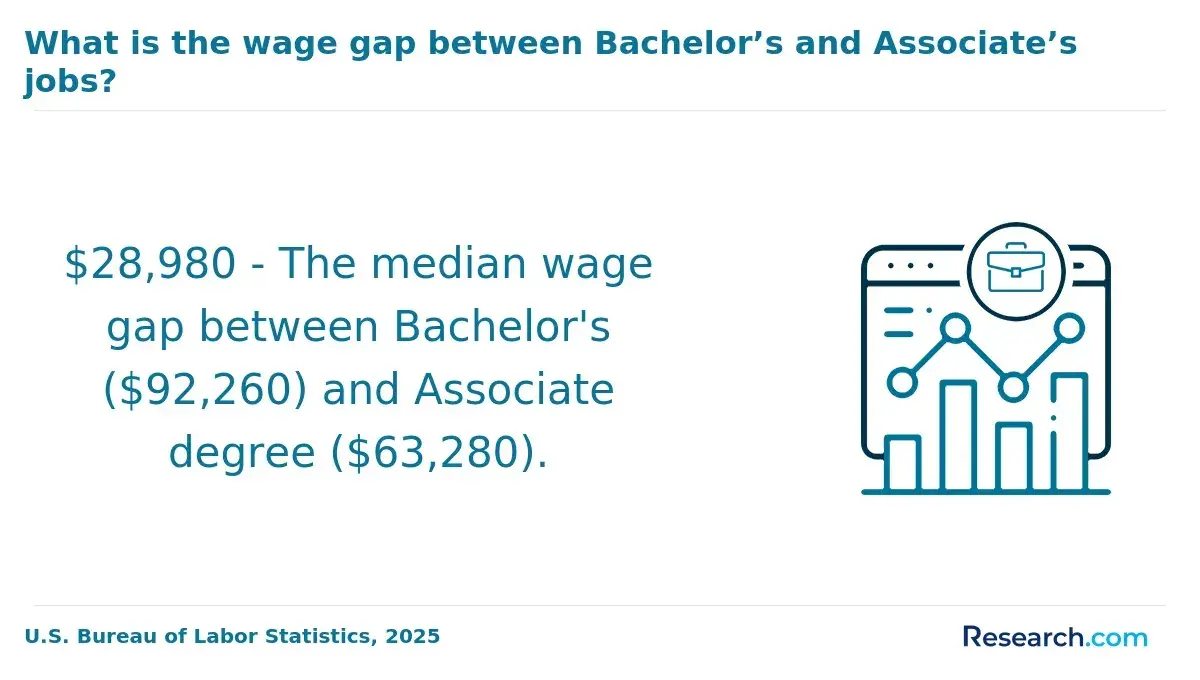
Salary comparisons depend on role, employer, location, experience, union or civil service structure, and required training. A 2-year criminal justice degree may help students enter the workforce sooner, while a traditional bachelor’s degree may support stronger long-term advancement in some agencies and specialized roles.
| Comparison point | 2-year criminal justice degree | Traditional bachelor’s degree |
| Typical early-career wages cited | According to the U.S. Bureau of Labor Statistics, median annual wages between $35,000 and $45,000 | Typically from $45,000 to $60,000 depending on role and region |
| Time to workforce entry | Graduates may enter the job market sooner and gain up to two years of income ahead of traditional bachelor’s degree holders | Students usually spend longer in school before full-time entry |
| Long-term advancement | May require additional education for supervisory, federal, or specialized roles | Often better aligned with positions that expect broader academic preparation |
| Higher-paying roles | Possible with experience, training, and promotions, but the degree alone may not be enough | Specialized or supervisory law enforcement positions regularly require a bachelor’s degree and frequently exceed median salaries of $70,000 annually |
The faster route can improve short-term cash flow because students begin working earlier. The longer route may provide stronger positioning for promotions, specialized assignments, or roles where employers prefer bachelor’s-level preparation.
Students should compare actual job postings in their target location before deciding. Look for required education, preferred education, academy or certification requirements, pay scales, and promotion criteria. A degree with a lower upfront cost is not a strong ROI if it does not qualify you for the jobs you want.
For perspective on accelerated degree-completion models in another career field, students may review cheapest BSN programs. The useful comparison is not the field itself, but the way students weigh speed, cost, credential value, and employer expectations.
Which factors most affect ROI for accelerated criminal justice degrees?
The ROI of an accelerated criminal justice degree depends on more than tuition. A program is financially worthwhile only if it helps you reach a realistic career outcome at a cost and pace you can sustain.
- Time-to-completion: Accelerated degrees may allow students to finish in roughly two to three years compared to the traditional four to five years. Finishing sooner can reduce time out of the workforce and help students start earning earlier.
- Total cost: Per-credit tuition, fees, books, technology, transportation, and living expenses all affect ROI. A program that looks inexpensive per credit may cost more if credits do not transfer or if students need extra terms.
- Opportunity cost: The faster you finish, the sooner you may earn wages and build experience. This is one of the biggest financial advantages of accelerated study.
- Employment demand: Jobs in criminal justice fields are expected to grow steadily in the coming decade. Demand can help, but students should still research local hiring patterns because criminal justice employment is often location-specific.
- Salary growth: Median wages for criminal justice careers hover around $62,000 annually and tend to rise with experience and advancement. The degree’s value improves if it supports promotion or transfer into higher-responsibility roles.
- Credential level: An associate degree may be enough for some entry-level jobs, while a bachelor’s degree may be preferred or required for certain advancement paths. Match the credential to your intended role.
- Accreditation and transferability: Accreditation affects financial aid, transfer options, and employer confidence. Transfer-friendly programs can protect ROI by reducing repeated coursework.
- Workload fit: Accelerated programs can save time only if you complete them successfully. If the pace leads to failed courses or withdrawal, both cost and completion time can increase.
- Career flexibility: Skills in critical thinking, legal reasoning, writing, ethics, investigations, and policy analysis can transfer across law enforcement, corrections, security, compliance, and cybersecurity-adjacent roles.
A strong ROI usually comes from a combination of low net cost, transferable credits, fast completion, realistic job access, and a clear plan for advancement after graduation.
How do you decide if a 2-year criminal justice degree is right for you?
A 2-year criminal justice degree may be right for you if you want a faster, lower-commitment entry point into the field and you understand the limits of the credential. It may be less suitable if your target jobs clearly prefer a bachelor’s degree, require specialized training, or offer limited advancement without further education.
- Choose this path if you need faster workforce entry: A shorter program can help you qualify for entry-level roles sooner and begin building experience.
- Choose this path if cost control is a priority: Associate-level programs often cost less upfront than four-year pathways, especially when credits transfer efficiently.
- Choose this path if you plan to transfer: A 2-year degree can be a smart first step if it connects cleanly to an accelerated bachelor’s program.
- Be cautious if your schedule is already overloaded: Accelerated formats demand steady attention. Work, family, and coursework must be realistically balanced.
- Be cautious if you want specialized or supervisory roles quickly: Some employers may prefer or require a bachelor’s degree, additional certifications, or agency experience.
- Be cautious if the school lacks clear outcomes: Ask about graduation rates, transfer agreements, career services, financial aid eligibility, and employer connections.
Before enrolling, review job postings in your area and compare them with the program’s curriculum. Pay attention to whether employers require an associate degree, bachelor’s degree, academy completion, certification, or prior experience. The projected 5% growth in criminal justice employment can be encouraging, but your personal ROI depends on the jobs available where you want to work.
A practical decision rule is simple: choose the 2-year option if it gets you to a real next step without excessive debt, lost credits, or unrealistic workload. If it does not, a traditional bachelor’s program or a planned transfer pathway may provide better long-term value.
What Graduates Say About Their 2-Year Criminal Justice Degree
- : "I chose the 2-year accelerated bachelor's degree in criminal justice because I wanted to jumpstart my career without the long wait of a traditional program. Managing the fast-paced schedule was challenging, but the structured courses and supportive faculty made it achievable. Since graduating, the degree has opened doors to new opportunities in law enforcement, proving well worth the investment of time and the average cost of attendance. — Marissa"
- : "Deciding on a 2-year criminal justice program was a deliberate choice to balance work, life, and education efficiently. Juggling a busy schedule required discipline, but the program's flexibility and focused curriculum helped me stay on track. Reflecting on my journey, this degree significantly enhanced my professional skills and credibility in the field. — Louise"
- : "I approached the accelerated criminal justice degree with a professional mindset, knowing the industry values both knowledge and experience. The intensity of the 2-year schedule demanded dedication, yet it fit well with my goal of quickly advancing my career. Now, having completed the program, I appreciate how the degree's relevance and reasonable cost have made a tangible difference in my current role. — Daphne"
Other Things You Should Know About Criminal Justice Degrees
In 2027, an accelerated bachelor's degree offers enhanced job prospects, higher salary potential, and a deeper knowledge of the field compared to a 2-year degree. It is an efficient way to advance in criminal justice careers, providing a more comprehensive understanding of complex subjects and eligibility for advanced roles.
An accelerated bachelor's degree provides a faster route to more advanced career opportunities and higher earning potential. It allows students to enter the workforce sooner while gaining in-depth knowledge and skills that are more competitive in the job market than a 2-year degree.
In 2027, students should consider tuition costs, potential earnings, and employment opportunities when evaluating the ROI of a 2-year criminal justice degree. It's essential to assess whether the degree opens career pathways in law enforcement, corrections, or legal assistance that align with financial and personal goals.
References
- Criminal Justice https://www.lewisu.edu/academics/crimjustice/swornofficers.htm
- Criminal Justice (BS) Law Enforcement Leadership Emphasis, Competency-Based **Ideal for students with law enforcement training** https://www.etamu.edu/programs/criminal-justice-bs-law-enforcement-leadership/
- Criminal Justice | Accelerated Bachelor’s Degrees | NEIT https://www.neit.edu/academics/bachelors-degrees/criminal-justice-career-focused-bs
- Two-year Degree Courses in the UK | GoStudyIn https://gostudyin.com/study-in-uk/study-options/two-year-degree/
- 7 Ways to Pay for a Criminal Justice Education | All Criminal Justice Schools https://www.allcriminaljusticeschools.com/blog/how-criminal-justice-students-pay-for-school/
- Bachelor of Science in Criminal Justice in Alabama and Online - Faulkner University https://www.faulkner.edu/bachelor-criminal-justice/
- Criminal Justice Jobs: Start a Career in Criminal Justice | GMercyU https://www.gmercyu.edu/academics/learn/criminal-justice-career-options
- Accelerated Online Criminology & Criminal Justice, BA | Lindenwood https://online.lindenwood.edu/programs/accelerated-online-bachelors-criminology-criminal-justice/
- Can You Get a Bachelor's Degree in 2 Years or Less? https://www.coursera.org/articles/can-you-get-a-bachelors-degree-in-2-years
- Bridging Education and Opportunity: Exploring the ROI of Higher Education and Workforce Development — HCM Strategists https://hcmstrategists.com/resources/ucmfwg7ha7zzeug6nb3dlawh3poziz


