
2027 Is a 2-Year Higher Education Degree Worth It: Accelerated Bachelor's ROI & Time Trade-Offs

Co-Founder and Chief Data Scientist
Many prospective students face uncertainty about whether pursuing a 2-year accelerated higher education degree delivers sufficient value. The dilemma involves weighing intense time commitments against potential salary increases. Recent data shows that graduates of accelerated bachelor's programs earn on average 15% more within five years compared to those with associate degrees. However, the faster completion also demands rigorous balancing of work, study, and life responsibilities.
This article analyzes the return on investment of accelerated bachelor's degrees, examines time trade-offs, and offers data-driven insights to help readers determine if this path aligns with their professional ambitions and financial realities.
Key Benefits of a 2-Year Higher Education Degree
- Accelerated 2-year degrees in higher education reduce time to entry, enabling graduates to begin earning sooner, often increasing lifetime income by 15% compared to longer programs.
- Lower tuition costs and fewer semesters lessen student debt, improving overall ROI especially for careers in administrative and support roles within education.
- Faster credential completion aligns with workforce demand, enabling quicker skill application and career advancement in a competitive education sector.
How Do 2-Year Higher Education Programs Work?
Two-year higher education programs offer an accelerated pathway by condensing a traditional four-year curriculum into about two years. This structure appeals to students looking to enter the workforce quickly or balance education with other commitments. Understanding the structure of 2-year higher education programs is essential for those considering an accelerated bachelor's degree, as it involves unique pacing and coursework demands.
Below is an overview of how these programs operate.
- Accelerated pacing: Coursework is faster than traditional programs, enabling students to complete required credits in roughly half the time. The pace demands strong time management to keep up with intensive study schedules.
- Year-round enrollment: Students can enroll continuously, including summer and winter terms, eliminating long breaks and allowing faster progression through the degree.
- Condensed course terms: Terms typically last 6 to 8 weeks, much shorter than regular semesters. This compact schedule increases course intensity but facilitates quicker credit accumulation.
- Credit load expectations: Full-time students often take 12 to 15 credits per term, with multiple sessions annually, requiring a commitment to managing a heavier course load than in traditional settings.
- Instructional format: Many programs blend online and in-person classes, with a strong emphasis on online learning to provide flexibility for working adults.
- Assessment methods: Frequent quizzes, papers, projects, and exams are designed to assess comprehension within short course durations efficiently.
- Curriculum progression: Programs focus heavily on core requirements with limited electives to ensure steady and continuous progression toward degree completion.
Prospective students evaluating an accelerated bachelor's degree admissions and coursework should consider how these factors impact their learning experience and career goals. Fields connected to higher education administration are projected to grow steadily, underscoring the value of such degrees. For related options, the cheapest online pharmacy school also offers accelerated programs worth exploring.
What Are the Admission Requirements for a 2-Year Higher Education Degree?
Carefully reviewing admission requirements is essential for students considering an accelerated bachelor's in higher education, as it helps ensure they meet qualifications while aligning with their academic and career goals. These requirements also inform how to qualify for accelerated bachelor's programs, which often have specific criteria to support student success within a shortened timeline.
Below is a detailed breakdown of the key admission factors typically involved.
- Prior Education: Most programs require a high school diploma or equivalent qualification such as a GED. This foundational credential confirms eligibility for entry into a structured two-year degree path.
- GPA Expectations: A minimum GPA, generally between 2.0 and 2.5 on a 4.0 scale, is usually required. Some accelerated bachelor's programs set higher standards to ensure students are prepared for the increased rigor and pace.
- Standardized Tests: While SAT or ACT scores are increasingly optional, certain programs may still request them or require placement tests to assess competencies in math and English.
- Prerequisite Coursework: Foundational courses related to the degree field are often necessary to ensure students possess the basic knowledge required for advanced study.
- Work Experience: Particularly relevant for adult learners, work experience can strengthen applications but is generally supplementary rather than mandatory for admission.
- Program-Specific Criteria: Individual programs may have unique requirements or additional evaluations, so reviewing each program's details is important before applying.
For those researching flexible alternatives, exploring online DNP programs without dissertation can offer insight into accelerated paths. According to the National Center for Education Statistics, these degree programs can shorten completion time by up to 25%, emphasizing why clarity on admission is key to effective academic planning.
What Does a Typical Week Look Like in a 2-Year Higher Education Program?
Prospective students should carefully consider the weekly demands of an accelerated 2-year higher education program to ensure they can balance coursework with other life commitments. Understanding the typical structure and workload helps set realistic expectations and aids in effective planning.
Below is an overview of what a usual week involves in such a fast-paced degree.
- Class Sessions and Lectures: Students usually attend 15 to 20 hours weekly of live lectures, seminars, or hands-on workshops. These sessions are scheduled throughout the week and require active participation.
- Assignments and Assessments: Weekly tasks often include readings, essays, presentations, or projects. Frequent quizzes and exams are common, maintaining a consistent evaluation rhythm.
- Group Work: Collaboration plays a key role, with students dedicating time outside class to coordinate with peers on projects, fostering teamwork skills.
- Independent Study: Equal to in-class hours, students spend considerable time reviewing content, researching, and preparing assignments independently to reinforce understanding.
- Instructor Interaction: Communication with professors happens via office hours, emails, or virtual meetings, providing guidance and clarifying complex topics.
- Time Management: Balancing a rigorous schedule with personal and possibly work commitments requires disciplined planning and prioritizing to stay on track.
When asked about his experience in a 2-year accelerated higher education degree, a recent graduate shared, "It was intense, especially trying to juggle a full-time job alongside classes. I often found myself staying up late to finish assignments or prepare for exams."
He emphasized that the speed meant there was little room for procrastination, stating, "You learn to prioritize quickly and accept that some weekends become just for studying." Despite the pressure, he also noted the sense of accomplishment that came from completing the degree in half the usual time, calling it "a challenging but rewarding journey."
Are 2-Year Higher Education Programs Available Online?
Choosing the right delivery format is essential for students pursuing an accelerated higher education degree, as it impacts flexibility, accessibility, and how effectively they manage their time. Online formats offer various options that cater to different learning styles and schedules.
The following points explain key features of two-year online programs to consider.
- Fully online vs. hybrid formats: Some programs are completely online, allowing students to complete coursework remotely, while others blend live sessions with self-paced study to provide interaction and structure.
- Asynchronous and synchronous learning: Many courses use asynchronous methods, enabling learners to access lectures and materials anytime. Hybrid and synchronous classes involve scheduled live sessions to foster real-time engagement.
- Technology requirements: Reliable internet and devices like laptops or tablets are necessary to run learning platforms and participate in video calls, ensuring smooth access to course content and communication.
- Student support services: Institutions often offer tailored support such as academic advising, tutoring, technical help, and career counseling to keep online students engaged and on track.
- Pacing and engagement: Accelerated two-year programs move quickly, demanding good time management and discipline. Online formats provide flexibility but require students to stay motivated amid condensed schedules.
How Much Does a 2-year Higher Education Degree Cost?
Carefully assessing the total cost of a 2-year higher education degree is essential for evaluating the return on investment (ROI) of accelerated programs. These pathways offer a quicker route to graduation, but the upfront and ongoing expenses can vary significantly. A thorough understanding of cost components helps prospective students make informed financial and academic decisions.
Below are key factors to consider when reviewing accelerated associate degree tuition fees and overall expenses:
- Tuition Structure: Tuition is often charged per credit hour or as a flat rate for a term. Accelerated programs may require a heavier course load each term to meet graduation deadlines, which can increase short-term tuition costs despite fewer total terms.
- Mandatory Fees: In addition to tuition, students face registration, student services, and technology fees. These fees add to the overall outlay and are typically required each term regardless of course load.
- Textbooks and Learning Materials: The intensive pace of accelerated programs can lead to higher costs for textbooks and other resources needed to keep up. These materials are essential for success but often add financial pressure.
- Technology and Lab Expenses: Some programs require specialized technology or lab access, which may not be included in tuition. These extra costs can influence the total expense of accelerated associate degrees.
- Condensed Schedule Impact: Unlike traditional four-year tracks, accelerated programs reduce the time to degree, saving 1 to 2 years of tuition and living expenses. However, this condensed format often demands concentrated payments and budgeting adjustments.
According to the National Center for Education Statistics, the average yearly tuition and fees at public two-year institutions hover around $4,240, although costs can be higher in private or specialized programs. For those exploring economical options, it is worth researching affordable online medical billing and coding schools, which may offer competitive pricing and flexible scheduling.
Can You Get Financial Aid for 2-Year Higher Education Programs?
Access to financial aid is a crucial factor for students considering accelerated higher education programs, especially those lasting around two years. Since these programs compress course loads into shorter timeframes, understanding aid options and their timing can significantly affect budgeting and overall affordability.
Below is a breakdown of key financial assistance aspects relevant to these programs.
- Federal Student Aid Eligibility: Students at qualifying institutions can apply for Pell Grants, Direct Subsidized and Unsubsidized Loans, and work-study through FAFSA. Accelerated programs are generally eligible as long as students maintain required academic progress.
- Scholarships and Grants: Outside of federal aid, private organizations and nonprofits often award scholarships targeting students in compressed degree paths or specialized study areas. These can reduce costs substantially for eligible candidates.
- Employer Tuition Assistance: Many working adults benefit from employer-sponsored tuition reimbursement programs. These vary widely in terms of eligibility and coverage but can significantly offset tuition for accelerated degree students.
- Aid Disbursement Timing: Because accelerated degrees condense curriculum into fewer terms, financial aid may be distributed differently than in traditional programs. Students sometimes receive larger lump sums or altered payment intervals, which can require careful financial planning.
- Payment Plans: Institutions often offer payment plans that break down tuition into manageable installments, helping students align payments with aid disbursements and avoid financial strain.
When I spoke with a professional who completed an accelerated bachelor's degree in higher education, she highlighted how mastering the financial aid process was key to her success. "Applying through FAFSA was straightforward, but keeping track of when aid arrived was challenging since funds came in bigger chunks less frequently," she recalled.
She actively supplemented federal aid with private scholarships by researching niche grants specifically targeting accelerated students. Additionally, she utilized a payment plan to balance tuition costs alongside fluctuating income from part-time work.
"The compressed schedule meant no breaks to catch up financially, so planning ahead was essential," she explained. Despite obstacles, she found that combining multiple aid sources made completing her degree in two years both feasible and rewarding
. Her experience illustrates that financial aid for accelerated higher education programs is accessible but does require intentional management to leverage effectively.
What Jobs Can You Get With a 2-Year Higher Education Degree?
Evaluating career outcomes is essential when considering the value of an accelerated higher education bachelor's degree. Prospective students benefit from understanding how the time commitment and curriculum translate into real-world opportunities.
Below is an overview of career possibilities that highlight the scope and potential of this educational path.
- Academic Advising Assistant: Graduates often start as academic advising assistants, supporting students in course selection and degree planning. This role builds foundational communication and organizational skills important for higher education settings.
- Admissions Coordinator: Working in admissions, graduates help manage applicant data and assist with recruitment efforts, gaining insight into institutional operations and student outreach strategies.
- Student Services Specialist: This position involves providing direct support to students, addressing their needs, and coordinating campus resources. It hones problem-solving skills and familiarity with student affairs departments.
- Instructional Aide: Graduates may assist faculty with classroom management, preparation of materials, and supporting learning activities, gaining hands-on experience in educational environments.
- Accelerated Program Benefits: An accelerated higher education degree condenses coursework, allowing students to enter the workforce sooner while developing practical skills. This format supports workforce readiness by emphasizing institutional administration, student development, and educational policies.
- Career Advancement Opportunities: The skills gained from a 2-year degree provide a strong base for advancement into specialized roles or graduate studies in education administration or counseling, expanding potential career pathways over time.
Industries employing graduates with a 2-year degree in higher education typically include academic advising offices, admissions departments, student affairs, and continuing education programs. For those seeking high paying jobs with 2 year degree credentials combined with timely completion, pursuing an accelerated bachelor's can be a strategic choice.
Employment growth in education-related fields is steady, reflecting the increasing demand for student support services and efficient institutional operations. The Bureau of Labor Statistics projects growth in roles such as educational administrators and advisors, underscoring opportunities available to graduates.
For individuals interested in related fields, exploring affordable accredited healthcare administration degrees can offer additional pathways to rewarding career opportunities in administration.
Choosing an accelerated degree with clear knowledge of career opportunities after 2 year higher education enhances the alignment of educational goals with workforce needs and job market trends.
How Do Salaries Compare for 2-year Higher Education Degree vs. Traditional Bachelor's Degrees?
Salary outcomes are a crucial factor when evaluating the return on investment (ROI) of accelerated versus traditional degree paths. For many prospective students, understanding these financial implications helps in making informed decisions about the time and resources spent on education.
Below is a detailed comparison of earnings between 2-year higher education degrees and traditional bachelor's degrees.
- Early-career earnings: Graduates with a bachelor's degree typically earn higher starting salaries, around $65,000 annually, compared to about $48,000 for associate degree holders, according to recent data. This gap highlights the immediate financial benefit often associated with traditional bachelor's degree earnings.
- Long-term earning potential: Over a career, bachelor's degree holders generally achieve higher total income due to broader advancement opportunities and access to specialized roles. Accelerated programs can help shorten this timeline but do not entirely close the earnings gap in many fields.
- Employer perception: Many employers prefer bachelor's degrees for professional and administrative positions, which can lead to faster promotions and increased salary growth. However, associate degrees still hold value in specific higher education administration or technical roles.
- Career progression timeline: Accelerated bachelor's degrees reduce study time by one to two years, allowing students to enter the workforce sooner. This earlier start can partially balance the salary difference by increasing total years of earning experience.
- Faster workforce entry impact: By completing their degrees quicker, accelerated degree graduates may accumulate additional work experience and income, which is a practical advantage over the 2-year degree salary comparison. This effect can enhance lifetime earnings despite initial lower salaries.
For those specifically interested in advancing nursing credentials efficiently, exploring the cheapest RN to BSN online programs may offer cost-effective solutions without compromising career growth.
Which Factors Most Affect ROI for Accelerated Higher Education Degrees?
Return on investment is a crucial element for students weighing accelerated higher education degree programs because it directly affects both financial burden and career advancement. Analyzing ROI helps learners determine whether the reduced time commitment and costs lead to meaningful professional and economic benefits.
Below is a breakdown of the primary factors shaping ROI in these accelerated paths.
- Time-to-completion: Accelerated programs typically condense degree timelines by one to two years compared to traditional tracks, allowing students to enter the workforce earlier. This compression not only cuts direct education expenses but also limits time away from earning potential.
- Tuition and total cost: While per-credit tuition may remain consistent, fewer required credits or faster completion can reduce total fees. This decrease in overall cost improves ROI by lowering the investment needed to earn the degree.
- Opportunity cost savings: Finishing sooner means less time out of employment, apprenticeships, or job advancement. Given the significant wage premium bachelor's graduates enjoy over high school diploma holders, this shorter interruption enhances lifetime earnings.
- Employment outcomes and salary growth: Graduates from accelerated programs can often access stable or growing job markets and potentially progress more quickly in their careers. Positions related to education administration, for example, show promising growth forecasts.
- Industry demand: Degrees suited to expanding sectors tend to offer better financial returns. Strong demand for specific skills or qualifications boosts job security and salary prospects.
- Transferability of skills: Acquired competencies such as research, communication, and management have broad applicability. These versatile skills open doors to diverse career paths and support long-term professional growth beyond entry-level roles.
How Do You Decide If a 2-year Higher Education Degree Is Right for You?
Choosing a 2-year higher education degree requires assessing your learning preferences, ability to keep up with an accelerated curriculum, and how much time you can dedicate amid work or family commitments. These programs demand focus and strong time management since they condense material into a shorter timeframe.
Consider how urgently you want to enter or advance in your career, as faster completion may provide a competitive edge. It's essential to gauge whether the rapid pace aligns with your academic strengths and personal responsibilities.
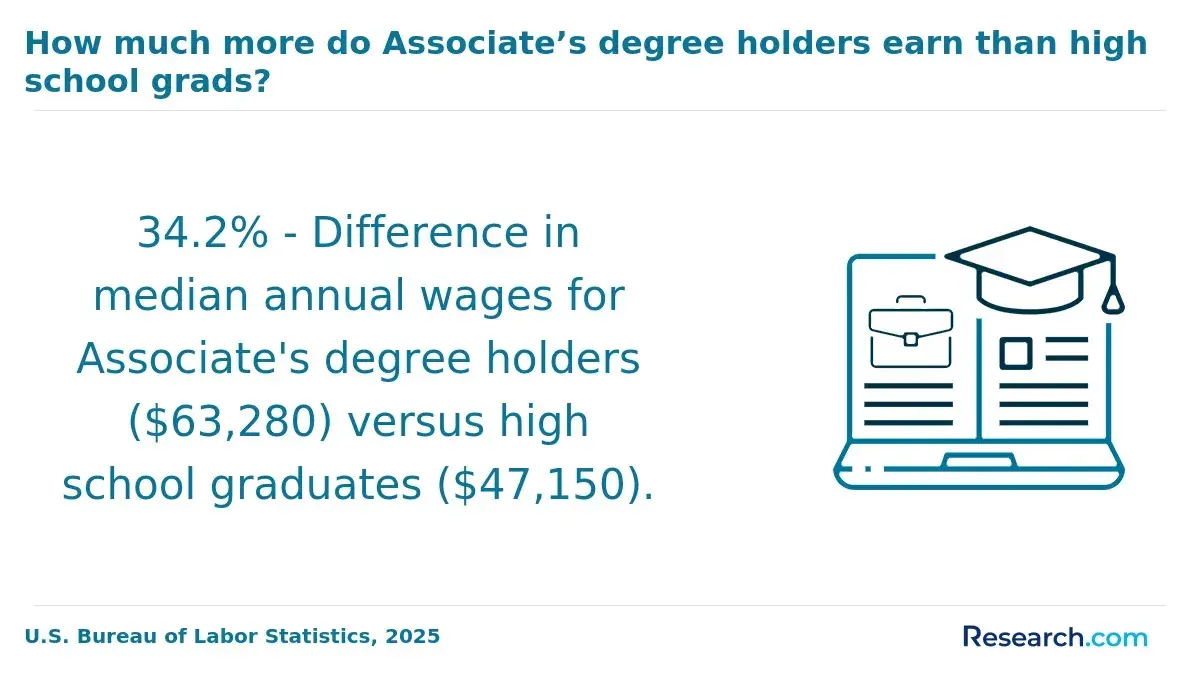
Financially, accelerated degrees often cost less overall and may reduce income loss by speeding up workforce entry. Evaluating the return on investment means comparing total expenses against expected salary gains and job prospects, especially since related associate degrees often yield higher earnings than just a high school diploma.
Employer requirements vary, so verify that the credential meets industry standards for your target roles. Also, bear in mind that some credits might not transfer to graduate programs, which could impact future education plans and career flexibility.
What Graduates Say About Their 2-Year Higher Education Degree
- Edwin: "Choosing a 2-year accelerated bachelor's degree in higher education was the perfect fit for me because I needed to fast-track my career while managing part-time work. The intensive schedule was challenging, but staying organized and prioritizing coursework helped me succeed. This degree has already opened doors for me as a program coordinator, proving that the investment-considering the average cost of attendance-was well worth it. "
- Sutton: "I opted for a 2-year degree program in higher education to avoid the long traditional route and reduce tuition expenses, which can be quite significant overall. Balancing the accelerated pace with personal commitments required discipline, but the compact learning timeline kept me motivated. Since graduating, I've noticed a distinct advantage in job interviews, as employers respect the dedication needed to complete such a rigorous program. "
- Ryan: "The 2-year accelerated bachelor's in higher education appealed to me for its efficiency in delivering essential knowledge without the typical four-year wait. The intense schedule demanded excellent time management and consistent effort, which improved my professional habits. Completing the program has significantly boosted my credibility and confidence in administrative roles, especially given that the cost was more manageable compared to traditional degrees. "
Other Things You Should Know About Higher Education Degrees
Long-term career advancement for graduates of 2-year accelerated bachelor's programs in 2027 can be influenced by industry demand for speed over specialization, networking opportunities, and the ability to balance education with practical experience. Employers often value well-rounded candidates who can quickly adapt to dynamic work environments.
In 2027, long-term career advancement for graduates of 2-year accelerated programs is influenced by industry demand, networking opportunities, and skill relevance. Shorter programs may expedite job entry but require proactive continuous learning to maintain competitiveness in evolving fields.
The demands of accelerated 2-year programs require students to manage intense workloads and quick-paced learning. They often juggle rigorous schedules to maximize their Return on Investment, all while navigating the complexities of condensing a bachelor's degree's worth of material into a shorter timeframe.
References
- Online Associate Degree Programs | SNHU https://www.snhu.edu/online-degrees/associate
- Return on Investment - your degree choice and potential future earnings https://www.thecompleteuniversityguide.co.uk/student-advice/what-to-study/degree-choice-and-future-earnings
- The Real Bachelor’s Degree Earnings Story https://encoura.org/resources/wake-up-call/the-real-bachelors-degree-earnings-story
- Online Accelerated Bachelor Swiss degree - Swiss School of Business and Management Geneva https://www.ssbm.ch/online-bba-accelerated-swiss/
- Two year accelerated degrees https://www.staffs.ac.uk/courses/undergraduate/study-options/two-year-accelerated-degrees
- Online College Degree Programs for Students & Business https://www.pearsonaccelerated.com/
- 5 best two-year degrees for international students in the UK https://studyinternational.com/news/two-year-degree-uk/
- Financial Aid Options 2025 | Your College Funding Guide https://www.educationconnection.com/financial-aid/
- Structure of studies in Poland https://study.gov.pl/structure-studies-poland
- Fast Track Your Future: How Accelerated Degrees Benefit Career Starters, Changers and Climbers - Beal University https://beal.edu/fast-track-your-future-how-accelerated-degrees-benefit-career-starters-changers-and-climbers/


