
2027 Is a Communication Online Degree Worth It?

Co-Founder and Chief Data Scientist
The rapid growth of online education has made earning a communication degree through virtual programs increasingly popular. Recent studies show that over 40% of students prefer online degrees for their flexibility and accessibility. Communication majors benefit from this trend, as digital learning options offer an alternative path to enhancing skills essential in media, marketing, and public relations roles.
This article guides prospective students by examining key factors like cost, program accreditation, job-market demand, flexibility, and how employers view online communication degrees. Understanding these elements will help individuals decide if pursuing an online communication degree aligns with their career goals and personal circumstances.
Key Benefits of Online Communication Degree
- Online communication degrees offer flexible scheduling, ideal for working adults balancing education with professional or personal responsibilities.
- Curricula often emphasize practical skills like media literacy and digital communication, aligning with evolving industry demands.
- Graduates see 14% employment growth in related fields by 2030, indicating strong career prospects across sectors.
Who Should Choose an Online Communication Degree Program?
Online learning has become a practical alternative for many students due to its adaptability and wide availability. Its flexible structure suits individuals balancing diverse personal and professional commitments.
The following groups are especially well-matched to pursue an online communication degree program:
- Working Professionals: Those currently employed who want to advance or change careers can benefit from the asynchronous course format, which allows them to study on their own time without disrupting their work schedules.
- Adult Learners and Career Changers: Individuals re-entering education or exploring new career paths will find these programs accommodating, as they cater to students with varied life experiences and responsibilities.
- Parents and Caregivers: Students with family duties appreciate the ability to study remotely, enabling them to earn a degree while managing household and caregiving tasks.
- Students with Geographical or Physical Constraints: Online programs remove obstacles related to location or physical challenges, making higher education accessible to a broader audience.
- Learners Seeking a Global Perspective: Online courses attract a diverse student body from different cultures and regions, enriching classroom discussions and networking opportunities.
What Are the Pros and Cons of an Online Communication Degree?
Online communication programs have gained popularity as students and working professionals seek flexible ways to advance their careers without disrupting existing commitments. These programs offer a practical solution for balancing education with busy schedules while providing relevant industry skills.
Pros of an Online Communication Degree
- Flexibility: Online communication degrees allow students to learn at their own pace and schedule, ideal for professionals working full-time jobs or parents managing family duties. This adaptability supports steady progress without sacrificing other responsibilities.
- Affordability: Tuition is generally lower than traditional campus programs, and students save on commuting and housing costs. The financial accessibility makes the benefits of online communication degrees appealing to a broad range of learners.
- Convenience and Access: Students can enroll from any location, including rural or remote areas, removing geographic barriers to specialized programs. This increases educational opportunities for diverse populations seeking communication careers.
- Tech Skill Development: Regular interaction with digital communication platforms in online courses helps students build essential technical competencies. These skills are valuable in media, marketing, and corporate communication roles.
Cons of an Online Communication Degree
- Limited Networking and Interaction: Online students often miss face-to-face interaction, reducing opportunities for mentorship and industry connections vital in communication fields. This drawback impacts the overall experience compared to on-campus programs.
- Self-Discipline Required: Success depends heavily on motivation and time management since online courses lack structured in-person settings. Some students may struggle to stay on track without regular class meetings.
- Technology Challenges: Reliable internet access and comfort with digital platforms are necessary, and technical issues can interrupt learning. These barriers affect some students' ability to complete their degrees smoothly.
- Perceived Value: Despite increasing employer acceptance, some still favor traditional degrees in competitive communication jobs or organizations that value campus experience. Understanding the drawbacks of earning a communication degree online helps potential students make informed decisions.
For those exploring career advancement options, considering online communication degrees alongside certifications that make money can provide a strategic path. Awareness of the benefits of online communication degrees and potential limitations ensures alignment with individual goals and industry demands.
How Do AI-Enhanced Virtual Classrooms Work in Online Communication Programs?
AI technologies have become central to modern online education by making learning more interactive and tailored to individual needs. For communication students, this means enhanced engagement and personalized support throughout their studies. The ai enhanced virtual classroom in communication programs offers various tools that improve instruction and collaboration.
Here are some key features of these AI-powered virtual environments:
- Personalized learning: AI customizes lessons and assignments based on each student's progress and comprehension, allowing learners to master communication concepts at their own pace.
- Intelligent tutoring: AI-driven virtual mentors provide targeted advice, answer questions, and deliver personalized feedback, helping students understand complex communication theories and practices.
- Enhanced collaboration: Natural language processing (NLP) facilitates seamless chat, real-time transcription, and automatic translation, enabling smoother discussion participation from diverse locations.
- Improved assessment: AI automates grading, detects plagiarism, and analyzes student engagement, aiding instructors in quickly identifying students who need additional support.
- 24/7 support: AI chatbots offer instant answers to frequent questions, boosting student satisfaction and retention in online programs.
Students interested in pursuing communication degrees using these advanced technologies can explore options at online open admission colleges that integrate AI to enhance their virtual classrooms.
What Technology Do You Need for an Online Communication Degree?
Having the right technology setup is essential for success in modern online communication programs. These programs require advanced tools and software that enable students to complete assignments, collaborate, and develop professional portfolios.
Below is a list of specific tools, equipment, and software students should prepare before enrolling in an online communication degree.
- Reliable Computer: A powerful laptop with at least 16GB of RAM, a modern processor (such as Intel 11th generation or Apple M1 chips), and SSD storage is crucial. This setup allows students to run demanding software smoothly, handle video editing without lag, and multitask effectively, which is critical for managing complex projects.
- Adobe Creative Cloud Subscription: Access to Adobe Creative Cloud is often mandatory, offering essential applications like Photoshop, Premiere Pro, and InDesign. These tools support photo editing, video production, and layout design, and are widely used throughout online communication coursework.
- Microsoft Office 365: Fundamental programs like Word, Excel, and PowerPoint remain key for preparing research papers, data analysis, and presentations. Many institutions provide free student access, helping to reduce costs.
- High-Speed Internet: A broadband connection with at least 1Mbps upload and download speeds is necessary to support video conferencing, software downloads, and cloud-based storage. Reliable internet ensures students can participate fully in synchronous classes and submit large media files with ease.
- Webcam and Microphone: Quality audio and video equipment fosters effective participation in virtual discussions and video projects. While built-in components may work initially, students focusing on broadcast or video journalism should consider upgrading to professional-grade gear.
- External Storage Drives: Media files demand significant storage space. External hard drives or cloud storage solutions offer backup options and ease file sharing with instructors and peers.
Students interested in exploring costs related to an online communication degree may find it helpful to review how much does an associate's degree cost online. Understanding these technology requirements is a key part of preparing for a virtual communication degree tech setup that supports academic success.
How Long Does It Take to Finish an Online Communication in 2027?
Program length is a key consideration for students deciding on an online communication degree, as it influences how soon they can begin or progress in their careers. Completion times vary widely depending on the program format, pacing options, and transfer credit policies.
Below is a breakdown of typical duration ranges for these programs.
- Full-Time Online Track: Most full-time students complete around 120 credit hours in approximately four years, mirroring traditional timelines. These programs often offer flexible course schedules including intensive 5-10 week sessions and summer terms to enable steady progress.
- Part-Time Enrollment: Students studying part-time usually take five years or more to graduate, balancing coursework with other commitments. This slower pace is common but may extend timelines based on course availability and individual schedules.
- Accelerated Programs: Designed for motivated students, accelerated tracks allow completion in two to three years by increasing course loads, utilizing year-round classes, or maximizing transfer credits. Some degree-completion options enable graduates with prior credits to finish in as little as one to two years.
- Competency-Based & Transfer-Friendly Models: Emerging program structures emphasize mastery of skills over seat time and accept generous transfer credits. These innovations help students progress more quickly and tailor pacing to individual needs.
Can You Work Full-Time While Completing an Online Communication Degree?
Many prospective students worry about how to balance full-time work with online study, concerned about managing deadlines and avoiding burnout. Understanding key factors that affect this balance can help students succeed in an online communication degree program.
Consider the following aspects when working full-time while enrolled:
- Program Pacing: Choosing a program that allows for one or two courses at a time helps prevent overload, making it easier to juggle work and study commitments.
- Course Format: Asynchronous classes offer flexibility since you complete work when it suits you, unlike synchronous classes that require attendance at specific times, which can conflict with work hours.
- Workload Management: The demands of assignments and exams fluctuate, so being aware of peak periods at work and school can help you plan better.
- Employer Support: Flexible work schedules or tuition assistance from employers can ease the stress of balancing responsibilities.
- Personal Time Management: Effective planning, setting priorities, and maintaining consistent routines are crucial strategies for success.
When I asked a recent graduate who worked full-time during her online communication studies, she shared that the biggest challenge was maintaining focus amid unpredictable work demands. "I learned to carve out early mornings for studying before work and reserved weekends for larger projects," she explained.
Although exhaustion was common, the sense of progress kept her motivated. She emphasized that adapting her schedule each term and communicating openly with her employer played vital roles. Reflecting on her journey, she said, "Balancing both was tough but entirely doable with determination and flexibility."
How Do Online Communication Degree Programs Help with Internships?
Internships are vital for gaining practical experience and preparing for a career in communication by allowing students to apply theoretical knowledge in real-world environments. These experiences also help build professional networks and portfolios essential for career success.
Online communication programs offer several strategies to ensure students secure and complete meaningful internships:
- Dedicated Internship Coordination: Programs often assign coordinators who assist with internship approvals, ensuring experiences meet academic requirements. Courses may be self-paced and online-friendly, accommodating flexible internship locations.
- Career Services and Tools: Access to career websites, job boards, and virtual workshops helps students identify and pursue internship opportunities effectively. Platforms like Handshake provide centralized listings and application tracking.
- Supervised Practical Work: Some programs require specific hours of supervised work along with evaluations and portfolio submissions to validate internship learning and maintain academic standards.
- Networking and Mentorship: Virtual events and alumni connections encourage professional relationship-building, which supports internship acquisition and career growth.
What Is the Average Tuition Cost of an Online Communication Program?
Knowing the financial requirements for an online communication degree is crucial for students aiming to balance education costs with career goals. Understanding the breakdown of tuition and fees helps in making well-informed decisions about which program fits both budget and aspirations.
Below is a detailed overview of common tuition expenses related to these programs.
- Average Tuition Per Credit: Public universities generally charge around $337 per credit hour for in-state students, while private colleges usually demand about $516 per credit, reflecting significant variation based on institution type.
- Full Degree Costs: Completing a bachelor's in communication at a public school typically costs approximately $40,500 for residents, whereas private institution fees can reach over $63,000, indicating a notable difference in total investment.
- Graduate Program Pricing: Master's degrees can differ widely; for example, Indiana residents pay $15,600 at Purdue, while out-of-state students pay $24,600. The University of Illinois ranges between $27,200 and $37,640 depending on residency status.
- More Affordable Options: Some universities like Eastern New Mexico University offer lower annual tuition rates, around $6,174, for online communication degrees, making them attractive for budget-conscious students.
- Additional Fees: Application fees typically fall between $60 and $75 but may be waived under certain conditions, easing upfront costs. Graduate students often encounter per-class expenses near $1,100.
When I talked to a student pursuing an online communication degree, he shared how budgeting was one of the first hurdles. "I had to carefully compare programs to avoid unexpected costs," he said. He explained that tracking not just tuition but also fees and supplies was essential to managing finances.
Despite the stress, he found that the flexibility of online classes allowed him to work part-time and handle payments steadily. Reflecting on his journey, he mentioned, "Knowing the exact tuition upfront gave me peace of mind and helped me stay motivated throughout the program."
This thoughtful approach highlights how understanding costs goes beyond numbers-it shapes the entire educational experience.
What Is the Average Salary for Someone with an Online Communication Degree in 2027?
Knowing the potential earnings is essential when evaluating an online communication program, as salary outcomes can significantly impact your return on investment. Understanding average salaries and industry trends helps students and professionals make informed decisions about their education and career paths.
Below are key insights into the average salary for online communication degree graduates in the United States in 2027.
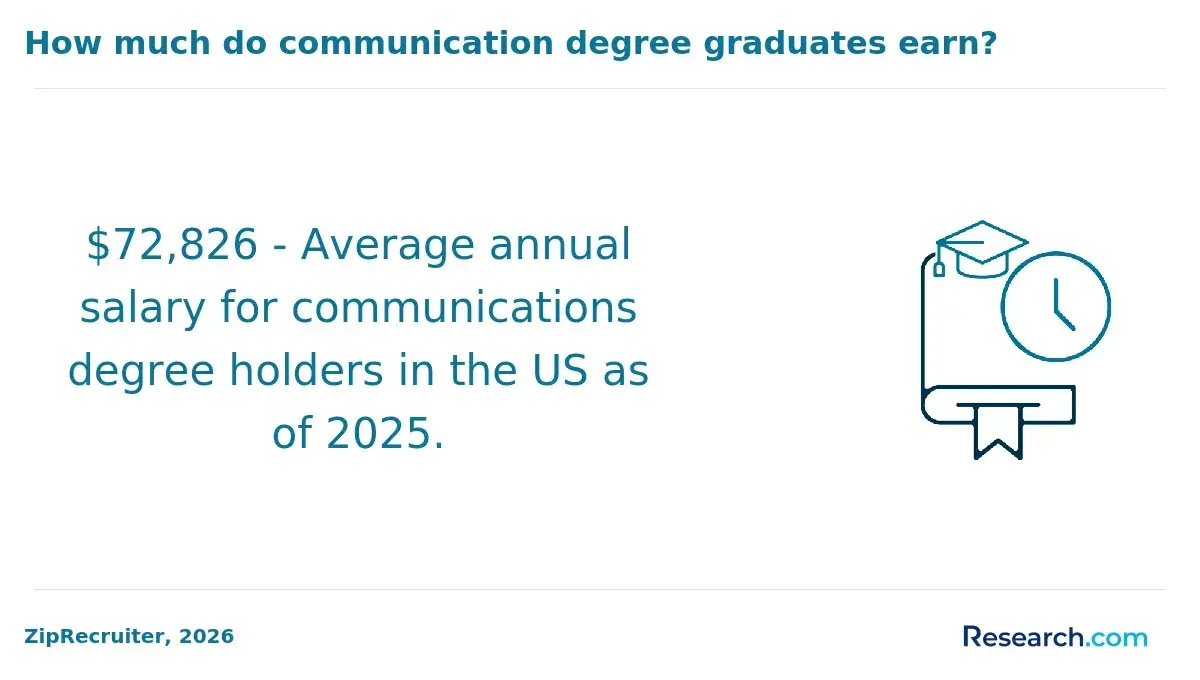
- Average Entry-Level Salary: Graduates typically start with salaries around $58,000, with many entry-level roles such as communications coordinator or specialist offering between $58,000 and $70,000 annually. This range reflects basic industry demand and regional variations.
- Mid-Career Salary Growth: Professionals with experience can expect a significant jump in earnings. Mid-career communications professionals, especially those in marketing or public relations management, can earn between $100,000 and $150,000 per year according to data from Glassdoor and the Bureau of Labor Statistics.
- Salary by Industry and Region: Salaries vary widely depending on industry and location. For example, a marketing manager in New York City may earn over $91,000, while social media managers in smaller markets might start at approximately $59,000. Specializing in high-demand fields like digital marketing, corporate communications, or technical writing boosts salary potential; technical writers earned a median wage of $91,670 in 2024.
Salaries linked to communications degree salary by industry and job title in 2025 show that choice of specialization and geographic location play crucial roles in maximizing earnings. For those considering where to pursue their education, finding the best non profit accredited online university can be an important step toward accessing quality programs that align with career growth opportunities.
Which Industries Hire Graduates From Online Communication Programs?
An online communication degree offers versatility by equipping graduates with essential skills in writing, speaking, and digital media fluency. This adaptability prepares graduates for diverse career opportunities in online communication degree graduates across multiple professional fields.
Below are key industries that actively hire graduates from online communication programs.
- Media and Journalism: Employers such as news organizations, broadcasters, and publishing houses seek communication graduates as journalists, editors, producers, and media relations specialists. The median annual salary in media and communication fields was $70,300 in 2024.
- Public Relations and Corporate Communication: Companies across sectors including healthcare and technology employ public relations specialists to manage brand image, external communications, and crisis messaging. PR specialists earn a median salary of $69,780 in 2024, with stable job growth expected.
- Marketing, Advertising, and Digital Media: Roles such as copywriters, social media managers, and inbound marketing managers are common in advertising agencies and e-commerce. Marketing managers earn median salaries near $88,932.
- Information Technology and Technical Fields: Technical writers and communication strategists produce manuals, documentation, and user guides for IT and scientific organizations, some earning over $80,000 annually.
- Healthcare, Education, and Government: Hospitals, universities, and public agencies employ communication specialists in outreach, training, human resources, and community relations. Graduates gain broad career pathways in these sectors, reflecting the degree's adaptability.
The value of an online communication degree is evident across industries that hire communication majors, as its focus on strategic messaging ensures graduates meet evolving workforce demands. For those seeking flexible learning options, many consider top online vocational colleges that offer relevant programs aligned with current labor trends.
What Graduates of Online Communication Programs Say About Their Degree
- Paxton: "Pursuing my online communication degree allowed me to learn at my own pace, balancing work and study without feeling overwhelmed. The curriculum was comprehensive, and the cost was surprisingly affordable compared to traditional programs. This degree opened new doors for my career in media relations, and I couldn't be more grateful. "
- Ameer: "The flexibility of an online communication degree was vital for me, especially since I was shifting careers later in life. The program's structure made complex concepts accessible, and the reasonable tuition fees reduced my financial stress, making the investment worthwhile. Today, I feel more confident and equipped in my communication consulting role. "
- Nathan: "Choosing an online communication degree was a strategic move to enhance my skills while staying within budget. The learning experience was rigorous yet flexible, fitting perfectly with my busy schedule. This degree significantly boosted my professional credibility and expanded my network, justifying every penny spent. "
Other Things You Should Know About Communication Degrees
Yes, online communication degrees from accredited institutions are generally respected by employers, especially as remote learning has become more common. Hiring managers often focus on the reputation of the school and the skills demonstrated rather than the delivery method. Graduates who can show practical experience, strong communication skills, and relevant portfolios typically do well in the job market.
An online communication degree can be a valuable asset for career advancement, especially in roles requiring strong writing, public relations, media, or marketing skills. It can open doors to supervisory or specialist positions in corporate, nonprofit, or media organizations. However, career growth often depends on additional factors like relevant work experience, networking, and certificates beyond the degree.
In 2027, many online Communication degrees match the quality of on-campus programs, often taught by the same faculty and following similar curricula. The flexibility of online programs allows students to access quality education without geographical constraints, though it's vital to choose accredited programs for optimal quality assurance.
References
- 5 Great Internships For Master’s In Communication Students - GradSchoolHub.com https://www.gradschoolhub.com/lists/5-great-internships-for-masters-in-communication-students/
- 5 Tips for Studying an Online Degree Whilst Working Full Time- Online https://www.ukstudyonline.com/5-tips-for-studying-an-online-degree-whilst-working-full-time/
- Careers with an Online Degree in Communication https://onlinemasters.jou.ufl.edu/online-degree-in-communication-career-options/
- Pros & Cons of Online Degree Courses in 2025 https://amityonline.com/blog/pros-and-cons-of-online-degree-courses
- 9 AI Technologies That Influence Online Language Learning - The Really Great Teacher Company https://reallygreatteachers.com/schools/insights/9-ai-technologies-that-influenced-online-language-learning
- What Jobs Can I Get With a Digital Communications Degree? https://www.gmercyu.edu/academics/learn/digital-communications-degree-job
- How AI Texting Transforms Communication in Higher Education https://element451.com/blog/texting-ai
- Is a Communication Degree Worth It? | UTSA Online https://online.utsa.edu/blog-content/is-a-communication-degree-worth-it/


