
2027 Is Accounting a Hard Major? What Students Should Know

Co-Founder and Chief Data Scientist
Accounting is hard for many students because it is cumulative, rule-based, and detail-sensitive. You are not only learning how to calculate numbers; you are learning how transactions flow through financial statements, how standards affect reporting, how taxes and audits work, and how to defend conclusions when small errors can change the result.
That does not mean accounting is only for “math people.” Most college accounting relies more on logic, organization, persistence, and accuracy than advanced mathematics. In the U.S., about 136,000 bachelor's degrees in accounting are awarded annually, which shows that many students choose the field despite its reputation for rigor.
This guide explains where accounting ranks among difficult majors, what makes the coursework challenging, who tends to do well, and how online, accelerated, and work-friendly formats compare. It also looks at admissions, career outcomes, salaries, and what graduates say about whether the difficulty is worth it.
Key Benefits of Accounting as a Major
- Accounting develops versatile skills like analytical thinking and financial literacy, crucial for career changers adapting to new professional fields.
- The major offers flexible learning paths, aiding full-time workers who balance education with job commitments.
- Traditional undergraduates gain confidence tackling complex coursework while accessing internships that enhance academic and professional growth.
Where Does Accounting Rank Among the Hardest College Majors?
Accounting usually ranks as a moderately to highly difficult college major. It is typically harder than broad business or communications programs because it requires technical accuracy, sequential learning, and frequent problem-solving. However, it is generally not considered as intense as majors such as aerospace engineering or genetics, which often involve heavier advanced science, laboratory, or engineering design requirements.
One reason accounting appears high in difficulty rankings is the workload. A 2024 survey by Big Economics placed accounting as the 6th most difficult major out of 118, with a difficulty rating near 75%. Students also commonly report spending 15 to 20 hours weekly on coursework outside the classroom, especially in courses that require repeated practice rather than simple reading.
The toughest courses are often intermediate accounting, auditing, taxation, and advanced financial reporting. These classes require students to apply rules to unfamiliar scenarios, identify exceptions, and explain why one treatment is correct while another is not. The challenge is not just volume; it is precision under pressure.
How accounting compares with nearby majors
- Usually harder than general business administration: Accounting has more technical rules, cumulative concepts, and graded problem sets.
- Often harder than communications or marketing: The coursework is less subjective and usually has clearer right or wrong answers.
- Comparable to finance in some areas: Finance may involve more valuation, markets, and modeling, while accounting emphasizes reporting accuracy, compliance, and documentation.
- Usually less demanding than the most intensive STEM majors: Engineering, genetics, and similar fields may require more advanced math, science sequences, and lab or design work.
Difficulty also depends on the school. A highly ranked business school may move faster, grade more strictly, or expect stronger preparation. A smaller or more flexible program may provide more support and pacing options. For students who like structured problems and steady routines, accounting may feel challenging but manageable. For students who dislike detailed rules or repeated practice, it can feel much harder than its ranking suggests.
What Factors Make Accounting a Hard Major?
Accounting is hard because the curriculum builds in layers. If you do not understand debits and credits, adjusting entries, accruals, inventory, or revenue recognition early, later courses become much more difficult. Unlike some majors where each class can stand alone, accounting rewards students who keep their foundation strong from the beginning.
The main factors that make accounting demanding include:
- Rigorous prerequisite requirements: Many programs require students to pass introductory financial and managerial accounting before moving into upper-level courses. Some schools also require a minimum grade, often a B or higher, in foundational classes. These policies are designed to prevent students from entering advanced courses without the technical base they need.
- Strict grade maintenance demands: Upper-level accounting courses often require a C or better to count toward the degree, and some programs limit retakes. This makes consistency important. One poor semester can slow progress if a required course must be repeated.
- Analytical and technical complexity: Accounting is not just arithmetic. Students must interpret standards, classify transactions, evaluate evidence, and understand how business decisions affect financial statements, taxes, and controls.
- Sequential learning structure: Concepts build on one another. Early gaps can reappear in intermediate accounting, auditing, cost accounting, and tax courses. Students who wait until exams to study often struggle because the material requires practice over time.
- High accuracy expectations: Small mistakes can change the answer. A misplaced decimal, incorrect account classification, or overlooked adjustment can affect an entire set of statements.
- Heavy reading plus problem practice: Students must read standards, textbook explanations, tax rules, and case facts, then apply them through exercises. Passive studying is rarely enough.
Students comparing accounting with shorter or less traditional options should look carefully at curriculum depth, transfer policies, and career goals. Programs such as the top online associate degree in 6 months may offer a different structure, but speed and convenience do not always mean the same preparation for accounting roles that require advanced coursework.
Who Is a Good Fit for a Accounting Major?
A good accounting major is not necessarily the student with the highest math score. The best fit is usually someone who can work carefully, follow complex rules, stay organized, and keep practicing until the logic becomes clear. Accounting favors persistence and precision more than quick memorization.
- Analytical thinkers: Students who like solving structured problems often do well. Accounting requires tracing cause and effect: what happened, how it should be recorded, and how it affects financial statements or tax outcomes.
- Detail-oriented individuals: Accuracy matters. Students who naturally check their work, notice inconsistencies, and care about documentation are better prepared for both coursework and professional practice.
- Organized time managers: Accounting assignments can be frequent and time-consuming. Students who plan ahead are less likely to fall behind during midterms, finals, tax projects, or group assignments.
- Effective communicators: Accountants must explain financial information to managers, clients, auditors, regulators, and non-accounting colleagues. Clear writing and speaking are more important than many students expect.
- Ethical and dependable students: Accounting involves confidential information, reporting obligations, and professional judgment. Integrity is not optional; it is central to the field.
- Adaptable learners: Accounting software, data tools, reporting systems, and regulations change. Students who can learn new platforms and update their knowledge have an advantage.
You may be a strong fit if you enjoy business, like rules with practical consequences, and are willing to practice problems regularly. You may want to compare other paths if you strongly dislike detail-heavy work, become frustrated by exact answers, or prefer open-ended creative assignments with fewer technical constraints. Students still weighing degree difficulty can compare options through resources such as what is the easiest bachelor's degree to obtain.
How Can You Make a Accounting Major Easier?
You can make accounting easier by changing how you study. The students who struggle most often try to memorize procedures without understanding why they work. The students who improve fastest usually practice consistently, review mistakes, and ask questions before small gaps become major problems.
- Practice problems every week: Accounting is learned by doing. Work through exercises without looking at the solution first, then compare your process step by step.
- Master the foundation early: Spend extra time on debits and credits, adjusting entries, accrual accounting, inventory, depreciation, and financial statement relationships. These topics return throughout the major.
- Study the “why,” not only the “how”: If you understand the purpose behind an accounting rule, you can apply it to new fact patterns instead of relying on memorized examples.
- Review material in small sessions: Short, repeated review is more effective than cramming because later accounting topics depend on earlier ones.
- Use old exams and self-assessments: Practice tests help you learn the format, identify weak areas, and improve pacing under time limits.
- Build a study group carefully: A good group explains reasoning and compares approaches. A weak group simply shares answers. Choose classmates who come prepared.
- Visit office hours before you are lost: Bring specific questions, attempted solutions, and notes on where your reasoning broke down. Professors and tutors can help more when they can see your process.
- Learn spreadsheet skills early: Comfort with spreadsheets can make homework, analysis, and internships easier, especially when assignments involve schedules, reconciliations, or data organization.
One accounting graduate said the workload felt overwhelming at first because she tried to memorize procedures without understanding their purpose. Forming a study group helped her talk through difficult concepts, and old exam questions helped her track progress and reduce test anxiety. Her takeaway was simple: “It wasn’t just about the hours spent studying but how I approached the material—focusing on ‘why’ rather than just ‘how.’” That mindset made the major more manageable as the courses became more advanced.
Are Admissions to Accounting Programs Competitive?
Admissions to accounting programs are usually less competitive than admission to highly selective engineering programs or some capped business majors. At many colleges, students enter the university first and then declare accounting after completing prerequisite business or introductory accounting courses.
That said, competitiveness varies by institution. A top-tier business school may require stronger grades, completion of specific prerequisites, or a minimum GPA around 3.0 in key courses such as introductory accounting or business math. Other colleges may be more accessible and focus mainly on standard university admission requirements.
Accounting enrollment saw a notable 12% increase in 2025, but many schools still aim to expand access rather than restrict it. This matters for applicants: the bigger challenge may not be getting admitted to an accounting track, but staying eligible for upper-level courses by meeting grade requirements.
What applicants should check before enrolling
- Major declaration rules: Find out whether you are admitted directly to accounting or must apply after completing prerequisites.
- Minimum course grades: Check whether foundational accounting courses require a B or higher, a C or better, or another threshold.
- Retake limits: Some programs limit how often you can repeat required courses.
- Business school requirements: Separate admission to the business school may be more selective than general university admission.
- CPA preparation: If CPA licensure is your goal, confirm whether the program helps you meet relevant education requirements in your state.
A professional who majored in accounting described the application process as straightforward but not automatic. “I wasn’t stressed about competing with others,” he said, “but I did need to focus on meeting all the prerequisite courses and maintaining a good GPA.” His experience reflects a common pattern: accounting programs are often accessible, but students must stay disciplined once they begin.
Is an Online Accounting Major Harder Than an On-Campus Program?
An online accounting major is not automatically harder than an on-campus program. The academic content is usually similar: financial accounting, managerial accounting, auditing, taxation, accounting information systems, and related business courses. The difference is how students manage structure, interaction, and accountability.
Online accounting can feel harder for students who need regular in-person reminders, immediate feedback, or a classroom routine. It can feel easier for students who are self-directed, comfortable with digital tools, and balancing school with work or family responsibilities.
| Factor | Online accounting major | On-campus accounting major |
| Academic standards | Often comparable to campus programs, especially at accredited institutions | Comparable core accounting expectations |
| Schedule | More flexible, but requires stronger self-management | More structured class times and routines |
| Instructor access | Usually through email, discussion boards, video meetings, or scheduled office hours | More immediate access before or after class |
| Peer interaction | Can be limited unless the program uses active discussions or group work | More natural peer contact and study group formation |
| Main risk | Procrastination, isolation, or falling behind quietly | Less flexibility for students with work or commuting constraints |
Studies indicate that while online accounting students may perform better on initial assignments, maintaining sustained engagement is often harder, resulting in stronger final exam performance for those attending in person. This does not mean online students cannot succeed. It means they need a reliable weekly routine, proactive communication with instructors, and a plan for getting help before deadlines arrive.
Cost should also be part of the format decision. Tuition, fees, transfer credits, software access, and time to completion can affect affordability, so compare accounting degree online cost alongside accreditation and course quality before choosing a program.
Students considering flexible education models may also look at options such as a fastest associates degree online, but the same caution applies: faster or more flexible programs still require steady effort if the coursework is technical.
Are Accelerated Accounting Programs Harder Than Traditional Formats?
Accelerated accounting programs are usually harder than traditional formats because they compress the same core material into shorter terms. The concepts are not necessarily more advanced, but the pace leaves less time to absorb, review, and recover from mistakes.
In a traditional term, students may have more time between topics, assignments, and exams. In an accelerated format, a course that might normally run 15 weeks may be delivered in 8-week terms. That can work well for disciplined students, but it can overwhelm students who need more time to process technical material.
- Course pacing and content density: Accelerated programs still cover foundational subjects such as financial accounting, taxation, and auditing, but students move through chapters, assignments, and exams more quickly.
- Workload management: The accelerated accounting degree workload can require more credits per term or year-round enrollment. Missing one week can feel like missing several weeks in a traditional course.
- Academic expectations and skill demands: Both formats require mastery, but accelerated programs demand sharper scheduling, fewer distractions, and faster feedback loops.
- Learning retention and stress levels: CPA exam pass rates can be comparable, but accelerated students may face increased stress and risk of burnout because there is less time for review.
- Flexibility and schedule structure: Accelerated programs can shorten time to completion, but they may offer fewer breaks, fewer electives, and less room to reduce course loads during difficult terms.
Accelerated accounting is best for students who already have strong study habits, predictable weekly availability, and confidence in quantitative business coursework. It is riskier for students working long hours, returning to school after a long break, or still building foundational math and study skills.
Students comparing fast-track education options may also encounter programs such as a PhD online 1 year, which reflects the broader interest in condensed degree timelines. The important question is not only how fast a program can be completed, but whether the pace supports durable learning.
Can You Manage a Part-Time Job While Majoring in Accounting?
Yes, many students can manage a part-time job while majoring in accounting, but the number of work hours matters. Because students often spend 15 to 20 hours weekly on coursework outside of class, a heavy job schedule can quickly reduce study quality, especially in upper-level accounting courses.
The most manageable jobs are flexible, predictable, and not physically or mentally exhausting. Roles in tutoring, office administration, bookkeeping support, campus employment, or remote work may fit better than jobs with late-night shifts or constantly changing schedules.
How to make work and accounting classes more manageable
- Limit work hours during difficult terms: Intermediate accounting, tax, and auditing may require more study time than general education courses.
- Choose flexible shifts when possible: A job that allows schedule changes during exams can prevent academic setbacks.
- Avoid stacking too many technical courses: Taking several accounting-heavy classes at once while working can increase stress and reduce performance.
- Use a weekly calendar: Block class time, work time, commuting, study sessions, and assignment deadlines before the week begins.
- Communicate early: Tell employers about exam-heavy weeks in advance, and contact instructors before problems become emergencies.
A part-time job can also help if it is related to accounting. Even basic bookkeeping, payroll support, tax preparation assistance, or administrative finance work can make classroom concepts feel more practical. The risk is overcommitment. If work hours force you to skip practice problems or cram for every exam, the job may slow your progress more than it helps your resume.
What Jobs Do Accounting Majors Get, and Are They as Hard as the Degree Itself?
Accounting majors enter jobs that vary widely in pace, pressure, and technical depth. Some roles feel as demanding as the degree because they involve deadlines, regulations, client expectations, and professional judgment. Others are more routine but still require accuracy and accountability.
- Public accountant: Public accountants prepare and examine financial records for clients, support tax compliance, and may provide advisory services. The role can be demanding because of client deadlines, long busy-season hours, and the need for technical accuracy.
- Auditor: Auditors review financial statements, controls, and documentation to assess accuracy and compliance. This work requires skepticism, attention to evidence, and the ability to identify problems that may not be obvious.
- Management accountant: Management accountants analyze internal financial data, budgets, costs, and performance measures. The work may be less compliance-driven than public accounting but can require stronger communication and business decision-making skills.
- Tax accountant: Tax accountants prepare returns, research tax rules, and advise on tax strategies. The difficulty often changes by season. Tax season can be intense, while other periods may be more predictable.
- Financial analyst: Financial analysts use data, forecasts, and market information to support business or investment decisions. This role may rely less on traditional accounting entries and more on interpretation, modeling, and presentation.
The degree prepares students for technical work, but professional difficulty also depends on deadlines, staffing, industry, technology, and whether the role requires client interaction. A student who enjoyed structured homework may still need time to adjust to ambiguous workplace questions where the answer is not in the back of the book.
Many accounting degree career paths and salaries reflect this range of demands. Students seeking roles that match quieter or more independent work preferences can compare options through this list of good jobs for an introvert. The highest paying accounting jobs in the US often combine technical expertise with leadership, advisory work, or strategic responsibility, which can make them rewarding but demanding.
Do Accounting Graduates Earn Higher Salaries Because the Major Is Harder?
Accounting graduates do not earn higher salaries simply because the major is hard. Difficulty can help build valuable skills, but pay is more closely tied to employer demand, industry, location, experience, credentials, and job responsibility.
The rigor of the major still matters because it develops marketable abilities: financial analysis, regulatory knowledge, documentation, problem-solving, and ethical judgment. Employers pay for those skills because organizations need accurate reporting, tax compliance, internal controls, and financial decision support.
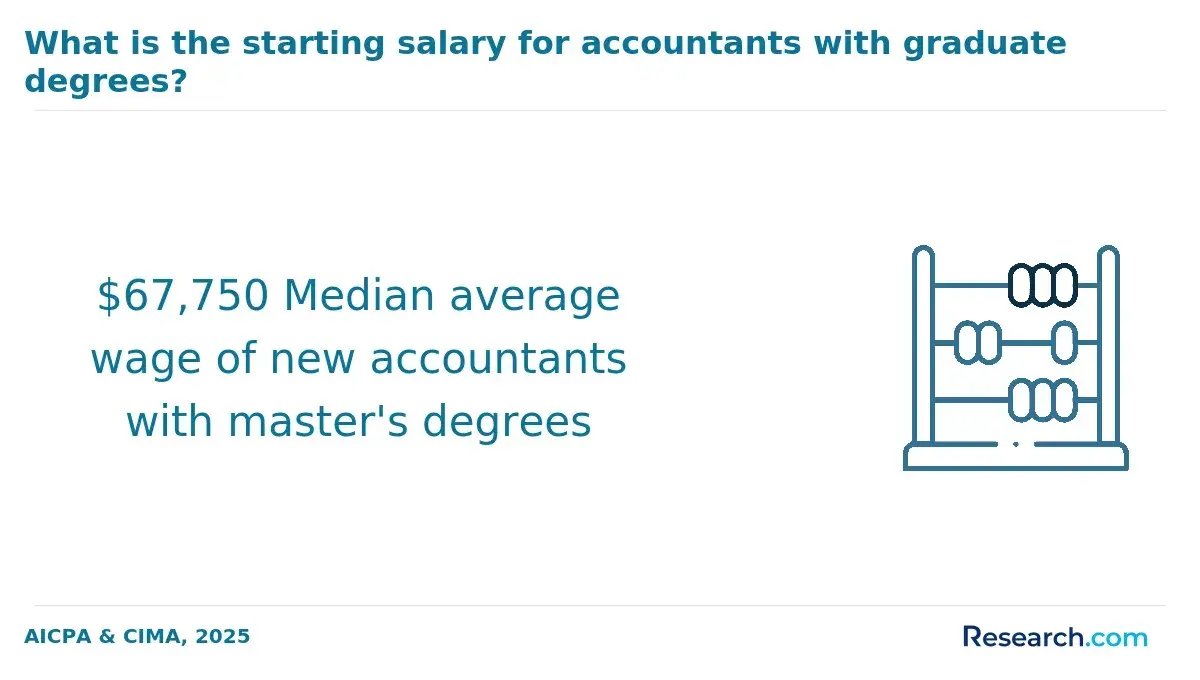
Multiple factors shape accounting earnings. The Bureau of Labor Statistics predicts a 5% employment growth for accountants and auditors through 2034, supporting steady salary opportunities. Entry-level accountants typically earn about $57,200, while CPAs and managerial roles can reach $160,000 or more, especially in high-pay states like New York and California.
Certifications can make a major difference. CPA licensure, specialized experience, and movement into management or advisory roles can raise earning potential substantially, with many top professionals earning upwards of $150,000. The median wage for accountants was $68,326 as of January 2026, due to evolving market needs rather than major difficulty alone.
The practical takeaway is this: accounting’s difficulty may help you build durable career skills, but salary growth usually depends on how you use the degree after graduation. Internships, CPA preparation, industry selection, and early job performance often matter as much as the major itself.
What Graduates Say About Accounting as Their Major
- : "Pursuing accounting was challenging, especially balancing complex financial concepts and continuous problem-solving. However, the learning experience was incredibly rewarding, and the skills I gained opened doors to great career opportunities. Considering the average cost of attendance, it was definitely an investment worth making. — Ryker"
- : "Accounting wasn't easy; it required dedication and a lot of hard work, but it taught me invaluable analytical and organizational skills. The cost of pursuing this major was significant, yet it's been a game-changer professionally and personally, providing stability and confidence in managing finances. — Eden"
- : "From a professional standpoint, accounting is a tough major with demanding coursework that pushes you to think critically. Despite the hefty tuition fees, the career impact has been profound, offering steady employment and a clear path for advancement. I think the challenge and cost balance out when you see the long-term benefits. — Benjamin"
Other Things You Should Know About Accounting Degrees
Accounting is often seen as challenging due to its rigorous curriculum, which includes complex mathematics, detailed regulations, and a strong demand for analytical skills. In 2027, keeping up with new software and technological advancements further adds to its complexity, requiring students to adapt and learn continuously.
In 2027, accounting is challenging due to its blend of complex mathematical skills, adherence to evolving standards like IFRS updates, and strong analytical abilities. Students must also navigate technological advancements like AI and blockchain, which transform financial data analysis and reporting.
In 2027, whether accounting is more difficult than other business majors depends on the individual. Accounting majors require attention to detail and analytical skills. Compared to other majors, it may have a steeper learning curve due to the technical nature of the subject matter, but those with strong organizational skills might find it manageable.
References
- Why Accounting is A Great Field https://an.edu/why-accounting-is-a-great-field/
- How Hard Is an Accounting Degree and Is It the Right Path for You? - Western CPE https://www.westerncpe.com/blog-post/how-hard-is-an-accounting-degree-and-is-it-the-right-path-for-you/
- What You Should Know If You're Considering an Accounting Degree https://www.pearsonaccelerated.com/blog/accounting-degree.html
- Accounting & Finance Subject League Table 2026 https://www.thecompleteuniversityguide.co.uk/league-tables/rankings/accounting-and-finance
- What Can You Do With an Accounting Degree? https://greatermanchester.ac.uk/blogs/what-can-you-do-with-an-accounting-degree
- A guide for aspiring accountants https://www.cmich.edu/blog/all-things-higher-ed/is-accounting-a-good-major-a-guide-for-aspiring-accountants
- Why Is Accounting So Hard? Understanding Challenges and Misconceptions https://www.glasscubes.com/why-is-accounting-so-hard-understanding-challenges-and-misconceptions/
- Is Becoming an Accountant Difficult? https://thedolinsgroup.com/is-becoming-an-accountant-difficult/
- How Flexible Is an Accounting Career? https://sopa.tulane.edu/blog/how-flexible-accounting-career
- How Long Does It Take to Get an Accounting Degree? https://www.warnerpacific.edu/blog/how-long-does-it-take-to-get-accounting-degree/
- ZipRecruiter. (n.d.). Accountant salary. ZipRecruiter. https://www.ziprecruiter.com/Salaries/Accountant-Salary


