
2027 Management vs. Finance: Explaining the Difference

Co-Founder and Chief Data Scientist
Choosing between management and finance is really a choice between two ways of solving business problems. Management programs prepare you to lead people, coordinate operations, improve processes, and make organization-wide decisions. Finance programs prepare you to evaluate money, risk, markets, investments, and financial performance.
Both paths can lead to strong business careers, and both require judgment, analytical thinking, and communication skills. The better fit depends on what kind of work you want to do every day: leading teams and shaping strategy, or analyzing financial data and guiding capital decisions. This guide compares management and finance programs by curriculum, difficulty, skills, career outcomes, cost, and decision factors so you can choose a program that matches your strengths and career goals.
Key Points About Pursuing a Management vs. Finance
- Management programs emphasize leadership, organizational skills, and often lead to careers in operations or human resources, with average tuition around $30,000 and program lengths of 1-2 years.
- Finance programs focus on financial analysis, investment, and banking careers, typically costing $35,000-$40,000 in tuition, with similar program durations but higher starting salaries.
- Career outcomes differ: management graduates often enter diverse industries, while finance graduates prioritize roles in financial services, both offering strong growth but varying in job focus and skills required.
What are Management Programs?
Management programs teach students how organizations work and how leaders make decisions across teams, departments, and business functions. The focus is not limited to one technical area. Instead, students learn how to coordinate people, budgets, operations, projects, and strategy so an organization can perform better.
A bachelor's degree in management usually takes about four years to finish. Master's programs commonly take one to two years, depending on whether the student studies full time, part time, online, or in an accelerated format. Graduate management programs often combine core business courses with electives in areas such as operations, entrepreneurship, human resources, consulting, or organizational leadership. Admission requirements vary by school and degree level.
The curriculum is broad by design. Students typically study organizational behavior, human resource management, operations management, management fundamentals, economics, accounting, marketing, and business communication. These courses help students understand both the human and operational sides of business.
Leadership development is a central part of most management programs. Students may complete case studies, team projects, simulations, presentations, and applied consulting assignments. These experiences are meant to build judgment, collaboration, negotiation, conflict resolution, and decision-making skills—not just textbook knowledge.
Modern management programs also include analytical training. Business statistics, probability, decision modeling, and performance measurement help students use data to support management decisions. A strong program should balance leadership practice with quantitative reasoning, because managers are increasingly expected to justify decisions with evidence.
What are Finance Programs?
Finance programs focus on how money is raised, invested, managed, valued, and protected from risk. Students learn to interpret financial information, evaluate investment choices, understand markets, and support decisions about capital, debt, profitability, and financial strategy.
Program length depends on degree level and format. Some undergraduate finance pathways, especially transfer or degree-completion options, take two to three years to complete, while graduate programs often last between one and two years. Students considering a finance degree should confirm whether the listed timeline assumes prior credits, full-time enrollment, summer study, or an accelerated schedule.
The curriculum is more quantitatively focused than a general management curriculum. Common subjects include corporate finance, investment analysis, derivatives, financial modeling techniques, financial statement analysis, portfolio management, and global financial markets. Students learn how to work with financial data, compare risk and return, and build models that support business or investment decisions.
Finance programs can prepare graduates for roles in corporate finance, banking, investment management, financial planning, risk analysis, and accounting-related functions. Some career paths may require or strongly favor additional credentials, licensing, or professional exams depending on the role and jurisdiction.
Admission standards vary. Undergraduate applicants may need strong grades in mathematics, economics, or business-related courses. Graduate applicants may be asked for a solid academic record, relevant coursework, work experience, and standardized test scores such as the GMAT, depending on the institution. Because advanced finance courses can be technical, applicants should be comfortable with math, spreadsheets, statistics, and data interpretation.
What are the similarities between Management Programs and Finance Programs?
Management and finance programs are different, but they share the same business foundation. Both prepare students to make decisions under constraints, interpret organizational data, communicate recommendations, and understand how companies create value. This overlap is why students in both fields often take similar introductory courses before moving into more specialized work.
- Business foundation: Both fields commonly include accounting, economics, statistics, business law, marketing, and business communication. These subjects help students understand how organizations operate beyond one department.
- Decision-making focus: Management students decide how to allocate people, time, and resources. Finance students decide how to allocate capital and manage financial risk. Both rely on structured analysis and sound judgment.
- Data use: Both programs require students to interpret budgets, financial reports, performance metrics, forecasts, and market or operational data.
- Communication skills: Graduates in both areas must explain recommendations clearly to executives, clients, coworkers, or stakeholders who may not share the same technical background.
- Applied learning: Case studies, group projects, simulations, presentations, and real-world business problems are common in both types of programs.
- Flexible formats: Many schools offer full-time, part-time, hybrid, and online options for management and finance students, including formats designed for working adults.
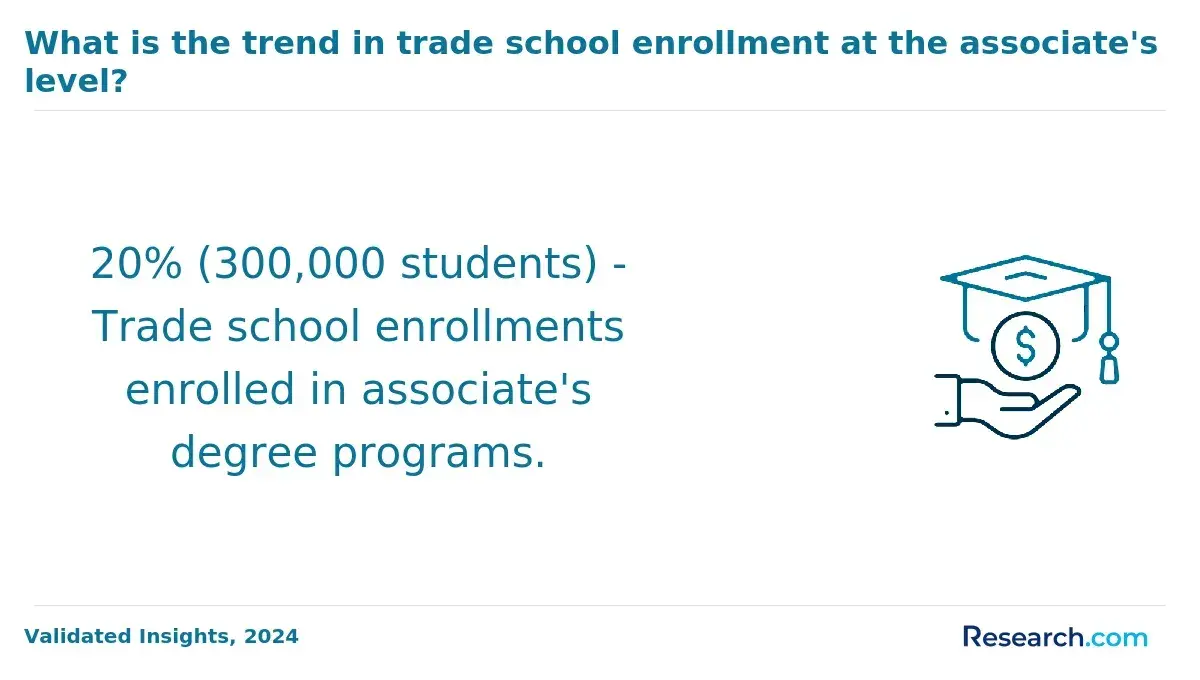
Students who want a lower-cost or faster entry point into business education may also compare associate-level pathways. Options such as the fastest way to get associate's degree online can help learners build business fundamentals before committing to a bachelor's or graduate program.
The key similarity is versatility. Either degree can support a business career, especially when students pair the degree with internships, strong Excel and data skills, industry knowledge, and evidence of practical experience.
What are the differences between Management Programs and Finance Programs?
The main difference is the type of business problem each program trains you to solve. Management programs focus on leading organizations and improving performance through people, processes, and strategy. Finance programs focus on financial decisions, investment analysis, capital planning, and risk.
| Comparison area | Management programs | Finance programs |
| Primary focus | Leadership, organizational strategy, operations, people management, and business execution | Financial analysis, investments, markets, capital structure, valuation, and risk management |
| Typical coursework | Organizational behavior, operations management, human resources, strategy, project management, and business communication | Corporate finance, investment analysis, derivatives, financial modeling, portfolio management, and financial statement analysis |
| Main skill emphasis | Communication, leadership, negotiation, planning, team coordination, and strategic thinking | Quantitative analysis, modeling, forecasting, valuation, risk assessment, and technical financial interpretation |
| Career direction | Operations, project management, consulting, human resources, general management, and entrepreneurship | Banking, corporate finance, investment management, financial planning, risk analysis, and accounting-related roles |
| Best fit for students who | Want to lead teams, improve systems, and work across business functions | Want to analyze financial data, evaluate investments, and work with markets or capital decisions |
Management programs are usually broader. They can be a good fit for students who want flexibility across industries or who are still deciding which business function interests them most. The trade-off is that students may need internships, concentrations, or certifications to stand out for specialized roles.
Finance programs are usually more specialized and technical. They can be a better fit for students who already know they want a career involving financial data, markets, valuation, or corporate financial decision-making. The trade-off is that finance careers may be more credential-driven and can require stronger quantitative preparation.
- Academic emphasis: Management studies leadership, organizational dynamics, strategy, and execution. Finance studies markets, investments, corporate finance, and risk.
- Skill development: Management builds interpersonal, operational, and strategic capabilities. Finance builds quantitative, analytical, and technical financial skills.
- Career structure: Management careers can be flexible and industry-spanning. Finance careers may follow more defined tracks in banking, corporate finance, investments, or accounting.
- Prerequisite expectations: Management master's degrees may accept students with limited professional experience. Finance programs often prefer candidates with finance, economics, accounting, mathematics, or other quantitative preparation.
- Curriculum depth: Management gives broad business exposure. Finance goes deeper into financial tools, models, markets, and capital decisions.
What skills do you gain from Management Programs vs. Finance Programs?
Management and finance programs both build business judgment, but they develop different strengths. Management programs emphasize leading people and coordinating work. Finance programs emphasize analyzing money, markets, and risk. The best choice depends on which skill set you want to use most often in your career.
Skill Outcomes for Management Programs
- Leadership and team management: Students learn how to guide teams, assign responsibilities, motivate employees, manage conflict, and support performance.
- Strategic decision-making: Coursework in strategy, organizational behavior, and operations helps students evaluate business problems from multiple angles and recommend practical action.
- Project planning and execution: Management students build skills in scheduling, resource allocation, workflow design, performance tracking, and process improvement.
- Communication and stakeholder management: Students practice writing, presenting, negotiating, and adapting messages for executives, employees, clients, and partners.
- Change management: Many programs teach how organizations respond to growth, restructuring, technology adoption, market shifts, and employee resistance.
These outcomes support roles that require coordination, accountability, and decision-making across departments, including operations manager, project manager, human resources specialist, business consultant, and general manager.
Skill Outcomes for Finance Programs
- Financial analysis: Students learn to evaluate financial statements, profitability, liquidity, cash flow, debt, and performance indicators.
- Quantitative reasoning: Finance coursework strengthens skills in statistics, forecasting, budgeting, risk assessment, and data-based decision-making.
- Financial modeling: Students often learn to build spreadsheets and models used for valuation, capital budgeting, investment comparison, and scenario analysis.
- Portfolio and investment analysis: Advanced courses may cover asset allocation, portfolio management, derivatives, and market behavior.
- Regulatory and risk awareness: Finance students learn why compliance, internal controls, ethics, and risk governance matter in financial decision-making.
These skills support roles such as financial analyst, investment banker, corporate finance associate, risk analyst, portfolio analyst, and accountant. The U.S. Bureau of Labor Statistics projects a 10% growth in business and finance jobs over the next decade, reflecting continued demand for these capabilities.
Students who need flexible study options can also compare online college classes open enrollment programs, especially if they are balancing school with work or family responsibilities.
Which is more difficult, Management Programs or Finance Programs?
Finance programs are often more difficult for students who struggle with math, statistics, modeling, or technical analysis. Management programs are often more difficult for students who dislike ambiguity, group work, presentations, leadership exercises, or open-ended business cases. In other words, difficulty depends less on the program label and more on your strengths.
Finance programs tend to be quantitatively demanding. Students may work through financial modeling, investment analysis, risk management, statistical analysis, valuation, and data-heavy assignments. Exams may require precise calculations and a strong grasp of formulas, assumptions, and financial logic. Students who enjoy numbers, spreadsheets, economics, and structured problem-solving may find finance challenging but manageable.
Management programs are usually broader. The challenge comes from integrating many subjects—strategy, operations, leadership, marketing, human resources, and organizational behavior—rather than mastering one technical area. Students are often graded on case analysis, written recommendations, presentations, team projects, simulations, and participation. This can be difficult for learners who prefer individual, calculation-based work.
| Difficulty factor | Management programs | Finance programs |
| Most challenging for | Students who dislike ambiguity, presentations, teamwork, or leadership-based assignments | Students who dislike math, modeling, statistics, or technical financial analysis |
| Common assessments | Case studies, group projects, presentations, strategy memos, and applied projects | Quantitative exams, modeling assignments, financial analysis, forecasts, and technical projects |
| Type of rigor | Broad, applied, communication-heavy, and judgment-based | Technical, analytical, quantitative, and detail-oriented |
Before choosing, review actual course descriptions—not just the degree title. A management program with a strong analytics concentration may be more quantitative than expected, while a finance program with a corporate or planning focus may be more applied and communication-oriented than a markets-heavy track.
Students who want to begin with a lower-cost pathway can compare the best affordable associate programs online before committing to a longer business degree.
What are the career outcomes for Management Programs vs. Finance Programs?
Management and finance degrees can both lead to business careers with advancement potential, but they tend to start from different functions. Management graduates often move into operations, project coordination, human resources, consulting, or general business leadership. Finance graduates more often pursue financial analysis, banking, investment, accounting-related roles, or corporate finance.
Career Outcomes for Management Programs
Management graduates can work across many industries, including technology, healthcare, finance, retail, manufacturing, nonprofit organizations, and government-related settings. Their value comes from helping organizations improve performance, coordinate teams, manage projects, and implement strategy. MBA holders can expect median salaries around $120,000 annually, though actual earnings depend on school reputation, location, industry, experience, and role.
- Project Manager: Plans timelines, coordinates teams, manages resources, and keeps work aligned with organizational goals.
- Business Consultant: Analyzes business problems and recommends improvements in strategy, operations, structure, or performance.
- Operations Manager: Oversees daily processes, productivity, staffing, quality, and resource use.
- Human Resources Specialist or Manager: Supports hiring, employee relations, training, compensation, and workforce planning.
- Entrepreneur or Small Business Manager: Applies leadership, planning, budgeting, and operations skills to start or run a business.
Management roles can offer flexibility because leadership, planning, and communication skills transfer across sectors. However, students should avoid assuming that a management degree alone guarantees a management title immediately after graduation. Internships, work experience, industry knowledge, and measurable project results matter.
Career Outcomes for Finance Programs
Finance graduates typically enter more specialized business functions. Career paths may be found in banking, investment firms, corporations, insurance companies, accounting firms, financial planning organizations, and public-sector finance offices. Some roles offer high earning potential, including bonuses, but may involve long hours, competitive hiring, and credential expectations. Talent shortages exist, particularly in accounting, with a projected 6% growth rate by 2025.
- Financial Analyst: Reviews financial data, builds forecasts, compares performance, and supports investment or business decisions.
- Investment Banker: Works on capital raising, mergers, acquisitions, valuation, and financial transactions in demanding environments.
- Accountant: Maintains records, prepares reports, supports audits, and helps ensure regulatory compliance for organizations or clients.
- Corporate Finance Associate: Supports budgeting, capital planning, forecasting, and financial strategy inside a company.
- Risk Analyst: Evaluates financial exposure, market uncertainty, credit risk, or operational risk to help organizations reduce losses.
Finance may offer more defined early-career pathways than management, especially in banking, corporate finance, and accounting-related tracks. The trade-off is that some finance jobs require stronger technical preparation, long recruiting cycles, and additional credentials or licensing depending on the role.
Students comparing speed, cost, and earnings may also find it useful to review quickest highest paying degree options alongside traditional management and finance pathways.
How much does it cost to pursue Management Programs vs. Finance Programs?
The cost of a management or finance program depends on degree level, school type, residency status, delivery format, fees, and how long it takes to finish. Public universities are generally less expensive than private institutions, and in-state tuition is usually lower than out-of-state tuition. Online programs may reduce housing or commuting costs, but students should still check tuition, fees, technology charges, and residency rules carefully.
Master's degrees in business administration, which often focus on management, average around $60,410 for an MBA. The total cost range is wide: approximately $22,620 at schools like Binghamton University to over $160,000 for the full two-year program at prestigious schools such as Harvard Business School. Graduate tuition at public universities tends to be lower, with annual fees around $12,596 compared to nearly $30,000 at private nonprofit schools.
Finance graduate programs show a similar cost pattern, with an overall average tuition near $62,820. Public universities charge roughly $51,740 on average, while private institutions are generally closer to $62,550. In-state students pursuing finance master's degrees pay about $10,350 in tuition, while out-of-state students may face fees near $26,300. Undergraduate finance programs show a similar residency gap, with in-state students paying around $11,140 and out-of-state students closer to $33,200.
| Cost factor | Management programs | Finance programs |
| Graduate average | Average around $60,410 for an MBA | Overall average tuition near $62,820 |
| Public vs. private | Graduate tuition at public universities has annual fees around $12,596 compared to nearly $30,000 at private nonprofit schools | Public universities charge roughly $51,740 on average, while private institutions are generally closer to $62,550 |
| Residency impact | Costs vary by institution and residency status | In-state master's students pay about $10,350, while out-of-state students may face fees near $26,300 |
| Undergraduate cost pattern | Varies by school, format, and residency | In-state students pay around $11,140 and out-of-state students closer to $33,200 |
When comparing programs, do not look only at published tuition. Estimate the full cost of attendance, including fees, books, software, travel, housing, lost work time, and interest if you borrow. Also compare financial aid, employer tuition assistance, scholarships, assistantships, credit transfer policies, and whether the program has strong career placement for your target role.
How to choose between Management Programs and Finance Programs?
Choose management if you want to lead people, improve operations, shape strategy, and work across business functions. Choose finance if you want to analyze financial data, evaluate investments, manage risk, and make capital-related decisions. If both interest you, look for programs with concentrations, minors, dual specializations, or electives that combine leadership and finance.
- Start with the work, not the degree title: Read job postings for roles you want. If they emphasize budgeting, valuation, modeling, and investment analysis, finance may fit better. If they emphasize leadership, operations, project execution, and cross-functional coordination, management may fit better.
- Assess your strengths honestly: Finance rewards comfort with numbers, spreadsheets, precision, and technical problem-solving. Management rewards communication, judgment, adaptability, collaboration, and decision-making in uncertain situations.
- Compare curriculum depth: A management program may offer broader exposure but less technical specialization. A finance program may offer stronger technical depth but less flexibility outside financial functions.
- Consider the work environment: Finance roles can be structured, competitive, deadline-driven, and hours-intensive. Management roles may involve more meetings, people issues, ambiguity, and accountability for team performance.
- Check career services and outcomes: Look for internships, employer partnerships, alumni outcomes, licensure or exam preparation where relevant, and placement in your target industry.
- Review accreditation and transfer value: Make sure the institution is properly accredited, especially if you plan to pursue graduate school, transfer credits, use financial aid, or seek employer reimbursement.
- Calculate return on investment: Compare total program cost with realistic earnings, not just advertised success stories. Consider debt, time to completion, opportunity cost, and the strength of the school’s employer network.
If you are drawn to markets, data analysis, financial planning, and risk governance, finance may be the stronger choice. If you prefer motivating teams, improving systems, resolving organizational problems, and shaping strategy, management may be the better fit.
Students seeking a more affordable starting point can also compare cheap online bachelor degree programs before choosing a specific management or finance track.
What Graduates Say About Their Degrees in Management Programs and Finance Programs
- : "The Management Program was demanding in the right ways. The case studies and group projects forced me to make decisions with incomplete information, explain my reasoning, and work through conflict with teammates. That experience helped me move into a managerial role at a growing tech startup. — Otis"
- : "The Finance Program gave me the technical foundation I needed for market analysis and risk management. The internship with a leading financial institution was especially valuable because it showed me how fast decisions move in investment banking and how important accuracy is. — Ronan"
- : "The Management Program pushed me beyond theory. I learned how to think strategically, communicate with senior leaders, and build a network that led to higher-impact projects. The workload was intense, but it changed how I approached leadership. — Brooks"
Other Things You Should Know About Management Programs & Finance Programs
In 2027, transitioning from finance to management requires understanding leadership dynamics, strategic planning, and cross-functional collaboration. Cultivating skills in communication and adaptability, while gaining insights into organizational behavior and managing teams, is crucial for successfully moving into a management role.
For Management Programs in 2026, prerequisites typically include an undergraduate degree and work experience. Finance Programs usually require a background in economics or mathematics. Both demand strong analytical skills and proficiency in business concepts, but specific requirements may vary by institution.
References
- Transitioning from Accountancy to FP&A https://www.financialprofessionals.org/training-resources/resources/articles/Details/transitioning-from-accountancy-to-fp-a
- MBA in Finance vs. Marketing: Who Earns a Higher Salary? https://www.dypatilonline.com/blogs/mba-finance-vs-marketing-who-earns-more
- What is programme management? | APM https://apm.org.uk/resources/what-is-project-management/what-is-programme-management/
- What are 5 key issues facing accounting and financial management today? | Unit4 https://www.unit4.com/blog/5-key-issues-facing-finance-today
- Work-related stress among financial professionals: The impact of age, work experience and education - PMC https://pmc.ncbi.nlm.nih.gov/articles/PMC11584122/
- What Do Finance Professionals Actually Do? | CSU Global https://csuglobal.edu/blog/what-do-finance-professionals-do
- MBA in Accounting or Finance: What’s the Difference? https://blog.mvnu.edu/mba-accounting-or-finance-whats-the-difference
- 2025 Finance and Financial Management Services (other) Tuition https://www.collegetuitioncompare.com/majors/52.0899/finance-and-financial-management-services-other/
- Mastering Management: Key Skills Gained from an MBA https://online.mason.wm.edu/blog/10-management-skills-youll-get-from-earning-your-mba
- Management vs. Finance: Which career field suits better to a commerce graduate? - The Times of India https://timesofindia.indiatimes.com/education/careers/management-vs-finance-which-career-field-suits-better-to-a-commerce-graduate/articleshow/123580227.cms


