
2027 What Does a PMHNP Do: Responsibilities, Requirements, and Salary

Co-Founder and Chief Data Scientist
Becoming a Psychiatric Mental Health Nurse Practitioner (PMHNP) is a major career decision for nurses who want to move into advanced practice and specialize in mental health care. PMHNPs assess psychiatric symptoms, diagnose mental health conditions, manage medications, provide therapy-focused support, and coordinate care for patients whose needs are often complex and urgent.
This role matters because access to psychiatric care remains a serious challenge for many patients. PMHNPs help close that gap in hospitals, outpatient clinics, community health centers, telehealth settings, correctional facilities, and private practices. Their work blends nursing judgment, psychiatric expertise, prescribing responsibility, and sustained patient relationships.
This guide explains what PMHNPs do day to day, what education is typically required, which specializations are available, how salary and job outlook compare, and what challenges come with the role. It is designed to help nurses and prospective advanced practice students decide whether the PMHNP path fits their skills, goals, and long-term career plans.
Key Benefits of Becoming a PMHNP
- Employment for nurse practitioners, including PMHNPs, is projected to grow 35% from 2024 to 2034, creating strong job security and expanding opportunities nationwide.
- Top-earning PMHNPs can make up to $180,000 annually, reflecting the high demand and specialized expertise required in mental health care.
- PMHNPs play a vital role in bridging psychiatric care gaps, improving access to quality treatment, and supporting communities amid rising mental health challenges.
What does a PMHNP do on a typical workday?
A PMHNP’s workday usually combines patient visits, medication decisions, counseling-oriented care, documentation, and collaboration with other providers. The exact schedule depends on the setting. A PMHNP in an inpatient psychiatric unit may handle crisis stabilization and discharge planning, while one in outpatient practice may focus on ongoing medication management and follow-up care.
Common responsibilities include:
- Psychiatric assessment: PMHNPs evaluate symptoms, review medical and psychiatric histories, assess risk factors, and gather information needed to form a diagnosis and treatment plan.
- Medication management: They prescribe psychiatric medications where permitted by their scope of practice, monitor response, address side effects, and adjust treatment when symptoms change.
- Therapeutic support: PMHNPs may provide individual, group, or family-based interventions, often focused on coping skills, symptom management, treatment adherence, and crisis prevention.
- Care coordination: They work with psychiatrists, primary care clinicians, therapists, social workers, case managers, and family members when appropriate to support continuity of care.
- Documentation and compliance: PMHNPs maintain progress notes, medication records, safety plans, treatment updates, and other clinical documentation required by healthcare regulations and employer policy.
The role requires quick clinical judgment, strong boundaries, and the ability to build trust with patients who may be distressed, ambivalent about treatment, or managing multiple conditions. Nurses comparing advanced practice paths may also find it useful to review how psychiatric care differs from primary care-focused roles, such as those covered in our guide to family nurse practitioner benefits.
What educational background is required for a PMHNP role?
The PMHNP pathway requires formal nursing education, registered nursing preparation, graduate-level psychiatric training, and the credentials needed for advanced practice. Requirements can vary by state and employer, but the common route begins with nursing licensure and progresses into a specialized graduate program.
The main educational steps are:
- Bachelor of Science in Nursing (BSN): A BSN builds the clinical foundation for registered nursing practice, including patient assessment, pharmacology, pathophysiology, evidence-based care, and supervised clinical experience.
- Master of Science in Nursing (MSN): An MSN with a psychiatric mental health nurse practitioner focus prepares nurses for advanced assessment, psychiatric diagnosis, psychopharmacology, therapy-informed care, and certification eligibility.
- Doctor of Nursing Practice (DNP): A DNP adds advanced clinical leadership, systems improvement, evidence-based practice, and preparation for higher-level roles in clinical leadership, academic settings, or complex care environments.
For many nurses, the key decision is whether to pursue an MSN or DNP route. An MSN is often the more direct path into PMHNP practice, while a DNP may appeal to nurses who want broader leadership preparation or who plan to work in advanced clinical, administrative, or academic roles.
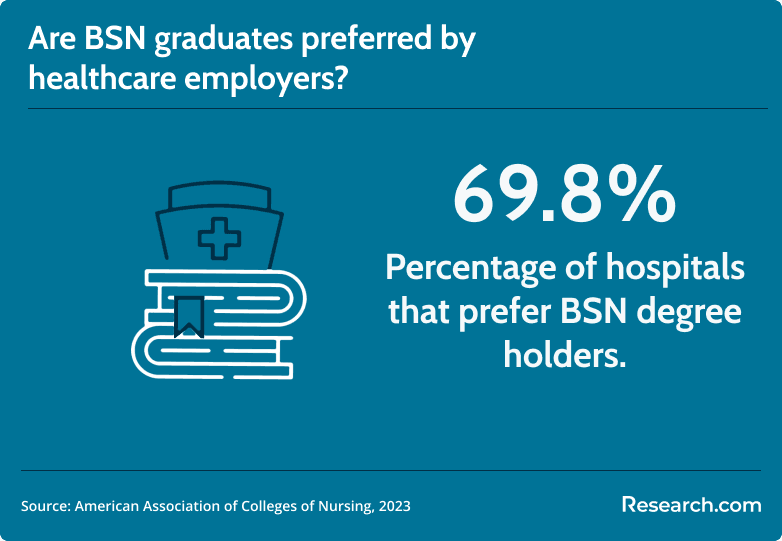
Program quality matters. Prospective students should review accreditation, clinical placement support, state authorization, certification pass-rate information when available, faculty experience, and whether the program’s clinical requirements align with their state’s advanced practice rules. Employer preferences also matter: 69.8% of healthcare employers prefer BSN graduates, reinforcing the value of strong academic preparation before entering advanced practice.
Which areas of specialization can PMHNPs pursue in their careers?
PMHNPs can build careers around specific patient populations, treatment needs, or practice settings. Specialization can influence daily responsibilities, continuing education priorities, employment options, and long-term earning potential. It can also help PMHNPs focus on the type of patient care they find most meaningful.
Common specialization areas include:
- Child and adolescent psychiatry: Focuses on children and teenagers, with attention to early intervention, family dynamics, school-related concerns, developmental context, and age-appropriate treatment planning.
- Geriatric psychiatry: Centers on older adults who may be managing depression, anxiety, cognitive decline, grief, medication interactions, or psychiatric symptoms connected to chronic illness.
- Addiction medicine: Supports patients with substance use disorders through medication management, behavioral strategies, relapse prevention planning, and coordination with recovery services.
- Forensic psychiatry: Involves psychiatric care and evaluation in settings connected to the legal system, such as correctional facilities, court-related evaluations, or mandated treatment environments.
- Community mental health: Serves patients who may face barriers to care, including limited access, housing instability, insurance challenges, transportation issues, or co-occurring medical and social needs.
Choosing a specialization should not be based only on salary potential. PMHNPs should also consider patient acuity, emotional intensity, schedule expectations, supervision and collaboration, safety protocols, and the availability of local resources. For example, addiction medicine and community mental health can be highly impactful but may require comfort with crisis care, relapse risk, and complex social determinants of health.
Specialization affects career fit in much the same way it does across other advanced practice nursing roles. For comparison, our breakdown of acute care nurse practitioner salary roles shows how setting, scope, and patient population can shape compensation and career direction.
What skills do you need to have as a PMHNP?
PMHNPs need more than psychiatric knowledge. They must combine clinical reasoning, communication, medication expertise, ethical judgment, and emotional steadiness. The role often involves patients in distress, uncertain diagnoses, safety concerns, and treatment plans that require careful monitoring over time.
Core skills include:
- Patient care and rapport-building: PMHNPs must create enough trust for patients to discuss symptoms, trauma, medication concerns, substance use, family issues, and safety risks honestly.
- Behavioral health expertise: They need to recognize patterns in mood, thought, behavior, sleep, functioning, and risk so they can support accurate diagnosis and appropriate intervention.
- Medical management: PMHNPs must understand psychiatric medications, potential side effects, contraindications, adherence barriers, and how mental health treatment interacts with physical health conditions.
- Diagnostic evaluation: They interpret clinical interviews, screening tools, psychological information, lab results, and medical history to support evidence-based treatment decisions.
Several practical abilities separate strong PMHNPs from clinicians who struggle in the role. These include de-escalation, documentation discipline, cultural humility, comfort with uncertainty, and the ability to communicate clearly with patients who may be anxious, guarded, overwhelmed, or ambivalent about care.
The chart below highlights essential PMHNP competencies and how they contribute to professional success over time.
What is the average salary for a PMHNP?
PMHNP compensation reflects advanced clinical training, prescribing responsibility, and strong demand for mental health services. The average annual salary is $141,112, though actual pay can vary by employer, state practice environment, years of experience, work setting, patient population, and whether the role includes leadership or private practice responsibilities.
Top-earning PMHNPs can make up to $180,000 per year, especially in private practice, leadership, or specialized psychiatric roles. Entry-level PMHNPs typically start around $120,500 annually, with room for growth as they gain experience, expand clinical competency, and move into higher-responsibility roles.
When evaluating salary, nurses should look beyond the headline number. Benefits, call expectations, productivity requirements, patient volume, administrative burden, supervision structure, and malpractice coverage can significantly affect the real value of an offer. A higher salary may come with heavier caseloads or less support, while a lower salary may offer stronger mentorship, better work-life balance, or more stable scheduling.
Reviewing psychiatric nurse practitioner salary information can help prospective PMHNPs understand how education, certification, specialization, and practice setting influence earning potential. The chart below breaks down PMHNP salary by percentile.
What is the job outlook for PMHNPs?
The job outlook for PMHNPs is strong because mental health demand continues to exceed available provider capacity in many communities. PMHNPs are especially important in settings where psychiatrists are limited, wait times are long, or patients need both medication management and ongoing behavioral health support.
Key labor market indicators include:
- Rapid employment growth: Overall employment for nurse practitioners, including PMHNPs, is projected to grow by 35% from 2024 to 2034, far faster than the average for all occupations.
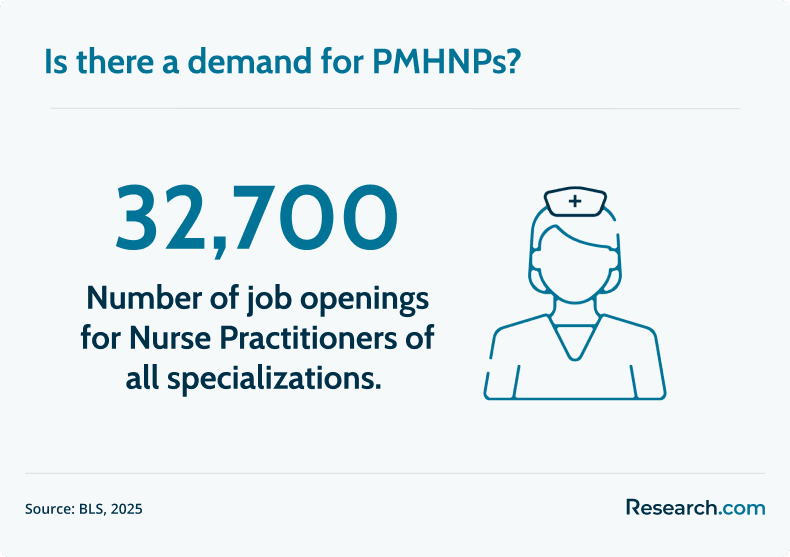
- Ongoing job openings: About 32,700 job openings are projected each year for nurse practitioners of all specializations, driven in part by retirements and career transitions.
- Large and expanding workforce: There are currently 258,230 nurse practitioners across all specializations, and demand is expected to continue rising as healthcare systems invest more heavily in mental health services.
PMHNPs may find opportunities in outpatient psychiatry, integrated primary care, hospitals, residential treatment, community mental health, telepsychiatry, correctional health, and academic medical centers. Candidates with strong clinical training, comfort with complex patients, and flexibility across care settings are likely to be especially competitive.
What are the alternative careers for a PMHNP?
A PMHNP credential can lead to more than traditional patient care. Some professionals continue in clinical practice while expanding into leadership, education, consulting, policy, digital health, or writing. These paths can be appealing for PMHNPs who want broader influence, more schedule flexibility, or less direct exposure to high-acuity clinical work.
Alternative career options include:
- Health policy advisor: Works with government agencies, advocacy groups, or nonprofits to improve mental health access, workforce planning, reimbursement policy, and public health strategy.
- Clinical consultant: Advises healthcare organizations, startups, or pharmaceutical companies on psychiatric workflows, patient safety, clinical standards, or care model design.
- Academic medical writer: Develops educational content, training materials, research summaries, continuing education resources, or publications related to psychiatric and mental health care.
- Corporate wellness director: Designs workplace mental health initiatives, employee support programs, stress-management resources, and referral pathways for organizations.
- Digital health specialist: Supports telehealth platforms, behavioral health apps, or virtual care programs by helping shape clinical protocols, patient experience, and psychiatric care delivery.
Before moving into an alternative role, PMHNPs should assess whether the position still requires active licensure, clinical experience, prescribing authority, malpractice coverage, or ongoing patient care. Some nontraditional roles are best suited for experienced clinicians who can translate real-world psychiatric practice into policy, education, product design, or organizational strategy.
PMHNPs who want to broaden their clinical range may also consider additional graduate-level credentials. For example, one of the best online family nurse practitioner graduate certificate programs may complement psychiatric expertise for nurses interested in more interdisciplinary practice options.
What are the biggest challenges PMHNPs face?
PMHNP work can be meaningful, but it is also demanding. The role often involves high-stakes decisions, patients in crisis, limited appointment time, documentation pressure, and gaps in community support. Understanding these challenges before entering the field can help nurses choose the right training environment and employer.
Common challenges include:
- High patient caseloads: Many PMHNPs manage large panels or frequent follow-ups, which can limit visit depth and increase burnout risk.
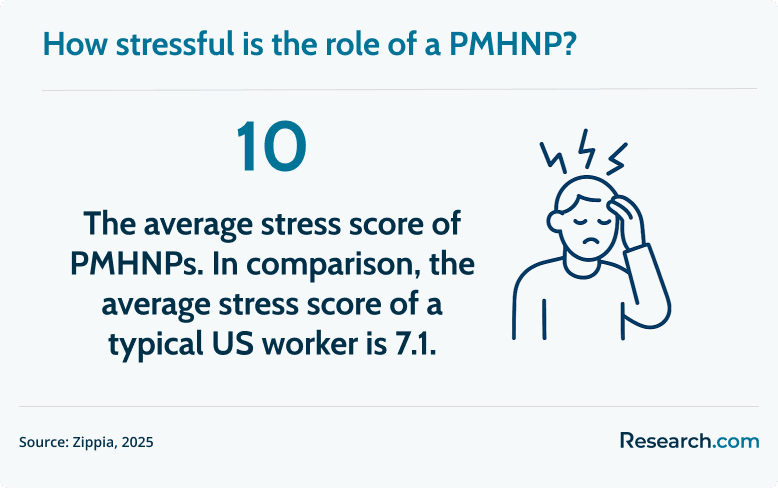
- High stress level: PMHNPs report an average stress score of 10, significantly higher than the US average of 7.1, reflecting the emotional intensity and responsibility of the role.
- Emotional fatigue: Repeated exposure to trauma, suicidal ideation, severe depression, psychosis, family conflict, or crisis situations can accumulate over time.
- Limited resources: In some regions, especially rural areas, PMHNPs may have fewer referral options, limited inpatient availability, staff shortages, or inadequate community support services.
- Regulatory variability: State laws differ on prescribing authority and scope of practice, which can affect autonomy, supervision requirements, and care delivery.
- Stigma around mental health: Patients may delay treatment because of shame, fear, cultural barriers, or concern about how a diagnosis could affect employment, family relationships, or identity.
Strong PMHNPs learn to manage these pressures with clinical supervision, peer consultation, clear boundaries, safety protocols, realistic scheduling, and ongoing professional development. When evaluating jobs, candidates should ask about caseload expectations, crisis coverage, administrative support, training, collaboration with psychiatrists or other clinicians, and policies for high-risk situations.
What industry trends should you know as a PMHNP?
PMHNPs are practicing during a period of rapid change in mental health care. Technology, telehealth, integrated care, substance use treatment needs, and prevention-focused models are reshaping how psychiatric services are delivered. Staying current helps PMHNPs remain clinically effective and competitive in the job market.
With demand for psychiatric nurse practitioner jobs rising nationwide, these trends are especially important to understand.
Frontlines of the Addiction Crisis
The U.S. is facing a growing addiction epidemic—nearly one in ten Americans over the age of 12 struggles with substance use, yet most never receive treatment. PMHNPs may support patients with substance use disorders through assessment, medication-assisted therapies such as buprenorphine, behavioral interventions, relapse prevention, and coordination with recovery resources.
AI-Powered Patient Care
Artificial intelligence is beginning to influence psychiatric practice through tools that may assist with documentation, pattern recognition, risk flagging, and workflow support. PMHNPs should approach these tools carefully: AI can support efficiency, but it does not replace clinical judgment, patient consent, privacy safeguards, or direct therapeutic relationships.
Expansion of Telepsychiatry
Telepsychiatry has moved from a convenience to a core access strategy for many patients. PMHNPs use virtual care for follow-ups, medication management, therapy-informed visits, and continuity of care. The trade-off is that clinicians must be prepared to manage privacy, emergency protocols, technology barriers, and state-specific practice requirements.
Integrated Behavioral Health Models
More PMHNPs are working in collaborative models that connect mental health with primary care. These models can improve coordination for patients whose psychiatric symptoms intersect with chronic illness, sleep problems, pain, substance use, or medication complexity.
Rising Focus on Preventive Mental Health
Prevention is becoming a larger part of psychiatric care. PMHNPs may support screenings, early intervention programs, workplace wellness strategies, patient education, and community-based initiatives designed to reduce stigma and address symptoms before they become more severe.
How do you know if becoming a PMHNP is the right career choice for you?
Becoming a PMHNP may be a strong fit if you are a nurse who wants advanced clinical responsibility and is deeply interested in mental health, behavior, medication management, and long-term patient relationships. The role is best suited for professionals who can combine empathy with structure, compassion with boundaries, and curiosity with disciplined clinical reasoning.
You may be well matched for this career if you:
- Want to work directly with patients experiencing anxiety, depression, trauma, psychosis, substance use disorders, mood disorders, or crisis situations.
- Are comfortable discussing sensitive topics such as suicide risk, family conflict, medication adherence, substance use, grief, and trauma history.
- Can remain calm when patients are distressed, distrustful, confused, angry, or fearful.
- Enjoy combining science, communication, and problem-solving rather than focusing only on procedures or acute physical care.
- Are prepared for lifelong learning in psychiatric medications, therapy-informed interventions, legal requirements, and evolving models of care.
You may want to reconsider or explore the field carefully before committing if you prefer predictable interactions, have difficulty setting boundaries, want to avoid emotionally intense conversations, or are not interested in documentation and medication monitoring. Shadowing a PMHNP, interviewing professionals in different settings, and comparing psychiatric practice with other nurse practitioner specialties can help clarify the decision.
Here’s What PMHNPs Have to Say About Their Careers
- : "Transitioning into psychiatric nursing changed how I see healthcare entirely. Every day, I get to witness lives transform—sometimes in small, quiet ways, sometimes dramatically. It’s challenging work, but seeing patients regain control of their mental health is beyond rewarding. — Bernadette"
- : "As a PMHNP, I’ve found the perfect balance between science and compassion. I use evidence-based treatments, but what truly makes the difference is building trust and being present for my patients. It’s a career that constantly reminds me why I became a nurse. — Alfonso"
- : "I started in general nursing, but mental health care gave my work deeper meaning. The demand for PMHNPs is growing fast, and I’ve had incredible flexibility—telehealth sessions, private practice options, and leadership roles I never thought possible. — Margaux"
Key Findings
- PMHNPs are advanced practice nurses who assess, diagnose, treat, and support patients with mental health conditions through psychiatric evaluation, medication management, therapeutic interventions, and care coordination.
- The typical educational path includes a BSN, registered nursing preparation, and an MSN or DNP with psychiatric mental health specialization.
- Common PMHNP specializations include child and adolescent psychiatry, geriatric psychiatry, addiction medicine, forensic psychiatry, and community mental health.
- The average annual PMHNP salary is $141,112, with entry-level PMHNPs typically starting around $120,500 and top earners making up to $180,000 per year.
- Overall employment for nurse practitioners, including PMHNPs, is projected to grow by 35% from 2024 to 2034, with about 32,700 job openings projected each year for nurse practitioners of all specializations.
- The role offers strong demand and meaningful patient impact, but it can also involve high stress, emotional fatigue, heavy caseloads, limited resources, and state-by-state scope-of-practice differences.
- PMHNP may be the right career choice for nurses who want advanced responsibility, psychiatric expertise, patient-centered communication, and a long-term role in expanding access to mental health care.
Other Things You Need to Know About Becoming a PMHNP
To practice as a PMHNP in 2027, one must obtain a state-specific Nurse Practitioner license after completing an accredited program and pass the national certification exam from the American Nurses Credentialing Center (ANCC) or the American Academy of Nurse Practitioners (AANP).
In 2027, a PMHNP (Psychiatric Mental Health Nurse Practitioner) primarily focuses on assessing, diagnosing, and treating mental health conditions. They provide therapy, prescribe medications, and collaborate with other healthcare professionals to ensure comprehensive care for adults and children.
To become a PMHNP by 2026, one should complete a Bachelor of Science in Nursing (BSN), earn a Registered Nurse (RN) license, pursue a Master of Science in Nursing (MSN) with a PMHNP focus, and achieve national certification as a PMHNP. Additionally, state licensure requirements must be met.
References
- American Addiction Centers. (n.d.). Addiction statistics & demographics. https://americanaddictioncenters.org/rehab-guide/addiction-statistics-demographics. Retrieved 30 October 2025.
- American Association of Colleges of Nursing. (2023). New graduate employment data. https://www.aacnnursing.org/news-data/research-data-center/new-graduate-employment-data. Retrieved 30 October 2025.
- American Association of Nurse Practitioners. (2025). State practice environment. https://www.aanp.org/advocacy/state/state-practice-environment. Retrieved 30 October 2025.
- Manderius, C., Clintståhl, K., Sjöström, K., & Örmon, K. (2023). The psychiatric mental health nurse’s ethical considerations regarding the use of coercive measures – a qualitative interview study. https://doi.org/10.1186/s12912-023-01186-z. Retrieved 30 October 2025.
- NP Hub. (n.d.). NP job trends: What nurse practitioners need to know. https://www.nphub.com/blog/np-job-trends. Retrieved 30 October 2025.
- State of the Behavioral Health Workforce Report 2024. (2024). U.S. Health Resources & Services Administration, Bureau of Health Workforce. https://bhw.hrsa.gov/sites/default/files/bureau-health-workforce/state-of-the-behavioral-health-workforce-report-2024.pdf. Retrieved 30 October 2025.
- US Bureau of Labor Statistics. (n.d.). Nurse anesthetists, nurse midwives, and nurse practitioners. U.S. Department of Labor. https://www.bls.gov/ooh/healthcare/nurse-anesthetists-nurse-midwives-and-nurse-practitioners.htm. Retrieved 30 October 2025.
- ZipRecruiter. (n.d.). Psychiatric nurse practitioner salary. https://www.ziprecruiter.com/Salaries/Psychiatric-Nurse-Practitioner-Salary. Retrieved 30 October 2025.
- Zippia. (n.d.). Psychiatric nurse practitioner jobs: Skills & requirements. https://www.zippia.com/psychiatric-nurse-practitioner-jobs/skills/. Retrieved 30 October 2025.


