2027 Online BA in Psychology - General Psychology for Qualitative Interviewing Foundations: Which Courses Should You Look For?
Audited and Verified:
Our Editorial and Data Verification Process
Research.com uses government datasets, official education statistics and primary institutional information to support its career and degree guides. Our review process checks factual accuracy, occupational definitions, source dates and the requirements associated with the credentials discussed.
How This Article Was Fact-Checked
Our editorial team verifies salary estimates, employment projections, education requirements and program information against original data providers and official organizations. Salary figures are checked against the relevant occupational definitions and reporting periods. Information about licensure, accreditation and required in-person training is reviewed separately.
Fact-checked and verified on:

Co-Founder and Chief Data Scientist
A psychology major may teach research methods without teaching students how to conduct a useful, ethical interview. If you want to study people's experiences through interviews, course titles alone are a poor guide: practice, feedback, analysis, and participant protections matter just as much. This guide is for prospective online BA students choosing courses or comparing programs. It identifies the strongest curricular combination, shows what to verify before enrolling, and explains when targeted methods training may be more practical than a full degree.
Key Things You Should Know
- Prioritize research methods, a qualitative methods course with interview practice, research ethics, and a supervised project; introductory psychology alone is not enough.
- Ask whether online students actually conduct and analyze interviews, receive feedback, and can complete the work under the program's scheduling and approval rules.
- A bachelor's degree commonly takes about four years of full-time study, but a shorter course or supervised project may be the better choice if interviewing is your only learning goal.
What Is an Online Bachelor's Degree in General Psychology?
An online BA in general psychology is a broad undergraduate degree covering psychological science rather than a qualification in one interviewing method. Its required courses typically introduce major areas of psychology, research methods, and statistics; electives and projects determine how much qualitative training a student can obtain. A BA label does not guarantee that interviewing, field research, or a qualitative methods elective is offered.
This breadth helps students frame interview questions around constructs such as belonging, motivation, or help-seeking and interpret accounts without treating one person's experience as representative of everyone's. If your goal is solely to learn interviewing for an existing job, compare the cost and time of the degree with a standalone methods course and supervised practice. If your goal is specifically substance-use support, lower-tuition bachelor's pathways in substance use counseling address a different, more occupationally focused choice; check any state credential rules separately.
Which Courses Build Qualitative Interviewing Skills in Psychology?
The strongest preparation combines research design with repeated, supervised interviewing and systematic interpretation. A course called "research methods" may devote most of its time to experiments and statistics, so inspect its syllabus and assignments rather than relying on the title. The comparison below shows what each course contributes to an interview-based project.
| Course or learning experience | Contribution to interviewing | Limitation to check |
| Psychological research methods | Turns a broad interest into a feasible question, sampling plan, and study design. | May offer little qualitative practice. |
| Qualitative methods or field research | Covers semistructured guides, probing, researcher reflexivity, coding, and interpretation. | May be an infrequently offered elective or sit outside psychology. |
| Research ethics | Addresses consent, privacy, recruitment, and responsibilities to participants. | Ethics instruction does not replace project-specific review or permission. |
| Supervised research or capstone | Provides feedback on an interview guide, practice, analysis, and written conclusions. | Interview-based projects may depend on faculty capacity and approval. |
Look for a course in which students revise questions after a pilot exercise, practice neutral follow-up prompts, document decisions, and distinguish participants' accounts from the researcher's interpretation. If a program lacks this depth, a later methods course may fill the gap; faster pathways through graduate psychology coursework are worth comparing only if graduate study also serves a broader goal.
How Do You Choose an Accredited Online Psychology Program?
First, confirm the institution's accreditation through the accreditor or the U.S. Department of Education's recognized-accreditor information, then verify that the BA and its online delivery are offered to students in your location. Institutional accreditation matters for degree recognition and potential federal aid eligibility, but it does not prove the program teaches qualitative interviewing. APA accreditation is not a general accreditation designation for undergraduate psychology majors.
Next, request the current catalog and recent syllabi. Ask the psychology department whether qualitative methods is required or elective, how often it runs, who supervises interview-based work, and whether online students can choose such a capstone. Confirm any live meetings, local recruitment expectations, and student research review procedures before committing. If comparing an advertised specialty instead, verify its exact credential and curriculum; evaluating forensic psychology degree admissions is a separate decision from finding strong general interviewing instruction.
Sequence courses so each one supports the next: introductory psychology establishes concepts, research methods and statistics build evidence literacy, qualitative methods develops interview design and analysis, and a supervised project puts those skills together. Statistics remains useful even for a qualitative researcher because it helps you evaluate competing evidence and recognize what interview findings cannot establish.
Choose topic electives to fit the people and question you hope to study. Social psychology can inform questions about norms and identity; developmental psychology matters when studying experiences across age groups; cultural psychology can sharpen attention to language and assumptions. These courses supply context, not permission to interview vulnerable groups or interpret responses clinically. Students interested specifically in legal-system settings may compare compressed online master's study in forensic psychology later, but that specialization does not substitute for qualitative methods or grant investigative authority.
Before registering, check prerequisites and ask whether a sociology, anthropology, public health, or education methods course can count toward the BA. An outside course may teach interviewing well without satisfying a psychology major requirement; obtain written approval from the program that awards the degree.
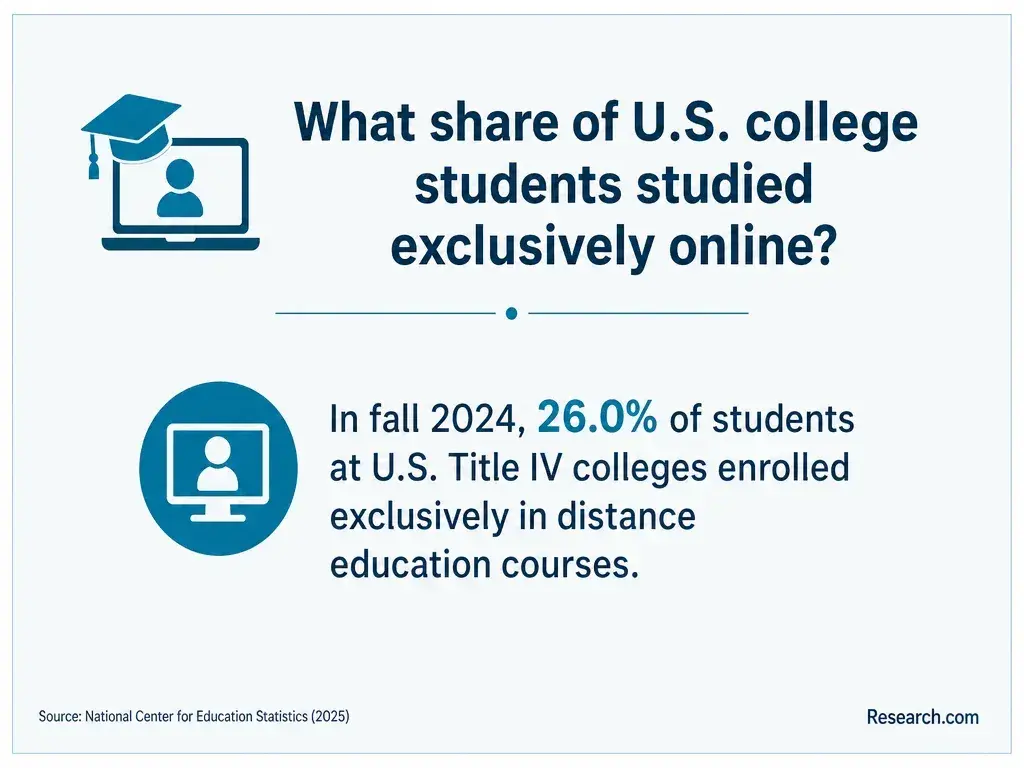
Either format can teach sound interviewing. Online study may make lectures and drafting easier to schedule, while campus study may provide more readily available in-person research teams or practice partners. Neither advantage is automatic. The decisive comparison is whether you can practice interviewing, get specific feedback, and complete approved research work in the format you will actually attend.
Ask how online students rehearse interviews, meet supervisors, recruit participants where permitted, and access transcription or secure storage tools. Live practice sessions, group work, and faculty meetings may have fixed times even in an otherwise asynchronous degree. Do not confuse a nonclinical interview research project with a counseling practicum: clinical counseling master's course sequencing involves a different professional pathway and potentially different supervised training obligations.
Requirements vary by institution and by whether you enter as a first-year or transfer student. Schools generally ask for prior academic records and may have separate procedures for admission to the psychology major. Prior psychology coursework is not necessarily required for first-year entry; transfer students should ask which completed courses satisfy statistics, methods, general education, and major requirements rather than assuming accepted credits meet each requirement.
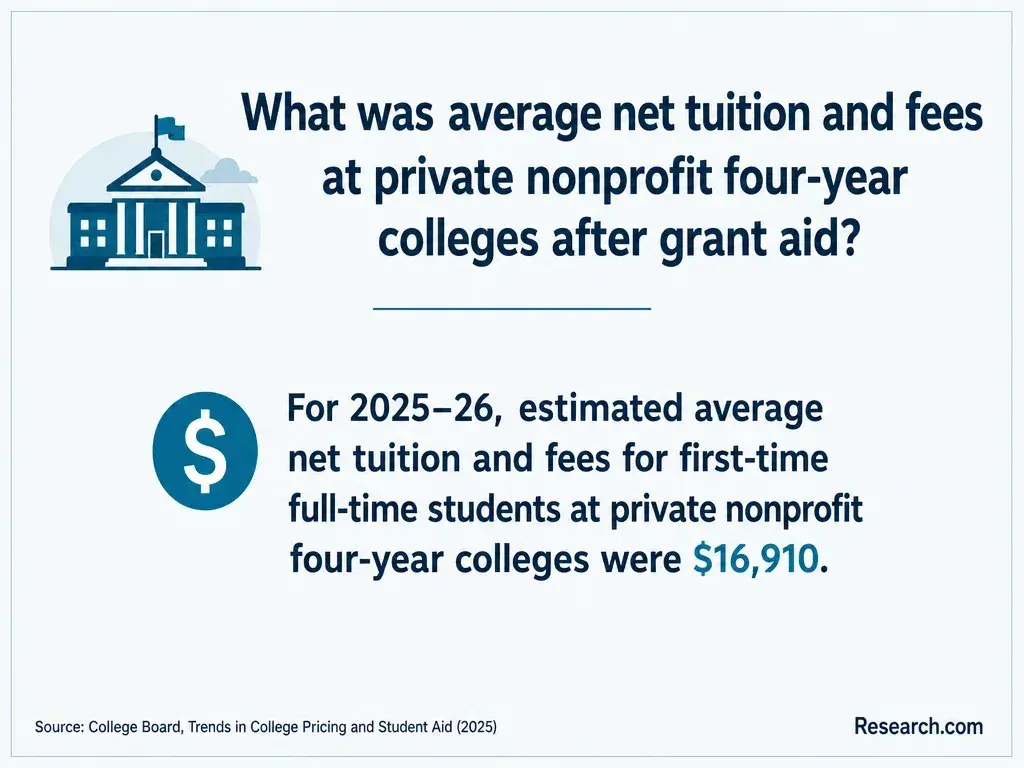
Request an official degree audit before estimating your remaining time or cost. Also verify tuition by credit or term, fees, and aid eligibility with the institution. Students comparing a different undergraduate route can review aid eligibility for online substance use counseling study, but aid for any specific school and enrollment plan must be confirmed directly.
About four years is a common full-time planning benchmark for a bachelor's degree, not a promise for a particular student. Transfer credits, course load, prerequisite order, and the frequency of qualitative electives can change the timeline. A methods course offered only occasionally could delay your interviewing project even if most degree requirements are available every term.
Map the term in which you can take research methods, the next available qualitative course, and the earliest eligible capstone. If your actual goal is to provide counseling, do not choose a BA based on interviewing electives alone: a qualifying professional graduate pathway requires separate planning. Comparing a short-duration counseling master's return on investment can clarify that longer-term commitment, but a short advertised duration does not remove applicable training or licensing requirements.
Interviewing skills can support entry-level research assistance, community program evaluation, user research support, and service-coordination work. Tasks might include preparing a guide, scheduling participants, taking accurate notes, organizing transcripts, or summarizing themes under a supervisor's direction. Employers may also require experience with their population, data systems, accessibility practices, or research procedures; the BA alone does not establish job eligibility.
Build evidence of skill through a supervised class project, research assistantship, or permitted workplace evaluation. Describe your contribution precisely: designing questions differs from conducting interviews, and coding transcripts differs from claiming that findings apply to an entire population. In service settings, careers in addiction treatment and support settings include roles with distinct duties and credential requirements; research interviewing should not be confused with clinical intake or counseling.
There is no single salary or growth rate for graduates of a general psychology BA. A research assistant, community-service worker, and market-research worker belong to different occupations, with different duties and entry expectations. For a meaningful comparison, identify a target job and location, then check the latest U.S. Bureau of Labor Statistics Occupational Outlook Handbook entry for that occupation's wage reference year, projection period, and typical education requirements. Its occupational median is not the expected starting salary - or an outcome measure - for one BA program.
Compare likely pay with the full cost of your intended route: tuition, fees, technology, any project-related travel, and time away from work. If the target job requires a qualifying counseling degree, comparing mental health counseling program costs is more relevant than treating BA-level research wages as a proxy for a licensed career.
Does a Psychology Bachelor's Degree Qualify You for Licensure or Certification?
No. A general psychology BA, including one with interviewing or mental-health electives, does not by itself authorize psychotherapy, diagnosis, independent psychological assessment, or use of a protected professional title. Requirements for licensed psychologists and other regulated roles depend on the occupation and jurisdiction and generally involve additional qualifying education and supervised training. Employer training or a role-specific certificate may be useful for nonclinical work, but its scope should be checked against the actual job.
Research interviews have boundaries of their own. Before recruiting people, determine who owns the project, whether institutional review or another approval is needed, how consent and recordings will be handled, and what to do if a participant discloses a safety concern. A class exercise is not automatically exempt from organizational privacy rules. If considering graduate study for research depth, planning the cost of a psychology master's is useful, but a general psychology master's is not automatically a licensure-qualifying degree.
Other Things You Should Know About Psychology
Yes. A role-play with a consenting peer can help you practice prompts and listening. For an actual research project, follow its approved consent, note-taking, and data-handling procedures.
Only if the project's supervisor and applicable privacy, consent, and data-use rules permit that tool. Check where recordings are stored, who can access them, and whether participants agreed to the proposed processing.
There is no universal number. The question, sample, analytic approach, course requirements, and available time determine a feasible scope; your supervisor should approve it before recruitment.
Not necessarily. Meaning, cultural context, and the accessibility of each question matter more than literal wording. Arrange appropriate review and pilot testing before using a translated guide with participants.
- Research ethics | nih.gov https://www.training.nih.gov/policies/research-ethics/
- Human Research Protection Training | hhs.gov https://www.hhs.gov/ohrp/education-and-outreach/human-research-protection-training/index.html
- Collecting and Analyzing Qualitative Data | Field Epi Manual https://www.cdc.gov/field-epi-manual/php/chapters/qualitative-data.html
- The Qualitative Interview in Psychology and the Study... - PMC https://pmc.ncbi.nlm.nih.gov/articles/PMC8172075/
- Qualitative Data: Best Practices, Analysis, and Tools | Research Guides at George Washington University https://libguides.gwu.edu/qualitative
- Pathways Through Psychology | Portland State University https://www.pdx.edu/psychology/pathways-through-psychology
- Qualitative Methods: Overview and Semi-Structured Interviewing | umich.edu https://si.isr.umich.edu/courses/qualitative-methods-overview-and-semi-structured-interviewing-2/
- Courses - Psychology - Virginia Commonwealth University https://psychology.vcu.edu/undergraduate/courses/
- IRB Training | Cornell Research Services https://researchservices.cornell.edu/resources/irb-training
- Giving effective feedback online | Mizzou Online: Teaching https://teaching.missouri.edu/resources/knowledge-base/assessment/giving-effective-feedback-online