
2027 Online vs On-Campus Geoscience Degree Programs: Pros & Cons

Co-Founder and Chief Data Scientist
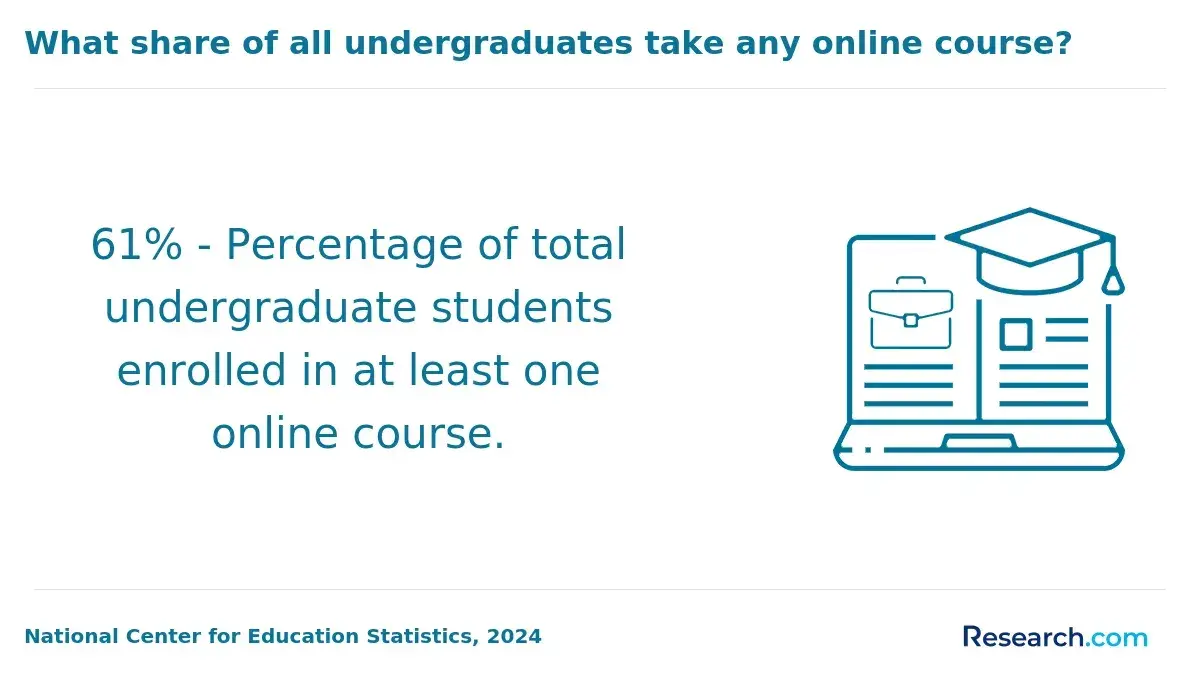
Online geoscience degree programs have surged in popularity, reflecting a 20% increase in digital enrollments over the past five years according to the National Center for Education Statistics. This trend highlights a growing shift toward flexible learning models that accommodate diverse student needs. Comparing online and on-campus geoscience degrees reveals distinct advantages and disadvantages related to flexibility, cost, learning experience, and career outcomes.
Understanding these factors is crucial for prospective students seeking to make informed decisions that align with their academic goals and professional aspirations in the evolving landscape of geoscience education.
Key Benefits of Online vs On-Campus Geoscience Degrees
- Online geoscience degree programs offer flexibility, allowing students to balance studies with work or family commitments, which is crucial as 63% of online learners in the USA are employed while studying.
- These programs often provide access to a broader range of courses and experts nationwide, surpassing the limited faculty available on many small campuses.
- On-campus geoscience degrees provide hands-on fieldwork experience, with 70% of employers ranking practical skills gained through in-person labs and field studies as highly valuable for graduates entering the geosciences workforce.
Are Online vs. On-Campus Geoscience Programs Structured the Same Way?
The structure of online and on-campus geoscience degree programs differs notably, shaping how students engage with coursework and instructors. While both formats aim to deliver comparable academic content, their delivery methods and scheduling options create distinct learning experiences. To highlight these differences, here is a comparison of key structural elements between online and on-campus geoscience programs.
- Course Delivery: On-campus courses feature in-person lectures, labs, and field experiences that provide direct guidance and spontaneous interaction with instructors. Online courses use narrated presentations and asynchronous modules, allowing students to learn at their own pace but with less immediate feedback.
- Class Schedules: Traditional programs follow fixed schedules requiring attendance at set times, fostering routine but limiting flexibility. Online formats offer flexible access to materials and assignments, benefiting students balancing work or family commitments.
- Interaction and Collaboration: In-person programs encourage spontaneous peer discussions and group work through classes and campus events. Online students collaborate through forums and virtual projects, which increase accessibility but can reduce the immediacy of engagement.
- Hands-on and Field Components: On-campus students participate in labs and field trips essential for practical skills in geoscience. Online programs may use virtual simulations or require limited campus visits, though some hands-on experiences are harder to replicate remotely.
- Assessment and Exams: Both formats often use the same exams, but on-campus testing is typically proctored in person. Online assessments may be completed remotely or occasionally require supervised on-campus exams, with no significant difference in performance observed when content aligns.
Are Admission Requirements the Same for Online vs On-Campus Geoscience Degree Programs?
Colleges and universities maintain consistent academic standards for both online and on-campus geoscience programs to ensure degree quality and reputation remain equivalent. However, they may differ in how they assess an applicant's readiness for online learning to accommodate the unique requirements of remote education.
Below are the key similarities and differences in admission requirements between online and on-campus geoscience programs, highlighting areas of overlap and divergence for prospective students to consider.
- Academic Qualifications: Both program types generally require a high school diploma or equivalent, along with strong science and math preparation. Minimum GPA expectations are usually aligned, reflecting common geoscience graduate program GPA requirements comparison across institutions.
- Prerequisite Coursework: Applicants must typically have completed foundational courses in biology, chemistry, physics, or mathematics for either modality. Online programs sometimes offer greater flexibility by allowing prerequisites to be met through online bridge courses or competency exams.
- Application Materials: Standard documents like transcripts, letters of recommendation, and personal statements are required for both formats. Online programs may additionally request information demonstrating an applicant's ability to manage time independently and adapt to remote learning.
- Work Experience: Prior work or volunteer experience is not commonly required for undergraduate geoscience programs on campus. However, some online programs targeting adult or nontraditional learners may value relevant experience more highly.
- Technical Readiness: Unlike on-campus applicants, online candidates often must prove their technical preparedness, including access to reliable internet, basic digital literacy, and comfort with learning platforms.
- Cost and Financial Aid: While admission criteria remain similar regardless of format, online programs frequently offer lower tuition costs and greater scheduling flexibility. Many students pursuing an online geoscience degree benefit from the option to get a bachelor's degree fast while working.
- Degree Awarded and Employer Perception: Graduates receive the same accredited degree title regardless of study format, and most employers do not differentiate between online and on-campus credentials.
Do Online Geoscience Students Receive the Same Academic Support as On-Campus Students?
Universities have significantly expanded their academic support systems to ensure that online geoscience students receive resources and assistance comparable to their on-campus peers. Technological advancements and a commitment to student engagement have helped bridge the gap between remote and in-person learning experiences.
Below is a comparison of the main academic support services typically offered to both online and on-campus geoscience students.
- Tutoring Services: Institutions offer online tutoring platforms alongside traditional in-person help centers. Online students can access live chat, video calls, or asynchronous support to receive subject-specific help similar to on-campus peer or professional tutoring.
- Career Counseling: Both formats provide access to career advisors who assist with job searches, resume building, and internship placements. Virtual appointments and digital resources ensure online students receive targeted support, although on-campus students may benefit from broader networking opportunities.
- Library Access: Universities provide expansive digital libraries with e-books, journals, and databases accessible to all students. Online geoscience students benefit from the same materials and increasingly have remote reference assistance and virtual workshops once only available in-person.
- Faculty Interaction: Faculty engage with students through virtual office hours, email, discussion boards, and video conferencing. This ensures online students receive timely feedback and support comparable to in-person interactions.
- Lab and Field Experience Support: Advances in virtual labs and immersive field simulations offer online students practical experiences similar to traditional labs. Studies suggest that high-quality virtual field trips can sometimes yield even greater learning gains than in-person experiences, especially when combined with adaptive feedback tools.
How Long Does It Take to Complete an Online vs an On-Campus Geoscience Degree?
The time required to complete a geoscience degree varies widely depending on the program's delivery method, the student's pace, and the available scheduling flexibility. Both online and on-campus formats offer different pathways that can significantly affect how quickly a student finishes their studies, influenced by program design and individual circumstances.
To better understand these differences, here is a comparison of the typical completion times for online versus on-campus geoscience degrees:
- Online Geoscience Degree: These programs are designed for flexibility, enabling students to progress at their own speed. Most online master's degrees in geoscience can be finished in 1 to 2 years full-time, with options to extend for part-time learners. Courses often follow accelerated 8-week or traditional 16-week formats, and multiple start dates throughout the year allow students to begin without waiting for standard semester cycles, which benefits those managing work or personal commitments.
- On-Campus Geoscience Degree: Typically more structured, on-campus bachelor's degrees usually require four years of full-time study, while master's programs take about 1.5 to 2 years full-time. The schedule is generally less flexible due to fixed semesters and predetermined course sequences. Part-time attendance is sometimes possible but often leads to lengthened completion times because of limited course availability each term.
- Hybrid and Accelerated Options: Some institutions offer hybrid programs that combine online and in-person elements or accelerated tracks. These options may reduce overall completion time if students can maintain a demanding pace and commit to intensive coursework, offering a blend of flexibility and campus interaction.
One professional who pursued an online geoscience degree shared insights into his experience with program duration. He noted that while the flexibility to study at his own pace was invaluable, it also required strong self-discipline to avoid procrastination. Initially, he aimed to complete the program within two years, balancing a full-time job and family commitments. However, unexpected work projects and personal events occasionally extended his timeline slightly, leading him to finish in about two and a half years.
He reflected that "the ability to start courses multiple times a year and choose accelerated sessions really helped me stay on track when life allowed." Despite the added challenges of managing his schedule independently, he felt the extended timeframe did not diminish the quality or value of the degree but actually enhanced his learning experience by allowing deeper engagement with the material. His journey underscores how online geoscience programs accommodate varying life circumstances without compromising academic rigor or career outcomes.
Are Online Geoscience Programs Cheaper Than On-Campus Ones?
Tuition, fees, and related expenses for online geoscience programs are generally lower than those for on-campus programs, though the exact savings depend on the institution and the student's location. Comparing the average cost of online geoscience degree programs to traditional on-campus options reveals notable differences in both direct and indirect costs.
Here is a breakdown of the main cost factors influencing the total price of each learning format.
- Tuition and Fees: Online geoscience programs usually have lower tuition rates, with the average annual cost around $12,216 compared to $18,981 for on-campus students. However, some public universities may charge higher per-credit fees for out-of-state online learners, so it's important to review specific program rates when making a tuition comparison online vs on-campus geoscience degrees.
- Living Expenses: Students studying online often avoid campus housing and meal plans, saving an average of $744 per year on room and board compared with on-campus students. This makes online programs appealing for those who can live at home or in less expensive accommodations.
- Transportation and Miscellaneous Costs: Online learners eliminate commuting, parking, and campus activity fees, which can cost hundreds or even thousands annually for on-campus students. These savings contribute to the overall affordability of online education.
- Technology Costs: While online students must maintain reliable computers and internet access, these expenses are typically offset by money saved on campus fees and transportation. Most students already own necessary technology before enrolling, further reducing this cost.
- Financial Aid Availability: Federal financial aid is accessible for both online and on-campus students, but traditional students may have greater access to institutional scholarships and grants. Some online programs offer fewer merit-based awards, which could affect the net price of the degree.
- Flexibility and Time-to-Degree: Many online programs provide accelerated courses, credit for prior learning, or transfer credits, allowing students to graduate faster and reduce overall tuition. This flexibility can also enable students to work while studying, lowering the effective cost of earning a geoscience degree.
For those interested in exploring highly accessible options, there are a variety of easy online programs that can complement geoscience studies or serve as alternative pathways to degree completion.
What Are the Financial Aid Options for Online vs On-Campus Geoscience Programs?
Both online and on-campus students pursuing Geoscience degrees in the U.S. may qualify for financial aid, but eligibility and accessibility often differ depending on the program format and type of institution. These differences play a significant role when students plan how to fund their education and compare degree options.
Below is a comparison of the main financial aid options available for both online and on-campus Geoscience students, highlighting how accessibility varies between each format.
- Federal Aid: Federal financial aid, including Pell Grants, Direct Loans, and work-study programs, is generally accessible to both online and on-campus students at accredited institutions. However, online students enrolled less than half-time-typically under six credits per term-are often ineligible for many federal loans, and part-time study can reduce grant amounts compared to full-time on-campus students.
- State Aid: Many states offer grants or scholarships for residents attending public colleges, which often extend to online students if the program is hosted by an in-state institution. Some states, however, restrict aid to on-campus students or require full-time enrollment, which can disproportionately affect online learners who are more likely to study part-time.
- Scholarships and Grants: Scholarships and grants for on-campus geoscience students tend to be more abundant and flexible, as many institutional awards are designed with full-time, campus-based learners in mind. Online students frequently find fewer opportunities and less adaptable application timelines, limiting their access to this important financial aid source.
- Employer Tuition Reimbursement: This option is generally equally available for both online and on-campus students, especially for working professionals. Online programs often offer greater scheduling flexibility, making them popular among students leveraging employer tuition benefits.
- Private Student Loans: Both online and on-campus students can access private loans, but lenders usually require at least half-time enrollment and creditworthiness, which may pose challenges for part-time online learners.
Students comparing financial aid for online geoscience degree programs should also consider overall cost differences, as online programs often have lower fees and fewer commuting expenses. For those exploring affordable options, examining cheap online master degree programs can provide valuable insights into financial planning and funding opportunities.
Are Online Geoscience Programs as Credible as On-Campus Ones?
Accreditation, faculty qualifications, and curriculum standards play a crucial role in establishing the credibility of both online and on-campus geoscience programs. Most reputable universities offering online geoscience degrees maintain accreditation through agencies recognized by the U.S. Department of Education, such as the Higher Learning Commission, ensuring their programs meet rigorous academic standards. Faculty who teach online courses are often the same experts leading on-campus classes, and curricula are carefully synchronized to provide consistent learning outcomes regardless of the format.
For example, institutions like the University of North Dakota offer fully accredited geological engineering master's degrees both online and on-campus, with identical diplomas, which reinforces the equal value of each modality. This alignment ensures that online students receive comparable academic support and access to resources as their on-campus peers.
Perceptions of online versus on-campus geoscience degrees are evolving positively among employers, academic institutions, and licensing bodies. Recent surveys and meta-analyses reveal no significant differences in exam performance or grades between online and traditional students, highlighting the academic parity of both formats. Most employers respect degrees from accredited institutions without distinguishing whether they were earned online or on campus, as transcripts and diplomas typically do not specify the delivery method.
While hands-on experience is sometimes viewed as more accessible through traditional programs, online students can compensate by pursuing internships and other practical opportunities. Advances in virtual labs, simulation tools, and growing industry partnerships are further bridging gaps in practical training, enhancing the credibility and acceptance of online geoscience education as a legitimate pathway to professional careers.
Do Employers Prefer Online vs On-Campus Geoscience Degrees?
Employer attitudes toward online versus on-campus geoscience degrees are evolving rapidly, reflecting broader shifts in higher education and workplace expectations. While traditional on-campus programs have long been considered the gold standard, especially for roles requiring hands-on fieldwork and laboratory experience, many organizations are increasingly open to online credentials.
Surveys indicate that over 70% of employers have hired candidates with online degrees recently, with 61% of human resource leaders considering online education quality to be on par with or superior to that of on-campus programs. Critical factors influencing hiring decisions include university reputation, program accreditation, and the candidate's demonstrated skills-technical expertise, project management, and communication remain paramount regardless of degree format.
The rise of remote and hybrid work environments, accelerated by the COVID-19 pandemic, has further shifted employer perceptions in favor of online education. Geoscience graduates from online programs may be viewed as particularly adaptable, having developed fluency with virtual collaboration tools and digital workflows common in today's professional settings.
However, employers continue to scrutinize how online programs incorporate practical training for geoscience careers that traditionally depend on field and laboratory experience. Ultimately, the narrowing gap in employer preference underscores that proven competencies and accreditation carry more weight than the delivery format of the education. Both online and on-campus graduates with strong portfolios and relevant experience can compete effectively in the job market.
When I asked a professional who completed an online geoscience degree about her experience entering the workforce, she highlighted the importance of skills and adaptability. She mentioned that her degree from a well-accredited institution helped open doors, but it was her ability to clearly communicate project outcomes and collaborate remotely that set her apart. "Employers were impressed by how comfortable I was with digital tools and remote teamwork," she explained.
Despite some initial skepticism from recruiters regarding her online education, she emphasized that demonstrating real-world problem-solving and proactive learning reassured employers. Her journey illustrates that while the mode of education matters less than before, leveraging the unique strengths of an online program can be a significant advantage in contemporary geoscience careers.
Do Online vs On-Campus Geoscience Program Graduates Earn the Same Salaries?
Salary comparisons between online and on-campus geoscience graduates are increasingly shaped by factors beyond just the mode of study. Employer perception, industry demand, and graduate credentials often play more decisive roles in determining salary outcomes.
To understand current trends in how salaries differ for online versus on-campus geoscience program graduates, consider the following key factors that influence earning potential.
- Accreditation and Program Quality: Employers prioritize degrees from accredited institutions regardless of delivery method. Well-established online geoscience degrees, such as those from Southern New Hampshire University and North Carolina Central University, include hands-on labs and internships, enabling graduates to compete for salaries similar to those of on-campus peers.
- Employer Perception: Although some hiring managers may still prefer traditional degrees, the acceptance gap is narrowing. Online program graduates benefiting from required in-person components or internships are increasingly viewed as equally prepared, resulting in comparable starting salaries.
- Location and Industry Demand: Geographic location and sector are major determinants of salary, often outweighing whether the degree was earned online or on-campus. Median salaries for geoscientists reported by the Bureau of Labor Statistics show little difference between these groups when experience and credentials align.
- Level of Degree and Experience: Advanced degrees and work history boost salaries substantially across the board. Mid-career professionals with bachelor's degrees earn between $105,000 and $118,000 on average, while those with graduate degrees make $128,000 to $146,000, with no clear salary gap linked to online or on-campus study modes.
- Access to Academic Support and Networking: On-campus programs may offer more direct interaction with faculty and research opportunities, but many online programs now provide virtual networking events and career services. These resources help graduates build connections that support salary progression similarly to traditional formats.
Those exploring options should also consider the benefits of attending an affordable online college accredited and well-regarded for its geoscience offerings to maximize chances of competitive salary outcomes.
How Do You Decide Whether an Online vs On-Campus Geoscience Program Is Right for You?
Choosing between online and on-campus geoscience programs depends largely on your personal learning preferences, lifestyle, and professional goals. Both formats offer unique advantages and challenges that can influence your academic experience and career trajectory. To help you decide, here are key factors students should consider before choosing the path that fits them best.
When you compare on-campus and online geoscience degrees, these considerations will guide you toward the best fit for your needs.
- Learning Style: If you benefit from face-to-face interaction and a structured classroom environment, on-campus programs often provide more direct support and engagement with instructors and peers. Conversely, online geoscience degree programs typically demand strong self-discipline and the ability to manage independent study at your own pace.
- Flexibility Needs: Online programs offer greater scheduling flexibility, allowing you to balance coursework with work or family commitments, especially through asynchronous classes. This makes online options particularly appealing for working professionals seeking the best online geoscience degree programs in the US. On-campus courses usually require fixed class times and physical presence, which can be less adaptable.
- Budget Considerations: Online degrees often reduce expenses related to commuting, housing, and campus fees, making them a cost-effective option. For insights into affordable study options, you might want to explore what is the cheapest bachelor degree available online to see how it aligns with your financial situation.
- Networking Opportunities: On-campus study facilitates immediate interaction, collaboration, and networking with fellow students and faculty, which can enrich your learning experience. Online programs may provide virtual communities and digital events, but these might not fully replicate the immersive nature of campus connections.
- Access to Campus Resources: Hands-on resources such as laboratories, libraries, and student organizations are more accessible on campus and critical for applied fields like geoscience. Online students are generally supported through virtual access to digital tools and remote assistance, though physical access remains limited.
Here's What Graduates of Online vs On-Campus Geoscience Programs Have to Say About Their Degree
- Jamal: "Completing my geoscience degree entirely online allowed me to balance my education with a full-time job and family responsibilities, which was crucial for my success. The flexibility to study at my own pace and access materials anytime gave me confidence to master complex subjects without sacrificing my personal life. Since graduating, I've secured a role in environmental consulting where I apply what I learned to real-world projects, contributing to sustainable resource management. The program's strong virtual community and supportive instructors made all the difference in staying motivated. "
- Maria: "Attending geoscience classes on campus was an immersive experience that fostered my passion for earth sciences in ways I couldn't have imagined. The hands-on labs, direct collaboration with professors and peers, and field trips gave me invaluable practical knowledge. My degree opened doors to a government research position where I'm helping assess natural hazard risks, deeply impacting community safety. Reflecting on my journey, the personal connections and networking I built during my time on campus have been instrumental in my professional growth. "
- Kevin: "The hybrid format of my geoscience degree combined the best of both worlds: in-depth in-person fieldwork paired with the convenience of online lectures. This approach fit perfectly with my work schedule and allowed me to develop strong analytical skills alongside practical experience. Starting my career at an energy firm, I appreciate how the diverse learning methods prepared me to adapt and innovate in a fast-paced industry. The balance of remote and face-to-face learning also sharpened my discipline and communication skills. "
Other Things You Should Know About Online & On-Campus Geoscience Degree Programs
Online geoscience degrees offer flexible scheduling and reduce the need to relocate, making education accessible to those balancing work or family. They often provide access to recorded lectures and digital resources, allowing students to learn at their own pace. However, hands-on fieldwork may be limited compared to on-campus options.
Yes, networking opportunities differ between online and on-campus geoscience programs. On-campus students benefit from face-to-face interactions and events, while online students tend to rely on virtual platforms and forums. Both formats offer networking, but methods and settings vary, influencing the breadth and type of professional relationships formed.
In 2027, both online and on-campus geoscience degrees are increasingly recognized for their academic rigor. Employers generally consider them equivalent if the program is accredited. However, networking, hands-on experience, and institutional reputation may influence perceived value.
References
- Earth and Environmental Science https://ees.acadiau.ca/faqs.html
- Online and on-campus colleges | University of Phoenix https://www.phoenix.edu/blog/cost-of-online-vs-traditional-college.html
- The Surprising Cost of Online Education: Why 83% of Online Degrees Aren’t More Affordable https://www.nexford.edu/insights/the-surprising-cost-of-online-education-why-83-of-online-degrees-arent-more-affordable
- Online vs. On Campus: Which Grad School Format Is Right for You? https://www.utrgv.edu/accelerated/articles/general/online-vs-on-campus-which-grad-school-format-is-right-for-you/index.htm
- Geological Engineering Master's Online or On-Campus https://und.edu/programs/geological-engineering-ms/index.html


