2027 Online vs On-Campus Mechanical Engineering Degree Programs: Pros & Cons

Co-Founder and Chief Data Scientist
Choosing between an online and an on-campus mechanical engineering degree is not just a question of convenience. It affects how you complete labs, interact with faculty, build a professional network, manage costs, and show employers that you have the technical skills expected of an engineer. The decision matters even more as online STEM enrollment grows and more universities build flexible pathways for working adults, transfer students, and learners who cannot relocate.
This guide compares online and on-campus mechanical engineering programs across the factors that usually shape the final decision: program structure, admissions, academic support, completion time, cost, financial aid, credibility, employer perception, salary outcomes, and fit. It is designed for prospective undergraduate and graduate students who want a realistic view of what each format offers, where each format can fall short, and how to evaluate a program before enrolling.
Key Benefits of Online vs On-Campus Mechanical Engineering Degrees
- Online mechanical engineering programs offer flexible scheduling, allowing about 70% of students to balance work and study efficiently according to the National Center for Education Statistics.
- These programs often reduce overall costs by 30% to 50% compared to traditional on-campus degrees, making them more accessible to a wider range of students.
- On-campus mechanical engineering degrees provide hands-on laboratory experiences and direct access to campus resources, which 85% of employers consider crucial for practical skill development.
Are Online vs. On-Campus Mechanical Engineering Programs Structured the Same Way?
Online and on-campus mechanical engineering programs usually follow the same academic requirements when they lead to the same degree, but they are not experienced in the same way. The largest differences are course delivery, lab access, scheduling, and day-to-day interaction with instructors and classmates.
For mechanical engineering, structure matters because the field depends on applied problem-solving. Students need more than theory; they also need exposure to design software, experimentation, materials, thermodynamics, fluid mechanics, manufacturing processes, and engineering teamwork. A strong online program must explain clearly how it delivers those hands-on and collaborative components.
- Course delivery: On-campus programs rely on scheduled lectures, in-person discussions, labs, and design sessions. Online programs typically use learning management systems, recorded lectures, assignments, discussion boards, and sometimes live video classes. Some online courses are mostly asynchronous, while others require attendance at set times.
- Class schedules: On-campus students usually follow fixed class and lab times. This creates structure but can be difficult for students who work or commute. Online students often have more control over when they study, although exams, group projects, live sessions, or lab deadlines may still follow a strict calendar.
- Interaction and collaboration: On-campus collaboration happens naturally before and after class, in labs, during office hours, and through student organizations. Online collaboration is more intentional and usually happens through video meetings, shared files, group chats, discussion boards, and scheduled project check-ins.
- Hands-on learning: On-campus students normally use university labs, machine shops, maker spaces, testing equipment, and research facilities directly. Online students may use simulations, virtual labs, mailed lab kits, local approved facilities, short campus residencies, or partner sites. This is one of the most important areas to verify before choosing an online program.
- Professional networking: On-campus students often have easier access to faculty, student engineering societies, research teams, company information sessions, and campus career fairs. Online students may still receive career services and networking opportunities, but they must be more proactive about attending virtual events, contacting faculty, and finding internships locally.
The key question is not whether the degree is online or on campus. It is whether the program gives you enough access to design work, technical feedback, engineering tools, and career-building experiences for your goals.
Are Admission Requirements the Same for Online vs On-Campus Mechanical Engineering Degree Programs?
Admission requirements are often similar because both online and on-campus mechanical engineering programs must determine whether applicants are prepared for rigorous math, science, and engineering coursework. However, online programs may add requirements that measure readiness for remote learning, such as technology access, independent study habits, and time management.
Applicants should review requirements by degree level. Undergraduate programs usually focus on high school preparation, transfer credits, and prerequisite coursework. Graduate programs often examine prior engineering coursework, GPA, recommendations, work history, and professional goals.
- Academic qualifications: Both formats generally require a high school diploma for undergraduate admission or a bachelor's degree in engineering or a related field for graduate admission. Minimum GPA requirements usually range from 2.0 to 3.0, and applicants are commonly expected to have completed coursework in mathematics and science.
- Application materials: Students typically submit an application and official transcripts. Some programs request SAT/ACT or GRE scores, while more online mechanical engineering programs are waiving GRE requirements. Graduate programs may also require a resume, statement of purpose, and recommendation letters.
- Prerequisite preparation: Mechanical engineering is math-intensive. Applicants may need prior coursework in calculus, physics, chemistry, differential equations, programming, or foundational engineering subjects. Students missing prerequisites may be admitted conditionally or asked to complete bridge courses.
- Work experience: Undergraduate programs rarely require professional experience. Some online graduate programs prefer applicants with engineering or technical work experience because many are designed for working professionals. On-campus graduate programs may be more likely to enroll students directly from undergraduate study.
- International student eligibility: On-campus programs frequently admit international students. Many online programs limit enrollment to U.S. residents because of licensing, visa, export control, or institutional policy issues. International applicants may also need to meet English-language proficiency requirements.
- Technical requirements: Online programs may require reliable internet, a capable computer, specific software, a webcam for proctored exams, and completion of an online orientation. On-campus applicants may not see these listed as formal admissions conditions, although they still need access to technology for coursework.
- Enrollment flexibility: Online programs often provide rolling admissions and multiple start dates. On-campus programs more commonly follow fall and spring entry points tied to the traditional academic calendar.
Students who are still building an academic pathway into engineering may also compare options such as accelerated online associate degree programs, especially if they plan to complete lower-division coursework before transferring into a bachelor's program.
Do Online Mechanical Engineering Students Receive the Same Academic Support as On-Campus Students?
Online mechanical engineering students can receive support comparable to on-campus students, but the delivery method is different. The strongest online programs do not simply post lectures and leave students to work alone. They provide advising, faculty access, tutoring, library resources, technical help, career services, and clear communication channels.
Before enrolling, students should confirm not only that support services exist, but also when they are available. Evening or weekend access can be especially important for online students who work full time.
- Tutoring services: Both online and on-campus students may have access to tutoring in calculus, physics, engineering mechanics, thermodynamics, and other difficult subjects. Online tutoring is usually delivered through video appointments, chat, shared whiteboards, or group review sessions. On-campus students can also use physical tutoring centers.
- Faculty interaction: Online students typically communicate with instructors through email, discussion boards, video office hours, and scheduled calls. On-campus students have face-to-face access through lectures, office hours, labs, and informal conversations. In either format, the quality of support depends on faculty responsiveness and course design.
- Library access: Online learners usually receive digital access to journals, e-books, databases, citation tools, and research help. On-campus students can use the same digital tools plus physical collections, study spaces, and in-person research assistance.
- Career counseling: Career services may include resume reviews, interview preparation, internship search support, employer events, and job boards. Online students should ask whether they can attend virtual career fairs and whether services are available to remote learners in the same way as campus students.
- Academic advising: Advisors help students choose courses, understand prerequisites, evaluate transfer credits, and stay on track for graduation. This is particularly important in mechanical engineering because course sequencing can be strict.
- Technical and software support: Online students may need help accessing engineering software, virtual labs, remote desktops, or proctored exam systems. A program should explain how students get technical support when deadlines or exams are at stake.
A useful test is to ask the program for a typical support plan: who advises you, how quickly faculty respond, how tutoring works for advanced engineering courses, and what happens if you need help during a lab, project, or software assignment.
How Long Does It Take to Complete an Online vs an On-Campus Mechanical Engineering Degree?
Completion time depends on degree level, enrollment status, transfer credits, course availability, lab requirements, and whether the student participates in co-ops or internships. Online programs may offer more pacing flexibility, but they are not automatically faster. On-campus programs may have a more predictable sequence, but required labs, course rotations, and co-op options can lengthen the timeline.
- Online Mechanical Engineering Degree - Online bachelor's programs generally require three to four years for full-time students, with many structured around a standard four-year completion plan. Transfer credits, prior learning, and year-round enrollment can shorten the timeline. Online master's programs are often more flexible, allowing dedicated students to finish within 12 to 18 months when taking heavier course loads, while part-time completion can extend up to ten years depending on the institution.
- On-Campus Mechanical Engineering Degree - Traditional on-campus bachelor's degrees typically take four to five years and may extend to six years because of co-op participation, course sequencing, repeated courses, or academic challenges. Full-time on-campus master's students usually complete their degrees in 18 to 24 months, and many schools enforce a strict three-year maximum to keep students progressing.
The fastest option is not always the best option. Mechanical engineering students should avoid overloading themselves if it weakens their performance in core courses or limits time for internships, design projects, and skill development. For working professionals, a slightly longer online path may be more realistic and financially stable than leaving the workforce for full-time study.
A professional who completed an online mechanical engineering degree described the format as flexible but demanding. The ability to accelerate some coursework and adjust around work and family helped him continue making progress, but he still had to plan carefully around exams, projects, and deadlines. “It wasn't just about having more time; it was about using the time wisely,” he reflected. His completion took just under four years, partly because he enrolled part time during heavier work periods. For him, the main advantage was not speed; it was the ability to keep working while steadily earning the degree.
Are Online Mechanical Engineering Programs Cheaper Than On-Campus Ones?
Online mechanical engineering programs can be cheaper than on-campus programs, but the total cost depends on tuition policies, residency status, fees, housing, technology, lab requirements, and how long it takes to finish. Students should compare the full cost of attendance, not just the advertised tuition rate.
- Tuition and fees: Online mechanical engineering programs typically charge lower tuition rates, averaging around $12,216 per year for undergraduates, compared to $18,981 for on-campus students. However, pricing varies by institution. Some public universities may charge online students more than in-state campus students, and private institutions can be expensive in either format.
- Living expenses: Online students often save the most by avoiding campus housing and meal plans. On-campus students often pay between $11,620 and $13,120 annually for room and board. Students who can live at home while studying online may reduce total costs substantially.
- Commuting and relocation: On-campus students may need to relocate, pay for transportation, or reduce work hours to attend classes and labs. Online students can often avoid relocation and may continue working, which can lower opportunity costs.
- Technology costs: Online students may need a reliable computer, high-speed internet, a webcam, engineering software, and possibly lab kits. These costs are usually smaller than housing savings, but they should still be included in the budget.
- Lab and residency costs: Some online programs require short campus visits, proctored exams, or local lab arrangements. Students should ask whether travel, lodging, equipment, or facility fees are included in tuition.
- Financial aid availability: Financial aid is available in both formats when students attend eligible accredited institutions and meet enrollment requirements. Online learners at schools like National University and Kennesaw State University may receive aid to help cover tuition costs.
- Schedule flexibility and career impact: Online programs can allow students to keep earning income while studying, which may reduce borrowing. Students comparing long-term education options, including the easiest PhD programs, should consider both direct costs and the income they may give up while enrolled.
The practical approach is to build a side-by-side budget for each program. Include tuition, required fees, housing, travel, software, books, lab costs, lost income, and expected time to completion. The cheaper program on paper may not be the cheaper program for your life circumstances.
What Are the Financial Aid Options for Online vs On-Campus Mechanical Engineering Programs?
Online and on-campus mechanical engineering students may qualify for many of the same financial aid programs if they enroll in an eligible accredited institution. The biggest differences usually involve enrollment status, state residency rules, work-study access, and whether scholarships are limited to full-time or campus-based students.
- Federal Aid (Grants, Loans, Work-Study): Federal aid, including Pell Grants and Direct Student Loans, is available to students in both formats at accredited institutions. Online students who enroll part time should confirm that they meet minimum enrollment requirements because federal loans generally require at least half-time enrollment. Federal work-study may be harder to use in online programs because many positions are tied to campus jobs.
- State Aid: State grants and scholarships are often available to residents attending in-state colleges, regardless of format. However, some states may restrict aid to students who attend classes physically on campus or meet specific residency and enrollment conditions. Online students should verify rules before counting on state funding.
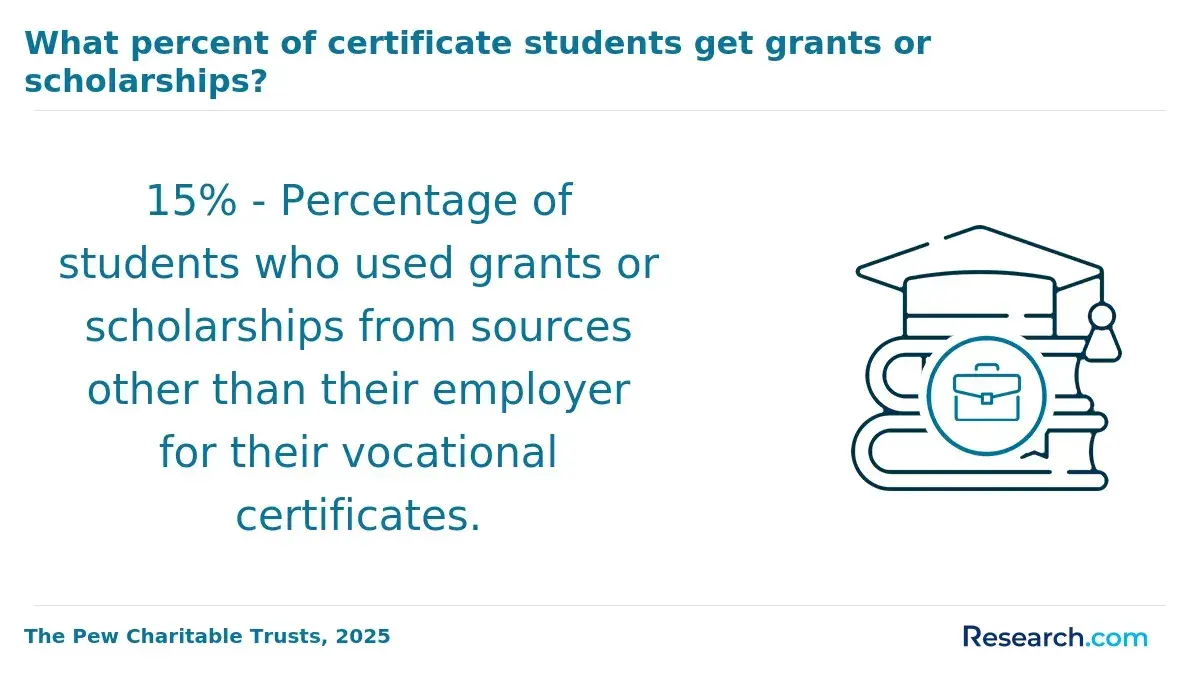
- Scholarships and Grants: Institutional scholarships and grants may be more abundant for traditional full-time campus students, especially awards connected to residential enrollment, honors programs, athletics, or campus organizations. Online students should still ask about engineering scholarships, transfer scholarships, adult learner awards, and department-based funding.
- Employer Tuition Reimbursement: Employer assistance can be especially useful for online students who remain employed while studying. Some employers reimburse tuition after successful course completion, while others require the degree to relate directly to the employee's role.
- Private Student Loans: Private loans may be available for either format if the program is accredited and the borrower meets lender criteria. Students should compare interest rates, repayment terms, cosigner requirements, and whether part-time enrollment affects eligibility.
Before enrolling, students should complete the required aid applications, ask the school for a written aid estimate, and confirm whether the program's online format affects any scholarship or grant eligibility. Students planning advanced study may also review online PhD cost considerations to understand how tuition, aid, and enrollment status can shape long-term education expenses.
Are Online Mechanical Engineering Programs as Credible as On-Campus Ones?
Online mechanical engineering programs can be as credible as on-campus programs when they meet the same academic and accreditation standards. The most important credibility factors are institutional accreditation, programmatic accreditation, curriculum rigor, faculty qualifications, lab quality, assessment standards, and employer recognition.
For engineering, ABET accreditation is especially important. Leading online programs are typically offered by regionally accredited institutions with programmatic accreditation from ABET, the gold standard in engineering education. Accreditation helps show that the curriculum, faculty, student outcomes, and continuous improvement processes meet recognized engineering standards. It can also matter for licensure pathways and employer screening.
Some universities, such as the University of Alabama and Arizona State University, offer online mechanical engineering degrees with requirements that mirror their on-campus programs. These programs may include in-person labs, proctored exams, or other measures designed to preserve academic integrity and practical learning outcomes.
Employer and institutional acceptance has also improved. A 2022 survey by Northeastern University found that 61% of HR leaders regard online credentials as equal to or better than those from traditional programs. Still, credibility is not automatic. Degrees from programs without ABET accreditation or from institutions with weak reputations may face more skepticism, especially in engineering roles where licensure, technical competence, and hands-on experience matter.
Students should verify credibility before applying by asking these questions:
- Is the institution regionally accredited?
- Is the mechanical engineering program ABET-accredited, if ABET accreditation is relevant to the student's goals?
- Does the transcript or diploma distinguish between online and on-campus delivery?
- How are labs, design projects, and exams completed?
- What employers recruit from or hire graduates of the program?
- Does the program support internships, capstone projects, and licensure preparation?
Do Employers Prefer Online vs On-Campus Mechanical Engineering Degrees?
Employers generally care more about program quality, accreditation, technical ability, project experience, and professional readiness than whether a mechanical engineering degree was completed online or on campus. That said, employer perception can vary by company, role, industry, and the reputation of the university.
Studies show that 76% of recruiters perceive four-year online degrees positively, with 92% willing to consider hiring graduates of such programs. In mechanical engineering, however, employers still look closely at evidence of applied skill. Candidates should be prepared to discuss design projects, lab work, internships, software proficiency, teamwork, and problem-solving experience.
- When an online degree is likely to be well received: The program is ABET-accredited, the university is recognized, the curriculum includes meaningful labs or projects, and the student has internship or work experience.
- When an on-campus degree may have an advantage: The role depends heavily on laboratory experience, manufacturing equipment, physical prototyping, research facilities, or campus recruiting pipelines.
- What can reduce concerns about online study: A strong portfolio, capstone project, internship record, professional references, engineering software skills, and clear evidence of teamwork in technical settings.
Remote and hybrid work have also changed how employers view online learning. Many hiring managers are now more comfortable with candidates who can work independently, communicate digitally, and manage projects without constant supervision. Online students can turn that into an advantage if they show discipline and measurable technical outcomes.
A graduate of an online mechanical engineering program said her employment prospects depended less on the delivery format and more on accreditation, projects, and experience. “The flexibility allowed me to work while studying, which enriched my understanding of real-world engineering challenges,” she explained. She found that internships and applied projects helped employers see her readiness. “Employers focused less on where I earned my degree and more on how well I could contribute from day one.”
Do Online vs On-Campus Mechanical Engineering Program Graduates Earn the Same Salaries?
Online and on-campus mechanical engineering graduates can earn comparable salaries when the programs are accredited, reputable, and similar in academic quality. Salary differences are usually driven more by location, industry, experience, internships, technical skills, employer type, and job function than by delivery format alone.
Key factors shaping salary outcomes include:
- Program accreditation and reputation: Employers prioritize degrees from ABET-accredited programs regardless of delivery mode. Accreditation can support licensure eligibility and helps employers trust that graduates met recognized engineering standards.
- Employer perception: Online degrees once faced more skepticism, but acceptance has grown as established universities expand online programs. When accreditation and institutional reputation are strong, employers are more likely to evaluate candidates based on skills and experience.
- Location and industry sector: Geography and industry often affect earnings more than program format. Mechanical engineers in research roles may earn median salaries above $125,000, while those in manufacturing often see figures closer to $100,000, independent of whether the degree was earned online or in person.
- Career support and networking: On-campus students may have stronger access to campus recruiting, alumni networks, labs, and in-person career fairs. Online students can close this gap by using virtual career services, joining professional associations, completing internships, and building a project portfolio.
- Experience and skills: Internships, co-ops, capstone projects, CAD and simulation skills, programming ability, manufacturing knowledge, and communication skills can influence salary offers. Employers reward demonstrated competence, not just the credential.
Students comparing affordable pathways may also review accredited online schools that waive application fees. The main takeaway is that the average salary for online mechanical engineering degree graduates can align closely with on-campus graduates when accreditation, school reputation, experience, and job market conditions are comparable.
How Do You Decide Whether an Online vs On-Campus Mechanical Engineering Program Is Right for You?
The right format depends on how you learn, how much structure you need, whether you can relocate, how important campus labs are to your goals, and how you plan to gain hands-on experience. Mechanical engineering is demanding in either format, so the best choice is the one you can complete successfully while building strong technical evidence for employers.
- Choose online if you need flexibility: Online programs may be a better fit if you work full time, have family responsibilities, live far from campus, or need to study without relocating. This format works best for disciplined students who can manage deadlines independently.
- Choose on campus if you want daily structure and direct access: On-campus programs may be better if you learn best through face-to-face instruction, frequent lab work, informal faculty access, peer study groups, and campus-based engineering clubs.
- Compare lab and project requirements carefully: Ask online programs exactly how labs are completed. Simulations can be useful, but some students need or prefer direct access to physical equipment, testing environments, and design spaces.
- Consider your budget beyond tuition: Online study may reduce commuting, housing, and campus costs, making it easier to find a low-cost online bachelor's degree pathway. On-campus programs may offer scholarships, assistantships, campus jobs, or resources that offset higher direct costs.
- Evaluate career access: On-campus programs can make it easier to attend career fairs, join research labs, and meet recruiters. Online students should ask about virtual career services, internship support, employer partnerships, and alumni access.
- Think about your target role: If you want research-heavy, lab-intensive, manufacturing, aerospace, robotics, or product development roles, hands-on access may be especially important. If you are already employed in a technical role, an online program may help you advance without leaving your job.
A practical decision rule: choose the program format that gives you the strongest combination of accreditation, completion feasibility, hands-on learning, career support, and affordability. Convenience alone is not enough; the program must also prepare you for engineering work.
Here's What Graduates of Online vs On-Campus Mechanical Engineering Programs Have to Say About Their Degree
- Frankie: "Finishing my online mechanical engineering degree gave me the flexibility to balance work, family, and school without stepping away from my career goals. The format forced me to become disciplined with time management and independent problem-solving, which helped me transition into a role at a leading aerospace firm. For me, online learning was not easier, but it was the path that made completion possible."
- Harold: "The on-campus mechanical engineering program gave me an immersive experience that shaped how I work with people and solve technical problems. Labs, design projects, and face-to-face collaboration with professors and classmates helped me build confidence in teamwork and leadership. That environment prepared me well for engineering work in sustainable energy."
- Robby: "The hybrid mechanical engineering degree gave me the best parts of both formats: flexible online coursework and focused on-campus sessions for practical application. That balance helped me adapt to different work environments and grow professionally. I now mentor aspiring engineers and believe flexible learning models can expand access without removing the hands-on experiences engineers need."
Other Things You Should Know About Online & On-Campus Mechanical Engineering Degree Programs
In 2027, online mechanical engineering programs often offer lower tuition costs and eliminate commuting expenses, making them more affordable. However, on-campus programs might provide better access to facilities and direct mentorship, potentially increasing their long-term value despite the higher upfront costs.
On-campus mechanical engineering programs provide direct hands-on experience with machinery and materials in well-equipped labs. Online programs use virtual simulations and occasional in-person sessions to replicate this experience, but may offer limited tactile learning, which is vital for mastering practical skills.
In 2027, online mechanical engineering programs must meet ABET accreditation standards, which include ensuring curriculum quality, faculty credentials, and access to lab resources. Accreditation confirms that the program meets industry and educational requirements, similar to on-campus programs.
References
- Is a master's in mechanical engineering worth it? | edX | edX https://www.edx.org/resources/is-a-masters-degree-in-mechanical-engineering-worth-it
- MEng in Mechanical Engineering https://online.uc.edu/masters-programs/meng-mechanical-engineering/tuition/
- Is Online Learning Effective for Engineering Courses? An In-Depth Analysis with iLearn Engineering® - iLearn Engineering® https://www.ilearnengineering.com/online-engineering-courses/is-online-learning-effective-for-engineering-courses-an-in-depth-analysis-with-ilearn-engineering
- Online vs. On-Campus B.Tech: 9 Key Things To Consider https://www.upes.ac.in/blog/advanced-engineering/btech-online-vs-on-campus
- Engineering Degrees Online or On Campus | Academic Programs https://gps.uml.edu/engineering-degrees-online-and-on-campus/
- Mechanical Engineering https://online-distance.ncsu.edu/program/master-of-science-in-mechanical-engineering/
- Mechanical Engineering Salaries https://www.mtu.edu/mechanical-aerospace/mechanical-engineering/salary/
- Online degree costs vs traditional degrees: which is more affordable? https://collegeonline.io/blogs/online-degree-costs-vs-traditional-degrees
- Mechanical Engineering Master's Online and On Campus https://und.edu/programs/mechanical-engineering-ms-meng/index.html
- The Surprising Cost of Online Education: Why 83% of Online Degrees Aren’t More Affordable https://www.nexford.edu/insights/the-surprising-cost-of-online-education-why-83-of-online-degrees-arent-more-affordable