
2027 Retail Management Degree vs. Certificate: Which Should You Choose?

Co-Founder and Chief Data Scientist
Today's students and professionals face important decisions when choosing between earning a degree or a certificate in retail management. Both paths can enhance career prospects, yet they differ in duration, depth, and cost. Degrees typically offer a comprehensive education, while certificates focus on specific skills, making each valuable depending on individual career goals and time availability.
Retail management roles forecasted to grow steadily highlight the importance of relevant training. A degree may open doors to leadership positions, while certificates can boost practical knowledge quickly for immediate job advancement. This article compares their key differences, guiding readers to select the best path for their career and lifestyle.
Key Points About Retail Management Degree vs. Certificate Programs
- A retail management degree offers comprehensive business education, enhancing long-term career growth and higher salary potential, with graduates earning approximately 15% more than certificate holders.
- Certificate programs focus on practical skills and quick entry, ideal for those seeking specialized retail knowledge without committing to multi-year studies.
- Degree programs promote strategic leadership and critical thinking, whereas certificates prioritize operational skills, influencing job roles and advancement opportunities differently.
What Are the Differences Between Retail Management Degree and Certificate Programs?
Both retail management degrees and certificate programs can open doors to rewarding career paths, yet they differ significantly in structure, depth, and time commitment. Understanding these differences allows students to select the educational track that best aligns with their professional aspirations and schedules.
Here are the key distinctions between retail management degree and certificate options:
- Career Advancement: Degrees typically provide broader foundational knowledge and are better suited for those aiming at managerial or leadership roles. Certificates offer targeted skills for immediate application, ideal for individuals seeking quick entry or specific expertise in retail operations.
- Depth of Learning: Degree programs cover comprehensive topics including business strategy, marketing, and finance, offering a well-rounded education. Certificates focus on essential, practical skills and concepts, appealing to learners needing concentrated training without extensive theory.
- Time and Commitment: Pursuing a degree requires a longer time investment, usually several years, making it suitable for students prepared for in-depth study. Certificates are shorter and more flexible, fitting professionals balancing work or other commitments who want to upskill rapidly.
- Cost Considerations: Degrees generally involve higher costs due to their length and breadth, while certificates present a more affordable alternative with less financial and time burden, attractive for those testing interest or enhancing specific competencies.
How Long Does It Take to Complete a Retail Management Degree vs. a Certificate Program?
Completion time is one of the most important factors for students deciding between a retail management degree vs. certificate. Understanding how long each pathway takes helps prospective students choose based on their career goals and available time commitment.
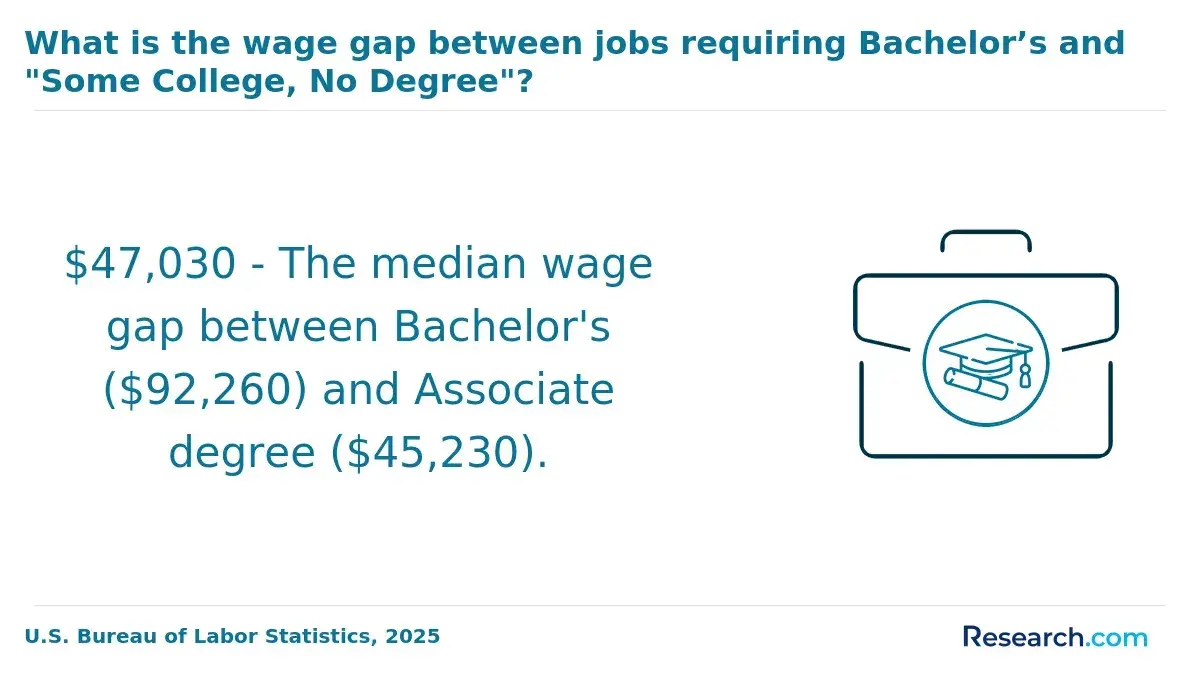
- Typical Duration: A retail management degree completion time typically ranges from two to four years of full-time study. An Associate of Applied Science (AAS) degree can take around two years, while bachelor's degrees usually require four years. In contrast, certificate programs can often be completed in one year or less, making them suitable for rapid skill acquisition.
- Flexibility: Degree programs generally demand a longer, more structured time commitment, though many schools offer part-time options. Certificate programs provide greater flexibility, with options for accelerated, online, or hybrid formats designed to accommodate working professionals. For instance, at San Diego Mesa College, a retail management certificate can be earned within a year with flexible online choices.
- Factors Affecting Timeline: How long to finish a retail management certificate program or degree varies by enrollment status, prior experience, and program structure. Part-time students usually need more time. Transfer credits and relevant work experience may reduce total study duration. Different institutions may set varying credit and pacing requirements, influencing overall completion time.
For those prioritizing speed and flexibility, certificate programs tend to be the fastest option. Those aiming for broader education and career advancement might prefer the longer degree pathway. To explore fast options, consider looking at 6 month certifications that pay well online, which include some retail management-related programs.
Can You Complete a Retail Management Degree or Certificate Entirely Online?
Online education has expanded significantly, making it possible to complete both a retail management degree and a retail management certificate or microcredential entirely online at many U.S. institutions. For example, Arizona State University and American Public University offer fully online bachelor's degrees in retail management, allowing students to complete all coursework remotely without on-campus requirements.
Similarly, Oregon State University provides a 12-credit retail management microcredential delivered exclusively online. Numerous career diplomas and certificate programs, such as those from Ashworth College and International Career Institute, are structured for complete online access with flexible study schedules designed for working professionals.
These examples illustrate the rise of online retail management degree programs that meet diverse student needs.
When choosing between degrees and online retail management certificate courses, it's important to consider factors such as hands-on training, internships, or licensure requirements. Most online retail management degrees prioritize theoretical coursework and case studies but may offer optional internships or networking through virtual platforms.
Certificates typically focus on skill-building without requiring practical training. Prospective students should evaluate their career goals: those seeking leadership roles or in-depth industry expertise might benefit from degrees with structured internships or capstone projects, while those seeking quick upskilling may prefer flexible certificates or microcredentials.
Selecting the right option depends on your need for hands-on experience, time commitment, and professional objectives. For further guidance on related programs, see this overview of easy college majors.
What Are the Admission Requirements for a Retail Management Degree vs. a Certificate Program?
Understanding the distinction between retail management degree admission requirements and retail management certificate program prerequisites is crucial for prospective students. Admission requirements help determine which educational path aligns with your background and career goals.
Admission Requirements for Retail Management Degree Programs
- Educational Background: Applicants must have a high school diploma or GED. For bachelor's programs, many universities require completion of specific high school competency courses.
- Academic Performance: A minimum GPA is often mandated; for example, Arizona State University typically expects a 3.0 unweighted high school GPA in competency courses and may require a transfer GPA of 3.0.
- Standardized Test Scores: Some degree programs require SAT or ACT scores, with benchmarks such as an SAT score of 1120 for residents or an ACT score of 22 at ASU.
- General Education Coursework: Candidates must complete general education classes in addition to retail management-specific courses.
- Additional Requirements: Letters of recommendation, personal statements, or interviews may be required but are less common in public universities offering retail management degrees.
Admission Requirements for Retail Management Certificate Programs
- Educational Background: Most certificate programs do not require a high school diploma or prior college coursework, making them accessible to working professionals and entry-level employees.
- Application Process: Admission is generally open enrollment; applicants typically submit an application and sometimes pay an application fee.
- Course Prerequisites: There are rarely prerequisites, though some programs may recommend basic math or English skills to enhance success.
- Work Experience: Some certificates are designed for current retail employees and may recommend-but not require-industry experience.
- Official Request: Students must file an official request with the admissions office by the deadline to receive their certificate upon completion.
Degree programs emphasize academic metrics and a structured curriculum, while certificate programs focus on accessibility and flexibility. For those considering continuing education, exploring options such as the fastest online masters degree provides additional pathways beyond certificates and bachelor's degrees.
How Many Credits Do You Need to Complete a Retail Management Degree vs. a Certificate?
Knowing how many credits are required for retail management programs helps students plan their educational path and time commitment effectively. Comparing the credit expectations for degrees versus certificates clarifies the scope of study and program length.
Here is a breakdown of typical credit requirements for retail management credentials:
- Certificate: Usually requires 24 to 30 credits, designed for quick completion often within one year of full-time study.
- Associate degree: Generally involves about 60 credits, requiring approximately two years of full-time coursework combining general education and retail-specific classes.
- Bachelor's degree: Approximately 120 credits, usually completed over four years, covering a broad curriculum beyond retail management.
One student I spoke with, who opted for the retail management certificate, shared his experience balancing studies with work. "The credit load felt manageable," he said, explaining that concentrating on fewer credits allowed him to focus deeply on practical retail skills without the pressure of broader academic requirements.
He described the accelerated pace as challenging but motivating, especially since completing the certificate quickly boosted his confidence and employability. Reflecting on his path, he appreciated choosing the certificate over a degree because it fit his immediate career goals and schedule, saying, "It was a practical decision that gave me solid training without dragging out the process."
What Is the Average Tuition for a Retail Management Degree vs. a Certificate?
Tuition costs are a key consideration when choosing between a retail management degree and a certificate, as they directly affect your overall financial investment and return on that investment. Comparing tuition ranges for each option can help you make a more informed choice tailored to your budget and career goals.
Below is a detailed comparison highlighting the average tuition for retail management degree programs versus certificate programs.
Average Tuition for Retail Management Degree Programs
- Tuition Range: The average tuition for retail management degree programs in the United States is approximately $10,827 per year for in-state students and $30,725 per year for out-of-state students, reflecting typical costs for the 2024-2025 academic year.
- Public vs. Private Institutions: Public universities generally offer lower tuition rates for in-state students, while private colleges tend to have higher fees, sometimes exceeding $30,000 annually.
- Program Length: Bachelor's degree programs usually span four years, meaning total tuition can range from about $43,308 to over $122,900 depending on residency and institution type.
- Graduate Degree Costs: Graduate-level retail management programs average around $31,657 per year in tuition, representing a higher investment for advanced credentials.
- Online vs. On-Campus: Online retail management degrees may offer reduced per-credit tuition or additional fees, but overall costs typically stay within the same general range as traditional programs.
Average Tuition for Retail Management Certificate Programs
- Tuition Range: The retail management certificate program cost comparison shows these programs are much more affordable, often ranging from $1,000 to $4,000 total, especially at community colleges and online providers.
- Program Length: Most certificates can be completed in less than a year with 12-18 credits, which helps keep tuition costs low.
- Institution Type: Community colleges offer the lowest tuition, particularly for in-district students, while private and for-profit providers may charge more.
- Online Options: Many certificates are available fully online, usually with flat-rate tuition that makes them accessible for working professionals seeking quick credentialing.
- Additional Fees: Some programs charge extra for materials or technology, but these costs remain significantly lower than degree programs.
For students interested in further advancing their education in a shorter timeframe, exploring 1 year PhD programs online free can provide insight into rapid doctoral pathways.
Breakdown of Private Fully Online For-profit Schools

Can You Transfer Certificate Credits Toward a Retail Management Degree Later On?
Yes, you can often transfer certificate credits toward a retail management degree, though it depends on several factors. Transfer is generally possible at accredited community colleges and universities with partnerships, such as those recognized by organizations like the Western Association of Food Chains.
Institutional policies play a crucial role, as each school sets its own criteria, with credits most likely accepted between partnered institutions. Additionally, only courses relevant to the degree program and from accredited institutions are usually eligible for credit transfer.
Key considerations include transfer limits, as some schools cap the number of credits accepted-Cal Poly Humboldt, for example, allows up to 70 community college units, including retail management credits. Grade requirements often demand a minimum passing grade, typically a C or above, for credits to qualify.
Since policies can change, it's essential to confirm transferability with academic advisors before enrolling to avoid surprises. Taking these steps can help students maximize their educational investment and progress efficiently.
A student who pursued a retail management degree after completing a certificate program shared how navigating credit transfers felt overwhelming at first. She recalled, "I wasn't sure which courses would count or how many credits I'd get."
By reaching out to the academic advising office, she discovered that most of her certificate courses transferred seamlessly, except for a few that didn't align closely with the bachelor's curriculum. This confirmation gave her confidence to continue her studies, making her transition smoother and reaffirming the value of thorough planning.
She reflected, "Understanding the transfer process early saved me time and made me feel more prepared for the next step."
Are Certificate Programs Accredited the Same Way as Retail Management Degrees?
Certificate programs in retail management are not accredited in the same way as degree programs. Degrees like associate or bachelor's in retail management are typically offered by accredited universities or colleges, with accreditation from regional or national agencies such as the Higher Learning Commission or the Western Association of Schools and Colleges.
This accreditation guarantees the program meets established academic and institutional standards accepted by employers and other academic institutions. Certificate programs differ widely; some are accredited by industry-specific bodies like the Western Association of Food Chains and offered through community colleges, while others may be provided by private organizations without formal regional or national accreditation.
This variation can affect how certificates are recognized or transferred compared to accredited degree programs.
Accreditation is important because it signals quality and trustworthiness, impacting a student's ability to transfer credits, gain employer acceptance, and qualify for financial aid. When assessing programs, students should verify that the accreditation is acknowledged by recognized bodies such as the U.S. Department of Education or the Council for Higher Education Accreditation.
It's advisable to choose certificates and degrees from institutions with well-established, industry-recognized accreditation to maximize educational and professional benefits. Always confirm the legitimacy of a program's accreditation before committing to enrollment to ensure the best outcomes.
What Jobs Can You Get with a Retail Management Degree vs. a Certificate?
Both retail management degrees and certificates provide pathways into the retail industry, though they typically prepare graduates for different levels of responsibility. While a degree often opens doors to higher-level positions involving strategic oversight, certificates tend to focus on practical skills for entry-level or supervisory roles.
Below is a comparison of career options associated with each credential.
Jobs You Can Get with a Retail Management Degree
- Store manager: Oversees all daily store operations, including staff management and sales performance.
- Assistant store manager: Supports the store manager by handling employee coordination and operational tasks.
- Retail operations manager: Manages multiple store locations, ensuring consistent policies and procedures.
- Merchandise planner: Develops strategies for inventory and product placement to maximize sales.
- District or regional manager: Supervises several stores across a geographic area, focusing on growth and efficiency.
Jobs You Can Get with a Retail Management Certificate
- Sales associate: Engages with customers on the sales floor, assisting with product selection and transactions.
- Shift supervisor: Leads team members during shifts, ensuring smooth operations and customer service.
- Customer service representative: Addresses customer inquiries and resolves complaints promptly.
- Inventory coordinator: Manages stock levels and coordinates restocking efforts.
- Visual merchandiser: Designs store layouts and product displays to attract shoppers.
What Is the Average Starting Salary for a Certificate vs. Retail Management Degree Graduates?
Salary potential often differs significantly between retail management certificate holders and graduates with a bachelor's degree in retail management. Understanding these differences can help prospective students make informed decisions about their educational paths and career goals.
Below is a side-by-side comparison of the average starting salary for a certificate versus retail management degree graduates, along with key factors influencing these figures and career outlooks.
- Typical Salary Range: The average salary with a retail management certificate generally falls between $35,000 and $45,000 per year, with common entry-level roles including sales associate, shift supervisor, or assistant store manager.
- Retail Management Degree Starting Salary in the US: Graduates with a bachelor's degree in retail management can expect starting salaries between $45,000 and $60,000 per year, typically qualifying for positions such as store manager, department manager, or management analyst.
- Experience: Previous retail work experience, even in non-management roles, often leads to higher starting pay for both certificate and degree holders.
- Industry: Degree holders working in luxury retail, e-commerce, or specialty sectors commonly receive higher starting salaries than those in more general retail environments.
- Location: Salaries tend to be higher in urban centers and states with higher living costs like California and New York.
- Career Outlook: While certificate holders can quickly enter supervisory roles, bachelor's degree graduates generally have broader advancement opportunities and long-term earning potential, with some management positions exceeding $80,000 to $120,000 annually.
For students considering further education, exploring schools that offer dual degree programs can provide valuable options for expanding career opportunities and salary potential.
Here's What Graduates of Retail Management Programs Say About Their Degree or Certificate
- Leonard: "Pursuing the retail management certificate was a fast and focused journey for me. It offered practical skills that I could immediately apply at work without the long commitment of a full degree. The cost was definitely more manageable, making it a smart choice for anyone looking to boost their career quickly. "
- Jairo: "Choosing the retail management degree program was a thoughtful decision because I valued a comprehensive learning experience that covers theory and practice extensively. Although it took longer and cost more, the depth of knowledge and the career opportunities it opened up made it worthwhile. I learned to appreciate balancing pace with thoroughness. "
- Charles: "I completed both the retail management certificate and degree programs, which gave me a unique perspective on their differences. The certificate allowed me to gain quick insights and save on costs initially, while the degree provided a deeper understanding and better long-term career options. If time and finances permit, combining both can be very beneficial. "
Other Things You Should Know About Retail Management Degrees
Retail management certificates are often recognized by employers as evidence of specialized knowledge and practical skills in retail operations. However, they generally hold less weight than a degree, which covers broader business and management concepts. Certificates can help candidates qualify for entry-level or support roles, but higher-level positions often require a degree.
Yes, many institutions allow you to transfer credits from a retail management certificate to a degree program, but it depends on the school's policies. It's crucial to consult with the academic advisor to understand specific transfer options and ensure that credits align with the degree requirements.
A retail management degree in 2027 typically includes opportunities such as industry conferences, internships, and alumni events, which help students build valuable professional networks. Access to guest lectures and mentorship programs also fosters connections within the retail sector.
References
- Retail Management | Maricopa Community Colleges https://www.maricopa.edu/degrees-certificates/business-entrepreneurialism-management/retail-management-3048-aas
- 14 Best Retail Management Certifications to Boost Skills in 2025 | The Retail Exec https://theretailexec.com/career/best-retail-management-certifications/
- Best Certifications for Retail Managers in 2025 (Ranked) https://www.tealhq.com/certifications/retail-manager
- Retail Management https://www.tmcc.edu/business/retail-management
- What Is Accreditation? Guide to Accreditation and Alternatives https://www.coursera.org/articles/what-is-accreditation
- Retail Management https://www.alextech.edu/programs/retail-management/tuition
- What Can You Do With a Retail Management Degree? (Careers) https://www.allbusinessschools.com/specialties/retail-management-career/
- Certificate, Retail Management | UT Online | Utah Tech University https://online.utahtech.edu/programs/retail-management-certificate/
- Retail Management Certificate Program https://www.cnm.edu/programs/cnm-my-way/retail-management


