
2027 What Does a Dental Receptionist Do: Responsibilities, Requirements, and Salary

Co-Founder and Chief Data Scientist
A dental receptionist plays a vital role in keeping a dental office organized and welcoming. From managing patient appointments to handling billing and communication, they ensure every visit runs smoothly.
This guide explains the key responsibilities, necessary qualifications, and typical salary of a dental receptionist. It’s designed to help readers understand what the job involves, what skills are needed to succeed, and how to pursue a career in this essential administrative role within the dental field.
Key Things You Should Know About What a Dental Receptionist Does
- The average salary for a dental receptionist is around $46,528 per year, depending on experience and location.
- Strong communication, organization, and multitasking skills are essential for managing patients and office operations effectively.
- While a degree isn’t required, having a background in business administration can enhance job prospects and career growth opportunities.
What are the main duties of a dental receptionist?
A dental receptionist performs a variety of administrative and customer service tasks that keep a dental practice running smoothly. Their role involves balancing patient care with efficient office management. Here are the main duties they handle every day:
- Scheduling and managing appointments: They book, confirm, and adjust patient appointments to keep the office calendar organized. Maintaining an efficient schedule helps reduce waiting times and ensures the dental team operates smoothly.
- Welcoming and assisting patients: They greet patients warmly, check them in, and answer any questions about their visit. A friendly and professional approach helps create a positive first impression and builds patient trust.
- Handling phone calls and emails: They respond to inquiries, confirm appointments, and relay important information between patients and staff. Effective communication ensures no messages are missed and patient needs are promptly addressed.
- Processing payments and insurance claims: They collect payments, verify insurance coverage, and submit claims for reimbursement. Accurate billing and record-keeping prevent errors and maintain patient satisfaction.
- Maintaining patient records: They update and organize patient files, ensuring all information is accurate and confidential. Proper record management supports compliance with privacy laws and helps the dental team access vital data quickly.
- Coordinating with dental staff: They communicate with dentists, hygienists, and assistants to ensure patient flow and task coordination. This teamwork helps the entire office run efficiently throughout the day.
For those looking to advance beyond the front desk, pursuing additional education — such as one of the shortest dental assistant associates online programs — can be a great next step.
These programs allow dental receptionists to expand their skills, move into clinical roles, and increase their earning potential without spending years in school. Many online options are flexible and designed for working professionals, making it easier to balance current job responsibilities while preparing for career growth in the dental field.
Where do dental receptionists typically work (private practices, clinics, hospitals)?
Dental receptionists can work in a variety of healthcare settings, each offering different experiences and responsibilities. Their work environment often shapes the pace, patient volume, and nature of their daily tasks. Here’s where dental receptionists typically work:
- Private dental practices: They often work in small to mid-sized offices that provide general or specialized dental care. In this setting, dental receptionists usually build close relationships with regular patients and manage both administrative and customer service duties.
- Dental clinics: These facilities may serve a larger number of patients or focus on community dental health. Receptionists in clinics handle higher appointment volumes and coordinate care among multiple dental professionals.
- Hospitals and medical centers: Some hospitals have dedicated dental departments that require front-desk support. Dental receptionists here assist with patient scheduling, record management, and coordination between departments.
- Specialty dental offices: They may work in practices focusing on orthodontics, oral surgery, or pediatric dentistry. In these environments, receptionists often manage more specialized appointment types and patient care needs.
- Educational or public health settings: Dental schools and public health programs also employ receptionists to manage patient flow and records. These roles often involve supporting student dentists or community outreach initiatives.
In general, many industries require receptionists, and the salary of a dental receptionist often depends on the type of workplace they are employed in. Those working in healthcare and social assistance, such as private dental practices or clinics, earn the highest average hourly wage at $18.47, reflecting the specialized nature of dental care and patient management.
The chart below shows the average hourly salary for receptionists in various industries:
What kind of communication is expected between a dental receptionist and patients?
Effective communication is one of the most important parts of a dental receptionist’s role, as they serve as the link between patients and the dental team. Clear, professional, and compassionate communication helps create a positive experience for every patient. Here’s what kind of communication is typically expected:
- Greeting and welcoming patients: They greet patients warmly upon arrival and make them feel comfortable. A friendly first interaction helps reduce anxiety and sets a positive tone for the visit.
- Explaining procedures and office policies: They clearly communicate appointment procedures, payment processes, and office policies. This helps patients understand what to expect and prevents misunderstandings.
- Managing appointment reminders and follow-ups: They call, text, or email patients to confirm appointments and remind them of upcoming visits. Consistent communication ensures patients stay on schedule and reduces missed appointments.
- Handling questions and concerns: They answer patient inquiries about treatments, insurance, or billing with professionalism and accuracy. When necessary, they refer complex questions to the appropriate dental staff member.
As dental receptionists gain experience, some choose to advance their careers by training for certified dental assistant jobs. These positions offer more hands-on involvement in patient care, from preparing exam rooms to assisting dentists during procedures. Earning certification can open doors to higher-paying roles and greater responsibility within a dental practice.
What qualifications are needed to become a dental receptionist?
Becoming a dental receptionist doesn’t usually require an advanced degree, but certain qualifications and skills can make candidates more competitive. Employers look for a mix of education, technical ability, and interpersonal strengths to ensure success in the role. Here are the key qualifications needed to become a dental receptionist:
- High school diploma or equivalent: Most employers require at least a high school diploma as a basic entry-level qualification. Strong performance in subjects like English, math, and computer skills can be beneficial.
- Office or administrative experience: Previous experience in customer service, office administration, or healthcare settings is often preferred. This background helps candidates handle scheduling, filing, and patient interactions efficiently.
- Knowledge of dental or medical terminology: Understanding common dental procedures and insurance terms allows receptionists to communicate more effectively with patients and staff. Some employers provide on-the-job training in this area.
- Computer and software proficiency: Familiarity with dental management systems, scheduling software, and electronic health records is essential. Basic skills in word processing, email, and spreadsheets are also important.
- Strong communication and organizational skills: Clear communication, professionalism, and attention to detail are key to managing appointments and patient information accurately. These soft skills help ensure smooth daily operations and positive patient experiences.
- Optional education or certification: While not required, a certificate or degree in business administration or medical office management can enhance job prospects. Earning a Certified Medical Administrative Assistant (CMAA) certification is another great option to demonstrate professionalism and strengthen your credentials.
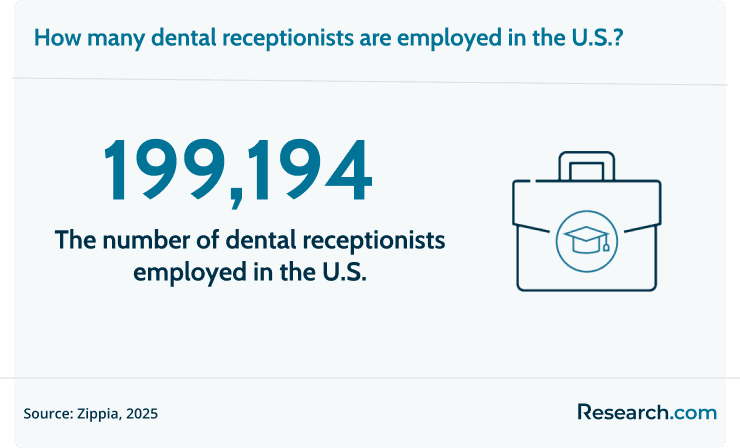
There are currently about 199,194 dental receptionists employed across the United States, reflecting the essential role they play in the healthcare system. This large number highlights the steady demand for skilled administrative professionals who can manage patient communication, scheduling, and recordkeeping in dental offices.
What technical or computer skills are essential for success?
Technical and computer skills are essential for dental receptionists, as much of their work involves managing digital records, scheduling systems, and patient communication tools. These skills help ensure efficiency, accuracy, and smooth coordination within the dental office. Here are the key technical and computer skills needed for success:
- Dental practice management software proficiency: Dental receptionists should be comfortable using programs like Dentrix, Eaglesoft, or Open Dental. These systems are used for scheduling, billing, charting, and maintaining patient records.
- Electronic health record (EHR) management: Knowing how to update and organize electronic patient files is crucial for maintaining accurate and accessible data. Proper record handling ensures compliance with privacy and healthcare regulations.
- Insurance and billing systems: Familiarity with dental billing software and electronic claims submission is highly valuable. These tools help streamline insurance verification, payment processing, and account management.
- General office software: Proficiency in Microsoft Office or Google Workspace applications (such as Word, Excel, and Outlook) is important for daily administrative tasks. These programs support communication, documentation, and reporting.
- Communication technology: Dental receptionists often use email platforms, phone systems, and text reminder tools to manage patient communication. Clear, efficient use of these technologies enhances patient satisfaction and office productivity.
- Optional certifications: Obtaining a Microsoft Office Specialist (MOS) certification or similar credential can showcase advanced computer skills and strengthen job qualifications.
How much does a dental receptionist typically earn?
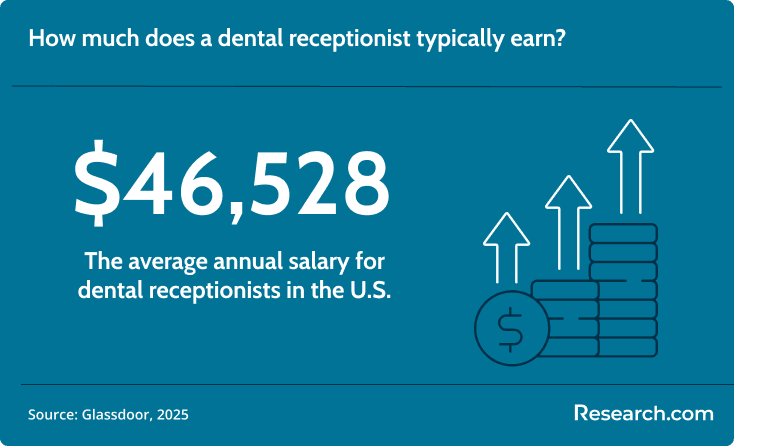
The average annual salary for a dental receptionist is about $46,528, though this figure can vary based on factors like location, experience, and the type of dental practice. Those employed in larger clinics or specialized dental offices may earn slightly higher wages due to increased responsibilities and patient volume. Entry-level receptionists typically start on the lower end of the pay scale, but salaries often rise with experience and strong performance.
In addition to their base pay, many dental receptionists receive benefits such as health insurance, paid time off, and retirement contributions, especially in full-time roles. Overall, this position offers a dependable income, job stability, and room for professional growth within the dental and healthcare industries.
Exploring careers with an associate degree in dental assisting can open the door to a wide range of opportunities in the dental field. Graduates can work as dental assistants, office coordinators, or even advance into management and specialized clinical roles. This degree provides both the technical skills and foundational knowledge needed to succeed in a professional dental environment.
What factors influence a dental receptionist’s salary?
Several factors can influence how much a dental receptionist earns, from their level of experience to the type of workplace they’re in. Understanding these factors can help candidates gauge their earning potential and plan for career growth. Here are the key elements that affect a dental receptionist’s salary:
- Experience level: Receptionists with several years of experience typically earn higher wages than those new to the field. Experience often leads to greater efficiency, stronger patient communication, and more administrative responsibilities.
- Location: Salaries tend to be higher in urban areas or regions with a higher cost of living. Dental receptionists in large cities often earn more than those in rural or suburban settings.
- Type of dental practice: Working in specialized practices such as orthodontics or oral surgery can lead to higher pay. These settings may require more complex scheduling and patient coordination skills.
- Education and training: While a degree isn’t required, additional education or professional development can improve earning potential. Employers may value candidates with business or healthcare administration backgrounds.
- Work hours and employment type: Full-time receptionists usually earn more than part-time or temporary staff. Some practices may also offer overtime pay or performance-based bonuses.
- Office size and patient volume: Larger practices with more patients and staff often offer higher pay to match the increased workload. Managing a busy front desk typically comes with greater responsibility and compensation.
For dental assistants aiming to take the next step in their careers, enrolling in a dental assistant to dental hygienist bridge program online offers a convenient and efficient path forward. These programs allow working professionals to build on their existing skills while earning the credentials needed to become licensed dental hygienists.
Online bridge programs provide flexibility for those balancing work and study, without sacrificing quality education or clinical training. This pathway opens doors to higher salaries, expanded responsibilities, and greater career satisfaction in the dental field.
Are there opportunities for career advancement in dental administration?
Yes, there are several opportunities for career advancement in dental administration, especially for those who gain experience and develop strong leadership or technical skills. Many dental receptionists go on to take on higher-level administrative or managerial roles. Here are some common career paths for advancement:
- Office manager: With experience, a dental receptionist can move into an office management role, overseeing staff, finances, and daily operations. This position often comes with higher pay and greater responsibility.
- Treatment coordinator: This role focuses on patient care coordination, explaining treatment plans, and handling insurance and payment options. It requires strong communication and organizational skills.
- Practice administrator: In larger dental practices, experienced professionals may become practice administrators, managing budgets, compliance, and overall business performance. This position blends administrative expertise with leadership.
- Insurance or billing specialist: Those who enjoy the financial side of the job can specialize in insurance claims and patient billing. This role offers opportunities to work in larger healthcare networks or corporate offices.
- Regional or corporate dental administrator: Some professionals advance to multi-office or corporate management positions, overseeing operations for several dental practices. This career path is ideal for those interested in leadership and business growth.
For dental receptionists or office managers looking to expand their career potential, pursuing the best online MBA in business analytics can be an excellent next step. This degree equips professionals with advanced skills in data interpretation, operational efficiency, and strategic planning — all of which are valuable in managing a modern dental practice. With flexible online options, it’s possible to continue working while earning the degree, making it ideal for busy dental professionals.
How can ongoing training or certification improve career prospects?
Ongoing training and professional development can significantly enhance a dental receptionist’s career prospects by improving their skills, confidence, and overall value to employers. Training in areas like dental software, billing systems, or patient communication helps receptionists stay up to date with industry standards and technologies. Many practices prefer employees who demonstrate initiative and a commitment to learning, as it shows reliability and a willingness to adapt to new procedures or office systems.
Certifications or advanced courses can also open doors to higher-paying roles within dental administration. By gaining specialized knowledge in office management, insurance processing, or healthcare administration, a dental receptionist can qualify for positions such as office manager or treatment coordinator. Continuous learning not only boosts employability but also helps professionals build long-term, rewarding careers in the dental field.
For dental receptionists interested in advancing their administrative and leadership skills, enrolling in an accelerated business communication degree online can be a smart move. This program helps professionals strengthen their ability to communicate effectively with patients, colleagues, and management — a vital skill in any dental office. The accelerated format allows students to earn their degree faster while balancing work and personal responsibilities.
What is the job outlook for dental receptionists and similar roles?
The job outlook for dental receptionists is steady, reflecting the ongoing need for administrative support in dental offices nationwide. Despite limited overall employment growth, about 128,500 openings for receptionists are projected each year, on average, over the coming decade. These openings primarily result from workers retiring or moving into other positions, ensuring a consistent flow of opportunities.
The demand for skilled dental receptionists remains strong as dental practices continue to rely on efficient front-desk management to maintain smooth patient operations.
Employment data also shows gradual, consistent growth in this field over recent years. This upward trend demonstrates the resilience of the profession, even amid shifts in the broader job market.
Overall, while explosive growth isn’t expected, the role of dental receptionist continues to offer reliable job stability and long-term career potential within healthcare administration.
Here’s What Dental Receptionists Have to Say About Their Careers
- June: "I love being the welcoming face of our practice; seeing a nervous patient relax just from a warm greeting is incredibly rewarding. My job involves juggling complex schedules and insurance claims, which keeps my problem-solving skills sharp, but the best part is truly making a stressful dental visit a positive experience for people."
- Demi: "The administrative side of being a dental receptionist is surprisingly engaging—I manage the patient database and master new billing software every year, which provides great professional development. While the work is detail-oriented, the highlight is the deep connection I build with our long-term patients and witnessing their confidence grow with a healthy smile."
- Lou Ann: "Being the communication hub in the dental office is incredibly fast-paced and never dull, offering constant opportunities to lead the flow of the entire practice from the front desk. The high level of multitasking is exciting, but nothing beats the feeling of being an indispensable part of a team that helps the community achieve better health."
Key Findings:
Key Findings
- There are approximately 199,194 dental receptionists employed across the United States, reflecting strong and steady demand in the dental field.
- The average annual salary for a dental receptionist is about $46,528, varying based on experience, location, and office type.
- Around 95.1% of dental receptionists are women, while 4.9% are men, showing a predominantly female workforce in this profession.
- The role offers opportunities for career advancement into positions such as office manager, treatment coordinator, or practice administrator.
- Despite modest employment growth, there are projected to be about 128,500 receptionist job openings each year on average over the next decade, ensuring steady opportunities in the field.
Other things you should know about being a dental receptionist
To become a dental receptionist in 2027, you typically need a high school diploma and on-the-job training. Some dental practices may prefer candidates with certification in dental office administration from a recognized body or relevant experience in a dental setting.
Most dental receptionists work full-time schedules, typically ranging from 35 to 40 hours per week, though some positions may offer part-time hours. Workdays often align with the dental office’s patient hours, which may include early mornings, evenings, or occasional weekends. Schedules can vary depending on the size and type of practice — for instance, larger clinics may require reception coverage across multiple shifts. Overall, the role offers a structured schedule with a healthy work-life balance compared to many other healthcare positions.
References
- Dental Post. (n.d.). Dental Receptionist FAQs. Dental Post
- Glassdoor. (2025). Salary: Dental Receptionist in the United States. Glassdoor
- U.S. Bureau of Labor Statistics. (2025). Occupational Outlook Handbook: Receptionists. U.S. BLS
- Zippia. (2024). Dental receptionist demographics and statistics in the US. Zippia


