
2027 What Does a Director of Operations Do: Responsibilities, Requirements, and Salary

Co-Founder and Chief Data Scientist
Moving from management into operations leadership is a shift from supervising work to designing the systems that make an organization perform. A Director of Operations is often the person responsible for turning strategy into repeatable processes, measurable results, and coordinated execution across departments.
This guide is for managers, business professionals, and career changers evaluating whether the Director of Operations path fits their skills and long-term goals. It explains what the role does, how it differs from similar titles, which KPIs matter, what education and experience employers typically expect, and how salary and job outlook compare for this senior leadership track. According to the U.S. Bureau of Labor Statistics, employment in this field is projected to grow by 4% through 2034, reflecting continued demand for leaders who can improve efficiency, control costs, and keep organizations scalable.
Key Things You Should Know about What a Director of Operations Does
- The Director of Operations is a senior executive who ensures company-wide efficiency by aligning day-to-day management with long-term business goals, leading cross-departmental teams, and driving continuous improvement through data-informed strategies and KPIs.
- Most directors hold a bachelor’s in business administration or management, often supported by an MBA or certifications such as PMP or Lean Six Sigma; the role typically requires 10–20 years of progressive experience in operations or leadership.
- As of 2027, Directors of Operations earn an average of $107,000–$109,000 annually, with top salaries exceeding $200,000 in high-demand industries like technology, healthcare, and finance; employment for top executives is projected to grow 4% through 2034, reflecting steady national demand.
What is the Director of Operations' role, and what value does this strategic position bring to a business?
A Director of Operations is a senior leader responsible for making sure a company’s people, processes, budgets, systems, and performance standards work together. The role sits between executive strategy and daily execution: executives set the direction, while the Director of Operations builds the operating model that helps the organization deliver on it.
In practice, this means the DOO is not simply “in charge of operations.” The position is accountable for improving how work gets done across teams, removing bottlenecks, managing resources, tracking results, and making operational decisions that support growth, profitability, customer experience, and compliance.
Core responsibilities
- Develops and implements operational strategies that improve productivity, quality, cost control, and service delivery.
- Leads and coordinates cross-functional work across departments such as HR, finance, logistics, customer service, production, and administration.
- Oversees budgets, staffing plans, resource allocation, vendor relationships, procurement, and regulatory or policy compliance.
- Designs, documents, and improves workflows so the organization can operate consistently as demand grows.
- Uses performance data and key performance indicators to identify inefficiencies, set targets, and guide continuous improvement.
- Reports to executive leadership and translates high-level business goals into practical operating plans, timelines, and accountability systems.
Strategic value to a business
- Better execution: The DOO helps ensure that company priorities are not stuck in planning documents but are carried out through clear processes and responsible teams.
- Scalability: Strong operations leadership allows a business to grow without relying on ad hoc decisions, duplicated work, or inconsistent standards.
- Cost discipline: By improving workflows, staffing models, vendor terms, and resource use, the DOO can reduce waste and protect margins.
- Risk control: The role supports compliance, continuity planning, quality control, and operational resilience.
- Cross-functional alignment: A Director of Operations often serves as the link between departments and senior leadership, helping teams understand priorities and measure progress consistently.
The strongest Directors of Operations combine business judgment with practical execution. They understand strategy, but they also know how policies, schedules, handoffs, systems, and frontline constraints affect performance.
What is the primary difference between a Director of Operations and an Operations Director?
The titles Director of Operations and Operations Director are often used interchangeably, and in some companies they mean the same thing. When there is a difference, it usually comes down to scope, reporting level, and how much strategic authority the role carries.
A Director of Operations is more commonly positioned as a broad senior leader responsible for operations across several departments, business units, or locations. This role usually focuses on aligning operating systems with companywide goals, managing budgets, improving processes, and reporting to the COO, CEO, or another executive leader.
An Operations Director may also be senior, but the title is sometimes used for a leader with a narrower operational area, such as a region, plant, service line, logistics function, or department. In that setting, the Operations Director may focus more on execution, staffing, production targets, service delivery, or compliance within a defined business segment.
| Comparison point | Director of Operations | Operations Director |
| Typical scope | Often companywide or multi-department | Often department, region, unit, or function specific |
| Primary emphasis | Strategy-to-execution alignment | Operational execution and performance management |
| Common reporting line | May report to COO, CEO, or senior executive | May report to a Director of Operations, VP, COO, or business unit leader |
| Decision authority | Usually broader budget, process, and organizational influence | May have strong authority within a narrower area |
The most reliable way to interpret either title is to read the job description carefully. Look for the number of teams managed, budget ownership, reporting structure, decision-making authority, and whether the role is expected to shape strategy or primarily execute an existing operating plan.
Professionals trained in organizational leadership or a Christian leadership program online may find that their leadership, ethics, and team-development training can apply to both titles, especially in organizations that value mission-driven management.
What are the most important day-to-day responsibilities of a Director of Operations?
A Director of Operations spends much of the day making sure people, systems, and priorities stay aligned. The work is usually a mix of performance review, problem solving, team coordination, resource decisions, and longer-term process improvement.
Common daily responsibilities
- Reviewing operational performance: Checks dashboards, reports, service levels, production metrics, financial indicators, or customer feedback to spot issues early.
- Coordinating department leaders: Meets with managers across functions to remove obstacles, clarify priorities, and keep work moving.
- Managing budgets and resources: Reviews staffing needs, procurement requests, vendor performance, spending trends, and resource allocation.
- Improving processes: Identifies delays, duplicated work, quality problems, or communication gaps and develops practical fixes.
- Maintaining compliance and standards: Ensures teams follow company policies, safety expectations, industry regulations, and internal quality requirements.
- Handling escalations: Steps in when operational problems affect customers, revenue, deadlines, employees, or business continuity.
- Communicating with executives: Reports progress, risks, and resource needs to senior leadership in a clear and decision-ready format.
What the role looks like in practice
A DOO may start the morning reviewing missed delivery targets, meet with finance to discuss cost overruns, work with HR on staffing shortages, evaluate a vendor issue, and end the day presenting an operational improvement plan to executives. The role requires switching between detailed analysis and high-level judgment without losing sight of business priorities.
Communication skill is especially important because operational problems often cross departmental boundaries. Graduates who understand messaging, stakeholder management, and organizational communication—such as those preparing for jobs for strategic communications majors—may be well positioned to manage the cross-functional demands of operations leadership.
What operational KPIs is a DOO accountable for tracking and improving?
A Director of Operations is usually accountable for operational KPIs, or Key Performance Indicators, that show whether the organization is efficient, reliable, profitable, and capable of meeting customer and stakeholder expectations. The exact KPIs vary by industry, but most fall into a few major categories.
Core operational KPI categories
| KPI category | Examples | What it tells the DOO |
| Process efficiency | Processing time, production cycle time, machine downtime, labor utilization | Whether work is moving through the system quickly and with minimal wasted capacity |
| Quality | Defect rate, first-pass yield (FPY), rework rates, customer complaints | Whether the organization is delivering consistent, accurate, and acceptable outputs |
| Productivity | Overall equipment effectiveness, throughput, team productivity index, staff time utilization | How much useful work is produced relative to time, labor, equipment, or cost |
| Cost management | Cost reduction percentage, cost of goods sold (COGS), operational costs | Whether operations are financially sustainable and improving margin performance |
| Delivery and fulfillment | On-time delivery rate, order fulfillment rate | Whether the business can meet customer commitments reliably |
| Inventory and waste | Inventory turnover, scrap rate | Whether materials, stock, and production resources are being used efficiently |
| Employee and team health | Employee engagement score, retention rate, training hours per employee, staff turnover rate | Whether the workforce is stable, capable, and supported |
| Customer satisfaction | Customer Satisfaction Score (CSAT), Net Promoter Score (NPS) | Whether operational performance is translating into a positive customer experience |
How a DOO should use KPIs
KPIs are useful only when they lead to better decisions. A strong Director of Operations does not track every possible metric. Instead, they identify the few measures that connect directly to the organization’s goals, then review them consistently, investigate root causes, and hold teams accountable for improvement.
For example, a falling on-time delivery rate may point to staffing shortages, supplier delays, poor forecasting, technology limitations, or unclear handoffs between departments. The DOO’s job is to determine the cause, not just report the number.
Professionals moving from analytical fields may adapt well to this part of the role. For example, those exploring careers with a biochemistry degree often bring habits of precision, data interpretation, and structured problem solving that can be valuable in operations management.
What is the required educational background to become a successful Director of Operations?
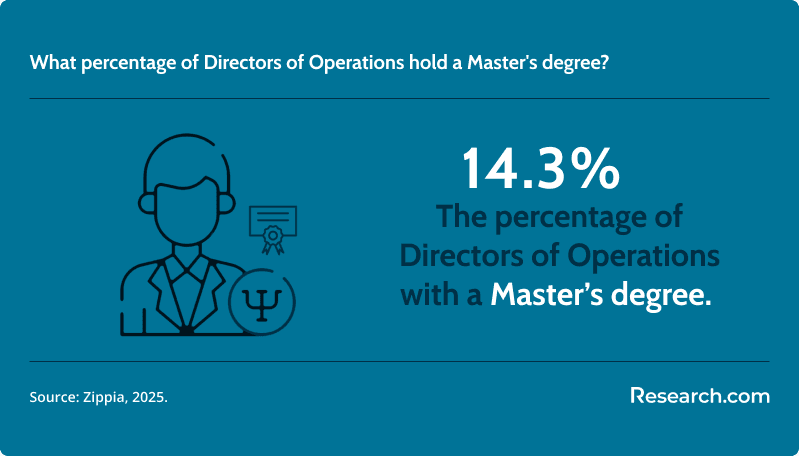
Most Director of Operations roles require at least a bachelor’s degree, usually in business administration, operations management, management, finance, supply chain, data science, IT, or a related field. For senior roles in larger organizations, employers may prefer or require a Master of Business Administration (MBA), particularly when the job includes enterprise strategy, financial planning, or executive-level reporting.
Common education pathways
- Bachelor’s degree: A degree in business administration, management, operations management, finance, supply chain, information systems, or a similar discipline is the typical baseline for many employers.
- Master’s degree or MBA: An MBA can strengthen preparation for senior leadership by adding coursework in operations, strategy, finance, organizational behavior, analytics, and business ethics.
- Professional certifications: Credentials such as Certified in Production and Inventory Management (CPIM), Certified Supply Chain Professional (CSCP), Project Management Professional (PMP), or Lean Six Sigma can demonstrate specialized expertise.
Experience matters as much as education
Education can open the door, but employers usually promote or hire Directors of Operations based on proof of leadership impact. Most roles require substantial professional and management experience—typically 10 or more years in management or business operations. Candidates are stronger when they can show measurable results in cost reduction, process improvement, team leadership, service quality, vendor management, or cross-functional project execution.
Experience across multiple departments is especially valuable. A future DOO should understand how finance, HR, technology, procurement, customer service, logistics, and frontline operations affect one another. The role rewards professionals who can see the entire operating system rather than only one function.
Can non-business majors become Directors of Operations?
Yes. Many operations leaders come from technical, analytical, creative, or industry-specific backgrounds and later move into management. Candidates from design, logistics, engineering support, technical drafting, healthcare, science, or field operations can build toward a DOO role if they gain leadership experience and learn budgeting, process improvement, data analysis, and organizational management.
For example, individuals reviewing AutoCAD job opportunities may develop project coordination, technical workflow, documentation, and quality-control skills that can transfer into operations leadership over time.
Meanwhile, the chart below shows the most common operations director degrees:
Is an MBA degree essential for advancing into a Director of Operations position?
An MBA is not essential for becoming a Director of Operations, but it can be a strong advantage. Employers often care most about whether a candidate can lead teams, manage budgets, improve systems, and deliver measurable results. However, an MBA may help candidates compete for roles in larger companies, highly structured corporate environments, consulting-driven organizations, or industries where graduate business education is common among senior leaders.
When an MBA can help
- When the role includes enterprise strategy, financial planning, mergers, expansion, or executive-level decision-making.
- When the company lists an MBA as preferred or required for senior management roles.
- When a candidate has strong functional experience but needs broader training in finance, strategy, analytics, or organizational leadership.
- When the professional network, recruiting access, or leadership brand of the MBA program can support advancement.
When experience may matter more
- When the organization values hands-on operating experience over academic credentials.
- When the candidate has a clear record of improving efficiency, reducing costs, managing teams, or scaling operations.
- When the industry is highly practical or technical and rewards deep process knowledge.
- When the professional already holds relevant certifications in project management, supply chain, Lean Six Sigma, or production and inventory management.
Practical decision rule
If you are already managing operations and can show measurable business results, an MBA may be optional. If you are trying to move from middle management into enterprise leadership, change industries, or compete for executive-track roles, an MBA may provide useful credibility and broader business training.
Professionals comparing career paths should also consider compensation, opportunity cost, and advancement timeline. For example, those moving from business fields such as real estate or consulting may find it useful to review how much do real estate agents make when weighing income potential against further education and leadership development.
What are the critical hard and soft skills a Director of Operations must master for senior leadership?
A Director of Operations needs both technical management ability and people leadership. The role requires a leader who can interpret data, manage budgets, improve systems, influence stakeholders, and keep teams focused during change or pressure.
Critical hard skills
- Strategic planning: Connecting operational priorities to revenue goals, customer needs, capacity limits, and long-term growth plans.
- Data analysis: Using KPIs, dashboards, reports, and root-cause analysis to diagnose performance problems and guide decisions.
- Financial management: Building budgets, forecasting resource needs, monitoring operational costs, and understanding the financial impact of process decisions.
- Process improvement: Mapping workflows, identifying waste, reducing bottlenecks, standardizing procedures, and improving quality.
- Project management: Planning timelines, assigning ownership, managing dependencies, and delivering initiatives across departments.
- Technology fluency: Understanding the systems used to run operations, such as reporting tools, enterprise platforms, scheduling systems, inventory tools, or workflow software.
- Compliance and risk management: Maintaining operational standards, documentation, safety expectations, and regulatory alignment where applicable.
Essential soft skills
- Leadership: Setting expectations, developing managers, building accountability, and keeping teams aligned around measurable goals.
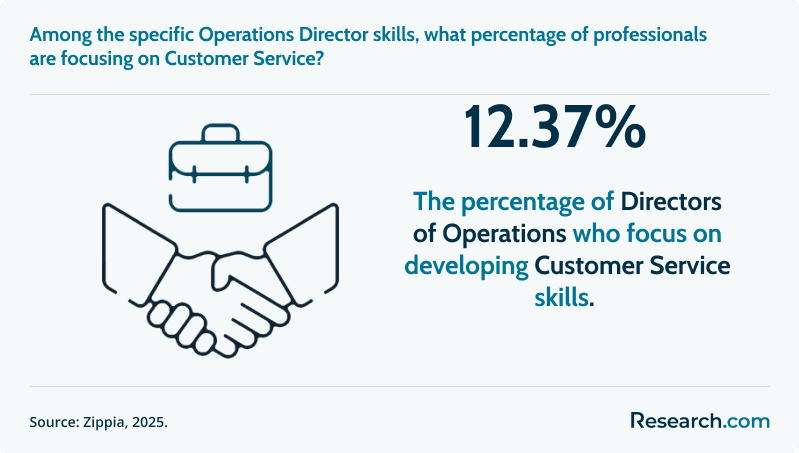
- Communication: Translating complex operational issues into clear updates for executives, managers, frontline staff, vendors, and customers.
- Decision-making under pressure: Acting quickly when disruptions affect customers, employees, deadlines, costs, or business continuity.
- Change management: Helping teams adopt new processes, systems, reporting structures, or performance expectations.
- Conflict resolution: Managing tension between departments when priorities, resources, or responsibilities overlap.
- Emotional intelligence: Coaching employees, reading team dynamics, and maintaining trust while enforcing accountability.
Common skill gap for new DOOs
Many new Directors of Operations are promoted because they are excellent problem solvers. The challenge is learning not to solve every problem personally. At the senior level, success depends on building systems, developing managers, and creating accountability so the organization performs consistently without constant intervention.
Professionals who have developed leadership competencies through interdisciplinary study, faith-based leadership training, strategic communication, or ethics-centered management programs may find those skills useful when navigating the human side of operational change.
What is the typical career progression timeline to become a Director of Operations?
The typical path to Director of Operations takes about 10 to 20 years of professional experience, depending on industry, company size, performance, education, and how quickly a professional gains management responsibility. The timeline can be shorter in fast-growing companies and longer in large, highly structured organizations.
Typical career path
- Early career: Professionals often begin in roles such as operations coordinator, project assistant, office manager, customer service supervisor, production associate, logistics coordinator, analyst, or human resources manager. The goal at this stage is to understand how work flows through the organization.
- First management roles: Many move into positions such as operations manager, project manager, department manager, business operations manager, or team lead. This stage builds experience in supervision, scheduling, process improvement, reporting, and budget awareness.
- Mid-level to senior management: Professionals then take on larger teams, cross-functional projects, vendor relationships, operational planning, and performance accountability. Titles may include senior operations manager, regional operations manager, plant manager, service delivery manager, or business unit manager.
- Director-level leadership: At this level, the professional is expected to manage through other managers, influence strategy, own major KPIs, and coordinate operations across functions or locations.
How to accelerate advancement
- Volunteer for cross-functional projects that expose you to finance, HR, technology, logistics, and customer-facing teams.
- Document measurable outcomes, such as cost savings, faster cycle times, improved retention, reduced defects, or higher customer satisfaction.
- Learn to present operational issues in business terms, not only process terms.
- Seek assignments involving budgeting, forecasting, vendor negotiation, compliance, or enterprise systems.
- Consider credentials such as an MBA, CPIM, PMP, or Lean Six Sigma when they align with your industry and target roles.
The key milestone is not a specific number of years but a clear record of leading people, improving systems, and delivering results across more than one operational area.
What is the job outlook for a Director of Operations?
The job outlook for Directors of Operations remains steady because organizations continue to need leaders who can improve efficiency, manage complexity, and coordinate execution across departments. The U.S. Bureau of Labor Statistics classifies this work under General and Operations Managers and projects 4% growth through 2034.
This growth reflects ongoing demand in industries that depend on strong operating systems, including healthcare, technology, logistics, finance, manufacturing, retail, and professional services. Even when companies automate parts of their workflow, they still need senior leaders to redesign processes, manage change, interpret performance data, and align teams around business goals.
The current workforce includes approximately $3.7 million professionals responsible for the day-to-day operations of U.S. organizations. Competition for director-level roles can still be strong because employers typically expect a combination of management experience, financial judgment, process improvement ability, and communication skill.
What improves job prospects?
- Experience leading multiple teams or departments.
- Proof of measurable operational improvements.
- Industry-specific knowledge in regulated, technical, or high-volume environments.
- Comfort with analytics, automation, and performance reporting.
- Ability to manage change without disrupting service quality or employee engagement.
For a comparison of this growth rate to other management roles, the chart below shows the Executive Job Growth Projections by Occupation from 2024 to 2034.
What is the average Director of Operations salary?
The average salary for a Director of Operations in the United States in 2027 ranges from about $107,000 to $109,000 annually. Top earners make up to $219,812 or more, depending on location, industry, organization size, scope of responsibility, and experience. Salary ranges can be much higher in large organizations or high-demand sectors, occasionally reaching $193,000 to $204,000 per year for highly experienced professionals.
Compensation for this role can vary widely because “Director of Operations” is used across many types of employers. A director overseeing one location, department, or service line may be paid very differently from a director managing national operations, large budgets, regulated processes, or several hundred employees.
Factors that affect salary
- Industry: Technology, finance, healthcare, pharmaceuticals, manufacturing, logistics, and large-scale e-commerce can offer stronger compensation when operations are complex or business-critical.
- Company size: Larger organizations often pay more because the role involves bigger budgets, more teams, and greater risk.
- Location: Salaries are often higher in major business markets and high-cost regions.
- Experience level: Directors with a record of cost savings, growth support, process redesign, or enterprise leadership usually command stronger pay.
- Scope of authority: Budget ownership, multi-site management, executive reporting, and responsibility for major KPIs can raise compensation.
- Credentials: An MBA, PMP, Lean Six Sigma, supply chain credentials, or specialized industry certifications may strengthen a candidate’s negotiating position when paired with proven results.
To understand where the highest salaries are found within this field, the chart below shows the top five best-paying related director of operations jobs in the United States.
What are the top-paying industries for a Director of Operations?
The top-paying industries for Directors of Operations are usually those where operational decisions have a direct effect on revenue, safety, compliance, scalability, or customer retention. Pay tends to rise when the role requires managing complex systems, large teams, regulated workflows, or high-cost operational risks.
- Technology and Software: Advanced technology companies and SaaS providers often pay higher salaries because operations must support rapid scaling, customer success, product delivery, automation, and cross-functional growth.
- Healthcare and Pharmaceuticals: Hospitals, healthcare networks, and pharmaceutical companies offer competitive compensation because leaders must manage regulated, high-stakes, resource-intensive operations.
- Finance and Banking: Directors of Operations in banking, insurance, and financial services oversee sensitive processes, compliance requirements, customer data, and risk controls, which can support strong earning potential.
- Manufacturing and Logistics: Large manufacturers and logistics firms pay well for leaders who can improve production, distribution, inventory flow, quality, and supply chain reliability.
- Retail and E-commerce: Major retailers and online platforms value operations leaders who can improve fulfillment, customer experience, workforce planning, vendor coordination, and cost efficiency.
How to choose an industry path
The highest-paying industry is not always the best fit. Candidates should also consider work pace, travel expectations, regulatory pressure, schedule demands, and whether the role is more people-focused, process-focused, technology-focused, or supply-chain-focused. A strong match between industry demands and personal strengths often leads to better long-term advancement than salary alone.
Here’s What Professionals Have to Say About What a Director of Operations Does
- : "I appreciate that this role places me at the intersection of business strategy and daily execution; my decisions on optimizing processes directly translate into measurable gains in efficiency and profitability. It's profoundly satisfying to manage complex systems and see those strategic plans stabilize the entire organization, reducing unnecessary friction across departments. — Marcus"
- : "Becoming a Director of Operations shifted my focus from just managing tasks to actively cultivating talent and building high-performing teams. I find genuine joy in mentoring future leaders and creating clear, scalable systems that empower them to own their results without constant oversight. — Aisha"
- : "The best part of being a DO is the daily mental challenge of solving large-scale, intricate problems that no one else sees; every day requires a blend of analytical rigor and creative adaptation to ensure continuous improvement. Successfully streamlining a chaotic logistical flow and achieving enterprise-wide cohesion provides a unique and powerful sense of accomplishment. — Greg"
Key Findings
- A Director of Operations is a senior leader who connects executive strategy with daily execution across people, processes, budgets, systems, and performance goals.
- The title often overlaps with Operations Director, but Director of Operations usually implies broader, more strategic authority, while Operations Director may refer to a narrower department, region, or function.
- Core responsibilities include process improvement, budget oversight, cross-functional coordination, KPI tracking, vendor management, compliance, and team leadership.
- Important KPIs include process efficiency, quality, productivity, cost management, delivery and fulfillment, inventory, employee engagement, retention, CSAT, and NPS.
- Most roles require at least a bachelor’s degree, and many senior positions prefer an MBA, though strong operational results and relevant certifications can also support advancement.
- The typical path to Director of Operations takes about 10 to 20 years and usually includes experience in operations management, project management, department leadership, or business operations.
- The U.S. Bureau of Labor Statistics projects 4% growth through 2034 for General and Operations Managers, the occupation group that includes many Director of Operations roles.
- The average salary for a Director of Operations in the United States in 2027 ranges from about $107,000 to $109,000 annually, with top earners making up to $219,812 or more.
- The highest-paying opportunities are often found in technology and software, healthcare and pharmaceuticals, finance and banking, manufacturing and logistics, and retail and e-commerce.
Other Things You Should Know About What a Director of Operations Does
In 2027, a Director of Operations oversees the operational strategies of a company, focusing on optimizing efficiency and productivity. Key responsibilities include managing daily operations, improving processes, overseeing resource allocation, and ensuring compliance with regulations. They play a crucial role in supporting and implementing senior management’s strategic goals.
A COO oversees all company operations and implements strategic goals across the entire organization, while a director of operations manages day-to-day activities within specific departments and typically reports to the COO or CEO.
References
- Bureau of Labor Statistics. (2025, August 28). Employment projections for management occupations, 2024-34. U.S. Department of Labor. https://www.bls.gov/ooh/management
- Bureau of Labor Statistics. (2025, August 28). Top executives: Occupational outlook handbook. U.S. Department of Labor. https://www.bls.gov/ooh/management/top-executives.htm#tab-6
- How to become an Operations director: what it is and career path - Zippia. (2025, January 8). https://www.zippia.com/operations-director-jobs
- Indeed. (2025). Director of Operations salaries. https://www.indeed.com/career/director-of-operations/salaries
- Salary.com. (2025). Director of Operations salary research. https://www.salary.com/research/salary/listing/director-of-operations-salary
- ZipRecruiter. (2025). Director of Operations' salary. https://www.ziprecruiter.com/Salaries/Director-Of-Operations-Salary


